
2027 What Can You Do With a Master’s in Education Leadership?

Co-Founder and Chief Data Scientist
Choosing a master’s in education leadership is usually a career decision, not just an academic one. Most applicants are experienced educators or education professionals who want to move into roles where they can shape school culture, supervise staff, manage budgets, improve curriculum, or influence policy. The degree can support that move, but its value depends on your target role, state licensure rules, work experience, program quality, and total cost.
This guide explains what you can do with a master’s in education leadership in 2027, how the degree compares with a master’s in teaching, what salaries and job outlooks look like, which certifications may matter, and how to choose an online program without overlooking accreditation, licensure alignment, or return on investment.
Quick answer: What is a master’s in education leadership good for?
A master’s in education leadership is best for educators who want to move from classroom-focused work into school, district, higher education, policy, curriculum, or training leadership. It can prepare graduates for roles such as principal, assistant principal, instructional coordinator, higher education administrator, education policy analyst, district administrator, superintendent, educational consultant, or corporate training manager. In K-12 settings, the degree alone is often not enough; many leadership jobs also require state licensure, teaching experience, supervised fieldwork, and exams.
Key things to know before enrolling in a master’s in education leadership
- Most master’s in education programs take one to two years to complete, though part-time, hybrid, and online formats may extend or shorten the timeline depending on course load and practicum requirements.
- Many K-12 leadership positions require state licensure or certification, and requirements commonly include teaching experience, approved preparation coursework, field experience, and passing scores on state exams.
- Leadership roles can pay more than classroom teaching roles, but salary varies by position, employer, district size, state, funding level, and years of experience.
- The degree is most useful when it matches a specific goal, such as principal licensure, curriculum leadership, higher education administration, policy work, or district-level advancement.
- What jobs can I get with a master’s in education leadership for 2027?
- Is a master’s in education leadership worth it for career advancement?
- How much can I earn with a master’s degree in education leadership?
- Which is better: a master’s in education leadership or a master’s in teaching?
- What specializations are available in master’s in education leadership programs?
- How long does a master’s in education leadership take?
- What certifications can I pursue after a master’s in education leadership?
- How do I choose the best online education leadership program?
- What are the advantages of an online master’s in education leadership?
- How can a complementary undergraduate degree support education leadership?
- Should I pursue a doctoral degree after a master’s in education leadership?
- How can I move from a master’s program into doctoral study?
- How can interdisciplinary study strengthen education leadership?
- Can accelerated programs help educators move into leadership faster?
- What financial aid options are available for education leadership graduate students?
- How can historical insight improve leadership decisions?
- What is the job outlook for education leadership roles?
- How should I compare education leadership with other online graduate programs?
- How can library science skills support education leadership?
- What final questions should I ask before choosing this degree?
What jobs can I get with a master’s in education leadership for 2027?
A master’s in education leadership can lead to administrative, instructional, policy, consulting, and organizational learning roles. The best-fit job depends on your background. A licensed teacher may pursue school administration, while someone with higher education or nonprofit experience may use the degree for student affairs, academic operations, policy analysis, or training leadership.
| Career path | Typical setting | What the role usually involves | Important requirements to check |
| School principal | Elementary, middle, or high schools | Leads daily school operations, supervises teachers and staff, manages school goals, handles discipline and family communication, and supports instructional improvement. | State principal certification, teaching experience, supervised administrative practice, and district hiring requirements. |
| Higher education administrator | Colleges, universities, and nonprofit universities | Manages academic departments, student services, admissions, compliance, institutional planning, or academic programs. | Relevant higher education experience, administrative skills, and sometimes specialized knowledge in areas such as student affairs or enrollment. |
| Instructional coordinator | Schools, districts, curriculum companies, or education agencies | Reviews curriculum, analyzes student performance data, trains teachers, supports instructional standards, and helps implement new teaching strategies. | Teaching background, curriculum expertise, data skills, and in some states or districts, additional certification. |
| Education policy analyst | Government agencies, nonprofits, advocacy groups, or research organizations | Studies education policies, interprets data, evaluates programs, writes reports, and recommends policy changes. | Research ability, policy writing, data analysis skills, and knowledge of education systems. |
| Corporate training manager | Businesses, healthcare systems, nonprofits, or workforce development organizations | Designs employee learning programs, manages training teams, evaluates learning outcomes, and supports organizational development. | Experience in adult learning, instructional design, learning technology, and organizational leadership. |
| Educational consultant | Independent consulting, school improvement firms, districts, or edtech companies | Advises schools or organizations on leadership, instruction, curriculum, compliance, training, or operational improvement. | Demonstrated expertise, professional network, measurable results, and often prior leadership experience. |
School principal
Principals are responsible for both instructional leadership and day-to-day operations. They work with teachers, students, families, counselors, support staff, and district leaders to improve school performance and maintain a safe learning environment. The role often includes teacher evaluation, budgeting, scheduling, curriculum implementation, discipline decisions, compliance reporting, and community engagement.
Higher education administrator
Higher education administrators work in areas such as admissions, registrar operations, student affairs, academic advising, financial aid, institutional effectiveness, residence life, or academic department management. The work is less centered on K-12 licensure and more focused on institutional policy, student success, compliance, enrollment, program quality, and cross-campus coordination.
Instructional coordinator
Instructional coordinators, often called curriculum specialists, help schools improve what and how students learn. They may review instructional materials, align curriculum with standards, analyze assessment results, train teachers, and support adoption of new learning strategies. This role is a strong fit for educators who want system-wide instructional influence without necessarily becoming a principal.
Education policy analyst
Education policy analysts evaluate how laws, budgets, standards, and reform initiatives affect schools and students. They may work with public agencies, nonprofits, think tanks, or advocacy organizations. This path is usually strongest for professionals who enjoy research, writing, data interpretation, and policy recommendations.
Corporate training manager
Some education leadership graduates move outside schools into workplace learning. Corporate training managers build professional development systems for employees, design learning pathways, supervise trainers, and evaluate whether training improves performance. This route can make sense for educators with strong curriculum design, coaching, and adult learning skills.
Educational consultant
Educational consultants support schools, districts, education companies, or nonprofits by diagnosing problems and recommending solutions. Their work may involve leadership coaching, curriculum review, school improvement planning, professional development, compliance support, or technology implementation. Consulting is usually easier to enter after building credible experience in teaching, administration, curriculum, or policy.
Is a master’s in education leadership worth it for career advancement?
A master’s in education leadership can be worth it if it is required or strongly preferred for the role you want. It is especially relevant for teachers planning to become principals, assistant principals, instructional leaders, or district administrators. It can also help professionals move into higher education administration, policy work, consulting, nonprofit leadership, or corporate training.
The National Center for Education Statistics (2023) reported that 151,707 students earned a master’s degree in education during the 2021–2022 academic year. The Department for Professional Employees (2024) also reported that 62% of public school principals held a master’s degree in 2020–2021. These figures show that graduate education remains common among school leaders, although the degree should be evaluated alongside experience, licensure, and cost.
| The degree may be worth it if... | You may want another path if... |
| You need a state-approved pathway to principal or administrator certification. | You want to remain primarily focused on classroom instruction and do not want administrative duties. |
| Your district or employer rewards advanced credentials through salary schedules or promotion eligibility. | The program does not meet your state’s licensure requirements. |
| You want to supervise staff, lead school improvement, manage programs, or influence policy. | The tuition cost is high and the degree does not clearly improve your career options. |
| You already have teaching or education experience and are ready for broader responsibility. | You lack the required years of teaching or field experience for your target job. |
| You want a credential that can transfer into education-adjacent roles such as training, consulting, or nonprofit leadership. | You are seeking a research-intensive academic career and may need a doctorate instead. |
The return on investment depends on several practical factors: tuition, fees, lost work time, employer reimbursement, certification alignment, local hiring demand, salary schedules, and whether the program includes meaningful field experience. Before enrolling, compare the total cost of attendance with the actual salary range for your target job in your state or district.
Questions to ask before deciding whether the degree is worth it
- Does this program meet administrator licensure or certification requirements in my state?
- How many years of teaching or education experience will I need before I can qualify for my target role?
- Will my employer increase my pay, reimburse tuition, or support fieldwork hours?
- Does the curriculum prepare me for the leadership job I want, or is it too general?
- What are the program’s practicum, internship, or capstone expectations?
- Are graduates employed in roles similar to the one I am pursuing?
How much can I earn with a master’s degree in education leadership?
Salary outcomes vary widely because education leadership covers several different job families. Employer type, state, district size, budget, union contracts, years of experience, licensure, and the level of responsibility all matter. A master’s degree may help you qualify for leadership roles, but it does not guarantee a specific salary.
Based on data cited from the U.S. Bureau of Labor Statistics, PayScale, and ZipRecruiter, school administrators in preschool and daycare earn $61,320. In K-12 education, school principals take home an average annual salary of $111,020. Higher education administrators, including roles such as deans or academic directors, often see salaries at $122,010. District administrators earn $87,873, while superintendents make $149,159 or more, especially in larger systems.
| Role or leadership area | Salary figure cited | What can affect pay |
| Preschool and daycare administrators | $61,320 | Childcare setting, employer size, state funding, and management scope. |
| K-12 school principals | $111,020 | School level, district size, location, years of experience, and contract structure. |
| Higher education administrators | $122,010 | Institution type, department, seniority, enrollment size, and funding model. |
| District administrators | $87,873 | District budget, department responsibility, region, and administrative experience. |
| Superintendents | $149,159 or more | District size, governance complexity, region, and executive leadership record. |
| Education policy analysts and instructional coordinators | between $60,000 and $100,000 annually | Employer type, analytical responsibilities, location, and specialized expertise. |
| Corporate training managers | exceeding $110,000 | Industry, organization size, management level, and learning technology responsibilities. |
Educational consultants may have variable earnings because compensation can depend on contracts, client base, specialization, reputation, and project scope. For any role, review local salary schedules or employer postings instead of relying only on national averages.
This chart shows the average salaries of education leadership careers.
Which is better: Master’s in Education Leadership vs. Master’s in Teaching?
The better degree depends on the kind of impact you want to have. A master’s in teaching is usually the stronger fit for educators who want to improve classroom instruction, deepen content-area teaching, or move into roles such as instructional coaching. A master’s in education leadership is usually better for educators who want to manage schools, lead teams, design systems, oversee programs, or influence policy beyond one classroom.
| Comparison point | Master’s in Education Leadership | Master’s in Teaching |
| Best for | Educators aiming for administration, school leadership, district roles, policy, or organizational leadership. | Educators who want stronger instructional practice, subject expertise, classroom strategies, or teaching credentials. |
| Primary focus | School operations, leadership theory, education law, budgeting, supervision, policy, improvement planning, and organizational decision-making. | Pedagogy, assessment, classroom management, lesson design, student learning, and subject-specific instruction. |
| Common outcomes | Principal, assistant principal, instructional coordinator, district administrator, policy analyst, or higher education administrator. | Teacher, lead teacher, curriculum specialist, instructional coach, or specialist teacher depending on program design. |
| Licensure considerations | May support administrator or principal certification if state-approved. | May support initial teacher licensure or advanced teaching credentials depending on the program. |
| Good next step if | You want to lead adults, systems, budgets, schoolwide improvement, or institutional strategy. | You want to remain close to classroom practice and student instruction. |
A Master’s in Teaching, including a traditional or online teaching degree, typically emphasizes instruction, pedagogy, classroom assessment, and content-specific teaching skills. A Master’s in Education Leadership shifts the focus to administration, organizational management, supervision, education law, budgeting, and strategic planning.
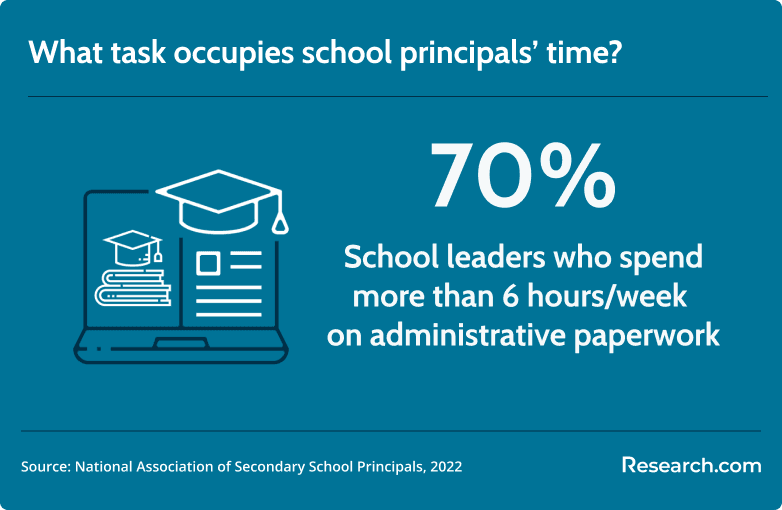
The distinction matters because school leadership is not only paperwork and compliance. A 2022 survey by the National Association of Secondary School Principals found that many school leaders spend over six hours each week on administrative paperwork (70%), interacting with students (64%), and attending meetings (52%). Their top priorities included spending more time with students (72%), supporting teachers (69%), and observing classrooms (60%).
In practical terms, choose teaching if you want to become a better classroom practitioner. Choose education leadership if you want responsibility for schoolwide or systemwide outcomes.
What specializations can I choose for a master’s in education leadership program?
Specializations help align the degree with a specific leadership goal. This matters because a principal preparation program, a higher education leadership track, and a policy-focused curriculum may all carry the education leadership label while preparing students for different careers.
| Specialization | Best for | Typical coursework or focus |
| K-12 School Administration | Teachers planning to become principals, assistant principals, or district administrators. | School operations, staff supervision, education law, student achievement, family engagement, and school improvement. |
| Higher Education Leadership | Professionals pursuing leadership roles in colleges and universities. | Student affairs, enrollment, academic administration, institutional governance, compliance, and higher education policy. |
| Education Policy and Advocacy | Professionals interested in reform, government, nonprofit, or advocacy work. | Policy analysis, legislative systems, education equity, research methods, and program evaluation. |
| Curriculum and Instruction Leadership | Educators who want to improve teaching and learning across schools or districts. | Curriculum design, assessment, instructional coaching, standards alignment, and data-informed improvement. |
| Special Education Leadership | Educators who want to lead programs serving students with diverse learning needs. | Special education law, inclusive education, program design, compliance, and instructional support systems. |
For educators focused on special education leadership, cost may be a key factor. Comparing options such as the cheapest online masters in special education can help identify specialized programs that may support related leadership goals while keeping expenses manageable.
When choosing a specialization, start with the job title you want after graduation. Then confirm whether that track includes the fieldwork, licensure preparation, coursework, and faculty expertise needed for that role.
How long does it take to complete a master’s in education leadership?
Most students complete a master’s in education leadership in about two years if enrolled full time. Part-time students may need three to four years, especially if they are balancing teaching, family responsibilities, and fieldwork. Accelerated formats may allow completion in as little as 12 to 18 months, but the pace can be demanding.
| Program format | Typical timeline | Best for | Potential trade-off |
| Full-time traditional program | About two years | Students who can manage a steady graduate course load. | May be difficult for full-time educators during the school year. |
| Part-time program | Three to four years | Working teachers and administrators who need a slower pace. | Longer time before credential completion or promotion eligibility. |
| Accelerated program | 12 to 18 months | Experienced educators who can handle intensive coursework. | Less scheduling flexibility and a heavier weekly workload. |
| Online or hybrid program | Varies by enrollment pace | Students who need location flexibility or asynchronous coursework. | Requires strong self-management and careful verification of field placement requirements. |
Online and hybrid programs are often designed for working educators. They may include evening classes, asynchronous modules, weekend intensives, virtual collaboration, local field placements, or a capstone project. If flexibility is your priority, compare masters degrees in education online by schedule, practicum structure, and whether the program meets your professional goals.
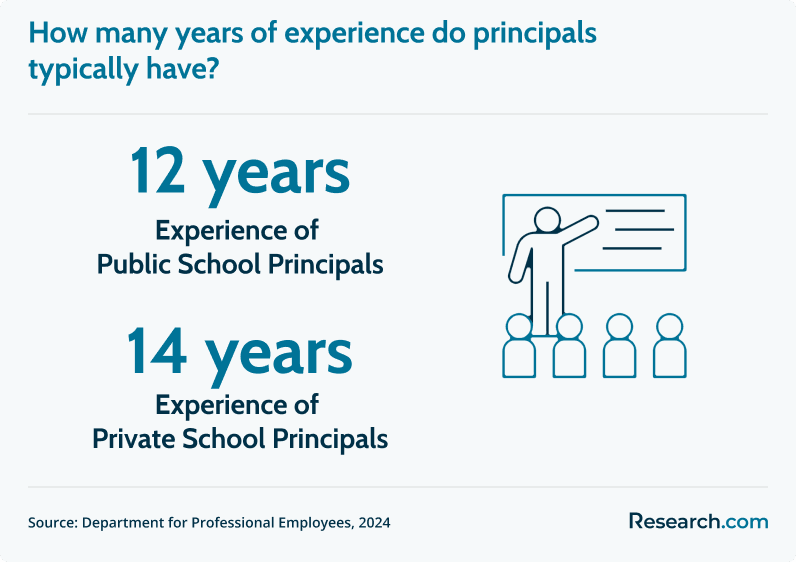
Degree length is only one part of the timeline. The Department for Professional Employees reported that public school principals generally have 12 years of teaching experience, while private school principals typically have 14 years. This means many educators earn the degree before they are fully competitive for top administrative posts.
What certifications can I pursue after completing a master’s in education leadership?
Certifications can be essential in education leadership, especially in K-12 public schools. The exact requirements vary by state, district, role, and school type, so students should verify licensure rules before choosing a program. A master’s degree may satisfy part of the requirement, but exams, fieldwork, background checks, and prior teaching experience may also be required.
| Certification or credential | Who it is for | What to verify before enrolling |
| Principal Certification | Educators pursuing principal or assistant principal roles. | Whether the program is state-approved, includes required internship hours, and prepares students for required exams. |
| Higher Education Administration Certification | Professionals seeking leadership in admissions, student affairs, academic services, or campus operations. | Whether the credential is valued by target employers and whether it aligns with a specific campus function. |
| Superintendent/District Leadership Certification | Experienced administrators planning to lead districts or manage district-level policy, budgets, and personnel. | State requirements for prior administrative experience, leadership coursework, and certification exams. |
| Instructional Coordinator Certification | Educators who want to lead curriculum design, standards alignment, teacher training, and instructional improvement. | Whether your state or employer requires a separate credential for curriculum leadership roles. |
| Instructional Technology Specialist Certification | Educators focused on digital learning, learning platforms, teacher technology training, and instructional innovation. | Technology competencies, field experience, and whether the credential applies to K-12, higher education, or corporate learning. |
Mentorship and on-the-job learning are also important. A 2024 RAND survey found that 97% of large school districts offered executive coaching or other on-the-job professional development for current principals, and 84% provided evaluations and mentorship for new principals. Those supports can help new administrators translate coursework into real decisions about staffing, school climate, instruction, and community expectations.
This chart displays the assistance school districts provide to school principals.
How do I choose the best online education leadership program?
The best online education leadership program is the one that fits your target credential, state requirements, budget, schedule, and preferred career setting. Do not choose based only on convenience or tuition. For K-12 administration, licensure alignment is often the most important factor.
Program selection checklist
- Accreditation: Confirm institutional accreditation and, when relevant, education-specific approval or state authorization for administrator preparation.
- Licensure alignment: Ask whether the program leads to principal, administrator, or superintendent eligibility in your state.
- Fieldwork requirements: Review internship, practicum, observation, or leadership project expectations and where they can be completed.
- Curriculum fit: Look for coursework in education law, equity, budgeting, instructional leadership, supervision, data use, school improvement, and organizational leadership.
- Faculty experience: Check whether instructors have real leadership experience in schools, districts, higher education, policy, or curriculum work.
- Student support: Compare advising, licensure guidance, placement help, technology support, and career services.
- Total cost: Review tuition, fees, books, travel, background checks, exam fees, and whether employer reimbursement applies.
- Doctoral pathway: If you may continue beyond the master’s level, compare programs with advanced options such as EdD online programs.
What are the advantages of an online master’s in education leadership?
An online master’s in education leadership can be a practical option for teachers and education professionals who cannot pause their careers to attend campus full time. The strongest online programs combine flexibility with structured advising, field experience, and licensure preparation where required.
| Advantage | Why it matters | What to watch for |
| Flexible scheduling | Teachers can complete coursework around school calendars, evening responsibilities, and family commitments. | Some programs still require synchronous sessions, campus visits, or scheduled fieldwork. |
| Lower relocation and commuting costs | Students may avoid moving, commuting, or paying for campus housing. | Online programs may still charge technology, distance learning, or student service fees. |
| Access to more programs | Students can compare programs beyond local campuses and choose a curriculum that fits their career goal. | Out-of-state programs may not meet local licensure requirements. |
| Broader peer network | Online cohorts may include educators from different districts, states, and school contexts. | Networking requires active participation in discussions, group projects, and professional communities. |
Students comparing online education programs should look closely at course delivery, faculty access, licensure advising, internship placement, and student outcomes. Online learning can be convenient, but convenience should not replace program quality.
How can a complementary undergraduate degree boost your career in education leadership?
A relevant undergraduate background can strengthen the way education leaders analyze problems and communicate decisions. For example, an online bachelors degree in history can build historical reasoning, policy awareness, research skills, and cultural context. Those skills can help school leaders understand how institutions change over time and why community expectations, education laws, and curriculum debates often reflect deeper social patterns.
The bachelor’s degree does not replace graduate leadership preparation. Instead, it can add perspective. Leaders with interdisciplinary training may be better prepared to interpret policy shifts, communicate with diverse stakeholders, and make decisions that account for local history and community values.
Should I pursue a doctoral degree after my master’s in education leadership?
A doctorate may be worth considering if your goals extend beyond building-level leadership. Doctoral study can support careers in district executive leadership, higher education administration, policy research, consulting, superintendent roles, or academic teaching. It is not always necessary for principal or assistant principal roles, so the decision should be based on your long-term plan.
Doctoral programs usually require deeper work in leadership theory, research design, organizational change, policy analysis, and applied problem-solving. If cost is a major concern, comparing options such as the most affordable online EdD programs can help you evaluate whether further study is financially realistic.
How can I transition from a master’s to a doctoral program in education leadership?
Moving from a master’s program into doctoral study requires more than meeting admission requirements. You should identify a clear research or practice problem, choose faculty whose expertise matches your interests, and decide whether a practice-oriented doctorate or research-oriented doctorate fits your career direction.
Steps to prepare for doctoral study
- Define the leadership problem you want to study, such as principal retention, school finance, instructional improvement, equity, teacher development, or organizational change.
- Review admission requirements, including GPA expectations, professional experience, writing samples, recommendations, and prior graduate coursework.
- Compare program models, including cohort formats, dissertation or capstone expectations, residency requirements, and online delivery.
- Contact faculty or program advisors to ask whether your interests fit the program’s strengths.
- Evaluate cost, time commitment, employer support, and how the doctorate will affect your career path.
Professionals interested in advanced leadership research may also compare pathways such as a PhD organizational leadership program to understand how broader organizational leadership training differs from education-specific doctoral study.
How can interdisciplinary studies enhance education leadership?
Education leaders rarely solve problems with one discipline alone. They use communication, law, finance, history, psychology, technology, data analysis, and community engagement. Interdisciplinary study can help leaders explain decisions clearly, interpret stakeholder concerns, and design better policies.
For example, language-focused study such as the cheapest online English degree can strengthen writing, argumentation, and communication skills. Those skills matter when leaders must write policy memos, communicate school improvement plans, respond to families, or guide staff through organizational change.
Can accelerated programs expedite the transition to educational leadership?
Accelerated programs can shorten the classroom portion of leadership preparation, but they do not eliminate the experience, fieldwork, or licensure requirements that many leadership roles require. They are best for focused, experienced educators who can manage a heavy workload and already understand the demands of school environments.
Fast-track formats may use shorter terms, intensive modules, year-round scheduling, or condensed assignments. Before enrolling, ask whether acceleration affects internship quality, advising access, licensure preparation, or your ability to keep working full time. If you are also comparing teaching pathways, resources such as What is the fastest degree to become a teacher? can provide useful context on how accelerated education programs are structured.
What financial aid options are available for education leadership graduate students?
Graduate education can be expensive, so funding should be part of the program selection process from the beginning. Students should compare net cost, not just published tuition. Fees, books, exam costs, travel, technology charges, and lost income can change the real price of the degree.
| Financial aid option | How it can help | What to confirm |
| Scholarships and grants | Can reduce costs without repayment when students meet academic, need-based, professional, or service-related criteria. | Eligibility rules, renewal requirements, deadlines, and whether awards apply to online students. |
| Federal student loans | Graduate students may access federal loans by completing the FAFSA. | Borrowing limits, interest rates, repayment options, and total debt after graduation. |
| Federal Work-Study Programs | Eligible students may earn money through part-time work, sometimes in education-related settings. | Whether graduate students qualify at your institution and whether positions fit your schedule. |
| Teacher Loan Forgiveness Program | Eligible educators working in low-income schools may qualify for up to $17,500 in loan forgiveness. | Subject area, school eligibility, service requirements, loan type, and federal program rules. |
| Employer tuition assistance | Districts, universities, and nonprofits may reimburse part or all of tuition, fees, or books. | Required grades, employment commitments, reimbursement caps, and whether the degree must relate to your current role. |
| Military education benefits | Veterans, active-duty service members, and eligible family members may use GI Bill or related benefits. | Benefit level, institutional participation, housing allowance rules, and remaining entitlement. |
Students trying to minimize costs should compare the cheapest online educational leadership programs alongside accreditation, licensure preparation, faculty quality, and student support. A low-cost program is only a good value if it supports your actual career requirements.
How can historical insights support strategic decision-making in education leadership?
School leaders make better decisions when they understand the history behind current challenges. Funding inequities, curriculum debates, accountability systems, community trust, staffing patterns, and school reform movements all have historical roots. Leaders who study those patterns can avoid repeating ineffective approaches and can explain change efforts with more credibility.
Historical analysis can also support long-term planning. By examining how institutions responded to past reforms, demographic shifts, or policy changes, administrators can identify what made earlier efforts succeed or fail. Readers interested in deeper historical study can review options such as an affordable online master of history to understand how historical thinking can complement leadership preparation.
What is the job outlook for leadership positions in education?
The outlook for education leadership roles is mixed. Some administrative roles are projected to decline slightly, while higher education administration is projected to grow modestly. Local hiring may differ significantly from national projections because school budgets, enrollment, retirements, policy changes, and district restructuring all influence openings.
According to the BLS, employment of K-12 school administrators is projected to decrease by 0.5% from 2023 to 2033, while daycare and childcare administrators are projected to decline by 2.1%. Even with those declines, approximately 20,800 annual job openings are expected for school administrators and 5,100 for childcare administrators.
Postsecondary education administrators are projected to see employment increase by 2.9% during the same period, with around 15,200 annual job openings. Roles in student services, academic affairs, financial aid, enrollment, and institutional administration may offer opportunities for professionals who understand compliance, student success, and program operations.
For job seekers, the strongest strategy is to build a profile that combines the degree with practical leadership evidence: supervising teams, analyzing data, improving instruction, managing programs, communicating with families, leading committees, and completing meaningful fieldwork.
This chart displays the job outlook for careers in educational leadership.
How do I compare my master’s in education leadership with other online graduate programs?
When comparing an online master’s in education leadership with other graduate programs, focus on career fit first. A leadership degree is not automatically better than another education-related master’s; it is better only if it supports the role you want.
| Program type | Best fit | Main decision factor |
| Master’s in Education Leadership | School, district, higher education, curriculum, policy, or training leadership. | Licensure alignment, leadership fieldwork, administrative coursework, and career outcomes. |
| Master’s in Teaching | Teachers focused on instruction, pedagogy, classroom practice, or teacher licensure. | Teaching credential alignment, classroom experience, and subject-area preparation. |
| Master’s in Special Education | Educators supporting students with disabilities or leading special education programs. | State special education requirements, inclusive practice, and compliance preparation. |
| Master’s in Library Science | Professionals interested in information management, school libraries, digital resources, or research services. | Career setting, certification requirements, and information systems training. |
Comparing a leadership program with a masters in library science online program, for example, can clarify differences in tuition, delivery format, student support, technical training, and career outcomes. Use these comparisons to decide whether your long-term goal is administrative leadership, instructional leadership, information management, or another education-related path.
How can integrating library science enhance education leadership roles?
Library science skills can strengthen education leadership by improving how leaders manage information, support digital literacy, organize learning resources, and evaluate research. These skills are useful in schools, districts, higher education, and organizations that depend on accurate information and effective knowledge-sharing.
Education leaders with library science experience may be better prepared to guide technology integration, support media specialists, improve research access, and help teachers and students use information responsibly. This combination can also create alternative career options, including jobs with an MLIS degree, for professionals who want to work at the intersection of learning, information systems, and institutional leadership.
Common mistakes to avoid when choosing a master’s in education leadership
- Ignoring licensure rules: An out-of-state online program may be accredited but still fail to meet your state’s administrator certification requirements.
- Comparing tuition only: Fees, fieldwork costs, exam charges, books, and travel can change the total cost significantly.
- Assuming online means self-paced: Many online programs have fixed deadlines, synchronous meetings, cohort requirements, or scheduled practicums.
- Choosing a specialization too late: A general leadership track may not prepare you for principal licensure, special education leadership, or higher education administration.
- Overlooking experience requirements: Many leadership roles require years of teaching or administrative experience in addition to the degree.
- Relying only on rankings: Rankings can be useful, but licensure fit, field placement quality, faculty support, and employer recognition matter more for career outcomes.
- Assuming salary increases are guaranteed: Pay depends on location, employer, contract structure, role, and experience, not just the degree.
Key Insights
- A master’s in education leadership is most valuable when it is tied to a defined role, such as principal, instructional coordinator, higher education administrator, policy analyst, district leader, or training manager.
- For K-12 leadership, state certification rules matter as much as the degree itself. Always confirm whether a program meets your state’s administrator or principal licensure requirements.
- The Department for Professional Employees (2024) reports that 62% of public school principals held a master’s degree in 2020–2021, showing that graduate education is common among school leaders.
- Salary outcomes vary by role: preschool and daycare administrators earn $61,320, K-12 school principals take home an average annual salary of $111,020, higher education administrators often see salaries at $122,010, district administrators earn $87,873, and superintendents make $149,159 or more.
- Experience remains crucial. Public school principals generally have 12 years of teaching experience, and private school principals typically have 14 years.
- Mentorship and professional development can shape leadership success. A 2024 RAND survey found that 97% of large school districts offered executive coaching or other on-the-job professional development for current principals, and 84% provided evaluations and mentorship for new principals.
- The job outlook is uneven: K-12 school administrator employment is projected to decrease by 0.5% from 2023 to 2033, daycare and childcare administrator employment by 2.1%, while postsecondary education administrator employment is projected to increase by 2.9%.
- Online programs can be a strong option for working educators, but students should verify accreditation, licensure alignment, fieldwork support, total cost, and career outcomes before enrolling.
References:
- Department for Professional Employees. (2024). School Administrators: An Occupational Overview. https://www.dpeaflcio.org/factsheets/school-administrators-an-occupational-overview
- National Center for Education Statistics. (2023, September). Master's degrees conferred by postsecondary institutions, by field of study: Selected academic years, 1970-71 through 2021-22. Digest of Education Statistics. https://nces.ed.gov/programs/digest/d23/tables/dt23_323.10.asp
- PayScale. (2025, January 1). Average School Superintendent Salary. Retrieved February 11, 2025, from https://www.payscale.com/research/US/Job=School_Superintendent/Salary
- U.S. Bureau of Labor Statistics. (2024a, April 3). Occupational Employment and Wages, May 2023 - Education and Childcare Administrators, Preschool and Daycare. Occupational Outlook Handbook. https://www.bls.gov/oes/current/oes119031.htm
- U.S. Bureau of Labor Statistics. (2024b, April 3). Occupational Employment and Wages, May 2023 - Education Administrators, Kindergarten through Secondary. Occupational Outlook Handbook. https://www.bls.gov/oes/current/oes119032.htm
- U.S. Bureau of Labor Statistics. (2024c, April 3). Occupational Employment and Wages, May 2023 - Education Administrators, Postsecondary. Occupational Outlook Handbook. https://www.bls.gov/oes/current/oes119033.htm
- U.S. Bureau of Labor Statistics. (2024d, August 29). Occupational projections, 2023–33, and worker characteristics, 2023 (Numbers in thousands). Employment Projections. https://www.bls.gov/emp/tables/occupational-projections-and-characteristics.htm
- ZipRecruiter. (2025, February 3). District Administrator Salary. Retrieved February 11, 2025, from https://www.ziprecruiter.com/Salaries/District-Administrator-Salary
Other Things You Should Know About Getting a Master’s in Education Leadership
Yes, if the program is approved by your state education department and includes the required administrative internship or fieldwork. Many states also require 30 to 36 graduate credits, a passing score on a principal licensure exam, and a valid teaching license before you can apply.
A Master’s in Education Leadership in 2027 equips graduates with skills in strategic planning, organizational management, and leadership, making them suitable for roles such as principal, district administrator, curriculum coordinator, and educational consultant, amongst others. These roles require a keen understanding of educational policies and development strategies.
A Master’s in Education Leadership in 2027 equips students with leadership, strategic planning, and policy analysis skills. These skills are crucial for managing educational institutions, developing curricula, and shaping educational policies, preparing graduates for influential roles in education.


