2027 Best Online Education Degree Programs

Co-Founder and Chief Data Scientist
Online education degree programs: what they are and how to choose the right one
If you are comparing online education degree programs, you are probably trying to solve a practical problem: how to earn a respected credential without wasting time or money, and whether that degree will actually support your career goals. That decision matters more in 2026 because online learning is now common, schools are competing harder for students, and employers expect graduates to be able to work across digital platforms, hybrid classrooms, and data-informed learning environments.
This guide explains what an online education degree can lead to, how much it may cost, how long it can take, what courses and specializations to expect, and how to judge whether a program is worth it. You will also see where graduates work, what skills matter most, and what mistakes to avoid before enrolling.
Quick answer: is an online education degree worth it?
An online education degree is worth considering if you want flexibility, a structured path into teaching or education-adjacent work, and a program that fits your schedule. It can be a strong option for career changers, working adults, and students who need to study remotely. It is usually the best choice only when the program is properly accredited, offers the specialization you need, and matches any licensure rules in your state. If you want to become a licensed teacher, make sure the program is approved for that purpose before you enroll.
What are the main benefits of earning an online education degree?
- Flexible scheduling: Online programs can make it easier to study while working, caregiving, or managing other commitments.
- Broader career use: An education degree can support paths in teaching, training, instructional design, educational technology, curriculum work, and nonprofit or public-sector education roles.
- Potential cost savings: Studying online can reduce commuting, housing, and relocation costs, though tuition and fees still vary widely.
- Digital skill development: Students gain experience with virtual classrooms, learning management systems, and online collaboration tools, which are increasingly common in education and training jobs.
What to expect from an online education degree
Most online education programs are built to cover teaching foundations, learning theory, curriculum design, assessment, classroom management, and technology use. Some programs lead directly to licensure, while others focus on education studies, leadership, or specialized roles outside K-12 teaching.
Before choosing a program, it helps to understand the format and outcomes you are actually buying. An online degree may be fully asynchronous, partly live, or a mix of both. Some programs include supervised fieldwork or student teaching, and others are designed for non-licensure careers in schools, nonprofits, agencies, or corporate training.
| What you may encounter | Why it matters |
| Core education courses | Builds your foundation in learning theory, pedagogy, and curriculum planning |
| Field experience or practicum | Often required for licensure or hands-on classroom preparation |
| Specialization options | Helps you align the degree with a specific career goal |
| Online delivery tools | Important for participation, collaboration, and course access |
| Different pacing options | Lets you choose between accelerated, traditional, or part-time study |
Who should consider an online education degree?
This type of degree is a good fit if you want a flexible route into education, already work in a school or learning-related setting, or need a program that can be completed remotely. It can also make sense if you want to move into instructional design, adult learning, training, or education policy.
It may be less suitable if you want a highly structured campus experience, need extensive face-to-face mentoring every week, or are looking for a shortcut into licensure without fieldwork. In education, the credential is only part of the picture. State rules, supervised practice, and accreditation matter just as much.
Where can you work with an online education degree?
An online education degree can lead to several career directions, depending on the concentration you choose and whether the program is licensure-based.
| Career area | Typical roles | Best for |
| K-12 education | Teacher, special education teacher, intervention specialist | Students planning to work in schools and pursue licensure |
| Curriculum and instruction | Curriculum developer, instructional coordinator, learning specialist | People who want to shape lessons and learning materials |
| Educational technology | Instructional technologist, e-learning designer, education technology consultant | Students interested in digital learning and online platforms |
| Corporate and workforce training | Corporate trainer, training coordinator, learning and development specialist | Career changers seeking roles outside traditional schools |
| Public and nonprofit education | Program manager, outreach coordinator, adult educator | Students who want community-based or mission-driven work |
| Leadership and administration | Principal, dean, director, education administrator | Professionals planning to continue into graduate study |
If you are interested in digital learning careers, it may also help to compare related options such as online learning platforms and program paths that build instructional design or e-learning skills.
How much can you make with an online education degree?
Earnings vary by role, location, experience, licensure, and degree level. The article’s source data reports a median annual wage of $59,220 for education-related graduates, compared with the general median of $46,310. That does not guarantee higher pay for every graduate, but it does show that education credentials can support stable career paths across multiple sectors.
Pay is usually strongest when the degree is paired with in-demand skills, state licensure, graduate education, or a specialization such as special education, instructional design, or educational leadership. If you are evaluating salary potential, look at the exact job title you want, not the degree alone.
How long does it take to finish an online education degree?
Completion time depends on the credential level, transfer credits, and whether you study full time or part time. Some students finish faster through accelerated formats, while others need a slower schedule because of work or family responsibilities.
| Credential type | Typical timeline | Best fit |
| Associate degree | About 20 months | Students seeking an entry point into education-related work |
| Standard bachelor’s degree | Up to four years | Students starting from scratch and aiming for a broad foundation |
| Accelerated bachelor’s degree | As little as one year in some programs | Students with significant transfer credit or prior college experience |
| Part-time bachelor’s degree | Five to six years | Working adults who need a slower pace |
If your long-term goal is leadership, policy, or college teaching, you may eventually need a master’s or doctorate. In that case, it can be smart to plan beyond the bachelor’s degree from the beginning and compare affordable graduate options such as cheapest PhD programs or a masters higher education online path.
Online vs. on-campus education degrees: which is better?
Neither format is automatically better. The right choice depends on how you learn, how much structure you need, and whether your program must satisfy licensure requirements in a specific state.
| Factor | Online program | On-campus program |
| Scheduling | Usually more flexible, especially with asynchronous coursework | Often fixed around class times and campus attendance |
| Commute and relocation | Not usually required | Often required |
| Interaction style | Virtual discussions, video sessions, group tools | In-person classroom interaction |
| Access for working adults | Often easier to manage with full-time employment | More difficult for students with limited schedule flexibility |
| Fieldwork | May still be required locally | Usually coordinated through the campus |
For students who need maximum flexibility, online study is often the more practical option. For students who want a highly structured environment or direct access to campus resources, an on-campus route may be a better fit.
How much does an online education degree cost?
Costs vary by school, residency status, degree level, and whether field experiences or licensure requirements add extra expenses. Based on the figures included in the source article, the average cost for an online bachelor’s degree in education is $60,593 at private colleges and $54,183 for out-of-state students at public universities. The per-credit average at private colleges is $488.
These numbers are helpful as a reference, but your actual cost can be lower or higher. Before enrolling, check tuition, fees, technology charges, books, practicum expenses, and any additional licensing costs.
What affects affordability the most?
- Residency status: Public universities often charge different rates for in-state and out-of-state students.
- Program format: Accelerated programs may reduce total time, but not always total cost.
- Transfer credits: Bringing in prior coursework can lower the number of credits you need.
- Fieldwork requirements: Practicum and student teaching may create added time or travel costs.
- Hidden fees: Technology, testing, and graduation fees can change the real price.
What financial aid options are available?
Students enrolled in online education programs can often use the same aid options as campus students, as long as the school and program qualify.
- Federal aid: Grants, federal student loans, and work-study may be available through the FAFSA process.
- Institutional aid: Schools may offer scholarships, grants, or tuition discounts for online learners.
- State aid: Some states provide grants or scholarships for eligible residents.
- Private scholarships: Professional groups, nonprofits, and foundations sometimes fund education majors or adult learners.
The source article cites a recent statistic that approximately 87% of full-time undergraduate students received some form of financial aid. That reinforces a simple point: do not assume the sticker price is the final price. Always check your aid eligibility before ruling a program out.
What are the admissions requirements?
Admission standards vary, but most online education degree programs ask for the following:
- High school diploma or equivalent: Usually required for undergraduate entry.
- Minimum GPA or coursework: Some programs expect foundational academic preparation.
- Technology access: A reliable computer and stable internet connection are essential.
- Experience or interest in education: Some programs prefer applicants with volunteer, work, or classroom experience.
- Test scores: Standardized testing may be required at some schools, though many programs now use more flexible admissions policies.
If you are applying to a licensure-track program, also check whether your background meets state-specific requirements for teacher preparation, student teaching, and background checks.
What courses are usually included?
Coursework depends on the concentration, but most programs share a common foundation in teaching and learning.
- Educational foundations and learning theory
- Curriculum planning and instructional design
- Assessment and evaluation
- Classroom management
- Special education and inclusion
- Educational technology
- Practicum, internship, or student teaching
Some programs also emphasize leadership. The source article notes that a survey found 85% of institutions offered educational leadership courses. For students aiming at administration, that is an important signal that leadership content is already part of many education curricula.
Which specializations are most common?
The best specialization is the one that matches your intended job. A strong general education degree can help, but a targeted concentration often improves career alignment.
| Specialization | What it prepares you for | Best for |
| Early childhood education | Working with young children and early learning settings | Students who want to focus on developmental foundations |
| Special education | Supporting learners with different needs | Future classroom teachers and intervention specialists |
| Educational leadership | Administrative and management roles | Professionals planning for school leadership |
| Curriculum and instruction | Designing lessons and improving teaching methods | Teachers who want to move into instructional design |
| Technology in education | Digital teaching and learning design | Students interested in EdTech and online instruction |
| Adult education | Teaching adult learners in workforce or community settings | Career changers and training professionals |
| TESOL | Teaching English to speakers of other languages | Students interested in language education |
The source article reports that 89% of institutions surveyed offered special education programs, which shows how common and important this specialization has become in education training.
How should you choose the best online education degree program?
Choosing well means looking beyond marketing claims. Use a practical checklist that focuses on outcomes, accreditation, fit, and affordability.
- Confirm accreditation: Make sure the institution and program are recognized by a legitimate accreditor. For general guidance, review the Council for Higher Education Accreditation resource.
- Check licensure eligibility: If you want to teach, confirm that the program meets your state’s licensure rules.
- Match the specialization to your goal: Do not pay for a concentration you will not use.
- Compare the real cost: Include tuition, fees, books, technology, fieldwork, and testing.
- Review the delivery format: Look closely at synchronous, asynchronous, and part-time options.
- Ask about student support: Advising, tutoring, career services, and internship placement matter.
- Check the results: Graduation rates, licensure pass rates, and job placement outcomes can tell you more than rankings alone.
The article’s source materials note that 46% of higher education leaders said at least half of their undergraduate students enrolled in fully online courses in 2025. That reflects how normal online learning has become, but it also means students need to be more selective, not less.
What are the most common mistakes students make?
Many students focus on convenience and overlook the details that affect value. Avoid these errors:
- Choosing a program without checking accreditation
- Assuming every online degree meets state licensure requirements
- Ignoring fieldwork, testing, and technology fees
- Picking a specialization before confirming career demand
- Assuming a higher tuition price guarantees a better outcome
- Assuming online classes are easier than campus classes
Can an online education degree help you build a professional network?
Yes, if the program is designed well. Strong online programs create opportunities for discussion boards, virtual group projects, faculty feedback, alumni connections, and live events. These features can help students build relationships even without a physical campus. Networking is especially useful if you want mentorship, job leads, or a future graduate-school reference.
Can it build leadership and management skills?
It can, especially in programs that include collaboration, project planning, and educational leadership coursework. Students often practice communication, decision-making, and team coordination through online assignments and group projects. Those skills are useful in classroom leadership, school administration, training, and program management.
What certifications can strengthen your career prospects?
Additional credentials can improve your profile when they match the role you want. Examples may include educational technology credentials, special education endorsements, leadership certificates, or subject-specific teaching licenses. The best certification is the one that adds clear value to your target job rather than simply adding more letters after your name.
If you are aiming at graduate-level roles or want to expand your job options, it may also help to explore jobs for masters in education as a planning tool.
How can you handle common challenges in online study?
Online students usually succeed by building structure before problems appear.
- Set a weekly schedule and protect it.
- Create a quiet study space with reliable internet.
- Track deadlines in a calendar or project-management tool.
- Join study groups or discussion communities early.
- Ask instructors for clarification instead of waiting.
- Plan ahead for practicum or student-teaching requirements.
If you are considering a faster route, it helps to understand the pacing first and compare it with resources such as how long does it take to get a teaching degree.
Can combining education with library science create more opportunities?
Yes. Pairing education with library science can be a smart move for students who want to work in school libraries, academic support, digital archives, learning resource centers, or information services. The overlap between teaching, literacy, research support, and resource management can create useful hybrid career paths.
If that combination interests you, you may also want to read What can you do with library science degree? to compare career directions.
What career paths are available after graduation?
The exact path depends on your concentration, licensure status, and level of study.
| Career path | What you do | Typical next step |
| Classroom teacher | Teach K-12 students in public or private settings | Licensure and student teaching |
| Educational administrator | Oversee programs, staff, or school operations | Master’s or doctoral study |
| Curriculum developer | Create and improve learning materials | Instructional design or curriculum training |
| Educational technology specialist | Support digital learning tools and systems | EdTech-focused experience or certification |
| Special education teacher | Support students with diverse learning needs | Special education credential or endorsement |
| Adult education instructor | Teach adults in colleges, training centers, or community programs | Relevant teaching or workforce experience |
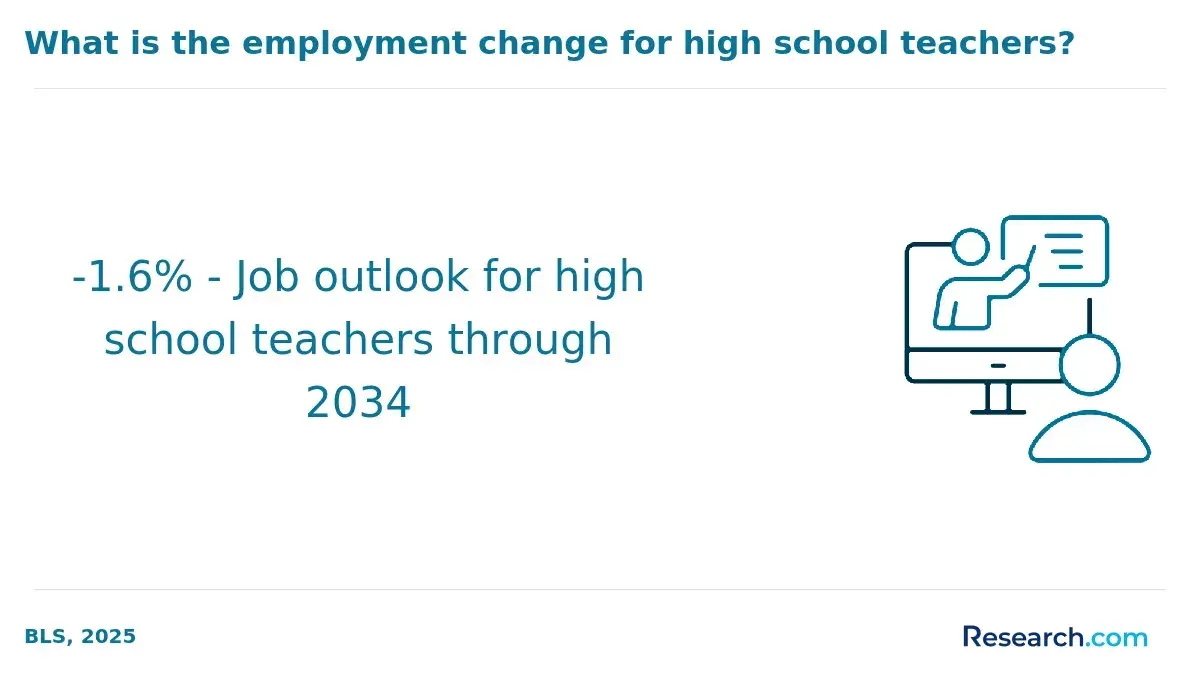
The source article notes that employment of elementary school teachers is projected to decline by 2% through 2034, but still shows 91,000 annual openings throughout the decade. That means the field is not disappearing, but competition and location matter.
How can child development training strengthen your education career?
A child development focus can help if you want to teach young learners, support early intervention, or design age-appropriate curriculum. It adds depth to your understanding of milestones, behavior, and learning differences. That knowledge is especially valuable in early childhood, special education, and family-focused programs.
For students who want more advanced specialization, a masters degree in child development online may be worth comparing.
What advanced degrees can help you move forward?
If you want to move beyond entry-level teaching or training roles, advanced study can open more options. Common next steps include master’s programs in educational leadership, curriculum and instruction, instructional technology, or higher education. Doctoral study can be useful for district leadership, college administration, research, and policy work.
Students who want to compare doctoral paths may want to review cheapest online EdD programs or look at online PhD higher education options if their goal is leadership in postsecondary education.
What is the job market like for online education graduates?
The job market is broad, but not every role is equally strong. The education and training sector remains large, and the Bureau of Labor Statistics continues to project openings across many roles. What matters most is how your degree aligns with local licensure requirements, your specialization, and the type of employer you want.
Online degrees are generally accepted when they come from accredited institutions and meet the same standards as campus-based programs. Employers usually care about quality, relevant experience, and whether you can do the work.
How can an online degree help you adapt to changes in education?
Education is changing quickly. Schools and organizations are using more digital tools, hybrid instruction, data-informed teaching, and personalized learning models. Online education degree programs can help you build the habits and technical fluency needed to work in that environment.
- Digital learning: Useful for online teaching, virtual training, and course design
- Hybrid instruction: Important in schools and organizations that combine in-person and remote learning
- Personalized education: Helps you tailor instruction to different learner needs
- Social-emotional learning: Increasingly important for student support and classroom climate
- Global and cross-cultural communication: Valuable in multilingual, international, and community-based settings
Questions to ask before you enroll
- Does this program qualify me for the license or credential I need?
- Is the program accredited by a recognized agency?
- What is the total cost, including fees and fieldwork?
- How long do students usually take to finish?
- What are the graduation and licensure pass rates?
- What kinds of student support are available online?
- Are there local practicum or student-teaching requirements?
- What jobs do graduates usually get?
Key Insights
- An online education degree can be a strong choice if you need flexibility, but only if the program is accredited and matches your career goals.
- The best program for a future teacher is not always the best program for someone who wants instructional design, training, or administration.
- Cost is more than tuition. Include books, fees, technology, and fieldwork when comparing programs.
- Licensure matters. If you want to teach, verify that the degree meets your state’s requirements before enrolling.
- Specializations such as special education, early childhood education, educational leadership, and educational technology can shape your job options after graduation.
- Online study works best for self-directed students who can manage deadlines and stay engaged without a traditional campus schedule.
- Additional degrees and certifications can improve advancement opportunities, especially for leadership and specialized roles.
References:
- Hanson, M. (2025, February 3). Financial Aid Statistics. Education Data Initiative. https://educationdata.org/financial-aid-statistics
- Hanson, M. (2025, October 27). Cost of Online Education vs. Traditional Education: Comparison. Education Data Initiative. https://educationdata.org/cost-of-online-education-vs-traditional-educationhttps://www.bls.gov/ooh/education-training-and-library/home.htm
- Kurtz, H. & Baker, L. (2025, March 4). What Teacher Morale Looks Like in Every State. EdWeek. https://www.edweek.org/the-state-of-teaching/teaching-learning/what-teacher-morale-looks-like-in-every-state/2025/03
- National Student Clearinghouse Research Center. (2026, January 15). Final Fall Enrollment Trends. https://nscresearchcenter.org/final-fall-enrollment-trends
- Simunich, B., Garrett, R., Fredericksen, E. E., & Gay, K. (2025). CHLOE 10 | Meeting the Moment: Navigating Growth, Competition, and AI in Online Higher Education, 2025. Quality Matters. https://qualitymatters.org/qa-resources/resource-center/articles-resources/CHLOE-10-report-2025
- U.S. Bureau of Labor Statistics. (2025, August 28). Occupational projections, 2024–2034, and worker characteristics. Retrieved February 2026, from https://www.bls.gov/emp/tables/occupational-projections-and-characteristics.htm
Other Things You Should Know About an Online Education Degree
In 2027, online education programs offer virtual simulations, partnerships with local schools for in-person practicums, and interactive virtual classrooms to provide hands-on teaching experience. These resources allow students to apply theoretical knowledge in practical settings, enhancing their teaching skills while adapting to digital and real-world educational environments.
Yes, if the program is state-approved and includes the required clinical practice. Most states require a bachelor’s degree, an educator-preparation program, and passing scores on licensing exams such as Praxis or a state-specific test. Check the state board of education before enrolling.
In 2027, ensure that the online education degree programs you consider are accredited by recognized agencies like the Council for the Accreditation of Educator Preparation (CAEP) or regional accrediting bodies. Accreditation guarantees that the program meets quality standards essential for effective teaching careers.
Most online education degree programs in 2027 take 2 to 4 years to complete, depending on whether you enroll full-time or part-time. Some accelerated programs offer a path to finish in 18 months. Verify program specifics with individual institutions.
Typical admission requirements for online education degree programs in 2027 include a completed application form, a bachelor’s degree from an accredited institution, official transcript submissions, letters of recommendation, and a statement of purpose. Some programs may also require relevant teaching experience or standardized test scores.