2027 Fastest Online Master’s in Multilingual Learner Education

Co-Founder and Chief Data Scientist
Choosing a fast online master’s in multilingual learner education is usually a practical decision: you want advanced training for English learner instruction, but you may not have two or more years to pause your teaching career. This guide is for licensed educators, aspiring ESL specialists, bilingual teachers, instructional coaches, and education professionals who want to compare accelerated online options without losing sight of accreditation, cost, licensure fit, fieldwork, and career outcomes.
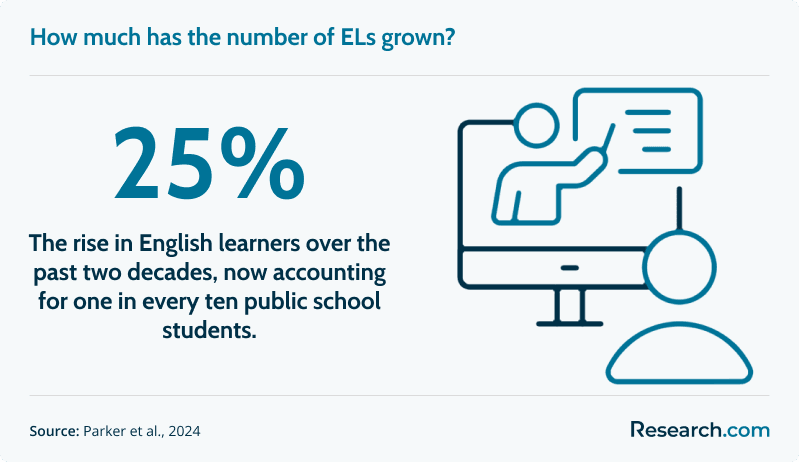
The need is significant. English learners (ELs) now represent one in every ten students in U.S. public schools, and the EL population has grown by more than 25% over the past two decades. That growth has increased demand for teachers and specialists who understand second language acquisition, culturally responsive instruction, assessment, bilingual education, and program leadership.
Below, you will find a decision-focused guide to the fastest online master’s in multilingual learner education programs for 2027, including what these degrees teach, how long they take, what they cost, how online study compares with campus study, which careers they support, and what to verify before enrolling.
Quick Answer: Is a Fast Online Master’s in Multilingual Learner Education Worth It?
A fast online master’s in multilingual learner education can be worth it if you already work in education, want to specialize in ESL, TESOL, bilingual education, or culturally and linguistically diverse instruction, and need a flexible program that can be completed in 12 to 18 months. The degree may help graduates pursue roles such as ESL teacher, bilingual teacher, instructional coach, curriculum specialist, program coordinator, or multilingual education leader.
According to May 2024 BLS data, ESL teachers earned a median salary of $59,950. Educators with a master’s degree may qualify for specialist or leadership roles, but salary outcomes depend on state certification rules, district pay schedules, location, experience, and the type of employer.
What are the main benefits of earning this degree online?
- Career alignment: The degree prepares educators for ESL, ESOL, TESOL, bilingual education, curriculum, coaching, and program coordination roles in schools, adult education, nonprofits, government agencies, and education organizations.
- Specialized preparation: Students study language acquisition, assessment, culturally responsive pedagogy, multilingual curriculum design, and instructional strategies for English learners.
- Flexible scheduling: Online coursework is often designed for working teachers, with asynchronous classes, short terms, and local fieldwork options.
- Faster completion: Accelerated programs may allow students to finish in as little as one year, reducing time away from career advancement opportunities.
- Potential salary mobility: ESL teachers earned a median salary of $59,950 as of May 2024, and master’s-prepared educators may be considered for higher-paying specialist, coaching, or administrative positions depending on local requirements.
What can I expect from an online master's in multilingual learner education?
An online master’s in multilingual learner education focuses on how students learn an additional language and how educators can support academic growth across language levels, cultures, and content areas. Programs typically combine theory, classroom practice, assessment design, and equity-focused instruction.
Common topics include second language acquisition, applied linguistics, TESOL methods, bilingual education, culturally responsive teaching, family and community engagement, and assessment for English learners. Many programs also require a practicum, field experience, action research project, or capstone that allows students to apply strategies in a local classroom or educational setting.
Accelerated online formats are usually built for working professionals. Students may complete weekly modules, discussion boards, lesson planning assignments, assessment projects, recorded lectures, and virtual collaboration. Depending on the school and course load, many programs can be completed in 12 to 18 months.
| Program feature | What it means for students | What to verify before enrolling |
| Accelerated terms | Courses may run in short five- to eight-week sessions, helping students finish faster. | Ask how many hours per week each course typically requires. |
| Online delivery | Students can often complete coursework from home while continuing to teach or work. | Confirm whether classes are asynchronous, synchronous, or a mix of both. |
| Local fieldwork | Practicum requirements may be completed in a nearby school or approved education setting. | Ask who arranges placements and whether your current classroom can qualify. |
| Licensure or endorsement alignment | Some programs support ESL endorsement, TESOL preparation, or bilingual education credentials. | Confirm requirements with your state education agency before applying. |
| Capstone or portfolio | Students may demonstrate mastery through research, lesson design, or a professional portfolio. | Ask whether the final project is individual, field-based, or research-based. |
Where can I work with a master's in multilingual learner education?
Graduates commonly work in K–12 public schools, private schools, charter schools, adult education programs, community education centers, and international schools. Districts with large or fast-growing English learner populations often need educators who can design language development instruction, support content teachers, and improve multilingual learner outcomes.
Outside direct classroom teaching, this degree can support roles in curriculum publishing, nonprofit education programs, immigrant and refugee support organizations, government education agencies, teacher training, and language equity initiatives. Professionals with experience may also move into coaching, program administration, policy, or research-focused work.
| Work setting | Possible roles | Best fit for |
| K–12 public schools | ESL teacher, bilingual teacher, ELD specialist, instructional coach | Licensed teachers seeking direct student impact or district advancement |
| Private and charter schools | TESOL teacher, multilingual learning coordinator, curriculum lead | Educators interested in flexible school models or specialized communities |
| Adult education | ESL instructor, literacy teacher, workforce language educator | Professionals who want to teach adults and community learners |
| Nonprofits and community organizations | Program manager, family engagement specialist, education advocate | Graduates interested in immigrant, refugee, and community support services |
| Education companies and agencies | Curriculum designer, assessment specialist, consultant | Educators with strong writing, training, research, or program design skills |
How much can I make with a master's in multilingual learner education?
Pay depends on role, employer, region, school district salary schedules, licensure, years of experience, union contracts, and whether the position is classroom-based or administrative. According to May 2024 BLS data, ESL teachers earned a median salary of $59,950.
Educators with a master’s degree may be eligible for higher salary lanes in some districts or may qualify for specialist and leadership roles. In administrative or specialist positions, such as bilingual program coordinator or instructional leader, salaries often range from $65,000 to $85,000 annually. Education consulting, curriculum design, and nonprofit leadership roles can exceed $90,000 for professionals with several years of experience.
Those figures should not be treated as guaranteed outcomes. Before choosing a program, compare the total cost of attendance with realistic salary rules in your state, district, or target employer.
- Fastest Online Master's in Multilingual Learner Education Programs for 2027
- How long does it take to complete a fast online master's in multilingual learner education?
- How does an online master's in multilingual learner education compare to an on-campus program?
- What is the average cost of a fast online master's in multilingual learner education program?
- What are the financial aid options for students enrolling in an online master's in multilingual learner education program?
- What are the prerequisites for enrolling in a fast online master's in multilingual learner education program?
- What courses are typically in a fast online master's in multilingual learner education program?
- What types of specializations are available in online master's in multilingual learner education programs?
- How do accreditation and quality standards impact online master's in multilingual learner education programs?
- What student support services are critical for an online master's in multilingual learner education program?
- What challenges do students typically encounter in accelerated online master's in multilingual learner education programs?
- What future trends will influence online master's in multilingual learner education programs?
- How do you choose the best among the fastest online master's in multilingual learner education programs?
- What career paths are available for graduates of online master's in multilingual learner education programs?
- What is the job market like for graduates of an online master's in multilingual learner education program?
Fastest Online Master's in Multilingual Learner Education Programs for 2027
How do we rank schools?
Research.com created this ranking to help prospective graduate students compare fast online programs using factors that matter in real decisions: completion time, affordability, accreditation, curriculum relevance, and online accessibility. The goal is not simply to identify the shortest program, but to highlight options that combine speed with academic credibility and practical preparation for multilingual learner education.
The ranking draws on multiple data sources, including the IPEDS database, Peterson’s database and its Distance Learning Licensed Data Set, the College Scorecard database, and the National Center for Education Statistics (NCES). For more detail on Research.com’s ranking process, review the Research.com methodology.
When using the list, pay attention to more than the advertised timeline. A 12-month program may be attractive, but it can require a heavy weekly workload. A slightly longer program may be a better choice if it offers stronger field placement support, endorsement alignment, or a specialization that matches your career goal.
| Rank | School | Program length | Track or concentration | Cost per credit | Credits | Accreditation |
| 1 | University of North Dakota | As few as 18 months | TESOL | $589 | 30 | Higher Learning Commission (HLC) |
| 2 | Arizona State University | As few as 15 months | ESL | $750 | 30 | HLC |
| 3 | Lamar University | As few as 12 months | ESL | $331 | 30 | Southern Association of Colleges and Schools Commission on Colleges (SACSCOC) |
| 4 | University of Missouri | As few as 18 months | TESOL | $500 | 30 | HLC |
| 5 | Sam Houston State University | As few as 16 months | TESOL | $428 | 30 | SACSCOC |
| 6 | Grand Canyon University | As few as 18 months | TESOL | $560 | 32 | HLC |
| 7 | Ball State University | 18 to 20 months | TESOL | $442 | 33 | HLC |
| 8 | Western Governors University | As few as 12 months | English Language Learning (PreK–12) | Flat rate: $3,975 per 6-month term | Equivalent to 31 to 33 | Northwest Commission on Colleges and Universities (NWCCU) |
| 9 | University of Colorado Denver | As few as 16 months | Culturally and Linguistically Diverse Education | $377 | 30 | HLC |
| 10 | Texas A&M University–Commerce | 12–18 months | ESL | $342 | 30 | SACSCOC |
1. University of North Dakota
The University of North Dakota offers a fully online M.Ed. in TESOL for educators and professionals who support multilingual learners. Available online since 2009, the program emphasizes applied linguistics, instructional strategies for language development, and cross-cultural communication.
Students can complete coursework asynchronously and choose from three start dates each year. The program can be finished in as little as 18 months and is designed for current teachers pursuing ESL endorsement as well as professionals transitioning into language education. Field experiences may be completed locally.
- Program Length: As few as 18 months
- Tracks/concentrations: TESOL
- Cost per Credit: $589
- Required Credits to Graduate: 30
- Accreditation: Higher Learning Commission (HLC)
2. Arizona State University
Arizona State University offers a fully online M.Ed. option for educators serving English language learners. Available online since 2011, the program covers culturally responsive teaching, second-language acquisition, and instructional practices for linguistically diverse classrooms.
ASU uses seven and a half-week course blocks, allowing students to focus on one course at a time. The program can be completed in about 15 months and may fit licensed educators seeking ESL endorsement or broader bilingual education preparation.
- Program Length: As few as 15 months
- Tracks/concentrations: ESL
- Cost per Credit: $750
- Required Credits to Graduate: 30
- Accreditation: HLC
3. Lamar University
Lamar University offers an online M.Ed. in Teacher Leadership with an ESL concentration for educators who want a fast path into English learner leadership and instructional support. The online format launched in 2012 and can be completed in just 12 months.
The curriculum focuses on leadership in multilingual classrooms, English learner assessment, and curriculum development. Courses run in 5-week terms, and the program offers multiple start dates throughout the year.
- Program Length: As few as 12 months
- Tracks/concentrations: ESL
- Cost per Credit: $331
- Required Credits to Graduate: 30
- Accreditation: Southern Association of Colleges and Schools Commission on Colleges (SACSCOC)
4. University of Missouri
The University of Missouri offers an online TESOL program built for educators who want research-based preparation in language instruction. Fully online since 2010, the program includes study in second language development, sociolinguistics, and teaching methods.
Students may enroll part-time or full-time and can complete the degree in 18 months. The program is designed for K–12 educators, supports certification preparation, and allows local practicum experiences.
- Program Length: As few as 18 months
- Tracks/concentrations: TESOL
- Cost per Credit: $500
- Required Credits to Graduate: 30
- Accreditation: HLC
5. Sam Houston State University
Sam Houston State University offers an online M.Ed. in TESOL that balances faster completion with graduate-level depth. The program has offered fully online options since 2013 and can be completed in 16 to 18 months.
Coursework addresses language acquisition theory, applied teaching practice, and bilingual education policies. It may fit licensed teachers as well as professionals preparing for ESL instruction roles.
- Program Length: As few as 16 months
- Tracks/concentrations: TESOL
- Cost per Credit: $428
- Required Credits to Graduate: 30
- Accreditation: SACSCOC
6. Grand Canyon University
Grand Canyon University provides an online M.Ed. in TESOL with a Christian institutional perspective. Offered online since 2008, the program can be completed in about 18 months through an accelerated eight-week course format.
The curriculum covers ESL methods, linguistics, and multicultural education. It may appeal to educators working in K–12, adult education, private schools, or faith-based learning environments.
- Program Length: As few as 18 months
- Tracks/concentrations: TESOL
- Cost per Credit: $560
- Required Credits to Graduate: 32
- Accreditation: HLC
7. Ball State University
Ball State University offers an online MA in TESOL with a strong focus on research-informed practice. Available online since 2010, the program includes grammar, phonology, language assessment, and ESL teaching methods.
Students can complete the program in 18 to 20 months. Practicum requirements may be completed locally or through virtual experiences, depending on program approval.
- Program Length: 18 to 20 months
- Tracks/concentrations: TESOL
- Cost per Credit: $442
- Required Credits to Graduate: 33
- Accreditation: HLC
8. Western Governors University
Western Governors University offers a competency-based MA in English Language Learning for current educators who want to progress at their own pace. Students may complete the program in as little as 12 months, depending on prior knowledge, professional experience, and weekly study time.
WGU uses flat-rate tuition every six months. Students advance by demonstrating mastery rather than waiting for traditional term pacing, which may benefit disciplined learners with relevant classroom experience.
- Program Length: As few as 12 months
- Tracks/concentrations: English Language Learning (PreK–12)
- Cost per Credit: Flat rate: $3,975 per 6-month term
- Required Credits to Graduate: Equivalent to 31 to 33
- Accreditation: Northwest Commission on Colleges and Universities (NWCCU)
9. University of Colorado Denver
The University of Colorado Denver offers an online MA in Culturally and Linguistically Diverse Education for educators serving diverse classrooms. Offered online since 2014, the program emphasizes equity, bilingualism, and inclusive pedagogy.
Students can use asynchronous and synchronous formats, depending on course design. Completion is possible in 16 to 18 months.
- Program Length: As few as 16 months
- Tracks/concentrations: Culturally and Linguistically Diverse Education
- Cost per Credit: $377
- Required Credits to Graduate: 30
- Accreditation: HLC
10. Texas A&M University–Commerce
Texas A&M University–Commerce offers a fully online M.Ed. in Curriculum and Instruction with an ESL emphasis for current K–12 educators. The program has been available online since 2012.
Coursework covers curriculum theory, pedagogy for English learners, and leadership in multilingual classrooms. Short-term course formats allow students to graduate in 12 to 18 months.
- Program Length: 12–18 months
- Tracks/concentrations: ESL
- Cost per Credit: $342
- Required Credits to Graduate: 30
- Accreditation: SACSCOC
How long does it take to complete a fast online master's in multilingual learner education?
Most accelerated online master’s programs in multilingual learner education take 12 to 18 months. The exact timeline depends on the number of required credits, term length, whether courses are offered year-round, transfer credit policies, practicum requirements, and whether the student enrolls full-time or part-time.
The shortest options may be intense. A one-year program can be a good fit for educators with strong time management skills, a supportive work schedule, and prior teaching experience. Students who need more flexibility may prefer an 18-month or 20-month plan that spreads assignments and fieldwork across more terms.
| Completion pace | Typical fit | Main trade-off |
| As few as 12 months | Experienced educators who can handle a compressed workload | Less scheduling room for work, family, and fieldwork conflicts |
| 15 to 18 months | Working teachers who want speed with slightly more breathing room | May cost more if tuition is term-based or if enrollment extends |
| 18 to 20 months | Students who want steadier pacing or more time for practicum and projects | Slower completion than the fastest accelerated tracks |
If you are preparing for graduate admissions, it can help to review application planning strategies similar to those used in other competitive fields. Research.com’s guide to SLP graduate school requirements offers useful examples of how applicants can organize prerequisites, recommendations, and personal statements.
How does an online master's in multilingual learner education compare to an on-campus program?
Online and on-campus master’s programs can both provide strong preparation, but they serve different types of students. The better format depends on your schedule, location, learning style, need for in-person networking, and ability to complete fieldwork.
| Factor | Online program | On-campus program |
| Schedule | Often more flexible, especially when courses are asynchronous | Requires attendance at set class times and locations |
| Access | Works well for teachers, parents, rural students, and career changers who cannot relocate | Best for students near campus or those who value in-person learning |
| Course quality | Can match campus quality when the institution is accredited and courses are well designed | May offer more direct classroom interaction and campus-based resources |
| Fieldwork | Often completed locally with program approval | May use school partnerships near campus |
| Cost factors | May reduce commuting, parking, housing, and relocation expenses | May involve added campus-related costs but can provide face-to-face networking |
| Speed | Frequently available in accelerated formats | May follow traditional semester pacing |
When an online program makes sense
An online format is usually the better choice if you need to keep teaching full-time, live far from campus, need flexible coursework, or want to complete a credential without relocating. Similar to other accelerated online options, such as fast online behavioral health science degrees, the benefit is speed and access, but the workload still requires planning.
When an on-campus program may be better
A campus program may be preferable if you learn best through face-to-face discussion, want regular access to campus faculty and peers, or need a structured weekly routine. It may also help students who want local school placements arranged through a university’s regional partnerships.
What is the average cost of a fast online master's in multilingual learner education program?
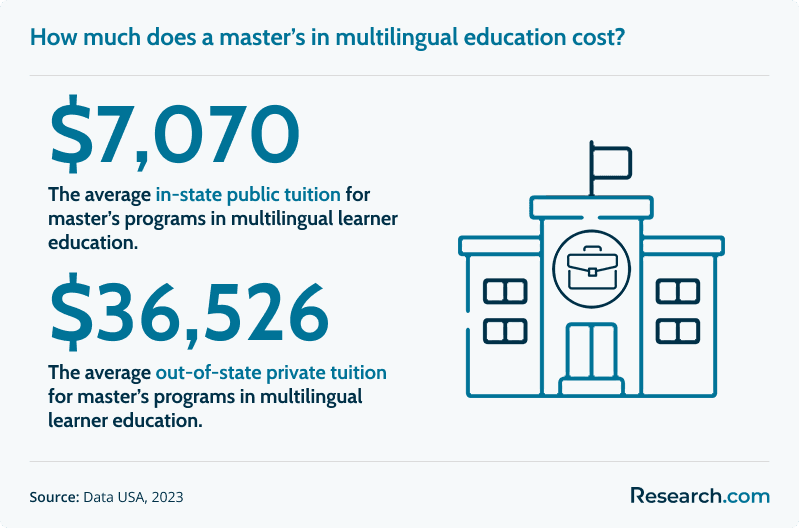
Costs vary widely by institution, residency status, credit load, program length, and fee structure. According to Data USA, the median in-state public tuition for multilingual and bilingual education programs is around $7,070, while the median out-of-state private tuition stands at $36,526.
When comparing programs, do not look only at cost per credit. A lower per-credit rate may not be the cheapest option if the program requires more credits or charges substantial fees. A flat-rate competency-based program may be cost-effective for fast learners, but only if you can complete enough coursework within each tuition term.
| Cost item | Why it matters | Question to ask |
| Tuition per credit | Determines the base cost for most programs | Is the listed rate the same for online and out-of-state students? |
| Total credits | More credits can increase the final price even if the per-credit rate is low | How many credits are required to graduate? |
| Program fees | Online, technology, assessment, and graduation fees can add to the total | What fees are mandatory for online students? |
| Books and materials | Education programs may require texts, software, or assessment tools | Are course materials included in tuition? |
| Fieldwork expenses | Students may need background checks, transportation, or placement documentation | Are there extra costs for practicum or field experience? |
| Time to completion | Finishing faster can reduce opportunity cost, but accelerated pacing can be demanding | Can I realistically complete the program within the advertised timeline? |
Students prioritizing affordability can also compare options in Research.com’s guide to the most affordable online TESOL master’s degree programs.
What are the financial aid options for students enrolling in an online master's in multilingual learner education program?
Graduate students in online multilingual learner education programs may be eligible for loans, grants, scholarships, employer support, or loan forgiveness opportunities. Availability varies by school, state, employer, and student eligibility.
- Federal financial aid: Complete the Free Application for Federal Student Aid (FAFSA) to determine eligibility for federal student loans and any applicable aid.
- State and institutional grants: Some universities offer aid for graduate education students, licensed teachers, or candidates preparing for high-need teaching areas.
- Teacher loan forgiveness programs: Educators working in Title I schools or bilingual education settings may qualify for federal loan forgiveness programs if they meet all requirements.
- Graduate assistantships and fellowships: These are less common in fully online programs, but some schools may offer research, teaching, or service-based funding.
- Employer tuition reimbursement: School districts and education employers may help pay for graduate coursework that supports professional development.
Before enrolling, ask the financial aid office for a full cost estimate and confirm whether aid applies to accelerated, online, part-time, or competency-based enrollment formats.
What are the prerequisites for enrolling in a fast online master's in multilingual learner education program?
Admission requirements vary, but most programs expect applicants to show academic readiness, professional purpose, and some connection to education or language learning. Some programs require current teacher licensure, while others admit career changers or professionals in related fields.
- Bachelor’s degree: Applicants generally need a completed undergraduate degree. According to Zippia, 66% of bilingual teachers hold a bachelor's degree, followed by 23% with a master’s and 6% with an associate degree.
- Minimum GPA: Many programs require a GPA of 2.75 to 3.0 on a 4.0 scale.
- Teaching certification: Some programs are built for licensed teachers, especially those seeking ESL endorsement. Others accept applicants from adjacent education or community-service backgrounds.
- Recommendations: Schools commonly request two to three academic or professional references.
- Statement of purpose: Applicants may need to explain their goals, experience with multilingual learners, and reasons for choosing the program.
- Relevant experience: Work or volunteer experience with English learners, bilingual students, immigrants, refugees, or diverse classrooms can strengthen an application.
Students who have handled accelerated study in other disciplines, such as those comparing the fastest online master’s in mathematics programs, may already understand the discipline required for compressed graduate coursework. If you are comparing teaching pathways more broadly, Research.com’s guide on how to become a science teacher can help you understand how certification and subject-area preparation differ across education careers.
What courses are typically in a fast online master's in multilingual learner education program?
The curriculum is designed to help educators teach language and content at the same time. Students learn how multilingual learners acquire English, how to assess language growth, how to design inclusive instruction, and how to collaborate with families, schools, and communities.
Common core courses
- Second language acquisition: Examines how learners develop an additional language and how age, context, motivation, and prior literacy can influence progress.
- ESL instructional methods: Focuses on lesson design, scaffolding, language objectives, vocabulary development, and academic language support for English learners.
- Assessment and evaluation: Covers tools for measuring English proficiency, classroom learning, and content-area progress.
- Applied linguistics: Introduces language structure, grammar, phonology, morphology, syntax, and meaning as they apply to teaching.
- Cultural competency and diversity in education: Explores inclusive teaching, culturally responsive practice, family engagement, and educational equity.
Many programs include a practicum, capstone, portfolio, or action research project. Students who have explored other accelerated education options, such as fast online STEM education programs, should expect a similar need to manage condensed assignments, applied projects, and ongoing reflection.
Multilingual learner preparation can also support broader teaching roles. For example, Research.com’s ESL career guide explains how to become an ESL teacher, while its English education guide outlines English teacher roles and responsibilities.
What types of specializations are available in online master's in multilingual learner education programs?
Specializations help students match the degree to a specific work setting or learner population. Not every program offers formal concentrations, so applicants should review course lists carefully rather than relying only on the program title.
| Specialization | Focus | Best for |
| TESOL (Teaching English to Speakers of Other Languages) | English language teaching methods, grammar instruction, language acquisition, and learner assessment | Educators interested in K–12, adult education, community, or international English language instruction |
| Bilingual Education | Instruction in two languages, biliteracy, dual-language models, and bilingual curriculum design | Teachers working in dual-language, immersion, or bilingual classrooms |
| Culturally and Linguistically Diverse (CLD) Education | Equity, inclusive pedagogy, multilingual learner advocacy, and culturally responsive instruction | Educators supporting students from diverse cultural backgrounds, including recent immigrant students or students with interrupted formal education |
| ESL Leadership or Teacher Leadership | Program coordination, coaching, assessment systems, and schoolwide language support | Teachers seeking instructional coach, coordinator, or specialist roles |
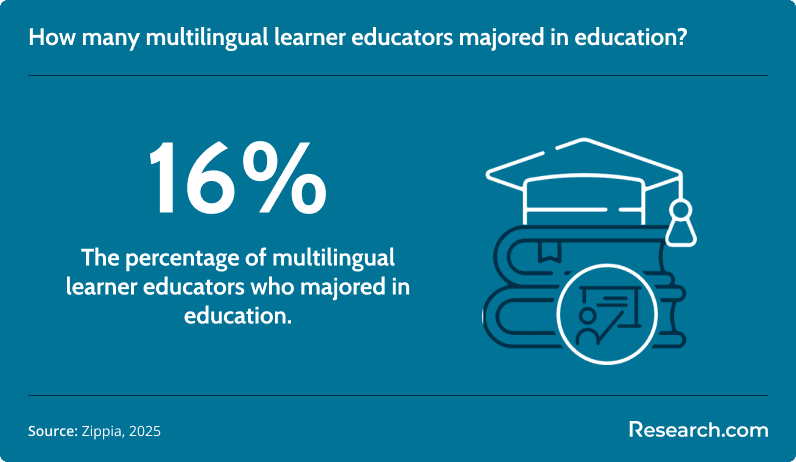
According to Zippia, 16% of bilingual teachers major in education, with others commonly holding degrees in elementary education or bilingual education. Students comfortable with accelerated graduate work in other fields, including those reviewing the fastest online master’s programs in business law, should still evaluate whether a multilingual learner education specialization meets state credentialing expectations.
How do accreditation and quality standards impact online master's in multilingual learner education programs?
Accreditation is one of the most important checks before enrolling. It signals that an institution has met recognized standards for academic quality, faculty qualifications, student services, and continuous improvement. It can also affect federal financial aid eligibility, credit transfer, employer recognition, and teacher licensure or endorsement pathways.
For this field, students should confirm both institutional accreditation and program alignment with state education requirements. A regionally accredited university may still offer a program that does not automatically meet your state’s ESL, bilingual, or TESOL endorsement rules. Always verify requirements with your state education agency and the school’s licensure office.
| Quality check | Why it matters | Where to verify |
| Institutional accreditation | Supports financial aid eligibility, credit recognition, and institutional credibility | Use the school website and the U.S. Department of Education accreditation database |
| Teacher licensure alignment | Determines whether the program supports an ESL, bilingual, or related credential | Check with your state education agency and program advisor |
| Fieldwork approval | Ensures practicum hours count toward program or endorsement requirements | Ask the program’s field placement office |
| Faculty expertise | Faculty should have relevant experience in TESOL, bilingual education, linguistics, or multilingual learner support | Review faculty profiles and course instructors |
| Student outcomes | Graduation, placement, endorsement, and satisfaction data can help assess value | Ask admissions or the program coordinator for available outcomes |
Students comparing advanced education pathways can also review Research.com’s guide to fast-track online EdD programs to see how accreditation and program quality factors apply at the doctoral level.
What student support services are critical for an online master's in multilingual learner education program?
Support services matter more in accelerated programs because students have less time to recover from registration problems, technology issues, fieldwork delays, or unclear requirements. A strong online program should provide academic, technical, career, and placement support from the start.
- Academic advising: Advisors should help students map courses, understand pacing, and avoid delaying graduation.
- Licensure and endorsement guidance: Programs should explain how coursework connects to state requirements, especially for teachers pursuing ESL or bilingual credentials.
- Field placement support: Students should know whether they must find their own practicum site or whether the school helps coordinate approval.
- Faculty access: Online students need predictable ways to reach instructors through office hours, email, video meetings, or learning platforms.
- Writing and library services: Graduate education programs often require research papers, lesson analyses, and capstone projects.
- Career services: Resume support, interview preparation, and job search assistance can help graduates move into specialist or leadership roles.
- Technical support: Fast courses require reliable help when learning management systems, video tools, or online assessments fail.
Students interested in long-term school leadership can compare graduate support structures with those described in Research.com’s guide to the most affordable online doctorate in educational leadership programs.
What challenges do students typically encounter in accelerated online master's in multilingual learner education programs?
The biggest challenge is pace. Accelerated programs compress readings, discussions, assignments, projects, and fieldwork into shorter terms. That can be manageable, but it requires a realistic study schedule and strong communication with instructors and supervisors.
| Common mistake | Why it creates problems | Better approach |
| Choosing the fastest program without checking workload | A 12-month timeline may require heavy weekly study hours | Ask for sample syllabi and expected time commitments |
| Assuming online means self-paced | Many online courses still have weekly deadlines and group work | Confirm whether the format is asynchronous, synchronous, or competency-based |
| Ignoring accreditation or licensure fit | The degree may not support the credential you need in your state | Verify requirements with the state education agency before applying |
| Focusing only on tuition per credit | Total cost also depends on credits, fees, materials, and time to completion | Request a full program cost estimate |
| Waiting too long to arrange fieldwork | Practicum approvals can delay graduation | Ask about placement steps before the first term begins |
| Underestimating technology demands | Online platforms, video meetings, and digital submissions can create friction | Test required tools early and know how to contact tech support |
Students who want to understand how accelerated online study differs across disciplines may find it useful to compare with Research.com’s guide to the fastest online philosophy degrees, where pacing and independent learning are also central considerations.
What future trends will influence online master's in multilingual learner education programs?
Multilingual learner education is being shaped by demographic change, teacher shortages, online learning design, data-informed instruction, and growing expectations for equity-centered teaching. Programs are likely to keep emphasizing practical classroom application, culturally responsive instruction, assessment literacy, and technology-supported learning.
Digital tools can support language practice, feedback, accessibility, and progress monitoring, but educators still need strong professional judgment. AI and adaptive learning tools may help with lesson differentiation or language practice, yet teachers must evaluate accuracy, bias, privacy, and whether tools meet learner needs.
Some educators also broaden their expertise through adjacent credentials in information access, literacy, and digital resources. For example, Research.com’s guide to affordable online master’s degrees in library science may interest educators who want to support multilingual learners through school libraries, digital literacy, and community resource access.
How do you choose the best among the fastest online master's in multilingual learner education programs?
The best program is not always the fastest or the cheapest. It is the one that matches your career goal, state requirements, budget, schedule, and preferred learning format. Use the checklist below before applying.
- Confirm accreditation: Check that the institution is accredited and, when relevant, review recognition through approved education accreditation sources or state teacher certification boards.
- Match the program to your credential goal: Determine whether the degree supports ESL endorsement, bilingual education certification, TESOL preparation, or professional development only.
- Compare total cost: Calculate tuition, fees, books, fieldwork costs, and the number of terms required.
- Evaluate the timeline honestly: Ask whether the advertised 12 to 18 months assumes full-time enrollment, year-round courses, or a specific course sequence.
- Review fieldwork requirements: Confirm whether placements can be completed locally and whether your current school can qualify.
- Look at course relevance: Prioritize programs with coursework in assessment, language acquisition, culturally responsive teaching, and multilingual learner instruction.
- Ask about support: Strong advising, faculty access, library resources, writing help, tech support, and career services can make an accelerated program more manageable.
- Consider fit, not just prestige: A well-matched online program with the right specialization may be more valuable than a higher-profile program that does not meet your licensure or scheduling needs.
Questions to ask admissions before enrolling
- Does this program meet ESL, bilingual, or TESOL endorsement requirements in my state?
- How many hours per week should I expect to study in an accelerated term?
- Are courses asynchronous, synchronous, or both?
- Can fieldwork be completed in my current school or district?
- What is the total estimated cost, including fees and materials?
- Are scholarships, district partnerships, or tuition reimbursement options available?
- What happens if I need to slow down or take a term off?
- What career outcomes do graduates commonly pursue?
What career paths are available for graduates of online master's in multilingual learner education programs?
Graduates can pursue classroom, coaching, curriculum, and program leadership roles. Some positions require state teaching licensure or specific endorsements, so students should verify requirements before assuming the degree alone qualifies them for a role.
| Career path | Typical responsibilities | Credential considerations |
| ESL or ESOL Teacher | Teach English language development, support academic language, assess proficiency, and collaborate with classroom teachers | Often requires teaching licensure and ESL endorsement in K–12 settings |
| Bilingual Teacher | Teach academic content in English and another language, support biliteracy, and work in dual-language programs | May require bilingual certification, language proficiency, and state approval |
| Instructional Coach or Literacy Specialist | Train teachers, model language-support strategies, analyze data, and improve instruction for multilingual learners | Experience and advanced credentials are often preferred |
| Program Coordinator or Administrator | Oversee ESL, ELD, bilingual, or multilingual learner services at a school or district level | May require teaching experience, leadership experience, or administrative certification |
| Curriculum Developer | Create lessons, assessments, teacher materials, and language development resources | Classroom experience and curriculum design skills are valuable |
| Nonprofit or Community Education Specialist | Support immigrant, refugee, adult learner, or family engagement programs | Requirements vary by organization and role |
According to BLS, ESL teachers earned the following median annual wages in May 2024 by work setting:
- Local junior colleges: $61,430
- Local elementary and secondary schools: $61,280
- State junior colleges: $55,910
- Private educational services: $51,010
These figures show that earnings vary by employer type. District salary schedules, state rules, experience, and advanced credentials can also influence compensation.
What is the job market like for graduates of an online master's in multilingual learner education program?
The job market is shaped by the continued growth of English learner populations and the need for educators trained in language development. English learners make up one in ten public school students, and the EL population has increased by over 25% during the last two decades. In nearly half the states, the share of ELs has more than doubled since 2000.
States such as Kentucky, Mississippi, North Dakota, and South Carolina are experiencing increased demand for ESL services and certified educators. Many state education agencies face challenges filling roles that require bilingual instruction, English language development support, or specialized multilingual learner expertise.
For educators, this means the strongest opportunities may be in districts with growing EL populations, high-need schools, dual-language programs, and systems expanding ESL or bilingual services. As with other specialized support fields, candidates often compare demand across related roles; Research.com’s guide on whether speech pathologists are in demand offers a useful example of how workforce shortages can shape career planning.
Who should choose a fast online master's in multilingual learner education?
This degree is a strong fit for educators who want to work directly with multilingual learners or move into ESL, bilingual, curriculum, coaching, or program leadership roles. It is especially practical for working teachers who need online flexibility and can handle accelerated graduate coursework.
This path may be a good fit if you:
- Already teach and want an ESL, TESOL, bilingual, or multilingual learner specialization.
- Work in a district with a growing English learner population.
- Want to become an instructional coach, curriculum specialist, or language program coordinator.
- Need an online program because of work, family, distance, or scheduling limits.
- Can commit to a demanding 12 to 18-month graduate schedule.
You may want a different option if you:
- Need initial teacher licensure and the program does not provide it.
- Cannot complete practicum or fieldwork requirements locally.
- Need a slower pace because of work, caregiving, or financial constraints.
- Want a research-heavy or doctoral pathway rather than a practitioner-focused master’s.
- Have not confirmed whether the program meets your state’s endorsement or certification requirements.
Key Insights
- English learners now account for one in ten U.S. public school students, and the EL population has grown by more than 25% over the past two decades.
- Fast online master’s programs in multilingual learner education can often be completed in 12 to 18 months, but the fastest option is only worthwhile if the workload is realistic for your schedule.
- ESL teachers earned a median salary of $59,950 according to May 2024 BLS data, with median annual wages ranging from $51,010 to $61,430 across listed industries.
- Program costs vary. Data USA reports median in-state public tuition of around $7,070 for multilingual and bilingual education programs, while median out-of-state private tuition stands at $36,526.
- TESOL, ESL, bilingual education, and culturally and linguistically diverse education tracks are not interchangeable. Choose the specialization that matches your state requirements and career goal.
- Accreditation and licensure alignment are essential. A regionally accredited university is important, but you still need to confirm whether the program meets ESL or bilingual endorsement requirements where you plan to work.
- Strong online programs provide advising, field placement support, faculty access, writing help, technical support, and clear guidance on certification rules.
- The best program balances speed, cost, academic quality, fieldwork feasibility, and career fit—not just the shortest advertised completion time.
References:
- BLS. (2025, April 18). Adult basic and secondary education and ESL teachers. bls.gov.
- Data USA. (2023). Bilingual & Multilingual Education. datausa.io.
- Parker, C., Partika, A., & Rutherford-Quach, S. (2024). Strengthening the Teacher Workforce to Support Multilingual Leaners: A Tool for State Educational Agencies. National Comprehensive Center at Westat. files.eric.ed.gov.
- Regional Educational Laboratory West. (n.d.). Systemic Factors That Shape Multilingual Learners’ Educational Opportunities and Outcomes. ies.ed.gov.
- Zippia. (2025, January 8). Best Colleges and Degrees for Bilingual Teachers. zippia.com.
Other Things You Should Know About Online Master's in Multilingual Learner Education Programs
Yes. Many 30- to 36-credit accelerated programs admit candidates without a current teaching license, but some require a valid state teaching certificate for licensure-track concentrations. Applicants usually need a bachelor’s degree, minimum GPA, transcripts, and may need one or more recommendation letters.
To enroll in an Online Master’s in Multilingual Learner Education in 2027, you typically need a bachelor’s degree from an accredited institution, a GPA of at least 3.0, letters of recommendation, and a statement of purpose. Some programs may also require GRE scores and practical experience in education.