
2027 Best Online Education Specialist (Ed.S.) Degrees

Co-Founder and Chief Data Scientist
You feel you’ve hit a ceiling in your education career and know a post-master's credential is the next step. But the thought of a traditional doctorate, which takes a median of 15.6 years to complete from a bachelor's degree, can feel overwhelming.
There is a more strategic path. The Education Specialist (Ed.S.) degree is the purpose-built credential for experienced educators who need a direct, efficient route to a specific outcome. Our career planning experts, with over a decade of experience, created this guide to not only list the best online EdS programs but to give you a clear roadmap for your next move.
What are the benefits of getting an online education specialist (Ed.S.) degree?
- Opens doors to advanced leadership roles like curriculum director or school principal, where you can directly shape educational outcomes for students and staff.
- Provides a significant salary increase, with education administrators earning a median salary of over $102,000 annually.
- Offers the flexibility of online learning, allowing you to earn your credential and advance your career without stepping away from your current role.
What can I expect from an online education specialist (Ed.S.) degree?
You can expect a focused, practical program designed for working professionals. Most online Ed.S. degrees consist of 30-36 credits and typically take about two years to complete.
The curriculum is more advanced than a master’s program but more targeted than a doctorate. It centers on applying expert knowledge directly to your professional practice. You won't be writing a dissertation; instead, you'll engage in coursework that solves real-world problems in education.
You’ll also be part of a cohort of experienced peers, which creates a powerful professional network. The experience is rigorous and engaging, built to fit into the life of a busy educator who is ready to take the next step.
Where can I work with an online education specialist (Ed.S.) degree?
With an Ed.S., you can work in a variety of leadership and specialist roles within the education sector. The most common settings are public and private K-12 schools, district administration offices, and educational non-profits.
Many people assume this degree is only for becoming a school principal, but that’s just one possibility. Graduates often become curriculum directors, special education coordinators, instructional technologists, or lead other key district-level initiatives.
The opportunities don't stop there. The skills you gain are also in demand in the growing fields of educational technology and corporate training, where organizations need experts to design and lead their learning programs. This degree signals a high level of specialized expertise that many sectors value.
How much can I make with an online education specialist (Ed.S.) degree?
Earning an Ed.S. degree typically leads to a significant salary increase, especially when moving into administrative roles. The specific amount depends on your location, role, and district pay scales.
To give you a clear idea, postsecondary education administrators earn a median annual wage of around $102,610. For more specialized leadership roles, the numbers are even stronger. A curriculum director, for example, can average $152,423 per year.
The key financial benefit comes from moving off a teacher's pay scale and onto an administrator's. That transition is what unlocks the highest earning potential this degree has to offer.
Best Online Education Specialist (Ed.S.) Programs for 2027
An online Education Specialist degree, commonly written as Ed.S. or EdSp, is a post-master’s credential for educators who want advanced expertise without committing to a full doctorate. It is often used by teachers, instructional coaches, counselors, curriculum leaders, and aspiring administrators who need graduate-level preparation for leadership, licensure, or a specialized school role.
This guide is designed for working education professionals comparing online Ed.S. programs by cost, completion time, accreditation, specialization, and career fit. You will learn which programs stand out, how an Ed.S. compares with a doctorate or certificate, what questions to ask before applying, and how to avoid choosing a program that does not match your state licensure goals. If you are still comparing graduate pathways, a related guide such as what an MSD degree in special education is can help you understand how specialized education credentials differ.
Quick Answer: What Is the Best Online Ed.S. Program?
The best online Ed.S. program is the one that matches your professional goal, state licensure requirements, budget, and preferred specialization. For many educators, an Ed.S. is most useful when it leads directly to a principal, administrator, curriculum leadership, special education leadership, school psychology, or district-level role. Before applying, confirm three things: the institution is accredited, the program aligns with the license or endorsement you need, and the curriculum supports the role you want next.
| Best for | What to prioritize | Why it matters |
| Aspiring principals or administrators | Educational leadership, administration, supervision, and state licensure alignment | Leadership roles often require a state-approved pathway, not just graduate credits. |
| Curriculum or instructional leaders | Curriculum and instruction, assessment, instructional supervision, and data use | The right specialization can prepare you for district curriculum, coaching, and instructional design roles. |
| Special education professionals | Special education leadership, compliance, intervention systems, and high-need learner support | Specialized training can help educators move into coordinator or director-level positions. |
| Working professionals balancing employment | Online format, predictable course schedule, advising, and practicum flexibility | Most Ed.S. students continue working while enrolled, so scheduling and support services matter. |
How We Ranked Online Ed.S. Programs
Choosing an advanced education degree is a major financial and professional decision, so the ranking process emphasizes transparent, comparable information. Research.com reviews available institutional and program data from reliable sources, including the IPEDS database, Peterson's database, the College Scorecard database, and the National Center for Education Statistics.
These sources help evaluate schools using data points that are relevant to students comparing graduate education programs. To understand the broader ranking process and criteria, visit Research.com’s methodology page.
Online Ed.S. Program Comparison
The programs below are designed for educators who already have graduate preparation and want a focused post-master’s pathway. Use the table as a starting point, then verify current tuition, fees, licensure outcomes, practicum expectations, and state authorization directly with each university.
| Rank | School and program | Program length | Credits | Cost per credit | Accreditation listed |
| 1 | University of Missouri - Online Education Specialist (EdSp) | As few as 2 years | 30 credit hours | $450.90 (in-state); $514.80 (out-of-state) | Higher Learning Commission (HLC); Council for the Accreditation of Educator Preparation (CAEP) |
| 2 | University of Kentucky - Online Education Specialist (Ed.S.) in Educational Leadership | 18-24 months | 30 credit hours | $731 | Southern Association of Colleges and Schools Commission on Colleges (SACSCOC); Council for the Accreditation of Educator Preparation (CAEP) |
| 3 | George Washington University - Education Specialist (Ed.S.) in Educational Leadership and Administration | 2 years | 30 credits | $1,825 | Middle States Commission on Higher Education (MSCHE); Council for the Accreditation of Educator Preparation (CAEP) |
| 4 | Indiana University - Online Ed.S. in Educational Leadership | 24 months | 36 credit hours | $522.69 (in-state); $784.04 (out-of-state) | Higher Learning Commission (HLC); Council for the Accreditation of Educator Preparation (CAEP) |
| 5 | University of Alabama - Education Specialist (EdS) in Educational Leadership | Less than two years | 30-33 credit hours | $440 | Southern Association of Colleges and Schools Commission on Colleges (SACSCOC); Council for the Accreditation of Educator Preparation (CAEP) |
| 6 | University of Idaho - Education Specialist (Ed.S.) | Varies by specialization | 30 credits (minimum) | $523 (in-state); $1,623 (out-of-state) | Northwest Commission on Colleges and Universities (NWCCU); Council for the Accreditation of Educator Preparation (CAEP) |
| 7 | University of Arkansas - Educational Specialist in Curriculum & Instruction | 1-2 years | 30 credit hours | $455.15 | Higher Learning Commission (HLC); Council for the Accreditation of Educator Preparation (CAEP) |
| 8 | Old Dominion University - Ed.S. in Educational Administration and Supervision | 18-24 months | 30 credit hours | $595 (in-state); $644 (out-of-state) | Southern Association of Colleges and Schools Commission on Colleges (SACSCOC); Council for the Accreditation of Educator Preparation (CAEP) |
| 9 | Clemson University - Education Specialist in Educational Leadership | 18-24 months | 30 credit hours | $808 | Southern Association of Colleges and Schools Commission on Colleges (SACSCOC); Council for the Accreditation of Educator Preparation (CAEP) |
| 10 | The University of Southern Mississippi - Education Specialist (Ed.S.) in Educational Administration | 2 years | 30 credit hours | $491.49 | Southern Association of Colleges and Schools Commission on Colleges (SACSCOC); Council for the Accreditation of Educator Preparation (CAEP) |
1. University of Missouri - Online Education Specialist (EdSp)
The University of Missouri offers an online EdSp built for educators who want room to customize their advanced study. With 14 emphasis areas, the program is especially useful for professionals who already know the type of expertise they want to build and need a flexible plan that connects to a specific career goal.
- Program length: As few as 2 years
- Emphasis areas: Educational Leadership; Special Education; Learning Technologies and Design; and others
- Required credits to graduate: 30 credit hours
- Cost per credit: $450.90 (in-state); $514.80 (out-of-state)
- Accreditation: Higher Learning Commission (HLC); Council for the Accreditation of Educator Preparation (CAEP)
2. University of Kentucky - Online Education Specialist (Ed.S.) in Educational Leadership
The University of Kentucky is a strong option for educators who want a structured route into school administration. The program is built around leadership practice, school improvement, and data-informed decision-making, making it most relevant for candidates pursuing principal or special education leadership certification.
- Program length: 18-24 months
- Certifications: School Principal Certification; Director of Special Education Certification
- Required credits to graduate: 30 credit hours
- Cost per credit: $731
- Accreditation: Southern Association of Colleges and Schools Commission on Colleges (SACSCOC); Council for the Accreditation of Educator Preparation (CAEP)
3. George Washington University - Education Specialist (Ed.S.) in Educational Leadership and Administration
George Washington University focuses its Ed.S. on leadership in PreK-12 schools and central office settings. The program may appeal to educators who want preparation grounded in collaboration, equity, policy awareness, and leadership across diverse school communities.
- Program length: 2 years
- Required credits to graduate: 30 credits
- Cost per credit: $1,825
- Accreditation: Middle States Commission on Higher Education (MSCHE); Council for the Accreditation of Educator Preparation (CAEP)
4. Indiana University - Online Ed.S. in Educational Leadership
Indiana University offers an online Ed.S. for educators preparing to guide schools or districts through complex instructional, organizational, and community challenges. The curriculum emphasizes leadership theory, applied problem-solving, stakeholder engagement, and implementation of a district mission.
- Program length: 24 months
- Required credits to graduate: 36 credit hours
- Cost per credit: $522.69 (in-state); $784.04 (out-of-state)
- Accreditation: Higher Learning Commission (HLC); Council for the Accreditation of Educator Preparation (CAEP)
5. University of Alabama - Education Specialist (EdS) in Educational Leadership
The University of Alabama provides a fully online EdS for educators pursuing advanced school leadership preparation. The program leads to Alabama Class AA certification in Instructional Leadership and centers on mission-driven leadership, instructional quality, and schoolwide academic improvement.
- Program length: Less than two years
- Required credits to graduate: 30-33 credit hours
- Cost per credit hour: $440
- Accreditation: Southern Association of Colleges and Schools Commission on Colleges (SACSCOC); Council for the Accreditation of Educator Preparation (CAEP)
6. University of Idaho - Education Specialist (Ed.S.)
The University of Idaho offers a post-master’s Ed.S. for educators who want deeper practitioner expertise in a chosen area. Because completion time varies by specialization, students should compare course sequencing, field requirements, and licensure implications before enrolling.
- Program length: Varies by specialization
- Specializations: Curriculum and Instruction; Educational Leadership; Special Education
- Required credits to graduate: 30 credits (minimum)
- Cost per credit: $523 (in-state); $1,623 (out-of-state)
- Accreditation: Northwest Commission on Colleges and Universities (NWCCU); Council for the Accreditation of Educator Preparation (CAEP)
7. University of Arkansas - Educational Specialist in Curriculum & Instruction
The University of Arkansas is a practical choice for educators who want to move into curriculum leadership, instructional supervision, or district-level instructional improvement. Its fully online format is designed for professionals who want advanced preparation without pausing their education careers.
- Program length: 1-2 years
- Required credits to graduate: 30 credit hours
- Cost per credit hour: $455.15
- Accreditation: Higher Learning Commission (HLC); Council for the Accreditation of Educator Preparation (CAEP)
8. Old Dominion University - Ed.S. in Educational Administration and Supervision
Old Dominion University prepares experienced educators for PreK-12 administration and supervision through an online program connected to state licensure. The curriculum emphasizes school operations, resource management, inclusive leadership, and the development of supportive school cultures.
- Program length: 18-24 months
- Required credits to graduate: 30 credit hours
- Cost per credit: $595 (in-state); $644 (out-of-state)
- Accreditation: Southern Association of Colleges and Schools Commission on Colleges (SACSCOC); Council for the Accreditation of Educator Preparation (CAEP)
9. Clemson University - Education Specialist in Educational Leadership
Clemson University offers an Ed.S. aimed at educators preparing for building- and district-level leadership in South Carolina schools. The program highlights instructional leadership, school improvement, student achievement, well-being, and the use of data to guide decisions.
- Program length: 18-24 months
- Required credits to graduate: 30 credit hours
- Cost per credit hour: $808
- Accreditation: Southern Association of Colleges and Schools Commission on Colleges (SACSCOC); Council for the Accreditation of Educator Preparation (CAEP)
10. The University of Southern Mississippi - Education Specialist (Ed.S.) in Educational Administration
The University of Southern Mississippi offers an online Ed.S. for educators seeking a K-12 administrator license and advancement into school leadership. The program is structured for working professionals and covers school management, instructional supervision, and community engagement.
- Program length: 2 years
- Required credits to graduate: 30 credit hours
- Cost per credit hour: $491.49
- Accreditation: Southern Association of Colleges and Schools Commission on Colleges (SACSCOC); Council for the Accreditation of Educator Preparation (CAEP)
What Is an Education Specialist Degree?
An Education Specialist degree is an advanced graduate credential positioned between a master’s degree and a doctorate. It is usually designed for educators who already hold a master’s degree and want more specialized preparation in leadership, curriculum, special education, school psychology, instructional technology, or another area of professional practice.
The Ed.S. is not the same as a Ph.D. or Ed.D. It is generally more practice-oriented, shorter, and more targeted. For educators who need a post-master’s credential for career advancement, licensure, or salary schedule movement, it can be a more direct option than a doctoral program. Professionals in other fields make similar credential comparisons, such as reviewing DNP vs MSN pathways to understand how advanced credentials differ by scope, time, and career purpose.
| Credential | Typical purpose | Best fit | Main trade-off |
| Graduate certificate | Focused skill development or endorsement preparation | Educators who need a narrow credential in one topic | Less comprehensive than a degree |
| Master’s degree | Advanced foundational graduate preparation | Teachers and education professionals seeking initial graduate-level advancement | May not be enough for some specialist or leadership roles |
| Ed.S. | Post-master’s specialization and leadership preparation | Experienced educators seeking practical advancement without a full doctorate | Not a terminal doctorate |
| Ed.D. or Ph.D. | Doctoral-level leadership, research, or academic preparation | Educators seeking the highest academic credential or research-intensive roles | Longer and often more demanding than an Ed.S. |
How Long Does It Take to Complete an Online Ed.S. Program?
Most online Ed.S. programs take 18 to 24 months to complete, although the timeline depends on course load, specialization, practicum requirements, transfer credit policy, and whether you study full time or part time. Many programs are intentionally designed for educators who continue working while enrolled.
The relatively defined timeline is one reason educators choose an Ed.S. instead of a doctorate. An Ed.S. can provide advanced preparation in a shorter window, especially when the goal is a specific leadership license, specialist role, or salary advancement rather than doctoral research.
Ed.S. vs. Doctorate: Time Commitment
The Ed.S. is often the more efficient route for targeted career advancement. While many Ed.S. programs are structured around a roughly two-year plan, the median time to finish an education doctorate is 5.5 years for the program itself. From the time a bachelor's degree is earned, that timeline extends to a median of 15.6 years.
Online vs. On-Campus Ed.S. Programs: What Changes?
In an accredited program, the most important elements to compare are the curriculum, faculty qualifications, field experiences, licensure alignment, and student support—not simply whether the courses are online or on campus. Online delivery can make an Ed.S. more accessible for working educators, but students should still verify quality indicators carefully.
Online graduate study is now common. According to the data cited in this article, 58% of all postbaccalaureate students participate in some form of distance education. That does not mean every online program is equally strong; it means online learning is no longer unusual at the graduate level.
| Factor | Online Ed.S. | On-campus Ed.S. | What to ask |
| Schedule | Often better for full-time educators | May require commuting or fixed meeting times | Are classes asynchronous, synchronous, or blended? |
| Fieldwork or practicum | May be completed in a local school setting if approved | May rely on partner schools near campus | Can I complete field requirements in my district or state? |
| Networking | Usually built through virtual cohorts, discussion boards, and group projects | Often includes face-to-face peer and faculty interaction | How does the program support cohort connection and mentoring? |
| Licensure | Must be checked carefully by state | May be more clearly aligned with the state where the campus is located | Does this program meet my state’s administrator or specialist license requirements? |
| Employer perception | Depends heavily on institutional reputation and accreditation | Also depends on reputation and accreditation | Will the transcript or diploma distinguish delivery format? |
How to Judge Online Program Quality
Do not assume an online program is strong simply because it is flexible. Review accreditation, faculty expertise, student services, licensure disclosures, internship placement support, and graduate outcomes. Over 90% of faculty in similar advanced education programs hold a doctorate themselves, which shows why faculty credentials are worth reviewing closely.
A useful way to think about delivery format is to compare it with related professional distinctions, such as cyber defense vs cyber security: the areas overlap, but the emphasis and experience can differ. Online and campus-based Ed.S. programs may lead to similar academic outcomes, but the learning experience, scheduling, and support model can vary substantially.
How Much Does an Online Ed.S. Program Cost?
Online Ed.S. tuition varies by university, residency status, credit load, and whether the school is public or private. The programs in this list show a wide range of per-credit prices, from lower-cost public options to more expensive private university pathways. The cost of tuition is only one part of the total price.
When comparing programs, calculate the full cost of attendance. Include tuition, required fees, books, technology fees, background checks, testing fees, travel for any campus intensives, and potential licensure exam costs. Also ask whether tuition is locked for a cohort or may increase during the program.
| Cost item | Why it matters | Question to ask |
| Tuition per credit | This is usually the largest direct cost. | Is the rate different for in-state and out-of-state online students? |
| Program fees | Fees can raise the total price beyond advertised tuition. | What mandatory fees apply each term? |
| Books and materials | Course materials may add recurring expenses. | Are digital materials included or billed separately? |
| Fieldwork or licensure costs | Leadership and specialist pathways may require exams, documentation, or placements. | What additional costs are tied to certification or licensure? |
| Employer reimbursement | District support can lower out-of-pocket cost. | Does my district reimburse post-master’s education or leadership preparation? |
How to Think About Return on Investment
The financial value of an Ed.S. depends on your current salary schedule, district pay policies, desired role, licensure outcome, and long-term career plan. Some educators pursue the degree to qualify for administrative openings; others use it to move into curriculum, special education, or district leadership. A school superintendent can earn an average salary of over $138,000, but individual pay varies by location, employer, contract structure, and experience.
If you are comparing the Ed.S. with doctoral study, it may help to review how much a doctor of education can make as a reference point for the next academic tier. Use salary information as a planning tool, not a guarantee.
Financial Aid and Funding Options for Online Ed.S. Students
Graduate students in online Ed.S. programs may use several funding sources. The best approach is to combine federal aid research, university aid, employer support, and state or educator-specific programs where available.
- Submit the FAFSA. The FAFSA is the starting point for federal student loan eligibility for many graduate students.
- Ask about university scholarships and grants. Some schools offer awards for graduate education students, leadership candidates, or licensed educators.
- Check employer tuition reimbursement. Many districts support professional development, especially when a degree connects to administrative licensure or a high-need role.
- Research educator-specific funding. Some state and organizational programs support educators who work in shortage areas, high-need schools, or specialized fields.
- Compare payment timing. Some reimbursement programs pay after grades are posted, which means students may need to cover costs upfront.
Start with your district’s human resources office and the financial aid office at each university. If you are comparing how different degree levels affect cost and long-term outcomes, a broader credential comparison such as MBA vs BA can help frame how graduate education changes financial planning.
Admission Requirements for Online Ed.S. Programs
Most online Ed.S. programs require an accredited master’s degree, a minimum GPA that is often 3.0 or higher, and relevant professional experience in education. Some pathways, especially those tied to leadership or administrator licensure, may also require a valid teaching license, recommendation letters, a statement of purpose, a resume, and documentation of school-based experience.
Many programs place less emphasis on the GRE than on professional experience, prior graduate performance, leadership potential, and fit with the specialization. Since the Ed.S. is a post-master’s credential, students who are earlier in their academic planning may want to review what is required for a master’s in education before evaluating specialist-level programs.
| Requirement | Common expectation | Why it matters |
| Master’s degree | Usually required from an accredited institution | The Ed.S. builds on graduate-level education knowledge. |
| GPA | Often 3.0 or higher | Programs use prior academic performance to assess readiness. |
| Professional experience | Relevant education experience is typically expected | Coursework often relies on real school or district problems. |
| License or certification | May be required for leadership or specialist licensure tracks | State-approved pathways may require current educator credentials. |
| Recommendations and statement | Commonly requested | These materials show leadership readiness and program fit. |
Why Cohort Quality Matters
Admission requirements do more than screen applicants. They help create a cohort of experienced educators who can contribute meaningful examples from classrooms, schools, districts, and specialized service settings. This is especially important in an Ed.S. program because many assignments are designed around applied problems of practice.
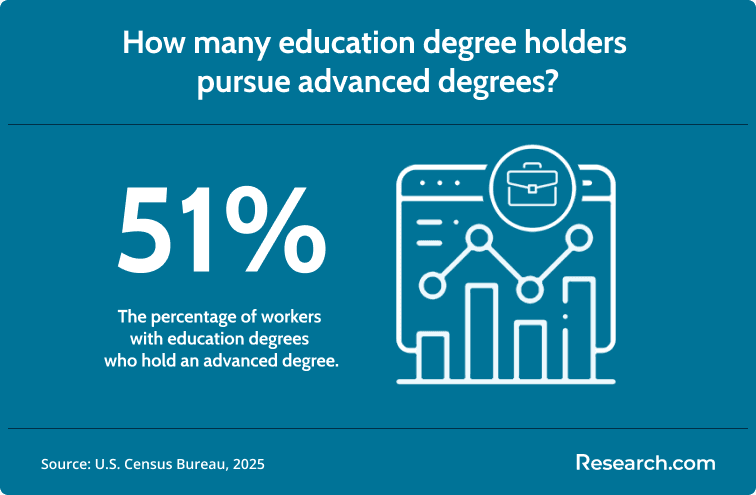
The advanced education landscape is already credential-heavy: 51% of all education professionals already hold an advanced degree. For many educators, the Ed.S. is a way to move beyond a master’s into a more defined leadership or specialist lane.
Typical Online Ed.S. Courses
Online Ed.S. coursework usually combines a shared professional core with specialization courses. The core often covers leadership, research, policy, assessment, organizational improvement, ethics, and data-informed decision-making. The specialization courses then focus on the student’s chosen area, such as educational leadership, curriculum and instruction, special education, learning technologies, or school psychology.
Unlike a broad introductory education degree, the Ed.S. is generally designed around application. Students may analyze school data, design improvement plans, evaluate instructional programs, complete leadership portfolios, or solve problems from their own professional settings. These courses build well beyond foundational undergraduate preparation, such as the topics covered in bachelor's in early childhood education program courses.
| Course area | What students may study | How it supports career advancement |
| Educational leadership | School culture, organizational change, supervision, and strategic planning | Prepares candidates for principal, administrator, or district roles. |
| Research and data use | Applied research, program evaluation, assessment data, and evidence-based improvement | Helps educators make defensible decisions using school and student data. |
| Policy and ethics | Education law, professional ethics, compliance, and governance | Supports leadership decisions that affect students, staff, and families. |
| Curriculum and instruction | Curriculum design, instructional supervision, assessment alignment, and coaching | Builds preparation for curriculum coordinator and instructional specialist roles. |
| Specialization practicum or capstone | Field-based projects, portfolios, internships, or applied leadership work | Connects coursework to real responsibilities in schools or districts. |
How Coursework Connects to Leadership Roles
Education degree holders work across several occupational areas. The data cited in this article shows that 53% of degree holders work in instruction, while 11% are in management occupations. Ed.S. coursework is often intended to help educators move from direct instructional roles into broader leadership, supervision, or specialist responsibilities.
Common Online Ed.S. Specializations
Specialization choice is one of the most important Ed.S. decisions. It determines which courses you take, what field experiences you may complete, what license or endorsement may be possible, and which jobs the degree supports. Common options include Educational Leadership, Curriculum and Instruction, Special Education, School Psychology, and Learning Technologies.
If you need only a narrow skill upgrade, an Ed.S. may be more than necessary. For example, some educators may be better served by one of the best online special education graduate certificate programs if their goal is a specific endorsement or competency rather than a full specialist degree.
| Specialization | Best for | Possible roles | Key caution |
| Educational Leadership | Educators pursuing principal, assistant principal, or district administration roles | School principal, assistant principal, district administrator | State licensure alignment is essential. |
| Curriculum and Instruction | Teachers or coaches who want to lead instructional improvement | Curriculum director, instructional coach, curriculum coordinator | Make sure the program includes applied curriculum leadership, not only theory. |
| Special Education | Educators working with students with disabilities or leading special education services | Special education coordinator, special education director, intervention leader | Check whether it supports the certification or administrative authority you need. |
| School Psychology | Professionals pursuing advanced student assessment and support roles | School psychologist or related specialist roles, depending on state rules | Licensure and practicum requirements can be highly state-specific. |
| Learning Technologies and Design | Educators leading instructional technology, online learning, or professional development | Instructional technology specialist, learning designer, district technology leader | Review whether the curriculum includes current instructional design tools and implementation practice. |
Choosing Between Broad and Niche Specializations
Some educators choose broad leadership tracks, while others pursue narrower specialist expertise. The data cited in this article shows General Education at 31% and Special Needs Education at 6% of specializations. That pattern suggests there is room for both broad leadership preparation and targeted expertise, but your choice should be based on the job you want—not simply on what is most common.
How to Choose the Best Online Ed.S. Program
The right Ed.S. program should make your next career step more realistic, not just add another credential to your resume. Use the process below to evaluate programs systematically before applying.
- Start with the job you want. Identify whether your goal is principal licensure, curriculum leadership, special education administration, instructional technology, school psychology, or another role.
- Confirm institutional accreditation. Accreditation affects academic quality, credit recognition, federal financial aid eligibility, and employer confidence.
- Verify CAEP or educator-preparation accreditation when relevant. Programmatic accreditation can matter for education preparation and professional credibility.
- Check state licensure alignment in writing. Do not assume an out-of-state online program meets your state’s administrator, specialist, or endorsement requirements.
- Compare total cost, not only tuition. Add fees, books, technology costs, travel, exams, and any required fieldwork expenses.
- Review field experience requirements. Ask whether internships, practicums, or supervised hours can be completed where you live and work.
- Evaluate advising and career support. Strong advising is especially important for licensure pathways and working professionals.
- Ask about course format. Determine whether classes are asynchronous, live online, cohort-based, self-paced, or offered in short terms.
| Question to ask the program | Why it matters |
| Does this program meet licensure requirements in my state? | Licensure rules vary, and a degree alone may not qualify you for a credential. |
| What percentage of students complete the program while working full time? | This helps you understand workload realism for practicing educators. |
| Are field placements arranged by the student or supported by the university? | Placement support can prevent delays, especially for leadership internships. |
| What is the full estimated cost of the program? | Total cost is more useful than per-credit tuition alone. |
| Who teaches the online courses? | Faculty experience can affect mentoring, relevance, and professional networking. |
| Can credits apply toward a later doctorate? | This matters if you may pursue an Ed.D. or Ph.D. after the Ed.S. |
Career Paths With an Online Ed.S. Degree
An Ed.S. can support advancement into school leadership, district administration, curriculum design, special education leadership, instructional technology, and other specialist roles. The exact career path depends on specialization, state rules, prior experience, and whether the program leads to a required license or endorsement.
Specialization is especially important in high-need education areas. For example, educators interested in language access, learner support, and specialized services may want to compare Ed.S. options with roles discussed in master’s in multilingual learner education jobs.
| Career path | Relevant Ed.S. focus | What the role often involves |
| School principal or assistant principal | Educational Leadership or Educational Administration | Instructional leadership, staff supervision, school operations, family engagement, and school improvement. |
| District administrator | Educational Leadership, Administration, or Policy | Program oversight, district planning, compliance, budgeting, and cross-school coordination. |
| Curriculum director or coordinator | Curriculum and Instruction | Curriculum design, assessment alignment, teacher support, and instructional program evaluation. |
| Special education coordinator | Special Education | Program compliance, intervention systems, service coordination, staff support, and family communication. |
| Instructional technology leader | Learning Technologies and Design | Technology integration, professional development, digital learning strategy, and instructional design. |
Do You Need a Doctorate for Education Leadership?
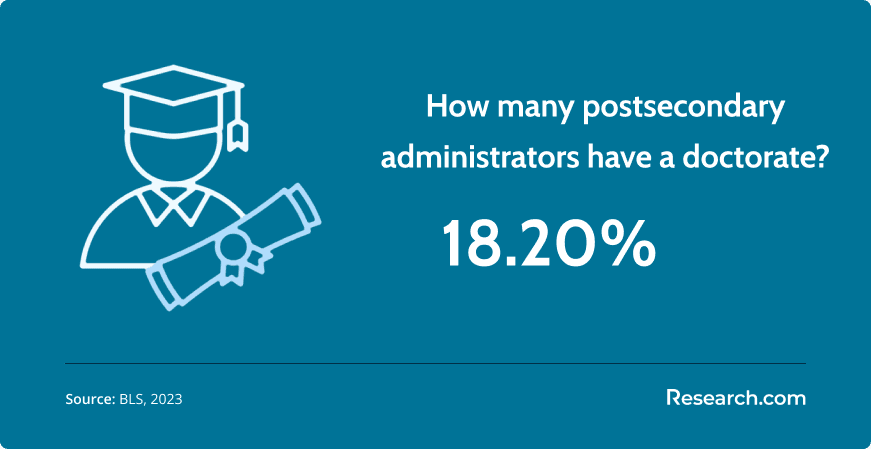
Not always. Many school and district leadership roles value experience, licensure, and advanced preparation more directly than a doctorate. The data cited in this article shows that only 18.2% of postsecondary administrators hold a doctoral degree, meaning many leadership positions are held by professionals with master’s or specialist-level credentials.
A doctorate may still be worthwhile for senior executive, research, faculty, or policy roles. But if your goal is a practical leadership position in a school or district, an Ed.S. may be the more direct credential.
Job Market Outlook for Ed.S. Graduates
The education job market is uneven. General teaching roles are projected to see a 2% decline, while specialized positions such as postsecondary health specialties teachers are expected to grow by 17%. This contrast shows why specialization, licensure, and leadership preparation matter when planning an advanced education credential.
An Ed.S. can help educators position themselves for roles that require more than classroom teaching experience. Districts and schools need professionals who can interpret data, manage programs, supervise instruction, support compliance, and lead change. However, the degree does not guarantee a promotion. Local hiring needs, certifications, seniority rules, budget conditions, and leadership experience all affect outcomes.
Current Trends Affecting Online Ed.S. Students
- Online graduate education is mainstream. With 58% of postbaccalaureate students participating in some form of distance education, online learning is a common format for advanced study.
- Specialization is becoming more important. The contrast between a 2% decline for general teaching roles and 17% growth for specialized postsecondary health specialties teachers highlights the value of targeted expertise.
- Licensure transparency matters more than ever. Online programs may enroll students across state lines, so candidates must verify whether a program satisfies their own state’s requirements.
- Data and technology skills are increasingly valuable. Ed.S. coursework in assessment, instructional technology, program evaluation, and school improvement can help educators lead in more complex learning environments.
- Cost control is a major decision factor. Per-credit tuition varies widely across programs, making total cost comparison essential before applying.
Common Mistakes to Avoid When Choosing an Online Ed.S. Program
| Mistake | Why it can hurt you | Better approach |
| Choosing based only on ranking | A highly ranked program may not match your state license or career goal. | Use rankings as a shortlist, then verify fit and requirements. |
| Ignoring state licensure rules | You may finish the degree and still not qualify for the credential you need. | Get licensure alignment confirmed by the program and your state agency. |
| Comparing only tuition per credit | Fees, books, exams, and fieldwork costs can change the real price. | Request a full cost estimate before applying. |
| Assuming online means easier | Online Ed.S. programs can be rigorous and time-intensive. | Ask about weekly workload, course pacing, and support services. |
| Picking a specialization too broadly | A generic track may not prepare you for a specific role. | Match specialization courses to job descriptions and licensure requirements. |
| Not checking transfer or doctoral credit policies | You may lose time or money if you later pursue an Ed.D. or Ph.D. | Ask whether Ed.S. credits can apply to future doctoral study. |
Challenges in an Online Ed.S. Program and How to Handle Them
Online Ed.S. students often balance graduate coursework with full-time education jobs, family responsibilities, field experiences, and leadership duties. The most common challenges include time management, limited face-to-face interaction, technology issues, and the pressure of applying coursework in real school settings.
- Create a weekly study schedule before classes begin. Treat coursework like a standing professional commitment rather than something to fit in when time is left over.
- Use advising early. Academic and licensure advisors can help prevent course sequencing or certification mistakes.
- Stay active in the cohort. Virtual discussions, group projects, and peer networks can reduce isolation and create useful professional connections.
- Confirm technology support. Make sure the university offers help desk access, learning platform support, and clear instructions for online tools.
- Plan fieldwork around your job calendar. Leadership practicums and applied projects can be easier to manage when aligned with school-year cycles.
If your long-term goal is doctoral study and you want the fastest possible route, compare Ed.S. programs with online EdD programs before deciding. The better choice depends on whether you need a specialist credential now or a doctorate for your future role.
What Graduates Say About Online Ed.S. Programs
- Kyle: "I did not want another broad credential. I wanted to become the person my district could rely on for instructional technology decisions. The Ed.S. gave me the depth I was missing, and each course helped me speak with more confidence when leading professional development across schools."
- Mayee: "Campus classes were not realistic for me as a working parent. The online format made the degree possible, but the work still felt serious and practical. I could take an idea from class and use it in my building almost immediately."
- Vener: "I was aiming for a curriculum director role, and I needed a post-master’s credential to be competitive. The Ed.S. was the most direct path. I kept working full time and finished in under two years because the online structure fit my schedule."
References
- Federal Reserve Bank of St. Louis. (n.d.). Continued GDD for 25 years and over [Data set]. FRED, Federal Reserve Bank of St. Louis. Retrieved October 13, 2025, from https://fred.stlouisfed.org/series/CGDD25O
- Indeed Editorial Team. (2024, February 20). How much can you make with a doctorate in education? Indeed. Retrieved October 13, 2025, from https://www.indeed.com/career-advice/pay-salary/how-much-can-you-make-with-doctorate-in-education
- National Center for Education Statistics. (2024, May). Fast facts: Distance learning. Retrieved October 13, 2025, from https://nces.ed.gov/fastfacts/display.asp?id=80
- National Center for Science and Engineering Statistics. (2023). Technical notes. National Science Foundation. Retrieved October 13, 2025, from https://ncses.nsf.gov/pubs/nsf23300/technical-notes
- National Center for Science and Engineering Statistics. (2024). Survey of Earned Doctorates 2024. National Science Foundation. Retrieved October 13, 2025, from https://ncses.nsf.gov/surveys/earned-doctorates/2024
- Payscale. (2024, September 22). Doctor of Education (EdD) degree salary. Retrieved October 13, 2025, from https://www.payscale.com/research/US/Degree=Doctor_of_Education_(EdD)/Salary
- University of St. Augustine for Health Sciences. (2024, August 27). Doctorate in Education (EdD) salary and career outlook. Retrieved October 13, 2025, from https://www.usa.edu/blog/doctorate-in-education-salary-and-career-outlook/
- U.S. Bureau of Labor Statistics. (2024, September 4). Employment projections: Educational attainment. U.S. Department of Labor. Retrieved October 13, 2025, from https://www.bls.gov/emp/tables/educational-attainment.htm
- U.S. Bureau of Labor Statistics. (2024, September 13). Field of degree: Education. U.S. Department of Labor. Retrieved October 13, 2025, from https://www.bls.gov/ooh/field-of-degree/education/education-field-of-degree.htm
Key Insights
- An online Ed.S. is best for educators who already hold a master’s degree and want targeted post-master’s preparation for leadership, licensure, or specialist roles.
- Most online Ed.S. programs take 18 to 24 months, making them a shorter alternative to doctoral study for many practical career goals.
- Accreditation and state licensure alignment are the two most important checks before applying. Never assume an online program qualifies you for an administrator or specialist credential in your state.
- Program cost varies widely, so compare total cost—not just tuition per credit—and ask about district reimbursement, university scholarships, and federal aid eligibility.
- Specialization drives career value. Educational Leadership, Curriculum and Instruction, Special Education, School Psychology, and Learning Technologies can lead to very different roles.
- The Ed.S. can be a strong credential for principals, curriculum leaders, district administrators, and special education coordinators, but salary and promotion outcomes depend on location, employer needs, licensure, and experience.
Other Things You Should Know About Online Education Specialist (Ed.S.) Programs
Yes, in many states an Ed.S. can be used for license renewal or salary advancement if the program is approved by the state education agency. Check whether the degree includes the required graduate semester hours, often 30 or more beyond a master’s degree, and whether your district accepts it.
Admission requirements for a 2027 online Ed.S. program often include a master's degree in education, a valid teaching license, and professional experience in education. Some programs may also require a minimum GPA and letters of recommendation.


