2027 Oceanography Transfer Credit Trends: How Schools Are Adapting for Adult Learners

Co-Founder and Chief Data Scientist
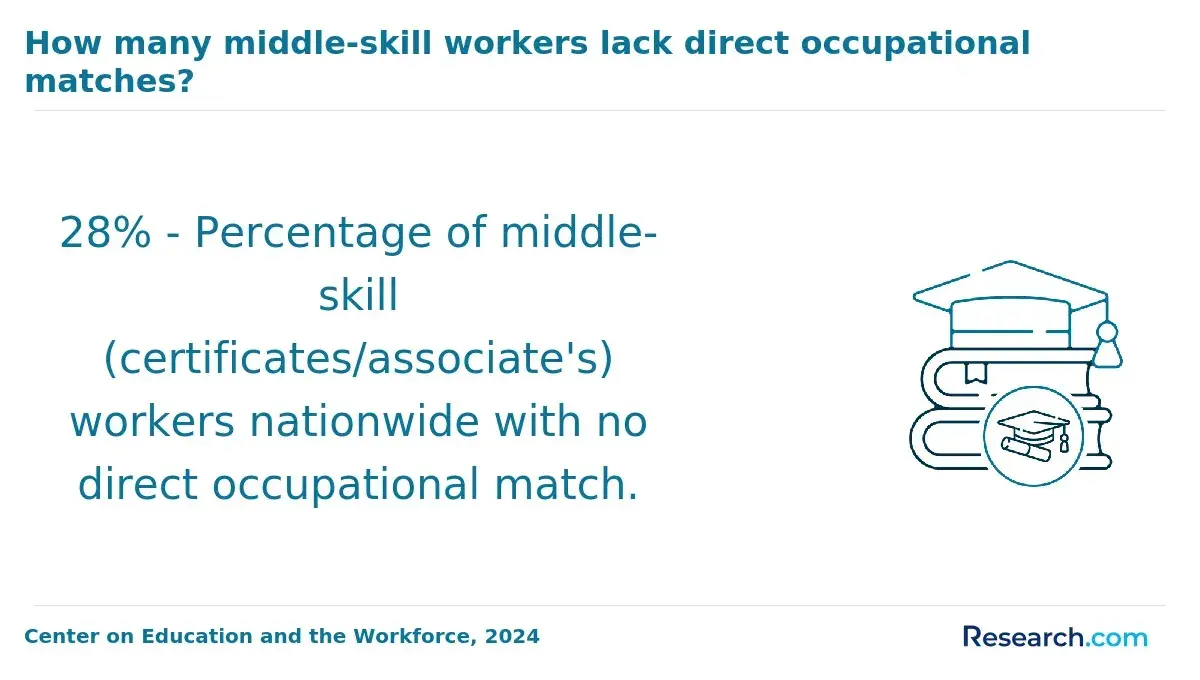
When a military-affiliated student seeks to transfer credits toward an oceanography degree, they often face unexpected hurdles as institutions tighten acceptance policies. A 2024 National Student Clearinghouse report shows that only 62% of transferring students have more than half their credits recognized by their new university, revealing a growing credential gap that can delay graduation and increase costs.
Such trends reflect institutions' cautious evaluations of course equivalencies and the rising emphasis on program-specific competencies. For prospective oceanography students, these shifts necessitate careful planning to identify schools with flexible policies. This article examines current transfer credit trends, institutional adaptations, and strategies to navigate oceanography degree pathways more efficiently and affordably.
Key Things to Know About Oceanography Transfer Credit Trends for Adult Learners
- Expanded recognition of military and workforce training credits in oceanography programs reflects a shift toward valuing applicable experience, yet inconsistencies across institutions create tradeoffs that complicate transfer planning for adult learners.
- Technology-driven transcript evaluations reduce delays in credit transfer decisions, improving access but often excluding alternative credits, highlighting a timing-cost balance that affects enrollment momentum and degree completion pacing.
- Data from 2024 indicate that programs streamlining community college pathways increase adult learner retention by 18%, signaling employer demand for transferable, practical skill sets aligned with workforce expectations in oceanography fields.
- Key Things to Know About Oceanography Transfer Credit Trends for Adult Learners Key Things to Know About Oceanography Transfer Credit Trends for Adult Learners
- How Are Oceanography Programs Changing Transfer Credit Policies for Adult Learners? Evolving Adult Transfer Policies
- Why Are More Oceanography Schools Accepting Credit for Prior Learning and Work Experience? Prior Learning Credit Benefits
- How Do Oceanography Colleges Evaluate and Award Transfer Credits Today? Transfer Credit Evaluation Process
- Which Alternative Credits Are Most Commonly Accepted by Oceanography Programs? Accepted Alternative Credits
- How Are Oceanography Schools Improving Transfer Pathways for Community College Students? Improved Community College Pathways
- How Can Transfer Credits Help Oceanography Students Graduate Faster? Accelerating Degree Completion
- How Much Money Can Students Save Through Oceanography Transfer Credit Opportunities? Cost Saving Through Transfers
- How Are Oceanography Programs Supporting Military Students and Workforce Learners Through Transfer Credits? Military Credit Transfer
- What Transfer Credit Innovations Are Shaping the Future of Oceanography Education? Transfer Credit Innovations
- How Can Adult Learners Maximize Transfer Credits in a Oceanography Program? Maximizing Your Transfer Credits
How Are Oceanography Programs Changing Transfer Credit Policies for Adult Learners?
Colleges and universities are increasingly shifting transfer credit policies in oceanography programs to recognize diverse learning paths, especially for adult learners balancing professional and academic commitments. This transition reflects a move away from rigid credit acceptance toward more flexible evaluation frameworks that incorporate credits from community colleges, accredited online programs, and prior learning assessments. For example, students with military training or relevant workforce experience can often translate such credentials into academic credit, reducing duplication and accelerating degree completion.
However, navigating these flexible transfer credit options for working professionals in oceanography requires careful institutional comparison, as policies around core science credits and maximum transferable hours vary widely, impacting how students sequence remaining coursework and manage affordability. Streamlined transcript evaluation through digital tools now supports more transparent and faster credit articulation, addressing a common barrier that historically extended time-to-degree for transfer students. According to recent data from the National Student Clearinghouse Research Center, nearly 67% of transfer students benefit from improved articulation agreements, underscoring the practical gains of these policy adaptations.
Yet, some programs retain strict limitations on competency-based credits or restrict transfer credits in critical subject areas, which may influence a student's strategic planning when transferring from community colleges or considering alternative credit pathways. Adult learners aiming to maximize previously earned credits must weigh these institutional nuances carefully to ensure their prior work aligns with degree requirements and their timeline for returning to the workforce after graduation does not lengthen unexpectedly. Those exploring the easiest online degrees that pay well should account for these factors to optimize credit mobility and minimize unnecessary coursework.
Why Are More Oceanography Schools Accepting Credit for Prior Learning and Work Experience?
The increased acceptance of credit for prior learning and work experience in oceanography programs signals a strategic shift driven by institutional priorities rather than a relaxed stance on transfer policies. Universities are responding to pressures to boost completion rates and diversify enrollment by recognizing nontraditional learning pathways such as military training, industry certifications, and competency-based assessments.
This approach helps reduce time-to-degree for students who bring relevant professional experience, yet schools must balance this with maintaining academic standards to preserve program integrity. For example, a professional entering with fieldwork in marine environmental assessment may receive credit that accelerates graduation but only after rigorous evaluation to ensure equivalence with core lab requirements.
These policies directly affect degree-completion planning and accessibility, especially for adults balancing multiple responsibilities. A 2024 report from the National Center for Education Statistics found that students with prior learning credits are 2.5 times more likely to graduate within six years, illustrating how credit recognition improves persistence in a demanding scientific discipline.
However, variability in how institutions assess and accept credit creates uncertainty for transfer students and military-affiliated enrollees, complicating enrollment decisions and potentially prolonging degree timelines if documentation or assessment processes are not carefully managed. Employers increasingly expect graduates to demonstrate both theoretical knowledge and applied skills, so schools must ensure experiential credits reflect relevant competencies without diluting essential academic rigor.
How Do Oceanography Colleges Evaluate and Award Transfer Credits Today?
Transfer credit evaluation in oceanography programs has evolved into a deliberate strategic effort aimed at enhancing student progression rather than just a procedural checkpoint. Institutions now apply a multifaceted approach, weighing prior coursework through detailed course equivalency analyses, institutional accreditation, and learning outcome alignment. For example, a student transferring from a community college must not only demonstrate that their credits match foundational oceanography topics but also meet upper-division residency requirements to maintain program rigor, which can prolong degree completion despite transferred credits.
Military-affiliated students and working professionals benefit from expanded recognition of Joint Services Transcripts and prior learning assessments, including challenge exams and portfolio reviews, translating real-world experience into academic credit. Still, the variance in how credits apply-especially between general education and discipline-specific courses-means that students often need targeted academic advising to optimize course selection and avoid unnecessary coursework.
According to the National Center for Education Statistics (2024), roughly 80% of public universities incorporate automated tools alongside faculty review to ensure timely yet thorough credit evaluations, a practice that shortens processing times but requires students to plan carefully around transfer policies, which often limit the total credits accepted toward an oceanography degree. These layered evaluation practices significantly impact degree timelines and cost-efficiency for adult learners navigating transfers from diverse educational or professional backgrounds.
While technology and clear articulation agreements enhance transparency, adult learners must weigh potential credit caps and discipline-specific requirements against the benefits of accelerated enrollment. This dynamic necessitates strategic academic planning to balance transfer opportunities with the demand for upper-division, in-residence oceanography coursework that ensures the technical depth valued by employers and necessary for meaningful workforce integration.
Which Alternative Credits Are Most Commonly Accepted by Oceanography Programs?
Acceptance of alternative credits has evolved into a strategic lever for improving accessibility and shortening timelines in oceanography degree programs, particularly benefiting adult learners. Many programs integrate credit for prior learning (CPL), military training, and workforce certifications as primary pathways, but such credits often undergo rigorous course equivalency evaluations and must meet accreditation and residency requirements.
For example, a working professional with military experience might gain foundational credits but find upper-division oceanography coursework less transferrable due to program-specific policies limiting credit in advanced courses. A 2024 Council for Adult and Experiential Learning report indicates that over 75% of STEM-related programs have expanded CPL options, underscoring its growing role in degree completion strategies. Standardized exams like CLEP and DSST frequently supplement these alternative credit sources, although acceptance varies widely and may only cover lower-division requirements, affecting degree progression.
Competency-based assessments offer another route to validate relevant skills such as environmental data analysis, yet concerns about academic rigor and employer recognition temper their broad adoption. Online platforms further complicate the landscape; credits earned from self-paced courses often face additional scrutiny to ensure alignment with program standards. Adult learners navigating transfer credit options for oceanography degree programs must balance affordability and flexibility with institutional constraints, planning carefully to optimize credit transfer without compromising academic outcomes.
Understanding these nuances is essential for students aiming to reduce time to degree while maintaining the quality and relevance of their education. Strategies that leverage recognized alternative credits effectively can improve transfer planning and affordability but require detailed review of each institution's policies. For those seeking to maximize prior learning credit, resources that identify the cheapest online EdD programs no GRE might offer indirect insights on flexible transfer pathways, as educational institutions increasingly adapt to diverse learner needs.
How Are Oceanography Schools Improving Transfer Pathways for Community College Students?
Oceanography programs increasingly view streamlined transfer pathways as essential to accommodating adult learners and mitigating time-to-degree challenges. This strategic emphasis reflects a recognition that clear articulation agreements and aligned course frameworks are decisive in minimizing credit loss and maintaining academic momentum. For instance, when foundational courses such as chemistry and physics are pre-approved across institutions, students avoid redundant coursework that can extend their studies, a benefit quantified by the National Center for Education Statistics (2024), which notes a 25% rise in credit acceptance rates tied to robust transfer policies.
However, discrepancies in course content or advanced specialized subjects can limit credit applicability, requiring students to weigh the potential benefits of credit transfer against the practical need for hands-on or research experience valued by employers. To address these challenges, many schools are enhancing credit evaluation processes and individualized transfer advising to better map community college curricula onto oceanography program requirements.
This includes recognizing prior learning assessments for students with relevant professional or military experience and adopting competency-based structures that offer flexibility in pacing degree completion. Still, students must remain vigilant about the variable nature of credit acceptance across programs and consider proactive counseling to ensure pathway alignment that supports both timely graduation and career readiness.
How Can Transfer Credits Help Oceanography Students Graduate Faster?
Transfer credit policies in oceanography programs do not guarantee accelerated degree completion unless credits align precisely with core major requirements, particularly upper-division courses and specialized labs. Many students find that while foundational classes such as calculus or chemistry transfer readily, limits on credit acceptance-especially for experiential or technical training-constrain the ability to significantly shorten time to graduation.
Understanding program-specific residency requirements and sequencing is critical, as some institutions require completion of a set number of credits directly at the awarding university, limiting how much transfer work reduces overall degree duration. This reality often shapes enrollment strategies for adult learners balancing cost, time, and work commitments, as maximizing prior credits entails careful academic planning rather than assuming wholesale credit recognition.
Evolving articulation agreements and prior learning assessments increasingly facilitate smoother credit mobility for working professionals and military-affiliated students, allowing these populations to leverage training and certifications relevant to oceanography prerequisites. However, transfer credit acceptance varies widely by institution and is often capped, which means students must strategically select programs and course pathways that acknowledge their previous learning without redundant coursework.
These nuances affect affordability and timelines, highlighting the importance of proactive advising and informed decision-making in oceanography degree completion. For those exploring interdisciplinary options or programs with more established transfer frameworks, such as AACSB online MBA programs, the ability to blend credentials and reduce repetitive learning can enhance career trajectory by speeding access to advanced study or workforce entry.
How Much Money Can Students Save Through Oceanography Transfer Credit Opportunities?
Transfer credit acceptance can significantly alter the financial landscape for students pursuing an oceanography degree, especially for those balancing work or military commitments. By applying previously earned credits-whether from community colleges, military training, or workplace learning-students frequently reduce both tuition expenses and the time needed to graduate. This effect is not uniform across institutions; many programs limit transfer credits to between 60 and 90 credit hours, mainly covering lower-division courses, which shifts the cost burden later in the curriculum but avoids paying higher university tuition for foundational classes.
However, limitations in credit transfer policies-such as strict residency requirements, inconsistent evaluation of experiential learning, and course equivalency challenges-can undermine potential savings and extend time to degree completion. For example, a professional with relevant STEM experience may find only a fraction of their prior learning recognized, forcing them to repeat similar coursework and increasing costs.
Research from the American Association of State Colleges and Universities indicates about 15% of STEM transfer credits are lost or undervalued in transition, highlighting the need for careful upfront evaluation of institutional policies. Adult learners and military-affiliated students must therefore weigh these tradeoffs carefully, as maximizing credit acceptance often requires navigating complex and variable academic regulations that impact both educational expenses and future planning within oceanography programs.
How Are Oceanography Programs Supporting Military Students and Workforce Learners Through Transfer Credits?
Oceanography programs increasingly recognize that military training and workforce credentials often represent substantial yet inconsistently evaluated prior learning, directly affecting degree progress for adult learners. A 2024 American Council on Education report highlights that over 60% of postsecondary institutions now formalize transfer credit for military and professional experiences. However, a National Center for Education Statistics analysis reveals a persistent challenge: while 75% of military learners obtain some transfer credit, nearly 40% encounter obstacles transferring credits into STEM fields like oceanography, resulting in extended coursework and delayed graduation.
Many programs collaborate with veteran affairs and accreditation bodies to align military and workforce-acquired competencies with oceanography curricula through articulation agreements and competency-based assessments. Despite these frameworks, institutional disparities mean students often face complex evaluation processes and must strategically advocate for credit recognition, impacting academic planning and course load. For example, a workforce learner with a professional certification in marine technology might reduce redundant introductory classes, accelerating degree completion and lowering tuition, but such outcomes depend heavily on program-specific policies and transparent credit evaluation practices.
This variability underscores the importance of understanding how specific oceanography programs assess nontraditional learning before enrollment. Policies that more consistently recognize military and workforce training not only improve educational accessibility but also better align graduates' qualifications with employer expectations in marine sciences. Nevertheless, adult learners should weigh whether available credit pathways meaningfully shorten degree timelines or merely shift requirements, as navigating these policies remains a significant factor in maintaining momentum toward completion and practical career readiness.
What Transfer Credit Innovations Are Shaping the Future of Oceanography Education?
Transfer credit innovations in oceanography programs are reshaping accessibility and degree mobility for adult learners, especially those balancing employment or military commitments. AI-assisted transcript evaluation has notably reduced processing times by 30% as of 2024, yet this efficiency gain can mask inconsistencies in how institutions interpret non-traditional credits like workforce training or informal education.
These inconsistencies affect transfer credit innovations in oceanography programs by requiring students to navigate varied acceptance policies that directly impact time to degree and educational costs, often making early advising critical to avoid wasted effort on non-transferable credits. Expanding credit for prior learning (CPL), including military and workforce experience, has helped many reduce degree completion time, but degree quality and employer recognition remain uneven across institutions.
Competency-based education models add flexibility but shift the burden of self-pacing and mastery demonstrate onto learners, which can be a double-edged sword for working adults. Digital credentialing platforms and formal articulation agreements enhance credit portability, yet their adoption is uneven, complicating long-term planning for transfer students aiming to maximize previously earned credits. Adult learners considering an interdisciplinary path or a link to credentials such as a masters in clinical psychology should weigh these transfer credit policies carefully to align educational choices with workforce expectations and realistic timelines.
How Can Adult Learners Maximize Transfer Credits in a Oceanography Program?
Maximizing transfer credits in an oceanography program requires strategic evaluation of how prior learning aligns with program requirements and institutional policies. Adult learners transferring from community colleges or military service, for example, must weigh the value of transferring foundational science credits against residency rules that often cap accepted transfer hours between 60 and 90.
For a student with extensive coursework and certifications, prioritizing credits recognized through articulation agreements can prevent redundant classes and reduce overall degree completion time, but this may necessitate flexibility in course sequencing and elective choices within the oceanography curriculum. Recognizing the practical limits of transfer credit acceptance early can help balance immediate cost savings with maintaining academic rigor and professional relevance.
Integrating prior learning credit is essential to this process, especially since military training or marine technology certifications may be undervalued or inconsistently applied by different institutions. Such discrepancies highlight the need for detailed documentation and proactive advising to secure credit that aligns with degree outcomes.
Studies from the Council for Adult and Experiential Learning show that maximizing prior learning credit in oceanography degree completion can shorten time-to-degree by up to a semester, a significant benefit for working adults. Learners should also consult degree transfer guides and advisors experienced in oceanography to navigate credit transfers effectively and explore flexible pathways that do not compromise long-term academic and career goals. Some students also find value in comparative strategies evident in other fields, such as the best online accelerated project management degree programs, where credit transfer can similarly impact educational pacing and costs.
References:
- How to Transfer College Credits and Finish Your Degree Faster https://www.park.edu/blog/transfer-college-credits-finish-degree-faster/
- News - AIR Centre | Atlantic International Research Centre https://www.aircentre.org/news/
- How College Credit Transfer Really Works: A Practical Guide https://www.straighterline.com/blog/transfer-how-college-credit-transfer-really-works-a-practical-guide
- Hard up for students, more colleges are offering college credit for life experience, or ‘prior learning’ https://hechingerreport.org/to-fill-seats-more-colleges-offer-credit-for-life-experience/
- UAlg promote advanced training in Oceanography through international course - SEA-EU https://sea-eu.org/sea-eu-and-ccmar-promote-advanced-training-in-oceanography-through-international-course/
- Workforce Development — VI EPSCoR https://www.viepscor.org/workforce-development
- Credit for Prior Learning: Why All the Controversy? https://www.higheredtoday.org/2014/06/17/credit-for-prior-learning-whyallthecontroversy/
- College Credit Transfer to Stretch Savings Further https://www.collegesavings.org/college-credit-transfer-to-stretch-savings-further
- New Pathways to a College Degree: How Transfer Credits Save Time https://www.uagrantham.edu/blog/transfer-college-credits-online-pathways-degree/
- Advanced Placement (AP) https://sunyorange.edu/registrar/transfer_credit.html
Other Things You Should Know About Oceanography
Transferring credits can streamline degree completion but may fragment the learning experience if prior courses don't align tightly with the oceanography program's core competencies. Many programs require upper-level or specialized oceanographic coursework to ensure graduates have sufficient depth in key areas like marine geology or physical oceanography. Students should prioritize credits that fulfill these advanced requirements to avoid extending time to degree later by having to retake essential classes or complete additional prerequisite work.
Laboratory and field experience components are integral to oceanography degrees but often pose barriers for transfer students whose previous courses lacked equivalent hands-on components. Programs may require demonstration of practical skills through local labs or capstone projects, which can increase workload and time to completion despite credit transfers. Adult learners should consider how well their transferred credits cover these experiential requirements and be prepared to invest extra effort in applied learning settings.
While maximizing transfer credits can reduce cost and time, prioritizing programs that align with employer expectations and have strong reputations in oceanography research or applied careers often yields better long-term outcomes. Accepting all transfer credits without scrutiny may result in degrees perceived as less rigorous or less relevant by employers. Students are advised to balance transfer opportunities with program quality indicators such as faculty expertise, industry connections, and graduate success.
Differences in transfer credit acceptance can complicate degree completion for students moving between institutions or states, potentially delaying graduation and affecting credential portability. This is particularly important for working professionals and military-affiliated students who may relocate frequently. Prioritizing transfer-friendly programs with standardized articulation agreements or regional accreditation can improve educational continuity and avoid redundant coursework that does not enhance employability.