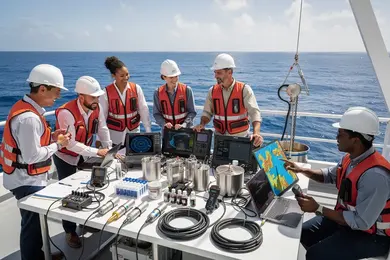
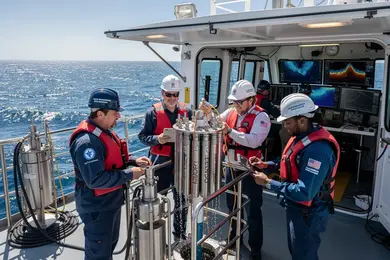
2027 Oceanography Degree Program Availability Report: Which States and Schools Offer the Most Options

Co-Founder and Chief Data Scientist
Academic programs in oceanography cluster in regions tied to coastal access and marine research infrastructure, reflecting the field's reliance on proximity to oceanic environments and funding priorities. States investing in marine science research show higher concentrations of these programs, aligning educational offerings with local workforce demands in environmental monitoring, resource management, and climate science. Recent labor market analyses from the U. S. Bureau of Labor Statistics indicate steady growth in ocean-related occupations, emphasizing practical skill development across interdisciplinary domains. This report examines which states and schools provide the broadest array of oceanography degree options, revealing patterns in educational access, institutional focus, and alignment with evolving sector needs.
Key Benefits of States and Schools That Offer the Most Oceanography Degree Program Options
- States with diverse oceanography programs offer specialized tracks but often require prolonged study time due to limited credit overlap, impacting students balancing work or family obligations.
- Employers in marine science increasingly prefer graduates from states with multiple program options, reflecting stronger regional research ecosystems and collaborative fieldwork experience.
- Broader program availability correlates with improved local internship access, reducing relocation costs and enabling timely workforce entry compared to students in states with fewer oceanography offerings.
- Key Benefits of States and Schools That Offer the Most Oceanography Degree Program Options Key Benefits
- Which States Offer the Most Oceanography Degree Programs? Top States
- Why Do Some States Have More Oceanography Programs Than Others? Program Availability
- Which Colleges Offer the Largest Number of Oceanography Degree Options? Top Schools
- How Do Online Programs Improve Access in States With Limited Options? Online Program Access
- How Much Does Oceanography Program Tuition Vary by State? Tuition Across States
- How Does Oceanography Program Demand Affect Admissions Decisions? Program Demand
- How Do Oceanography Specialization Options Vary by Region? Specialization Options
- How Does Regional Employer Demand Affect Career Outcomes? Employer Demand
- What Factors Matter Most When Comparing Oceanography Programs Across States? Key Comparison Factors
- Which Regions May See the Fastest Growth in Oceanography Education? Fastest Growing Region
Which States Offer the Most Oceanography Degree Programs?
Oceanography degree programs disproportionately cluster in coastal states where geographic and economic conditions favor collaboration with marine science industries and research bodies. Access to diverse marine ecosystems supports specialized curriculum and hands-on learning, which employers in the field highly value. This concentration also reflects established regional networks of universities, federal agencies, and private sector marine employers that sustain program development and graduate pipelines. Recognizing these ecosystem factors helps explain why top US states with the highest number of oceanography degree options provide distinct advantages to students and researchers alike.
- California: With its extensive Pacific coastline and numerous research institutions like the Scripps Institution of Oceanography, California leads in program diversity and volume. The state's economic connections to shipping, fisheries, and environmental management enable robust university-industry partnerships. Students benefit from numerous specialization tracks alongside strong internship and job placement opportunities tied to local marine employers.
- Florida: Positioned between the Atlantic Ocean and Gulf of Mexico, Florida's unique marine environments support a concentration of programs emphasizing applied research in tropical and coastal oceanography. Collaboration with agencies like NOAA increases federal project involvement, providing students with practical experience that aligns closely with workforce needs in federal and regional marine science roles.
- Washington: The Puget Sound region serves as a hub for oceanographic study focused on both physical and biological marine systems, bolstered by universities emphasizing ecosystem preservation and environmental policy. The state's network of marine research centers and conservation initiatives fosters cross-disciplinary education and research, cultivating graduates prepared for varied careers in science, policy, and resource management.
These coastal states dominate in oceanography degree availability due to a convergence of geographic proximity to significant marine environments, institutional density, and economic demand from marine industries. While some inland states offer limited oceanography-related options, they lack the ecosystem integration critical for comprehensive training. Many employers prioritize hands-on fieldwork and federally linked research exposure that these coastal programs provide, underscoring the importance of considering location in selecting oceanography studies.
The educational landscape for oceanography also reveals broader trends in specialization and federal collaboration, influences that increasingly shape student outcomes. Prospective students who weigh these structural dynamics alongside their academic interests can better navigate program choices to align with workforce realities and regional strengths.
For those exploring advanced degree options related to educational leadership or seeking streamlined online pathways, resources like cheapest online doctorate in educational leadership offer additional perspectives on academic decision-making relevant to balancing career and study ambitions.
Why Do Some States Have More Oceanography Programs Than Others?
The highest concentration of oceanography degree programs by state reflects significant variation in higher education infrastructure and regional labor market demands. States with well-developed university systems and access to diverse aquatic environments naturally cultivate more robust oceanography offerings, as their programs depend on proximity to practical research settings and committed institutional resources.
This uneven distribution correlates strongly with population density in coastal regions where maritime industries and environmental research priorities drive student interest and program development. The interplay between local employer demand for oceanography graduates and university capacity creates clear geographic patterns in program availability.
Key drivers of regional differences in oceanography program availability include state funding priorities, university research capacity, and the presence of industry clusters related to marine sciences. Coastal states allocating sizable portions of their budgets to environmental research, often supplemented by federal grants such as those from the National Oceanic and Atmospheric Administration, enable their institutions to sustain advanced curricula and research facilities.
Additionally, universities embedded within large state systems with interdisciplinary faculties can integrate oceanography into broader earth and environmental science offerings, enhancing program variety and depth. Employer demand for specialized oceanography skills in sectors like fisheries, climate science, and maritime logistics encourages program expansion and reflects economic incentives that inland or less-funded states cannot match; notably, designated marine science research funding raises the likelihood that universities maintain accredited oceanography programs by approximately 35 percent, underscoring the fiscal influence on program survival and growth.
These disparities carry important consequences for student access and regional workforce development, partly fueling interest in flexible pathways such as a doctorate in leadership online that can complement oceanography training or provide alternative routes in related fields. As oceanography programs cluster in states with supportive funding, research environments, and industry ties, students outside these hubs face limitations in choice and face decisions balancing geographic mobility against online options. Consequently, the uneven landscape of oceanography education shapes not only academic opportunities but also the alignment of graduate supply with evolving labor market needs in marine-centered economies.
Which Colleges Offer the Largest Number of Oceanography Degree Options?
The availability of oceanography degree options at a college hinges more on the institution's size, research intensity, and academic infrastructure than simply on its geographic location. Larger, research-focused universities can offer greater specialization through diverse tracks and interdisciplinary formats, while smaller or less funded schools typically provide limited or generalized curricula. The structure and funding of an institution largely dictate how many distinct oceanography pathways it can maintain, including bachelor's, master's, and doctoral levels with applied components.
- Large Public Research Universities: These institutions often dominate in the number of oceanography programs due to significant state or federal funding, well-established marine science departments, and access to coastal field sites. For example, flagship state universities like those in California's University of California system frequently develop multiple specialized tracks-biological, chemical, physical, and geological oceanography-along with interdisciplinary degrees combining environmental science and engineering.
- R1 Classification Universities: Schools designated with the highest research activity tend to expand oceanography offerings by leveraging robust faculty expertise and grant-funded projects. Their capacity to provide doctoral programs and partnerships with federal agencies, such as NOAA or NSF-funded labs, supports a wider variety of concentrations and extensive lab and field components, matching employer expectations for research experience.
- Institutions with Coastal Access and Marine Facilities: Universities located near diverse marine environments along the West Coast, East Coast, and Gulf Coast capitalize on geographic advantages by integrating hands-on experiential learning into curricula. This practical orientation encourages program diversification and collaborative research opportunities with oceanographic institutions, which smaller inland colleges seldom replicate.
- Specialized Technical Institutes and Interdisciplinary Programs: Though fewer in number, technical institutes or universities with engineering and environmental science integration expand oceanography options through applied tracks and innovation in curriculum delivery. These programs often emphasize fieldwork, laboratory skills, and policy-related studies, broadening employability pathways beyond traditional pure science degrees.
How Do Online Programs Improve Access in States With Limited Options?
In states where in-person oceanography programs are scarce or nonexistent, online delivery formats significantly alter the access landscape by connecting students to academic opportunities previously limited by geography. Online programs reduce reliance on local institutional capacity, enabling learners in underserved or rural areas to engage with established oceanography curricula without relocating.
his shift expands participation beyond traditional campus boundaries, allowing students to tap into specialized fields that require costly physical infrastructure unlikely to be viable at many state colleges. The National Center for Science and Engineering Statistics reported in 2024 that students residing in states with fewer than two oceanography programs were 35% more inclined to enroll in an online alternative, underscoring the growing role of digital formats in compensating for geographic disparities.
The mechanisms facilitating this expansion include asynchronous coursework, which accommodates diverse schedules and eliminates the need for real-time presence, thus enabling cross-state enrollment without the constraints of traditional semester timetables. Institutions offering online programs can scale beyond their physical campus limitations, distributing resources such as remote labs and expert instruction through virtual platforms.
This decentralization decreases dependence on the concentration of marine science facilities and broadens institutional reach, allowing students to pursue highly specialized studies regardless of their home state's academic offerings. Such structural changes reshape enrollment patterns, often fostering new interregional educational dynamics and competition as programs vie for a more geographically dispersed student base.
These developments carry broader implications for regional workforce development and mobility, as online oceanography credentials can enhance local talent pools in states otherwise underserved by traditional programs. Students gain flexibility to remain within their communities while acquiring qualifications relevant to marine sciences, potentially influencing local industry partnerships and research collaborations. Meanwhile, institutions must navigate the balance between expanding access and maintaining program integrity, adapting recruitment and support services to a diverse, often remote student population drawn from multiple states.
A recent graduate recounted navigating a rolling admissions cycle for an online oceanography program amid uncertainty about full eligibility due to delayed prerequisite transcripts. With physical programs unavailable nearby, the candidate hesitated before applying, weighing the risk of enrolling without immediate on-campus support against the urgency to begin studies aligned with career plans. The eventual acceptance offered flexibility in pacing coursework and access to virtual labs, but the experience highlighted the nuanced timing challenges applicants face when seeking nontraditional academic pathways from states where program options are minimal.
How Much Does Oceanography Program Tuition Vary by State?
Tuition costs for oceanography degree programs differ substantially across U.S. states, driven largely by variation in public funding priorities, institutional types, and residency-based pricing policies. Public universities typically offer significantly reduced rates for in-state students, reflecting state investment in local higher education, while out-of-state students face higher fees due to the lack of state subsidies.
Private institutions, which do not receive direct state funding, set tuition independently, often resulting in considerably higher sticker prices that may correspond to more specialized research opportunities or industry ties. These structural differences in funding and institutional missions create a complex landscape where tuition variation reflects broader systemic factors rather than arbitrary pricing.
As of recent data, in-state tuition at large public research universities with oceanography programs commonly ranges between $10,000 and $25,000 annually, whereas out-of-state students may encounter fees above $35,000. Private universities frequently charge more than $40,000 per year, which can be attributed to both the absence of public subsidies and investment in resources tailored for marine science career pathways.
States with fewer oceanography programs, often inland or less densely populated regions, may have lower overall tuition but also less access to comprehensive research infrastructure. These cost disparities emphasize the practical realities behind oceanography degree tuition differences by state, reflecting region-specific funding models and program availability rather than merely raw price competition.
This uneven tuition landscape affects student mobility and access, particularly for those weighing affordability against program quality and networking opportunities critical to employability in ocean science fields. Students must consider how cost savings in states with multiple oceanography programs compare to the potential advantages of institutions offering stronger applied training despite higher tuition.
Understanding such tradeoffs requires a nuanced view of cost variation for oceanography programs across states, encompassing financial, academic, and career factors. For prospective students exploring allied pathways, resources like the administrative assistant associate degree listings can provide additional context on cost structures and support mechanisms within related academic fields.
How Does Oceanography Program Demand Affect Admissions Decisions?
Rising interest in oceanography programs often forces institutions to tighten admissions criteria, increasing selectivity as demand exceeds available spots. When applicant pools swell, programs prioritize candidates demonstrating strong analytical skills and direct research experience to meet heightened employer expectations. This heightened competition typically appears in coastal states with extensive marine industries, where acceptance rates can drop markedly due to limited capacity relative to high application volumes. Consequently, admissions committees refine evaluation benchmarks to identify applicants most likely to succeed within constrained lab and field resources.
Institutional bottlenecks including limited lab space, access to research vessels, and faculty bandwidth systematically restrict enrollment, compelling programs to balance quality with quantity carefully. Accreditation standards and evolving sector needs require programs to admit students who can cope with intensive, hands-on training and advanced technical demands, rather than simply increasing headcount. Beyond physical and instructional limits, labor market trends pressure programs to align admissions with skills in demand, intensifying selection for candidates with proven proficiency in quantitative methods and applied marine science. This dynamic creates a feedback loop where program reputation and workforce placement reinforce admission stringency.
Applicants facing this environment must invest heavily in research credentials and demonstrate clear technical competence, as rising demand raises the bar for entry and long-term program viability. At the same time, more selective intake narrows pathways for students from less traditional backgrounds, potentially reducing overall accessibility even as it drives stronger graduate outcomes. Prospective students should anticipate fluctuating competitiveness linked not only to institutional resources but also to shifting industry needs that continuously redefine admissions standards in oceanography education.
One graduate recalls navigating the rolling admissions process amid intense demand during their application cycle. Initial hesitation delayed submission of a key internship report, and by the time it was included, program spots were nearly full due to early high-quality applicants. This uncertainty forced them to quickly secure additional recommendation letters and emphasize fieldwork experience in late supplemental materials. Ultimately, acceptance arrived just before the deadline, underscoring how timing and strategic presentation of one's qualifications can critically impact outcomes when program demand constrains admissions choices.
How Do Oceanography Specialization Options Vary by Region?
Specialization options within oceanography degree programs are closely tied to the economic priorities and dominant industries of their respective regions. Coastal states, for instance, typically offer a broader array of marine-specific tracks due to their direct access to ocean environments, enabling curricula that emphasize applied research and practical fieldwork in marine biology, coastal processes, and climate-related ocean studies. In contrast, inland areas without direct marine access often provide more generalized geoscience or environmental science programs with limited marine focus, reflecting both geographical constraints and differing labor market demands. According to a 2024 report from the National Oceanic and Atmospheric Administration, around 65% of accredited oceanography programs operate within coastal regions, underscoring this coastal concentration of specialized training aligned with maritime economic sectors.
The variation across regions also emerges from how universities leverage local employer partnerships and align research priorities with workforce needs. In the Great Lakes region, for example, programs prioritize freshwater ecosystem dynamics and limnology, directly supporting industries centered on freshwater resource management and environmental consulting. Similarly, Gulf Coast programs place significant emphasis on offshore energy resources, sediment transport, and hurricane impact analysis, reflecting regional reliance on oil and gas sectors as well as disaster mitigation agencies. These connections between regional labor markets and academic specialization demonstrate how curriculum design adapts to deliver expertise in fields with strong local employer demand, which can enhance graduate employability in specialized sectors.
This regional differentiation has implications for students weighing program options relative to their career goals. Those aiming for marine-specific roles tied to coastal economies may find richer research opportunities and employer networks through programs near the ocean, while students in inland or mountain states might need to consider trade-offs involving less specialized curricula and fewer hands-on marine experiences. This also influences student mobility patterns, with many pursuing relocation to coastal hubs for oceanography training to access the full spectrum of fieldwork and applied learning. Advising choices thus benefit from a nuanced understanding of how regional economic ecosystems shape both program offerings and downstream career trajectories.
How Does Regional Employer Demand Affect Career Outcomes?
Regional employer demand exerts a direct influence on job availability and early career opportunities for oceanography graduates, often aligning with the state-by-state oceanography job market trends. Coastal states and regions hosting marine research institutions, environmental agencies, and maritime industries typically present a denser cluster of hiring entities, which enhances the range of entry-level positions.
This concentration creates more specialized roles and internships that are less common in inland or sparsely populated markets, where career options can be limited and may require graduates to diversify their skills into adjacent fields. The variability in demand often means that graduates must carefully consider not only where to study but also where the local economy supports sustained marine science employment.
The relationship between regional employer demand for oceanography graduates and career outcomes hinges on several structural factors. Industry concentration enables stronger partnerships between universities and local employers, fostering work-integrated learning and research opportunities directly linked to labor market needs.
Wage competition in coastal metropolitan areas frequently results in salary premiums, as indicated by data from the U.S. Bureau of Labor Statistics, reflecting both higher living costs and more substantial funding for marine projects. These specialized hiring ecosystems also nurture professional networks and mentorship, which are key in accelerating career progression and reducing job search friction. Conversely, areas with diffuse industry presence lack these reinforcing mechanisms, resulting in slower advancement and narrower salary ranges.
Broader implications of regional demand patterns include geographic mobility and remote work considerations shaping long-term career trajectories. Graduates facing limited local options may opt to relocate to established marine hubs or leverage remote work technologies when possible, though many oceanography roles require field presence. The uneven distribution of employer demand therefore influences not only initial employment but ongoing opportunities for specialization and advancement within marine science sectors.
Prospective students and researchers evaluating program availability should weigh these regional dynamics alongside academic factors, while also comparing related fields where demand may be expanding, such as environmental science. For comparative insight into degree accessibility and affordability, exploring data science degrees can provide useful benchmarks given the evolving interdisciplinary nature of marine data analysis.
What Factors Matter Most When Comparing Oceanography Programs Across States?
Evaluating oceanography programs across states requires more than scanning program listings; state-level variations shape access, affordability, and career trajectories significantly. Differences in tuition costs and specialization options in oceanography programs by state directly impact a student's ability to pursue tailored academic paths that align with evolving scientific needs. Additionally, regional employer demand and online oceanography degree availability influence not only where jobs are but also how graduates can enter the workforce.
- Curriculum breadth and specialization: States vary in offering interdisciplinary training combining marine biology, geosciences, and environmental policy. Programs that include these integrated pathways better prepare students for diverse employer expectations. This depth in curriculum often correlates with higher graduate employment rates in coastal and environmental sectors, reflecting market-driven relevance.
- Research infrastructure and hands-on experience: Access to practical research, including laboratories and fieldwork linked with federal agencies like NOAA, provides critical real-world skills. Around 68% of employers in oceanography-related fields prioritize candidates with such experiential learning, underlining how program location affects practical job readiness.
- Geographic proximity to marine environments and industry hubs: Coastal states often offer abundant internships and stronger industry connections post-graduation, which enhance professional networks unavailable in inland or less marine-focused areas. These location-based ecosystems can accelerate workforce integration and long-term career development.
- Tuition costs and program affordability: Variations in state tuition rates and financial aid influence the net value of obtaining an oceanography degree, affecting accessibility especially for students balancing costs against specialized educational opportunities.
- Graduate outcomes and alignment with employer demand: Programs tied to regions experiencing higher local demand for marine science professionals provide more reliable job placement opportunities. Graduates from such states often benefit from established partnerships with both public and private marine research entities.
Students or researchers comparing these factors should also consider emerging degree delivery modes, such as online learning options, which can mitigate geographic constraints. For instance, programs comparable to an instructional design masters online offer alternative access pathways, though direct employer recognition varies.
Which Regions May See the Fastest Growth in Oceanography Education?
Growth in oceanography education is closely tied to regions where employer demand, demographic expansion, and higher education investment converge. These factors combine to promote program development that aligns with regional economic diversification and workforce needs. Rather than speculative trends, growth follows measurable increases in industry activity, research funding, and institutional capacity. Below are key U.S. regions ranked by their demonstrated potential for expanding oceanography degree offerings based on such structural dynamics.
1. Southeast: This region leads due to its extensive coastline and focus on coastal and estuarine ecosystems. States like Florida and the Carolinas have increased institutional investments responding to expanding marine research funding and stakeholder engagement. The Southeast also benefits from growing port infrastructure and marine industries, creating demand for specialized skills in environmental management and policy, which support broader program diversification and internship availability.
2. West Coast: California, Oregon, and Washington exhibit sustained growth driven by strong ties between universities and federal marine research agencies. The region's technology-driven ocean data analysis and environmental monitoring sectors fuel employer demand, encouraging program expansions focused on applied oceanographic methods and climate impact assessments. Population growth and environmental priorities reinforce institutional efforts to broaden offerings and enhance experiential learning.
3. Northeast: Although more mature, this region maintains steady growth propelled by dense concentrations of marine research centers and collaborations with academic consortia. Its diverse marine environments support specialized curricula in fisheries science and marine conservation. While overall expansion is moderate compared to the Southeast and West, ongoing federal funding and workforce demands sustain program vitality.
4. Gulf Coast: Economic reliance on offshore energy and fisheries creates unique workforce needs influencing regional program development. Emerging partnerships between universities and industry stakeholders aim to address environmental challenges and regulatory compliance training, suggesting potential for targeted program growth despite fluctuating industry cycles.
References
- How Climate Change is Reshaping Jobs at Sea and Oceanography Careers • Blue-Jobs • The online platform to find a job in marine sciences https://blue-jobs.com/2024/12/10/how-climate-change-is-reshaping-jobs-at-sea-and-oceanography-careers-%F0%9F%8C%90/
- Do online courses increase access to education? | PBS News https://www.pbs.org/newshour/economy/online-courses-increase-access-education
- The Rise of Oceanography in the United States, 1900-1940 https://escholarship.org/uc/item/3t0184x4
- SEA Summer Programs for High School Students: Cost & Application Guide https://pioneeracademics.com/news/sea-summer-programs-for-high-school-students-how-to-apply-cost-and-is-it-worth-it/
- Oceanography https://www.marinecareers.net/career-fields/oceanography
- Education & Outreach https://angari.org/education-outreach/
- Deep Dive into Oceanography https://education.nationalgeographic.org/resource/deep-dive-oceanography/
- Home https://www.husson.edu/online/blog/2026/01/difference-between-oceanography-and-marine-biology
- Marine Biology Degree Programs in the U.S. | MarineBio Conservation Society https://www.marinebio.org/careers/us-schools/
- Tag: online learning https://mirjamglessmer.com/tag/online-learning/
Other Things You Should Know About Oceanography
While states with many oceanography programs offer more choices, larger program numbers don't guarantee faculty expertise in specialized subfields. Prospective students should prioritize schools where faculty research aligns closely with their interests, even if that program is smaller. Depth of mentorship and research opportunities often outweigh sheer program quantity for building relevant skills and strengthening employability in niche oceanographic careers.
Choosing programs in states with fewer direct marine or coastal industries may limit locally available internships or network connections, posing a challenge for gaining applied experience. However, these programs might emphasize broader or interdisciplinary oceanographic topics useful for diverse careers beyond traditional marine sectors. Students targeting coastal employment should prioritize proximity to active marine industries, while those aiming for research or policy roles might accept less local industry access.
States with numerous oceanography programs often foster competition that encourages curricular innovation and interdisciplinary offerings combining biology, chemistry, geology, and climate science. This can enhance adaptability to emerging ocean science challenges but may require students to navigate more complex academic planning. Students valuing curricular breadth and cutting-edge topics should favor states with rich program diversity, while those seeking focused traditional training might prefer established single-discipline programs.
To find states with the most comprehensive oceanography programs, students should consult the 2027 Oceanography Degree Program Availability Report. It details schools with broad curriculum offerings and faculty expertise, often found in states with established marine industries and research facilities.