2027 How to Compare Online Digital Photography Degrees by Return Potential

Co-Founder and Chief Data Scientist
Choosing an online digital photography degree is really a return-on-investment decision: Will the credential, portfolio, network, and skills justify the time and cost? The U.S. Bureau of Labor Statistics reported a May 2024 median annual wage of $42,520 for photographers, which means program choice matters because earnings vary widely by niche, location, business model, and technical skill.
This guide is for prospective students comparing online photography programs and alternatives. You will learn how to judge cost, accreditation, curriculum quality, career outcomes, and salary potential before enrolling.
Key Things You Should Know
- ROI depends less on the word "online" and more on total net cost, portfolio quality, transfer credit, internship access, software training, business coursework, and whether the program matches a marketable photography niche.
- The BLS May 2024 median annual wage for photographers was $42,520, so students should avoid high-debt programs unless the degree supports a clear path into higher-value niches such as commercial, product, editorial, real estate, media, or creative direction.
- A strong online program should be institutionally accredited, require intensive critique and portfolio development, teach editing and digital workflow, and provide transparent information about tuition, fees, equipment expectations, transfer policies, and career support.
How can you compare online digital photography degrees by return on investment potential?
To compare online digital photography degrees by return on investment potential, start with the outcome you want and work backward. ROI is not simply "highest salary minus tuition." For photography students, it also includes portfolio strength, client-development skills, access to critiques, business training, software fluency, equipment costs, and how quickly the program helps you produce work that can win paid assignments.
A practical ROI comparison should separate costs you can control from outcomes the school can realistically influence. Use the following sequence when reviewing programs so you do not overvalue branding or overlook hidden expenses:
- Define your target path, such as freelance portrait photographer, commercial product photographer, real estate photographer, photo editor, content creator, or visual media specialist.
- Calculate the total net cost, including tuition, fees, camera equipment, lighting, printing, cloud storage, editing software, portfolio hosting, travel for shoots, and any residency requirements.
- Check whether the program accepts transfer credits, prior learning, military credit, or community college coursework, because reducing credits is often the fastest way to improve ROI.
- Compare portfolio requirements and critique frequency, since photography hiring is heavily portfolio-driven and a weak portfolio can reduce the value of any credential.
- Look for career evidence, such as internship support, alumni work samples, employer partnerships, freelance business instruction, and transparent career services.
- Estimate opportunity cost by asking whether the schedule lets you keep working, build clients, or complete paid shoots while studying.
The table below shows how major ROI factors usually affect an online photography degree decision. It is most useful when you are comparing several schools side by side and need to move beyond advertised tuition.
| ROI factor | Why it matters | Higher-return sign | Red flag |
| Net price | Photography salaries vary, so debt control is important. | Clear tuition, aid estimates, transfer-credit review, and no surprise residency costs. | Only the per-credit price is shown, with no full-program estimate. |
| Portfolio development | Employers and clients judge visible work more than course titles. | Multiple critique courses, a capstone portfolio, and genre-specific projects. | Few required critiques or no final portfolio review. |
| Business training | Many photographers freelance or run small businesses. | Contracts, pricing, client management, licensing, marketing, and taxes are covered. | The curriculum teaches image-making but ignores client acquisition. |
| Technology fit | Digital photography now overlaps with AI tools, video, content workflows, and e-commerce. | Editing, color management, asset management, lighting, video basics, and ethical AI use appear in courses. | Outdated software lists or no mention of current digital workflow. |
| Career services | Online students need intentional access to networks and opportunities. | Virtual portfolio reviews, internship help, alumni events, and job-search coaching. | Career support is generic and not creative-industry specific. |
One common mistake is choosing the most prestigious-looking program without calculating how many paid projects or higher-paying roles would be needed to justify the cost. A better approach is to rank schools by "net cost per portfolio outcome": the program that helps you produce stronger, more marketable work at a manageable price often has better return potential than a more expensive name-brand option.
What are the main differences between online and campus digital photography degree programs?
Online and campus digital photography programs can lead to similar credentials, but the learning experience is different. The biggest difference is not academic rigor; it is access to equipment, studio space, in-person critique, local networking, and scheduling flexibility.
The following comparison can help you decide whether online learning fits your work style and career goals. It is especially useful if you are balancing a job, family responsibilities, military service, or a need to build a portfolio in your own local market.
| Program feature | Online digital photography degree | Campus digital photography degree | Best fit |
| Schedule | Often asynchronous or hybrid, with deadlines instead of fixed class meetings. | Usually includes scheduled studio sessions, labs, and critiques. | Online fits working adults; campus fits students who want structured studio time. |
| Equipment access | Students may need to supply more of their own camera, lighting, and editing setup. | Students may access campus studios, printers, lighting kits, and labs. | Campus may be better if you need costly shared equipment. |
| Critique format | Usually video, discussion boards, uploaded portfolios, or live virtual reviews. | Often in-person group critique and immediate studio feedback. | Either can work if critique is frequent and detailed. |
| Networking | Depends on virtual events, local internships, alumni channels, and faculty outreach. | Can include local gallery shows, campus exhibitions, and regional employer visits. | Campus may help local networking; online may help students already embedded in a market. |
| Portfolio setting | Students shoot in their own communities, homes, workplaces, or client environments. | Students often use campus studios and assigned locations. | Online can be strong for students who already have access to subjects and clients. |
An online degree can be the better ROI choice if it lets you keep earning income, avoid relocation, and build a portfolio in the market where you plan to work. A campus program may be worth the higher cost if you need hands-on access to studios, professional printers, lighting labs, faculty connections, or a creative community you do not already have.
Students comparing formats should also consider whether their goals extend beyond still photography. For example, someone interested in interactive media, 3D environments, or visual storytelling for games may want to compare a photography curriculum with a game development online degree, because the better investment may be the program aligned with the intended industry.
How do you evaluate accreditation and program quality for online digital photography degrees?
Accreditation is the first quality screen for any online digital photography degree. In the U.S., the most important baseline is institutional accreditation from an agency recognized by the U.S. Department of Education or the Council for Higher Education Accreditation. It can affect federal financial aid eligibility, credit transfer, graduate school options, and employer confidence.
Programmatic accreditation is less universal in photography than in fields such as nursing or engineering, so students should not assume a photography degree is weak simply because it lacks a specialized art-school accreditor. Instead, evaluate the whole quality system: accreditation, faculty expertise, student work, critique structure, equipment expectations, and career support.
Use this checklist before applying. It focuses on quality signals that directly affect the value of the degree and your ability to use it after graduation.
- Verify institutional accreditation on the school's official accreditation page and with the accreditor's public directory.
- Confirm that the online photography program is included under the accredited institution and is not offered by an unaccredited partner.
- Review faculty portfolios to see whether instructors have current professional work in commercial, editorial, fine art, documentary, portrait, product, or digital media photography.
- Ask how often students receive individual critique, because automated quizzes and recorded lectures cannot replace expert feedback on images.
- Request examples of recent student portfolios, exhibitions, capstones, or alumni projects.
- Check whether credits can transfer to another accredited institution if your plans change.
- Ask what software, camera, computer, lighting, and printing costs are required before the first term.
Be cautious if a school refuses to provide a full cost estimate, uses vague claims about guaranteed creative careers, or shows student work that does not match the advertised program level. Another red flag is a curriculum that emphasizes inspiration but provides little instruction in lighting, editing, workflow, copyright, contracts, and client communication.
What coursework and skills should a strong online digital photography curriculum include?
A strong online digital photography curriculum should teach students how to make technically sound images, edit them professionally, organize digital assets, present a coherent portfolio, and operate in real creative markets. The degree should not be limited to camera settings; it should connect image-making with storytelling, business, ethics, and digital distribution.
The table below summarizes core curriculum areas and why each matters for return potential:
| Curriculum area | Skills students should build | Why it affects ROI |
| Camera and exposure fundamentals | Manual exposure, lenses, composition, motion, depth of field, and image capture. | Technical control is the foundation for consistent professional results. |
| Lighting | Natural light, studio lighting, flash, modifiers, product setups, and location lighting. | Lighting skill can separate paid commercial work from casual photography. |
| Digital editing and workflow | RAW processing, retouching, color correction, file management, metadata, and output preparation. | Efficient workflow improves quality and reduces time spent per project. |
| Visual storytelling | Sequencing, documentary practice, editorial narratives, brand storytelling, and image selection. | Clients often pay for communication outcomes, not just attractive images. |
| Business and legal practice | Pricing, contracts, copyright, licensing, releases, invoicing, taxes, and client management. | Freelance income depends heavily on business discipline. |
| Portfolio and critique | Artist statements, portfolio sequencing, web presentation, critique response, and capstone development. | Portfolio quality is central to internships, clients, and creative employment. |
Current programs should also acknowledge how AI-assisted tools are changing image editing, culling, search, retouching, and content production. Students do not necessarily need to become AI specialists, but they should understand ethical disclosure, copyright concerns, authenticity standards, and how to use automation without weakening their creative judgment.
If your interests lean toward imaging technology, automation, or computer vision rather than traditional photography, an applied artificial intelligence degree may be a more direct path.
A useful rule is to look for assignments that resemble real deliverables: product photos for e-commerce, editorial photo essays, environmental portraits, event coverage, social media campaigns, gallery-ready prints, and client briefs. Programs that produce only isolated exercises may be less helpful than programs that force you to solve realistic visual problems.
How long do online digital photography degrees typically take, and what do they cost?
Online digital photography degrees vary widely in length and cost because students may choose certificates, associate degrees, bachelor's degrees, or completion programs. The best value depends on how much education you already have, whether you need a credential for employment, and how much portfolio development you still need.
The table below gives a practical comparison of common program types. Exact tuition varies by school, residency status, transfer credits, and financial aid, so use these categories as a planning framework rather than a price quote.
| Credential type | Typical length | Common use case | ROI consideration |
| Certificate | Several months to 1 year | Skill upgrade, portfolio refresh, or transition into a niche. | Often lower cost, but may not carry the same weight as a degree. |
| Associate degree | About 2 years full-time | Entry-level preparation or transfer pathway to a bachelor's degree. | Can be cost-effective if credits transfer cleanly. |
| Bachelor's degree | About 4 years full-time | Broader creative preparation, advanced portfolio work, and eligibility for roles requiring a degree. | Higher cost may be justified only if the program improves career options and portfolio quality. |
| Degree-completion program | Often 1 to 2 years after transfer | Students with prior college credits who need to finish a bachelor's degree. | Can improve ROI by reducing time and total credits required. |
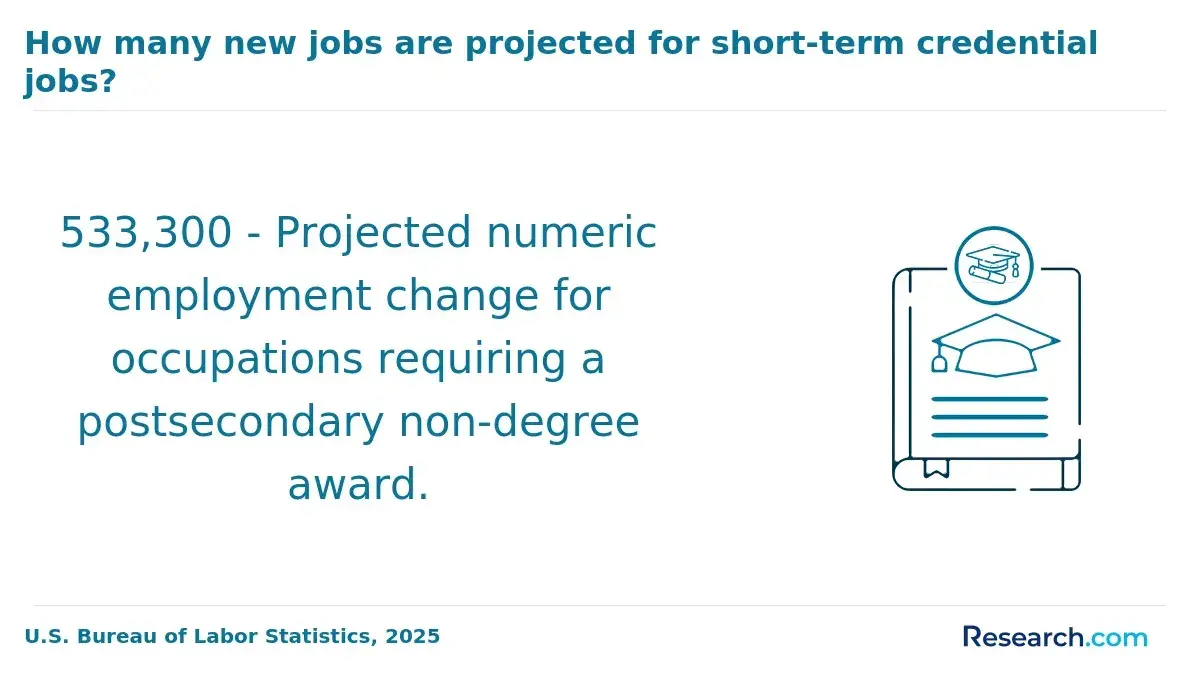
Public data can help you keep costs in perspective. The College Board's 2024 Trends in College Pricing and Student Aid reported that average published tuition and fees for in-state students at public four-year institutions were $11,610 for the 2024-25 academic year. That figure is not photography-specific, but it is a useful benchmark when judging whether an online program's price is unusually high or reasonably aligned with broader U.S. tuition patterns.
Before enrolling, ask schools for a total cost of attendance estimate rather than tuition alone. Photography students may face expenses that do not appear in the headline price, including a camera body, lenses, memory cards, external drives, calibration tools, lighting equipment, cloud backup, editing software, printing, matting, exhibition fees, and website hosting.
Military-connected students should pay special attention to transfer credit, Yellow Ribbon participation, deployment flexibility, and technology requirements. Comparing photography programs with broader military-friendly online options, such as an online electrical engineering degree for military veterans, can clarify whether a creative degree or a technical degree better matches long-term earning goals, benefits use, and schedule constraints.
What admissions requirements and portfolio expectations do online digital photography programs have?
Admissions requirements for online digital photography programs depend on the credential level and selectivity of the school. Many certificate and associate programs are open-access or lightly selective, while bachelor's programs may require a high school diploma or equivalent, transcripts, a personal statement, and sometimes a portfolio.
Portfolio expectations vary. Some programs use the portfolio mainly to place students at the right level, while more selective art and design programs use it to judge creative potential, technical ability, and readiness for critique-based learning. A beginner-friendly program may not require polished professional work, but it should still explain how students will develop a portfolio before graduation.
Use the following preparation steps if you are applying to a program that requests images. They will help you present your strongest work without pretending to be more advanced than you are:
- Select a focused set of images that shows composition, light, subject awareness, and editing judgment rather than every style you have tried.
- Include short captions or context when allowed, especially for documentary, conceptual, commercial, or staged work.
- Avoid over-editing; admissions reviewers often value control, intent, and consistency more than dramatic effects.
- Show a range of assignments only if the program asks for range; otherwise, prioritize a coherent visual point of view.
- Ask a teacher, working photographer, or mentor to review the portfolio before submission.
- Check file size, format, naming, and upload instructions carefully, because missed technical instructions can weaken an otherwise strong application.
Students without a portfolio should not automatically avoid degree programs. Instead, look for programs that clearly state they accept beginners and include foundation courses in camera operation, design, digital imaging, and critique. However, if a school charges high tuition while offering little hands-on feedback for beginners, a lower-cost certificate or community college pathway may be a safer first step.
What entry-level and advanced career paths can an online digital photography degree support?
An online digital photography degree can support several career paths, but the degree alone is rarely the deciding factor. Employers and clients usually look for a combination of portfolio quality, technical reliability, communication skills, turnaround speed, and professionalism.
The table below connects common photography-related paths with the type of work they involve. It can help you decide whether a degree program's curriculum matches the roles you actually want.
| Career path | Typical responsibilities | How a degree may help | Advancement direction |
| Portrait or event photographer | Photograph individuals, families, weddings, schools, performances, and community events. | Builds lighting, posing, editing, and client-management skills. | Studio owner, premium event specialist, or brand photographer. |
| Commercial or product photographer | Create images for advertising, e-commerce, catalogs, food, products, and brand campaigns. | Develops lighting control, retouching, art-direction awareness, and client briefs. | Commercial studio lead, creative director, or specialized product expert. |
| Editorial or documentary photographer | Produce visual stories for publications, nonprofits, agencies, or independent projects. | Strengthens storytelling, ethics, sequencing, and visual research. | Photo editor, documentary producer, or multimedia journalist. |
| Real estate or architectural photographer | Photograph properties, interiors, exteriors, and spaces for listings or firms. | Supports lighting, perspective control, editing, and quick delivery workflows. | Architectural specialist, drone imaging provider, or media package business owner. |
| Photo editor or digital asset specialist | Select, organize, retouch, caption, archive, and prepare images for publication or brand use. | Builds workflow, metadata, editing, and visual judgment skills. | Senior photo editor, content operations manager, or visual brand manager. |
Some graduates also move into adjacent creative fields such as content marketing, social media production, video editing, art direction, UX content, or brand strategy.
If you are more interested in campaign analytics, customer research, and management than image production, a marketing masters may offer a stronger path after an undergraduate creative degree or professional photography experience.
Students should be realistic about the freelance-heavy nature of photography. A degree may improve craft and credibility, but steady income often depends on repeat clients, referrals, local market demand, niche specialization, and business systems. For that reason, programs with entrepreneurship coursework can be more valuable than programs that focus only on artistic development.
What salary ranges and earning potential can digital photography graduates expect?
Digital photography earning potential varies because photographers work in many different settings: self-employment, media, advertising, real estate, retail studios, higher education, government, and corporate communications. Salary data is useful as a baseline, but it does not capture all freelance income patterns, part-time work, seasonal demand, or business expenses.
The BLS reported a May 2024 median annual wage of $42,520 for photographers. For readers comparing degree ROI, this means debt should be kept proportionate to realistic early-career earnings, especially if the goal is freelance work where income may fluctuate during the first few years.
The table below places photography alongside adjacent visual and creative roles. It helps show why some students use a photography degree as a foundation for broader media careers rather than limiting themselves to one job title.
| Occupation | May 2024 U.S. median annual wage | How to interpret the figure |
| Photographers | $42,520 | A useful baseline for traditional photography roles, but individual results vary by niche, location, and self-employment success. |
| Graphic designers | $61,300 | Relevant for students who combine photography with layout, branding, and digital design. |
| Film and video editors and camera operators | $70,980 | Relevant for photographers who add video production, editing, and multimedia storytelling. |
| Art directors | $106,500 | Usually requires substantial experience and a strong creative leadership portfolio. |
The key salary lesson is that specialization can matter more than the degree title. Product photography, commercial campaigns, high-end events, architectural imaging, and hybrid photo-video work may offer better income potential than generalist photography, but they also require stronger business development, equipment, and client-service skills.
Do not treat wage data as a promise. Use it to test affordability: if a program requires significant borrowing, ask how the curriculum helps you reach roles or client markets with enough earning potential to manage repayment without relying on best-case assumptions.
How is the job market and industry demand changing for digital photographers?
The photography job market is changing rather than disappearing. Demand for visual content remains strong across e-commerce, social media, real estate, events, education, journalism, branding, and small business marketing, but competition is intense because entry barriers are lower than in many licensed professions.
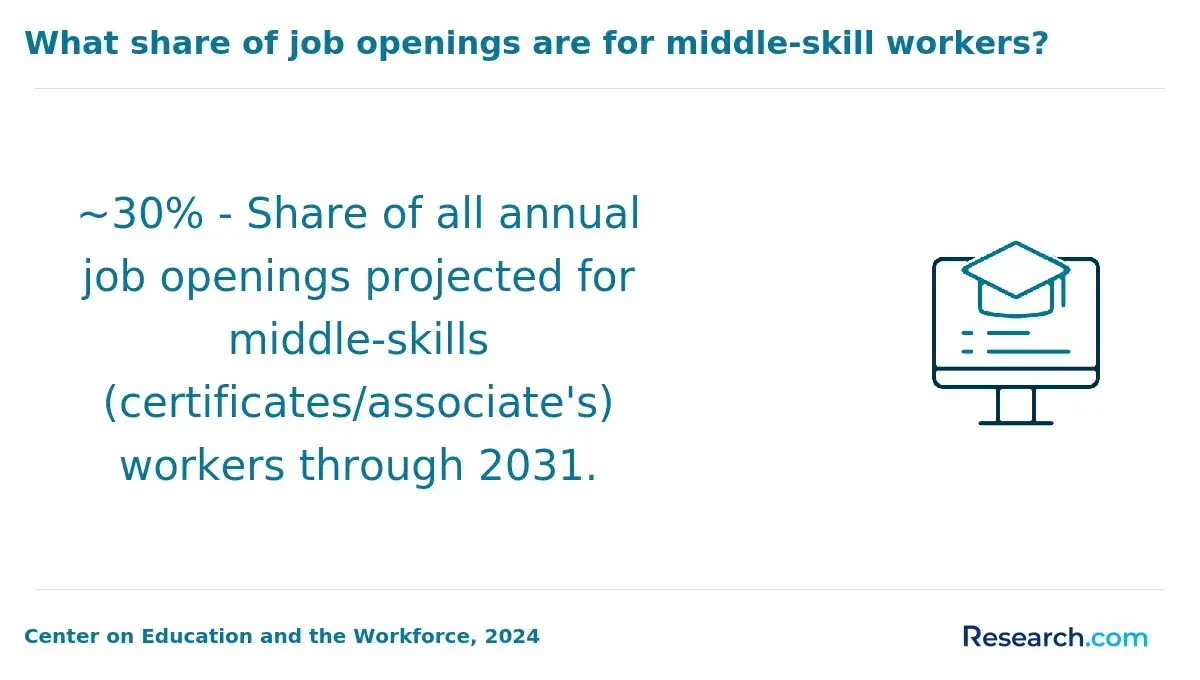
BLS occupational projections released in 2025 for the 2024-34 period describe photographer employment as growing more slowly than many occupations, with many openings expected to come from workers leaving the occupation or moving into other roles. For students, the practical takeaway is that a degree should prepare you for adaptable visual work, not only a narrow job title.
Several trends should influence your program comparison. These are especially important because they affect what clients and employers expect from new photographers.
- AI-assisted editing is speeding up culling, masking, retouching, and image organization, so students need judgment, ethics, and workflow skills rather than only manual software steps.
- Short-form video and hybrid content are increasingly expected in brand, event, and social media work, making basic video capture and editing valuable additions to a photography curriculum.
- E-commerce and real estate clients often need fast turnaround, consistent style, and repeatable workflows, which favors photographers who understand lighting systems and production efficiency.
- Authenticity and copyright concerns are becoming more important as synthetic imagery expands, so students should learn disclosure norms, model releases, licensing, and image provenance.
- Local networking still matters because many assignments are location-based, even when the degree itself is online.
A common mistake is assuming that better camera gear will solve market competition. Employers and clients usually care more about reliability, visual consistency, problem-solving, and whether your images serve a business or storytelling goal. Choose a program that teaches those professional behaviors, not just creative experimentation.
What certifications, professional memberships, or credentials strengthen a digital photography career?
Digital photographers usually do not need a state license to work, but certifications, memberships, and specialized credentials can strengthen credibility in certain markets. The best credential depends on your niche: portrait, commercial, drone, real estate, media production, editing, or visual asset management.
The table below summarizes credentials and affiliations that may complement an online digital photography degree. They are not substitutes for a strong portfolio, but they can help signal professionalism or unlock specific types of work.
| Credential or membership | Best for | Value to a photography career |
| Adobe Certified Professional | Students using Photoshop, Lightroom workflows, or broader digital media tools. | Signals software competence for editing, retouching, and production roles. |
| FAA Part 107 Remote Pilot Certificate | Photographers offering commercial drone imagery in the U.S. | Required for many paid drone operations and useful in real estate, events, and inspection-related imaging. |
| Professional Photographers of America membership or certification pathways | Portrait, wedding, studio, and small business photographers. | Can support continuing education, networking, insurance options, and professional standards. |
| American Society of Media Photographers membership | Commercial, editorial, and publication-focused photographers. | Offers business resources, advocacy, and community for professional image-makers. |
| Digital asset management or metadata training | Photo editors, archivists, content teams, and brand media departments. | Supports roles that require organizing, licensing, and retrieving large image libraries. |
If you want the strongest credential mix, match it to your income strategy. A real estate photographer may benefit more from drone certification and fast editing workflows, while a portrait photographer may benefit more from business training, lighting workshops, and client-experience systems.
For commercial work, copyright literacy, licensing knowledge, and consistent production standards may be just as important as any badge.
Before paying for a certification, ask whether it is recognized by the clients or employers you want. If the answer is unclear, invest first in portfolio improvement, critique, targeted workshops, and business systems that directly improve your ability to win and deliver paid work.
Other Things You Should Know About Digital Photography
It can be worth it if you need structured critique, a stronger portfolio, business training, editing workflow, and a credential for broader creative roles. If you only need help with camera settings or one niche skill, a certificate, workshop, or mentorship may be more cost-effective.
Look for institutional accreditation from a U.S. Department of Education-recognized accreditor, such as the Higher Learning Commission or regional accreditor for the school’s home state. If the program offers portfolio-based assessment, confirm it is part of an accredited degree and lists credit hours, not just noncredit coursework.
Most programs require a digital camera with manual controls, a reliable computer, editing software, storage drives, and basic accessories. Some courses may require lighting equipment, tripods, calibration tools, printing supplies, or specialty lenses, so ask for the equipment list before enrolling.
Choose a degree if you want broad education, transfer options, a stronger academic credential, and time to build a substantial portfolio. Choose a certificate if you already have a degree, want a lower-cost skill upgrade, or need focused training in editing, lighting, drone work, or a specific photography niche.
References
- Online Photography Degrees | Photography Programs & Courses https://www.onlinecolleges.net/degrees/photography/
- Photographer Certifications: Best Credentials to Advance Your Career | Teal https://www.tealhq.com/career-paths/photographer-certifications
- Does College Pay Off? A Comprehensive Return On Investment Analysis - FREOPP https://freopp.org/whitepapers/does-college-pay-off-a-comprehensive-return-on-investment-analysis/
- Digital Photography Market Size, Share Trends, Growth, Industry Analysis 2034 https://www.zionmarketresearch.com/report/digital-photography-market
- Should you Study Photography at College or are There Better Options Now? https://digital-photography-school.com/should-you-study-photography-at-college-or-are-there-better-options-now/
- Digital Photography Market Report: Trends, Forecast and Competitive Analysis to 2031 https://www.researchandmarkets.com/reports/6179272/digital-photography-market-report-trends
- Accredited Online Photography Degree Programs https://www.accreditedonlinecolleges.org/photography/
- Credentials | Professional Photographers of America https://www.ppa.com/credentials/cpp
- Computer graphic arts - digital photography https://www.starkstate.edu/academics/explore-all-programs/digital-photography-major/
- Online Photography Degree | Associate Degree (AOS) https://www.sessions.edu/online-degrees/digital-photography/