2027 Best Online Digital Photography Degrees for Product Photography Careers

Co-Founder and Chief Data Scientist
Choosing an online digital photography degree is really a career investment question: will the program help you build a product portfolio employers and clients trust? The timing matters because U.S. retail e-commerce sales reached about $1.19 trillion in 2024, according to the U.S. Census Bureau, keeping demand high for clean, conversion-focused product images.
This guide is for aspiring commercial photographers, career changers, and creatives comparing online programs. You will learn how degrees differ, what skills matter, what schools to compare, and how to judge cost, outcomes, and fit before enrolling.
Key Things You Should Know
- Product photography is portfolio-driven, but an accredited online degree can add structured training in lighting, color accuracy, retouching, studio workflow, and commercial production that self-study often misses.
- Use cost benchmarks carefully: College Board's 2024-25 published tuition averages were $4,050 at public two-year colleges, $11,610 for in-state public four-year institutions, and $43,350 at private nonprofit four-year institutions before aid.
- The BLS reported a $43,170 median annual wage for photographers in May 2024, while stronger product-photography earnings usually depend on specialization, client quality, technical retouching skill, and business development.
What is an online digital photography degree and how does it prepare product photographers?
An online digital photography degree is a college program that teaches image capture, lighting, editing, visual communication, digital workflow, and professional practice through remote coursework. For product photography, the strongest programs go beyond taking attractive pictures; they train students to create technically consistent images that meet brand, marketplace, catalog, and advertising requirements.
Product photographers typically work with physical goods such as apparel, cosmetics, jewelry, electronics, food, furniture, packaging, and handmade products. Their job is to make the product look accurate, appealing, and shoppable while controlling reflections, color, texture, scale, shadows, and background consistency. A degree can help by turning scattered skills into a repeatable production process.
The best fit is usually a student who wants structured feedback, access to faculty critique, a credential for creative-industry roles, and a portfolio that can support freelance, in-house, or studio work. A degree may be less necessary for someone who already has a strong commercial portfolio, paying clients, and advanced technical skills, in which case a targeted certificate, assistantship, or mentorship may offer a faster return.
Online creative programs also differ by career goal. A student focused on product images needs lighting and post-production depth, while someone interested in narrative media might compare an online MFA creative writing instead. The important point is to choose the credential that matches the kind of portfolio and job market you want to enter.
This table summarizes the main credential levels and how they usually map to product photography goals. Use it to decide whether you need a short skill-building pathway or a broader degree with general education, business, and visual communication coursework.
| Credential | Typical fit | Product photography value | Main limitation |
| Certificate | Beginners or working creatives filling a skill gap | Fast training in camera operation, lighting, editing, or portfolio basics | May carry less weight for degree-preferred employer roles |
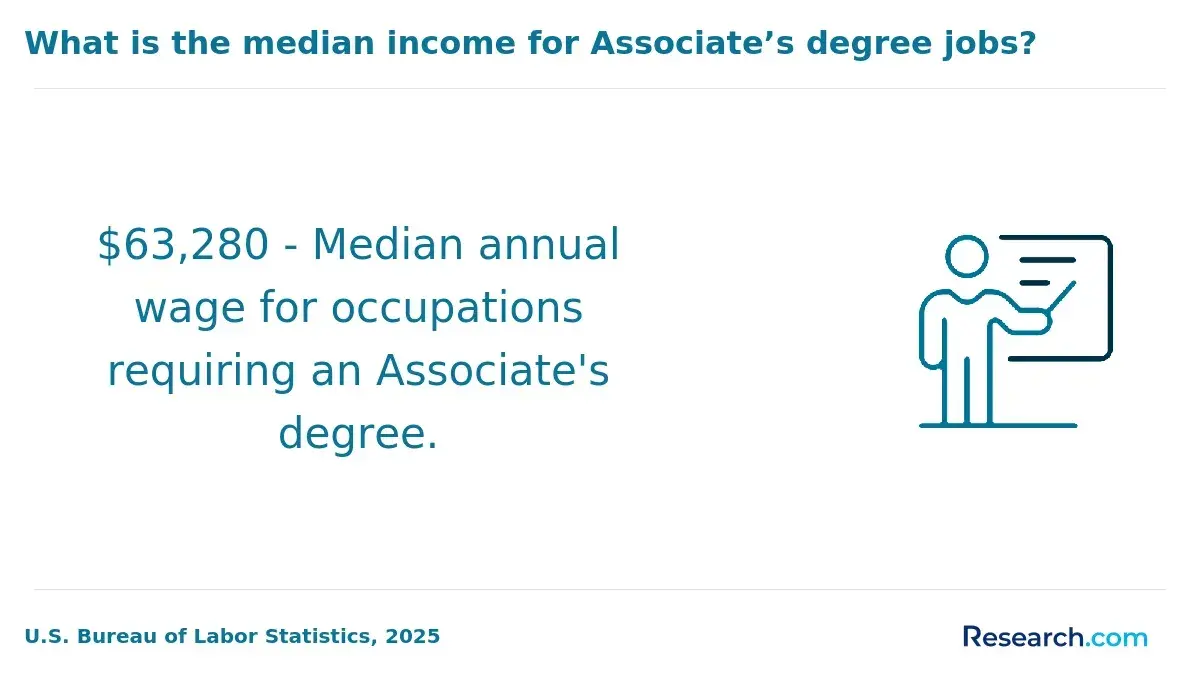
| Associate degree | Students seeking an affordable entry route | Builds fundamentals and may transfer into a bachelor's program | May not cover advanced commercial production in depth |
| Bachelor's degree | Students seeking the broadest undergraduate preparation | Combines technique, critique, business, art direction, and portfolio development | Higher time and cost commitment than certificates |
| Master's degree | Experienced photographers pursuing teaching, advanced practice, or conceptual specialization | Useful for high-level creative direction, research, or college teaching pathways | Usually unnecessary for most entry-level product photography jobs |
How do online digital photography programs compare to campus-based options for product photography?
Online and campus-based photography programs can both prepare students for product work, but they create different learning environments. The right choice depends on your access to equipment, need for studio space, schedule flexibility, and comfort with remote critique.
Online programs are strongest when they provide clear project briefs, instructor video feedback, critique boards, digital asset review, and guidance on building a home or rented studio setup. Campus programs are strongest when students need immediate access to lighting bays, printers, product tables, prop rooms, and in-person collaboration with stylists or art directors.
Photography is not the only studio-based field moving online. Students comparing portfolio programs may see similar trade-offs in areas like a game development degree online, where remote learning works best when projects, software access, critique, and portfolio outcomes are clearly defined.
The table below compares online and campus-based study through a product photography lens. Focus less on which format sounds better and more on which environment will help you produce a stronger commercial portfolio.
| Factor | Online digital photography degree | Campus-based photography degree |
| Schedule | Often better for working adults, caregivers, and freelancers | Better for students who want fixed studio and class times |
| Studio access | Requires a home setup, rented studio, employer studio, or school equipment shipment policy | May include dedicated lighting labs, printers, and shooting spaces |
| Feedback | Usually asynchronous critique, recorded feedback, and peer discussion boards | Often live critique, demonstrations, and immediate troubleshooting |
| Networking | Depends heavily on virtual events, internships, alumni groups, and local initiative | Often easier for local studio assistantships and campus collaborations |
| Best for | Self-directed students who can create or access a shooting environment | Students who need hands-on supervision and built-in facilities |
A common mistake is choosing an online program because it is convenient without checking whether you can complete product assignments at home. Before enrolling, ask whether the school requires specific cameras, lenses, lighting kits, color calibration tools, editing software, and printing access.
Which accredited schools offer the best online digital photography degrees for product photography careers?
The best online digital photography degree for product photography is not simply the most famous school. It is the accredited program that gives you the right mix of commercial lighting, critique, editing workflow, portfolio development, affordability, transfer options, and career support.
Because program names, online availability, and tuition can change, verify each option through the school catalog, accreditation database, and admissions office before applying. The schools below are useful starting points because they offer online or distance-accessible photography-related study and hold institutional accreditation recognized in the U.S. higher education system.
| School | Relevant online photography option | Institutional accreditation | Why product photography students may consider it |
| Southern New Hampshire University | BA in Digital Photography | New England Commission of Higher Education | Accessible online format with digital imaging, visual communication, and portfolio emphasis |
| Academy of Art University | Online photography degrees at undergraduate and graduate levels | WASC Senior College and University Commission | Commercial-art environment with coursework that can support studio, advertising, and portfolio development |
| Rocky Mountain College of Art + Design | Online photography-focused BFA pathway, subject to current catalog availability | Higher Learning Commission | Art-school model that can fit students seeking critique-heavy visual training |
| Savannah College of Art and Design | SCADnow online photography-related graduate study, subject to current catalog availability | Southern Association of Colleges and Schools Commission on Colleges | Strong creative-industry orientation for advanced students building a refined body of work |
| Sessions College | Online digital photography and visual arts programs | Distance Education Accrediting Commission | Career-focused online creative training that may appeal to students seeking flexible portfolio development |
To compare schools fairly, use the same evaluation process for each program. This prevents you from overvaluing a brand name while missing practical details that affect your portfolio, costs, and completion timeline.
- Confirm institutional accreditation through the accreditor or federal accreditation database, not only through marketing pages.
- Review the course sequence for lighting, digital workflow, retouching, color management, commercial photography, and portfolio review.
- Ask whether product, tabletop, food, fashion, or advertising assignments are part of required coursework or only electives.
- Check whether credits transfer in and whether prior learning, military credit, or community college coursework can reduce cost.
- Request total estimated cost, including technology fees, software subscriptions, equipment, printing, shipping, and graduation fees.
- Look for student work samples that resemble the kind of product photography you want to produce.
A red flag is a program that advertises photography career outcomes but cannot explain what equipment students need, how critique works online, or how the portfolio is evaluated. Product photography is technical, so vague promises are not enough.
What courses and technical skills are covered in online digital photography curricula for product work?
Online digital photography curricula for product work should develop three connected abilities: capture control, post-production accuracy, and commercial judgment. A beautiful image is not enough if the product color is wrong, the shadows are inconsistent, or the file does not meet a client's marketplace specifications.
Strong programs typically include a mix of creative, technical, and business courses. These subjects matter because product photographers often work under tight brand standards and must deliver files that can move directly into e-commerce, advertising, or catalog systems.
- Digital camera operation, exposure, lens choice, depth of field, and tethered capture for controlled studio shooting.
- Lighting for reflective, transparent, textured, glossy, matte, and small-scale objects.
- Color management, monitor calibration, white balance, file formats, and print or screen consistency.
- Adobe Lightroom, Photoshop, Capture One, or equivalent workflow tools for selection, retouching, compositing, masking, and batch delivery.
- Commercial photography, advertising concepts, brand storytelling, art direction, and visual merchandising.
- Portfolio development with product, still life, packaging, fashion accessory, food, or lifestyle product assignments.
- Business practices, copyright basics, licensing, client communication, estimates, invoices, contracts, and usage rights.
AI is also changing the curriculum conversation. Automated background removal, generative fill, denoising, smart masking, and AI-assisted product visualization can speed up production, but employers still need photographers who understand lighting, authenticity, file quality, brand consistency, and when synthetic edits may misrepresent a product.
Students should avoid programs that treat post-production as an afterthought. In product photography, retouching is not just cosmetic; it is often where dust removal, label cleanup, reflection control, background consistency, and file delivery standards are finalized.
What are the admission requirements and application steps for online digital photography degrees?
Admission requirements vary by school and degree level, but online photography programs usually combine standard college admissions materials with creative or technical expectations. Some bachelor's programs are accessible to beginners, while selective art schools may require a portfolio.
Most applicants should be prepared to submit academic, identity, and program-specific materials. The exact list matters because missing a transcript, portfolio requirement, or financial aid deadline can delay enrollment by a term.
- Completed online application and any required application fee or fee waiver request.
- High school transcript, GED documentation, or college transcripts for transfer applicants.
- Minimum GPA requirement, if the school uses one, or placement review for general education courses.
- Portfolio, artist statement, or sample images if required for admission or scholarship review.
- Proof of English proficiency for applicants whose prior education requires it under school policy.
- FAFSA submission for eligible students seeking federal aid, plus any school scholarship applications.
- Equipment and software readiness review before the first photography course begins.
Veterans and active-duty students should ask about credit for military training, deployment flexibility, Yellow Ribbon participation, and dedicated advising. Even in a different field, reviewing how schools structure support in military-friendly online cybersecurity degree programs can help service members recognize the kinds of policies worth asking about.
A practical application sequence can keep the process manageable. Follow these steps before committing to a start date.
- Shortlist only accredited schools that offer the credential level you need.
- Compare curriculum maps and identify which courses directly support product photography.
- Ask admissions whether a portfolio is required for admission, scholarships, or placement into advanced courses.
- Confirm transfer-credit rules before sending deposits, especially if you have community college or prior art credits.
- Estimate total cost using tuition, fees, software, camera gear, lighting, storage, printing, and shipping.
- Speak with faculty or an advisor about how online critiques, portfolio reviews, and career services work.
The biggest admissions mistake is rushing into the first available start date. A better approach is to delay enrollment if needed so you can secure transcripts, compare aid packages, and budget for equipment before tuition charges begin.
How long do online digital photography programs take, and what do they typically cost?
Program length depends on credential level, transfer credit, enrollment intensity, and course availability. A certificate may take a few months to one year, an associate degree usually takes about two years of full-time study, and a bachelor's degree commonly takes about four years for first-time full-time students. Transfer students and year-round online learners may finish faster, while part-time students often need longer.
Costs vary widely because online photography students pay for more than tuition. They may also need a camera body, lenses, tripod, lighting kit, backdrop system, color calibration tools, editing software, external storage, props, printing, and occasional studio rental.
The following 2024-25 College Board tuition benchmarks are useful for judging whether a quoted program price is low, typical, or high. These figures are published tuition and fees before grant aid, scholarships, living expenses, and program-specific equipment costs.
- Public two-year college, in-district average published tuition and fees: $4,050
- Public four-year college, in-state average published tuition and fees: $11,610
- Public four-year college, out-of-state average published tuition and fees: $30,780
- Private nonprofit four-year college average published tuition and fees: $43,350
For an online digital photography degree, the sticker price can be misleading. A program with higher tuition but generous transfer credit, included software, or strong scholarship aid may cost less than a cheaper-looking program that requires more credits or expensive out-of-pocket equipment.
Use this cost checklist when speaking with admissions or financial aid. It helps you compare total cost instead of tuition alone.
- Ask for tuition per credit and the exact number of credits required for graduation.
- Request a list of mandatory fees, including technology, portfolio, lab, graduation, and online learning fees.
- Confirm whether software subscriptions are included or student-paid.
- Ask whether the school requires specific camera bodies, lenses, lighting brands, tablets, printers, or calibrated monitors.
- Check whether transfer credits, prior learning assessment, employer tuition benefits, or military education benefits can reduce the bill.
- Compare net cost after grants and scholarships, not only the advertised tuition rate.
Who should choose the lower-cost path? Students who are still exploring photography or building foundational skills may benefit from a certificate or associate degree first. Who should consider a fuller bachelor's program? Students who want a broader creative credential, more critique, general education, internships, and stronger preparation for in-house creative roles may find the longer route more useful.
What product photography career paths can graduates pursue with an online digital photography degree?
Graduates can pursue several product photography career paths, but titles vary by employer. Some jobs are photography-heavy, while others combine photography with retouching, content production, styling, asset management, or marketing support.
The table below shows common product photography roles and how a degree can support each one. Use it to match your program choice with the work you actually want to do after graduation.
| Career path | Typical responsibilities | How a degree can help |
| E-commerce product photographer | Shoots consistent images for online stores, marketplaces, and product pages | Builds repeatable lighting, file naming, editing, and delivery workflows |
| Commercial studio photographer | Creates product, advertising, catalog, and campaign imagery for brands or agencies | Develops art direction, client communication, and advanced studio skills |
| Photo retoucher | Cleans, composites, color-corrects, and prepares product files for publication | Strengthens Photoshop, masking, color, and quality-control skills |
| Studio assistant or digital tech | Supports lighting setup, tethered capture, file handling, and on-set workflow | Provides technical vocabulary and production habits needed on set |
| Freelance product photographer | Finds clients, shoots products, edits images, licenses work, and manages business operations | Adds portfolio structure, business coursework, and professional practice training |
| Creative content producer | Combines product photography with short-form video, social media, and brand assets | Supports cross-platform visual storytelling and production planning |
Some students discover that they want a different creative career altogether. If you are more interested in therapeutic, clinical, or human-service applications of art than commercial image production, a master in art therapy may be a better long-term fit than a photography degree.
To move from degree to employment, students should build evidence of job readiness before graduation. The most useful steps are practical and portfolio-centered.
- Create separate portfolio sections for white-background product images, lifestyle product images, detail shots, and retouched before-and-after examples.
- Practice with difficult objects such as glass, chrome, cosmetics packaging, fabric, food, and jewelry.
- Build a repeatable file delivery process that includes naming conventions, export sizes, color profiles, and backup storage.
- Seek internships, assistant roles, campus projects, local business collaborations, or small paid shoots while still enrolled.
- Document your role in each project so employers know whether you handled lighting, styling, capture, retouching, or art direction.
A common career mistake is presenting only artistic images when applying for product roles. Employers and clients need to see precision, consistency, and commercial usability, not just personal style.
What are the salary ranges and earning potential for professional product photographers?
Product photography earnings vary because the field includes hourly studio employees, in-house brand photographers, retouchers, freelancers, agency collaborators, and high-end commercial specialists. Location, niche, client budget, speed, licensing knowledge, and retouching skill can all affect income.
The best national baseline is the photographer occupation reported by the U.S. Bureau of Labor Statistics. The BLS listed the median annual wage for photographers at $43,170 in May 2024. This figure is useful as a broad reference, but it does not isolate product photographers specifically or capture the full income range of successful freelancers and commercial specialists.
The table below explains how to interpret salary potential by work setting rather than assuming one number applies to everyone. This is important because product photographers often increase earning potential by moving into more specialized or client-facing work.
| Work setting | Typical earning pattern | What can raise earning potential |
| Entry-level studio or e-commerce role | Often more structured and predictable, but may start lower than advanced commercial work | Speed, consistency, retouching ability, and comfort with high-volume workflows |
| In-house brand photographer | May offer steadier employment and benefits depending on employer | Ability to create product, lifestyle, social, and campaign assets |
| Freelance product photographer | Income can fluctuate by season, client base, pricing, and marketing | Strong niche, repeat clients, licensing terms, business systems, and referrals |
| Commercial advertising specialist | Potentially higher project value, but more competitive and portfolio-dependent | Advanced lighting, art direction, production coordination, and agency relationships |
| Retoucher or digital tech | Can be a specialized path adjacent to photography | High-end compositing, color precision, speed, and collaboration with photographers and art directors |
Students should not treat salary data as a guarantee. Instead, use it to estimate risk and decide whether the cost of a degree makes sense compared with lower-cost training, assistant work, or a certificate. To improve earning potential, focus on capabilities that clients can measure. These include consistent product sets, fast turnaround, accurate color, clean retouching, strong communication, clear licensing terms, and the ability to solve difficult lighting problems.
What is the job outlook for product photographers in e-commerce and commercial industries?
The job outlook for product photographers is shaped by two forces moving at the same time: the growth of visual commerce and the automation of basic image production. Brands need more images across websites, marketplaces, ads, social media, and email campaigns, but they also expect faster workflows and may use AI, templates, or CGI for simpler assets.
The BLS projected employment for photographers to grow 4% from 2024 to 2034, which it describes as about as fast as the average for all occupations. For readers, this means the field is not disappearing, but competition will likely remain strong, especially for generalist photographers without a clear commercial niche.
E-commerce supports continued demand for product imagery because online shoppers rely heavily on visuals to judge color, size, texture, and trustworthiness. However, the strongest opportunities may go to photographers who can do more than press the shutter: lighting design, retouching, short-form video, asset management, and brand consistency are increasingly valuable.
Several trends should influence your education decision. A degree program that ignores these trends may leave you with a portfolio that looks outdated.
- AI-assisted editing is speeding up background cleanup, masking, denoising, and image extension, so photographers need judgment and quality control rather than only manual editing skills.
- Marketplace standards require consistent file sizes, backgrounds, angles, and color, making workflow discipline as important as creativity.
- Short-form video and motion assets are increasingly paired with still product images for social commerce and brand campaigns.
- CGI and 3D product rendering may replace some simple product shoots, but physical products with complex texture, transparency, food freshness, or luxury detail still require skilled visual production.
- Remote collaboration with brands, stylists, retouchers, and art directors makes file management and communication skills more important.
The smartest preparation is to build a hybrid portfolio. Include technically clean product images, creative lifestyle shots, retouching examples, and at least a few motion or behind-the-scenes workflow pieces that show how you think and produce.
Are certifications, portfolios, or industry standards needed to succeed in product photography careers?
No universal license is required to become a product photographer in the U.S., but credentials and standards can still matter. Employers and clients usually care most about portfolio quality, reliability, technical accuracy, and professional workflow.
Certifications can be useful when they prove a specific skill rather than simply decorate a resume. They are best viewed as supplements to a portfolio, not substitutes for one.
- Adobe credentials can support claims of Photoshop, Lightroom, and digital imaging proficiency.
- The Professional Photographers of America's Certified Professional Photographer credential may help some photographers demonstrate technical competence and professional commitment.
- Vendor-specific training in Capture One, color management, printing, or studio lighting can be valuable for commercial production environments.
- Business credentials or short courses in contracts, licensing, taxes, and marketing can help freelancers avoid underpricing and rights-management mistakes.
Portfolio standards are more important than any single certificate. A product photography portfolio should show consistency, not just variety. Include final images, close crops, lighting challenges, and brief notes explaining the assignment, your role, and the intended use.
Before launching a product photography career, avoid these common mistakes. Each one can weaken your credibility, even if your images look good at first glance.
- Ignoring color accuracy, which can create problems for clients whose products must match real-world materials.
- Over-retouching products until they look misleading or different from what customers receive.
- Using only personal creative images instead of showing commercial sets with consistent angles and backgrounds.
- Failing to understand copyright, usage rights, and licensing terms before delivering files.
- Buying expensive gear before learning lighting control, composition, and client workflow.
- Choosing a degree program without checking accreditation, transfer rules, equipment requirements, and portfolio outcomes.
A practical success standard is simple: can a client trust you to receive a product, interpret a brief, light it well, deliver accurate files, and communicate professionally? If your degree, certificate, or self-study path helps you prove that, it is moving you in the right direction.
Other Things You Should Know About Digital Photography
The best 2027 online digital photography degrees for product photography should offer courses in lighting, editing, and composition. Look for programs that provide interactive lessons, access to industry-standard software like Adobe Suite, experienced instructors, and opportunities for real-world projects.
Most programs require access to a DSLR or mirrorless camera, a tripod, and studio lighting such as two continuous LED lights or strobes with softboxes. Some courses also expect a light tent, reflectors, and editing software like Adobe Photoshop or Lightroom for assigned product-image projects.
Start with objects that show technical range: glass bottles, reflective packaging, textured fabric, cosmetics, food, jewelry, books, electronics, and handmade items. Make each project look like a real commercial assignment, not a casual practice shot.
It is both, but technical control is the foundation. Creativity helps with brand storytelling and styling, while lighting, color accuracy, retouching, and consistency determine whether the image is usable for commerce.
References
- Should you Study Photography at College or are There Better Options Now? https://digital-photography-school.com/should-you-study-photography-at-college-or-are-there-better-options-now/
- Digital Photography Career Paths | F.I.R.S.T. Institute https://www.first.edu/your-career/photography-career-paths/
- Admission requirements master Photography & Society https://www.kabk.nl/en/programmes/master/master-photography-society/admission-requirements
- The Photography Institute https://www.thephotographyinstitute.com/ca/en/blog-salary
- College Certificate vs Online Photography School | Cameraderie https://cameraderie.org/threads/college-certificate-vs-online-photography-school.56322/
- Photography Course Toronto: Online Training vs In-Person School Comparison https://www.canadianphotographyschool.ca/blog/photography-course-toronto-online-vs-inperson-comparison/
- Ecommerce Product Photography Service Market Growth, Size & Trend | CAGR of 8% https://www.businessresearchinsights.com/market-reports/ecommerce-product-photography-service-market-113167
- Product photography courses and guide https://www.clippingpathassociate.com/blog/10-best-product-photography-classes-and-trainings
- Digital Photography Courses to Boost Your Creative Skill https://bellview.edu.za/courses/digital-photography-courses/
- What can you do with a Photography degree? https://www.falmouth.ac.uk/study/undergraduate/what-can-you-do-photography-degree