2027 Best Online Digital Photography Degrees for Commercial Photography Careers

Co-Founder and Chief Data Scientist
Choosing an online digital photography degree is really a career investment question: will the program help you build a commercial portfolio that clients and employers will trust? The timing matters because the U. S. Bureau of Labor Statistics projects photographer employment to grow 4% from 2024 to 2034, with about 13,700 openings each year.
This guide is for aspiring product, advertising, portrait, real estate, fashion, and brand photographers. You will learn how online programs work, what they cost, which credentials matter, and how to compare schools before enrolling.
Key Things You Should Know
- The best online digital photography degrees for commercial careers combine accredited coursework, portfolio production, business training, lighting, editing, and client-facing project experience rather than photography theory alone.
- For cost planning, College Board's 2024-25 averages list published tuition and fees at $11,610 for in-state public four-year colleges and $43,350 for private nonprofit four-year colleges, before aid and program-specific fees.
- The BLS reports a $42,520 median annual wage for photographers in May 2024, but commercial income varies widely by market, specialization, client base, equipment costs, and whether the photographer is employed or self-employed.
What is an online digital photography degree and how does it prepare commercial photographers?
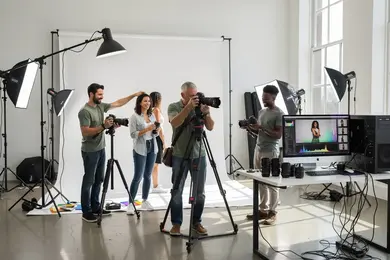
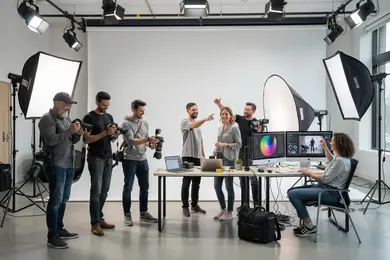
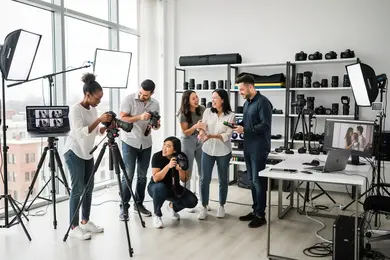
An online digital photography degree is a college program that teaches image-making, digital editing, lighting, visual storytelling, and professional workflow through remote courses. For commercial photography careers, the strongest programs go beyond camera operation. They help students create images for business uses such as e-commerce, advertising, food, fashion, architecture, events, portraits, and brand campaigns.
Commercial photography is different from fine art photography because the image serves a client objective. A product photographer may need to show texture and scale accurately. A real estate photographer must make interiors readable and marketable. An advertising photographer often works from a creative brief, coordinates with art directors, and delivers files that meet campaign specifications.
Good online programs prepare students through a mix of technical, creative, and business training. The most useful programs usually include the following elements because they directly connect classroom work to paid client expectations:
- Camera and lighting control: Students learn exposure, lens choice, color temperature, natural light, strobes, modifiers, tethered capture, and consistent repeatable setup.
- Digital workflow: Coursework typically covers RAW processing, color correction, retouching, file naming, backup systems, metadata, and export settings for print, web, and client delivery.
- Commercial production: Students practice planning shoots, building shot lists, interpreting creative briefs, managing deadlines, and presenting proofs or selects to clients.
- Business and marketing: Programs may cover pricing, proposals, contracts, usage rights, invoicing, client communication, and self-promotion.
- Portfolio development: Students graduate with a curated body of work, often organized by niche rather than by course assignment.
Students who are drawn to broader visual communication may also compare photography with graphic design programs, especially if they want to work in brand identity, advertising layouts, digital media, or creative direction. Photography can stand alone as a career path, but many commercial photographers benefit from understanding typography, layout, and campaign design.
This degree is a strong fit for students who want structured critique, access to faculty feedback, and a credential that supports creative employment or freelance credibility. It may be less necessary for experienced photographers who already have a strong commercial portfolio, steady clients, and solid business systems; those learners may get more value from targeted certificates, workshops, mentorships, or specialized software training.
How do online digital photography programs compare with campus-based options for commercial careers?
Online and campus-based digital photography programs can both lead to commercial photography careers, but they train students in different environments. The right choice depends on your schedule, access to equipment, learning style, local networking needs, and how much hands-on studio support you require.
The table below compares the decision factors that matter most for commercial photography preparation. Use it to identify whether an online format will support your work habits or whether a campus studio environment would remove practical barriers.
| Factor | Online digital photography degree | Campus-based photography degree | Best fit |
| Schedule | Often more flexible, with asynchronous lectures and project deadlines | Usually tied to studio blocks, critique sessions, and campus schedules | Online works well for working adults and students with family responsibilities |
| Studio access | Students may need their own camera, lighting, backdrops, and shooting space | Students may access campus studios, lighting kits, printers, and labs | Campus may be better for students who cannot invest in equipment early |
| Critique | Critiques may happen through video calls, discussion boards, or uploaded galleries | Critiques happen in person and may include live demonstrations | Either format can work if critique is frequent, specific, and portfolio-focused |
| Networking | Networking depends on virtual events, local internships, online communities, and outreach | Networking may be easier through campus exhibitions, local studios, and alumni events | Campus can help students who need local creative-industry introductions |
| Career readiness | Strong if the program requires client-style projects and portfolio reviews | Strong if students use facilities to produce polished commercial work | The best option is the one that results in a professional portfolio, not just completed credits |
Online education can be especially practical for photography because students can shoot in real environments: homes, small studios, retail spaces, restaurants, events, and local businesses. This can make assignments feel closer to commercial work than classroom-only exercises. The drawback is that students must be self-directed and may need to solve lighting, space, and equipment limitations independently.
Campus programs may be better for students who want daily studio immersion or access to specialized facilities such as large cyclorama walls, darkrooms, high-end printers, product tables, and rental cages. Similar trade-offs appear in other visual and built-environment disciplines; for example, students comparing an architecture degree online also need to evaluate how remote learning handles studio critique, design software, and hands-on production.
A common mistake is choosing an online program only because it is convenient. Convenience matters, but commercial photography is portfolio-driven. Before enrolling, confirm how often students receive instructor critique, whether portfolio reviews are required, what equipment you must provide, and whether the program has examples of student work that match the commercial niche you want to enter.
What accreditation should online digital photography schools have for commercial photography work?
For online digital photography degrees, the most important accreditation is institutional accreditation from an accreditor recognized by the U.S. Department of Education or the Council for Higher Education Accreditation. This matters because accreditation affects federal financial aid eligibility, transfer credit evaluation, employer trust, and admission to graduate programs.
Programmatic accreditation can also be useful, but it is not usually required for commercial photography jobs. Some art and design programs hold accreditation from the National Association of Schools of Art and Design, commonly known as NASAD. NASAD accreditation can signal that the curriculum, faculty qualifications, student work, and facilities have been reviewed against discipline-specific standards. However, many reputable photography programs do not have NASAD accreditation, so students should not treat it as the only sign of quality.
Use the following checklist when reviewing accreditation and school legitimacy. These checks help you avoid programs that may be hard to transfer from, difficult to finance, or weakly recognized by employers:
- Confirm that the institution, not just the photography department, is accredited by a recognized accreditor.
- Check whether the online program is offered by the same accredited institution that grants the degree.
- Ask whether online students are eligible for the same diploma, transcript wording, career services, and alumni support as campus students.
- Verify state authorization if you live outside the school's home state, especially for fully online enrollment.
- Review transfer credit rules before enrolling if you plan to start at a community college or return later for a bachelor's degree.
Red flags include vague accreditation language, pressure to enroll immediately, no faculty names, no clear tuition disclosure, weak portfolio examples, and promises of guaranteed employment or income. Commercial photography is competitive, and no school can guarantee client bookings or salaries. A trustworthy program should explain outcomes carefully and show how students build marketable work.
What types of online digital photography degrees lead to commercial photography careers?
Online digital photography credentials range from short certificates to graduate degrees. The best choice depends on your current skill level, budget, career goal, and whether you need a full academic credential or targeted portfolio development.
The table below summarizes the main degree types and how each one typically supports commercial photography careers. It is useful if you are deciding whether to start small, complete a bachelor's degree, or pursue advanced creative leadership roles.
| Credential type | Typical focus | Commercial career use | Who it fits best |
| Certificate in digital photography | Camera basics, editing, lighting, and portfolio samples | Entry-level skill building, freelance preparation, or career exploration | Beginners, hobbyists moving toward paid work, or professionals adding photography skills |
| Associate degree in photography or digital media | Foundational photography, visual design, general education, and introductory business concepts | Assistant photographer roles, junior studio work, transfer into a bachelor's program | Students seeking a lower-cost starting point or transfer pathway |
| Bachelor's degree in digital photography | Advanced lighting, digital workflow, visual communication, portfolio, business, and electives | Commercial, portrait, product, editorial, real estate, brand, and studio photography paths | Students who want a comprehensive credential and a stronger portfolio structure |
| Master's degree in photography or visual arts | Advanced concept development, research, critique, teaching preparation, and professional practice | Creative direction, higher education teaching, advanced portfolio repositioning, or specialized practice | Experienced photographers, educators, and artists seeking advanced critique and credentials |
A bachelor's degree is often the most balanced option for students who want a structured route into commercial photography. It gives enough time to build technical control, complete multiple portfolio projects, and learn the business side of client work. An associate degree or certificate may be more efficient if your goal is to test the field, build basic competence, or add photography to an existing marketing, design, real estate, or small-business role.
A master's degree is not usually required to become a commercial photographer. It makes more sense when the student wants to teach, pursue high-level conceptual work, change artistic direction, or build a network through intensive critique. For many client-facing photographers, a strong portfolio, reliable workflow, and business skills will matter more than a graduate credential.
What core courses and technical skills are taught in online digital photography programs?
Online digital photography programs usually combine image-making, post-production, design thinking, and professional practice. The strongest courses are not isolated technical tutorials; they require students to produce finished images that solve a visual problem for a defined audience or client type.
The table below shows common course areas and why they matter for commercial photography. Use it to compare curricula and identify whether a program is preparing you for paid assignments rather than only personal projects.
| Course or skill area | What students learn | Why it matters commercially |
| Digital camera operation | Exposure, aperture, shutter speed, ISO, lenses, focus, and file formats | Clients expect technically consistent images across products, people, locations, and lighting conditions |
| Lighting for photography | Natural light, strobes, continuous lights, modifiers, reflectors, and lighting ratios | Lighting control is central to product, portrait, food, fashion, and advertising work |
| Photo editing and retouching | RAW processing, color correction, skin retouching, compositing, and output settings | Commercial images must meet brand standards, platform requirements, and publication specifications |
| Visual composition and design | Framing, balance, hierarchy, color, typography awareness, and storytelling | Photographers often create assets that must work within ads, websites, packaging, and social media campaigns |
| Commercial studio practice | Shot planning, prop styling, tethered workflow, model releases, and client review | Professional shoots require repeatable process, communication, and controlled delivery |
| Business of photography | Pricing, licensing, contracts, invoices, taxes, marketing, and client management | Many commercial photographers freelance or operate small businesses, so business skills affect sustainability |
Technology is changing what clients expect. AI-assisted editing, object selection, noise reduction, generative fill, automated culling, and background replacement can speed up production, but they do not replace lighting judgment, visual taste, client communication, or ethical decision-making. Students should look for programs that teach both efficient software workflows and professional standards around authenticity, usage rights, and disclosure.
Before enrolling, compare course descriptions against your intended niche. A future e-commerce photographer needs product lighting, color accuracy, batch workflow, and file delivery discipline. A future portrait photographer needs posing, people skills, retouching ethics, and studio or environmental lighting. A future real estate photographer needs wide-angle technique, vertical correction, HDR or flash-ambient blending, fast turnaround, and sometimes drone imaging.
The practical skills that deserve special attention include the following because they are frequently tested in real commercial assignments:
- Building a repeatable digital asset management system for storing, naming, backing up, and delivering client files.
- Creating estimates that separate creative fees, production expenses, licensing, editing time, travel, and rush delivery.
- Reading a creative brief and translating brand goals into lighting, composition, color, and file formats.
- Conducting a portfolio review to remove weak images and group work by niche, client type, or campaign purpose.
- Using critique to improve an image rather than simply defending the original creative choice.
What are typical admission requirements for online digital photography bachelor's and master's programs?
Admission requirements vary by school and degree level, but online digital photography programs usually evaluate academic readiness, creative potential, and access to basic technology. Bachelor's programs are often more accessible to beginners, while master's programs typically expect a developed portfolio and clearer artistic or professional goals.
The table below compares common admissions requirements for bachelor's and master's programs. It can help you prepare application materials and avoid surprises late in the admissions process.
| Requirement | Online bachelor's program | Online master's program |
| Prior education | High school diploma, GED, or transfer credits | Bachelor's degree, often in photography, art, design, media, or a related field |
| Transcripts | High school and any college transcripts | Official undergraduate transcripts and sometimes proof of prerequisite coursework |
| Portfolio | May be optional for entry-level programs but required for selective art schools | Usually required and expected to show a coherent body of work |
| Statement of purpose | Sometimes required to explain goals and interest in the program | Commonly required to explain creative direction, research interests, and career plans |
| Recommendations | May be optional or required by selective programs | Often required from faculty, supervisors, or creative professionals |
| Technology access | Camera, computer, editing software, and reliable internet may be required | Advanced equipment and software access may be expected from the start |
Some online programs offer multiple start dates, rolling admission, or accelerated terms. If timing is a major factor, it can help to compare online colleges that start immediately, but photography students should still check whether the specific photography courses they need are available in every term.
Applicants can strengthen their chances by preparing early. The most useful preparation steps are practical and portfolio-focused:
- Collect 10 to 20 of your strongest images and remove duplicates, near-misses, and technically weak work.
- Group images by theme or commercial category so reviewers can understand your direction.
- Write a short statement explaining what you want to photograph professionally and why the program fits that goal.
- Confirm required software, camera specifications, computer performance, and storage needs before classes begin.
- Ask admissions staff how transfer credits apply to the major, not only to general education requirements.
A common mistake is treating the portfolio as a scrapbook. Admissions reviewers usually prefer fewer strong images over many inconsistent ones. If you are applying to a master's program, your portfolio should show judgment, intention, and editing discipline, not just technical variety.
How long do online digital photography degrees take and what do they cost?
Program length and cost depend on credential level, transfer credits, enrollment pace, institution type, residency status, and equipment requirements. Photography students should budget for more than tuition because cameras, lenses, lighting, software, storage, printing, props, backdrops, and travel can affect the real cost of attendance.
College Board's 2024-25 tuition and fee averages provide a useful benchmark for comparing school prices before financial aid. The table below shows broad U.S. pricing categories, but your net price may be lower after grants, scholarships, transfer credits, employer benefits, or military education benefits.
| Institution category | Average published tuition and fees for 2024-25 | What it means for photography students |
| Public two-year college, in-district | $4,050 | Often a lower-cost way to complete general education or begin an associate pathway before transferring |
| Public four-year college, in-state | $11,610 | May offer a comparatively affordable bachelor's route if the online program accepts state residents at in-state rates |
| Public four-year college, out-of-state | $30,780 | Can become expensive unless the school offers online tuition discounts or flat-rate distance pricing |
| Private nonprofit four-year college | $43,350 | May offer strong art programs, but students should compare net price, scholarships, portfolio outcomes, and debt carefully |
Typical timelines also vary. Certificates may take a few months to one year. Associate degrees often take about two years full time. Bachelor's degrees usually take about four years for first-time students, but transfer students may finish faster. Master's degrees commonly take one to three years depending on format, residency requirements, thesis expectations, and enrollment pace.
To estimate total cost, look beyond the advertised tuition rate. The following items can materially change the value of a program:
- Equipment requirements: Some programs require a DSLR or mirrorless camera, specific lenses, tripod, lighting kit, color-calibrated monitor, external drives, and editing software.
- Course fees: Studio, technology, portfolio, printing, or digital platform fees may be charged separately from tuition.
- Transfer policy: Generous transfer credit can shorten the degree, while restrictive policies can force students to retake courses.
- Residency or in-person requirements: Some online art programs require short campus intensives, exhibitions, or critiques that add travel costs.
- Net price: Scholarships, grants, and tuition discounts matter more than sticker price when comparing affordability.
Students comparing costs across hands-on online majors can also learn from tuition breakdowns in fields outside photography, such as an online animal science bachelor degree, because equipment, lab, technology, and course fees can change the real price of applied programs. For photography, the same principle applies: a lower tuition rate may not be the cheapest option if required gear and fees are high.
The best cost strategy is to match the credential to the outcome you need. If you need a full bachelor's degree for employment flexibility, advancement, or graduate study, compare accredited degree programs. If you already have a degree and need commercial skills, a certificate plus a focused portfolio may offer a better return.
What commercial photography jobs can graduates of online digital photography programs pursue?
Graduates of online digital photography programs can pursue employed, freelance, or hybrid roles. Commercial photography careers are often portfolio-driven, so the degree may help open doors, but the quality and relevance of the work usually determine whether clients or employers respond.
The table below outlines common commercial photography paths and the kind of work each involves. Use it to connect program electives and portfolio projects with a realistic career direction.
| Career path | Typical responsibilities | Portfolio evidence employers or clients want to see |
| Product photographer | Photograph consumer goods, packaging, textures, details, and e-commerce views | Clean lighting, color accuracy, consistent angles, white-background work, lifestyle product scenes |
| Advertising photographer | Create campaign images for brands, agencies, and marketing teams | Conceptual images, strong art direction, polished retouching, ability to match a brand brief |
| Portrait photographer | Photograph professionals, families, executives, performers, or editorial subjects | Lighting variety, posing skill, natural expressions, retouching judgment, client-ready galleries |
| Real estate and architecture photographer | Photograph interiors, exteriors, rental properties, hotels, and commercial spaces | Straight verticals, balanced interior light, room flow, exterior twilight images, fast delivery examples |
| Fashion or editorial photographer | Work with models, stylists, publications, boutiques, or brands | Cohesive visual style, lighting control, collaboration with creative teams, published or campaign-style sets |
| Food and beverage photographer | Photograph dishes, packaged foods, restaurants, drinks, and menus | Texture, color, styling awareness, appetizing light, consistency across a menu or brand set |
| Photo editor or retoucher | Select, edit, color-correct, composite, and prepare images for publication or campaigns | Before-and-after examples, clean retouching, color consistency, efficient workflow, file organization |
Entry-level commercial photographers often start as assistants, studio coordinators, second shooters, retouchers, content creators, or junior visual media specialists. These roles can be valuable because they expose new photographers to lighting setups, client communication, production timelines, and file delivery standards.
Advancement usually comes from specialization rather than trying to shoot everything. A photographer who becomes known for jewelry, cosmetics, hotel interiors, corporate headshots, or restaurant campaigns can market more clearly and price more strategically. The trade-off is that specialization requires targeted portfolio building and may limit early opportunities until the photographer gains traction.
AI tools and smartphone cameras have increased competition for basic imagery, especially for low-budget social media content. However, businesses still need photographers who can solve complex lighting problems, manage people and products on set, maintain brand consistency, and deliver reliable files under deadline. The safest career strategy is to combine photography skill with business communication, fast workflow, and a clear niche.
What is the salary outlook and industry demand for commercial photographers in the U.S.?
The U.S. salary outlook for commercial photographers is mixed: demand exists, but income depends heavily on specialization, region, business model, and client access. According to the BLS, photographers had a median annual wage of $42,520 in May 2024. This figure is useful as a national baseline, but it includes many types of photographers and does not isolate high-end commercial specialists, part-time freelancers, or business owners.
The BLS also projects photographer employment to grow 4% from 2024 to 2034, which is about as fast as the average for all occupations. For students, this means the field is not disappearing, but it is not a low-competition career path. Graduates should plan to compete through portfolio quality, niche expertise, local networking, marketing, and consistent client service.
Commercial photography income can vary for several reasons. These factors are more useful for decision-making than a single national salary figure:
- Employment model: Staff photographers may have steadier income, while freelancers may have higher upside but must cover taxes, insurance, marketing, slow seasons, and equipment replacement.
- Market size: Larger metro areas may offer more advertising, fashion, corporate, and product work, but competition and business costs may also be higher.
- Specialization: Technical niches such as product, architectural, medical, industrial, or high-volume e-commerce photography may require more equipment and workflow discipline.
- Client type: Corporate, agency, hospitality, and brand clients may budget differently than individuals, small local businesses, or event clients.
- Licensing and usage: Commercial photographers may charge based on how images are used, where they appear, and how long the client needs rights.
Students should be cautious about salary claims from schools, influencers, or bootcamps that highlight only exceptional outcomes. A better approach is to ask programs for recent portfolio examples, internship support, alumni career paths, employer partnerships, and business coursework. For freelancers, it is also important to calculate net income after expenses rather than focusing only on gross revenue.
Are certifications, portfolios, or licensing needed for commercial photography careers?
Commercial photographers generally do not need a state photography license to work, but credentials, permits, and legal requirements can apply depending on the assignment. The most important career requirement is a strong, targeted portfolio that proves you can create client-ready images in the niche you want to sell.
Certifications are optional, but they can help signal software skill, technical competence, or professional commitment. They are most valuable when they support a specific service rather than decorate a resume. For example, editing-focused photographers may benefit from Adobe-related training, while studio photographers may pursue professional photography certifications or manufacturer-specific lighting and capture training.
Portfolio quality matters more than the number of images. A commercial portfolio should be curated around buyer intent. The following steps help turn student work into client-facing proof:
- Choose one or two commercial niches first, such as product, portrait, real estate, food, or fashion.
- Create portfolio projects that look like real client assignments, not only class exercises.
- Show consistency across a series because clients often need multiple usable images, not one standout shot.
- Include only images that match the type of work you want to be hired for.
- Prepare a simple website or presentation deck with contact information, service categories, and clear image groupings.
Licensing and permits depend on the work. Drone photography for commercial purposes generally requires FAA Part 107 certification. Some cities, parks, transit systems, or private venues require filming or photography permits. Photographers who operate as businesses may need local business registration, sales tax compliance, insurance, contracts, and model or property releases. Requirements vary by location and assignment, so students should learn to check rules before accepting paid work.
The biggest red flag is entering the market without written agreements. Commercial photography involves usage rights, deadlines, revisions, deposits, cancellation terms, and liability. Even small projects should use clear contracts or service agreements so both sides understand what is being delivered and how images may be used.
Other Things You Should Know About Digital Photography
Usually no. Smartphones can support composition practice and social content, but degree programs commonly require a DSLR or mirrorless camera with manual controls. Check the equipment list before enrolling.
Not always. Introductory courses may begin with natural light, but commercial-focused courses often require at least basic lighting tools. Ask whether the school provides a recommended starter kit or allows rentals.
No, internships are usually not required for graduation, but many commercial photography programs strongly recommend them. Some schools make a 120-hour field placement or portfolio practicum part of the final year, and employers often expect documented client work before hiring.
Yes, if you have enough strong work to show. A simple website can help you test your niche, request feedback, and start conversations with local businesses before graduation.
References
- What can you do with a Photography degree? https://www.falmouth.ac.uk/study/undergraduate/what-can-you-do-photography-degree
- 10 real photography jobs in Australia’s creative industries https://www.collarts.edu.au/collarts-life/news/blog-what-jobs-can-you-get-in-photography-top-10-real-career-paths/
- Photography School, Degree, and Career Guide | All Art Schools https://www.allartschools.com/photography/
- Admission requirements master Photography & Society https://www.kabk.nl/en/programmes/master/master-photography-society/admission-requirements
- Best Online Photography Degrees https://www.onlineu.com/degrees/photography
- Online Photography Degrees | Photography Programs & Courses https://www.onlinecolleges.net/degrees/photography/
- What Can You Do With A Photography Degree? - What Career Live https://www.whatcareerlive.co.uk/what-can-you-do-with-a-photography-degree/
- Photography Course Toronto: Online Training vs In-Person School Comparison https://www.canadianphotographyschool.ca/blog/photography-course-toronto-online-vs-inperson-comparison/
- How to Choose the Right Photography Program https://nossi.edu/how-to-choose-the-right-photography-program/
- How to Become a Professional Photographer | BizInsure https://www.bizinsure.com/becoming-certified-photographer/