
2027 Most Affordable Online Master’s Degrees in Exercise Science

Co-Founder and Chief Data Scientist
Choosing an affordable online master’s degree in exercise science is a cost, career, and credential decision. The right program can deepen your understanding of human movement, exercise physiology, performance training, wellness programming, and applied research without requiring you to leave your job or relocate. The wrong program can leave you with high debt, weak career alignment, or credits that do not support your intended certification or professional path.
This guide is designed for students, fitness professionals, coaches, health educators, athletic staff, and career changers comparing lower-cost online graduate programs in exercise science, kinesiology, sport and human performance, and related fields. It explains what these programs teach, how long they take, what they cost, which careers they may support, and how to compare programs before applying. The need for qualified exercise and wellness professionals remains important: 2024 data states that only 26% of Americans meet the fitness standards set by the CDC. Source: Centers for Disease Control and Prevention.
Quick answer: What is the most affordable online master’s degree in exercise science?
Among the programs reviewed in this guide, the lowest listed per-credit tuition is Sam Houston State University’s Master of Science in Kinesiology with a concentration in Sport and Human Performance at $320.25 per credit for in-state students, followed by the University of North Georgia’s Master of Science in Kinesiology at $340.50 per credit. The best choice, however, depends on more than price. Students should also compare accreditation, specialization options, required credits, practicum or research expectations, online format, and whether the curriculum supports their target career.
What are the main benefits of an affordable online master’s degree in exercise science?
- Career flexibility: Graduates may pursue roles such as athletic trainer, certified personal trainer, clinical exercise physiologist, strength and conditioning coach, performance enhancement specialist, wellness coordinator, or health educator, depending on their background, certifications, and state or employer requirements.
- Salary potential: Recent data cited in this guide reports a median annual salary of $70,000 for an exercise science professional and $58,160 for an exercise physiologist.
- Lower access barriers: Online master’s programs can reduce relocation, commuting, and campus housing costs while allowing students to study from any location with a reliable internet connection.
- Better fit for working adults: Many online programs use asynchronous or partially asynchronous coursework, making them more manageable for students balancing work, coaching, family, or clinical responsibilities.
What can I expect from an affordable online master’s degree in exercise science?
An online master’s degree in exercise science is an applied graduate program focused on how physical activity affects human health, performance, movement, recovery, and behavior. Programs often combine scientific coursework with practical training in assessment, exercise prescription, research methods, program design, and population-specific fitness planning.
- Students usually study core subjects such as exercise physiology, biomechanics, kinesiology, motor learning, and exercise testing.
- Common courses include Advanced Exercise Physiology, Motor Learning and Control, and Program Design and Exercise Prescription.
- Depending on the school, electives may include Sports Nutrition, Exercise Psychology, wellness management, rehabilitation science, or strength and conditioning.
- Most online master’s degrees in exercise science take 1 to 2 years to complete, depending on whether the student enrolls full time, part time, or in an accelerated format.
- An online master’s degree in exercise science may cost an average of $57,000, though individual programs in this guide list lower per-credit tuition rates.
| Program feature | What students should look for | Why it matters |
| Curriculum focus | Exercise physiology, biomechanics, performance training, wellness, rehabilitation, or sport management | The curriculum should match the student’s target career, not just the degree title. |
| Online format | Asynchronous, synchronous, accelerated, or hybrid requirements | Working professionals need to know whether classes require live attendance or campus visits. |
| Credits required | Usually around 30 to 36 credits among programs listed here | More credits can increase both time to graduation and total tuition. |
| Capstone, thesis, or coursework-only path | Thesis for research preparation; coursework-only for applied career goals | The final project format can affect preparation for doctoral study, research, or direct practice. |
| Accreditation | Institutional and, when relevant, programmatic accreditation | Accreditation affects credit transfer, financial aid eligibility, employer recognition, and future education options. |
Where can I work with an affordable online master’s degree in exercise science?
Exercise science graduates work in fitness, sport, healthcare, education, corporate wellness, community health, and research environments. The most suitable setting depends heavily on the student’s specialization, certifications, prior experience, and whether the role is clinical, athletic, educational, or administrative.
- Sports teams
- Fitness centers and gyms
- Hospitals and clinics
- Private practice
- Community health organizations
- Corporate wellness initiatives
- Schools
- Research centers
Specialization affects work setting. A student focused on strength and conditioning may be better positioned for athletic performance environments, while a student focused on rehabilitation science may be more aligned with hospitals, clinics, or post-injury fitness programs. Students interested in independent practice should also investigate certification, liability insurance, business requirements, and state-specific rules before assuming the degree alone is sufficient.
How much can I make with an affordable online master’s degree in exercise science?
According to 2025 data from ZipRecruiter, a graduate with a master’s degree in exercise science earns an average annual salary of $61,531. Actual pay varies by role, employer, city, experience level, certifications, and whether the position is clinical, athletic, managerial, or research-focused.
The highest-paying cities based on average annual salaries are Berkeley, CA ($71,404), Bailey's Crossroads, VA ($67,898), Daly City, CA ($67,577), San Mateo, CA ($65,464), and Richmond, CA ($64,905).
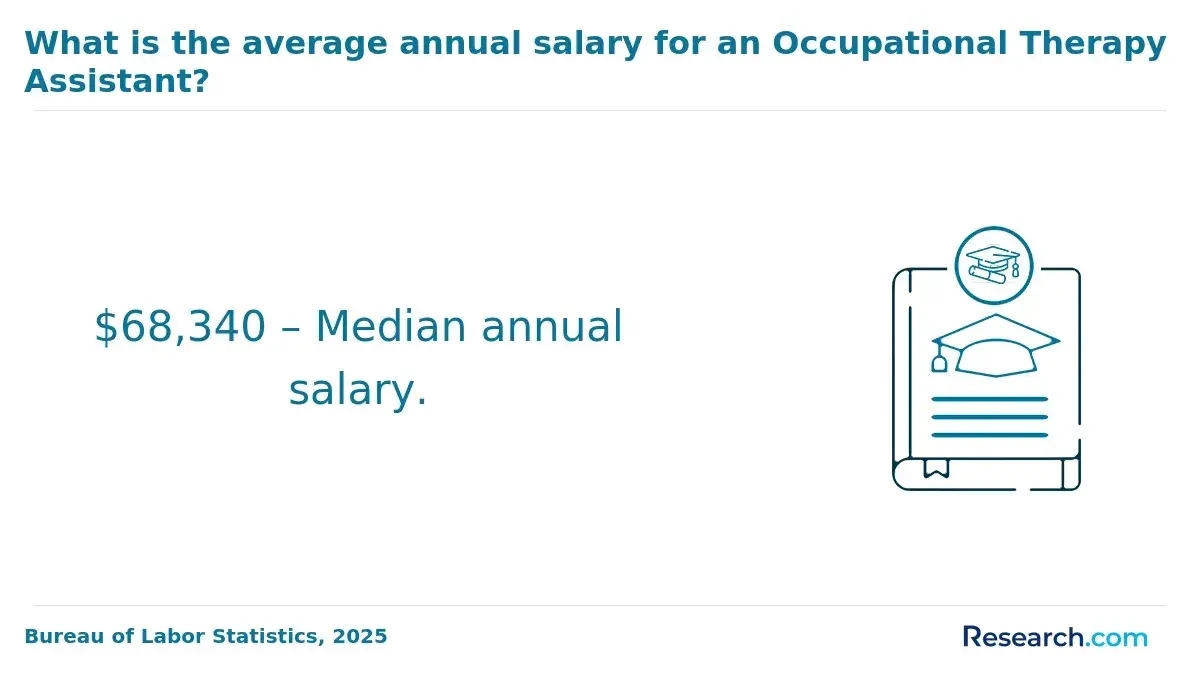
Salary can also vary by occupation. Recent United States Bureau of Labor Statistics (BLS) data reports median annual salaries of $60,250 for athletic trainers, $46,180 for fitness instructors, and $58,160 for exercise physiologists.
| Career | Reported salary figure in this guide | Important note |
| Master’s exercise science graduate | $61,531 average annual salary | ZipRecruiter figure; salaries vary widely by location and job title. |
| Athletic trainer | $60,250 median annual salary | Licensure, certification, and state requirements may apply. |
| Fitness instructor | $46,180 median annual salary | Income may depend on clientele, schedule, location, and certifications. |
| Exercise physiologist | $58,160 median annual salary | Clinical roles may require specific credentials or employer-required experience. |
- Most Affordable Online Master's Degrees in Exercise Science for 2027
- How long does it take to complete an online master's degree in exercise science?
- How does an online master's degree in exercise science compare to an on-campus program?
- What is the average cost of affordable online master's degrees in exercise science?
- What are the financial aid options for students enrolling in a master's degree in exercise science?
- What are the prerequisites for enrolling in an online master's degree in exercise science?
- What courses are typically in an online master's degree in exercise science?
- What types of specializations are available in an online master's degree in exercise science?
- How do I choose the best affordable online master's degrees in exercise science?
- Is an online master's degree in exercise science worth the investment?
- What challenges do online master's degrees in exercise science present and how can they be managed?
- How do online master's degrees in exercise science benefit working professionals?
- What career paths are available for graduates of an online master's degree in exercise science?
- How to transition to sports management?
- What is the job market for graduates of an online master's degree in exercise science?
- Bachelor's vs. Master's in Exercise Science: Which Path is Right for You?
- Other Things You Should Know About Online Master's Degree in Exercise Science
Most Affordable Online Master's Degrees in Exercise Science for 2027
How do we rank our schools?
A low-cost online master’s degree still requires a serious financial and time commitment. To build this list, our research team reviewed transparent program information and data from trusted sources such as the IPEDS database, Peterson’s Database, the College Scorecard database, and the National Center for Education Statistics (NCES). Our goal is to help students and families compare programs using relevant, verifiable factors. For more detail on how Research.com evaluates schools and programs, see our methodology page.
1. University of North Georgia Kinesiology (M.S.)
The University of North Georgia offers a Master of Science in Kinesiology with two concentration options: Exercise Science and Physical Education. The 30-credit program can be completed in just over a year, and courses are offered in two-year rotations. At $340.50 per credit hour, UNG is one of the lowest-cost options in this guide.
- Program Length: 1.5 years
- Tracks/concentrations: Exercise Science and Physical Education
- Cost per credit: $340.50
- Required credits to graduate: 30
- Accreditation: Southern Association of Colleges and Schools Commission on Colleges
2. American Public University Online Master of Science in Sports and Health Sciences (MS)
The online Master of Science in Sports and Health Sciences at American Public University allows students to choose from General, Exercise Science and Human Performance, Exercise and Chronic Disease, and Health and Wellness Management concentrations. The program does not charge an application fee, provides free transfer credit evaluation, and does not require GRE scores.
- Program Length: 8 to 16 weeks
- Tracks/concentrations: General, Exercise Science and Human Performance, Exercise and Chronic Disease, and Health and Wellness Management
- Cost per credit: $425
- Required credits to graduate: 36
- Accreditation: Council for Higher Education Accreditation
3. Pittsburg State University Health, Human Performance & Recreation Online Master's Degree
Pittsburg State University offers an online master’s degree in Health, Human Performance & Recreation with concentrations in Sport and Leisure Service Management, Physical Education, and Human Performance and Wellness. The program costs $393 per credit hour, can be completed in around a year, and allows students to choose either a thesis option or a coursework option.
- Program Length: 1 to 1.5 years
- Tracks/concentrations: Sport and Leisure Service Management, Physical Education, and Human Performance and Wellness
- Cost per credit: $393
- Required credits to graduate: 32
- Accreditation: Higher Learning Commission of the North Central Association of Colleges and Schools
4. Sam Houston State University Master of Science in Kinesiology (Sport and Human Performance)
The online Master of Science in Kinesiology with a Sport and Human Performance concentration at Sam Houston State University emphasizes exercise, movement, training, and human development. The program uses small class sizes, regularly employs experienced instructors, and lists an in-state tuition rate of $320.25 per credit hour.
- Program Length: 1 to 2 years
- Tracks/concentrations: None
- Cost per credit: $320.25 (in-state); $728.25 (out-of-state)
- Required credits to graduate: 30 to 36
- Accreditation: Southern Association of Colleges and Schools Commission on Colleges
5. Northern Kentucky University Master of Science in Exercise Science Online
The online Master of Science in Exercise Science at Northern Kentucky University includes both Thesis and Non-thesis tracks. Coursework addresses strength programming, human performance data analytics, and clinical exercise physiology. Students are assigned an academic advisor, and the school offers a seven-week accelerated course format. Tuition is $464 per credit hour.
- Program Length: 7 weeks to 2 years
- Tracks/concentrations: Thesis and Non-thesis
- Cost per credit: $464
- Required credits to graduate: 31
- Accreditation: Southern Association of Colleges and Schools Commission on Colleges
6. Delta State University Master of Science in Sport and Human Performance
The Master of Science in Sport and Human Performance at Delta State University offers Exercise Science, Human Performance, and Sports Management concentrations. Its 30-credit structure can support a relatively efficient path to graduation, and tuition is listed at $469 per credit hour.
- Program Length: 1 to 2 years
- Tracks/concentrations: Exercise Science, Human Performance, and Sports Management
- Cost per credit: $469
- Required credits to graduate: 30
- Accreditation: Southern Association of Colleges and Schools
7. Kansas State University Nutrition, Dietetics and Sensory Sciences Master's Degree
Kansas State University offers a Nutrition, Dietetics, and Sensory Sciences master’s degree with five concentration options, including Public Health Nutrition, Nutrition and Exercise Sciences, and Sensory Analysis and Consumer Behavior. Students may choose thesis, report, or coursework-only options. The program requires 30 credit hours and charges $611.13 per credit hour.
- Program Length: 1 to 2 years
- Tracks/concentrations: Public Health Nutrition, Nutrition and Exercise Sciences, Sensory Analysis and Consumer Behavior, Nutritional Sciences and Dietetics, and Nutrition Education and Communication
- Cost per credit: $611.13
- Required credits to graduate: 30
- Accreditation: Higher Learning Commission
8. Lindenwood University Master of Science in Health Sciences with a Fitness and Wellness Specialization
The Master of Science in Health Sciences with a Fitness and Wellness emphasis at Lindenwood University covers areas such as nutrition, fitness, exercise physiology, and health promotion. Students can choose a thesis or coursework-only option. The school also offers an MS in Health Sciences with a Sports Science and Performance Specialization in on-campus and hybrid formats.
- Program Length: 1 to 2 years
- Tracks/concentrations: None
- Cost per credit: $551
- Required credits to graduate: 33
- Accreditation: Higher Learning Commission
9. University of Louisiana - Monroe MS in Exercise Science (Sports Management Concentration)
The MS in Exercise Science at the University of Louisiana offers its Sports Management concentration fully online. Its Sport Performance and Applied Exercise Science concentrations are delivered on campus. The program requires 30 to 36 credit hours, can be completed in around two years, and includes three elective options for added flexibility.
- Program Length: 2 years
- Tracks/concentrations: None
- Cost per credit: $500
- Required credits to graduate: 30 to 36
- Accreditation: Commission on Accreditation of Allied Health Education Programs
10. University of Florida Online Master of Science in Applied Physiology and Kinesiology
The online Master of Science in Applied Physiology and Kinesiology at the University of Florida offers specializations in Athlete Development and Integrative Strength and Conditioning Science. Students study topics such as exercise physiology, biomechanics, and strength and conditioning. The program requires 30 credits and charges $550 per credit hour.
- Program Length: 1 to 2 years
- Tracks/concentrations: Athlete Development and Integrative Strength and Conditioning Science
- Cost per credit: $550
- Required credits to graduate: 30
- Accreditation: Southern Association of Colleges and Schools Commission on Colleges
What students often value in online exercise science master’s programs
Online exercise science students often point to three advantages: flexible scheduling, exposure to classmates from different professional backgrounds, and the ability to apply coursework immediately in coaching, fitness, healthcare, or wellness settings.
-
: "
“The most valuable part of my online program was learning alongside classmates from many regions and professional settings. Their perspectives on health, wellness, and training helped me think beyond one local fitness model and consider broader community needs.” - Elena
"
-
: "
“The online format made graduate school possible while I continued working full time. I could review lectures when my schedule allowed, participate in discussions, and connect with faculty without putting my career on hold.” - Alex
"
-
: "
“As a former athlete, I wanted to understand movement and performance at a deeper level. Online coursework let me revisit complex concepts and use that knowledge to move from coaching toward sports performance research.” - Sydney
"
Key findings
- Students can normally complete a master’s degree in exercise science in about one to two years.
- 45% of high-income Americans, 36% of mid-income Americans, and 29% of low-income Americans are interested in health and fitness.
- The average total cost of a master’s degree in science, including master’s degrees in exercise science, is $57,770.
- The employment of athletic trainers and fitness instructors from 2024 to 2034 is poised to grow by a notable 11%.
- Exercise science-related occupations generate many annual openings, including 69,000 openings for fitness instructors, 6,700 for rehabilitation counselors, 6,600 for health education specialists, 2,700 for athletic trainers, and 1,200 for exercise physiologists.
How long does it take to complete an online master's degree in exercise science?
Most students finish an online master’s degree in exercise science in about one to two years. Accelerated programs can shorten that timeline to roughly one year, but students should expect heavier course loads and less flexibility during busy terms.
Program length also depends on credit requirements, concentration choice, transfer credit policies, thesis or capstone expectations, and whether the student enrolls full time or part time. Students pursuing advanced athletic, clinical, research, or strength and conditioning roles should make sure the shorter timeline does not remove coursework or practical experience they need for their goals.
| Enrollment path | Typical completion time stated in this guide | Best for | Trade-off |
| Accelerated | About 1 year | Students who can handle a demanding schedule | Less room for work, family, internships, or exam preparation |
| Full time | 1 to 2 years | Students prioritizing faster completion | Higher term-by-term workload |
| Part time | Often closer to 2 years | Working adults and students with family obligations | Longer time before graduation and career advancement |
How does an online master's degree in exercise science compare to an on-campus program?
Online and on-campus exercise science master’s programs can cover similar academic content, but the learning experience differs. The better option depends on whether the student values scheduling flexibility, campus facilities, in-person networking, lab access, or lower indirect costs.
| Factor | Online master’s program | On-campus master’s program |
| Schedule | Often asynchronous or partially asynchronous | Usually follows fixed class meeting times |
| Location | Accessible from any suitable study location with reliable internet | Requires travel to campus and physical attendance |
| Facilities | May rely on virtual labs, local fieldwork, or applied assignments | Can provide direct access to labs, gyms, sports fields, and campus equipment |
| Networking | Mostly through online discussions, virtual meetings, and digital communities | More frequent face-to-face interaction with faculty, peers, and campus events |
| Cost considerations | May reduce commuting, relocation, and campus living expenses | May involve transportation, housing, meals, and campus-based costs |
When an online program makes more sense
- You plan to keep working while enrolled.
- You cannot relocate for graduate school.
- You already have access to a gym, clinic, school, team, or fitness setting where you can apply what you learn.
- You prefer self-directed learning and can manage deadlines without frequent in-person reminders.
When an on-campus program may be better
- You want extensive hands-on lab work using campus equipment.
- You learn best through face-to-face instruction.
- You want stronger access to athletic departments, research labs, or local internships tied to the university.
- You are preparing for a research-intensive or clinical pathway that depends on direct mentorship and facility access.
What is the average cost of affordable online master's degrees in exercise science?
The average total cost of a master’s degree in science, including master’s degrees in exercise science, is $57,770. The average cost of a master’s degree at a public institution is $48,690, while private institutions charge around $64,440 per program.
Online graduate degrees are often less expensive than campus-based options because they may reduce commuting, housing, and relocation costs. Students can sometimes lower expenses further by choosing accelerated formats, comparing programs listed among the cheapest online masters, using employer tuition benefits, applying for scholarships, and maximizing transfer credits when allowed.
| Cost factor | Why students should check it |
| Per-credit tuition | A low per-credit rate can still become expensive if the program requires more credits. |
| Required credits | Programs in this guide range from 30 to 36 credits, which affects total tuition. |
| Online fees | Technology, distance learning, graduation, or program fees can increase total cost. |
| Residency pricing | Some public universities charge different rates for in-state and out-of-state students. |
| Books, software, and equipment | Students may need textbooks, software, assessment tools, or access to fitness technology. |
| Time to completion | A longer timeline may increase living costs and delay career advancement. |
What are the financial aid options for students enrolling in an online master's degree in exercise science?
Students pursuing online exercise science master’s programs can use many of the same funding options available to learners in other graduate programs, including those researching an affordable online master's in communication. Before borrowing, students should compare grants, scholarships, employer benefits, assistantships, and school-based aid.
- Federal Aid: The Free Application for Federal Student Aid (FAFSA) helps students determine the federal aid options for which they may qualify, including loans, grants, and work-study programs.
- Grants and Scholarships: Colleges, professional organizations, and private groups may offer funding for exercise science, kinesiology, health, wellness, and sport-related graduate study. Awards may be based on need, academic record, professional interest, or discipline-specific criteria.
- Assistantships: Some universities reduce tuition or provide stipends in exchange for teaching, research, lab, coaching, or administrative support.
- Employer Assistance: Working students should ask their HR department whether tuition reimbursement, tuition assistance, or professional development funding is available.
- Work-study Programs: Eligible students may use Federal Work-Study for part-time employment that helps offset educational costs while building experience.
- Loans: Loans can fill remaining funding gaps after grants, scholarships, assistantships, and employer support. Students should compare repayment terms and interest rates carefully, especially when considering private loans.
How to reduce the cost before enrolling
- Ask each school for a full cost estimate, not just the per-credit tuition rate.
- Confirm whether online students pay separate distance learning fees.
- Ask whether previous graduate credits, certifications, or professional training can reduce required coursework.
- Submit the FAFSA early and check school-specific scholarship deadlines.
- Compare accelerated and part-time formats to see which offers the best balance of cost and workload.
What are the prerequisites for enrolling in an online master's degree in exercise science?
Admission requirements vary by school, but online exercise science master’s programs usually expect applicants to show academic readiness for graduate-level science and applied health coursework. Similar document requirements appear in other health-related graduate programs, including some of the cheapest MHA programs.
- Bachelor's Degree: Applicants are generally expected to hold a bachelor’s degree in exercise science or a related field.
- Official Transcripts: Schools usually request official transcripts from every college or university attended to verify degree completion, grades, and prerequisite coursework.
- CV or Resume: Applicants with experience in coaching, fitness, wellness, healthcare, athletics, or research can use a resume or CV to strengthen their file.
- Recommendation Letters: Letters from instructors, supervisors, coaches, mentors, or employers can speak to an applicant’s academic ability, work ethic, and professional readiness.
- Personal Statement: A statement of purpose gives applicants space to explain their goals, relevant experience, and reasons for pursuing a master’s degree in exercise science.
- Standardized Test Scores: Some programs may require GRE scores, though several online programs waive this requirement.
- Application: Students must complete the school’s online application and submit any required application fee.
Questions to ask admissions before applying
- Do I need an undergraduate degree specifically in exercise science, or will a related major qualify?
- Are prerequisite courses required in anatomy, physiology, biomechanics, statistics, or research methods?
- Is the GRE required, optional, or waived?
- Can I apply with professional experience if my bachelor’s degree is in another field?
- Are there campus visits, labs, clinical placements, internships, or synchronous class meetings?
What courses are typically included in an online master's degree in exercise science?
A master’s degree in exercise science usually combines core science courses, applied training courses, research methods, electives, and sometimes a thesis, capstone, or practicum. Like an affordable online masters in healthcare administration, the curriculum can vary by institution and specialization.
- Exercise Physiology: Students study how the body responds and adapts to physical activity, including cardiovascular, respiratory, muscular, and metabolic responses. The course helps connect exercise programming to health, performance, recovery, and disease risk.
- Biomechanics: This course applies mechanical principles to human movement. Students analyze force, leverage, joint action, movement efficiency, and injury risk.
- Nutrition for Health and Exercise: Students examine how macronutrients and micronutrients support training, performance, recovery, and overall health.
- Exercise Psychology: This course explores motivation, adherence, behavior change, and psychological factors that influence whether people begin and maintain exercise habits.
- Kinesiology: Kinesiology takes a broad view of human movement, often including anatomy, motor learning, motor control, and movement assessment.
Specialization courses may go deeper into strength and conditioning, rehabilitation science, chronic disease, sports psychology, nutrition, health promotion, athletic development, or management. Students should compare course lists closely because two programs with similar titles can prepare graduates for different outcomes.
What types of specializations are available in an online master's degree in exercise science?
Many graduate exercise science degree programs offer concentrations that help students focus on a specific career direction. A specialization should be chosen based on the roles, populations, and credentials the student wants to pursue.
| Specialization | Best fit for students interested in | Possible career direction |
| Strength and Conditioning | Athletic performance, injury prevention, training program design | Strength and conditioning coach, performance coach, athletic training support roles |
| Nutrition and Wellness | Exercise nutrition, lifestyle coaching, health promotion | Wellness coach, nutrition consultant, corporate wellness roles |
| Sports Psychology | Motivation, adherence, behavior change, performance mindset | Health coach, wellness counselor, exercise psychology-related roles |
| Fitness Leadership and Management | Running fitness programs, facilities, teams, or wellness initiatives | Fitness director, gym manager, wellness coordinator |
| Rehabilitation Science | Exercise for people recovering from injury, illness, or surgery | Clinical fitness, rehabilitation support, post-recovery exercise programming |
| Health Promotion | Community wellness, prevention, population health education | Health educator, community wellness specialist, program coordinator |
- Strength and Conditioning: Students learn how to create safe, evidence-informed training plans for athletes and physically active populations. This concentration is common among students interested in competitive sport, combat sports, and high-contact athletic environments.
- Nutrition and Wellness: This area examines how diet, exercise, and lifestyle behaviors affect performance, disease prevention, and long-term health.
- Sports Psychology: Sports psychology focuses on mental and behavioral factors in training, motivation, exercise adherence, and performance. Graduates and sports psychology majors may pursue roles related to wellness counseling, coaching, and exercise behavior support.
- Fitness Leadership and Management: Students learn about program development, customer service, marketing, operations, and business management in fitness and wellness organizations.
- Rehabilitation Science: This concentration focuses on exercise programming for people recovering from surgery, illness, injury, or functional limitations.
- Health Promotion: Students study how to encourage healthier lifestyles at the individual, workplace, and community levels.
Kinesiology may appear as a course, specialization, or separate degree. Students comparing related programs can also review online kinesiology degree options.
How do I choose the best affordable online master's degrees in exercise science?
The best affordable online master’s degree is not automatically the cheapest one. It is the program that gives you the strongest match between cost, academic quality, flexibility, specialization, accreditation, and career goals. This same principle applies when comparing other low-cost online options, such as the cheapest online psychology bachelor degree programs.
Key factors to compare
- Available Specializations: Choose a program with courses that support your intended role. Strength and conditioning, clinical exercise physiology, sports management, wellness, and rehabilitation science can lead to different outcomes.
- Accreditation: Students should verify whether the institution and, when relevant, the program meet recognized standards. Useful accreditation sources include the Commission on Accreditation of Allied Health Education Programs (CAAHEP), the Commission on Accreditation for Exercise Science (CoAES), the Higher Learning Commission, and regional accrediting bodies.
- Cost: Compare total program cost, not just tuition. Include fees, books, equipment, travel, and time away from work.
- Flexibility: Students with jobs or family responsibilities should check whether classes are asynchronous, synchronous, accelerated, or locked into fixed weekly meeting times.
Common mistakes to avoid
| Mistake | Why it can hurt you | Better approach |
| Choosing based only on tuition | A cheap program may not offer the specialization, support, or credential alignment you need. | Compare total cost, curriculum, accreditation, outcomes, and flexibility together. |
| Ignoring accreditation | Accreditation can affect financial aid, transfer credits, employer recognition, and future graduate study. | Verify institutional and relevant programmatic accreditation before applying. |
| Assuming online means fully flexible | Some online programs require live sessions, campus visits, labs, or fixed deadlines. | Ask about synchronous meetings, residency requirements, and course pacing. |
| Overlooking certification requirements | A degree may not automatically qualify you for a specific certification, license, or clinical role. | Check employer, state, and certification-body requirements before enrolling. |
| Relying only on rankings | A ranked program may not fit your schedule, budget, or career direction. | Use rankings as a starting point, then evaluate personal fit. |
Is an online master's degree in exercise science worth the investment?
An online master’s degree in exercise science can be worth the investment when it helps a student qualify for higher-responsibility roles, specialize in a specific area, prepare for certification, move into leadership, or build stronger applied and research skills. It is less likely to be worth the cost if the student’s target job only requires a bachelor’s degree, a lower-cost certification, or work experience.
Students comparing this degree with other graduate options, including high paying master's degrees, should estimate the financial return carefully. Salary outcomes are not guaranteed. The degree’s value depends on tuition, debt, current earnings, expected role changes, local demand, certifications, and whether the program provides practical experience that employers recognize.
Who is most likely to benefit?
- Fitness, coaching, and wellness professionals who need advanced scientific knowledge to move into leadership or specialized roles.
- Students planning careers in exercise physiology, athletic performance, health promotion, or applied research.
- Working adults who need a flexible graduate format.
- Professionals whose employers reward advanced education through promotion, salary increases, or expanded responsibilities.
Who should consider another path?
- Students who want to become licensed physical therapists, since that pathway typically requires a different professional degree.
- Applicants seeking a quick entry into personal training when a certification may be sufficient for their immediate goal.
- Students who need extensive in-person lab work and do not have access to local applied settings.
- Anyone who would need to borrow heavily without a clear career plan for using the degree.
What challenges do online master's degrees in exercise science present and how can they be managed?
Online graduate study is convenient, but it also requires discipline. Exercise science can be especially challenging online because some topics are easier to master through hands-on labs, movement analysis, supervised testing, and direct coaching practice.
| Challenge | How to manage it |
| Self-paced coursework can lead to procrastination | Create a weekly study calendar and treat coursework like fixed work appointments. |
| Limited in-person lab exposure | Ask whether the program uses virtual labs, local practicums, recorded demonstrations, or optional campus experiences. |
| Fewer face-to-face networking opportunities | Attend virtual office hours, join professional associations, participate in online discussions, and connect with classmates intentionally. |
| Balancing school with work | Choose part-time or asynchronous formats if your job schedule changes frequently. |
| Technology demands | Confirm software, device, internet, and platform requirements before the first term begins. |
Students who want broader exposure to online learning models can also review online college courses for seniors, especially if they are comparing flexible academic options across different life stages.
How do online master's degrees in exercise science benefit working professionals?
Online exercise science master’s programs are often designed for adults who cannot pause their careers. The strongest programs allow students to connect graduate-level theory with real workplace problems in fitness, healthcare, athletics, corporate wellness, education, or community health.
- Flexible scheduling: Asynchronous coursework can help students complete lectures, readings, and assignments around work shifts, client appointments, coaching schedules, and family obligations.
- Lower indirect costs: Online study can reduce commuting, relocation, parking, and campus living expenses.
- Immediate application: Students already working in fitness, sport, wellness, or healthcare can apply course concepts to client programming, training plans, assessment methods, or workplace wellness initiatives.
- Broader peer network: Online classrooms often include professionals from different regions and fields, giving students exposure to varied approaches to health, performance, and exercise programming.
What career paths are available for graduates of an online master's degree in exercise science?
An online master’s degree in exercise science can support many career paths, but the degree alone does not guarantee a specific job title. Employers may also require certifications, licensure, clinical experience, coaching experience, or specialized technical skills. Similar career-planning logic applies to related graduate fields, including masters in educational psychology jobs.
- Certified Personal Trainer: Personal trainers design safe and effective exercise programs for individuals with different goals, abilities, and health considerations. Graduate study can strengthen their understanding of exercise physiology, assessment, nutrition, and motivation.
- Strength and Conditioning Coach: These professionals build training programs that improve strength, power, speed, endurance, and injury resilience for athletes and active populations.
- Corporate Wellness Program Manager: Wellness managers create and oversee employee health programs that may include fitness, stress management, prevention, and lifestyle education.
- Exercise Physiologist: Exercise physiologists assess fitness, medical history, and physical capacity to design exercise plans for health improvement, chronic condition management, or performance goals.
- Athletic Director: Athletic directors manage sports programs, budgets, staff, compliance responsibilities, and student-athlete support within schools or organizations.
- Health Educator: Health educators develop programs, workshops, and resources that help individuals and communities make informed health decisions.
- Exercise Science Researcher: Researchers study how physical activity affects health, performance, disease risk, recovery, and human physiology, often contributing to evidence-based exercise recommendations.
The chart below shows the exercise science jobs with the highest average annual salaries, excluding senior and managerial roles.
How to transition to sports management?
Exercise science graduates who want to move into sports management should build business, operations, leadership, finance, and event-management skills alongside their performance and wellness expertise. This transition can make sense for professionals who enjoy sport environments but want to manage people, programs, facilities, budgets, or athlete services rather than focus only on training or exercise programming.
1. Add sports management coursework
Students can bridge the gap by taking courses or earning an additional credential in sports marketing, facility management, sports finance, event planning, compliance, and sport organization leadership. An online sports management degree can be useful for professionals who need structured business training.
2. Gain hands-on experience in sports organizations
Internships, volunteer roles, graduate assistantships, and part-time positions with athletic departments, professional teams, sports facilities, youth sport organizations, or sports marketing firms can help exercise science graduates learn how the business side of sport operates.
3. Build a professional network
Students should attend sports industry events, connect with athletic administrators, join relevant associations such as the Sports Management Association, and use platforms like LinkedIn to seek informational interviews and mentorship.
4. Strengthen leadership and communication skills
Sports management roles often require supervising staff, coordinating schedules, managing athletes or clients, negotiating with vendors, and communicating with stakeholders. Workshops, committee work, team leadership, and project management experience can help develop these skills.
5. Learn budgeting and analytics
Sports managers frequently work with budgets, performance metrics, attendance data, revenue goals, and operational reports. Courses in sports finance, budgeting, and data analysis can make an exercise science graduate more competitive.
6. Use your exercise science background as a differentiator
A graduate background in exercise science can be especially valuable in sports performance management, athlete wellness, injury prevention programming, and health-focused team operations. This combination can help candidates stand out from applicants with only general business training.
7. Consider professional certifications
Certifications such as Certified Sports Manager (CSM) or Certified Athletic Administrator (CAA) may help demonstrate commitment to the sports management field, depending on the role and employer.
Students interested in this transition can compare online sports management degree programs to identify pathways that complement their exercise science background.
What is the job market for graduates of an online master's degree in exercise science?
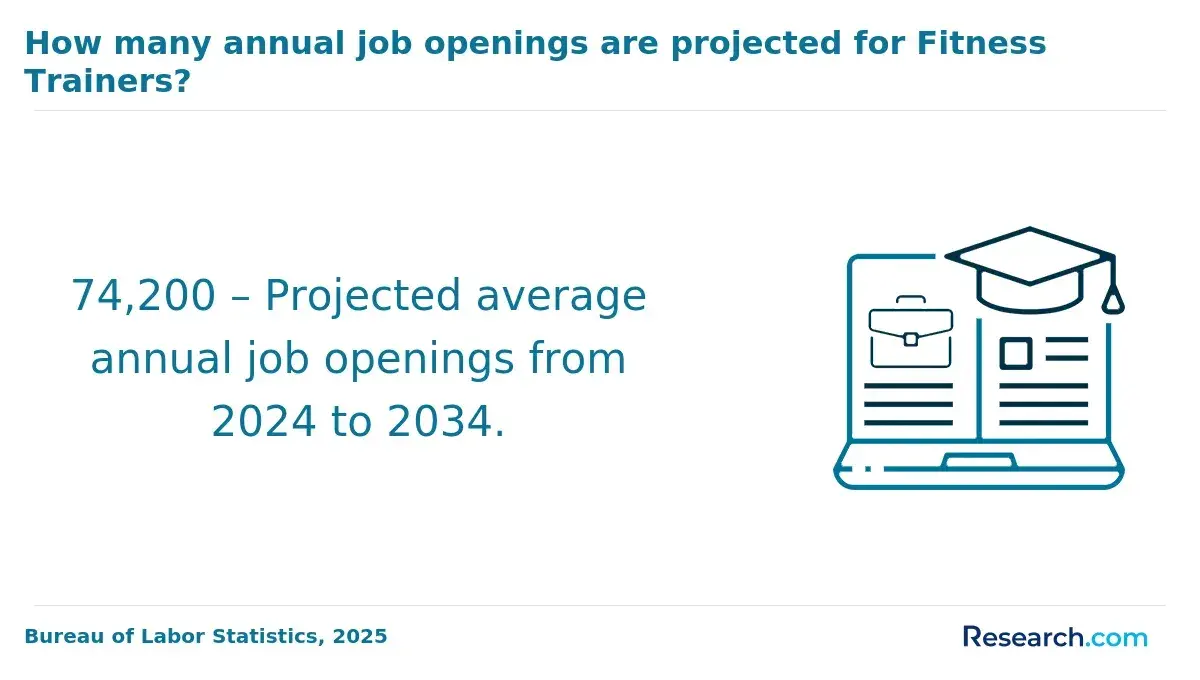
According to 2025 data from the BLS, as shown in the chart below, employment of fitness instructors from 2024 to 2034 is poised to grow by a notable 12%. This represents 74,200 openings for fitness instructors.
Interest in health and fitness supports demand for exercise science professionals. As of 2024, 52% of high-income Americans, 39% of mid-income Americans, and 28% of low-income Americans are interested in health and fitness. Demand may be strongest for graduates who combine exercise science knowledge with certifications, digital tools, client communication skills, and experience working with specific populations.
The chart below indicates the growth of exercise science jobs over the next decade, as compared to the national average.
Bachelor's vs. Master's in Exercise Science: Which Path is Right for You?
The right degree level depends on your current education, career target, budget, and timeline. A bachelor’s degree is often the entry point for fitness, coaching, wellness, and related roles. A master’s degree can make more sense for students who want advanced specialization, leadership, research preparation, or deeper applied science training.
| Degree level | What it provides | Best for |
| Bachelor's Degree in Exercise Science | A broad foundation in exercise science, physiology, kinesiology, and movement principles | Students seeking entry-level roles or a foundation for future graduate study |
| Master's Degree in Exercise Science | Advanced study in areas such as exercise physiology, sports nutrition, cardiac rehabilitation, performance training, or research methods | Students pursuing specialized, leadership, research, or advanced applied roles |
Bachelor's Degree in Exercise Science
- Introduces the core principles of exercise science, physiology, and kinesiology.
- Can support entry-level work as a personal trainer, fitness instructor, or related fitness professional, although additional certifications may be required.
- Can prepare students for a master’s degree, professional school, or specialized credentials.
- Students seeking lower-cost options can explore affordable online Exercise Science degree programs.
Master's Degree in Exercise Science
- Builds on undergraduate training with more advanced coursework and specialization.
- May support roles such as exercise physiologist, strength and conditioning coach, or research scientist in the field.
- May require prerequisite coursework or professional experience, depending on the program.
Other Things You Should Know About an Online Master's Degree in Exercise Science
What are the highest paying exercise science jobs?
According to 2024 data from ZipRecruiter, the exercise science jobs with the highest average annual salaries, excluding senior and managerial roles, are sports scientists ($90,961), research physiologists ($90,419), exercise test technologists ($89,646), corporate exercise specialists ($87,325), and clinical physiologists ($72,002).
What is the closest degree to exercise science?
Closely related degree options include exercise physiology, kinesiology, movement science, and fitness and wellness. Some areas that appear as exercise science specializations may also be offered as standalone degree programs.
What is the difference between kinesiology and exercise science?
Kinesiology is the broader study of human movement, including biomechanics, motor control, body mechanics, and exercise physiology. Exercise science focuses more specifically on how exercise and physical activity affect body systems such as cardiovascular function, muscle performance, metabolism, and overall health.
What skills do students need for an online master's degree in exercise science?
Students should be prepared to develop communication, critical thinking, adaptability, research, technology, and time management skills. Online learners also need self-discipline, comfort with digital learning platforms, and the ability to apply scientific concepts to real people and real movement problems.
How do exercise science programs prepare students for fitness and healthcare careers?
Exercise science programs combine classroom theory with applied training in anatomy, physiology, nutrition, assessment, exercise programming, and movement analysis. Depending on the program, students may complete labs, internships, clinical experiences, research projects, or applied assignments that help them connect scientific knowledge to personal training, physical therapy preparation, sports coaching, wellness programming, and exercise physiology.
How do programs include current research and technology?
Many exercise science programs update coursework to reflect current research in biomechanics, physiology, nutrition, performance, and health behavior. Programs may use tools such as motion analysis systems, metabolic carts, wearable fitness trackers, research databases, and virtual learning platforms. Students may also engage in faculty-led research, seminars, guest lectures, or workshops that expose them to evolving industry practices.
Current trends affecting exercise science students
- Wearable fitness data is changing practice: Employers increasingly value professionals who can interpret information from trackers, performance platforms, and health apps without overpromising what the data can show.
- AI tools are entering fitness and wellness: AI-supported programming tools can help with planning and tracking, but human professionals remain important for assessment, motivation, safety, adaptation, and client communication.
- Online education is more accepted but still requires scrutiny: Students should verify accreditation, curriculum quality, faculty access, and practical learning opportunities rather than assuming every online program has the same value.
- Employers look for stacked credentials: A master’s degree may be strongest when paired with relevant certifications, applied experience, internships, and population-specific expertise.
Key Insights
- The most affordable listed option in this guide by per-credit tuition is Sam Houston State University at $320.25 for in-state students, but total value depends on credits, fees, accreditation, specialization, and career fit.
- Most online master’s degrees in exercise science take 1 to 2 years, while accelerated formats can be faster but more demanding.
- The average total cost of a master’s degree in science, including exercise science, is $57,770, so students should compare full program cost rather than relying only on tuition per credit.
- Online study works best for disciplined students who need flexibility and already have or can access applied settings for practice.
- Specialization matters. Strength and conditioning, rehabilitation science, sports psychology, wellness, health promotion, and sports management can lead to different career paths.
- Accreditation, certification alignment, and employer expectations should be checked before enrollment, especially for students pursuing clinical, athletic, or regulated roles.
- A master’s degree can improve career options, but salary and job outcomes are never guaranteed. The strongest return comes from matching the degree to a clear career goal, minimizing unnecessary debt, and building hands-on experience while enrolled.
References:
- BLS (2025, August 28). Athletic Trainers. BLS
- BLS (2025, August 28). Exercise Physiologists. BLS
- BLS (2025, August 28). Fitness Trainers and Instructors. BLS
- Coursera (2025, October 15). Exercise Science: Definition, Degrees, and Jobs. Coursera
- Hanson, M. (2024, November 23). Average Cost of a Master’s Degree. Education Data Initiative
- Statista (2025, July 9). Share of Americans interested in health and fitness as of September 2024, by income. Statista
- ZipRecruiter (2026, February 16). Masters Exercise Science Salary. ZipRecruiter
Other Things You Should Know About an Online Master's Degree in Exercise Science
Scholarships for online master's degrees in exercise science are available from various sources, including universities, professional organizations, and foundations. Students should research opportunities early, as availability and deadlines vary by institution and funding source.
To participate in 2027 online exercise science master's programs, students typically need a reliable internet connection, a modern computer or laptop, and updated software for accessing course materials and submitting assignments. Specific platforms like Blackboard or Canvas may be used by different institutions.
Many programs require a capstone, while thesis options are less common. A capstone is often worth 3 to 6 credits and is completed in the final term after core coursework. Some schools accept a practicum or applied project instead, especially in 30- to 36-credit programs.


