2027 Best Online Certificate Programs for Dental Assistant

Co-Founder and Chief Data Scientist
If you want to become a dental assistant without putting your job, family schedule, or current responsibilities on hold, an online certificate program can be a practical starting point. The key question is not just whether online study is possible, but whether the program meets your state’s requirements, gives you enough hands-on training, and leads to real employment opportunities.
This guide breaks down what online dental assistant certificate programs usually include, how they compare with campus-based options, what they cost, what to check before enrolling, and whether the path is worth it for your goals. It also explains the difference between quick-entry certificate programs and longer academic routes so you can choose the option that fits your timeline, budget, and career plans.
Demand for dental services continues to shape the need for trained dental assistants. At the same time, employers are looking for candidates who can handle both patient-facing and administrative tasks, while state rules determine whether certification, clinical hours, or a specific exam is required. That mix makes program choice especially important.
Quick Answer: Is an online dental assistant certificate worth it?
Yes, for many students it can be a strong option if they want a faster, more flexible route into dental assisting. The best programs combine online theory with required labs, clinical practice, or externships, and they prepare you for the credentialing or state-specific steps you need to work legally and competitively.
Choose this path if you want to start working sooner, need a schedule that fits around work or caregiving, and are willing to verify accreditation, hands-on training, and licensure requirements before enrolling. If your state requires more extensive clinical preparation or you want a broader academic foundation, an associate degree may be the better long-term fit.
Online dental assistant certificate programs: what they are and who they are for
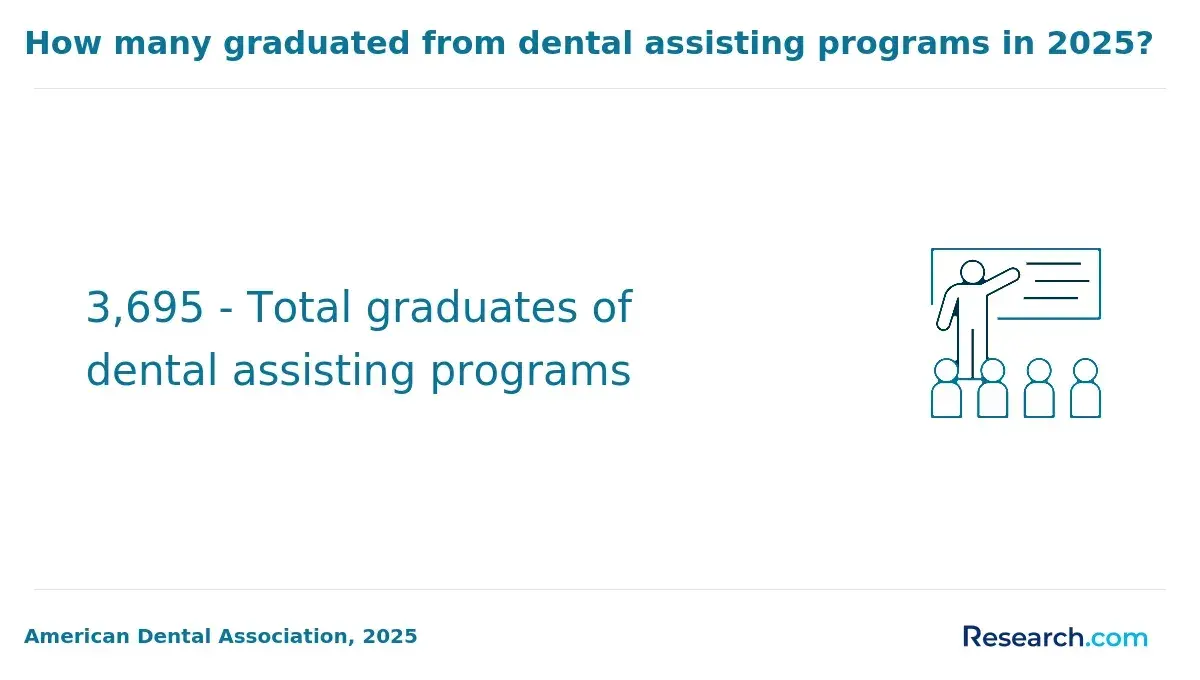
An online dental assistant certificate program teaches the core skills needed for entry-level dental assisting. Coursework usually covers chairside assisting, infection control, dental terminology, radiography basics, office procedures, patient communication, and safety protocols. Some programs are fully online for lecture-based content, while others use a hybrid format that adds in-person labs or externships.
This path is usually best for students who want a short, career-focused program and do not need a full college degree to start working. It can also work well for adults changing careers, parents managing a tight schedule, and current healthcare workers looking to move into a dental setting.
It may not be the best choice if you want the broadest academic experience, plan to continue into dental hygiene or another degree path right away, or live in a state that requires very specific clinical training that your program cannot provide.
Do employers accept online dental assistant credentials?
Often, yes — but only when the program is credible, properly accredited, and aligned with state and employer expectations. Employers usually care less about whether the theory portion was online and more about whether you have the required skills, clinical exposure, and any needed certification or licensure.
What matters most is whether your program prepares you to do the job. A strong online program should help you build practical skills, document your hands-on experience, and understand what employers in your area expect from new hires. If the program has weak clinical training or no clear path to required credentials, employer confidence can be limited.
In other words, “online” is not the problem. Quality and compliance are.
Can a dental assistant certificate be recognized beyond the U.S.?
Not automatically. Recognition depends on the country, the employer, and whether your credentials match local licensing or registration rules. Even when online learning is widely accepted, dental assisting is still regulated by local standards, and those standards may require additional exams, local training, or work authorization.
If you plan to work outside the United States, check the destination country’s dental board or professional regulator before enrolling. A program that looks convenient at home may not transfer cleanly abroad.
For students staying in the U.S., the more relevant issue is state recognition. Some states require graduation from an accredited program and passing a national exam, while others allow entry through supervised experience or different state-based pathways.
Online vs. traditional dental assistant certificate programs
Both online and campus-based programs can prepare you for entry-level dental assisting. The right choice depends on how you learn best, how quickly you need to finish, and how much in-person training your state or employer expects.
| Factor | Online certificate program | Traditional campus program |
| Schedule | More flexible for working adults and caregivers | Fixed class times and campus attendance |
| Learning format | Online lectures with possible labs or externships in person | Mostly in-person instruction and labs |
| Speed | Often shorter or easier to complete around a busy schedule | May follow a standard semester calendar |
| Cost | Can be lower, but varies by school and required clinical components | Can be higher due to campus fees and commuting costs |
| Hands-on training | Depends on the program’s lab, simulation, or externship structure | Usually built into the daily schedule |
| Best for | Self-motivated students who need flexibility | Students who prefer direct classroom structure |
Online study works best when the program has a clear plan for practical experience. If a program is mostly online but offers little or no clinical preparation, it may leave you underprepared for certification or the workplace.
How long does it take?
Some dental assisting certificate programs can be finished in less than a year. Shorter timelines are possible because these programs usually do not include as many general education courses as degree programs.
That said, completion time depends on course load, term length, externship scheduling, and whether your state requires additional practical hours. A program that looks “fast” on paper may still take longer if you can only study part time.
Is online study more convenient?
Usually, yes. Online coursework allows students to study around work and family obligations, and it removes daily commuting. For many adult learners, that flexibility is the main reason to choose this route.
Convenience is not the same as ease, though. Online programs still require time management, self-discipline, and consistent participation.
Is it cheaper?
Often, but not always. Online programs can reduce commuting and housing costs, and some schools price them more affordably than campus programs. Still, tuition, lab fees, exam fees, uniforms, supplies, and externship costs can change the total price quickly.
The cheapest program is not automatically the best value. A low-cost option that lacks accreditation or strong job support can cost more in the long run if you need to retake courses or qualify for a different program later.
How much does an online dental assistant certificate program cost?
Costs vary widely by school, location, program length, and whether clinical training is built into the price. In general, online dental assisting programs may cost around $500 to $23,000, depending on the institution and included requirements.
For context, the ADA reports that tuition and fees for first-year students in dental schools range from $24,000 to $63,000 in public universities and around $48,000 to $127,000 in private institutions. Total first year costs range between $30,000 and $154,000. Those figures are for dental school, not dental assistant certificate programs, but they show how much less expensive assistant training can be compared with professional dental degrees.
When comparing programs, look beyond tuition. Ask about:
- Registration and technology fees
- Books and supplies
- Background check and drug screen charges
- Uniforms and equipment
- Certification exam fees
- Externship or lab costs
Is it worth the investment?
For many students, yes — especially if the goal is to enter healthcare quickly and without the cost of a longer degree path. Dental assistants support dentists with chairside tasks, patient education, sterilization, recordkeeping, scheduling, and other duties that keep a practice running smoothly.
The U.S. Bureau of Labor Statistics projects employment change of 6.4% through 2034 for dental assisting. That does not guarantee a job, but it does indicate continued demand. The ADA also reports that many dentists plan to increase staff in 2026, which may improve hiring prospects for well-prepared graduates.
Work Settings of Dental Assistants

What are the admission and technology requirements?
Requirements differ by school and by state, but many programs ask for the following:
| Requirement type | Common examples |
| Academic entry | High school diploma or GED, transcripts, and prerequisite coursework |
| Health and safety | CPR certification, physical exam, drug screening |
| Program paperwork | Application, personal essay, advising session, background check |
| Technology | Laptop or desktop computer, reliable internet connection, basic digital skills |
Before enrolling, confirm whether your state requires additional steps after graduation, such as a national exam, registration, or supervised practice. Missing that detail is one of the most common and costly mistakes students make.
How to prepare for certification exams
If your state or employer expects certification, preparation should begin before your final term ends. The best exam plan is structured, realistic, and tied to the actual credential you need.
Step 1: Identify the right credential
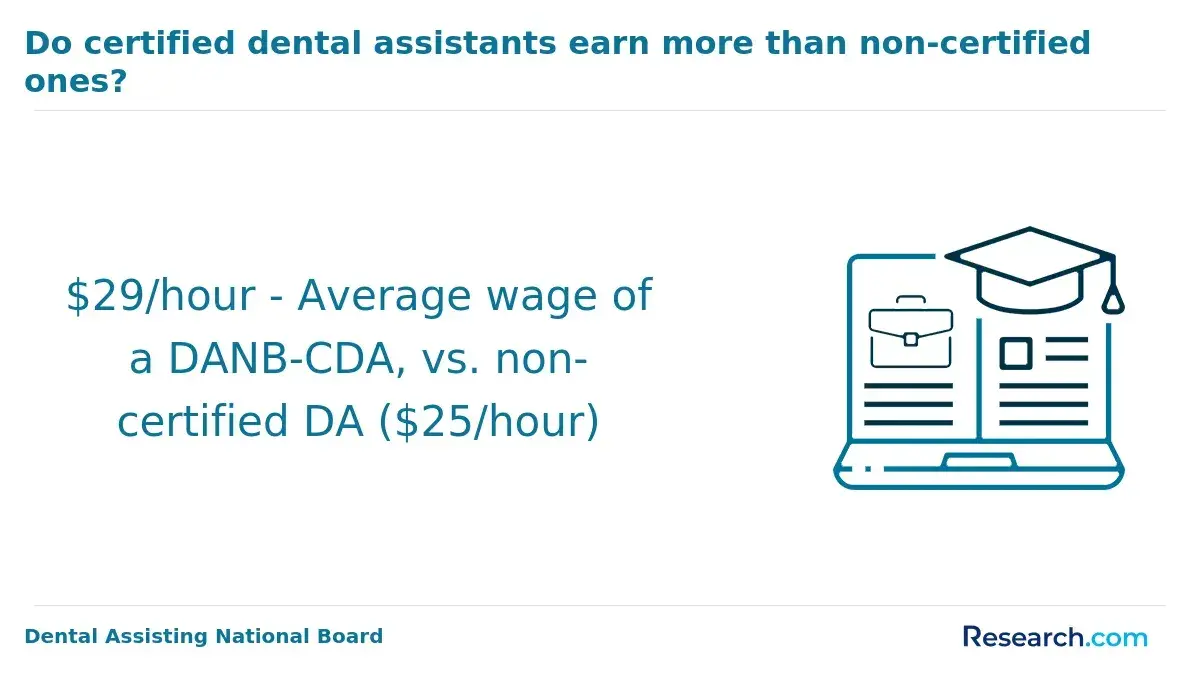
Not every dental assistant needs the same credential. Some students pursue the Certified Dental Assistant (CDA) credential offered by the Dental Assisting National Board (DANB), while others must follow a state-specific registration or licensure process. Start by checking your state board and local employer expectations.
Step 2: Match your coursework to exam content
Study the exact areas covered by your program and the exam blueprint. Prioritize topics such as infection control, radiography, chairside assisting, patient record handling, and safety procedures.
Step 3: Use official and practice-based study tools
- Use the exam sponsor’s published materials when available.
- Take timed practice tests to find weak areas early.
- Review terminology regularly instead of cramming at the end.
- Study with classmates or peers when you need accountability.
Step 4: Build hands-on confidence
Certification prep is easier when your course includes labs, simulation, or externship experience. Practical repetition helps you remember procedures and improves your speed under pressure.
Step 5: Protect your study schedule
Consistency matters more than intensity. Short, regular study blocks are usually more effective than long sessions that leave you exhausted.
For students comparing schools on a budget, it can also help to review most affordable online universities in USA as part of a broader cost comparison strategy, especially if you are balancing education with work.
What courses are usually included?
Course names vary by school, but most online dental assistant certificate programs cover a similar mix of clinical and administrative subjects.
| Course area | What you usually learn | Why it matters |
| Dental materials | Common materials, tools, terminology, and safety practices | Helps you work correctly with instruments and supplies |
| Dental anatomy | Teeth, oral structures, facial bones, and basic disease processes | Supports patient education and chairside support |
| Office administration | Scheduling, claims, inventory, software, and records | Builds front-office and support skills |
| Radiography | X-ray basics, image handling, and radiation safety | Useful for clinical tasks and credential preparation |
| Infection control | Sterilization, PPE, microorganisms, and prevention procedures | Essential for patient and staff safety |
Some programs also include communication skills, ethics, patient relations, and basic pharmacology or emergency procedures. The more clearly a curriculum maps to your state requirements, the better.
What should you look for in a program?
Choosing the right school is more important than choosing the shortest ad. A strong program should help you qualify for the job you want, not just finish quickly.
Accreditation
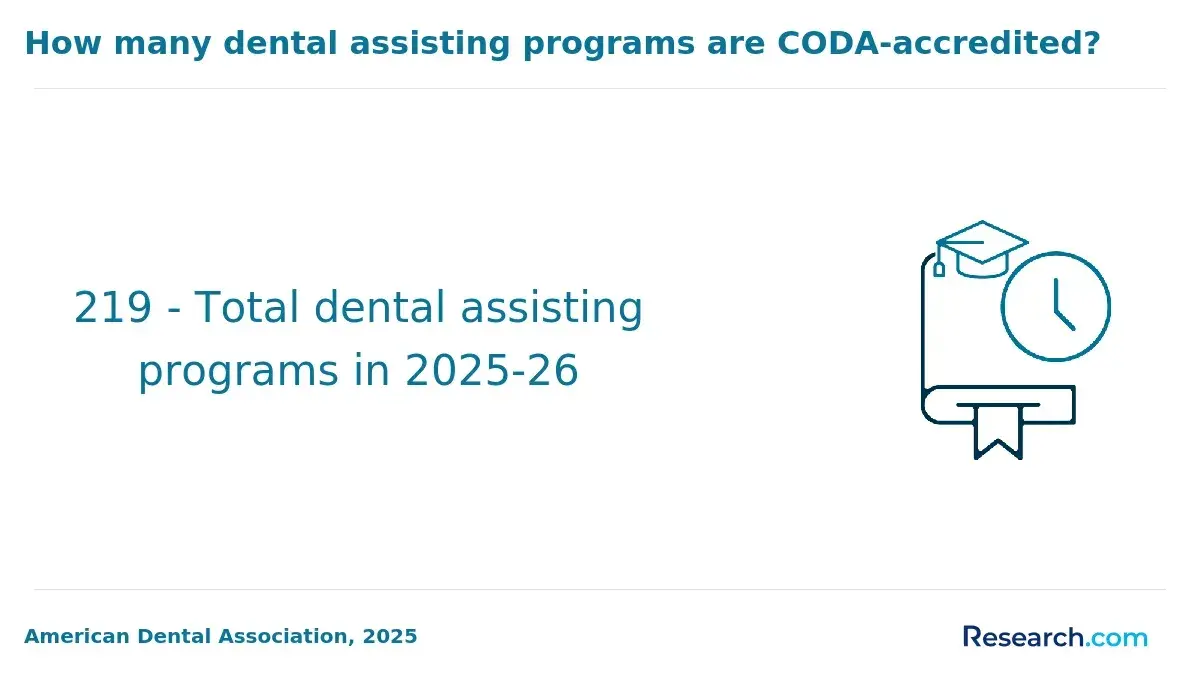
Check whether the school and program hold recognized accreditation. In dental education, the Commission on Dental Accreditation (CODA) is a key name to know. Accreditation matters because it can affect financial aid eligibility, transfer credit acceptance, employer trust, and exam eligibility in some states.
Hands-on training
Look for programs that include lab work, simulation, externships, or another approved clinical component. Dental assisting is practical work, and employers expect graduates to understand real-world procedures, not just online theory.
Faculty experience
Faculty should have current or relevant professional experience in dental assisting or dental practice management. Instructors with field experience can explain workplace expectations more clearly and help students avoid common errors.
Financial aid and total cost
Ask what financial aid may be available and whether the school participates in aid programs that apply to your situation. Aid options can include grants, scholarships, veteran benefits, or institutional support, but availability depends on the school and its status.
Career services
Job placement support is especially valuable for students entering a new field. Look for resume help, interview preparation, employer connections, and documented graduate outcomes rather than vague promises.
State compliance
Confirm that the curriculum aligns with the state where you plan to work. A program that is well known in one state may not satisfy requirements elsewhere.
What career paths can follow a dental assistant certificate?
A dental assistant certificate can lead to several work settings, especially if you build experience and keep learning. Entry-level graduates commonly begin in private dental practices, but some move into broader healthcare or administrative roles over time.
- Chairside dental assistant: Supports the dentist during procedures, prepares instruments, assists patients, and helps maintain a smooth clinical flow.
- Dental office receptionist: Handles check-ins, calls, scheduling, and insurance questions.
- Office manager or administrative assistant: Oversees records, billing, scheduling, and practice coordination.
- Specialty assistant: Works in orthodontics, pediatric dentistry, oral surgery, or other focused settings.
- Dental sales representative: Uses clinical knowledge to support dental product or equipment companies.
- Pathway to further education: Some graduates continue into dental hygiene or related healthcare programs.
Not every assistant moves upward in the same direction. The best next step depends on whether you prefer patient care, office coordination, sales, or further schooling.
Can extra certifications improve your outlook?
Yes, especially if they add practical value. Additional credentials can help you stand out when employers want assistants who can contribute beyond the basics. Specialized training in radiography, infection control, orthodontic assisting, or expanded duties may be especially useful depending on your state.
Some students also build broader office skills with training related to billing or records management. For example, a medical billing and coding certification may be useful for those leaning toward administrative work, though it is not a substitute for dental assisting preparation.
Benefits of accelerated programs
Accelerated programs can be helpful when you need a fast route into the workforce and want to reduce the time between enrollment and employment. They are especially attractive to adults with work or family commitments.
- Faster completion: Some programs can be completed in 6-9 months.
- Earlier job entry: Shorter timelines can help you start applying for work sooner.
- Lower indirect costs: Less time in school may mean less spending on commuting, childcare, and lost wages.
Still, speed should never replace quality. A rushed program without enough practice or credential alignment can create problems later.
If you are comparing fast education paths more broadly, fastest bachelor's degree programs may be worth reviewing if you want a longer-term academic ladder after your certificate.
How useful are job placement rates?
Job placement data can be one of the best indicators of a program’s value, but only when it is verified and explained clearly. Ask whether the school measures placement based on graduates working in the field, related fields, or any job at all. Those categories are not the same.
Also ask whether the school publishes recent outcomes, how many graduates responded, and whether career services are active or only advertised. Strong placement support often includes employer partnerships, externship connections, and interview coaching.
Can these programs be completed on an accelerated timeline?
Yes, many can. Some schools compress lecture content and use a shorter calendar to help students finish more quickly. That can work well for motivated learners who can commit steady time each week.
However, accelerated does not mean easier. The workload can be intense, and you may still need to complete clinical or lab requirements in person. Make sure the timeline is realistic for your schedule before you enroll.
How do they compare with other accelerated healthcare programs?
Dental assistant certificates are usually shorter and narrower in scope than many other accelerated healthcare degrees. They focus on practical entry-level support skills, while other programs may prepare students for more advanced clinical or administrative responsibility.
For instance, some students compare this route with 3 year accelerated PharmD programs or accelerated healthcare administration degree programs online. Those paths generally require more coursework, higher tuition, and a longer commitment, but they may also lead to different roles and pay levels. The right option depends on how quickly you want to work and how far you want your education to take you.
Certificate or associate degree: which is better?
The answer depends on your goals, not on which option sounds more impressive. A certificate is usually the faster, cheaper path into dental assisting. An associate degree takes longer, costs more, and includes more general education, but it can give you more room for advancement or future study.
| Feature | Certificate | Associate degree |
| Typical time to finish | Often 6 to 12 months | About two years |
| Focus | Job-ready technical and clinical skills | Broader academic and career preparation |
| Cost | Usually lower | Usually higher |
| Best for | Students who want to enter the field quickly | Students who want more academic depth |
| Future study | Can be a starting point for more training | May provide a stronger base for transfer or advancement |
If your goal is immediate entry into dental assisting, a certificate may make sense. If you are already thinking about dental hygiene, office leadership, or a future bachelor’s degree, an associate degree may be the better investment.
What is the salary potential for dental assistants?
According to the Bureau of Labor Statistics, the median annual salary for dental assistants is around $47,300. Reported earnings can range from around $36,190 to over $61,780 per year depending on location, experience, employer type, and duties.
Salary should be viewed carefully. A certificate can help you enter the field, but pay depends on where you work, how much responsibility you take on, and whether you earn additional credentials over time. For broader state-by-state comparisons in a related healthcare occupation, you can review medical assistant salary data.
What advanced education options exist after certification?
A dental assistant certificate does not have to be the end of your education. Many professionals continue with specialty training, advanced clinical skills, or degree programs that expand their career options.
Possible next steps include:
- Orthodontic assisting training
- Pediatric dental assisting education
- Advanced radiography instruction
- Expanded duties training, where allowed by state law
- Administrative or management coursework
- A future move into dental hygiene or another healthcare field
For students who want to broaden their academic path while staying in healthcare, dual degree programs online may be worth exploring if they align with long-term goals and schedule demands.
What are the main challenges of online dental assistant programs?
Online programs can be convenient, but they are not the easiest route for everyone. The biggest challenge is usually hands-on training. Dental assisting is a skill-based profession, so students should confirm that the program includes enough real-world practice to build confidence and competence.
Other issues to watch for include weak instructor support, limited employer recognition, poor technology access, and unclear certification alignment. These problems can undermine even a low-cost program.
Before enrolling, ask yourself whether the school tells you exactly how clinical training works, how graduates are supported, and what credentials you will be eligible to pursue after completion. If the answers are vague, keep looking.
Common mistakes students make when choosing a program
- Choosing a school without checking accreditation
- Assuming every online program meets state licensing rules
- Focusing only on tuition and ignoring exam, lab, and supply costs
- Skipping questions about externships and clinical practice
- Trusting placement claims without asking how outcomes are measured
- Assuming certificate length automatically means quality
- Not verifying whether the program matches the state where they plan to work
Questions to ask before enrolling
- Is the program accredited, and by whom?
- Does it include enough hands-on training for my state?
- Will it prepare me for the credential I need?
- What are the total costs, including books and exam fees?
- What kinds of graduates does the school place, and where?
- Can I complete the program part time if needed?
- Will the credits transfer if I later pursue an associate degree?
- How does the school support students with job placement?
Key Insights
- An online dental assistant certificate can be a smart choice if you want a faster, more flexible way into the field.
- The best programs do more than deliver online lectures; they include hands-on training, externships, or another clear clinical component.
- Accreditation and state requirements matter more than marketing claims. Always check them before enrolling.
- Costs vary widely, so compare total price, not just tuition.
- A certificate is usually the quickest route, while an associate degree offers more academic depth and may support longer-term advancement.
- Job outcomes depend on your location, skills, and credentials. A strong program should help you prepare for the exact role and exam your state requires.
- If you want to balance speed, flexibility, and job readiness, an online certificate can be worthwhile — as long as you confirm it is a legitimate path to practice in your state.
References:
- American Dental Association. (2024). CODA Survey of Dental Education - Report 2: Tuition, Admission, and Attrition. https://www.ada.org/resources/research/health-policy-institute/dental-education
- American Dental Association. (2025). 2025-26 Survey of Dental Hygiene Education Programs. Commission on Dental Accreditation. https://www.ada.org/resources/research/health-policy-institute/dental-education
- American Dental Association. (2025). The State of the U.S. Dental Economy 4th Quarter 2025 Update. https://www.ada.org/-/media/project/ada-organization/ada/ada-org/files/resources/research/hpi/state_us_dental_economy_q42025.pdf
- Dental Assisting National Board. (2024). Job Task Analysis Report. https://danbsfprodassets.azureedge.net/assets/docs/default-source/marketing-and-surveys/job-task-analysis-report.pdf
- Learn How to Become. (n.d.). How to Become a Dental Assistant: Dental Assistant Schools & Careers. https://www.learnhowtobecome.org/dental-assistant/
- U.S. Bureau of Labor Statistics. (2025, August 28). Occupational projections, 2024–2034, and worker characteristics, 2024. Retrieved February 2026, from https://www.bls.gov/emp/tables/occupational-projections-and-characteristics.htm
Other Things You Should Know About Online Certificate Programs for Dental Assistant
Online dental assistant programs provide flexibility and convenience, allowing students to learn at their own pace while covering the same essential curriculum as traditional programs. However, practical hands-on training, often required for certification, is typically arranged locally for online students to gain necessary clinical experience.
Yes, employers generally accept online dental assistant certificates, especially if they are from accredited programs. The stigma against online degrees has significantly decreased, and many employers recognize their validity.
To choose the best online dental assistant certificate program in 2027, consider accreditation, curriculum comprehensiveness, flexibility, and career support services. Look for programs offering externships and industry-recognized certifications to enhance employability.
The cost varies depending on the program and institution. On average, online programs are cheaper than traditional on-campus programs, with costs ranging from $5,000 to $20,000.
In 2027, most online dental assistant certificate programs require a high school diploma or GED, while some may ask for basic science coursework. Additional requirements might vary, with some programs requesting personal statements or interviews. Always check specific program prerequisites.
Common courses include Dental Materials, Dental Anatomy, Office Administration, Radiography, and Infection Control.
Yes, it is worth it, especially for those looking for a flexible and affordable way to enter the dental assisting field. The demand for dental assistants is growing, providing numerous job opportunities.
In 2027, an online dental assistant certificate program offers flexible learning, allowing students to balance education with other responsibilities. These programs often provide up-to-date curriculum, access to virtual resources, and networking opportunities. With advancements in online education technology, students can gain practical skills essential for a dental assistant role.