
2027 Easiest Medical Degree Programs

Co-Founder and Chief Data Scientist
Choosing an allied health program is really a career decision, not just a school decision. The right path depends on how quickly you want to enter healthcare, how much patient contact you want, whether your state requires licensure, how much clinical training you can complete in person, and whether the expected salary justifies the tuition. This guide compares some of the more accessible medical and allied health degree and certificate options for 2027, including radiation therapy, dental hygiene, sonography, nursing, physical therapist assisting, and phlebotomy. You will learn what each program involves, how long it can take, what it may cost, which credentials matter, where graduates work, and how to avoid choosing a program that does not support licensure or employment.
Quick Answer: What Are the Easiest Allied Medical Degree Programs?
The “easiest” allied medical programs are usually those with shorter training timelines, clear certification routes, and accessible admissions requirements. Phlebotomy technician programs are often the fastest because they may take only a few weeks to several months. Physical therapist assistant, dental hygiene, ultrasound technician, radiation therapy, and registered nursing programs usually require more coursework, labs, and supervised clinical experience. None of these careers is easy in practice: all involve patient care, safety standards, technical skills, and, in many cases, licensure or certification.
| Career Path | Common Entry Credential | Typical Completion Time | Median Annual Salary | Best Fit For |
| Phlebotomy Technician | Certificate program | A few weeks to several months | $38,000 | Students who want the fastest entry into patient-facing healthcare work |
| Physical Therapist Assistant | Associate degree | 2 years full-time | $58,740 or $59,770, depending on the cited data section | Students interested in rehabilitation, mobility, and hands-on therapy support |
| Ultrasound Technician | Associate degree or postsecondary certificate | 18-24 months or 4 years for a bachelor’s degree | $77,740 or $80,850, depending on the cited data section | Students who like imaging technology, anatomy, and diagnostic procedures |
| Dental Hygienist | Associate degree | 2 years full-time or 4 years for a bachelor’s degree | $87,530 | Students who want preventive care, patient education, and oral health work |
| Registered Nurse | ADN or BSN | 2 years for an ADN, 4 years for a BSN, or 12-18 months for an accelerated BSN | $77,600 or $86,070, depending on the cited data section | Students seeking broad clinical options and long-term advancement pathways |
| Radiation Therapist | Associate or bachelor’s degree | 2 years or 4 years full-time | $98,300 | Students comfortable with oncology care, precision technology, and high responsibility |
What are the benefits of an allied medical degree program?
- Multiple healthcare entry points: Allied health programs prepare students for technical, clinical, diagnostic, rehabilitation, and patient-support roles. Graduates may pursue work as radiation therapists, dental hygienists, ultrasound technicians, registered nurses, physical therapist assistants, phlebotomy technicians, and related professionals.
- Different timelines and cost levels: Some allied health careers require a short certificate, while others require an associate or bachelor’s degree. This makes the field useful for students who need a faster route into healthcare as well as those planning for advanced clinical roles.
- Flexible formats in some programs: Many schools offer online or hybrid coursework for general education, theory, medical terminology, and administrative subjects. However, most direct patient-care programs still require in-person labs, simulations, practicums, or clinical rotations.
- Competitive earning potential in selected roles: Salaries vary by occupation, state, employer, credentials, and experience. Existing cited figures include $98,300 for radiation therapists, $87,530 for dental hygienists, $86,070 for registered nurses, $80,850 for ultrasound technicians, $58,740 for physical therapist assistants, and around $38,000 for phlebotomy technicians.
What can I expect from an allied medical degree program?
Allied medical programs combine science coursework, technical training, patient-care practice, and supervised clinical experience. The balance depends on the field. A sonography student spends significant time learning imaging physics and anatomy, while a dental hygiene student focuses on oral health, radiology, periodontology, and preventive care. Nursing students study broad patient assessment and care planning, while phlebotomy students concentrate on blood collection, safety, and specimen handling.
- Core healthcare knowledge: Most programs include anatomy, physiology, medical terminology, infection control, ethics, and patient communication.
- Profession-specific training: Students learn the tools, procedures, and safety protocols used in their chosen role, such as ultrasound imaging, radiation treatment delivery, dental radiography, nursing procedures, therapeutic exercise, or venipuncture.
- Clinical skill development: Programs generally require supervised practice in hospitals, outpatient clinics, dental offices, imaging centers, rehabilitation facilities, laboratories, or other healthcare settings.
- Licensure or certification preparation: Many allied health careers require a state license, national certification exam, or both. A program should clearly state which exams it prepares students to take.
Where can I work with an allied medical degree?
Allied health graduates work across the healthcare system. Common employers include hospitals, health systems, outpatient clinics, physician practices, dental offices, diagnostic imaging centers, rehabilitation centers, laboratories, blood donation centers, public health agencies, and government healthcare facilities.
| Work Setting | Roles Commonly Found There | What to Consider |
| Hospitals | Registered nurses, radiation therapists, ultrasound technicians, phlebotomy technicians, physical therapist assistants | Often more shift work, complex cases, and stronger exposure to acute care |
| Outpatient clinics | Nurses, sonographers, PTAs, phlebotomy technicians | May offer more predictable schedules depending on the employer |
| Dental offices | Dental hygienists | Strong fit for students interested in preventive care and patient education |
| Diagnostic imaging centers | Ultrasound technicians and other imaging professionals | Technical accuracy and specialty credentials can matter for advancement |
| Rehabilitation centers | Physical therapist assistants | Requires physical stamina, coaching ability, and comfort working with recovery plans |
| Laboratories and blood banks | Phlebotomy technicians | Emphasizes safety, specimen integrity, labeling accuracy, and patient identification |
How much can I make with an allied medical degree?
Pay depends heavily on the occupation, state, setting, credentials, seniority, and shift schedule. The figures below are cited salary data from the article’s source set and should be used as planning benchmarks, not salary guarantees.
- Radiation Therapists: $98,300 median annual salary
- Dental Hygienists: $87,530 median annual salary
- Ultrasound Technicians: $80,850 median annual salary
- Registered Nurses: $86,070 median annual salary
- Physical Therapist Assistants: $58,740 median annual salary
- Phlebotomy Technicians: Around $38,000 median annual salary
An allied medical professions credential can be a practical route into healthcare, but the best choice is the one that matches your timeline, budget, state requirements, and comfort with direct patient care.
- What are the easiest medical degree programs for 2027?
- How long does it take to complete an allied medical professions degree program?
- What is the cost of tuition for allied health degree programs?
- How does an online allied medical professions degree compare to an on-campus program?
- What are the financial aid options for students in allied medical professions degree programs?
- What are the typical admission requirements for allied medical profession degrees?
- What courses are typically in allied medical professions programs?
- What certifications are available for allied medical professions?
- What career paths are there for graduates of allied medical professions?
- How can I become a certified medical assistant?
- How can I choose the right allied health program for my career goals?
- What are the continuing education requirements for allied medical profession graduates?
- How do accreditation and licensing standards affect allied health programs?
- What is the job market for allied medical professions graduates?
- What are the post-graduation success metrics for allied health programs?
- What are the emerging trends and challenges in allied health careers?
- What are the professional development and advancement opportunities for allied health professionals?
- What is the return on investment for an allied health degree?
- Can short-term courses and certifications accelerate my allied health career?
- How can accelerated medical billing and coding programs enhance my allied health career?
- Can complementary interdisciplinary degrees advance my allied health career?
- Can business acumen and management skills advance allied health careers?
What are the easiest medical degree programs for 2027?
The programs below are considered more accessible relative to many physician, advanced practice, or long professional healthcare degrees. “Easy” should not be interpreted as low responsibility. Each role requires patient safety, technical competence, ethical judgment, and, in many cases, licensure or certification.
1. Radiation Therapist
- Median Annual Salary: $98,300
- Projected Job Growth: 3% from 2023 to 2033
- Estimated Openings Per Year: Approximately 800
Radiation therapists work with cancer care teams to deliver prescribed radiation treatments. The role requires accuracy, comfort with specialized equipment, and compassion for patients undergoing difficult treatment plans. Entry usually requires an associate’s or bachelor’s degree in radiation therapy, and many states require licensure or certification. With a median annual salary of $98,300, this is one of the higher-paying allied health options listed here. Employment is projected to grow by 3% from 2023 to 2033, with approximately 800 openings per year, often connected to replacement needs as experienced workers retire or move into other roles.
2. Dental Hygienist
- Median Annual Salary: $87,530
- Projected Job Growth: 9% from 2023 to 2033
- Estimated Openings Per Year: About 16,400
Dental hygienists provide preventive oral healthcare, screen for signs of oral disease, take dental X-rays, clean teeth, apply preventive treatments, and educate patients. Most work in dental offices, though some practice in public health or community settings. The usual entry route is an associate degree in dental hygiene followed by state licensure. The field offers a median annual salary of $87,530 and projected job growth of 9% from 2023 to 2033. About 16,400 openings are expected each year, driven by demand for oral healthcare and workforce turnover.
3. Ultrasound Technician
- Median Annual Salary: $77,740
- Projected Job Growth: 12% from 2023 to 2033
- Estimated Openings Per Year: About 14,600
Ultrasound technicians, also called diagnostic medical sonographers, use imaging equipment to create internal images that help clinicians evaluate medical conditions. Many work in hospitals, outpatient centers, and imaging facilities. Students commonly complete an associate degree or postsecondary certificate in sonography. The role suits detail-oriented learners who enjoy anatomy, technology, and patient interaction. The cited median annual salary is $77,740, with projected job growth of 12% from 2023 to 2033 and about 14,600 expected openings each year.
4. Registered Nurse
- Median Annual Salary: $77,600
- Projected Job Growth: 6% from 2021 to 2031
- Estimated Openings Per Year: About 194,500
Registered nurses assess patients, administer medications, coordinate care, educate patients and families, and work across hospitals, clinics, long-term care, public health, and community settings. Students can enter through an associate degree in nursing or a bachelor’s degree in nursing and must pass a national licensing exam. The cited median annual salary is $77,600, with 6% projected growth from 2021 to 2031 and about 194,500 openings per year. Nurses who want to advance may later compare graduate options such as the most affordable online MSN programs.
5. Physical Therapist Assistant
- Median Annual Salary: $59,770
- Projected Job Growth: 24% from 2021 to 2031
- Estimated Openings Per Year: About 29,000
Physical therapist assistants help patients complete rehabilitation exercises and treatment plans under the supervision of physical therapists. The work is active, hands-on, and patient-centered. PTAs generally need an associate degree from an accredited program and must pass a licensing exam. The cited median annual salary is $59,770, with projected job growth of 24% from 2021 to 2031 and about 29,000 openings expected each year. This path can be a strong fit for students interested in movement, recovery, and coaching patients through physical challenges.
6. Phlebotomy Technician
- Median Annual Salary: $38,000
- Projected Job Growth: 22% from 2021 to 2031
- Estimated Openings Per Year: About 20,000
Phlebotomy technicians collect blood samples for testing, transfusions, donation, or research. Training is typically much shorter than degree-based allied health programs, making it a common entry point for students who want to begin healthcare work quickly. The job requires calm patient communication, precise labeling, infection control, and safe needle handling. The cited median annual salary is approximately $38,000, with 22% projected growth from 2021 to 2031 and about 20,000 expected openings each year. Some students later build on this experience through medical assisting, nursing, laboratory science, or programs such as RN to BSN programs with no clinicals.
How long does it take to complete an allied medical professions degree program?
Program length depends on the credential, the number of prerequisites, clinical placement availability, and whether you study full-time or part-time. A short certificate may lead to faster employment, while an associate or bachelor’s degree may support licensure, higher responsibility, or future advancement.
| Program | Credential Options | Typical Full-Time Timeline | Timeline Notes |
| Radiation Therapist | Associate degree or bachelor’s degree | 2 years or 4 years | Clinical training and state requirements can affect completion planning |
| Dental Hygienist | Associate degree or bachelor’s degree | 2 years or 4 years | Licensure is typically required after graduation |
| Ultrasound Technician | Associate degree or bachelor’s degree | 18-24 months or 4 years | Specialty tracks may add requirements |
| Registered Nurse | ADN, BSN, or accelerated BSN | 2 years, 4 years, or 12-18 months | Accelerated BSN programs are for students who already hold a bachelor’s degree |
| Physical Therapist Assistant | Associate degree | 2 years | Programs usually include supervised clinical experiences |
| Phlebotomy Technician | Certificate | A few weeks to several months | Often the quickest route among the options discussed |
Time factors students often overlook
- Prerequisites: Anatomy, physiology, chemistry, math, or biology courses may need to be completed before formal program admission.
- Clinical scheduling: Clinical placements can affect graduation timing, especially in competitive healthcare markets.
- Part-time enrollment: A part-time schedule can make school manageable but will usually extend the timeline.
- Bridge and accelerated options: Students with previous college credit or healthcare experience may qualify for faster pathways. For example, many affordable RN to BSN online programs are designed for ADN-prepared nurses seeking a BSN, while some students compare accelerated medical assistant programs when they want a shorter entry route.
What is the cost of tuition for allied health degree programs?
Tuition varies widely by institution type, residency status, credential level, program length, and clinical fees. Students should compare total cost, not only advertised tuition. Books, uniforms, background checks, immunizations, exam fees, transportation to clinical sites, lab supplies, and certification costs can materially change the final price.
| Program | In-State Tuition Estimate | Out-of-State or Private Tuition Estimate | Cost Planning Note |
| Radiation Therapist | Typically ranges from $32,000 to $61,008 for a four-year bachelor’s degree | Often between $61,008 and $121,148 for a four-year program | Check whether the program qualifies graduates for licensure or certification in your state |
| Dental Hygienist | Generally ranges from $6,000 to $12,000 for a two-year program at public community colleges | Can range from $20,000 to $50,000 or more for the entire program at private institutions | Dental hygiene programs may have equipment, instruments, and clinic-related fees |
| Ultrasound Technician | For a two-year associate degree, costs can vary but are typically around $7,335 for the entire program at community colleges | Not specified, but generally higher than in-state rates | Ask whether specialty training is included or separate |
| Registered Nurse | ADN costs can range from $2,000 to $10,000 per year; BSN in-state tuition can range from $5,000 to $15,000 per year | Often between $10,000 to $30,000 per year for ADN and BSN programs | Compare NCLEX support, clinical placement quality, and graduation rates |
| Physical Therapist Assistant | Typically ranges from $2,500 to $8,000 per year for a two-year associate degree at community colleges | Can be as high as $10,000 to $20,000 per year at private programs | Accreditation and licensure exam eligibility are critical |
| Phlebotomy Technician | Generally around $1,985 for a short-term certification program | Not typically relevant for such short programs, though costs may vary by institution | Ask whether certification exam preparation and clinical practice are included |
Some of these cost comparisons are visualized in the graph below.
How does an online allied medical professions degree compare to an on-campus program?
Online and hybrid allied health programs can be convenient, but students should understand one major limitation: direct patient-care programs cannot be completed entirely through online coursework if they require labs, simulations, or clinical rotations. Online delivery is most useful for theory courses, general education, medical terminology, healthcare administration, billing and coding, and degree-completion pathways.
| Factor | Online or Hybrid Program | On-Campus Program |
| Schedule flexibility | Often better for working adults and students with family responsibilities | Usually follows fixed class, lab, and clinical schedules |
| Hands-on training | May require local clinical placements, campus intensives, or simulation labs | Often provides direct access to campus labs and established clinical sites |
| Learning style | Requires self-direction, time management, and comfort with learning platforms | Offers more in-person structure and immediate faculty interaction |
| Networking | Students may need to be more intentional about connecting with peers and faculty | More built-in interaction with classmates, instructors, and local employers |
| Cost | May reduce commuting or housing costs, though tuition varies | May involve commuting, parking, relocation, or campus fees |
| Best fit | Students who need flexibility and can meet in-person clinical requirements | Students who prefer structured labs, face-to-face support, and campus resources |
Students interested in movement, exercise science, or wellness careers may also compare allied health programs with an easier kinesiology degree program, depending on whether they want clinical licensure or a broader health and fitness path.
Questions to ask before choosing an online allied health program
- Is the program accredited for the specific allied health field I want to enter?
- Does the school arrange clinical placements, or am I responsible for finding them?
- Will the program meet licensure or certification requirements in my state?
- Are labs completed locally, on campus, through intensives, or through simulation?
- What are the total costs after clinical fees, supplies, exams, and travel?
If you are comparing distance-learning options, verify institutional quality and program recognition. A useful starting point is Research.com’s guide to nationally accredited online colleges, but for licensure-bound allied health careers, programmatic accreditation and state eligibility are just as important.
What are the financial aid options for students in allied medical professions degree programs?
Allied health students may qualify for grants, scholarships, loans, work-study, employer tuition assistance, and military education benefits. Eligibility depends on the school, program length, accreditation status, enrollment level, financial need, and student category.
1. Grants and scholarships
- Federal Pell Grants: Need-based federal grants that do not require repayment. Eligibility is determined through the Free Application for Federal Student Aid, commonly called the FAFSA.
- Federal Supplemental Educational Opportunity Grants (FSEOG): Aid for undergraduate students with exceptional financial need.
- State grants: Some states provide aid for residents pursuing healthcare or workforce training programs.
- Institutional scholarships: Colleges may award funding based on need, academic performance, program area, or other criteria.
- Professional organization scholarships: Field-specific organizations, including groups for dental hygienists and radiologic technologists, may offer awards for students.
- Private scholarships: Foundations, employers, healthcare associations, and community organizations may fund allied health students.
Students looking for an entry point into nursing may also compare allied health options with the easiest LPN programs to get into, especially if cost and admission accessibility are major concerns.
2. Loans
- Federal Direct Student Loans: Available to eligible undergraduate and graduate students. Subsidized loans are based on financial need, while unsubsidized loans are not limited to need-based applicants.
- Federal Direct PLUS Loans: Available to graduate students or parents of dependent undergraduate students.
- Private student loans: Offered through banks and other lenders, usually with different credit requirements, interest terms, and repayment rules than federal loans.
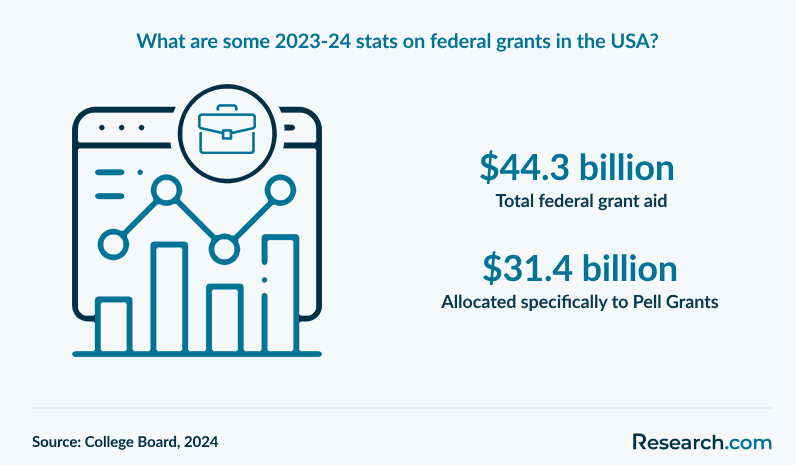
In the 2023-24 academic year, the US federal government allocated $44.3 billion for federal grant aid, according to the College Board (2024). Of that total, $31.4 billion went to Pell Grants for undergraduate students with financial need. These figures show the scale of federal grant support available in higher education, though individual eligibility varies.
3. Work-study programs
- Federal Work-Study: Provides part-time work opportunities for eligible students with financial need.
- Institutional work-study: Some colleges offer similar campus-based or program-related employment options.
4. Employer assistance
- Tuition reimbursement: Healthcare employers may help employees pay for additional training, especially when the education supports workforce needs.
Career ladders can matter when evaluating aid. For example, nurses planning long-term graduate study may compare routes such as the shortest MSN to DNP program. Students leaning toward leadership rather than direct clinical practice may research the easiest MHA online programs to get into.
5. Military benefits
- GI Bill: Provides education benefits for eligible veterans and family members.
How to reduce allied health education costs
- Submit the FAFSA as early as possible.
- Ask whether the program is eligible for federal financial aid.
- Compare community college, public university, and private school costs.
- Confirm whether prerequisite credits can transfer.
- Ask whether certification exam fees, uniforms, supplies, background checks, and immunizations are included.
- Search for scholarships through professional associations in your target field.
- If you already work in healthcare, ask your employer about tuition reimbursement or career ladder programs.
For students considering nursing, it is also useful to understand the requirements for becoming a nurse before committing to prerequisites, clinical schedules, and licensure steps.
What are the typical admission requirements for allied medical profession degrees?
Admissions vary by field and school. Short certificate programs may have open or simplified admissions, while nursing, dental hygiene, radiation therapy, sonography, and PTA programs can be selective because clinical seats are limited.
Common admission requirements
- High school diploma or equivalent: Most programs require proof of secondary education completion.
- Minimum GPA: Many programs set minimum GPA expectations, often around 2.5-3.0, while competitive programs may expect stronger grades.
- Prerequisite coursework: Biology, chemistry, math, anatomy, physiology, and other college-level prerequisites may be required.
- Standardized tests: Some undergraduate programs may request ACT or SAT scores, and some graduate pathways may require the GRE, though this is becoming less common.
- Healthcare exposure: Volunteering, shadowing, or work as a certified nursing assistant or similar role can strengthen an application for some programs.
- Letters of recommendation: Faculty, supervisors, or healthcare professionals may be asked to comment on your reliability, professionalism, and readiness.
- Personal statement: Many programs ask applicants to explain their career goals and interest in patient care.
- Interview: Selective programs may use interviews to assess communication skills, maturity, and understanding of the profession.
Requirements tied to clinical placement
- Background checks: Programs with patient contact commonly require criminal background screening.
- Drug screening: Clinical sites may require drug testing before placement.
- Immunization records: Students often must document required immunizations before entering clinical settings.
- Health insurance: Some schools or clinical sites require students to carry health insurance.
- Technical standards: Programs may publish physical, cognitive, communication, and sensory standards required for safe practice.
How to strengthen your application
- Review each program’s admissions checklist before taking prerequisites.
- Prioritize strong grades in anatomy, physiology, biology, chemistry, and math.
- Gain patient-facing exposure through volunteering, shadowing, or entry-level healthcare work.
- Prepare early if an entrance exam is required.
- Request recommendations from people who can speak to your dependability and professionalism.
- Use your essay to show realistic knowledge of the role, not just a general interest in healthcare.
Federal support for higher education changes over time. Total federal aid reached $147.3 billion in 2018-19, increased to $164.2 billion in both 2019-20 and 2020-21, then declined to $158.8 billion in 2021-22, $154.8 billion in 2022-23, and $120.8 billion in 2023-24. Students should always confirm current aid eligibility with the school’s financial aid office.
What courses are typically in allied medical professions programs?
Coursework depends on the profession, credential level, and accreditation standards. The examples below show common subjects, but students should review the actual curriculum, clinical hours, and exam preparation details for each school.
Radiation therapist courses
- Radiation physics: Radiation principles, interactions with matter, and dosimetry.
- Anatomy and physiology: Human structure and function with attention to cancer-related processes.
- Radiation biology: How radiation affects cells and tissues.
- Radiation safety: Protection standards, safe handling, and exposure control.
- Treatment planning: Imaging, simulation, and delivery techniques.
- Patient care: Assessment, communication, and management of treatment side effects.
- Clinical practice: Supervised experience in radiation therapy settings.
Dental hygienist courses
- Oral anatomy and physiology: Teeth, gums, and oral structures.
- Oral pathology: Conditions and diseases of the mouth.
- Periodontology: Gum disease prevention and treatment.
- Dental radiology: Dental X-ray techniques and interpretation basics.
- Dental materials: Materials used in restorative and preventive dental care.
- Clinical dental hygiene: Scaling, root planing, polishing, fluoride, sealants, and patient education.
- Community dental health: Oral health promotion for diverse populations.
Ultrasound technician courses
- Physics of ultrasound: Sound wave principles, image formation, and equipment use.
- Sonographic anatomy: Normal and abnormal anatomy as seen through ultrasound.
- Abdominal sonography: Imaging abdominal organs and related structures.
- Obstetric and gynecologic sonography: Imaging the female reproductive system and pregnancy.
- Vascular sonography: Imaging blood vessels and blood flow.
- Echocardiography: Imaging the heart and cardiac function.
- Patient care and communication: Medical history, procedure explanation, and patient interaction.
Registered nurse courses
- Fundamentals of nursing: Basic care skills, assessment, medication administration, and the nursing process.
- Medical-surgical nursing: Care for adults with medical and surgical conditions.
- Maternal-newborn nursing: Care for pregnant patients, newborns, and families.
- Pediatric nursing: Care for children and adolescents.
- Mental health nursing: Care for patients with mental health conditions.
- Community health nursing: Health promotion and disease prevention.
- Pharmacology: Medication actions, uses, and safety.
- Pathophysiology: Disease processes and their effects on the body.
Physical therapist assistant courses
- Anatomy and physiology: Human body systems, with emphasis on the musculoskeletal system.
- Kinesiology: Human movement and mechanics.
- Therapeutic exercise: Strength, flexibility, range of motion, and functional training.
- Physical agents: Heat, cold, ultrasound, electrical stimulation, and related modalities.
- Patient care: Transfers, gait training, mobility support, and daily activity assistance.
- Clinical practice: Supervised experience in physical therapy environments.
Phlebotomy technician courses
- Phlebotomy techniques: Venipuncture, capillary puncture, and blood collection.
- Anatomy and physiology: Basic circulatory system and blood vessel knowledge.
- Specimen handling: Labeling, processing, transport, and quality control.
- Infection control: Standard precautions and prevention of disease transmission.
- Patient interaction: Identification, reassurance, and communication.
- Safety procedures: Needle safety, needlestick prevention, and emergency response.
What certifications are available for allied medical professions?
Certification and licensure requirements vary by occupation and state. Some credentials are required to practice, while others improve employability or support specialization. Before enrolling, ask the program which exams graduates are eligible to take.
| Profession | Common Certifications or Exams | Why They Matter |
| Radiation Therapist | ARRT Certification in Radiation Therapy; Computed Tomography (CT) Imaging Certification; Magnetic Resonance Imaging (MRI) Certification; Medical Dosimetry Certification; Certification of Radiation Oncology | Supports competency in radiation therapy and related imaging or dosimetry pathways |
| Dental Hygienist | RDH Certification; Certified Dental Hygienist (CDH); Certified Public Health Dental Hygienist (CPHDH); Certified Oral Health Educator (COHE); Local Anesthesia Certification | Licensure and expanded practice options often depend on state rules and approved credentials |
| Ultrasound Technician | ARDMS Certification; RDMS; RDCS; RVT; RPS; RPVI | Specialty credentials can support work in general, cardiac, vascular, and other sonography areas |
| Registered Nurse | NCLEX-RN; CCRN; CPN; CNE; CNP | NCLEX-RN is mandatory for RN licensure; specialty credentials support advancement |
| Physical Therapist Assistant | PTA Certification; CPTA; Orthopedic Physical Therapy Certification; Neurological Physical Therapy Certification; Geriatric Physical Therapy Certification | Licensure and specialty competence influence employment and career development |
| Phlebotomy Technician | CPT; CPT-1; CPT-2; DPT; PBT | Certification can verify blood collection skills and may be preferred or required by employers |
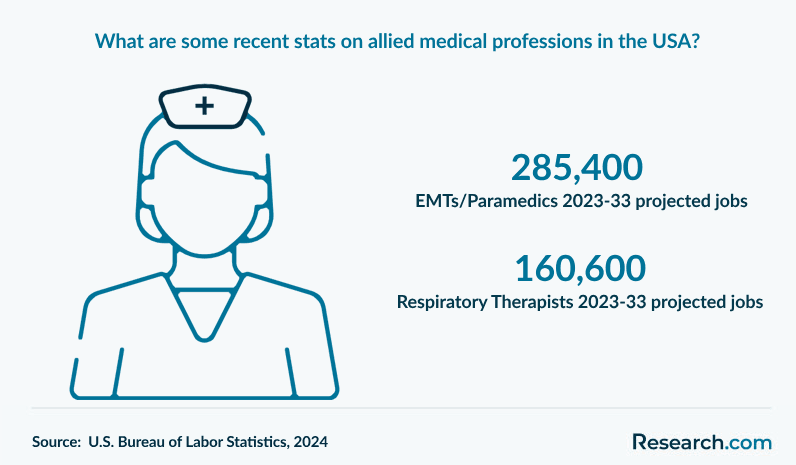
Additional allied health occupations also show strong demand. Emergency Medical Technicians and Paramedics are cited with 285,400 projected jobs and a growth rate of 15.1%, while Respiratory Therapists are expected to reach around 160,600 jobs, with a growth rate of 23.3% from 2023-33. These figures, shown below, highlight demand across several allied health areas.
What career paths are there for graduates of allied medical professions?
Allied health careers can start with a certificate or associate degree and later expand through specialization, advanced credentials, management roles, teaching, or further education. The best long-term path depends on whether you want to stay clinical, move into leadership, enter education, or transition into administration.
Radiation therapist advancement options
- Clinical specialization: Focus on pediatrics, brachytherapy, specific cancer types, proton therapy, or stereotactic radiosurgery.
- Leadership: Become a lead therapist or manage a radiation therapy department.
- Dosimetry: Move into treatment dose calculation and planning.
- Education or research: Teach in academic programs or participate in clinical research.
Dental hygienist advancement options
- Public health: Serve community programs and underserved populations.
- Corporate roles: Educate dental professionals or support oral health product programs.
- Research: Contribute to studies on oral health and disease prevention.
- Education: Become a clinical instructor in dental hygiene programs.
- Advanced practice: Pursue expanded responsibilities where state rules permit.
Ultrasound technician advancement options
- Specialty imaging: Build expertise in OB/GYN, echocardiography, vascular technology, or abdominal sonography.
- Travel sonography: Work temporary assignments in different locations.
- Education: Teach in sonography programs.
- Research: Assist with imaging-related studies.
- Management: Become a lead sonographer or department supervisor.
Registered nurse advancement options
- Specialty practice: Move into critical care, emergency medicine, oncology, pediatrics, geriatrics, or other areas.
- Advanced practice: Become a nurse practitioner, certified registered nurse anesthetist, certified nurse-midwife, or clinical nurse specialist.
- Leadership: Work as a charge nurse, nurse manager, or director of nursing.
- Education: Teach in hospitals or academic programs.
- Non-clinical roles: Explore case management, insurance, informatics, or legal nurse consulting.
Physical therapist assistant advancement options
- Specialized patient populations: Work with older adults, children, athletes, or patients with neurologic conditions.
- Focused treatment areas: Build experience in orthopedics, wound care, or rehabilitation specialties.
- Lead roles: Coordinate assistant work or support department operations.
- Travel PTA: Take short-term assignments in different locations.
- Further education: Some PTAs pursue a Doctor of Physical Therapy degree to become physical therapists.
Phlebotomy technician advancement options
- Specialized environments: Work in hospitals, blood banks, research laboratories, or pharmaceutical companies.
- Mobile phlebotomy: Collect samples in homes or off-site settings.
- Donor phlebotomy: Work at blood drives or donation centers.
- Career stepping stone: Use phlebotomy experience to move toward medical assisting, nursing, or laboratory science.
How can I become a certified medical assistant?
Medical assisting is another accessible allied health route for students who want a mix of clinical and administrative responsibilities. A typical pathway includes choosing an accredited program, completing classroom and hands-on training, practicing core clinical skills, and taking a recognized certification exam. Certification can help demonstrate readiness for work in clinics, physician offices, and outpatient settings. For a step-by-step explanation, see Research.com’s guide on how to become a certified medical assistant.
How can I choose the right allied health program for my career goals?
Start with the job you want, then work backward to the credential required in your state. A low-cost or fast program is not a good deal if it does not qualify you for licensure, certification, or clinical employment.
Program selection checklist
- Accreditation: Confirm both institutional accreditation and any programmatic accreditation required for your field.
- Licensure eligibility: Ask whether graduates qualify for the state license or certification exam you need.
- Clinical placement support: Determine whether the school arranges placements or expects students to find sites independently.
- Exam pass outcomes: Review certification or licensure exam pass rates when available.
- Job placement support: Ask about employer partnerships, career services, and graduate employment outcomes.
- Total cost: Include tuition, fees, supplies, transportation, exams, and lost work time.
- Schedule fit: Make sure class, lab, and clinical hours are realistic for your work and family obligations.
For administrative allied health pathways, cost comparisons such as the cost of medical billing and coding certification can help students evaluate shorter training options against longer clinical programs.
What are the continuing education requirements for allied medical profession graduates?
Continuing education helps allied health professionals maintain licensure or certification, keep up with technology, and meet employer expectations. Requirements differ by profession, state, certifying agency, and specialty.
Radiation therapist continuing education
- Continuing Education Units: ARRT typically requires 24 CEUs every two years to maintain certification, with certain topic requirements.
- Professional organizations: Groups such as the American Society for Radiation Oncology offer courses, conferences, and online learning.
- State boards: State licensing requirements may add separate renewal rules.
Dental hygienist continuing education
- State-based requirements: Many states require continuing education hours every 1-3 years.
- Approved providers: Dental hygiene associations, universities, and dental companies may offer accepted courses.
- Common topics: Infection control, new dental technologies, patient management, ethics, and legal issues.
Ultrasound technician continuing education
- Continuing Medical Education: ARDMS typically requires 30 CMEs every three years to maintain certification.
- Specialty rules: Cardiac, vascular, and other specialties may have specific CME expectations.
- Learning formats: Conferences, online courses, journal activities, and webinars may qualify.
Registered nurse continuing education
- State renewal rules: Requirements vary, with many states requiring contact hours every 2-3 years.
- Approved providers: Universities, hospitals, professional organizations, and online providers offer continuing education.
- Common topics: Specialty care, patient safety, clinical procedures, ethics, and healthcare trends.
Physical therapist assistant continuing education
- State-based CEUs: Many states require continuing education every 2 years.
- Approved providers: Physical therapy associations, universities, and continuing education companies may offer accepted courses.
- Focus areas: Therapeutic techniques, exercise science, technology, ethics, and patient care updates.
Phlebotomy technician continuing education
- Certification or employer requirements: Continuing education may be required to maintain credentials or workplace competency.
- Relevant topics: Infection control, collection techniques, safety, labeling accuracy, and patient interaction.
- Resources: Community colleges, phlebotomy associations, and online providers may offer training.
Always verify continuing education rules with your state licensing board, certifying agency, and employer before paying for a course.
How do accreditation and licensing standards affect allied health programs?
Accreditation and licensing determine whether a program is recognized, whether graduates can sit for required exams, and whether employers will view the credential as credible. Institutional accreditation evaluates the school as a whole. Programmatic accreditation evaluates a specific healthcare program against field standards. State licensure determines whether you can legally practice in a regulated role.
Before enrolling, ask the school to confirm in writing that its program meets educational requirements for your intended state. This is especially important for online and hybrid programs because a program approved in one state may not automatically satisfy another state’s rules. Students comparing advanced healthcare credentials can also review fields such as online pharmacy schools to see how accreditation and professional standards differ across healthcare education.
What is the job market for allied medical professions graduates?
The allied health job market includes clinical, diagnostic, rehabilitation, laboratory, and healthcare support roles. Demand is shaped by population aging, chronic disease management, diagnostic technology, outpatient care growth, and the need to replace workers who retire or change occupations.
Job market overview
- Healthcare employment growth: Overall employment in healthcare occupations, including allied health, is projected to grow much faster than the average for all occupations from 2023 to 2033. The healthcare sector is expected to add about 1.9 million new jobs annually due to growth and replacement needs.
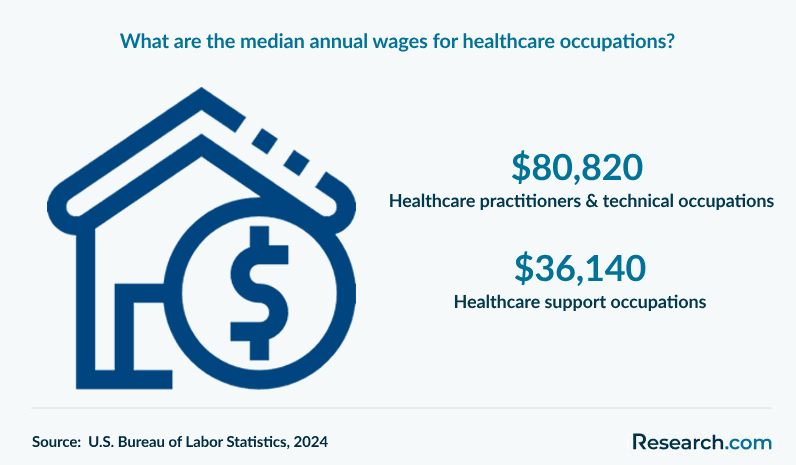
- Median wages: The median annual wage for healthcare practitioners and technical occupations was $80,820 in May 2023, while healthcare support occupations had a median wage of $36,140.
- Job stability: Many allied health roles are tied to essential patient services, which can support steady demand.
- Accessible entry points: Several roles require an associate degree or certificate rather than a long professional degree.
Selected allied health job data
| Occupation | Median Salary | Projected Job Growth | Common Credential or Exam |
| Radiation Therapist | $98,300 | 3% from 2023 to 2033 | ARRT Certification in Radiation Therapy |
| Dental Hygienist | $87,530 | 9% from 2023 to 2033 | RDH Certification |
| Ultrasound Technician | $80,850 | 12% from 2023 to 2033 | ARDMS Certification |
| Registered Nurse | $86,070 | 6% from 2021 to 2031 | NCLEX-RN Certification |
| Physical Therapist Assistant | $58,740 | 24% from 2021 to 2031 | PTA Certification |
| Phlebotomy Technician | Around $38,000 | 22% from 2021 to 2031 | CPT Certification |
These salary and growth figures are also presented in the graph below.
The salary spread is significant: radiation therapists are cited at $98,300, dental hygienists at $87,530, ultrasound technicians at $80,850, registered nurses at $86,070, physical therapist assistants at $58,740, and phlebotomy technicians at around $38,000. This range is why students should compare both training time and long-term earning potential before enrolling.
What do graduates say about their medical degrees?
-
: "
Radiation therapy gave me a career where technology and patient care meet every day. The work is precise and demanding, but being part of a cancer treatment team makes the responsibility meaningful. Alex
"
-
: "
Dental hygiene lets me combine science, prevention, and patient education. I like helping people understand their oral health and seeing the immediate impact of preventive care. Olivia
"
-
: "
Sonography is rewarding because the images we capture can help clinicians make important decisions. I enjoy the mix of equipment, anatomy, and direct patient interaction. Noah
"
What are the post-graduation success metrics for allied health programs?
Strong allied health programs should be able to show whether students finish, pass required exams, and find work. Do not rely only on marketing claims. Ask for recent outcomes and whether they are independently reported, internally tracked, or required by an accreditor.
Success metrics to request
- Graduation or completion rate: Shows whether students are progressing through the program.
- Certification or licensure exam pass rate: Indicates whether the curriculum prepares students for required credentials.
- Job placement rate: Helps measure employment outcomes after graduation.
- Clinical placement quality: Strong clinical sites can improve readiness and employer connections.
- Alumni satisfaction: Can reveal whether graduates felt prepared for the realities of the field.
- Employer feedback: Useful for understanding how local healthcare employers view the program.
Students comparing healthcare-related programs with lower tuition may also review options such as the cheapest online public health degree, particularly if they are interested in population health rather than direct clinical practice.
What are the emerging trends and challenges in allied health careers?
Allied health work is changing as healthcare becomes more technology-driven, team-based, and data-informed. Students entering the field should expect to keep learning after graduation.
Important trends
- Telehealth and remote support: Some patient education, monitoring, and administrative tasks are increasingly supported through digital platforms.
- Artificial intelligence and automation: AI may assist with imaging workflows, scheduling, documentation, coding, and decision support, but it does not remove the need for trained professionals who can evaluate quality, communicate with patients, and follow safety standards.
- Greater emphasis on documentation and compliance: Accurate records, privacy rules, and reimbursement requirements affect both clinical and administrative roles.
- Interdisciplinary care: Allied health professionals increasingly work in teams that include physicians, nurses, therapists, technicians, case managers, and administrators.
- Upskilling pressure: New devices, software, protocols, and regulations make continuing education more important.
Some allied health professionals eventually move into operations, administration, or management. Those considering this shift can compare clinical advancement with the highest-paying healthcare administration careers.
What are the professional development and advancement opportunities for allied health professionals?
Professional growth in allied health usually comes from a combination of experience, specialty credentials, leadership training, and additional education. The right development path depends on whether you want deeper clinical expertise, a supervisory role, teaching responsibilities, or a move into healthcare administration.
- Specialty certification: Sonographers, nurses, dental hygienists, radiation therapists, PTAs, and phlebotomy technicians may pursue credentials tied to specific skills or patient populations.
- Leadership roles: Experienced professionals may become lead technicians, department coordinators, supervisors, or managers.
- Teaching and training: Some move into clinical instruction, precepting, or academic teaching.
- Advanced degrees: Nurses and other healthcare professionals may pursue graduate education for advanced practice, administration, research, or education.
- Professional associations: Membership can provide continuing education, networking, conferences, and policy updates.
For a broader view of advanced income potential across healthcare, students and professionals can review Research.com’s guide to the highest paying medical jobs.
What is the return on investment for an allied health degree?
Return on investment depends on total program cost, time out of the workforce, salary potential, job availability, and whether the credential supports advancement. A short certificate may produce faster earnings, but a longer degree may lead to higher pay or broader mobility. The best ROI is not always the cheapest program; it is the program that leads to recognized credentials, strong clinical preparation, and realistic employment outcomes at a manageable cost.
How to estimate ROI before enrolling
- Calculate total cost, including tuition, fees, supplies, exams, commuting, and clinical expenses.
- Check whether you can work while enrolled or whether clinical hours will reduce income.
- Compare salary benchmarks for your state and preferred work setting.
- Ask for exam pass rates and job placement outcomes.
- Confirm that credits can transfer if you plan to advance later.
- Consider whether the role has overtime, shift differentials, travel options, or specialty pathways.
Students considering medical assisting can use cost-focused resources such as Research.com’s guide to medical assisting program cost to compare short-term investment with expected entry-level opportunities.
Can short-term courses and certifications accelerate my allied health career?
Short-term courses can help you enter healthcare faster, add administrative skills, or qualify for a defined support role. They are most useful when they lead to a recognized certification or a skill employers actually request. They are less useful when credits do not transfer, the credential is not recognized, or clinical practice is insufficient.
Medical billing and coding is one example of a shorter healthcare pathway that may appeal to students interested in administrative work rather than direct clinical procedures. A focused option such as a 4-week online course for medical coding and billing may help learners build targeted skills, although students should still verify certification preparation and employer expectations.
How can accelerated medical billing and coding programs enhance my allied health career?
Accelerated billing and coding programs can add revenue cycle, documentation, claims, and coding knowledge to a healthcare background. This can be useful for clinical workers who want to move into administrative support, compliance, outpatient operations, or hybrid clinical-administrative roles. These programs are strongest when they include current coding systems, practical exercises, and preparation for recognized certification exams.
Students interested in this route can compare accelerated medical billing and coding programs and prioritize accredited or otherwise reputable options with transparent outcomes.
Can complementary interdisciplinary degrees advance my allied health career?
Interdisciplinary degrees can broaden career options when they add skills that match a clear goal. For example, allied health professionals interested in wellness programs, athletics, rehabilitation-adjacent services, or community health initiatives may benefit from training in sports management, public health, business, or health administration. The value depends on whether the degree supports a specific role rather than simply adding another credential.
For students interested in combining health knowledge with athletics or organizational leadership, an affordable online sports management bachelor’s degree may be worth comparing with clinical advancement options.
Can business acumen and management skills advance allied health careers?
Business and management skills can help allied health professionals move from individual contributor roles into supervision, operations, scheduling, budgeting, quality improvement, compliance, and team leadership. These skills are especially useful in outpatient clinics, imaging centers, dental practices, rehabilitation departments, and healthcare administration.
Professionals who want a faster management-oriented academic path may explore accelerated business degree programs, particularly if they already have clinical experience and want to transition toward leadership.
Common mistakes to avoid when choosing an allied health program
| Mistake | Why It Can Hurt You | Better Approach |
| Choosing only by tuition | A cheap program may not offer strong clinical placement, exam preparation, or recognized credentials | Compare total cost, accreditation, outcomes, and licensure eligibility |
| Assuming online means fully remote | Patient-care programs usually require in-person labs or clinical rotations | Ask exactly where and when clinical hours are completed |
| Ignoring state licensure rules | A program may not meet requirements where you plan to work | Verify state eligibility before enrolling |
| Skipping accreditation checks | Graduates may be ineligible for exams, licensure, or employer consideration | Confirm institutional and programmatic accreditation |
| Relying only on rankings | A ranked school may still be a poor fit for your schedule, budget, or state requirements | Use rankings as one data point, not the whole decision |
| Assuming salary outcomes are guaranteed | Pay varies by location, employer, shift, certification, and experience | Research local wages and entry-level job postings |
| Not asking about transfer credits | You may lose time and money if credits do not apply to future degrees | Request written transfer and articulation policies |
Key Insights
- The fastest path is usually phlebotomy, not a degree program: Phlebotomy technician training can take a few weeks to several months, with a cited median annual salary of $38,000 and 22% projected job growth from 2021 to 2031.
- The highest listed salary is radiation therapy: Radiation therapists are cited at a median salary of $98,300, with 3% projected job growth from 2023 to 2033. The role generally requires an associate’s or bachelor’s degree and ARRT Certification.
- Dental hygiene and sonography offer strong middle-ground options: Dental hygienists are cited at $87,530 with 9% growth from 2023 to 2033, while ultrasound technicians are cited at $80,850 with 12% growth from 2023 to 2033.
- Nursing offers the broadest advancement ladder: Registered nurses are cited at $86,070 with 6% growth from 2021 to 2031. ADN, BSN, RN-to-BSN, MSN, and advanced practice routes create multiple career stages.
- Program cost varies dramatically: Estimated tuition ranges from around $1,985 for a phlebotomy technician certificate to between $61,008 and $121,148 for some out-of-state four-year radiation therapy programs.
- Financial aid can be significant but is not automatic: Federal grant aid totaled $44.3 billion in 2023-24, including $31.4 billion for Pell Grants. Students must confirm eligibility by program and school.
- Accreditation and licensure are non-negotiable: Before enrolling, confirm that the program qualifies graduates for required exams and state practice rules.
- Healthcare demand supports many allied health paths: Healthcare occupations are projected to add about 1.9 million new jobs annually from 2023 to 2033 due to growth and replacement needs.
- Use ROI, not speed alone, to choose: A short program may get you working quickly, but a longer credential may provide higher wages, broader mobility, or stronger advancement options.
References
- All Allied Health Schools. (n.d.). How to Become a Radiation Therapist (Career Overview). All Allied Health Schools.
- American Dental Association. (n.d.). National Board Dental Hygiene Examination. American Dental Association.
- American Society for Clinical Pathology. (n.d.). Phlebotomy Certification. American Society for Clinical Pathology.
- ARDMS. (n.d.). Certification. ARDMS.
- Bureau of Labor Statistics. (2024). Dental hygienists. Retrieved from https://www.bls.gov/ooh/healthcare/dental-hygienists.htm
- Bureau of Labor Statistics. (2024). Radiation therapists. Retrieved from https://www.bls.gov/ooh/healthcare/radiation-therapists.htm
- Data USA. (2024). Dental hygienists. Retrieved from https://datausa.io/profile/soc/dental-hygienists.
- Federation of State Boards of Physical Therapy. (n.d.). NPTE-PTA. Federation of State Boards of Physical Therapy.
- National Council of State Boards of Nursing. (n.d.). NCLEX-RN. National Council of State Boards of Nursing.
- NWHSU. (2025). How to Become a Radiation Therapist. NWHSU.
- Salary.com. (2025). Radiation therapist I salary in the United States. Retrieved from https://www.salary.com/research/salary/alternate/radiation-therapist-i-salary
- U.S. Bureau of Labor Statistics. (2024). EMTs and Paramedics: Occupational Outlook Handbook. U.S. Bureau of Labor Statistics.
- Zippia. (2024). Dental hygienist salaries. Retrieved from https://www.zippia.com/dental-hygienist-jobs/best-companies-for-dental-hygienists/
- Zippia. (2024). Radiation therapist salary. Retrieved from https://www.zippia.com/salaries/radiation-therapist/
Other Things You Should Know About Allied Medical Profession Degrees
Check the program’s accreditor before enrolling. In the United States, medical schools should be accredited by the Liaison Committee on Medical Education (LCME), and many health programs are reviewed by the Commission on Collegiate Nursing Education (CCNE) or the Accreditation Review Commission on Education for the Physician Assistant (ARC-PA).
Admission to the easiest medical degree programs in 2027 typically requires a high school diploma, completion of prerequisites in biology, chemistry, and physics, and a minimum GPA of 3.0. Some programs may also require standardized test scores like the SAT or ACT.


