2027 Best Occupational Therapy Programs

Co-Founder and Chief Data Scientist
Choosing an occupational therapy program is not just a college-search decision; it is a licensure, cost, clinical training, and career-fit decision. Occupational therapy attracts students who want a healthcare career centered on helping people regain independence after illness, injury, disability, developmental delay, or age-related change. The path can lead to meaningful work in hospitals, schools, outpatient clinics, nursing homes, rehabilitation centers, community programs, and private practice.
This guide explains what occupational therapy degrees are, how much programs can cost, what jobs graduates may pursue, how to compare degree options, and what to check before applying. It is designed for high school students, transfer students, science and health majors, working adults considering healthcare, and graduates comparing occupational therapy with other healthcare careers. Occupational therapists held roughly 160,000 jobs, and 28% worked in state, local, and private hospitals at the time (BLS, 2025), making this a sizeable healthcare profession with several practice settings.
Occupational therapy can also appeal to students from biology, kinesiology, psychology, health science, and related majors. If you are comparing science-based career options, occupational therapy is often discussed alongside other well-paying career paths for biology majors, but it has its own education, accreditation, and licensing requirements.
Occupational Therapy Programs: Table of Contents
- What is an occupational therapy degree?
- How much do occupational therapy programs cost?
- What jobs can occupational therapy graduates pursue?
- What degree levels are available in occupational therapy?
- What are the usual occupational therapy admission and skill requirements?
- How should you compare occupational therapy programs?
- 2027 best occupational therapy programs
- How is technology changing occupational therapy?
- What challenges should occupational therapy students expect?
- Which healthcare certifications can support an occupational therapy pathway?
- Is occupational therapy a strong investment compared with other healthcare majors?
- Can short healthcare certifications help aspiring occupational therapists?
- How can students move from undergraduate study to advanced occupational therapy degrees?
- Why does interprofessional collaboration matter in occupational therapy?
- When can dual healthcare degrees be useful?
- How can administrative skills strengthen occupational therapy practice?
- Should occupational therapists consider another graduate degree?
- Why are accreditation and licensing so important?
- Can healthcare administration training help occupational therapy managers? Accreditation and licensing Graduate advancement Administration skills Bridge programs Fast-track credentials Student challenges Technology trends Program list
Quick Answer: What Should You Know Before Choosing an Occupational Therapy Program?
An occupational therapy degree prepares students to help clients participate in daily activities, work, school, self-care, and community life despite physical, cognitive, developmental, or mental health barriers. Students should pay close attention to accreditation, fieldwork quality, total cost, degree level, licensure preparation, and whether the program’s clinical experiences match their intended specialty.
The strongest program for you is not automatically the most famous or most expensive one. A better fit is usually an accredited program with clear clinical placement support, transparent tuition and fees, strong advising, realistic admission requirements, and a curriculum aligned with the setting where you want to work.
What is an occupational therapy degree?
An occupational therapy degree is an academic program focused on helping people perform meaningful daily activities when illness, injury, disability, aging, developmental conditions, or mental health concerns limit their independence. In this field, “occupation” does not only mean employment. It refers to the everyday tasks and roles that give a person’s life structure, function, and purpose.
Students learn how to evaluate client needs, understand movement and cognition, design interventions, adapt environments, use assistive equipment, document progress, and work with families and healthcare teams. Occupational therapy education combines science coursework, clinical reasoning, communication skills, ethical practice, and supervised field experience.
Many occupational therapy professionals complete graduate education, and some pursue doctoral-level preparation. Students comparing advanced healthcare education may also explore related formats such as shorter doctoral program options, although occupational therapy programs must still meet profession-specific accreditation and licensing expectations. Degree titles and requirements can differ by country, region, employer, and practice setting.
What can you do with an occupational therapy degree?
Occupational therapy graduates may work with children, adults, older adults, injured workers, people with chronic illness, individuals recovering from surgery or stroke, clients with developmental delays, and people managing mental health or cognitive challenges. Their work often includes assessment, treatment planning, adaptive strategies, environmental modification, skills training, family education, and progress monitoring.
Common workplaces include hospitals, schools, nursing homes, outpatient clinics, primary care offices, rehabilitation facilities, home health programs, community agencies, and private practices. Some practitioners focus on pediatrics, mental health, geriatrics, neurological rehabilitation, workplace ergonomics, assistive technology, or work-associated interventions.
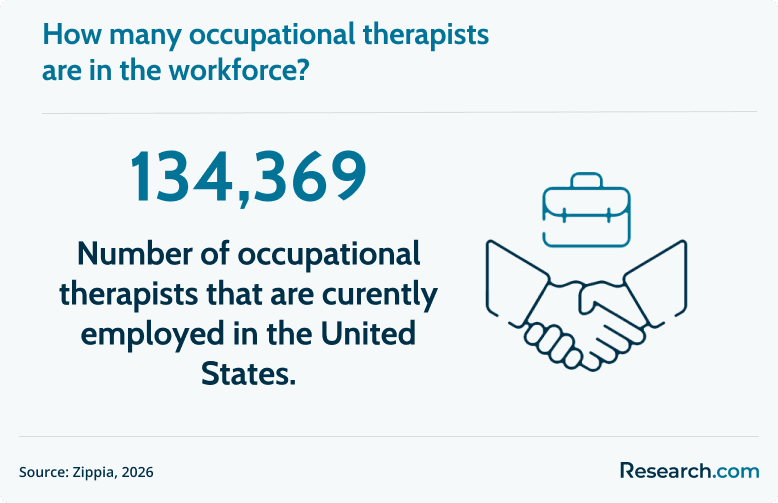
Graduates who continue into master’s or doctoral study may qualify for broader responsibilities, advanced practice roles, research, teaching, policy work, leadership, or specialized clinical positions. According to Zippia, there are over 134,369 occupational therapists employed in the U.S. today (Zippia, 2026).
Cost of Occupational Therapy Degree Programs
Occupational therapy program costs vary widely because tuition depends on degree level, institution type, residency status, program length, clinical requirements, and whether the school is public or private. Students should look beyond the advertised tuition rate and estimate the full cost of attendance, including textbooks, supplies, background checks, immunizations, travel to fieldwork sites, housing, exam preparation, and lost income if full-time study limits work hours.
Healthcare programs can carry substantial costs across fields. Students comparing occupational therapy with nursing may also want to review tuition patterns at the best nursing degree programs to understand how healthcare education expenses differ by discipline and institution.
How much does it cost to get an occupational therapy degree?
The cost of an occupational therapy degree depends heavily on the school and program structure. Public institutions may charge different rates for in-state and out-of-state students, while private institutions often use one tuition rate. Some students also reduce costs through transfer credits, employer tuition benefits, scholarships, part-time enrollment, or community college prerequisites.
Free online courses can help with career exploration or prerequisite preparation, but they do not replace accredited occupational therapy degree requirements. Similar to students who use free online nursing courses for background learning, aspiring occupational therapy students should verify which credits actually count toward admission or degree completion.
| University | Institution Type | Program Type | Estimated Cost Per Credit |
| Eastern Kentucky University | Public | BS to Doctor of Occupational Therapy | $682 |
| Texas Tech University | Public | Post-Professional Doctor of Occupational Therapy | $1,020 (in-state); $1,440 (out-of-state) |
| Mercy College | Private | Graduate Occupational Therapy program | $1,106 |
| Saint Louis University | Private | Masters of Occupational Therapy/Doctor of Physical Therapy | $1,740 |
How should you think about return on investment?
Asking whether occupational therapy is worth the cost is similar to asking, “Is nursing school worth it?” The right answer depends on your career goals, debt level, scholarship access, preferred work setting, admission options, and tolerance for intensive clinical training. Occupational therapy can be personally rewarding for people who want hands-on patient care, problem-solving, and long-term client progress, but it is not an easy path.
New practitioners may experience pressure as they move from student training into independent practice. Research has noted that some new occupational therapists experienced stress and anxiety during the transition because of caseload demands, as discussed in this study on early practice challenges.
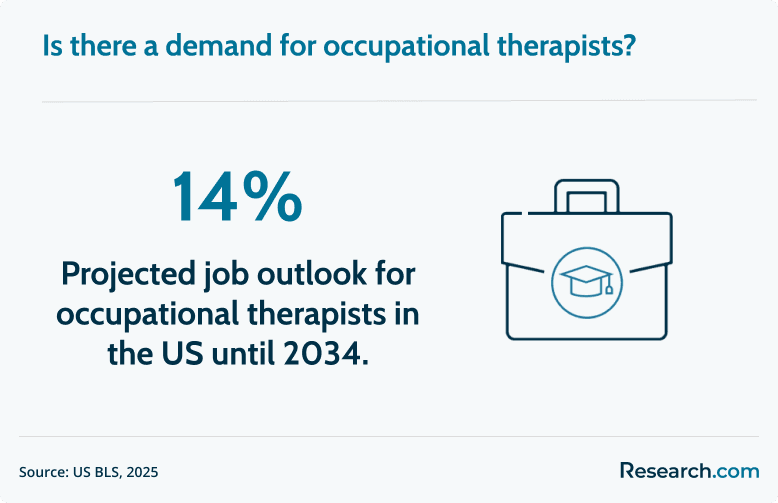
From a labor-market perspective, occupational therapy has a positive outlook in the source data used for this guide. BLS projects the profession to grow by 14% until 2031, a rate described as faster than that of many other occupations. A major driver is the aging population, since older adults with chronic conditions may need help maintaining everyday function. This aging-related demand overlaps with broader healthcare workforce questions, including discussions about nurse practitioner career options and other roles serving patients with ongoing health needs.
Occupational Therapy Degree Jobs
An occupational therapy education can lead to several practice and support roles, depending on the degree completed, licensure status, experience level, and state requirements. Students should distinguish between roles that require full occupational therapist licensure and related jobs that may be available with undergraduate preparation, assistant training, rehabilitation experience, or administrative skills.
Is occupational therapy in high demand?
Yes, the available labor-market information points to continued demand for occupational therapists. Demand is influenced by population aging, chronic disease management, rehabilitation needs, school-based services, disability support, and the growing use of team-based healthcare. As more people live longer with complex health conditions, occupational therapists may be needed to help clients remain safe, active, and independent.
What jobs can you get with an occupational therapy degree?
Occupational therapists use evidence-informed interventions, clinical observation, functional assessment, and individualized planning to help clients participate more fully in daily life. Their responsibilities vary by population and setting. According to 2024 data, 183,544 occupational therapists were employed in the US, the highest concentration among industries (IBISWorld, 2024).
The following roles show how occupational therapy training can translate into different career directions:
| Role | Typical Focus | Best Fit For |
| Pediatric Occupational Therapist | Supports children with disabilities, developmental delays, sensory needs, learning challenges, or health conditions that affect play, school participation, social interaction, and daily routines. | Students interested in child development, school services, family collaboration, and early intervention. |
| Geriatric Occupational Therapist | Helps older adults adapt to age-related changes, manage chronic conditions, reduce safety risks, and preserve independence in everyday activities. | Students drawn to aging services, home safety, rehabilitation, chronic care, and quality-of-life improvement. |
| Work and Ergonomic Consultant | Assesses workplace demands, recommends ergonomic changes, supports injury prevention, and advises employers on safer and more productive work environments. This work is especially relevant when as many as 164 million work days are lost due to various diseases. | Students interested in workplace health, injury prevention, consulting, and employer-based services. |
| Clinical Director | Oversees daily operations in a clinical department, including staffing, training, scheduling, budgets, and service coordination. | Experienced practitioners who want leadership, management, and operational responsibility. |
| Researcher or Educator | Conducts studies, develops interventions, teaches future practitioners, or contributes to academic and clinical knowledge. | Students interested in graduate study, research design, teaching, evidence-based practice, and policy development. |
What kind of salary can I earn with an occupational therapy degree?
Salary depends on location, employer type, setting, experience, credentials, schedule, specialization, and advancement into leadership or private practice. When comparing offers, students and graduates should also evaluate benefits, continuing education support, licensure reimbursement, productivity expectations, flexibility, and opportunities for promotion.
The average yearly wage for occupational therapists is $98,340 as of this writing.
Types of Degrees in Occupational Therapy
The right occupational therapy degree depends on where you are starting and what role you want. A bachelor’s degree may help students prepare for graduate study or enter related support roles, while master’s and doctoral pathways are more closely tied to becoming a practicing occupational therapist. Transfer students should confirm how previous credits apply, especially if they are moving from another health-related major. Research.com’s undergraduate transfer application guide can help students understand common transfer considerations before speaking with admissions offices.
What kinds of occupational therapy degrees are there?
| Degree Level | Average Time to Complete | What Students Usually Study | Possible Entry-Level Outcomes |
| Bachelor’s Degree in Occupational Therapy | 4 years | Anatomy, psychology, therapeutic foundations, human development, and introductory occupational therapy principles. | Occupational therapy assistant, rehabilitation aide, or activities coordinator in healthcare settings, rehabilitation centers, or schools. |
| Master’s Degree in Occupational Therapy | 2 years | Gross anatomy, kinesiology, neuroscience, behavioral health, applied research, rehabilitation, and supervised clinical preparation. | Occupational therapist, pediatric occupational therapist, geriatric occupational therapist, mental health occupational therapist, or rehabilitation therapist. |
| Doctoral Degree in Occupational Therapy | 3 years | Advanced clinical reasoning, research application, leadership, fieldwork, and intensive practice experiences. | Researcher, professor, policy developer, or advanced clinical practitioner depending on licensure and experience. |
Bachelor’s degree in occupational therapy
Average Time to Complete: 4 years
A bachelor’s program introduces the science, communication, and therapeutic foundations of the field. Students commonly study anatomy, psychology, therapeutic techniques, human function, and occupational therapy principles. Graduates may assist in rehabilitation environments, support activity-based programs, or use the degree as preparation for graduate study.
Entry-level Jobs: occupational therapy assistant, rehabilitation aide, or activities coordinator in healthcare settings, rehabilitation centers, or schools.
Master’s degree in occupational therapy
Average Time to Complete: 2 years
A master’s degree usually provides the professional preparation needed for occupational therapy practice. Coursework often includes gross anatomy, kinesiology, neuroscience, behavioral health, applied research, and rehabilitation. Graduates may work in clinics, hospitals, schools, private practices, and community-based settings, subject to licensure requirements.
Entry-level Jobs: occupational therapist, pediatric occupational therapist, geriatric occupational therapist, mental health occupational therapist, rehabilitation therapist.
Doctoral degree in occupational therapy
Average Time to Complete: 3 years
The Doctor of Occupational Therapy, or OTD, is a more extensive full-time pathway that emphasizes advanced clinical experience, research application, leadership, and practice innovation. Some employers, especially in private-sector or state-agency settings, may prefer or require doctoral preparation for selected roles. The program typically spans three years of school work and includes eight to 10 weeks of fieldwork. According to the Accreditation Council for Occupational Therapy Education (ACOTE), there were over 500 accredited OTD programs.
Entry-level Jobs: researcher, professor, policy developer.
Occupational Therapy Degree Requirements
Occupational therapy programs evaluate whether applicants are academically prepared, professionally mature, and familiar with the realities of patient care. Requirements differ by school and degree level, so applicants should review each program’s admissions page early and create a checklist for prerequisites, field experience, test scores, deadlines, and recommendation letters.
Admission Requirements
- Educational prerequisites. Programs commonly require a high school diploma or equivalent for undergraduate entry, while graduate programs may require prior college coursework. Biology, anatomy, psychology, and related science prerequisites are common.
- GPA. Many occupational therapy programs set a minimum GPA requirement. The common range is usually between 3.0 and 3.5 on a 4.0 scale. Competitive applicants often aim higher, especially for selective programs.
- Observation or volunteer experience. Programs may ask applicants to spend time in occupational therapy or healthcare settings. This experience helps students confirm career fit and gives admissions committees evidence of commitment.
- Recommendation letters. Applicants may need letters from professors, supervisors, employers, or occupational therapists who can discuss their academic ability, professionalism, communication, dependability, and readiness for healthcare training.
- Additional materials. Some programs request GRE scores, essays, interviews, or supplemental applications. Students should verify requirements before assuming a test is optional or unnecessary.
Skill Requirements
- Assessment and evaluation. Occupational therapists need to observe clients carefully, gather information through interviews and standardized tools, and evaluate physical, cognitive, emotional, and environmental factors.
- Treatment planning and intervention. Practitioners must translate assessment findings into realistic goals and individualized interventions. This can include improving motor skills, supporting independent living, adapting tasks, and helping clients manage functional limitations related to chronic disease and other health concerns.
- Communication and interpersonal ability. Occupational therapists work closely with clients, families, teachers, caregivers, physicians, nurses, and other professionals. Clear explanations, active listening, empathy, and culturally responsive communication are essential.
- Adaptability and problem-solving. Client needs change, home and clinical environments vary, and treatment plans often require adjustment. Strong practitioners can adapt strategies without losing sight of safety, function, and client goals.
- Ethics and empathy. Occupational therapists must protect client dignity, follow professional standards, respect cultural differences, and balance clinical judgment with the preferences and values of the people they serve.
What to Look for in Occupational Therapy Degree Programs
A good occupational therapy program should prepare you for licensing, clinical practice, and the population you want to serve. Program reputation can matter, but it should not replace a careful review of accreditation, fieldwork access, costs, outcomes, support services, and flexibility.
Key factors to compare before applying
| Factor | Why It Matters | Questions to Ask |
| Accreditation | Accreditation helps confirm that the program meets professional education standards and may affect licensure eligibility. | Is the program accredited by ACOTE in the U.S.? Is the accreditation status current? |
| Clinical placement quality | Fieldwork is where students develop hands-on judgment, professional habits, and exposure to real client needs. | Where are placements located? Who arranges them? Are pediatrics, geriatrics, mental health, or rehabilitation options available? |
| Specialization options | Coursework and fieldwork should align with the clients and settings you hope to serve. | Does the curriculum include pediatrics, mental health, geriatrics, assistive technology, ergonomics, or neurological rehabilitation? |
| Total cost | Tuition alone may not reflect travel, fees, supplies, housing, or clinical placement expenses. | What is the full estimated cost of attendance? Are scholarships, assistantships, or payment plans available? |
| Format and flexibility | Some students need campus-based learning, while others need hybrid or part-time flexibility. | Which parts are online, on campus, or in person? Can working students realistically complete the program? |
| Research and advancement support | Students interested in teaching, policy, doctoral study, or specialized practice may need faculty mentorship and research access. | Are faculty active in research? Can students participate in projects or advanced professional development? |
Common mistakes to avoid
- Choosing a program without confirming accreditation. Accreditation should be checked directly with the appropriate accrediting body, not assumed from marketing language.
- Comparing only tuition. Fieldwork travel, fees, supplies, living costs, and exam preparation can change the real price of the degree.
- Assuming every online or hybrid program fits licensure goals. Students should confirm that clinical and state requirements can be completed where they live or plan to practice.
- Ignoring transfer credit policies. A school may accept some credits but not apply them to occupational therapy prerequisites or professional coursework.
- Relying only on rankings. Rankings can be a starting point, but program fit depends on location, cost, clinical access, admissions odds, support, and career goals.
- Expecting salary outcomes to be guaranteed. Wage data can help with planning, but individual compensation varies by employer, region, experience, setting, and specialization.
2027 Best Programs in Occupational Therapy
Research.com reviewed occupational therapy programs to help students begin comparing options by format, length, cost, credit requirements, and accreditation. The programs below can serve as a starting point, not a final answer. Before applying, students should verify current tuition, admission rules, fieldwork expectations, accreditation status, licensure preparation, and financial aid availability directly with each school.
1. University of Southern California Bachelor’s-to-Doctorate in Occupational Therapy
The University of Southern California offers a bachelor’s-to-OTD pathway that includes coursework in clinical reasoning, kinesiology, and the neuroscience of behavior. Students also complete two practice immersion courses in pediatrics, mental health, or adult physical rehabilitation. Like many doctorate-level healthcare programs, this pathway requires a significant time commitment.
- Program Length: 6 years
- Cost: $63,468 per semester
- Required Credits to Graduate: 128
- Accreditation: Accreditation Council for Occupational Therapy Education (ACOTE)
2. Saint Louis University Freshman-Entry Bachelor’s-to-Master’s in Occupational Therapy
Saint Louis University provides a five-year bachelor’s-to-master’s route that begins with a bachelor’s in occupational science. Students study human development, interprofessional health outcomes, healthcare systems, and health promotion. The program also includes two three-month fieldwork experiences.
- Program Length: 5 years
- Cost per Credit: $1,740 per credit
- Required Credits to Graduate: 130 undergraduate + 30-36 professional
- Accreditation: Accreditation Council for Occupational Therapy Education (ACOTE)
3. Drake University Pre-Occupational Therapy Program
Drake University offers a pre-occupational therapy route that starts with a Bachelor of Science in Health Sciences, which can be completed in three or four years’ time. After finishing the bachelor’s degree, students may move into the university’s OTD program. The pathway emphasizes healthcare knowledge, statistics, and developments in health services.
- Program Length: 6 to 7 years
- Cost per Credit: $20,452 per semester
- Required Credits to Graduate: 124
- Accreditation: ACOTE
4. Worcester State University Bachelor of Science Occupational Studies Program
The Bachelor of Science Occupational Studies Program at Worcester University is designed to prepare students to support independent living and continue toward master’s-level occupational therapy study. Students also complete fieldwork that connects classroom learning with practice exposure.
- Program Length: Four years
- Cost: $40 per credit (in-state), $294 per credit (out-of-state)
- Required Credits to Graduate: 80-81
- Accreditation: ACOTE
5. McKendree University B.S. Degree in Occupational Therapy
McKendree University offers an occupational therapy pathway in cooperation with Washington University. Students complete courses such as cellular and molecular biology, abnormal psychology, and chemistry. After three years at McK, students complete their final year and one year of the master’s program at Washington University.
- Program Length: 5 years
- Cost per Credit: $1,779
- Required Credits to Graduate: 120
- Accreditation: ACOTE
How can technology impact the future of occupational therapy?
Technology is changing how occupational therapists assess clients, document care, deliver services, and support independence. It does not replace clinical judgment, but it can expand access, improve monitoring, and give therapists better information for treatment planning.
- Telehealth and remote therapy. Remote service delivery can improve access for clients in rural areas, underserved communities, or situations where travel is difficult. It may also support follow-up visits, caregiver coaching, and flexible scheduling.
- Wearable devices and sensors. Wearables can track movement, posture, activity patterns, and rehabilitation progress. Therapists can use this information to adjust interventions and identify barriers outside the clinic.
- Virtual reality and augmented reality. VR and AR can create controlled practice environments where clients rehearse daily tasks, cognitive activities, or movement patterns. These tools may be especially useful in neurological rehabilitation and skills retraining.
- Assistive technology and adaptive equipment. Smart wheelchairs, customized adaptive tools, robotic supports, and home-based technologies can help clients complete daily activities with greater safety and independence.
- Artificial intelligence and machine learning. AI may support documentation, pattern recognition, outcome prediction, and treatment personalization. Therapists still need to evaluate recommendations carefully and apply ethical clinical reasoning.
- Electronic health records and data management. EHRs can streamline documentation, support interprofessional communication, and make it easier to track outcomes across episodes of care.
Challenges in Pursuing an Occupational Therapy Degree and How to Overcome Them
Occupational therapy programs can be demanding because students must master academic science, clinical reasoning, documentation, communication, fieldwork performance, and professional behavior. Planning early can reduce avoidable stress.
| Challenge | Why It Can Be Difficult | Practical Response |
| Rigorous coursework | Subjects such as anatomy, physiology, psychology, neuroscience, and rehabilitation require sustained study. | Use tutoring, faculty office hours, study groups, and weekly review schedules before falling behind. |
| Clinical training plus classes | Fieldwork can compete with exams, assignments, commuting, and personal obligations. | Build a term-by-term schedule and talk with advisors early about workload, placement timing, and flexibility. |
| Financial pressure | Tuition, fees, supplies, and reduced work hours can create budget strain. | Compare total cost of attendance, apply for scholarships, ask about work-study, and review affordable alternatives. Students exploring related counseling or therapy fields may also compare options such as the most affordable online MFT programs. |
| Admission prerequisites | Volunteer hours, science courses, GPA thresholds, and application deadlines can be easy to miss. | Create a prerequisite tracker at least one application cycle in advance and confirm requirements with each school. |
| Licensing and certification steps | Graduation alone may not be enough to practice; graduates must meet exam and state requirements. | Ask programs how they prepare students for licensing exams and when to begin exam review. |
Students who understand these barriers before enrolling are better positioned to choose a program that fits their academic strengths, finances, schedule, and long-term goals.
What Other Healthcare Certifications Can Complement an Occupational Therapy Degree?
Some healthcare certifications can help aspiring occupational therapy students build patient-care experience, understand rehabilitation environments, or strengthen applications. The right certification depends on your timeline and goals. A student who wants hands-on rehabilitation exposure, for example, may benefit from learning how physical therapy assistants support therapy plans. Research.com’s guide to online PTA programs can help students compare a related rehabilitation pathway and understand how occupational and physical therapy teams may work together.
Certifications should be treated as supplements, not substitutes. They may improve confidence, experience, or employability in support roles, but they do not replace the accredited education and licensing requirements for occupational therapists.
Is an Occupational Therapy Degree a Smart Investment Compared to Other Healthcare Majors?
Occupational therapy can be a strong investment for students who want a regulated healthcare profession, client-centered work, and multiple practice settings. However, the decision should be based on total education cost, expected debt, licensing requirements, preferred work environment, and realistic salary expectations. Students comparing healthcare and non-healthcare majors may want to review broader data on college majors associated with high earnings, but income should not be the only factor.
Occupational therapy may be a better fit if you want direct client progress, adaptive problem-solving, long-term rehabilitation, and a mix of science and human interaction. It may be a weaker fit if you prefer limited patient contact, dislike documentation, want the shortest possible training route, or are uncomfortable with emotionally complex cases.
Exploring Fast-Track Certifications for Aspiring Occupational Therapists
Short healthcare certifications can help students gain practical exposure while preparing for occupational therapy applications. Certifications in patient care, medical coding, rehabilitation support, or basic clinical skills may help applicants understand healthcare workflows and build confidence before entering a professional degree program.
Students interested in short-term credentials can review Research.com’s guide to quick medical certifications. These options may be useful for building experience, earning income while completing prerequisites, or deciding whether healthcare is the right long-term field.
The main caution is to avoid overinvesting in unrelated certificates. A credential is most useful when it supports your application, helps you gain relevant experience, or prepares you for work in a setting connected to rehabilitation, patient support, documentation, or care coordination.
Bridging the Gap Between Undergraduate and Advanced Occupational Therapy Degrees
Students often need to move from undergraduate preparation into a master’s or doctoral occupational therapy program. That transition is easier when prerequisites, field experience, GPA goals, and application deadlines are planned early. Waiting until senior year to identify missing courses can delay admission.
Accelerated undergraduate options may help some students reach graduate study sooner. For example, students comparing shorter bachelor’s routes can review 2-year accelerated bachelor degree options, although they should confirm that any accelerated program includes the science prerequisites and grades required by occupational therapy schools.
Combined bachelor’s-to-master’s or bachelor’s-to-doctorate pathways can also reduce application friction because students follow a structured sequence. These programs may be useful for students who are already committed to occupational therapy and want a clearer academic route. However, students should still compare cost, fieldwork quality, accreditation, and whether the pathway allows enough flexibility if their goals change.
Students who need flexibility may compare hybrid, part-time, or online prerequisite options, including broader online healthcare bachelor’s degree pathways. The key is to verify that online coursework, transfer credits, and lab requirements will be accepted by the occupational therapy programs you plan to apply to.
Start Mapping Out Your Occupational Therapy Plans Now
A strong occupational therapy plan starts before the application deadline. Students should focus on grades, prerequisite sequencing, observation hours, volunteer or work experience, school comparisons, and financial planning. They should also speak with advisors and practicing occupational therapists to understand the realities of documentation, caseloads, fieldwork, and client care.
Begin by listing your target programs, admission requirements, total costs, accreditation status, and fieldwork settings. Then compare whether each program supports your preferred population, such as children, older adults, workers, mental health clients, or rehabilitation patients. Early planning gives you more time to fix prerequisite gaps, strengthen your application, and avoid choosing a program based only on name recognition.
Why Should You Foster Interprofessional Collaboration in Occupational Therapy?
Occupational therapists rarely work in isolation. They coordinate with physicians, nurses, physical therapists, speech-language pathologists, pharmacists, social workers, teachers, caregivers, and administrators. Collaboration improves care planning because each professional sees a different part of the client’s health, function, medication use, environment, and support system.
Students interested in broader interdisciplinary healthcare may explore related professional tracks such as accelerated doctor of pharmacy programs. While pharmacy and occupational therapy are separate professions, understanding how medication management, safety, rehabilitation, and daily function intersect can strengthen team-based thinking.
What Are the Benefits of Pursuing Dual Degree Programs in Healthcare?
Dual degree programs can make sense for healthcare professionals who want to combine clinical practice with another area such as administration, public health, education, research, policy, or pharmacy. The benefit is broader career flexibility. The trade-off is additional time, cost, and academic pressure.
For occupational therapy students, a second degree should have a clear purpose. It may support leadership, program development, interdisciplinary care, or specialized patient services. Students comparing pharmacy-related options, for example, may review affordable PharmD program information, but should only pursue that route if it directly supports a realistic career plan.
How Can Administrative Skills Enhance Your Occupational Therapy Practice?
Administrative knowledge becomes more important as occupational therapists move into supervision, private practice, department leadership, billing oversight, compliance, or program management. Skills in scheduling, documentation standards, billing, coding, budgeting, staff coordination, and quality improvement can help therapists run services more effectively.
Students and practitioners who want to understand the business side of healthcare may find it useful to review topics such as how much medical billing and coding school costs. This kind of knowledge does not replace clinical expertise, but it can support cleaner documentation, better reimbursement processes, and stronger practice operations.
Should You Consider a Complementary Graduate Degree for Occupational Therapy Advancement?
A complementary graduate degree can be useful if your goals extend beyond direct clinical care. Occupational therapists interested in population health, prevention programs, community services, healthcare policy, or leadership may benefit from graduate coursework in public health, administration, education, or research.
For example, one year online MPH programs may appeal to professionals who want to connect occupational therapy practice with community health, program planning, prevention, and health equity work. The decision should be based on whether the additional credential helps you reach a specific role, not simply on adding another degree.
How Do Accreditation and Licensing Shape Your Occupational Therapy Career?
Accreditation and licensing are central to occupational therapy career planning. Accreditation signals that a program has been reviewed against professional education standards. Licensing is the legal process that determines whether you can practice in a specific state or region. Students should confirm both before committing to a program.
Before enrolling, ask whether the program is accredited, whether graduates are eligible for required licensing exams, and whether the curriculum and fieldwork meet the requirements of the state where you plan to work. If you are exploring quicker healthcare entry points while preparing for a longer occupational therapy route, you may also compare accelerated support roles such as the fastest ways to become a medical assistant.
Can a Master’s in Healthcare Administration Boost Your Occupational Therapy Management?
A master’s in healthcare administration can be useful for occupational therapists who want to lead departments, manage clinics, oversee budgets, improve operations, or move into executive-level healthcare roles. The degree can strengthen skills in finance, compliance, staffing, quality improvement, strategic planning, and organizational leadership.
Practitioners considering this route should compare the opportunity cost with their career goals. If your aim is clinical specialization, another clinical credential may fit better. If your goal is management, Research.com’s guide on whether a master’s in healthcare administration is a good degree can help frame the decision.
Key Insights
- Occupational therapy is a client-centered healthcare path. The field focuses on helping people participate in daily life, school, work, self-care, and community activities despite physical, cognitive, developmental, or mental health barriers.
- Demand is supported by healthcare and aging trends. BLS projects occupational therapy employment to grow by 14% until 2031, with aging-related care needs playing an important role.
- Program choice should start with accreditation. In the U.S., students should verify ACOTE accreditation and confirm that the program supports licensure eligibility in the state where they plan to practice.
- Cost varies significantly by school and format. Public, private, in-state, out-of-state, bachelor’s-to-doctorate, master’s, and post-professional pathways can have very different price structures.
- Salary planning should be realistic. The average yearly wage is $98,340 as of this writing, but actual pay depends on setting, location, experience, specialization, schedule, and employer benefits.
- Fieldwork quality matters as much as coursework. Strong clinical placements help students test specialties, build professional confidence, and prepare for real caseloads.
- Technology is reshaping practice. Telehealth, wearables, VR, assistive technology, AI, and EHR systems are expanding how occupational therapists evaluate progress and deliver care.
- The best program is the one that fits your goal, budget, and licensing plan. Rankings are useful starting points, but your final decision should reflect accreditation, cost, clinical access, admission odds, and career direction.
References:
- Data USA. (n.d.). Occupational therapists. https://datausa.io/profile/soc/occupational-therapists
- Indeed. (2026). 11 Convincing Reasons To Become an Occupational Therapist. https://www.indeed.com/career-advice/finding-a-job/reasons-to-become-occupational-therapist
- Statista (2024). Number of employed occupational therapists in the United States, by state. https://www.statista.com/statistics/1303973/number-of-employed-occupational-therapists-by-us-state/
- US BLS (2025). Occupational Outlook Handbook: Occupational Therapists. https://www.bls.gov/ooh/healthcare/occupational-therapists.htm
- Zippia (2026). Occupational therapist demographics and statistics in the US. https://www.zippia.com/occupational-therapist-jobs/demographics
- Zippia (n.d.). Occupational therapist salary. https://www.zippia.com/salaries/occupational-therapist/ Occupational therapist demographics
Other Things You Should Know About Occupational Therapy Programs
Rankings in 2027 are determined by factors such as faculty credentials, research output, graduate employment rates, accreditation status, and student satisfaction scores, which are compiled by organizations like U.S. News & World Report.
A top occupational therapy program in 2027 should be accredited by the Accreditation Council for Occupational Therapy Education (ACOTE). ACOTE accreditation is required for graduates to qualify for the NBCOT certification exam, which is a standard step before state licensure in the United States.
Admission requirements for top occupational therapy programs in 2027 typically include a bachelor’s degree, completion of specific prerequisite courses (e.g., anatomy, psychology), a competitive GPA, a personal statement, and relevant volunteer or work experience. Some programs may also require GRE scores, letters of recommendation, and an interview.