
2027 Fastest Online Sterile Processing Technician Certificate Programs

Co-Founder and Chief Data Scientist
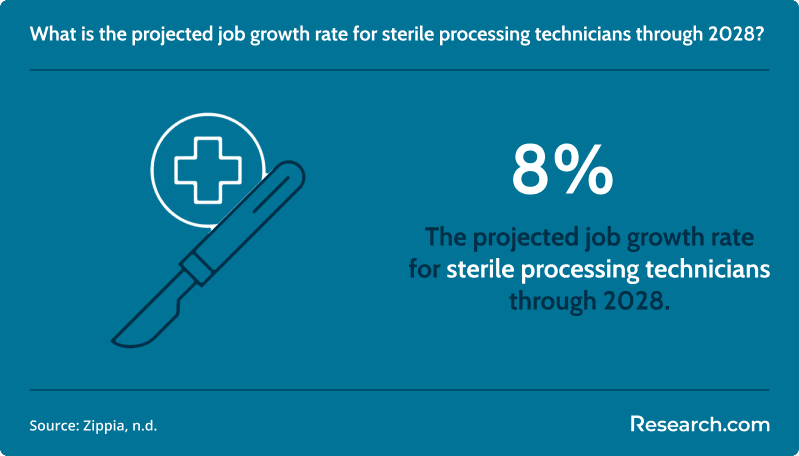
Many people consider a career as a sterile processing technician, but feel unsure where to begin their research. They often wonder about the profession's value and whether an online certificate program can truly equip them for employment. Fortunately, the projected sterile processing technician job growth rate is 8% through 2028, indicating a steady demand for these vital healthcare roles.
The Research.com team, with over ten years of expertise in career planning, has carefully created this guide using only reliable information. By reading this article, you will clearly understand the sterile processing technician role and discover the quickest online certificate programs available for 2025.
What are the benefits of getting an online sterile processing technician certificate program?
- Qualifies you for in-demand jobs as a sterile processing technician in hospitals, surgical centers, and clinics, with fast entry into the healthcare field.
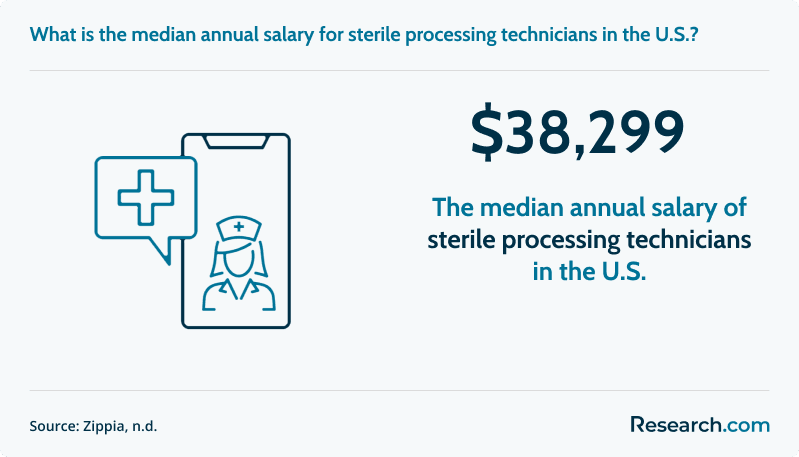
- Median annual salary for sterile processing technicians is $38,299 or $18.41 per hour, with opportunities for advancement and higher pay as you gain experience.
- Online sterile processing technician certificate programs offer accelerated, flexible, and affordable pathways, allowing you to complete your training in as little as four (4) months.
What can I expect from an online sterile processing technician certificate program?
An online sterile processing technician certificate program offers a focused curriculum covering medical terminology, anatomy, infection control, decontamination, and sterilization processes. Most programs include core courses, a capstone project, and require completion of internship or externship hours—typically 400 hours of hands-on experience in a healthcare setting—to qualify for national certification.
Tuition usually ranges from about $1,000 to $3,000, often including exam fees and materials. Online classes are delivered through self-paced modules, expert-led video lectures, interactive simulations, and competency assessments, allowing you to study on your own schedule while receiving support from instructors and advisors.
Where can I work with an online sterile processing technician certificate program?
With an online sterile processing technician certificate, you can work in hospitals, outpatient surgical centers, dental offices, and specialty clinics. Over 70% of sterile processing technicians are employed in hospitals, but opportunities also exist in government health agencies, research labs, and medical device companies.
Some graduates move into management, training, or quality assurance roles, or support healthcare consulting and supply chain operations. The skills you gain, organization, attention to detail, and knowledge of infection control, are valued across healthcare and related industries. As the healthcare sector grows, job prospects remain strong, with thousands of new positions projected each year.
How much can I make with an online sterile processing technician certificate program?
The average salary for professionals with an online sterile processing technician certificate is about $38,299 per year, with entry-level technicians earning around $27,240. Salaries vary by industry, location, and experience—technicians in states like California can earn averages of $56,437 or more, while those in high-demand metro areas or specialized facilities may see even higher pay.
Entry-level roles typically start lower, but with experience or advanced certifications, salaries can rise higher for senior technicians. Additional credentials and specialization can further boost earning potential in this growing healthcare field.
- List of the Best Online Sterile Processing Technician Certificate Programs for 2027 Best Programs
- How long does it take to complete an online sterile processing technician certificate program? Program Length
- How does an online sterile processing technician certificate program compare to an on-campus program? How does an online sterile processing technician certificate program compare to an on-campus program?
- What is the average cost of an online sterile processing technician certificate program? Program Cost
- What are the financial aid options for students enrolling in an online sterile processing technician certificate program? Financial Aid
- What are the prerequisites for enrolling in an online sterile processing technician certificate program? What are the prerequisites for enrolling in an online sterile processing technician certificate program?
- What courses are typically in an online sterile processing technician certificate program? What courses are typically in an online sterile processing technician certificate program?
- What types of specializations are available in an online sterile processing technician certificate program? What types of specializations are available in an online sterile processing technician certificate program?
- How to Choose the Best Online Sterile Processing Technician Certificate Program How to Choose the Best Online Sterile Processing Technician Certificate Program
- What career paths are available for graduates of an online sterile processing technician certificate program? What career paths are available for graduates of an online sterile processing technician certificate program?
- Could Further Education in Healthcare Administration Boost My Career? Could Further Education in Healthcare Administration Boost My Career?
- What is the job market for graduates with an online sterile processing technician certificate program? Job Market
- Can Diversifying Credentials Enhance Healthcare Career Growth? Can Diversifying Credentials Enhance Healthcare Career Growth?
- What is the long-term return on investment of an online sterile processing technician certificate program? What is the long-term return on investment of an online sterile processing technician certificate program?
- What Are the Key Challenges of Online Sterile Processing Technician Certificate Programs? What Are the Key Challenges of Online Sterile Processing Technician Certificate Programs?
Best Online Sterile Processing Technician Certificate Programs for 2027
Choosing an online sterile processing technician certificate program is a practical way to enter healthcare without committing to a long degree. The challenge is that programs differ widely in cost, clinical-hour support, certification preparation, accreditation, and whether they are truly fully online. For students who want a faster path into hospitals, surgery centers, clinics, or central service departments, those details matter.
This guide compares online and hybrid sterile processing technician certificate programs, explains what you should verify before enrolling, and shows how to evaluate program length, tuition, hands-on training, certification readiness, financial aid options, and career outcomes. It is designed for first-time healthcare students, career changers, working adults, and anyone comparing short healthcare training options.
Quick Answer: Is an Online Sterile Processing Technician Certificate Worth Considering?
An online sterile processing technician certificate can be worth considering if you want a relatively short, career-focused healthcare credential and are comfortable completing coursework remotely. The strongest programs prepare students for national certification exams such as the HSPA CRCST or CBSPD credential and clearly explain how students can complete any required hands-on experience, including the 400 clinical hours often associated with full certification eligibility.
The best choice is not always the cheapest or fastest program. Before enrolling, confirm accreditation, certification alignment, clinical-placement expectations, total tuition, state eligibility, and whether the program helps you connect with healthcare facilities for practical experience.
How We Evaluated Online Sterile Processing Technician Certificate Programs
Because certificate programs can vary by provider type, delivery format, and credential outcome, students need transparent information before committing tuition money. Research.com’s ranking approach uses reliable education data sources, including the IPEDS database, Peterson's database, the College Scorecard database, and the National Center for Education Statistics.
These resources help provide context for institutional quality, affordability, and student decision-making. To understand how Research.com develops rankings and program lists, review the Research.com methodology page.
Top Online Sterile Processing Technician Certificate Programs
The programs below include fully online, self-paced, and hybrid options. Some are credit-bearing, while others are continuing education or career training programs. Pay close attention to whether a program includes clinical experience or whether you must arrange those hours independently.
| Program | Format and focus | Program length | Listed cost or tuition detail | Credits or structure | Accreditation or certification alignment |
| Ashworth College - Sterile Processing Technician Training | Self-paced online training for students preparing for central service and hospital support roles | Up to one year; self-paced, with many students finishing in a few months | Flexible payment option; applicants are encouraged to request information directly from the college | Not credit-based | Distance Education Accrediting Commission (DEAC); prepares for HSPA CRCST certification |
| Orangeburg-Calhoun Technical College - Sterile Processing Program | 100% online sterile processing training focused on infection prevention and sterilization workflow | 12 months or less | $2,995 | N/A | Southern Association of Colleges and Schools Commission on Colleges (SACSCOC); prepares for HSPA CRCST certification |
| Central Piedmont Community College - Sterile Processing Certificate Program | Certificate program covering instrument preparation, sterilization, inventory, and practical sterile processing applications | 562 hours | N/A | 3 courses | SACSCOC; graduates are eligible for both CBSPD and HSPA certifications |
| Herzing University - Sterile Processing Program | 100% online program for Iowa residents covering surgical services, instrumentation, and entry-level technician preparation | 8 months | $515 | 24 | HLC; prepares students for CRCST certification |
| Health Tech Academy - Sterile Processing Technician (CRCST) Program | Self-paced online CRCST-focused program for students without prior healthcare experience | 16 weeks of online coursework + 400 clinical hours | $3,450 upfront payment | N/A | HSPA; includes 400 hours of hands-on experience |
| Northcentral Technical College - Sterile Processing Technician Certificate | Certificate introducing students to central service duties, medical terminology, microbiology, cleaning, packaging, and sterilization | 16 weeks | $522 | 3 | HLC; lecture and lab experiences are included, though course and program availability may change |
| Portland Community College - Sterile Processing Technician Program | Hybrid program for students who want online learning plus hospital-based hands-on practice | One term | $1,498 | Not credit-based | HSPA; prepares graduates for CBSPD certification and includes 42 hours of hands-on hospital training |
| U.S. Career Institute - Sterile Processing Technician Program | 100% online, self-paced program covering decontamination, sterile storage, and instrument preparation | As little as 4 months; up to 9 months part-time for coursework + 400 clinical hours for certification | $979 if paid in full | 21 lessons, 21 quizzes | DEAC; prepares students for the HSPA CRCST exam but does not include an in-program clinical |
| Purdue University - Sterile Processing Online Technical Training 9th Edition | Online self-study course for learners seeking structured CRCST exam preparation | One year of access to online materials, plus 400 required clinical hours for HSPA certification that students must secure independently | $518 | N/A | HSPA; includes lessons, quizzes, and virtual exercises |
| Berkeley College - Sterile Processing Technician Certificate | Online and campus certificate covering decontamination, sterilization, distribution, and instrument management | 2 semesters | $23,200 total tuition | N/A | Middle States Commission on Higher Education (MSCHE); CRCST certification-ready program without externship opportunities |
What Does a Sterile Processing Technician Do?
Sterile processing technicians work behind the scenes to support patient safety. Their work centers on cleaning, decontaminating, assembling, sterilizing, storing, and distributing surgical instruments and medical equipment. They usually work in hospitals, surgical centers, clinics, and other healthcare facilities where sterile instruments are essential.
This role is different from patient-facing clinical jobs. Sterile processing technicians may not provide direct patient care, but their work affects infection prevention, operating-room readiness, and the safety of medical procedures. Students who want a healthcare career with technical, detail-oriented responsibilities may find this field a better fit than roles that require extensive bedside interaction.
How Long Does It Take to Complete an Online Sterile Processing Technician Certificate Program?
Most online sterile processing technician certificate programs are built for relatively fast completion. The exact timeline depends on whether the program is self-paced, cohort-based, credit-bearing, or tied to clinical hours. Some students finish coursework in a few months, while others may need up to a year, especially if they are working part time or arranging clinical experience separately.
Students who like accelerated healthcare credentials sometimes compare this path with other short programs, including the shortest respiratory care therapy AS program online, especially when deciding whether they want a certificate or an associate degree.
Typical Completion Timelines
- Four to nine months: Many self-paced programs can be completed in as little as four months, while part-time students may take up to nine months.
- Fourteen weeks, or about three and a half months: Some structured programs can be completed in about 14 weeks when students dedicate 15–20 hours per week.
- Six to eight months: Several online options identify six to eight months as the standard completion window.
- Up to 12 months: Programs with broader coursework, more flexible pacing, or clinical components may allow up to one year.
Online vs. On-Campus Sterile Processing Technician Programs
Online and campus-based sterile processing programs can both prepare students for entry-level work, but the learning experience is different. Online programs tend to offer more flexibility, while campus programs may provide more direct access to labs, instructors, and equipment. The right option depends on your schedule, learning style, location, and need for hands-on support.
| Factor | Online program | On-campus program |
| Best for | Working adults, career changers, rural students, and learners who need flexible pacing | Students who prefer scheduled classes, in-person labs, and direct instructor supervision |
| Schedule | Often self-paced or asynchronous | Usually fixed class and lab times |
| Hands-on training | May require students to locate clinical sites or externships independently | May provide easier access to labs or local clinical partners |
| Cost considerations | May reduce commuting, housing, and campus-related expenses | May include higher transportation, textbook, and facility-related costs |
| Main risk | Choosing a program without clear clinical-hour support | Committing to a schedule that does not fit work or family responsibilities |
Advantages of Online Programs
- Flexible pacing: Many online programs allow students to study around work, caregiving, or other commitments.
- Potentially faster completion: Accelerated and self-paced formats may help motivated students finish sooner.
- Lower indirect costs: Online learners may avoid commuting, parking, relocation, or housing expenses.
- Certification-focused options: Many online programs are designed around HSPA CRCST or CBSPD exam preparation.
Potential Drawbacks of Online Programs
- Less built-in supervision: Students must be comfortable learning procedures, terminology, and workflow through online materials.
- Clinical-hour uncertainty: Some programs do not place students in externships, so you may need to arrange hands-on experience yourself.
- Self-discipline required: Without scheduled classes, it can be easy to fall behind.
Advantages of On-Campus Programs
- Structured learning: Fixed schedules can help students stay on track.
- Direct access to labs: Students may practice with equipment under instructor supervision.
- Local networking: Campus programs may have closer relationships with nearby healthcare employers.
Potential Drawbacks of On-Campus Programs
- Less schedule flexibility: Class times may conflict with work or family needs.
- Higher total attendance costs: Transportation, textbooks, and fees can increase the real cost.
- Longer completion timeline: Some campus programs may take a year or more.
If you are comparing different entry-level healthcare office or technical roles, it may also help to research the best school for medical coding to see how administrative healthcare training differs from sterile processing work.
What Is the Average Cost of an Online Sterile Processing Technician Certificate Program?
The average cost of an online sterile processing technician certificate program typically ranges between $1,000 and $3,000. Some lower-cost options may fall between $500 and $1,000, while many comprehensive, certification-focused programs are closer to the $1,500 to $3,000 range. On-campus certificate or associate degree programs can cost $5,000 to $8,000 or more.
Online programs may cost less because they often avoid expenses tied to physical classrooms, campus facilities, and commuting. However, students should not compare tuition alone. A program that appears inexpensive may become less practical if it does not include exam preparation, textbooks, clinical-placement support, or guidance on the 400 clinical hours needed for full certification eligibility.
Students focused on affordability can compare options through a low cost sterile processing technician certification online guide, but the best value is the program that combines reasonable cost with credible certification preparation and realistic hands-on training support.
Financial Aid and Payment Options for Online Sterile Processing Technician Students
Financial aid for sterile processing technician certificates is not always the same as aid for degree programs. Many online certificate programs are non-credit or continuing education courses, which means they may not qualify for federal financial aid through FAFSA or Pell Grants. Students should ask the school directly whether the specific program is aid-eligible before assuming federal aid applies.
- Payment plans: Many providers allow students to pay weekly, bi-weekly, or monthly instead of paying the full amount at once.
- Workforce funding: Eligible students may be able to use government-funded workforce training support through programs such as the Workforce Innovation and Opportunity Act (WIOA).
- Military and spouse benefits: Active duty service members, veterans, and military spouses may qualify for education benefits or training grants.
- State and local workforce grants: Some state workforce agencies, vocational rehabilitation offices, or local training initiatives may help fund healthcare certificate programs.
- Scholarships: Scholarships are less common for short certificate programs, but some institutions or healthcare organizations may offer limited support.
- Employer sponsorship: Hospitals, clinics, or healthcare systems may reimburse tuition or sponsor employees who train for hard-to-fill support roles.
Admission Requirements for Online Sterile Processing Technician Certificate Programs
The most common enrollment requirement is a high school diploma or equivalent. This baseline requirement helps ensure students are prepared for technical vocabulary, infection-control concepts, documentation requirements, and online coursework.
Some students use sterile processing as their first step into healthcare and later add other short credentials, such as an accelerated home health aide online certification, depending on whether they want more patient-facing work.
Common Requirements to Check Before Applying
- High school diploma or equivalent: Most programs require this before enrollment.
- English proficiency: Programs may expect students to read technical instructions and communicate clearly in healthcare settings.
- Minimum age: Some providers require students to be at least 18 years old.
- Technology access: Online students need a reliable computer, internet access, and the ability to complete digital assignments.
- Background checks and health documentation: Clinical sites or externships may require a background check, drug screening, immunization records, or other health documentation.
What Courses Are Included in an Online Sterile Processing Technician Certificate?
Most sterile processing technician certificates focus on the technical knowledge and workflow skills needed in central service departments. Course titles vary, but strong programs should cover the full instrument-processing cycle, from receiving contaminated instruments to returning properly sterilized equipment for use.
- Medical terminology and basic anatomy: Students learn the language used in healthcare settings and the body systems connected to surgical procedures.
- Allied health professionalism: Coursework may cover communication, workplace ethics, teamwork, and healthcare department expectations.
- Sterile processing fundamentals: Students study decontamination, cleaning, inspection, assembly, packaging, sterilization, storage, and distribution.
- Infection prevention: Programs teach personal protective equipment, infection-control procedures, and safe handling of contaminated items.
- Quality assurance and documentation: Students learn why accurate records, process checks, and compliance matter in environments influenced by organizations such as the Occupational Safety and Health Administration (OSHA), the Centers for Disease Control and Prevention, and the Food and Drug Administration (FDA).
Students interested in a wider operating-room support pathway may also compare sterile processing certificates with affordable surgical tech associate's programs online, which generally involve broader surgical technology training.
Are Specializations Available in Sterile Processing Technician Certificate Programs?
Most online sterile processing technician certificates do not include formal specializations. They are usually designed as broad entry-level programs that prepare students for central service work and certification exams. Specialization typically comes later, after gaining experience and earning additional credentials.
| Advanced credential or focus area | What it emphasizes | Who may consider it |
| Certified Endoscope Reprocessor (CER) | Cleaning, disinfection, and sterilization of endoscopes | Technicians working with endoscopy units or facilities that process endoscopic equipment |
| Certified Instrument Specialist (CIS) | Advanced surgical instrument identification, care, and handling | Experienced technicians who want deeper instrument expertise |
| Certified Healthcare Leader (CHL) | Leadership, supervision, and department operations | Technicians aiming for lead, supervisor, or management roles |
| Certified Central Service Vendor Partner (CCSVP) | Sterile processing concepts for vendors and partner organizations | Vendor representatives or professionals who support sterile processing departments |
Choosing a specialty is common across healthcare careers. If you are comparing how specialization works in other fields, Research.com’s guide on which therapy specialization is right for me shows how professionals evaluate role fit, client needs, and long-term career direction.
The chart below highlights the must-have skills employers often seek in sterile processing technicians.
How to Choose the Best Online Sterile Processing Technician Certificate Program
A good sterile processing technician program should do more than offer online lessons. It should prepare you for certification, explain clinical-hour expectations, provide realistic student support, and make all costs clear before you enroll.
1. Confirm Accreditation and Certification Alignment
Look for an institution accredited by a recognized accreditor or a program that clearly aligns with a respected certification organization, such as the Healthcare Sterile Processing Association (HSPA). Ask whether the curriculum prepares students for the Certified Registered Central Service Technician (CRCST) exam, the CBSPD exam, or another recognized credential.
Students comparing fast, career-focused healthcare training may also want to review the fastest dental assistant certificate programs online to understand how different healthcare certificate pathways vary in structure and hands-on requirements.
2. Ask Exactly How Clinical Hours Work
Certification preparation is not the same as certification completion. Some programs include clinical experience, while others require students to find a site independently. Because 400 hours of hands-on training are required for full certification, ask whether the school arranges placements, helps with site matching, provides documentation, or leaves the entire process to the student.
3. Review the Curriculum Against Real Job Duties
The curriculum should cover anatomy, medical terminology, decontamination, sterilization methods, infection control, storage, distribution, quality assurance, and regulatory standards. Avoid programs that focus only on exam vocabulary without teaching the full sterile processing workflow.
4. Compare Total Cost, Not Just Tuition
Ask whether the listed price includes textbooks, online materials, exam-prep resources, technology fees, uniforms, background checks, immunization costs, or certification exam fees. A lower tuition price may not be the lowest total cost.
5. Check State Eligibility and Enrollment Restrictions
Some programs are not available in every state, and requirements may vary by location or clinical site. Confirm that you are eligible to enroll from your state and that the program’s training aligns with your intended certification path.
6. Evaluate Student and Career Support
Ask whether the program provides advisors, instructor access, certification-exam preparation, resume support, job-search resources, and help connecting with clinical sites. Support matters more in online programs because students have fewer in-person touchpoints.
Students who are comparing healthcare education options beyond sterile processing may also explore online sonography programs, particularly if they are interested in diagnostic imaging rather than instrument processing.
Questions to Ask Before Enrolling
| Question | Why it matters |
| Is the institution accredited, and by whom? | Accreditation can affect credibility, transferability, and employer confidence. |
| Which certification exam does the program prepare students for? | Employers may prefer or require credentials such as CRCST or CBSPD. |
| Does the program include clinical hours or only classroom preparation? | Students may need 400 hours of hands-on experience for full certification. |
| Who is responsible for finding the clinical site? | Some programs provide placement support, while others expect students to arrange it independently. |
| What is the full cost after fees, books, exams, and supplies? | Total cost is more useful than tuition alone. |
| Are there state restrictions? | Your location may affect eligibility, externship options, or certification planning. |
Career Paths After an Online Sterile Processing Technician Certificate
Most graduates pursue entry-level sterile processing technician roles in hospitals, surgical centers, clinics, and related healthcare facilities. Daily duties may include cleaning, inspecting, assembling, sterilizing, storing, and distributing medical instruments and devices.
With experience and additional credentials such as CRCST or Certified Sterile Processing and Distribution Technician (CBSPD), technicians may move into lead technician, supervisor, department manager, quality assurance, infection control support, vendor, or training roles. Some technicians also focus on endoscope reprocessing, instrument repair, or robotic surgical instrument processing.
Others use sterile processing as a starting point for broader healthcare education. For example, a fast track medical assistant associate degree online may appeal to students who later want more patient-facing responsibilities and a wider clinical skill set.
| Career direction | Typical next step | Best fit for |
| Entry-level sterile processing | Complete certificate training and prepare for certification | Students seeking a technical healthcare support role |
| Lead technician or supervisor | Gain experience and pursue advanced credentials | Technicians who want responsibility for workflow, staff, and quality control |
| Endoscope reprocessing or instrument specialization | Add focused certification or facility-based training | Technicians who enjoy detailed technical work |
| Healthcare administration | Earn additional education in management, compliance, or operations | Professionals aiming for nonclinical leadership roles |
| Related clinical support roles | Pursue additional healthcare certificates or degrees | Students who want patient-facing or broader allied health responsibilities |
The chart below shows the most common states for sterile processing technicians.
Could Further Education in Healthcare Administration Support Career Growth?
Further education in healthcare administration may help sterile processing technicians move toward leadership, operations, compliance, budgeting, or department management roles. This route is most relevant for technicians who want to supervise teams or transition away from hands-on instrument processing into administrative decision-making.
Cost-conscious students can compare options such as low cost online healthcare administration degrees when deciding whether additional education could improve long-term mobility.
Job Market for Online Sterile Processing Technician Certificate Graduates
The job market for graduates with an online sterile processing technician certificate is described as strong and growing in 2025. Demand is connected to ongoing infection-control needs, surgical procedures, healthcare facility operations, and workforce replacement as employees retire or change roles.
The Bureau of Labor Statistics projects a steady increase in job openings, with estimates ranging from over 60,000 to nearly 67,000 positions becoming available due to both new job creation and workforce retirements. Job growth rates for sterile processing technicians are expected to reach 8% through 2028.
These projections should be used as planning context, not a guarantee of employment. Hiring depends on location, facility demand, certification status, hands-on experience, shift availability, and whether employers in your area require CRCST, CBSPD, or related credentials.
The chart below shows sterile processing technician salary by year.
Can Additional Healthcare Credentials Improve Career Flexibility?
Adding another healthcare credential may broaden your options, especially if you want to move between technical, clinical support, and administrative roles. For example, pairing sterile processing knowledge with training in billing, coding, or healthcare administration may help you understand both the clinical workflow and the documentation side of healthcare operations.
Students interested in administrative healthcare skills can compare programs such as the most affordable online medical billing and coding courses. This path may be useful for people who want a less physically demanding healthcare role or a backup option beyond sterile processing.
What Graduates Say About Online Sterile Processing Technician Certificates
- Subin: "The online format made it possible for me to keep my full-time job while building healthcare skills. I could move through the modules at a pace that fit my schedule, and the training helped me feel more prepared to enter a new field."
- Ritchie: "Studying from home worked well for me because the course explained decontamination and sterilization procedures in a clear, organized way. The materials helped me prepare for the certification exam and understand how this work supports patient safety."
- Mary: "Online sterile processing training gave me a way to start a healthcare career without commuting to campus. The curriculum showed me how important central service technicians are in hospitals, and it gave me practical knowledge I could build on."
What Is the Long-Term ROI of an Online Sterile Processing Technician Certificate?
The return on investment depends on more than tuition. Students should weigh the total program cost against certification preparation, clinical-hour support, speed to completion, local job availability, employer credential expectations, and opportunities for advancement. A low-cost program may have weaker ROI if it leaves students without support for hands-on experience or certification planning.
ROI can also depend on whether sterile processing is your final career goal or a first step. Some students use the certificate to enter healthcare quickly and later move into surgical technology, medical assisting, healthcare administration, billing and coding, or health information management. Comparing related programs, such as the cheapest online health information management options, can help you decide whether a short certificate or a broader degree better matches your long-term plans.
Common Challenges and Mistakes to Avoid
Online sterile processing technician programs can be convenient, but they also require careful planning. The biggest challenge is often connecting online coursework with the hands-on experience needed for certification and job readiness.
| Common mistake | Why it can hurt you | Better approach |
| Choosing the cheapest program without checking accreditation | The credential may carry less value with employers or may not align with certification requirements. | Verify institutional accreditation and certification exam preparation before enrolling. |
| Assuming “online” means everything is completed online | Certification may require hands-on hours that must be completed in a healthcare setting. | Ask how the program handles the 400-hour clinical component and whether placement help is available. |
| Focusing only on tuition | Extra costs for exams, books, background checks, immunizations, or supplies can change affordability. | Request a full cost breakdown in writing. |
| Ignoring state restrictions | You may not be eligible for a program or clinical placement in your area. | Confirm state eligibility with the school before applying. |
| Assuming certification guarantees a job | Hiring depends on local demand, experience, shifts, employer preferences, and interview performance. | Research local healthcare employers and ask programs about job-search support. |
| Overlooking financial aid limits | Many non-credit certificate programs do not qualify for federal financial aid. | Ask about payment plans, WIOA eligibility, employer sponsorship, and workforce grants. |
Students comparing healthcare training with stronger financial aid options may also review accredited medical billing and coding schools online with financial aid to understand how funding differs across certificate and career-training programs.
Current Trends Affecting Sterile Processing Technician Training
Sterile processing remains closely tied to patient safety, infection prevention, and surgical volume. Employers continue to value technicians who understand sterilization standards, quality documentation, instrument tracking, and compliance expectations. As medical technology becomes more complex, technicians may also need stronger familiarity with specialized instruments, endoscopes, and robotic surgical tools.
Online education is also changing expectations. Students increasingly want flexible coursework, but employers still need proof of practical competence. That makes clinical-hour access, certification readiness, and documented hands-on experience especially important when choosing an online program.
Step-by-Step Plan for Choosing the Right Program
- Define your goal: Decide whether you want immediate entry-level employment, certification preparation, future advancement, or a stepping stone into another healthcare role.
- Check certification requirements: Review whether your target employers prefer HSPA CRCST, CBSPD, or another credential.
- Verify accreditation: Confirm the institution’s accreditor and whether the program is recognized or aligned with relevant certification expectations.
- Ask about clinical hours: Get clear answers about whether the program includes hands-on training, helps arrange it, or requires you to find it independently.
- Calculate full cost: Include tuition, fees, books, exam costs, background checks, immunizations, transportation to clinical sites, and supplies.
- Compare support services: Look for instructor access, advising, exam prep, resume help, and career guidance.
- Contact local employers: Ask hospitals or surgery centers near you what credentials they prefer and whether they accept students for clinical hours.
- Choose based on fit, not advertising: Select the program that best matches your location, budget, schedule, certification plan, and need for hands-on support.
Key Insights
- The best online sterile processing technician certificate is the one that supports certification and hands-on readiness. Coursework alone may not be enough if you need 400 clinical hours for full certification.
- Program costs vary widely. Many online programs fall between $1,000 and $3,000, but students should compare the full cost, not just tuition.
- Online programs offer flexibility but require more planning. Before enrolling, confirm who is responsible for finding clinical placements or externship sites.
- Accreditation and certification alignment matter. Look for recognized institutional accreditation and preparation for credentials such as HSPA CRCST or CBSPD.
- Sterile processing can be an entry point into healthcare. With experience and additional credentials, technicians may move into lead roles, specialized processing, quality assurance, training, vendor positions, or healthcare administration.
- Do not rely only on rankings. Use program lists as a starting point, then verify state eligibility, clinical-hour requirements, total cost, employer expectations, and student support.
References:
- 13 of the highest paying sterile processing technician jobs in 2025. (2025). ZipRecruiter. Retrieved July 14, 2025, from https://www.ziprecruiter.com/g/Highest-Paying-Sterile-Processing-Technician-Jobs
- Sterile Processing Technician Must-Have resume skills and keywords. (2025). ZipRecruiter. Retrieved July 14, 2025, from https://www.ziprecruiter.com/career/Sterile-Processing-Technician/Resume-Keywords-and-Skills
- Sterile Processing technician salary in California. (2025). ZipRecruiter. Retrieved July 14, 2025, from https://www.ziprecruiter.com/Salaries/Sterile-Processing-Technician-Salary--in-California#Yearly
- Sterile Processing Technician Trends. (n.d.). https://www.zippia.com/sterile-processing-technician-jobs/trends
Other Things You Should Know about Online Sterile Processing Technician Certificate Programs
Yes, prerequisites typically include a high school diploma or GED equivalent. Some programs may require background checks or immunization records. Verify with specific schools for their exact requirements to ensure eligibility for the 2027 programs.
The fastest online sterile processing technician certificate programs in 2027 can be completed in as little as 4 to 6 months, depending on the course structure and intensity. Check specific programs for exact timelines and accelerated options.
Most graduates pursue the Certified Registered Central Service Technician (CRCST) exam from the Healthcare Sterile Processing Association. Candidates must meet HSPA’s eligibility rules and complete 400 hours of hands-on sterile processing experience within five years of passing the exam to keep the certification current.


