2027 Best Veterinary Technician Programs

Co-Founder and Chief Data Scientist
Choosing a veterinary technician program is a licensure, cost, and career-readiness decision—not just a question of finding a school that teaches animal care. The right program should prepare you for supervised clinical work, hands-on procedures, laboratory testing, anesthesia monitoring, client communication, and the credentialing expectations in your state. This guide is for students comparing online, hybrid, and campus-based veterinary technician programs, as well as working adults who need a flexible route into animal healthcare.
Below, you will find a decision-focused overview of what veterinary technician programs teach, how long they take, what they cost, how online programs compare with campus options, what financial aid may be available, and how to evaluate program quality before enrolling. You will also find a ranked list of programs, career paths, salary information, job market context, technology trends, and common mistakes to avoid.
Quick Answer: What is a veterinary technician program?
A veterinary technician program trains students to support veterinarians in animal nursing, diagnostics, laboratory testing, imaging, anesthesia, surgery assistance, emergency care, and client education. Most students complete an associate degree in about two years, although bachelor’s degree options are also available. For students who want to become credentialed veterinary technicians, program accreditation, clinical training access, and state licensing requirements are the most important factors to verify before enrolling.
What are the main benefits of completing a veterinary technician program?
- You can qualify for clinical animal healthcare roles where you work directly with veterinarians, animals, laboratory samples, diagnostic tools, and pet owners.
- The median annual wage for veterinary technicians was $45,980 in May 2024.
- Online veterinary technician programs can make coursework more flexible, but students still need approved hands-on clinical training to build job-ready skills.
What can I expect from a veterinary technician program?
A veterinary technician program usually combines science coursework, animal handling practice, laboratory instruction, clinical simulations, and supervised experience in veterinary settings. Students learn how to collect samples, perform basic diagnostic tests, assist with examinations, monitor patients, support surgical teams, maintain medical records, and communicate with pet owners under the direction of veterinarians.
Expect the program to be practical and detail-heavy. You will study anatomy, physiology, pharmacology, clinical pathology, radiology, anesthesia, animal nursing, and veterinary office procedures. Even in online programs, the clinical portion matters because employers and licensing bodies need evidence that graduates can safely perform technical tasks with live animals and real equipment.
Where can I work after completing a veterinary technician program?
Graduates may work in small animal clinics, emergency hospitals, specialty practices, animal shelters, rescue organizations, zoos, wildlife rehabilitation centers, research facilities, pharmaceutical companies, biomedical organizations, and laboratory animal settings. In these roles, veterinary technicians may assist with examinations, administer treatments, prepare surgical areas, monitor anesthesia, run laboratory tests, take diagnostic images, document care, and educate animal owners.
The best work setting depends on your temperament and career goals. General practice may suit students who enjoy long-term client relationships and preventive care. Emergency hospitals may fit those who want fast-paced clinical decision support. Research, wildlife, zoo, or laboratory roles may appeal to graduates who prefer specialized animal populations, public health, or scientific environments.
How much can I make with a veterinary technician program?
According to the Bureau of Labor Statistics, the median annual wage for veterinary technicians was $45,980 in May 2024. Earnings vary by region, experience, employer type, credentials, and specialty area. The salary range can differ widely, with the 10th percentile earning around $32,120 and the 90th percentile earning over $60,880 annually.
Students should treat salary figures as planning benchmarks, not guarantees. Before enrolling, compare total program cost with local wages, clinical placement availability, licensing requirements, and the types of veterinary employers hiring in your area.
| Factor | How it can affect earning potential |
| Location | Wages may differ depending on regional demand, cost of living, and state credentialing rules. |
| Experience | Technicians with stronger clinical judgment, anesthesia skills, emergency experience, or leadership ability may qualify for more advanced roles. |
| Specialization | Specialty areas such as emergency care, anesthesia, dentistry, and internal medicine can improve competitiveness. |
| Work setting | General practice, specialty hospitals, research facilities, shelters, zoos, and emergency clinics may offer different responsibilities and compensation structures. |
- 2027 Best Veterinary Technician Programs
- How long does it take to complete a veterinary technician program?
- How does an online veterinary technician program compare to an on-campus program?
- What is the average cost of a veterinary technician program?
- What financial aid options are available?
- What prerequisites do veterinary technician programs require?
- What courses are typically included?
- What specializations are available?
- How do you choose the best veterinary technician program?
- What ongoing professional development options exist?
- How do programs support mentorship and employer partnerships?
- What additional certifications can strengthen a veterinary technician career?
- How are veterinary technicians different from veterinary assistants?
- How can programs prepare graduates for leadership?
- What supplementary online education options can help?
- What career paths are available?
- What is the job market for graduates?
- How do veterinary technicians support public health and animal welfare?
- What technology trends are shaping veterinary technician programs?
- What skills do veterinary technicians need?
- What are the fastest pathways to becoming a veterinary technician?
- What common mistakes should students avoid?
2027 Best Veterinary Technician Programs
How do we rank schools?
Research.com evaluates veterinary technician programs with a focus on transparency, data quality, and student decision-making. Our ranking process uses a defined methodology to help prospective students compare programs using consistent criteria rather than marketing claims alone.
Program data is compiled from established sources, including the IPEDS database, Peterson's database, including the Distance Learning Licensed Data Set, the College Scorecard database, and the National Center for Education Statistics. These sources help support a more reliable comparison of institutions and program characteristics.
Use this ranking as a starting point, not the only factor in your decision. Before applying, confirm accreditation status, state credentialing requirements, clinical placement expectations, total cost, transfer credit policies, and whether the program format fits your schedule.
Program comparison at a glance
| School | Credential and length | Cost per credit | Credits | Accreditation listed |
| Blinn College | 2 years; Associate Degree | $225 - $300 | 60 credits | American Veterinary Medical Association (AVMA) accredited |
| Purdue University | 4 years; Bachelor's Degree | $475 - $525 | 120 credits | American Veterinary Medical Association (AVMA) accredited |
| Michigan State University | 4 years; Bachelor's Degree | $540 - $600 | 120 credits | American Veterinary Medical Association (AVMA) accredited |
| St. Petersburg College | 2 years; Associate Degree | $125 - $175 | 60 credits | American Veterinary Medical Association (AVMA) |
| California State Polytechnic University Pomona | 2 years; Associate Degree | $375 - $425 | 180 credits | American Veterinary Medical Association (AVMA) |
| Mercy College | 4 years; Bachelor's Degree | $875 - $925 | 60 credits | American Veterinary Medical Association (AVMA) |
| Fort Valley State University | 4 years; Bachelor's Degree | $225 - $300 | 120 credits | American Veterinary Medical Association (AVMA) |
| Dallas College | 2 years; Associate Degree | $125 - $175 | 60 credits | American Veterinary Medical Association (AVMA) |
| Jefferson State Community College | 2 years; Associate Degree | $175 - $225 | 60 credits | American Veterinary Medical Association (AVMA) |
| Penn Foster College | 2 years; Associate Degree | $425 | 60 credits | Distance Education Accrediting Commission (DEAC) |
1. Blinn College
Blinn College's associate in veterinary technology online program is built for students who need remote coursework while still completing practical training through approved veterinary facilities. The format includes online lectures, virtual lab components, and supervised clinical experiences intended to help students build foundational veterinary technology skills while managing work or personal obligations.
- Program Length: 2 years (Associate Degree)
- Tracks/Concentrations: Not specified
- Cost per Credit: $225 - $300
- Required Credits to Graduate: 60 credits
- Accreditation: American Veterinary Medical Association (AVMA) accredited
2. Purdue University
Purdue University offers a veterinary nursing program designed for students seeking a flexible bachelor’s-level pathway. Coursework is delivered through online learning activities, interactive assignments, and clinical rotations completed at approved veterinary clinics or hospitals, giving students a broader academic structure while preserving hands-on requirements.
- Program Length: 4 years (Bachelor's Degree)
- Tracks/Concentrations: Not specified
- Cost per Credit: $475 - $525
- Required Credits to Graduate: 120 credits
- Accreditation: American Veterinary Medical Association (AVMA) accredited
3. Michigan State University
Michigan State University provides an online Bachelor of Science in Veterinary Technology for students who want to deepen their education and prepare for advancement in veterinary medicine. The program combines academic study with applied training so students can develop both technical knowledge and clinical confidence.
- Program Length: 4 years (Bachelor's Degree)
- Tracks/Concentrations: Not specified
- Cost per Credit: $540 - $600
- Required Credits to Graduate: 120 credits
- Accreditation: American Veterinary Medical Association (AVMA) accredited
4. St. Petersburg College
St. Petersburg College's online veterinary technology program offers a flexible route for students preparing to enter the veterinary field. Online courses, virtual simulations, and required clinical training help students connect academic concepts with real-world animal care responsibilities.
- Program Length: 2 years (Associate Degree)
- Tracks/Concentrations: Not specified
- Cost per Credit: $125 - $175
- Required Credits to Graduate: 60 credits
- Accreditation: American Veterinary Medical Association (AVMA)
5. California State Polytechnic University Pomona
California State Polytechnic University Pomona includes veterinary technician coursework through an online learning environment where students can access lectures, assignments, and virtual labs. The program emphasizes animal health science and veterinary technology preparation for students seeking structured training in animal care.
- Program Length: 2 years (Associate Degree)
- Tracks/Concentrations: Concentration in Veterinary Technology within the Animal Health Science major
- Cost per Credit: $375 - $425
- Required Credits to Graduate: 180 credits
- Accreditation: American Veterinary Medical Association (AVMA)
6. Mercy College
Mercy College offers an online veterinary technology program for students who want flexible academic delivery with clinical experience at approved veterinary clinics. The program is structured to prepare students for the clinical, laboratory, and client-facing responsibilities common in veterinary medicine.
- Program Length: 4 years (Bachelor's Degree)
- Tracks/Concentrations: Not specified
- Cost per Credit: $875 - $925
- Required Credits to Graduate: 60 credits
- Accreditation: American Veterinary Medical Association (AVMA)
7. Fort Valley State University
Fort Valley State University provides an online veterinary technology option for students pursuing career growth in veterinary medicine. Students use an interactive online platform for coursework and participate in virtual labs, discussions, and hands-on clinical experiences through approved animal healthcare sites.
- Program Length: 4 years (Bachelor's Degree)
- Tracks/Concentrations: Not specified
- Cost per Credit: $225 - $300
- Required Credits to Graduate: 120 credits
- Accreditation: American Veterinary Medical Association (AVMA)
8. Dallas College
Dallas College offers an online veterinary technology program for students seeking a practical, accessible route into animal care. The program blends online coursework, virtual lab activities, and clinical experiences to help students prepare for veterinary technician responsibilities.
- Program Length: 2 years (Associate Degree)
- Tracks/Concentrations: Not specified
- Cost per Credit: $125 - $175
- Required Credits to Graduate: 60 credits
- Accreditation: American Veterinary Medical Association (AVMA)
9. Jefferson State Community College
Jefferson State Community College offers an online veterinary technology program that combines remote coursework with hands-on clinical experience at approved veterinary facilities. Students can use the program to build core knowledge in veterinary medicine while maintaining a more flexible schedule than a fully campus-based format may allow.
- Program Length: 2 years (Associate Degree)
- Tracks/Concentrations: Not specified
- Cost per Credit: $175 - $225
- Required Credits to Graduate: 60 credits
- Accreditation: American Veterinary Medical Association (AVMA)
10. Penn Foster College
Penn Foster College offers an online veterinary technician associate degree that pairs academic coursework with practical externship experience. Students complete hands-on clinical training at approved veterinary facilities, which helps connect online learning with workplace expectations in veterinary medicine.
- Program Length: 2 years (Associate Degree)
- Tracks/Concentrations: Not specified
- Cost per Credit: $425
- Required Credits to Graduate: 60 credits
- Accreditation: Distance Education Accrediting Commission (DEAC)
Here’s What Graduates Have to Say About Their Veterinary Technician Program
Completing my veterinary technician degree online changed what was possible for me. I could keep working full time while studying animal care, and the flexible schedule helped me move through coursework at a pace I could manage. After graduation, I felt prepared to enter the field with practical skills and stronger confidence. -Sarah
As a parent with a busy household, commuting to campus was not realistic. An online veterinary technician degree gave me the structure I needed without forcing me to step away from work or family responsibilities. The digital platform, instructor support, and hands-on requirements helped me stay engaged and move toward certification. -Michael
Moving from in-person classes to online veterinary technology courses felt intimidating at first, but it helped me build discipline and time management. Virtual labs, instructor guidance, and clinical preparation gave me the foundation I needed to pursue animal healthcare as a licensed veterinary technician. -Emily
Key Findings
- The average duration of a veterinary technician program is two years.
- The veterinary technician program costs between $1,300-$12,000 for in-state and $8,000-$30,000 for out-of-state students.
- Veterinary Technician jobs are expected to grow 9% until 2034.
- A shortage of up to 24,000 companion-animal veterinarians is expected to continue by 2030.
- Over 30 years of graduates is required to meet the industry's 10-year demand for credentialed veterinary technicians.
How long does it take to complete a veterinary technician program?
The BLS estimates that there will be a total of 146,900 veterinary technicians and technologists by 2031. Most veterinary technician programs take about two years, especially associate degree programs. However, your timeline depends on credential level, enrollment status, transfer credits, clinical placement scheduling, and whether you study full time or part time.
| Program type | Typical timeline | Best fit |
| Certificate or diploma | Around one to two years | Students seeking focused training in core veterinary technician skills, depending on state and employer requirements. |
| Associate degree | Around two years | Students pursuing the common veterinary technology pathway with technical courses, labs, clinical work, and general education. |
| Bachelor’s degree | Four years in listed programs | Students who want broader academic preparation, possible advancement options, or deeper study in veterinary technology. |
Certificate or Diploma Programs
Certificate and diploma programs usually take around one to two years. They focus on job-related veterinary technician skills and may be offered by community colleges, vocational schools, or online institutions. Students should verify whether this type of credential supports their state’s licensing or credentialing path before enrolling.
Associate Degree Programs
Associate degree programs in veterinary technology usually take around two years. These programs typically include general education courses, veterinary technology classes, laboratory instruction, and clinical practice. They are commonly offered by community colleges and some four-year institutions.
How does an online veterinary technician program compare to an on-campus program?
A survey by the NAVTA reports that 27% of veterinary technicians have a second job, which helps explain why many students look for online or hybrid options. Online programs can make lectures, assignments, and some lab preparation easier to complete around work schedules. Campus programs usually provide more fixed class times and direct access to labs, equipment, instructors, and classmates.
The biggest difference is not whether you study online or in person; it is how the program handles hands-on training. On-campus programs often place students in labs, clinical rotations, and campus-based practice environments. Online programs may use simulations or virtual labs for preparation, but students generally still need approved externships or clinical placements at veterinary clinics or hospitals.
| Format | Advantages | Potential drawbacks | Choose this if... |
| Online | More scheduling flexibility, easier access for working adults, reduced commuting. | Hands-on training must be arranged carefully; less face-to-face peer and instructor interaction. | You need flexible coursework and can complete clinical requirements at approved local sites. |
| On-campus | Direct lab access, scheduled practice, in-person faculty support, stronger campus community. | Less scheduling flexibility and possible commuting or relocation costs. | You learn best through structured, in-person instruction and want immediate access to facilities. |
| Hybrid | Combines online coursework with in-person labs or clinical training. | May still require travel for labs, check-ins, or clinical components. | You want flexibility but also value scheduled hands-on training. |
What is the average cost of a veterinary technician program?
The cost of a veterinary technician program varies by credential level, institution type, residency status, delivery format, and required clinical materials. Tuition is only part of the total cost; students should also budget for fees, textbooks, equipment, scrubs, transportation to clinical sites, exam costs, and possible lost work hours during externships.
The most common pathway, the associate degree, costs between $1,300 - $12,000 for in-state tuition and fees. Out-of-state tuition can range from $8,000 - $30,000 for the same program.
The bachelor’s degree, which is less common but may provide broader theoretical preparation and additional career options, can range from $67,000 - $86,000.
Public institutions usually cost less for in-state residents than private institutions. Programs in higher-cost regions may also have higher tuition and living expenses. Books and learning materials can cost several hundred dollars per semester, and students may need scrubs, stethoscopes, instruments, and other supplies.
The next chart shows the typical credentials of veterinary technicians in the U.S.
What are the financial aid options for students enrolling in a veterinary technician program?
Among veterinary technician program graduates, 18% have student loan debt averaging $29,700. Because program costs can vary widely, students should compare financial aid packages, not just advertised tuition. The best approach is to estimate the full cost of attendance and then identify grants, scholarships, work opportunities, veterans benefits, and loans that may reduce out-of-pocket expenses.
Federal Student Aid (FAFSA)
The Free Application for Federal Student Aid (FAFSA) is the starting point for many students seeking federal grants, loans, and work-study opportunities. Eligibility depends on factors such as financial need, enrollment status, and the school’s cost of attendance.
Grants
Grants generally do not need to be repaid. They may come from the federal government, state agencies, colleges, or private organizations. Awards may be based on financial need, residency, academic background, or other eligibility criteria.
Scholarships
Scholarships also do not require repayment. Students may find awards through colleges, professional associations, community organizations, animal welfare groups, and private foundations. Some scholarships are specifically intended for veterinary technology or animal health students.
Loans
Student loans must be repaid with interest. Federal student loans, including Direct Subsidized Loans and Direct Unsubsidized Loans, may offer borrower protections and repayment options. Private loans may be available, but students should compare interest rates, repayment terms, and borrower protections carefully before borrowing.
Work-Study Programs
Federal Work-Study can provide part-time employment for eligible students with financial need. Jobs may be on campus or off campus, and some positions may connect with a student’s academic or career goals.
Veterinary Technician Program Scholarships and Grants
Some veterinary technician programs offer their own scholarships, grants, or tuition assistance. Ask each school whether awards are automatic, competitive, renewable, or tied to academic performance or financial need.
Veterans Benefits
Veterans, active-duty service members, and eligible dependents may qualify for education benefits through the U.S. Department of Veterans Affairs, including the GI Bill® or Yellow Ribbon Program. Students should confirm that the school and program qualify for the specific benefit they plan to use.
What are the prerequisites for enrolling in a veterinary technician program?
In 2025, veterinary technicians with an associate degree reached 82%, showing how important standardized education has become in this field. Admission requirements vary by school, but most programs expect applicants to show academic readiness for science-heavy coursework and clinical training.
- High School Diploma or Equivalent: Most programs require a high school diploma or GED certificate. Some may expect prior coursework in biology, chemistry, mathematics, and English.
- Minimum GPA: Many schools set a minimum GPA for admission. Competitive programs may prefer applicants with stronger academic records, especially in science courses.
- College Placement Tests: Some programs may use ACT, SAT, or placement test scores to determine readiness, course placement, scholarship eligibility, or academic support needs.
- Prerequisite Courses: Programs may require students to complete biology, chemistry, mathematics, or English composition before beginning the technical curriculum.
Applicants should also ask whether the program requires immunizations, background checks, drug screening, rabies vaccination, proof of health insurance, animal handling experience, or specific clinical site documentation.
What courses are typically in a veterinary technician program?
By 2030, the U.S. needs an additional 55,000 veterinarians to support the expanding companion animal healthcare industry. Veterinary technician programs prepare students to support that system through practical medical, laboratory, and client-care training.
- Animal Anatomy and Physiology: Students study the structure and function of organ systems across multiple animal species, including mammals, birds, reptiles, and amphibians.
- Veterinary Medical Terminology: This course teaches the clinical vocabulary used in anatomy, diagnostics, procedures, treatment plans, and patient records.
- Animal Nursing and Husbandry: Students learn restraint, handling, feeding, grooming, environmental management, and basic patient care techniques.
- Veterinary Pharmacology: Coursework covers drug classes, dosage calculations, administration routes, species differences, and medication safety. Students interested in related biological science pathways may also explore a career in biology.
- Veterinary Clinical Procedures: Students practice core procedures such as physical examinations, diagnostic testing, wound care, anesthesia monitoring, surgical support, and emergency response.
- Diagnostic Imaging: Students learn the basics of radiography, ultrasonography, image safety, positioning, and interpretation support.
- Surgical Nursing and Anesthesia: This course covers sterile technique, instrument handling, anesthesia support, patient monitoring, and post-operative care.
- Clinical Pathology: Students learn hematology, cytology, urinalysis, sample handling, and laboratory interpretation. These laboratory skills may also support interest in biotechnology careers.
- Animal Behavior and Handling: Coursework focuses on behavior cues, low-stress handling, fear reduction, communication, and safe patient restraint.
- Veterinary Practice Management: Students study client communication, scheduling, billing, inventory, recordkeeping, ethics, and daily clinic operations.
What types of specializations are available in a veterinary technician program?
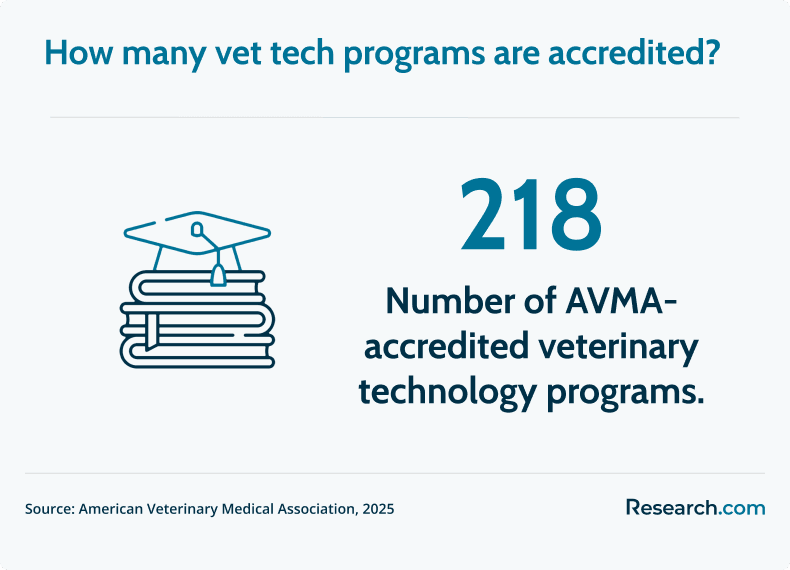
Veterinary technician programs may allow students to build expertise through electives, clinical placements, continuing education, or specialty credentials. Some graduates also use veterinary technology as a foundation for broader animal health, research, or public health interests, including advanced studies in public health. As of 2025, there were 218 AVMA-accredited programs.
Over the next eight to ten years, it is anticipated that spending on pet healthcare services will rise by 4% annually. Choosing a specialization can help students align their training with the employers, species, and procedures they want to focus on.
| Specialization | What technicians focus on |
| Anesthesia and Analgesia | Preparing patients for anesthesia, monitoring vital signs, supporting pain management, and assisting before, during, and after procedures. |
| Dental Technology | Dental cleanings, oral exams, dental radiography, procedure support, and client education on preventive dental care. |
| Emergency and Critical Care | Stabilizing urgent cases, supporting triage, administering emergency treatments, and monitoring critically ill animals. |
| Internal Medicine | Supporting diagnosis and treatment of gastrointestinal, endocrine, respiratory, infectious, and other internal conditions. |
| Surgical Nursing | Preparing instruments, maintaining sterile fields, assisting during surgery, and monitoring patients through recovery. |
| Behavior and Training | Assessing behavior, supporting behavior modification plans, and helping reduce stress and anxiety in animals. |
| Exotic Animal Medicine | Working with birds, reptiles, small mammals, zoo animals, and other nontraditional species. |
| Clinical Pathology | Performing and interpreting laboratory tests in clinics, diagnostic labs, research institutions, or related settings. |
Behavior and Training
Pet owners account for 65.1 million households in the U.S. Veterinary technicians who specialize in behavior may help veterinarians and animal behavior professionals assess behavioral concerns, design enrichment plans, support training strategies, and teach owners how to reduce stress-related problems.
How do you choose the best veterinary technician program?
Based on AVMA data, it would take almost 30 years of graduates to meet the industry's 10-year demand for credentialed veterinary technicians. That demand does not mean every program is equally strong. Students should choose based on accreditation, clinical access, credentialing outcomes, affordability, and fit.
Questions to ask before enrolling
| Question | Why it matters |
| Is the program accredited by the appropriate body for my career goal? | Accreditation can affect eligibility for credentialing, transfer, financial aid, and employer recognition. |
| Does the program meet veterinary technician licensing or credentialing requirements in my state? | State rules differ, and online programs may not automatically satisfy every jurisdiction. |
| How are clinical placements arranged? | Students need access to approved facilities, qualified supervisors, and required case experiences. |
| What is the full cost beyond tuition? | Fees, equipment, travel, books, uniforms, exams, and clinical expenses can change the total price. |
| What support is available for online students? | Advising, tutoring, technical support, faculty access, and placement help can affect completion. |
| What are graduate outcomes? | Ask about credentialing exam preparation, employment support, and local employer connections. |
Research Accredited Programs
Start with programs recognized by relevant accrediting bodies, such as the American Veterinary Medical Association (AVMA). Accreditation helps show that the program meets established educational standards in veterinary technology.
Evaluate Program Curriculum
Review whether the curriculum covers animal anatomy, physiology, terminology, pharmacology, clinical procedures, imaging, anesthesia, laboratory testing, and hands-on care. If you already know your preferred specialty, look for electives or clinical placements in that area.
Consider Program Format
Decide whether online, on-campus, or hybrid learning fits your life. Online coursework can be convenient, but you still need reliable access to approved clinical training. Campus programs may offer more built-in lab access but less schedule flexibility.
Review Clinical Experience Opportunities
Ask where students complete internships, externships, or clinical rotations. Strong programs should be able to explain placement requirements, supervision standards, required competencies, and how students are evaluated.
Assess Faculty and Resources
Look into faculty experience in veterinary medicine and teaching. Also ask about tutoring, advising, career counseling, exam preparation, technology support, and student access to instructors.
Explore Program Facilities
If the program has campus labs or affiliated clinics, review the facilities through a visit, virtual tour, or information session. Students need adequate equipment and practice opportunities to build safe technical skills.
Evaluate Cost and Financial Aid Options
Compare tuition, fees, supplies, travel, books, and clinical costs across schools. Then review grants, scholarships, loans, work-study, payment plans, employer assistance, and veterans benefits before deciding whether the program’s expected value is realistic for you.
What career paths are available for graduates of veterinary technician programs?
Graduates of veterinary technician programs can pursue roles in clinical practice, emergency medicine, specialty care, research, animal welfare, wildlife, and laboratory environments. Even with the predicted influx of new veterinary graduates during the next decade, a shortfall of up to 24,000 companion-animal veterinarians is likely to persist by 2030, which may increase the need for qualified support professionals.
- Veterinary Technician/Technologist: Provides animal nursing, diagnostic support, anesthesia monitoring, surgical assistance, laboratory testing, treatment support, and client education.
- Emergency and Critical Care Technician: Works in urgent care or specialty settings to support triage, stabilization, intensive monitoring, and emergency treatment.
- Surgical Technician: Supports surgical preparation, instrument handling, sterile technique, anesthesia monitoring, and recovery care. Students comparing allied health responsibilities may also review what kind of degree a medical assistant may need.
- Anesthesia Technician: Helps administer and monitor anesthesia, track patient vitals, and support pain management before, during, and after procedures.
- Dental Technician: Assists with cleanings, dental radiography, oral exams, dental procedures, and owner education on preventive dental care.
- Internal Medicine Technician: Supports diagnostic and treatment plans for internal conditions involving the gastrointestinal, endocrine, respiratory, and infectious disease systems.
- Zoo and Wildlife Technician: Works with zoos, aquariums, rehabilitation centers, or wildlife organizations to provide care, support exams, and assist with health assessments. Students interested in animal health documentation may also compare this work with how to become a medical coder.
- Laboratory Animal Technician: Provides care for research animals, assists with study protocols, supports scientists and veterinarians, and helps maintain compliance with animal welfare standards.
This chart shows the average annual pay of veterinary technicians and technologies from top-paying industries.
What opportunities exist for ongoing professional development for veterinary technicians?
Veterinary technicians can continue building expertise through continuing education, specialty workshops, professional conferences, online training, and advanced certifications. These options can help technicians stay current with clinical procedures, anesthesia protocols, dentistry practices, emergency response, practice software, and animal welfare standards.
Professional development also helps technicians expand beyond a single role. Some may move into training, inventory management, team leadership, laboratory work, public health support, or specialty practice. Technicians considering related healthcare technician careers can also compare training expectations with fields such as how to become a dialysis technician.
How do veterinary technician programs foster mentorship and industry partnerships?
Strong veterinary technician programs connect students with working professionals through externships, clinical rotations, advisory boards, employer relationships, shelter partnerships, and mentorship opportunities. These connections matter because students need supervised exposure to real patients, real workflow, and real client communication before entering the workforce.
Industry partnerships can also help students understand workplace expectations, build references, explore specialties, and identify local hiring opportunities. Students comparing flexible career training models may also find it useful to review how online trade schools structure hands-on preparation in technical fields.
What additional certifications can boost a veterinary technician’s career?
Additional credentials can help veterinary technicians show deeper competence in specialized or administrative areas. Clinical certifications in anesthesia, dental technology, emergency care, and related specialties may support advancement in specialty practices or emergency hospitals. Administrative training can also be useful for technicians who want to move into practice operations, billing support, compliance, or office management.
For technicians interested in the business side of healthcare documentation and revenue processes, medical billing and coding online courses may provide complementary knowledge. These credentials should be selected based on a clear career goal, not simply added for the sake of having more certificates.
What differentiates veterinary technicians from veterinary assistants?
Veterinary technicians typically complete formal veterinary technology education and perform technical clinical tasks under veterinarian supervision, including diagnostics, patient monitoring, anesthesia support, laboratory procedures, imaging assistance, and nursing care. Veterinary assistants usually provide general support, such as cleaning, feeding, animal handling, room preparation, clerical tasks, and basic client service.
The distinction matters because education, legal scope of practice, credentialing, and employer expectations can differ. Students who want a clinical technical role should verify that the program they choose supports the credentialing path required in their state. Those comparing other healthcare training structures can also review how online pharmacy schools approach advanced clinical education and career preparation.
| Role | Typical education | Common responsibilities |
| Veterinary technician | Accredited veterinary technology training is commonly expected for credentialed roles. | Diagnostics, anesthesia monitoring, laboratory testing, imaging support, surgical assistance, patient nursing, and client education. |
| Veterinary assistant | May enter with on-the-job training or shorter educational preparation, depending on employer expectations. | Animal handling, feeding, cleaning, stocking, appointment support, administrative tasks, and general clinic assistance. |
How can veterinary technician programs equip graduates for leadership roles?
Veterinary technician programs can prepare students for leadership by combining clinical training with communication, workflow, ethics, documentation, and practice management skills. Leadership in veterinary settings often means supervising assistants, training new staff, managing inventory, improving patient flow, supporting compliance, and helping teams communicate clearly during high-pressure cases.
Students who want to move toward management should look for programs or continuing education that include budgeting, scheduling, client service, regulatory compliance, team coordination, and medical record systems. For broader administrative preparation, a healthcare administration accelerated degree may be a useful next step for some professionals.
What supplementary online education options can enhance a veterinary technician's career?
Veterinary technicians may strengthen their career options with online education in healthcare management, digital health tools, data systems, communication, leadership, compliance, and patient care coordination. These areas are especially useful for technicians who want to transition into supervisory, administrative, training, or operations-focused roles.
Supplemental education should support a specific objective. A technician aiming for practice management may need leadership and budgeting coursework, while someone interested in public health may focus on epidemiology, animal welfare, or data reporting. Professionals comparing broader healthcare pathways can explore online healthcare degrees to understand how additional credentials may complement clinical veterinary training.
What is the job market for graduates of veterinary technician program?
The Bureau of Labor Statistics (BLS) projects a strong 9% job growth for veterinary technicians and technologists until 2034. This translates to an estimated 14,300 new job openings each year.
Demand is supported by the continued need for veterinary services, preventive care, diagnostics, surgery, emergency care, and ongoing treatment for companion animals. Veterinary technicians are also important because they help veterinarians extend clinical capacity, manage patient care, and perform technical procedures under supervision.
Technology is also changing employer expectations. As veterinary medicine adopts more advanced diagnostics, imaging, anesthesia monitoring, telemedicine tools, and data systems, technicians with strong technical training may be better positioned. This shift resembles broader scientific change in areas such as the study of genetics, where improved tools and data have expanded what professionals can do.
How do veterinary technicians contribute to public health and animal welfare?
Veterinary technicians support more than individual animal care. Their work can influence community health, disease prevention, shelter outcomes, food safety, wildlife rehabilitation, and public education.
- Disease Prevention: Veterinary technicians help reduce zoonotic disease risks by supporting vaccination, parasite prevention, treatment administration, and owner education.
- Animal Welfare Advocacy: Technicians may work with shelters, rescues, and clinics to care for neglected, injured, or abused animals and support rehabilitation.
- Food Safety: In agricultural or food production settings, veterinary technicians may assist veterinarians in monitoring livestock health and disease prevention.
- Public Education: Technicians help pet owners understand preventive care, medication instructions, animal safety, nutrition, and responsible ownership.
- Wildlife Conservation: In zoos, rehabilitation centers, and conservation programs, technicians may support care for injured wildlife and endangered species.
What are the latest technology trends in veterinary technician programs
Veterinary technician programs increasingly expose students to digital tools used in modern animal healthcare. These may include digital radiography, electronic medical records, laboratory information systems, telemedicine support, virtual simulations, and data management platforms.
Telemedicine platforms can help technicians understand remote care workflows, client communication, and follow-up support, particularly in areas where access to in-person veterinary services may be limited. While technicians do not replace veterinarians, they may help gather information, prepare records, and support continuity of care.
Virtual reality and simulation tools can give students a safer way to practice procedures before working with live patients. Simulated training may support early practice in anesthesia preparation, instrument handling, restraint strategies, and emergency response.
Programs are also placing more emphasis on recordkeeping and data systems. Technicians need to document care accurately, manage patient information, and communicate efficiently across clinical teams. Students interested in healthcare operations and digital management may compare this training with 1 year MHA programs online.
What are the key skills needed to succeed as a veterinary technician?
Veterinary technicians need a mix of technical ability, emotional steadiness, communication skill, and careful attention to detail. Whether students study through cheap accredited online colleges or campus-based institutions, they should be prepared for physically active work, stressful cases, and close interaction with both animals and owners.
- Compassion and Empathy: Technicians often care for animals that are scared, injured, ill, or in pain while also supporting worried owners.
- Strong Communication Skills: Clear explanations, accurate handoffs, client education, and team coordination are essential in veterinary settings.
- Attention to Detail: Medication doses, lab values, vital signs, anesthesia monitoring, and medical records require precision.
- Technical Proficiency: Technicians must use diagnostic equipment, laboratory tools, imaging systems, monitoring devices, and practice software.
- Problem-Solving Abilities: Clinical work can change quickly, especially with anxious animals, emergencies, or unexpected patient responses.
- Physical Stamina: The work may involve lifting, standing, restraining animals, cleaning, and moving between exam rooms, surgery areas, and labs.
- Professional Boundaries: Technicians must understand their legal scope of practice and work under veterinarian supervision where required.
What are the fastest pathways to becoming a veterinary technician?
The fastest practical pathway is usually an associate degree or eligible accelerated program that satisfies the education and clinical requirements for your state. Fast-track options may shorten the timeline through online coursework, structured clinical placements, transfer credits, or credit for previous college work.
Speed should not come at the expense of accreditation or credentialing eligibility. A short program that does not meet licensing requirements may delay your career instead of accelerating it. Before choosing an accelerated route, ask whether graduates are eligible for the credentialing exam or licensing process required where you plan to work.
Students comparing accelerated education models can review fast track degree programs to understand how condensed schedules, transfer policies, and flexible formats can affect completion time.
What common mistakes should students avoid when choosing a veterinary technician program?
| Mistake | Why it can hurt you | Better approach |
| Choosing a program without checking accreditation | You may discover too late that the program does not support your credentialing or employment goals. | Confirm accreditation and state requirements before applying. |
| Looking only at tuition | Fees, books, supplies, uniforms, transportation, and clinical costs can raise the real price. | Compare the full cost of attendance and financial aid package. |
| Assuming online means fully remote | Veterinary technician programs require hands-on experience that cannot be completed only through lectures. | Ask exactly where and how clinical training is completed. |
| Ignoring state credentialing rules | Requirements may differ depending on where you plan to work. | Check your state board or credentialing authority before enrolling. |
| Relying only on rankings | A highly ranked program may not fit your schedule, budget, location, or licensing needs. | Use rankings as one tool alongside accreditation, cost, clinical access, and outcomes. |
| Assuming salary outcomes are guaranteed | Wages vary by location, employer, experience, specialty, and credential status. | Research local job postings and compare them with total program cost. |
Key Insights
- A veterinary technician program should prepare students for real clinical responsibilities, including diagnostics, laboratory work, anesthesia monitoring, surgical support, animal nursing, and client education.
- Most students complete an associate degree in about two years, while bachelor’s programs listed in this guide run four years.
- Accreditation and state credentialing rules are critical. Always confirm that a program supports the licensing or certification path required where you plan to work.
- Online programs can be a strong option for working adults, but they still require approved hands-on clinical experience.
- The median annual wage for veterinary technicians was $45,980 in May 2024, with earnings affected by location, specialization, experience, and work setting.
- Program cost varies widely, from $1,300-$12,000 for in-state associate degree tuition and fees to $8,000-$30,000 for out-of-state students, while bachelor’s degree options can range from $67,000-$86,000.
- Before enrolling, compare total cost, financial aid, clinical placement support, faculty access, exam preparation, and graduate outcomes—not just program length or convenience.
References:
- American Veterinary Medical Association. (2025). Veterinary nursing and technology education trends 2024-2025. https://www.avma.org/resources-tools/reports-statistics/market-research-statistics
- O*NET. (2025). Veterinary Technologists and Technicians.
- U.S. Bureau of Labor Statistics. (2025). Veterinary Technologists and Technicians: Occupational Outlook Handbook.
- Zippia (2026). Veterinary technician demographics and statistics in the US. https://www.zippia.com/veterinary-technician-jobs/demographics/
Other Things You Should Know About Veterinary Technician Program
The top veterinary technician programs for 2027 include Purdue University, St. Petersburg College, and Michigan State University. These institutions are recognized for their comprehensive curriculum, experienced faculty, and state-of-the-art facilities, providing students with the skills needed to succeed in the field.
In 2027, top veterinary technician programs emphasize practical skills such as animal handling, laboratory procedures, and surgical assistance. Students gain hands-on experience through clinic rotations and externships, enhancing their proficiency and readiness for real-world veterinary settings.
Typical prerequisites for enrolling in a top veterinary technician program include a high school diploma or GED, coursework in biology and chemistry, and relevant experience or volunteer work in animal care settings. Some programs may also require a college entrance exam and letters of recommendation.