
2027 Best 1-Year Master's In Healthcare Administration

Co-Founder and Chief Data Scientist
Studying for a Master of Healthcare Administration (MHA) degree helps students excel in leadership roles in healthcare. It offers higher earning potential and more career opportunities in healthcare administration. An MHA provides a strong educational foundation and prepares professionals to make informed decisions, especially during critical health situations.
This guide aims to address the requirements and benefits of studying an online master's in healthcare administration. It focuses on providing aspiring healthcare administrators with cost-effective and time-efficient educational opportunities that cater to professionals seeking to advance their careers in healthcare management within a short timeframe.
What are the benefits of getting an online master’s in healthcare administration?
- An MHA can lead to a wide range of high-level leadership positions in healthcare, such as hospital CEO, COO, or department manager.
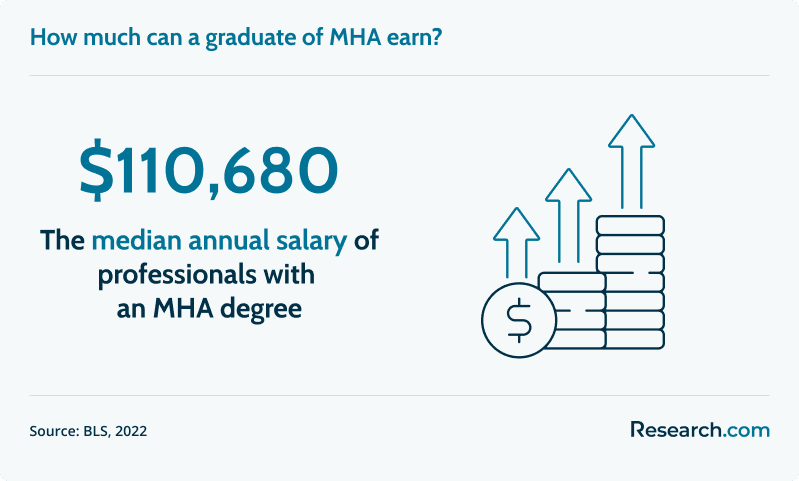
- Professionals with an MHA degree earn a median salary of $110,680 per year.
- Pursuing an online master's in healthcare administration offers affordability and accessibility.
What can I expect from an online master’s in healthcare administration?
An online master’s in healthcare administration focuses on developing key competencies such as communication, leadership, and professionalism. The program prepares students for executive roles in healthcare administration. An online program also provides online bulletin boards and video conferencing to enhance the learning experience.
Where can I work with an online master’s in healthcare administration?
Graduates of MHA can work in hospitals as CEOs, department managers, or other executive roles. Graduates can also work in government agencies and non-profit organizations. Aside from these settings, there are also career opportunities in public health clinics and state agencies for graduates to significantly impact the healthcare industry.
How much can I make with an online master’s in healthcare administration?
With an online master's in healthcare administration, professionals can expect to earn a median annual salary of $110,680. Salaries can also increase after obtaining enough work experience. The top industries offering the highest median annual wages for medical and health services managers include government, hospitals, nursing, and residential care facilities.
- 2027 List of the Best Online Master’s in Healthcare Administration Top Programs
- How does an online master’s in healthcare administration compare to an on-campus program? Online vs Campus Program
- What is the average cost of an online master’s in healthcare administration? Program Cost
- What are the financial aid options for students enrolling in an online master’s in healthcare administration? Financial Aid
- What are the prerequisites for enrolling in an online master’s in healthcare administration? Admission Requirements
- What courses are typically in an online master’s in healthcare administration? Curriculum
- What types of specializations are available in an online master’s in healthcare administration? Specializations
- How to choose the best online master’s in healthcare administration? How to choose the best online master’s in healthcare administration?
- What career paths are available for graduates of an online master’s in healthcare administration? What career paths are available for graduates of an online master’s in healthcare administration?
- What is the job market for graduates with an online master’s in healthcare administration? What is the job market for graduates with an online master’s in healthcare administration?
- What challenges might students encounter in an online master’s in healthcare administration? What challenges might students encounter in an online master’s in healthcare administration?
- What leadership skills are critical for success in healthcare administration? What leadership skills are critical for success in healthcare administration?
- Should I pursue additional advanced degrees alongside my MHA? Should I pursue additional advanced degrees alongside my MHA?
- What are short-term certifications to enhance healthcare administration skills? What are short-term certifications to enhance healthcare administration skills?
- Can a medical coding certification enhance my healthcare administration career? Can a medical coding certification enhance my healthcare administration career?
- What are the best strategies for choosing a flexible healthcare administration program? What are the best strategies for choosing a flexible healthcare administration program?
- What are the fastest online MPH programs for healthcare administration professionals? What are the fastest online MPH programs for healthcare administration professionals?
- Can accelerated clinical degree programs enhance leadership in healthcare administration? Can accelerated clinical degree programs enhance leadership in healthcare administration?
- What are the future and emerging trends in healthcare administration? What are the future and emerging trends in healthcare administration?
- How does an advanced degree in healthcare administration improve career prospects compared to a bachelor’s degree? How does an advanced degree in healthcare administration improve career prospects compared to a bachelor’s degree?
- Can a specialized pharmacy degree complement healthcare administration? Can a specialized pharmacy degree complement healthcare administration?
- How critical is accreditation for online healthcare administration programs? How critical is accreditation for online healthcare administration programs?
2027 Guide to the Best Online Master’s in Healthcare Administration Programs
Choosing an online master’s in healthcare administration is a career decision, not just an academic one. The right MHA program can help experienced healthcare workers, business professionals, clinicians, and public-sector employees move toward management roles in hospitals, health systems, long-term care, consulting, health technology, and policy-focused organizations. The wrong program can leave students with unnecessary debt, limited employer recognition, or a curriculum that does not match their career goals.
This guide explains how online MHA programs work, how to compare schools, what they cost, which admissions requirements to expect, and what career paths graduates commonly pursue. It also highlights important decision factors such as accreditation, delivery format, specialization options, financial aid, and whether an online MHA is the best credential for your professional goals. Research.com reviewed available program information and recognized education data sources to help prospective students evaluate their options with more confidence.
Quick Answer: Is an Online Master’s in Healthcare Administration Worth Considering?
An online master’s in healthcare administration can be a strong option for working adults who want to move into healthcare leadership without leaving their jobs. The degree is most useful for students who want training in healthcare finance, operations, policy, quality improvement, leadership, and information systems. Before enrolling, students should verify institutional and programmatic accreditation, calculate total program cost, compare required credits, review networking and career support, and confirm that the curriculum fits their target role.
| Best fit | Students who may want another path |
| Healthcare professionals seeking management, operations, quality, informatics, or policy roles | Students who want direct clinical licensure or hands-on patient care training |
| Working adults who need flexible online coursework | Students who learn best through daily in-person interaction and campus-based networking |
| Professionals interested in hospital administration, consulting, long-term care, or healthcare technology | Applicants who have not confirmed accreditation, total cost, or career outcomes before applying |
How Research.com Evaluates Online MHA Programs
Online MHA programs vary widely in price, curriculum structure, completion time, accreditation, and student support. To make comparison easier, Research.com considers recognized education data sources, program-level information, and factors that matter to graduate students, including affordability, flexibility, credit requirements, and academic quality indicators.
Sources used in the review process include:
- Integrated Postsecondary Education Data System, including the IPEDS database
- Peterson’s database, including distance learning data
- College Scorecard database
- National Center for Education Statistics
Best Online Master’s in Healthcare Administration Programs
The programs below are presented as a decision-support list. Students should use the details as a starting point, then confirm tuition, fees, admissions requirements, accreditation status, and course delivery directly with each university before applying.
| School | Program length | Credits | Published cost | Accreditation listed |
| Capella University | 1 Year | 48 credits | $2,535 per 12 week | Higher Learning Commission |
| Boston College | 1 Year | 54 credits | $2,314 per credit | New England Commission of Higher Education |
| University of St. Francis | 1 Year | 36 credits | $535 per credit | Higher Learning Commission |
| Louisiana State University Shreveport | 1 Year | 30 credits | $416 per credit | Association to Advance Collegiate Schools of Business |
| University of North Carolina Wilmington | 1 Year | 48 credits | $309 per credit | Commission on Accreditation of Healthcare Management Education (CAHME) |
| West Coast University | 8 months | 30 credits | $750 per credit | WASC Senior College of University Commission |
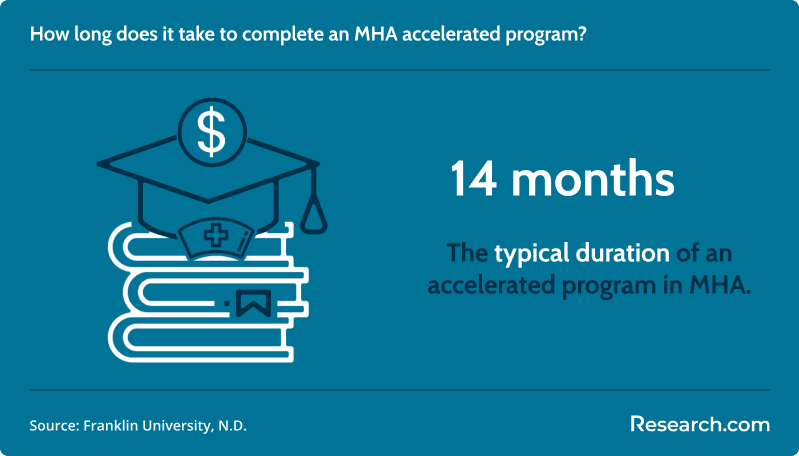
| Franklin University | 14 months | 36 credits | $670 per credit | The Higher Learning Commission |
| Southern New Hampshire University | 15 months | 36 credits | $637 per credit | New England Commission of Higher Education (NECHE) |
| Radford University | 18 months | 36 credits | $349 per credit | Commission of Accreditation of Healthcare Management Education |
| The University of St. Augustine | 16 months | 37 credits | $901 per credit | Southern Association of Colleges and Schools Commission on Colleges |
1. Capella University
Capella University offers an online MHA in Health Administration focused on the intersection of healthcare operations, leadership, patient-centered systems, and business strategy. Students can choose between GuidedPath and FlexiPath options, which may appeal to learners who want either a more structured schedule or a self-paced format.
- Program Length: 1 Year
- Tracks/concentrations: Health Administration
- Cost per 12 week: $2,535
- Required credits to graduate: 48 credits
- Accreditation: Higher Learning Commission
2. Boston College
The online Master of Healthcare Administration from Boston College is designed for students who want leadership preparation grounded in healthcare transformation, ethics, and social responsibility. The program emphasizes critical thinking, organizational change, and healthcare improvement through a curriculum shaped by Boston College’s mission and values.
- Program Length: 1 Year
- Tracks/concentrations: Health Administration
- Cost per credit: $2,314
- Required credits to graduate: 54 credits
- Accreditation: New England Commission of Higher Education
3. University of St. Francis
The University of Saint Francis offers an online MHA for students preparing for administrative and leadership responsibilities in healthcare organizations. The program combines applied management concepts, ethical decision-making, and healthcare-focused coursework delivered by faculty with field experience.
- Program Length: 1 Year
- Tracks/concentrations: Health Administration
- Cost per credit: $535
- Required credits to graduate: 36 credits
- Accreditation: Higher Learning Commission
4. Louisiana State University Shreveport
The online Master of Health Administration at Louisiana State University Shreveport is structured around affordability, speed, and core administrative training. Students study topics such as healthcare systems, law, ethics, and leadership. LSUS may be especially relevant for students comparing short completion timelines and lower per-credit tuition. The university’s accelerated healthcare administration degree also ranks highly nationwide.
- Program Length: 1 Year
- Tracks/concentrations: Health Administration
- Cost per credit: $416
- Required credits to graduate: 30 credits
- Accreditation: Association to Advance Collegiate Schools of Business
5. University of North Carolina Wilmington
The online MHA at the University of North Carolina Wilmington prepares students to address operational, strategic, and leadership challenges in healthcare settings. Its curriculum is aligned with the National Center for Healthcare Leadership's Health Leadership Competency Model 3.0, which can be useful for students seeking competency-based preparation for management roles.
- Program Length: 1 Year
- Tracks/concentrations: Health Administration
- Cost per credit: $309
- Required credits to graduate: 48 credits
- Accreditation: Commission on Accreditation of Healthcare Management Education (CAHME)
6. West Coast University
West Coast University offers an online MHA with applied, scenario-based coursework. Students can focus on areas such as informatics, organizational leadership, project management, and public health, making the program a possible fit for learners who want a shorter timeline and defined specialization choices.
- Program Length: 8 months
- Tracks/concentrations: Informatics, Org Leadership, Project Management, and Public Health
- Cost per credit: $750
- Required credits to graduate: 30 credits
- Accreditation: WASC Senior College of University Commission
7. Franklin University
Franklin University provides an online MHA for students who want career-focused healthcare leadership training. The program is built around administrative decision-making, ethics, and practical management skills, and it may appeal to students seeking a 36-credit graduate pathway with online flexibility.
- Program Length: 14 months
- Tracks/concentrations: Healthcare Administration
- Cost per credit: $670
- Required credits to graduate: 36 credits
- Accreditation: The Higher Learning Commission
8. Southern New Hampshire University
Southern New Hampshire University offers an online healthcare administration master’s program that covers leadership, finance, policy, technology, and social factors that affect healthcare access and outcomes. Students comparing flexible, widely accessible online programs may want to review SNHU’s pacing, transfer credit policies, and tuition structure.
- Program Length: 15 months
- Tracks/concentrations: Healthcare Administration
- Cost per credit: $637
- Required credits to graduate: 36 credits
- Accreditation: New England Commission of Higher Education (NECHE)
9. Radford University
Radford University offers an online MHA intended for students preparing to lead in healthcare organizations facing operational, ethical, and technological change. Its flexible online structure can support working professionals who need to continue employment while completing graduate study.
- Program Length: 18 months
- Tracks/concentrations: Healthcare Administration
- Cost per credit: $349
- Required credits to graduate: 36 credits
- Accreditation: Commission of Accreditation of Healthcare Management Education
10. The University of St. Augustine
The online MHA from University of St. Augustine uses collaborative learning and applied healthcare scenarios to prepare students for administrative, consulting, and change-management roles. The program may be a fit for learners who want an interactive curriculum with a healthcare operations and leadership emphasis.
- Program Length: 16 months
- Tracks/concentrations: Healthcare Administration
- Cost per credit: $901
- Required credits to graduate: 37 credits
- Accreditation: Southern Association of Colleges and Schools Commission on Colleges
Students balancing full-time work, caregiving, and graduate study may also want to compare broader affordability options, including the cheapest online colleges for working adults.
What Graduates Say About Online MHA Programs
- Carey: "I was working full-time in a hospital and raising a family, so a campus program did not feel realistic. The online format gave me room to study during lunch breaks, evenings, and weekends. Discussions with classmates in different states helped me see healthcare leadership from multiple perspectives, and faculty support made the workload manageable. I finished the program feeling more prepared to pursue a leadership role tied to patient care improvement."
- Hampton: "My online MHA changed how I approached my job. The assignments were demanding, but they connected directly to finance, operations, and leadership problems I was already seeing at work. Because I could study online, I was still able to attend conferences and build professional contacts. Within a year of completing the degree, I moved into a director of operations role."
- Nelly: "Even though my classmates were not in the same city, the program created a real professional community. Online forums, team projects, and faculty feedback helped me build communication and collaboration skills. The degree gave me administrative knowledge, but the network I developed was just as valuable."
Key Findings
Online vs. On-Campus MHA Programs: Which Format Fits You?
The main difference between online and campus-based MHA programs is not usually the degree title; it is the learning experience. Online programs are often better for working professionals who need schedule flexibility, while campus programs may provide more frequent face-to-face interaction, easier access to in-person events, and a more traditional graduate school environment.
Employers generally focus on the institution, accreditation, curriculum, experience, and leadership skills rather than whether coursework was completed online or in person. A respected online MHA from an accredited institution can be a credible option, especially when the program includes applied projects, faculty interaction, career support, and networking opportunities. Students comparing healthcare graduate programs may also want to review related options such as the cheapest MSN programs online, particularly if they are deciding between clinical and administrative graduate pathways.
| Factor | Online MHA | On-campus MHA |
| Schedule | Often better for students working full time or managing family responsibilities | Better for students who can attend classes at set times and commute regularly |
| Networking | Depends heavily on virtual events, group projects, alumni access, and faculty engagement | Usually easier to build relationships through campus events, seminars, and informal meetings |
| Cost considerations | May reduce relocation, commuting, and some campus-related costs | May involve commuting, housing, parking, or relocation expenses |
| Learning style | Works best for self-directed students who can manage deadlines independently | Works best for students who prefer in-person structure and immediate classroom interaction |
What Is the Average Cost of an Online Master’s in Healthcare Administration?
The cost of an online master’s in healthcare administration can vary significantly, ranging from around $30,400 to upwards of $96,000. Total cost depends on tuition format, required credits, fees, transfer credit policies, residency requirements, and whether the program charges per credit or uses another pricing model. Programs from highly recognized universities or programs with specialized accreditation such as CAHME may have higher tuition.
For example, the online MHA program at Louisiana State University Shreveport lists a cost of $416 per credit hour. Students comparing tuition should look beyond the advertised per-credit price and calculate the full bill, including fees and the total number of credits. Broader affordability comparisons, such as Research.com’s guide to the most affordable online colleges, can help students identify lower-cost online study options.
Financial Aid Options for Online MHA Students
Graduate students should begin with the school’s financial aid office and the FAFSA process, then compare federal loans, institutional aid, employer tuition benefits, scholarships, and payment plans. Students searching for a master's degree under $10 000 should pay close attention to total program cost rather than only the per-credit price.
- Federal Stafford Loans: Graduate students may qualify for unsubsidized federal loans. Interest begins accruing when the loan is disbursed.
- Graduate PLUS Loans: These federal loans are designed for graduate students and may allow higher borrowing amounts, though they typically carry higher interest rates than Stafford loans.
- Federal Pell Grants: Pell Grants are need-based awards that usually do not require repayment, but they are less common for graduate-level study.
- Institutional grants: Some universities provide need-based or program-specific grants for MHA students.
- Tuition payment plans: Many schools allow students to divide tuition payments across a semester or year, sometimes through university-managed plans or third-party providers.
Admissions Requirements for an Online Master’s in Healthcare Administration
Admissions standards differ by university, but most online MHA programs look for evidence that applicants can handle graduate-level work and connect their career goals to healthcare leadership. Applicants should review each program’s admissions page carefully because deadlines, test requirements, prerequisites, and professional experience expectations can vary.
| Requirement | What applicants should expect |
| Bachelor's Degree | Most programs require a bachelor's degree from an accredited institution. A healthcare, business, public health, or related major may help, but it is not always mandatory. |
| Minimum GPA | Many programs list a minimum GPA, often around 3.0 GPA overall or in upper-division coursework. |
| Standardized Test Scores | GRE or GMAT scores may be required by some programs, but test requirements have become less common in many online MHA admissions processes. |
| Work Experience | Some programs prefer applicants with healthcare experience because it gives students context for administrative, policy, and operational coursework. |
| Résumé and Purpose Statement | Applicants commonly submit a résumé or CV and a statement explaining professional goals, leadership interests, and reasons for pursuing the MHA. |
Common Courses in an Online Master’s in Healthcare Administration
Online master's in healthcare administration programs are designed to build leadership and management skills for complex healthcare environments. Course names differ by school, but most programs cover finance, policy, operations, quality, ethics, technology, and organizational leadership.
- Healthcare Systems and Organizations: Introduces how healthcare organizations operate, including delivery models, major stakeholders, regulatory structures, and organizational design.
- Healthcare Finance and Economics: Covers budgeting, revenue cycle management, reimbursement, financial planning, and economic pressures that affect healthcare decisions.
- Health Policy and Law: Examines policy development, compliance, ethics, legal risk, privacy, and the regulatory environment shaping healthcare organizations.
- Healthcare Quality Improvement: Focuses on patient safety, performance improvement, quality measurement, outcomes, and patient-centered care.
- Health Information Systems and Technology: Covers electronic health records, analytics, telehealth, information governance, and the role of technology in healthcare management.
Online MHA Specializations to Compare
Some MHA programs offer concentrations that allow students to tailor the degree toward a specific administrative function. A specialization is most useful when it matches a clear career direction, such as finance, informatics, quality, or executive leadership.
| Specialization | Best for students interested in | Typical focus |
| Healthcare Finance | Budgeting, reimbursement, revenue cycle, and financial strategy | Cost control, reimbursement systems, budgeting, and healthcare economics |
| Health Informatics | Technology leadership, data systems, and digital health operations | Electronic health records, analytics, telehealth, data quality, and systems implementation |
| Healthcare Leadership and Management | Administrative leadership, team management, and organizational change | Strategic planning, change management, organizational behavior, and decision-making |
How to Choose the Best Online Master’s in Healthcare Administration
The best online MHA is the one that fits your career goal, budget, schedule, and learning needs. A highly ranked program is not automatically the right program if it is too expensive, lacks your specialization, or does not offer the support you need as an online graduate student.
- Start with your target role. A student aiming for hospital operations may need different coursework than someone pursuing healthcare consulting, health IT, or policy analysis.
- Verify accreditation. Check institutional accreditation and, when relevant, programmatic accreditation. Recognized accreditors such as the Higher Learning Commission help signal baseline academic quality.
- Calculate total cost. Multiply tuition by required credits and add fees, books, residencies, technology charges, and travel if required. Compare options with guides to affordable online master's programs.
- Compare curriculum and specializations. Look for required courses in finance, policy, leadership, informatics, quality improvement, and healthcare operations.
- Ask about online support. Strong online programs should provide advising, faculty access, library resources, technology support, career services, and networking opportunities.
- Review pacing carefully. Accelerated programs can save time, but they may be difficult for students with demanding jobs or family obligations.
Career Paths for Online MHA Graduates
Graduates of an online MHA can pursue administrative, operational, policy, consulting, and technology-focused roles across healthcare settings. Some students may also compare healthcare administration with a public administration degree online if they are more interested in government, nonprofit, or public-sector leadership.
- Healthcare Administrators: Manage operations, staffing, compliance, budgeting, and service delivery in hospitals, clinics, long-term care facilities, and health systems.
- Healthcare Consultants: Advise organizations on strategy, operations, finance, performance improvement, and organizational change.
- Health Policy Analysts: Evaluate healthcare laws, reimbursement models, regulations, and access issues for agencies, think tanks, advocacy groups, or research organizations.
- Healthcare IT Managers: Oversee information systems, technology implementation, analytics, and digital workflow improvements.
- Healthcare Quality Improvement Managers: Lead efforts to improve patient safety, clinical outcomes, performance metrics, and patient experience.
Medical and health services managers are expected to grow by 28% from 2022 to 2032. This Bureau of Labor and Statistics chart shows how projected growth for healthcare administrators compares with other management occupations.
Job Market Outlook for Online MHA Graduates
The job market for graduates with an online master's in healthcare administration includes opportunities in hospitals, health systems, government agencies, nonprofit organizations, consulting firms, long-term care providers, and healthcare technology companies. Graduates may pursue roles such as department manager, clinical director, operations leader, COO-track administrator, or other senior management positions depending on experience and employer requirements.
The median annual salary for medical and health services managers is $110,680. Salary outcomes can vary by location, employer type, years of experience, job function, and prior clinical or administrative background. An MHA can strengthen leadership qualifications, but it does not guarantee a specific title or salary.
Challenges Students May Face in an Online MHA Program
Online MHA programs can be flexible, but they are not effortless. Students often need to manage graduate-level coursework while working, caregiving, or handling unpredictable healthcare schedules. Online group projects, discussion boards, and virtual presentations also require strong communication habits and consistent participation.
Common challenges include time management, limited informal networking, fewer spontaneous faculty conversations, and the need to take more initiative when using career services or academic support. Before enrolling, students should review healthcare administration degree requirements and ask whether the program’s pacing, expectations, and support systems match their current responsibilities.
Leadership Skills Healthcare Administrators Need
Healthcare administration requires more than general business knowledge. Leaders must make decisions in environments shaped by patient safety, regulation, staffing shortages, reimbursement pressure, ethical obligations, and rapidly changing technology.
- Strategic thinking: Administrators must set priorities, anticipate organizational risks, and align operations with long-term healthcare goals.
- Communication: Leaders need to explain policies, coordinate across departments, communicate with stakeholders, and build trust with clinical and nonclinical teams.
- Decision-making: Healthcare managers often make high-pressure decisions using financial, operational, clinical, and compliance data.
- Emotional intelligence: Empathy, self-awareness, and conflict management are essential in high-stress healthcare workplaces.
- Change management: Administrators must guide teams through new regulations, technology rollouts, process redesigns, and care delivery changes.
Should You Pursue Another Advanced Degree with an MHA?
Most students do not need a second advanced degree to benefit from an MHA. A second degree makes sense only when it supports a specific career goal, such as moving into clinical leadership, pharmacy administration, public health, health informatics, or executive policy roles. For example, a clinical credential such as a pharmacist degree online may be useful for professionals whose long-term work involves medication management, pharmacy operations, or regulatory compliance.
Before adding another degree, compare the cost, time, licensure implications, and likely career benefit. In many cases, a certification, employer-sponsored training, or targeted graduate certificate may be more efficient than a second full degree.
Short-Term Certifications That Can Support Healthcare Administration Skills
Short-term certifications can help MHA students and graduates build focused skills without committing to another full graduate program. Useful areas may include project management, healthcare quality, compliance, informatics, revenue cycle, or health information technology. These credentials are most valuable when they align with a current role or a clearly defined next job.
Students exploring targeted credentials can compare short-term medical certificate programs that support skills in healthcare compliance, informatics, billing, coding, or quality improvement.
Can Medical Coding Certification Help a Healthcare Administration Career?
A medical coding certification can be useful for healthcare administrators who work with revenue cycle management, claims accuracy, compliance, billing operations, or health data quality. It is not required for every MHA career path, but it can help managers better understand documentation, reimbursement, coding workflows, and operational risk.
This type of credential is most relevant for professionals targeting roles in billing operations, practice management, compliance, health information management, or administrative analytics.
How to Choose a Flexible Healthcare Administration Program
Flexibility should mean more than “online.” A truly flexible MHA program should match your weekly schedule, preferred learning style, technology access, and work responsibilities. Students should compare synchronous and asynchronous courses, assignment deadlines, clinical or campus requirements, group project expectations, and whether courses are offered year-round.
Ask each program these questions before applying:
- Are classes asynchronous, synchronous, or a mix of both?
- How many hours per week should students expect to study?
- Are there required campus visits, live sessions, internships, or residencies?
- Can students slow down or speed up if work demands change?
- What academic advising, career support, tutoring, and library access are available online?
- How are group projects handled across time zones?
- What fees are not included in the advertised tuition rate?
Students comparing workload and accessibility may also find it useful to review broader graduate options such as the easiest online master's degrees, while remembering that “easier” should never replace accreditation, curriculum quality, or career fit.
Should Healthcare Administration Professionals Consider an Online MPH?
An online MPH can complement healthcare administration training for professionals who want stronger preparation in population health, epidemiology, health policy, community health, or prevention-focused leadership. It may be more appropriate than an MHA for students aiming at public health agencies, global health organizations, health education, or population-level program design.
Healthcare administrators who want faster public health training can compare accelerated MPH programs online. The best choice depends on whether the student wants to lead healthcare organizations from an operations perspective, a public health perspective, or a role that combines both.
Can Accelerated Clinical Degree Programs Strengthen Healthcare Leadership?
Accelerated clinical degrees can give administrators a deeper understanding of patient care, clinical workflows, and provider decision-making. This can be useful in roles where administrative leaders work closely with physicians, pharmacists, nurses, and care teams. However, clinical degree programs are intensive and may include licensure or practice requirements that go far beyond administrative training.
Options such as 3 year PharmD programs may be relevant for professionals seeking pharmacy leadership, medication-use policy, or clinical operations roles. For many MHA students, however, a targeted certificate or healthcare operations experience may be a more practical next step.
Emerging Trends in Healthcare Administration
Healthcare administrators are operating in a field shaped by technology, cost pressure, regulation, workforce challenges, and patient expectations. MHA students should choose programs that address current management realities rather than only traditional organizational theory.
- Technology and digital operations: Administrators increasingly manage electronic health records, analytics tools, telemedicine, cybersecurity concerns, and AI-supported workflows.
- Value-based care: Healthcare organizations continue to focus on quality, outcomes, cost-efficiency, and patient satisfaction rather than only service volume.
- Aging populations and demand for care: Older populations increase demand for chronic disease management, long-term care, home health, and coordinated services.
- Policy and regulatory change: Leaders must monitor changes affecting Medicare, Medicaid, insurance requirements, privacy, reimbursement, and compliance.
- Rural and underserved care access: Administrators may need to support telehealth, workforce partnerships, mobile services, and community-based care models.
- Sustainability and infrastructure: Healthcare organizations are paying more attention to facility efficiency, resource use, environmental responsibility, and resilient operations.
How an MHA Can Improve Career Prospects Compared with a Bachelor’s Degree
A bachelor’s degree can support entry-level and midlevel healthcare roles, but an MHA is designed to develop higher-level skills in finance, regulation, strategy, operations, and organizational leadership. This can help professionals compete for roles that require graduate education or advanced administrative preparation.
Students deciding whether graduate school is necessary should compare the roles they want with the education employers request. Some high paying healthcare jobs with bachelor's degree may not require an MHA, while executive, policy, consulting, or system-level leadership roles may favor graduate training. Cost-conscious students can also compare affordable online masters programs before committing.
Can a Specialized Pharmacy Degree Complement Healthcare Administration?
A specialized pharmacy degree can complement healthcare administration for professionals focused on medication safety, pharmacy operations, regulatory compliance, formulary management, or clinical service leadership. Administrative leaders with pharmacy knowledge may be better prepared to collaborate with clinical teams and evaluate medication-related operations.
Students considering this path should review the time, cost, licensure implications, and career relevance of an online doctor of pharmacy program before deciding whether a full pharmacy degree is more useful than an MHA concentration or certificate.
How Important Is Accreditation for Online Healthcare Administration Programs?
Accreditation is one of the most important checks students should complete before enrolling in an online MHA program. Institutional accreditation helps confirm that a college or university meets recognized academic standards. Programmatic accreditation can provide additional assurance that the curriculum aligns with expectations in a specific field.
Students should verify accreditation directly through recognized accrediting organizations and the school’s official disclosures. This is especially important for programs connected to regulated or technical healthcare fields. For comparison, students researching health information management may review options such as a CAHIIM approved online health information management degree.
Common Mistakes to Avoid When Choosing an Online MHA
| Mistake | Why it matters | Better approach |
| Choosing based only on tuition per credit | A low per-credit price may still lead to a high total cost if the program requires more credits or adds fees. | Calculate total tuition, fees, books, technology costs, and any residency expenses. |
| Ignoring accreditation | Accreditation can affect employer perception, transfer options, and financial aid eligibility. | Confirm institutional and, when relevant, programmatic accreditation before applying. |
| Assuming all online programs are equally flexible | Some online programs require live sessions, group work, or fixed deadlines that may conflict with work schedules. | Ask about asynchronous courses, pacing options, and weekly workload. |
| Choosing the fastest program without checking workload | Accelerated schedules can be difficult for students with demanding jobs or caregiving responsibilities. | Match completion speed to realistic weekly study time. |
| Relying only on rankings | A ranked program may not offer the specialization, support, or cost structure a student needs. | Use rankings as a starting point, then compare curriculum, outcomes, and fit. |
| Assuming salary outcomes are guaranteed | Salary depends on experience, location, employer, and job function. | Research local job postings and ask programs for career support and alumni outcome information. |
Key Insights
- An online MHA is best for students who want healthcare leadership training while maintaining work or family commitments.
- Program fit depends on accreditation, total cost, curriculum, flexibility, specialization options, and career support—not just ranking or brand name.
- Published tuition can be misleading unless students calculate the full cost using required credits, fees, and completion timeline.
- Common MHA careers include healthcare administrator, consultant, policy analyst, IT manager, and quality improvement manager.
- Medical and health services managers are expected to grow by 28% from 2022 to 2032, and the median annual salary is $110,680, but individual outcomes vary.
- Students should avoid enrolling before verifying accreditation, workload, transfer policies, financial aid, and whether the program supports their target role.
References:
- Bureau of Labor and Statistics. (2022). Occupational Outlook and Handbook: Medical and Health Services Managers. Retrieved from: https://www.bls.gov/ooh/management/medical-and-health-services-managers.htm
- Bernau, P. (2021). 5 Essential Skills Needed to Enter the Healthcare Administration Field. Retrieved from: https://www.linkedin.com/pulse/5-essential-skills-needed-enter-healthcare-field-paulina-bernau/
- Campbel, J. (2023). How To Become a Health Care Administrator in 5 Steps. Retrieved from: https://www.indeed.com/career-advice/career-development/how-to-become-a-healthcare-administrator
- Data USA. (2021). Healthcare Administration and Management. Retrieved from: https://datausa.io/profile/cip/health-care-administration-management
Other Things You Should Know About 1-Year Online Master’s in Healthcare Administration
Most 1-year Master’s in Healthcare Administration programs require about 30 to 42 semester credit hours. Accelerated formats usually compress full-time study into 12 months, often with summer enrollment and a heavier course load than standard two-year programs.
Look for unique features such as industry partnerships, experiential learning opportunities, and specialized tracks like Health Informatics or Policy Analysis in a 1-year Master's in Healthcare Administration program for 2027. These elements can enhance practical knowledge and connectivity in the healthcare sector.


