2027 Most Affordable Online MBA Programs in the U.S.

Co-Founder and Chief Data Scientist
An online MBA can be a practical way to build management, finance, analytics, and leadership skills without leaving a full-time job. The harder question is whether the degree is worth the cost. Tuition varies widely, and the advertised price is not always the amount students actually pay after fees, books, employer benefits, scholarships, and schedule-related costs are included.
This guide is for working professionals, career changers, and recent business graduates comparing lower-cost online MBA options in the U.S. It explains which programs are among the most affordable based on the information provided, what makes an online MBA cheaper or more expensive in practice, and how to judge cost without ignoring accreditation, curriculum quality, flexibility, and career value.
Key Benefits of Enrolling in One of the Most Affordable Online MBA Programs in the U.S.
- Cost Savings: Affordable programs allow students to earn a respected MBA without accumulating excessive debt.
- Flexibility: Most online programs let students balance work, family, and studies, making them accessible to busy professionals.
- Career Advancement: Even at a lower cost, these programs provide essential skills and credentials that can boost career growth and salary potential.
- Access to Quality Education: Many affordable online MBAs are offered by reputable schools, ensuring students receive a high-quality curriculum and networking opportunities.
List of the Most Affordable Online MBA Programs in the U.S.
Choosing an online MBA should start with fit, not only price. A low tuition rate matters, but students should also compare accreditation, required credits, concentrations, course pace, admissions requirements, and how well the curriculum matches their career plans. To identify affordable programs and organize school information, Research.com uses our methodology and draws from the following sources:
- IPEDS database
- Peterson's database, including their Distance Learning Licensed Data Set
- College Scorecard database
- National Center for Education Statistics
The programs below stand out for low published tuition rates, online delivery, and formats designed for students who need to balance graduate study with work or family responsibilities. Before applying, verify the current tuition, fees, admissions requirements, and residency expectations directly with the university, since costs and policies can change.
1. Georgia Southwestern State University
Georgia Southwestern State University offers a fully online MBA designed for working professionals who want a broad graduate business education at a low per-credit cost. The curriculum emphasizes ethical leadership, global business, and core management disciplines, making it a strong option for students who want a generalist MBA rather than a highly specialized track.
- Program Length: Two Years
- Cost per Credit/Tuition: $263
- Required Credits to Graduate: 36
- Accreditation: Association to Advance Collegiate Schools of Business (AASCB)
2. Southeastern Oklahoma State University
Southeastern Oklahoma State University is a good fit for students who want a fast, flexible MBA with multiple concentration choices. Its accelerated online format can appeal to professionals who want to finish quickly, while the no-GMAT policy may reduce application cost and preparation time.
- Program Length: 12 months
- Tracks/concentrations: organizational management and leadership, general business, accounting, aerospace logistics, data analytics, entrepreneurship, and many more.
- Cost per Credit/Tuition: $345
- Required Credits to Graduate: 30 to 36
- Accreditation: AACSB
3. Texas A&M International University
Texas A&M International University offers a 12-month online MBA built around short 7-week terms. The program may suit students who can manage an intensive pace and want coursework in areas such as managerial economics, research methods, leadership, and entrepreneurship.
- Program Length: 12 months
- Tracks/concentrations: human resource development, leadership and decision-making, and entrepreneurship.
- Cost per Credit/Tuition: $367
- Required Credits to Graduate: 30
- Accreditation: AACSB
4. Florida Gulf Coast University
Florida Gulf Coast University offers an online MBA for students who want a management degree with applied decision-making and analytical coursework. Its concentration options may be useful for professionals moving toward roles that involve data, human resources, or global organizational strategy.
- Program Length: 12 months
- Tracks/concentrations: data management, human resource management, big data analytics and data mining, global organization issues, and more.
- Cost per Credit/Tuition: $373
- Required Credits to Graduate: 33
- Accreditation: AACSB
5. Arkansas State University
Arkansas State University offers an online MBA with coursework tied to ethical leadership, international business, technology, and applied concentration study. It may be a practical choice for students who want an AACSB-accredited option with focused electives in business functions or industry areas.
- Program Length: 12 months
- Tracks/concentrations: financial planning and analysis, marketing, supply chain management, and agricultural business.
- Cost per Credit/Tuition: $514
- Required Credits to Graduate: 33
- Accreditation: AACSB
6. University of North Georgia
University of North Georgia offers a 36-credit online MBA with no GMAT requirement, which can make the admissions process more accessible for qualified applicants. Its concentrations are especially relevant for students targeting analytics, healthcare leadership, or sports-related business roles. Students comparing test-optional programs can also review additional no-GMAT online MBA affordability information.
- Program Length: One and a half years
- Tracks/Concentrations: Data Analytics, Healthcare Management, Sports Management
- Cost per Credit: $290
- Required Credits to Graduate: 36
- Accreditation: Southern Association of Colleges and Schools Commission on Colleges (SACSCOC)
7. Eastern University
Eastern University offers a 30-credit MBA centered on ethical leadership with a Healthcare Management concentration. It is best suited for students who want a shorter credit requirement and a healthcare-focused business curriculum rather than a broad menu of concentration options.
- Program Length: One year
- Tracks/Concentrations: Healthcare Management (focus on ethical leadership)
- Cost per Credit: $300
- Required Credits to Graduate: 30
- Accreditation: Middle States Commission on Higher Education (MSCHE)
8. Northeastern State University
Northeastern State University offers a no-GMAT online MBA with concentrations in core business areas. The program may work well for students who want a traditional MBA structure with the option to focus on management, marketing, or finance.
- Program Length: One and a half years
- Tracks/Concentrations: Management, Marketing, Finance
- Cost per Credit: $279
- Required Credits to Graduate: 36
- Accreditation: Higher Learning Commission (HLC)
9. Missouri State University (No GMAT)
Missouri State University offers a 33-credit online MBA with a straightforward general business focus. Because no concentration is required, it may appeal to students who want a flexible, no-frills MBA rather than a specialized pathway.
- Program Length: One year
- Tracks/Concentrations: No concentrations offered
- Cost per Credit: $348
- Required Credits to Graduate: 33
- Accreditation: HLC
10. Lamar University
Lamar University offers a 36-credit online MBA with no GMAT requirement and career-oriented concentration choices. Students considering roles in healthcare administration, project management, or information systems may find the concentration lineup especially relevant.
- Program Length: One and a half years
- Tracks/Concentrations: Healthcare Administration, Project Management, Management Information Systems
- Cost per Credit: $388
- Required Credits to Graduate: 36
- Accreditation: SACSCOC
What factors determine the affordability of an online MBA program?
The affordability of an online MBA depends on the full cost of earning the degree, not just the advertised tuition rate. Even among the cheapest MBA online programs, two schools with similar per-credit prices can have very different total costs once credits, fees, schedule, and aid are included.
- Tuition per credit hour: This is usually the starting point for comparison. A lower per-credit rate can make a major difference, especially in programs with higher credit requirements.
- Total required credits: Programs that require more credits generally cost more overall, even if their per-credit tuition looks affordable.
- Mandatory fees: Technology fees, online course fees, graduation fees, proctoring fees, and student service fees can raise the final bill.
- Books and course materials: Some MBA courses require digital textbooks, simulations, software, case-study packets, or database access that may not be included in tuition.
- Residency or immersion requirements: A program advertised as online may still require travel for short campus sessions, networking events, or intensives.
- Program length: Longer enrollment can mean more terms of fees and a longer wait before the student sees the career value of the degree.
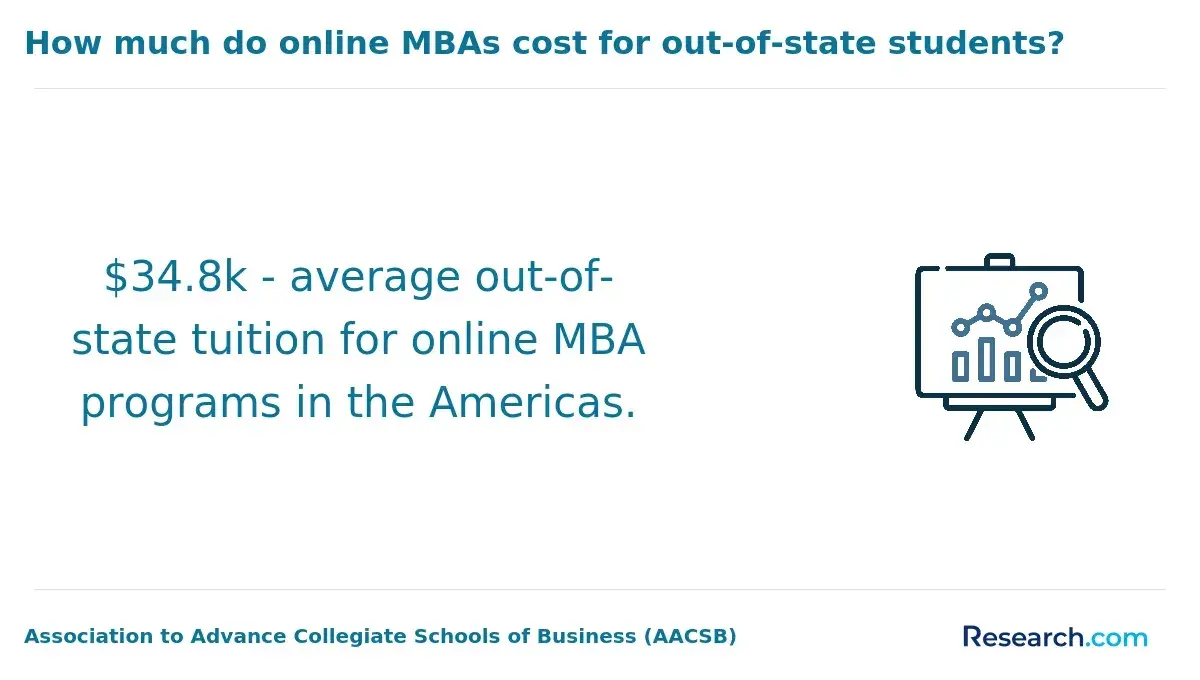
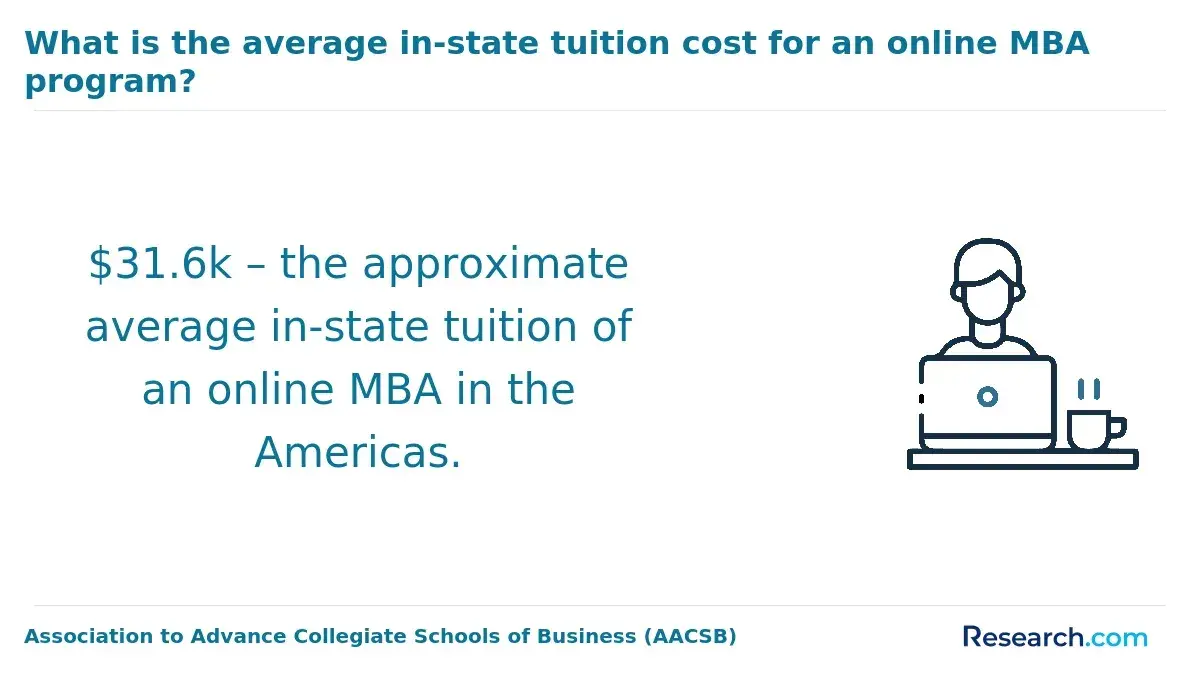
- In-state versus out-of-state pricing: Some online MBAs charge one rate for all distance learners, while others price students differently based on residency.
- Financial aid, scholarships, and employer support: Grants, loans, institutional scholarships, military benefits, and employer tuition reimbursement can lower out-of-pocket cost.
A useful affordability test is to ask the school for a complete cost estimate before enrolling. That estimate should include tuition, mandatory fees, expected course materials, any travel requirements, and the number of credits needed based on your background.
How does tuition for online MBAs compare to traditional on-campus programs?
Online MBA tuition is often lower than on-campus MBA tuition, but that is not guaranteed. Some universities charge the same academic tuition regardless of format, while others offer a separate online rate. The bigger savings often come from avoided costs: online students usually do not need to relocate, commute, pay for campus housing, or reduce work hours as much as full-time residential students.
On-campus programs can still offer value through in-person recruiting, live networking, student organizations, and access to local employers. Online programs tend to be more cost-effective for students who plan to keep working while enrolled and who do not need the campus experience to meet their goals.
This is why many working professionals compare online MBAs with cheap executive MBA programs. Both formats can support career advancement, but students should compare total cost, schedule demands, cohort structure, employer recognition, and career services before deciding which route offers the better return.
Yes. Financial aid, scholarships, and employer tuition benefits can reduce the out-of-pocket cost of an affordable online MBA. The main step is to separate the published price from the net price after aid. A program with slightly higher tuition may become cheaper for a student who receives a scholarship or employer reimbursement.
- Federal aid: Eligible graduate students may use federal aid options, including loans and, where applicable, grants or other aid sources, to help cover education costs.
- Institutional scholarships: Universities may offer merit-based, need-based, military, alumni, or program-specific awards for online MBA students.
- Employer tuition assistance: Many working professionals use employer reimbursement or tuition assistance to pay part of the cost. Students should confirm annual limits, grade requirements, repayment clauses, and whether the MBA must relate to their current role.
- Military and veteran benefits: Eligible students should ask how benefits apply to online graduate business programs and whether the school has staff who specialize in benefit certification.
- Payment plans: Some schools allow students to spread tuition across terms, which can help cash flow even if it does not reduce the final cost.
Students should apply early for scholarships and request a complete aid package before committing. The most affordable choice is not always the school with the lowest sticker price; it is the school with the best combination of net cost, quality, and career fit.
Part-time and full-time online MBA formats affect affordability in different ways. A full-time schedule can shorten the time to graduation and may reduce the number of terms in which students pay recurring fees. However, the workload can be difficult to manage with full-time employment, and any reduction in work hours can offset tuition savings.
Part-time study usually makes the degree easier to finance while working. Students can spread tuition payments over a longer period, continue earning income, and potentially use employer tuition assistance over multiple benefit cycles. The trade-off is that the degree takes longer to complete, and students may pay certain term-based fees for more time.
For working professionals comparing the cheapest AACSB online MBA options, the right schedule is usually the one that protects both academic performance and income stability. A program is not truly affordable if the pace causes a student to withdraw, repeat courses, or lose employer support.
Program length influences cost through tuition, fees, and opportunity cost. Shorter programs can help students finish sooner, reduce the number of enrolled terms, and apply the degree to career goals more quickly. Accelerated formats can be cost-effective for students who have the time and discipline to handle a heavier course load.
Longer programs may cost more if they require more credits or charge fees each term. They can also delay the professional benefits of the degree. Still, a longer timeline can be financially sensible for students who need to keep working full time, manage family obligations, or use employer reimbursement gradually.
When comparing program length, students should ask three questions: How many credits are required? Are fees charged by term or by course? Can I realistically complete the coursework at this pace without lowering my work income or academic performance?
No-GMAT and low-GMAT online MBA programs are not automatically cheaper in tuition, but they can reduce the total cost of applying. Students may avoid exam registration costs, test-preparation materials, tutoring, and the time needed to study for a standardized test. For working professionals, that time savings can be meaningful.
Programs offering affordable online MBA programs no GMAT required may also be more accessible for applicants with strong professional experience, prior graduate coursework, or solid undergraduate records. However, a GMAT waiver should not be the only deciding factor. Students should still compare tuition, fees, accreditation, curriculum, student support, and graduation requirements.
The best no-GMAT option is one that removes an unnecessary admissions barrier without weakening academic fit or employer recognition. If a program is test-optional, applicants should ask what materials carry the most weight instead, such as work experience, GPA, recommendation letters, essays, or interviews.
Students should look for the lowest-cost program that still meets their academic, professional, and credibility requirements. A cheap MBA that lacks relevant coursework, support, or employer recognition may deliver weaker long-term value than a moderately higher-priced program with stronger outcomes and better fit.
- Accreditation: Institutional accreditation is essential. Programmatic business accreditation, such as AACSB, ACBSP, or IACBE, can also signal that the business curriculum has been reviewed against external standards.
- Curriculum relevance: Review the actual course list, not just the program title. Make sure the MBA covers the skills you need, such as finance, analytics, operations, leadership, marketing, or strategy.
- Concentrations: A concentration can be valuable if it supports a clear career goal. If your goal is broad management advancement, a general MBA may be enough.
- Faculty and teaching format: Check whether courses are taught by experienced faculty, how interaction works online, and whether classes are asynchronous, synchronous, or mixed.
- Career services: Ask whether online MBA students receive resume help, interview coaching, career advising, employer events, and access to alumni networks.
- Flexibility: Course pacing, start dates, leave policies, and workload expectations can determine whether the program is realistic for working adults.
- Student outcomes and reputation: Look for transparent information about alumni roles, employer partnerships, and graduate satisfaction when available.
A strong value decision balances price with evidence of quality. Before enrolling, compare at least several programs side by side and ask each school the same questions about total cost, transfer credits, support services, and time to completion.
Are certain regions in the U.S. more cost-effective for online MBA programs?
Yes, the university’s region can affect online MBA cost, even when students study remotely. Schools in the South and Midwest often appear among lower-cost online MBA options, partly because regional operating costs, state funding models, and public university pricing can differ from those in the Northeast or on the West Coast.
However, location should not be evaluated by tuition alone. Some online programs charge the same rate to all distance learners, while others maintain in-state and out-of-state pricing. Regional employer recognition can also matter, especially for students who plan to work in the same state or region as the university.
For students who want maximum flexibility, the best approach is to search nationally but evaluate locally. Compare online tuition policies, accreditation, employer reputation in your target market, and whether the school’s alumni network is useful for the region or industry where you want to work.
Other Things You Should Know About Affordable Online MBA Programs in the U.S.
Affordable online MBA programs in the U.S. typically require around 36 to 54 credit hours to complete, depending on the institution. These credit hours include core courses, electives, and possibly a capstone project. Completion timelines vary, averaging two years for part-time students.
No, many affordable online MBA programs waive the GMAT or GRE for applicants with a bachelor’s degree and a minimum GPA, often around 2.75 to 3.0. Schools may also accept several years of professional experience instead of test scores, but each university sets its own admission policy.
- Accreditation Council for Business Schools and Programs. (n.d.). ACBSP accreditation Overview - Accreditation Council for Business Schools and programs. acbsp.org.
- Accredited Online Colleges. (n.d.). Cheap Online AACSB Accredited MBA Programs. accredited-online-college.org.
- Harland, N. (2025, November 7). 10 Most Affordable US Online MBA Programs. BusinessBecause.
- Rau, J. (2024, February 15). Are Online MBAs Worth It? Here’s Insight From The Best (And The Rest). Forbes.
- Wintemute, D. (2025, August 13). What Does An M.B.A. Cost, And Is It Worth It? Forbes.