2027 What to Do Before Applying to an Online MBA Program

Co-Founder and Chief Data Scientist
Many prospective students face uncertainty about how to prepare effectively before applying to an online MBA program. Balancing work and study while ensuring all requirements are met can feel overwhelming. Additionally, applicants often struggle to identify which credentials and experiences strengthen their candidacy. Understanding the admissions landscape is crucial for working professionals pivoting careers through flexible education pathways. This article explains essential steps to take before submitting an application, clarifies program expectations, and offers strategies to enhance acceptance chances, guiding readers through the complexities of pursuing an accredited online MBA degree.
Key Things You Should Know
- Research accreditation and program rankings carefully, as 85% of employers prefer graduates from recognized online MBA programs certified by bodies like AACSB or AMBA.
- Prepare a strong application by highlighting leadership experience and GMAT/GRE scores, as over 60% of top U.S. programs require standardized test results in 2025.
- Understand the financial commitment by exploring scholarships and employer sponsorships since the average tuition for online MBA programs rose by 7% to $45,000 in 2025.
What is an online MBA program?
An online MBA program provides a flexible, graduate-level business education accessible through digital platforms, ideal for working professionals, parents, and international students. Core coursework usually covers finance, marketing, operations, leadership, and strategy, with some programs offering fully asynchronous learning while others require live participation. Group projects and networking opportunities are often included to maintain academic rigor.
Admission standards vary widely; for instance, Indiana University's Kelley School of Business online MBA holds a competitive 23% acceptance rate, ranking it #1 according to Poets&Quants 2026 OMBA Ranking. Prospective students should evaluate program accreditation, faculty expertise, technology platforms, and alumni networks. Some programs cater to seasoned executives, while others are open to early-career candidates, so aligning these factors with individual goals is crucial.
When assessing an online mba program overview, key questions include:
- Is the curriculum aligned with your career goals, such as entrepreneurship or corporate leadership?
- What time commitments and support services are available?
- How do admissions criteria match your background?
- Are there opportunities for live interaction or networking events?
To maximize the benefits of an online MBA degree, students should research cost considerations as well. Exploring options for a low cost MBA online can help reduce financial barriers while gaining valuable skills and credentials.
Is an online MBA as valuable as a traditional one?
An online MBA offers comparable outcomes to traditional programs, particularly regarding salary growth and career advancement. Graduates typically report a median base salary of $150,000 three years after completing the program, marking a 20% increase from their starting salary. This growth is largely due to moving into management roles, reflecting the advantages of an online MBA for career advancement.
Employers increasingly accept accredited online MBA degrees from reputable schools as equivalent to in-person degrees. Prospective students should verify that their program holds recognized accreditation like AACSB or EQUIS to ensure academic quality and industry credibility.
Networking opportunities differ between formats. Traditional MBAs often provide in-person experiences that foster strong connections, while online MBA students must actively participate in virtual networking, attend any available residencies, and engage with alumni networks to compensate for less face-to-face interaction.
Consider these practical aspects when evaluating the value of an online MBA compared to traditional programs:
- Flexibility allows working professionals to study without disrupting employment.
- Lower costs from avoiding relocation and commuting fees make online MBAs more accessible.
- Diverse cohorts bring broader perspectives through national or international participation.
- Success requires strong self-discipline and time management due to less structured environments.
For those seeking affordability without sacrificing quality, exploring the cheapest AACSB MBA programs can be a strategic step in finding a well-regarded, cost-effective option aligned with career goals.
How do I choose an accredited online MBA program?
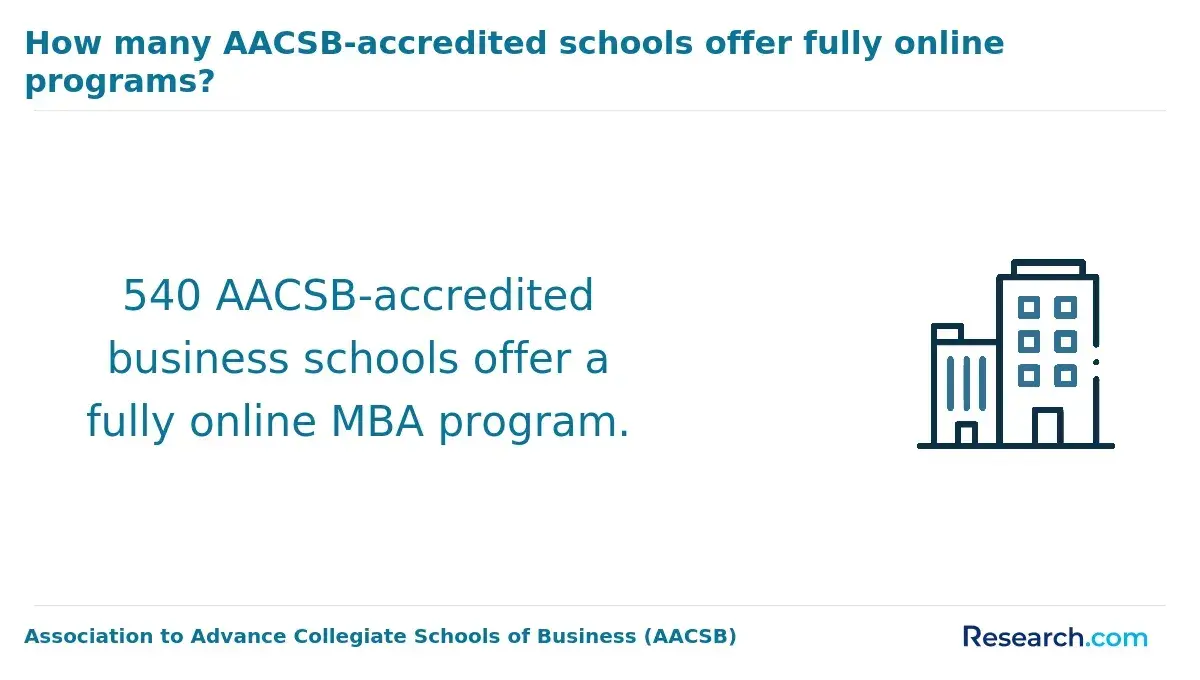
Choosing accredited online MBA programs in the US means verifying credentials from recognized agencies such as the Association to Advance Collegiate Schools of Business (AACSB), Accreditation Council for Business Schools and Programs (ACBSP), or the International Assembly for Collegiate Business Education (IACBE). These accreditations confirm that the program meets rigorous academic standards and carries weight with employers.
To verify accreditation for online MBA programs, check their official listings on accrediting bodies' websites and confirm federal aid eligibility. Accreditation also affects credit transferability and the professional value of the degree. Programs lacking proper accreditation generally offer diplomas with little recognition in the job market.
Assess the curriculum carefully to ensure alignment with your career goals-whether that's finance, marketing, leadership, or technology management. Faculty expertise matters; verify instructors' academic and professional backgrounds. Student support services such as career advising, networking, and technical help enhance the educational experience and employment prospects.
Acceptance rates in ranked online programs have risen to 77.28%, indicating more accessible admissions policies suited for working professionals. Financial considerations are crucial, so review tuition and aid options closely. Many students benefit from exploring affordable EMBA programs to find transparent pricing and scholarships.
Typical admission requirements for online MBA programs include a completed application form, official transcripts from all previous academic work, and a bachelor's degree from an accredited institution. A minimum GPA of around 3.0 on a 4.0 scale is commonly expected, though some programs accept lower GPAs if balanced by professional experience or standardized test scores. The Graduate Management Admission Test (GMAT) or Graduate Record Examination (GRE) scores are often required, but many waive these for applicants with significant work experience, usually five years or more.
Applicants must also submit a current resume detailing relevant work history, with strong professional achievements and leadership roles, to improve admission chances. Additionally, one to three letters of recommendation from supervisors or professional contacts are necessary, focusing on leadership, teamwork, and potential for graduate success. Personal essays or statements of purpose explaining career goals and motivation are standard prerequisites.
English proficiency tests such as TOEFL or IELTS are mandatory for international candidates whose native language is not English. Some programs emphasize diversity in professional backgrounds to enrich cohort experiences. For example, Carnegie Mellon Tepper's online MBA acceptance rate increased notably due to an intentional preference for applicants from various industries.
Strong early preparation is key, including collecting transcripts and recommendations well in advance, and tailoring essays to each program's values. For those looking for flexibility, a 1 year online MBA no GMAT program can be an attractive option.
Common prerequisites for applying to online MBA courses remain consistent across schools but vary slightly depending on program focus and selectivity.
Online MBA programs usually require 18 to 36 months to complete, depending on whether you study full-time or part-time. Full-time students often finish within 18 to 24 months, while part-time students balancing work and family commitments may take 2 to 3 years. The overall duration depends on credit requirements and course scheduling flexibility.
Some programs offer accelerated tracks or year-round courses, enabling faster completion. Others include required residency experiences or capstone projects that can extend timelines. Students should consider their availability carefully, especially when managing a 40+ hour workweek and family responsibilities.
For example, the University of Southern California Marshall's online MBA program, with over 1,600 students enrolled, serves mid-career professionals who commonly complete their degrees over two to three years. When selecting a program, clarify options like summer sessions, accelerated courses, and asynchronous learning to match your schedule.
Key questions to ask include how many credits are expected per term and how flexible the course format is. Aligning the program's pace with your career goals and lifestyle is essential.
The online MBA curriculum covers core business disciplines essential for leadership and management. Key subjects include finance, accounting, marketing, operations, strategy, and organizational behavior, all designed to build analytical skills and strategic thinking needed for complex decision-making.
Many programs also prioritize leadership development, ethics, and communication. Through case studies and team projects, students gain practical experience while exploring theory. Electives often allow specialization in fields like entrepreneurship, supply chain management, data analytics, or international business, helping tailor the degree to individual career goals.
Formats and pacing vary, but most online MBA programs require a capstone project or comprehensive exam. These integrate concepts into a strategic business plan or real-world problem-solving scenario, ensuring graduates can apply their knowledge directly to business contexts.
Admissions can be competitive. For example, the Jack Welch Management Institute had a 27% acceptance rate recently, which dropped by 3% from the previous year. Essays that clearly demonstrate leadership impact and contribution to class discussions are increasingly important for admission.
This curriculum balance prepares students for rigorous coursework and aligns their skills with employer expectations in today's dynamic business landscape.
The cost of an online MBA program generally ranges from $30,000 to over $120,000, influenced by the institution's prestige, program length, and format. Public universities and less selective programs usually fall on the lower end, while private institutions with strong brand recognition or specialized tracks often have tuition between $50,000 and $80,000. For example, Rice University's Jones Graduate School had a 70.70% acceptance rate in 2023-2024, indicating moderate selectivity linked to tuition in this range.
Additional fees such as technology access, course materials, and graduation costs typically add 10-15% more to total expenses. Employer tuition reimbursement programs can offset costs but verifying eligible expenses is essential.
Program costs may be charged per credit hour-usually between $1,000 and $2,200-or as a flat rate for full enrollment. Part-time students can spread payments over multiple years, whereas accelerated formats might require larger upfront fees.
Exploring financial options like scholarships, employer sponsorship, and federal graduate loans is vital. Comparing tuition costs with expected career advancement benefits helps avoid unmanageable debt. A thorough evaluation of program selectivity, cost, and funding ensures informed decisions aligned with one's career and budget.
Graduates of online MBA programs often pursue leadership roles across industries such as finance, marketing, operations, consulting, and technology management. Typical career paths include financial manager, marketing director, operations analyst, management consultant, product manager, and business analyst. These programs develop strategic thinking, analytical skills, and managerial expertise essential for success in these roles.
Many professionals use online MBAs to transition into specialized fields like business analytics, supply chain management, or entrepreneurship. For example, business analytics roles require strong quantitative abilities. According to Poets&Quants, the University of Texas at Dallas Jindal online MBA program has a 46% acceptance rate and emphasizes quantitative skills during interviews, highlighting the value of data-driven decision-making.
Job seekers should evaluate whether their target roles prioritize leadership development and practical business simulations offered by online MBA programs. Consulting candidates benefit from case study methodologies to advise clients on complex challenges, while technology management careers require knowledge of both business strategy and emerging technologies.
Graduates frequently report salary increases ranging from 20% to 50% post-completion. Networking and alumni connections gained through online MBA programs also improve career prospects. Prospective students should select programs aligned with their goals and industry demands.
The average salary for graduates of an online MBA ranges from $90,000 to $120,000 annually, influenced by factors such as industry, experience, and location. According to the Graduate Management Admission Council (GMAC) 2025 Corporate Recruiters Survey, 65% of MBA graduates report a salary increase averaging 30% after earning their degree. Finance and consulting professionals often reach the higher end of this range, while marketing and operations roles tend to start lower but show steady growth.
Geographic location also plays a significant role in earning potential. Graduates employed in major metropolitan areas typically earn 10-20% more than the national average, driven by higher living costs and demand. Specialized online MBA programs focusing on technology management, healthcare, or data analytics frequently command premium salaries compared to general management degrees.
Cost is a crucial factor in evaluating return on investment. For example, Indiana University Bloomington Kelley's online MBA charges $1,635 per credit for out-of-state students, totaling approximately $82,000 for a 50-credit program. Graduates should balance this cost against potential salary increases and career advancement.
Prospective students should ask:
- What is the typical salary increase for alumni in my target industry?
- How much debt or upfront cost will this program require?
- Do career services or alumni networks support high-paying job placements?
Access to corporate partnerships and internships correlates closely with higher salary outcomes. Researching salary statistics and career support before selecting a program is essential for maximizing post-mba success.
What is the job outlook for MBA graduates?
The job outlook for MBA graduates remains strong, with growth driven by demand for skilled leadership and management across industries like finance, consulting, technology, and healthcare. Management occupations are projected to grow 5% from 2024 to 2034, faster than average, ensuring steady opportunities for MBA holders.
Programs such as the Kelley School of Business online MBA illustrate competitive admissions with rolling cohorts and a June 1 application deadline, achieving a 28% enrollment yield among accepted applicants. This reflects strong market interest and promising employment outcomes post-degree.
MBA graduates can pursue roles including product manager, financial analyst, business consultant, and operations director. Employers value these candidates for strategic thinking, analytical skills, and leadership, essential traits for complex business environments.
Specializations like data analytics, entrepreneurship, and supply chain management can further enhance job prospects by aligning education with industry demand. Graduates see salary growth around 50% to 70% higher than business bachelor's degree holders, providing a substantial financial incentive.
Other Things You Should Know About MBA
Yes, many online MBA programs are designed to accommodate full-time working professionals. They offer flexible scheduling options such as asynchronous classes and part-time enrollment, allowing students to balance work and study effectively. However, the workload can vary, so good time management is essential.
Online MBA programs from properly accredited institutions are generally recognized by employers, especially those familiar with evolving educational formats. Many employers value the skills and knowledge gained regardless of delivery mode, but it is important to verify the school's reputation and accreditation. Networking opportunities and internships may differ from on-campus experiences, which can affect employer perception.
Students should be comfortable using computers, navigating learning management systems, and utilizing common productivity software such as word processors, spreadsheets, and presentation tools. Basic competency in video conferencing platforms and online collaboration tools is also important. Familiarity with these technologies ensures a smoother learning experience.
- Are Online MBA Degree Programs Respected by Employers? https://blog.targettestprep.com/are-online-mba-degrees-respectable/
- What is an Online MBA? | FIND MBA Online https://findmbaonline.com/what-is-an-online-mba
- How to Choose an Online MBA Program - Tips to Consider https://www.umassglobal.edu/blog-news/choose-online-mba-program-tips-consider
- Are Online MBAs Worth It? | Comparing Value, Networking, and Career Impact https://www.edx.org/resources/is-an-online-mba-worth-it
- Best Online MBA Programs https://www.princetonreview.com/business-school-rankings
- Average Salary Increase After Online MBA in India https://www.onlinecu.in/blog/cu/average-salary-increase-after-online-mba-india
- What To Know Before Getting an MBA - OnlineMBA.com https://www.onlinemba.com/resources/what-to-know-before-getting-an-mba/
- How Much Does an Online MBA Cost? | University of Bridgeport https://www.bridgeport.edu/news/cost-of-online-mba/
- Online MBA Programs Admission Requirements You Need to Know - consulting https://consulting.mampirbandung.com/online-mba-programs-admission-requirements-you-need-to-know/
- What Are Career Prospects Post Online MBA | ChitkaraU Online https://onlinechitkarau.com/our-blogs/career-prospects-post-online-mba-what-to-expect/