2027 Supply Chain and Logistics Careers With an Online MBA

Co-Founder and Chief Data Scientist
Professionals from unrelated fields often face challenges breaking into supply chain and logistics roles due to a lack of specialized business knowledge and industry insight. This gap can limit career advancement and adaptation to evolving market demands.
An online MBA offers a flexible solution, allowing learners to gain targeted skills without interrupting their current employment. This article explores how an online MBA can equip candidates with the expertise required for supply chain and logistics careers. It aims to guide readers in selecting programs that align with their goals and enhance their competitiveness in this dynamic field.
Key Things You Should Know
- Online MBA programs specializing in supply chain and logistics can increase employment prospects by equipping students with advanced skills in data analytics, procurement, and operational strategy.
- The U.S. Bureau of Labor Statistics projects 2-5% growth in supply chain management jobs through 2031, highlighting steady demand for qualified professionals.
- Graduates with an online MBA often earn median salaries around $115,000 annually, reflecting enhanced career advancement opportunities in supply chain leadership roles.
What are supply chain careers with an online MBA?
Supply chain management roles with an online MBA prepare graduates for strategic positions such as supply chain manager, logistics analyst, procurement director, and operations consultant. These careers demand strong analytical skills and leadership, combining supply chain expertise with core business knowledge in finance, marketing, and data analytics.
An online MBA helps professionals optimize procurement, reduce operational costs, and improve supply chain resilience.
Logistics career opportunities after earning an online MBA often involve managing global transportation strategies, implementing technologies like ERP and AI-driven forecasting, and leading sustainability and risk management initiatives. Collaboration across departments ensures alignment of supply chain functions with overall business goals.
Demand for professionals who blend supply chain skills with business acumen is reflected in the employment success of Massachusetts Institute of Technology's Supply Chain Management master's graduates, with 95% securing jobs within five months. This trend signals strong prospects for those pursuing this path.
Typical responsibilities include demand forecasting, supplier relationship management, and distribution network design. These complex challenges require flexible education options like those offered by low cost MBA programs, which provide accessible pathways for career advancement in supply chain roles.
How does an online MBA prepare for logistics roles?
An online MBA prepares candidates for logistics roles by combining core business management with specialized supply chain knowledge. Programs focus on strategic decision-making, data analysis, and operations management, essential for optimizing logistics processes.
Students develop skills to evaluate supplier performance, manage inventory efficiently, and design distribution networks that reduce costs and speed delivery.
Courses frequently emphasize practical case studies and simulations that replicate real-world logistics challenges. For example, candidates may analyze tariff impacts on global supply chains or create contingency plans for transportation disruptions.
This hands-on approach builds problem-solving abilities, which is key for how an online MBA enhances logistics management skills.
Leadership and communication training enable students to coordinate cross-functional teams, negotiate with vendors, and align logistics goals with corporate strategy. Proficiency in ERP software and data visualization tools further strengthens technical competencies required in modern logistics positions.
The U.S. Bureau of Labor Statistics projects a 30% growth in logisticians' employment from 2020 to 2030, signaling strong industry demand. An online MBA supports career advancement in supply chain roles by providing flexible learning options for working professionals. It allows knowledge acquisition without interrupting current employment, facilitating growth in fields such as transportation management, warehousing, procurement, and distribution planning.
For those seeking affordable programs, exploring the cheapest online MBA no GMAT AACSB can be a valuable step toward advancing a logistics career.
What jobs can you get with an online MBA in supply chain?
An online MBA in supply chain opens diverse career opportunities in logistics, procurement, operations, and supply chain management. Graduates often secure roles such as supply chain analyst, procurement manager, logistics coordinator, operations manager, and supply chain consultant.
These positions focus on optimizing processes, managing supplier relationships, and ensuring efficient product delivery. Supply chain management careers with an online MBA provide graduates with strategic and leadership skills highly valued across industries.
Professionals can advance into leadership roles that combine business acumen with technical knowledge. For instance, operations managers oversee production and distribution networks, ensuring cost efficiency and meeting deadlines. Procurement managers negotiate contracts and source materials to maintain supply continuity and improve margins.
Logistics and operations management roles for MBA graduates often include demand planning, inventory control, and transportation management, where forecasting demand, implementing just-in-time inventory systems, and coordinating shipments are crucial.
Graduates with an MBA often take on strategic responsibilities like redesigning supply chain networks or integrating advanced technologies such as AI and blockchain. According to the UniversityHQ 2026 rankings, Claremont McKenna College's online MBA in supply chain management ranks highly with a score of 82.54.
Its graduate tuition averages $68,525, with average graduate salaries reaching $92,000 annually, demonstrating strong earning potential and ROI.
Professionals aiming for executive roles may become supply chain directors or chief operations officers, managing multi-billion-dollar supply chains and large teams. Smaller firms also value MBAs for their ability to streamline operations and implement best practices.
Those seeking flexible and affordable study options can explore executive MBA programs online to enhance their credentials and career prospects.
The salary outlook for supply chain MBA graduates remains highly favorable, supported by strong demand for effective logistics and operations management. Supply chain management salary trends for MBA graduates show that the median base salary for MIT Supply Chain Management graduates was $143,500 in 2024. This underlines the competitive earning potential for professionals who blend advanced supply chain expertise with MBA-level business skills.
Graduates pursuing careers as supply chain managers, logistics directors, or operations consultants benefit from varied salaries influenced by industry, location, company size, and experience. In particular, roles in technology or pharmaceutical sectors tend to offer higher wages when compared to retail or manufacturing industries.
Base pay is often supplemented by bonuses, profit-sharing, and other performance incentives. Senior supply chain executives, including chief supply chain officers, can command base salaries exceeding $200,000, especially in Fortune 500 firms.
Logistics and supply chain career salary projections for MBA holders indicate an accelerated growth trajectory. Transitioning from entry-level to MBA management roles typically results in salary increases of 30% to 50% within a few years after graduation. Many employers prioritize managers who combine technical supply chain knowledge with strategic business acumen.
For those exploring educational options, flexible pathways like an MBA no GMAT can facilitate career advancement without traditional barriers.
The demand for supply chain and logistics professionals is rapidly growing across diverse industries, especially in technology. Notably, 67% of MIT supply chain management graduates took positions in tech companies in 2024, up from 19% the previous year. This trend reflects increasing reliance on supply chain expertise due to digital transformation and e-commerce expansion beyond traditional manufacturing and retail.
Employers prioritize candidates with skills in data analytics, process optimization, and technology integration. Common roles include supply chain analyst, logistics coordinator, procurement manager, and operations director. The demand also extends to sustainable supply chain management and global risk mitigation.
- Growth of e-commerce driving need for efficient last-mile delivery
- Greater complexity in global supply chains requiring advanced risk management
- Implementation of automation, AI, and blockchain to boost efficiency and transparency
Obtaining an online MBA in supply chain and logistics provides a competitive edge by blending business strategy with technological proficiency. Employers value professionals who can lead cross-functional teams and spearhead digital initiatives. This credential benefits mid-career individuals aiming for senior roles and recent graduates entering dynamic supply chain fields.
Developing quantitative skills and mastering industry-standard software are crucial. Networking within tech-driven logistics sectors reveals opportunities often not publicly listed. The tech hiring surge underscores the importance of adaptable expertise aligned with evolving supply chain demands.
Accreditation is crucial for online MBA programs to guarantee quality education and wider acceptance by employers. The Association to Advance Collegiate Schools of Business (AACSB) offers the most respected accreditation in the U.S., confirming programs meet high standards in faculty expertise, curriculum relevance, and continuous improvement.
This credential is especially valued in supply chain and logistics careers, where strategic management and analytics are essential.
Additional credible accrediting bodies include the Accreditation Council for Business Schools and Programs (ACBSP) and the International Accreditation Council for Business Education (IACBE). While respected, these do not carry the same prestige as AACSB, particularly for specialized fields such as supply chain management.
Students should verify that the online MBA supply chain programs they consider hold proper accreditation recognized on official school or accreditor websites. Ensure accreditation applies specifically to the online format to maintain educational standards. Lack of valid accreditation can hinder job placement, licensure, and credit transfers.
For example, the University of Maryland's online MBA in supply chain is AACSB-accredited and reports a 96% retention rate and average graduate salary of $83,000 (UniversityHQ, 2026 rankings), highlighting how solid accreditation benefits graduates professionally.
Admission to online MBA programs usually requires a bachelor's degree from an accredited institution and a competitive GPA, commonly around 3.0 or higher. Official transcripts must be submitted to verify academic history. Many schools expect satisfactory Graduate Management Admission Test (GMAT) or Graduate Record Examination (GRE) scores, though waivers may be available for those with significant professional experience or advanced degrees.
Professional work experience is important, typically ranging from two to five years, especially for those specializing in supply chain and logistics. Admissions committees evaluate leadership abilities, problem-solving skills, and industry knowledge through detailed resumes or CVs. Letters of recommendation are generally required and should come from supervisors or academic mentors familiar with the applicant's business skills.
Applicants often submit personal statements or essays outlining career goals, motivation for pursuing an MBA, and program fit. Some programs also include interviews, conducted virtually or by phone, to assess communication skills and commitment. For international students, proof of English proficiency through TOEFL or IELTS is essential.
Employers value MBA graduates focusing on supply chain for skills in quantitative analysis, strategic planning, and project management. Salaries for those specializing in quantitative supply chain approaches average around $106,000, according to UniversityHQ. Choosing programs emphasizing these skills can boost career outcomes.
Prospective students should carefully review program details and prepare test scores, professional documents, and compelling essays to meet admission standards efficiently.
Online MBA programs in supply chain and logistics typically require between 18 and 24 months to complete, depending on enrollment status and course load. Full-time students usually finish in about 18 months, while part-time learners or working professionals may take up to two years or longer. Some institutions offer accelerated tracks that reduce completion time to around 12 months but demand a heavier workload.
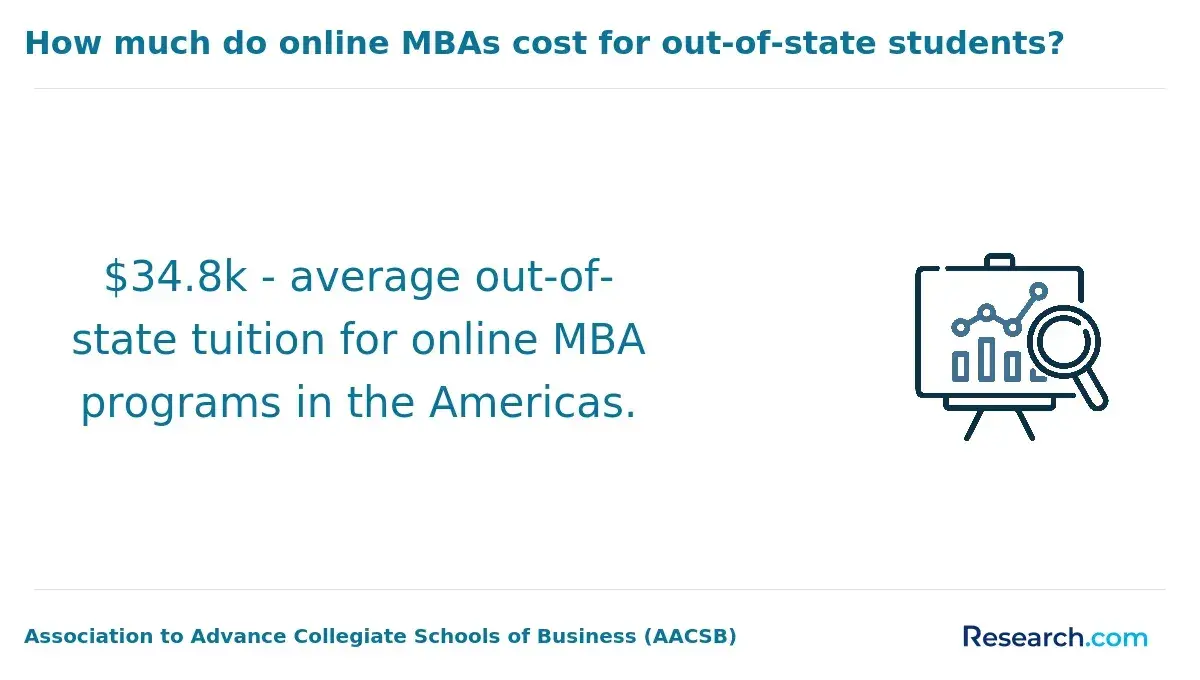
Tuition costs vary widely, ranging from $20,000 to over $70,000. Factors influencing price include the institution's reputation, program length, and additional fees. Public universities generally provide more affordable options, while private schools often charge higher tuition with potentially greater networking opportunities or specialized curricula.
For instance, Binghamton University's online MBA supply chain program boasts an 84% graduation rate, with graduates earning an average of $90,000 annually, illustrating strong career prospects. Prospective students should carefully assess the return on investment by comparing program costs with expected salary growth and advancement.
Financial aid, employer tuition reimbursement, and scholarships can significantly offset costs. Some programs also permit stacking credits from prior coursework or certifications to shorten duration and reduce expenses.
Choosing the right program and leveraging financial support can make an online MBA in supply chain and logistics an effective path to enhanced earning potential and career growth within two years for most candidates.
Supply chain MBA programs offer a diverse curriculum that equips students with skills to manage complex logistics and global supply networks effectively. Core subjects commonly include operations management, procurement strategies, inventory control, and demand forecasting, enabling graduates to optimize supply chain performance and reduce costs.
Students gain expertise in data analytics and information technology, including enterprise resource planning (ERP) systems and advanced modeling, reflecting the growing role of digital transformation in the industry.
Risk management and sustainability are key components, with courses often featuring case studies on crisis response and eco-friendly supply chain practices. Leadership and strategic decision-making modules emphasize supplier negotiation, team management, and alignment of supply chain objectives with business goals.
Electives typically cover global logistics, transportation management, and supply chain finance, allowing customization based on career interests. Practical experience remains central, with internships, capstone projects, and industry collaborations. For example, data from MIT Supply Chain Management shows that 72% of graduates secured employment through school-facilitated opportunities.
Such programs integrate quantitative analysis, technological proficiency, and leadership training, preparing professionals for evolving demands and challenges in supply chain careers.
How to choose the best online MBA for supply chain careers?
When selecting an online MBA focused on supply chain careers, prioritize programs with specialized concentrations in logistics, procurement, operations, and analytics to ensure relevant skill development. Accreditation by recognized organizations such as AACSB confirms program quality and enhances employability.
Evaluate the program's return on investment by comparing tuition costs to expected salary outcomes. For instance, graduates from North Carolina State University's online MBA with a supply chain focus earn an average salary of $82,000 while paying $9,459 in-state tuition. This balance of cost and career payoff is crucial for long-term success.
Flexibility is key for working professionals. Programs offering asynchronous learning, real-world projects, case studies, and practical tools in inventory management and risk mitigation help accommodate busy schedules and provide applicable expertise.
Alumni success and career support services, including active networks and career counseling, can significantly improve job placement and salary advancement. Additional factors to consider include:
- Faculty expertise specific to supply chain management and industry research
- Internships or industry partnerships that provide practical experience
- Certification options integrated with courses, such as APICS CPIM or CSCP
- Technology platforms supporting course delivery and professional networking
Choosing a program aligned with these criteria ensures a meaningful, cost-effective education that advances your supply chain career.
Other Things You Should Know About MBA
Online MBA programs typically enhance leadership, strategic thinking, financial analysis, and project management skills. These competencies are essential for supply chain and logistics professionals who aim to move into managerial or executive roles. The programs often include case studies and simulations to build decision-making and problem-solving capabilities.
Many online MBA programs incorporate virtual networking events, discussion forums, and group projects to connect students with peers and faculty. Some schools also offer local meetups or access to alumni networks, which can be valuable for building professional relationships within the supply chain and logistics industries. Networking remains a key component of career growth even in an online learning environment.
Online MBA curricula are regularly updated to reflect the latest developments in supply chain management, technology, and global trade. Faculty members often have industry experience and maintain connections with business leaders, ensuring course content addresses emerging challenges and innovations. Additionally, many programs incorporate real-world projects and case studies that highlight current trends and best practices.
- How to Build a Global Career with an Online MBA in Logistics & SCM | MIT SDE https://mitsde.com/knowledge-center/how-to-build-global-career-with-an-online-mba-in-logistics-and-scm
- Accreditation and Your Online MBA: What You Should Know | Online MBA Report https://www.onlinembareport.com/articles/accreditation-and-your-online-mba-what-you-should-know
- How will an Online MBA in Logistics and Supply Chain Management help you widen your horizons? https://onlinejain.com/blogs/how-will-online-mba-logistics-and-supply-chain-management-help-you-widen-your-horizons
- MBA in Logistics & Supply Chain: Curriculum & Learning Outcomes https://www.dypatilonline.com/blogs/mba-logistics-supply-chain-curriculum-overview
- 10 Most In-Demand Supply Chain Roles in 2026 https://www.scoperecruiting.com/blog/in-demand-supply-chain-roles-2026
- Online MBA Supply Chain Program: Jobs, Scope, ROI & Career Growth in 2026 https://www.onlinesrm.in/online-mba-supply-chain-program/
- Rising Demand for Logistics and Supply Chain Professionals https://www.cvi.ac/blog/rising-demand-for-logistics-and-supply-chain-professionals
- Top Career Options After Online MBA in Logistics and Supply Chain Management https://www.careers360.com/courses-certifications/articles/top-career-options-after-online-mba-in-logistics-and-supply-chain-management
- Earn Your Online MBA — No GMAT Required for Entrance https://www.snhu.edu/about-us/newsroom/business/earn-your-online-mba-no-gmat-required
- Why the Logistics & Supply Chain Job Market is Booming in 2025 - GRN Group https://grn.group/why-the-logistics-supply-chain-job-market-is-booming-in-2025/