2027 Best Online MBA for Business Analytics & Data Careers

Co-Founder and Chief Data Scientist
Choosing an online MBA for business analytics is a career decision, not just a degree decision. The right program should help you move from reporting data to using it for pricing, operations, finance, marketing, product, strategy, or executive decisions. For working professionals, the challenge is finding a program that is credible, flexible, affordable, and technical enough to matter in data-focused roles.
Business analytics MBA programs sit between traditional management education and specialized data training. They usually combine finance, marketing, operations, strategy, and leadership courses with analytics coursework in statistics, visualization, predictive modeling, databases, and business intelligence. According to recent data, graduates from business analytics programs report median salaries exceeding $110,000 within a few years, but outcomes vary by prior experience, industry, location, employer, and the quality of the program.
This guide explains how to compare online MBA programs for analytics and data careers, what features to prioritize, how no-GMAT and executive formats differ, what skills you can expect to build, and how to think about cost, admissions, flexibility, specializations, and return on investment.
Key Benefits of Getting An Online MBA for Business Analytics & Data Careers
- Career advancement: Graduates can pursue roles in business analytics, data management, strategy, and leadership, often moving into senior or specialized positions.
- High earning potential: Median salaries for graduates of business analytics-focused programs can exceed $100,000 in the U.S., providing strong ROI.
- Flexible learning: Earning this degree online allows you to continue working full-time while studying, enabling immediate application of new skills.
What are the best online MBA for business analytics & data careers?
The best online MBA for business analytics is not always the most expensive or the most recognizable. A strong program should combine respected business training with applied analytics coursework, current tools, employer-relevant projects, and enough flexibility for working adults. Cost also matters. Some students will benefit from a nationally known business school, while others may get better value from a lower-cost accredited program with a focused analytics curriculum. If affordability is your main filter, reviewing the cheapest MBA online options can help you identify programs that may offer strong value without unnecessary debt.
Below are online MBA options commonly considered by students interested in business analytics and data-related careers. Use this list as a starting point, then verify current tuition, accreditation, curriculum, admissions requirements, and delivery format directly with each school.
- University of Massachusetts Amherst (Isenberg) – MBA with a Focus in Business Analytics: A fully online option with a substantial analytics component, including data visualization, predictive modelling, and business decision-making. It may suit students who want a well-known business school with a structured analytics focus.
- Syracuse University – Online MBA with Business Analytics Specialization: Designed for professionals who want to combine management training with data-informed decision-making. The specialization can be a good fit for students targeting leadership roles where analytics supports strategy, operations, or client work.
- University of Illinois Springfield – MBA in Business Analytics (Online): A cost-conscious option with total tuition around $15,000. It may appeal to students who want a practical analytics MBA while keeping overall education costs low.
- University of North Carolina at Pembroke – Online Business Analytics MBA: Offers online delivery, an analytics-centered curriculum, and accessible pricing for working students. It can be a practical choice for applicants seeking flexibility and a clear business analytics pathway.
- University of Massachusetts Lowell – Online MBA in Business Analytics: A fully online MBA with an analytics focus and a reputation for affordability among analytics-oriented programs. It may be appropriate for students who want a balance of cost, flexibility, and applied business coursework.
- Villanova University – Online MBA with Analytics Concentration: A well-regarded institution offering online MBA formats and recognized for online MBA quality. It may be a fit for students who value institutional reputation along with analytics electives.
- Indiana University Bloomington – Online MBA / Business Analytics Specialization: A premium option with an analytics focus and stronger brand recognition. It may make sense for students with a larger budget or employer tuition support who want a well-known business school network.
- University of Maryland – College Park – Online MBA, Information Systems & Business Analytics: Blends analytics with business systems, making it relevant for professionals interested in technology management, information systems, analytics strategy, or digital transformation.
- U.S. University of South Dakota – MBA – Business Analytics (Online): Among the most affordable analytics-oriented MBAs identified, with tuition as low as ~$21,000 in some listings. It may be suitable for students who want an analytics MBA with a lower total cost.
- Temple University – Online MBA in Business Analytics: Included among the best online MBA analytics programs and positioned as a solid medium-cost option. It can work well for students seeking a recognizable university with analytics-focused business training.
When comparing these programs, look beyond the program name. Review the actual course list and ask whether analytics is a true concentration or only a small group of electives. Stronger programs usually include applied work with tools such as SQL, Python, Tableau, or R; courses in predictive analytics or business intelligence; and a capstone or project that lets you solve a business problem with data.
The best fit depends on your starting point. If you already work in analytics, you may need leadership, strategy, and cross-functional business training. If you come from a general business background, you may need more technical exposure and hands-on analytics practice. If you are changing careers, prioritize programs with career support, portfolio-building projects, and clear evidence that graduates move into analytics-related roles.
What features should you look for in online MBA programs for analytics?
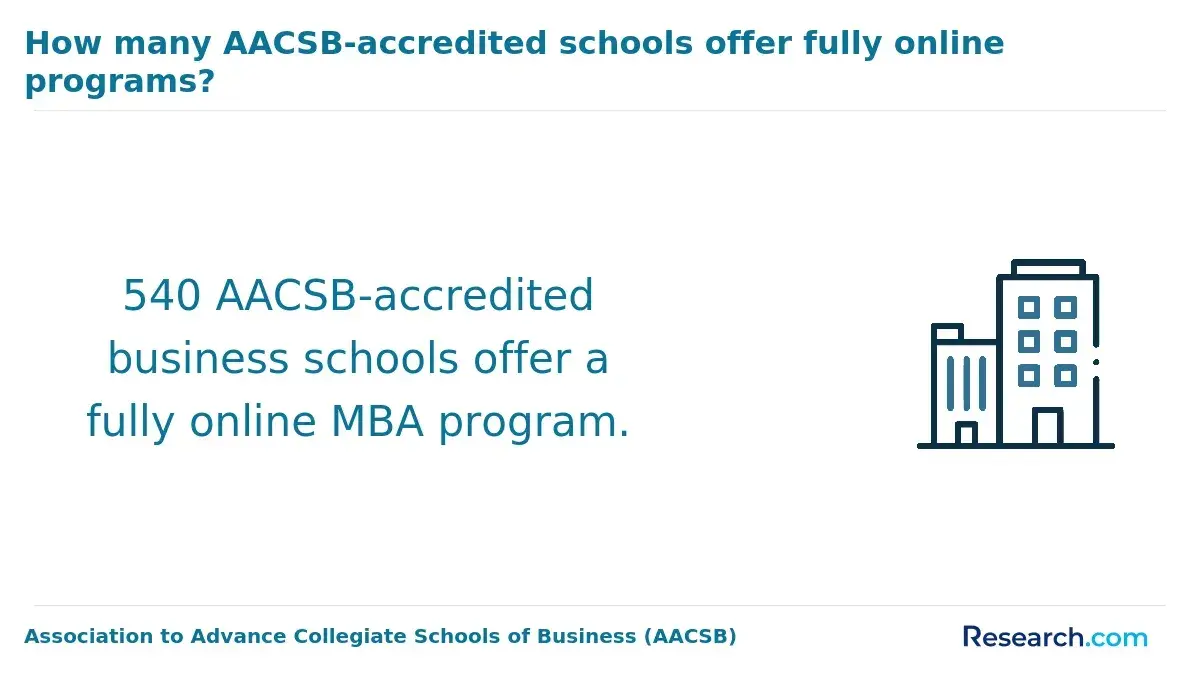
A strong online MBA in analytics should be credible to employers, technically relevant, and practical enough to improve your work performance before graduation. Accreditation is one of the first signals to check. Programs accredited by the Association to Advance Collegiate Schools of Business (AACSB) meet recognized business education standards and may carry stronger employer recognition. Students comparing cost-conscious accredited options can review AACSB online MBA programs as part of their research.
Accreditation alone is not enough. A general MBA with one analytics elective is different from a program with a structured business analytics concentration. Read the course descriptions carefully. Look for business statistics, predictive analytics, data visualization, database concepts, business intelligence, analytics strategy, and decision modeling. If the curriculum does not show how data is used in finance, marketing, operations, supply chain, or strategy, it may be too shallow for data career goals.
Core features that matter most
- Recognized accreditation: Accreditation helps confirm that the school follows academic quality standards. AACSB is especially respected in business education, but you should still evaluate curriculum, cost, and outcomes.
- Dedicated analytics concentration: A named analytics track is usually more useful than a generic MBA with limited data coursework.
- Applied projects: Case studies, simulations, capstones, and employer-connected projects help you demonstrate skills to hiring managers.
- Current tools: Programs should expose students to common analytics and visualization tools such as SQL, Python, Tableau, R, Power BI, or similar platforms.
- Quantitative support: If you have not taken statistics or programming recently, look for bridge modules, tutoring, or introductory analytics courses.
- Career services for online students: Online learners should have access to coaching, resume reviews, networking events, job boards, and alumni connections.
- Flexible scheduling: Asynchronous classes, part-time pacing, and clear course sequencing can make the degree more manageable while working full time.
Ask admissions teams direct questions before applying: How many analytics courses are required? What tools are used? Are projects individual or team-based? Are datasets realistic? Do online students receive the same career support as campus students? Clear answers are a good sign; vague responses may indicate that analytics is more of a marketing label than a serious specialization.
The best programs help you build a practical bridge between data and leadership. You should graduate better prepared to define business problems, evaluate evidence, communicate findings, and guide decisions—not just produce dashboards.
How does an EMBA program with a data analytics focus differ from a standard online MBA in analytics?
An Executive MBA, or EMBA, is usually built for experienced professionals who already manage people, budgets, clients, business units, or strategic initiatives. A standard online MBA in analytics is more often designed for early- to mid-career professionals who want to build management knowledge and analytics capability. Both can support data-related careers, but they serve different career stages.
EMBA participants usually have significant work experience, often 8–15 years, and the classroom discussion is designed around that experience. Analytics coursework in an EMBA is typically framed around executive decision-making: how to use data to set strategy, allocate resources, evaluate risk, lead transformation, and manage analytics teams. Professionals seeking senior leadership formats can compare online executive MBA programs to understand cost and structure.
A standard online MBA in analytics may spend more time on foundational business functions and applied analytics skills. It can be a better fit if you need to build technical confidence, move from an individual contributor role into management, or pivot toward analytics from another business area. Coursework may include more hands-on assignments in statistics, visualization, modeling, or database-driven analysis.
Which format is the better fit?
- Choose an EMBA with a data analytics focus if you are already in a leadership role and want to use analytics for enterprise strategy, governance, transformation, or executive-level decision-making.
- Choose a standard online MBA in analytics if you are building toward management, changing functions, or need stronger technical and analytical foundations.
- Be cautious with cost: EMBA formats can be more expensive and intensive. They may offer strong value when your employer contributes or when the degree directly supports senior advancement.
- Check peer profile: In an EMBA, the professional network is often one of the main benefits. Make sure the cohort’s experience level matches your goals.
The main difference is emphasis. Standard analytics MBAs often help professionals develop business and data skills for career growth. EMBAs are more focused on helping experienced leaders use analytics to guide strategy, manage complex organizations, and make higher-stakes decisions.
Yes. Many online MBA programs now waive GMAT or GRE requirements for qualified applicants, including students interested in business analytics. No-GMAT programs are especially common for working professionals with strong undergraduate records, relevant work experience, leadership achievements, or evidence of quantitative ability. If avoiding standardized testing is important to you, compare MBA online no GMAT options early in your search.
A no-GMAT policy does not mean a program has no standards. Schools may still expect a bachelor’s degree, a minimum GPA, professional experience, letters of recommendation, a resume, and a personal statement. Some analytics-focused programs may also look for evidence that you can handle quantitative coursework. That evidence may come from prior statistics, accounting, finance, economics, computer science, engineering, or analytics-related work.
Typical admission criteria include a bachelor’s degree, professional experience often in the range of 2–5 years, letters of recommendation, and a personal statement explaining your career goals. Some schools may require prerequisite courses or foundation modules if your academic background is light in quantitative subjects.
How to strengthen a no-GMAT application
- Show quantitative readiness: Highlight coursework, certifications, projects, or work responsibilities involving data, budgets, forecasting, reporting, or analysis.
- Use your resume strategically: Include measurable business results, not just job duties.
- Explain your analytics goal: Admissions committees should understand whether you want to move into analytics management, business intelligence, consulting, operations, finance, marketing analytics, or another path.
- Address gaps directly: If your GPA or quantitative background is weak, use optional essays or prerequisite coursework to show preparation.
No-GMAT online MBA programs can reduce barriers for experienced professionals, but you should still judge them by accreditation, curriculum depth, faculty expertise, student support, and career outcomes. The goal is not simply to avoid a test; it is to earn a credible analytics-focused MBA that supports your next career move.
An online MBA in business analytics should teach you how to turn data into business decisions. The strongest programs do not treat analytics as a stand-alone technical subject. They connect data skills with finance, marketing, operations, strategy, leadership, and communication so graduates can influence decisions across an organization.
Technical Analytics Tools
You can expect coursework in statistical analysis, predictive modeling, data visualization, business intelligence, SQL/Python/R programming, analytics strategy, and ethics in data governance. Some programs also introduce data mining, regression analysis, machine learning basics, database management, and dashboard development using tools such as Tableau or Power BI.
The practical value of these courses depends on how they are taught. Look for assignments that use real or realistic datasets, require interpretation rather than simple calculation, and ask you to explain results in business terms. Employers generally care less about whether you completed a course called “analytics” and more about whether you can define a problem, analyze data responsibly, and recommend action.
Business Decision-Making and Strategy
Analytics work becomes more valuable when it is tied to decisions. MBA programs should help you evaluate trade-offs, compare alternatives, estimate risk, and connect evidence to business strategy. For example, analytics may be used to improve pricing, reduce customer churn, forecast demand, allocate marketing spend, manage inventory, assess financial performance, or identify operational bottlenecks.
You should also learn how to manage analytics work, not just perform it. That includes setting project scope, asking better business questions, working with technical teams, interpreting model limitations, and deciding when data is strong enough to support action.
Ethics, Governance, and Communication
Data-driven decisions can create legal, ethical, and reputational risk when data is biased, incomplete, poorly governed, or misinterpreted. A well-designed analytics MBA should address data privacy, responsible use of analytics, governance, transparency, and the limits of models.
Communication is equally important. Analytics professionals often need to explain complex findings to executives, clients, or managers who do not have technical backgrounds. You should practice presenting insights clearly, choosing the right visualization, defending assumptions, and translating analysis into recommendations. These skills are often what separate an analyst from an analytics leader.
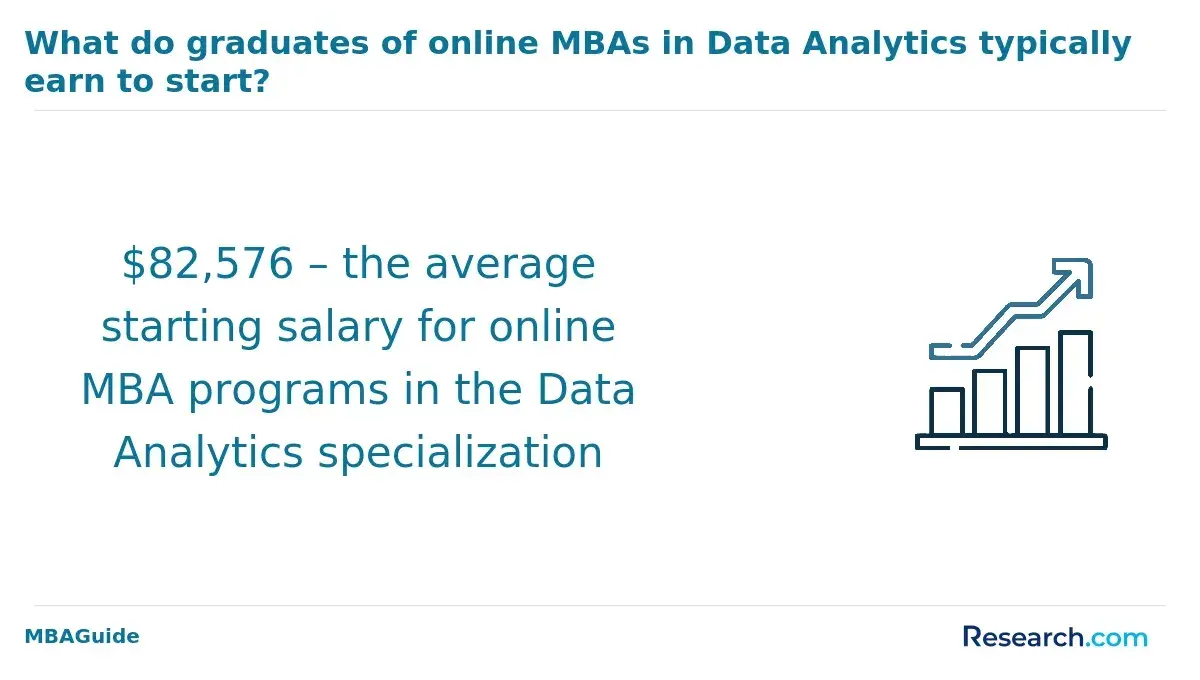
A business analytics-focused online MBA can support roles that require both analytical judgment and business leadership. Common outcomes include business analyst, senior analyst, analytics manager, data strategist, and business systems analyst. Graduates may work in technology, consulting, finance, healthcare, operations, retail, logistics, marketing, or other data-intensive fields.
According to recent data, median salaries for business analytics graduates exceed $110,000. That figure should be interpreted carefully. Salary depends on your pre-MBA experience, industry, job level, location, technical skill set, employer type, and whether you are moving into a new function or advancing in your current field. An MBA is not a salary guarantee, but a strong analytics-focused program can help you compete for roles where data fluency and business judgment are both required.
Common career paths
- Business analyst: Uses data to evaluate processes, performance, requirements, and business opportunities.
- Senior analyst: Leads more complex analysis, mentors junior staff, and presents findings to managers or executives.
- Analytics manager: Oversees analytics projects, teams, dashboards, reporting priorities, and stakeholder relationships.
- Data strategist: Helps organizations decide how to use data assets, analytics platforms, and insights to support business goals.
- Business systems analyst: Connects business needs with technology systems, data workflows, and process improvements.
The strongest career outcomes usually come from combining the MBA with proof of applied skill. Build a portfolio of analytics projects, document business impact in your resume, and use the program’s career services before you need a job. If you are aiming for a more technical data science role, verify that the MBA includes enough quantitative and programming depth; otherwise, you may need supplemental technical training.
To evaluate cost and ROI, start with the full price of attendance, not just tuition. Include fees, books, technology costs, residency or travel requirements, software, exam fees if applicable, and the time you will spend away from work or family responsibilities. Online programs can reduce relocation and commuting costs, but they still require a significant time investment.
ROI is not only about a salary increase immediately after graduation. It can also include promotion potential, a move into analytics management, access to a stronger professional network, improved job security, employer tuition support, and the ability to qualify for roles that combine business and data responsibilities. Some programs offer scholarships, employer tuition assistance, or flexible schedules that reduce the financial burden.
Questions to ask before committing
- What is the total program cost? Ask for a complete estimate that includes tuition, fees, books, and any required travel or technology expenses.
- How long will completion take? A slower pace may be easier while working, while a faster pace may reduce the time before you can use the credential.
- Will your employer pay part of the cost? Employer tuition assistance can significantly change the ROI calculation.
- What career support is available to online students? Coaching, alumni access, and employer connections can affect the degree’s practical value.
- Does the analytics curriculum match your target role? A low-cost program is not a good value if it does not teach the skills you need.
- What evidence of outcomes does the school provide? Review employment reports, alumni profiles, salary information, and examples of graduate career paths when available.
Affordable programs can offer excellent value when they are accredited, well-structured, and aligned with your goals. Higher-cost programs may be worthwhile when they provide stronger brand recognition, specialized recruiting access, or a network that is relevant to your industry. The right ROI calculation is personal: compare the cost of the degree with the specific career move you expect it to support.
Most online MBA programs in business analytics require a bachelor’s degree, a minimum GPA, and professional experience. Many programs look for 2–5 years of work experience, though requirements vary by school. Some require GMAT or GRE scores, while others waive testing for applicants with strong academic, professional, or quantitative credentials.
Because analytics coursework can be quantitative, programs may also review your readiness for statistics, finance, accounting, economics, programming, or data-related work. If your background is not technical, that does not automatically disqualify you, but you may need to show preparation through prior coursework, professional projects, certificates, or prerequisite classes.
Common application materials
- Online application: Basic academic, professional, and personal information.
- Official transcripts: Proof of bachelor’s degree completion and academic performance.
- Resume: A record of work experience, leadership, promotions, analytics projects, and measurable achievements.
- Letters of recommendation: Usually from supervisors, managers, faculty, or professional contacts who can speak to your performance and potential.
- Personal statement: An explanation of your goals, why analytics matters to your career, and why the program is a good fit.
- Test scores or waiver request: Required by some programs, waived by others.
Application Tips
- Highlight analytics-related achievements in your resume.
- Quantify business impact where possible.
- Demonstrate leadership and decision-making abilities.
- Prepare a statement emphasizing career goals in analytics or data-driven strategy.
- Explain how your background prepares you for quantitative coursework.
- Apply early enough to secure transcripts, recommendations, and financial aid information.
A strong application connects your past experience to your future goals. Admissions committees should see why an MBA in business analytics is the logical next step and how you are prepared to contribute to an online cohort.
Online MBA programs are often designed for working professionals, but flexibility varies widely. Some programs are mostly asynchronous, allowing you to watch lectures and complete work on your own schedule. Others require live evening sessions, weekend meetings, group projects, campus residencies, or scheduled presentations. Before enrolling, make sure the format matches your work hours, travel demands, family responsibilities, and learning style.
Programs may be completed in 18–36 months, with accelerated tracks available. A faster format can help you finish sooner, but it may be difficult if you work full time or have heavy personal commitments. A part-time format can be more sustainable, though it extends the time before you complete the degree.
Online-friendly features to compare
- Asynchronous access: Helpful for students in demanding jobs or different time zones.
- Live class options: Useful for discussion, accountability, and interaction with faculty.
- Clear weekly structure: Deadlines, modules, and predictable pacing make it easier to plan.
- Mobile access and recorded lectures: Important for students who study around work travel or irregular schedules.
- Online career services: Resume support, interview preparation, employer events, and alumni networking should be available remotely.
- Group project support: Since analytics work often involves teams, programs should provide tools and expectations for online collaboration.
- Faculty access: Office hours, discussion boards, and timely feedback matter in quantitative courses.
The biggest challenge is usually time management. Analytics courses can require sustained attention, especially when projects involve data cleaning, modeling, or visualization. Before starting, block weekly study time, discuss workload with your employer or family, and confirm whether your workplace can provide schedule flexibility during busy terms.
What specializations should you consider within an online MBA for data careers?
Specializations help you align your MBA with a target role or industry. A general business analytics track can be useful, but a more focused elective path may give you a clearer story for employers. Choose a specialization based on the business problems you want to solve, not only on what sounds technical.
- Marketing analytics track - Focuses on analyzing consumer behavior, campaign effectiveness, customer segmentation, pricing, and marketing strategy through data. This path can support roles in digital marketing, customer insights, product marketing, or growth strategy.
- Supply-chain/data operations track - Applies predictive analytics to logistics, inventory, procurement, forecasting, quality improvement, and operational efficiency. This track may suit students interested in operations management, logistics, manufacturing, retail, or process improvement.
- AI & machine learning track - Introduces advanced computational techniques used to automate decisions, forecast trends, and support intelligent systems. This track can be valuable, but students should verify how technical the coursework is and whether it includes hands-on application rather than only management-level concepts.
You may also encounter electives in financial analytics, healthcare analytics, business intelligence, information systems, risk analytics, or data governance. Financial analytics may be useful for banking, corporate finance, investment analysis, or risk management. Healthcare analytics may fit students interested in providers, insurers, public health, or health technology. Information systems and business intelligence tracks can be practical for students who want to manage reporting platforms, data workflows, or analytics operations.
The best specialization is the one that matches your career target and strengthens your evidence of fit. If you want to manage analytics teams, prioritize leadership, strategy, governance, and communication. If you want a more technical analyst role, prioritize statistics, SQL, programming, visualization, and applied projects. If you are unsure, choose a broader business analytics path and use electives, projects, and internships or work assignments to explore specific industries.
Other Things You Should Know About Online MBA for Business Analytics & Data Careers
Applicants typically need a strong foundation in statistics, Excel, and programming languages like Python before enrolling. Some programs may also require familiarity with data analysis tools like Tableau or SAS to succeed in the 2027 curriculum.
Yes. Many 2027 online MBA programs with a business analytics concentration require a capstone in the final term, often worth 3 to 6 credits. The project usually uses real company data and must be completed before graduation, alongside core MBA coursework.
- AACSB. (n.d.). Search accredited Schools. aacsb.edu.
- All Business Schools. (2025, June 10). MBA accreditation: Why it Matters (Explained). allbusinessschools.com.
- BLS. (2025, August 28). Data scientists. bls.gov.
- Zippia. (2025, January 8). Business & Data Analyst Demographics and Statistics [2025]: Number of business & data analysts in the US. zippia.com.
- Zippia. (2025, January 8). Business Analytics Director Demographics and Statistics [2025]: Number of business analytics directors in the US. zippia.com.