2027 Best Affordable Public University Online MBA Programs

Co-Founder and Chief Data Scientist
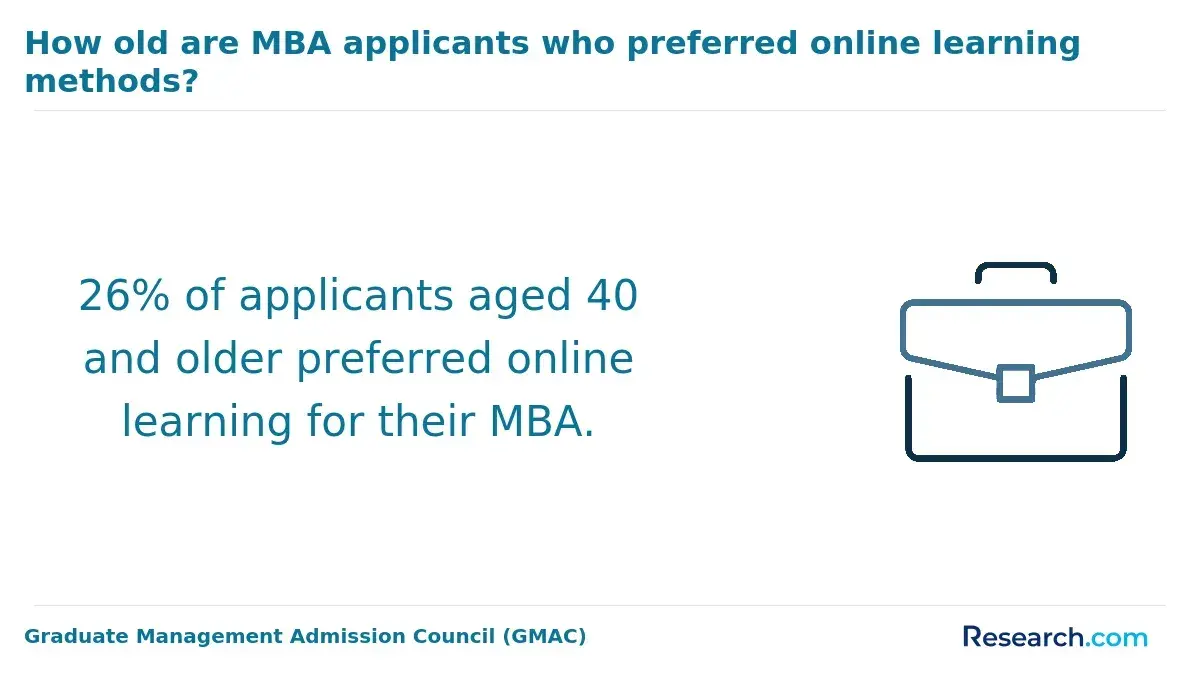
Choosing an online MBA is a cost, time, and career decision—not just a school search. For working adults, the strongest option is often a public university program that keeps tuition lower, delivers coursework online, and still offers credible business training, career support, and recognized accreditation. In 2027, interest in online study remains strong, with over 36 % of domestic candidates now more open to taking their courses online.
This guide is for professionals, managers, and career changers who want a practical MBA without leaving the workforce or taking on unnecessary debt. It explains what makes a public university online MBA affordable, how to judge quality beyond price, what admissions and timelines typically look like, and how to choose a program that fits your goals, schedule, and budget.
Key Benefits of Getting Into Affordable Public University Online MBA Programs
- Earn credentials that can lead to management, operations, consulting or leadership roles.
- MBA graduates report median starting salaries of around $125,000 in the U.S.
- You can continue working while studying, with flexibility to advance without relocating.
What defines an affordable public university online MBA program?
An affordable public university online MBA is typically a graduate business program offered by a state or publicly funded institution, delivered fully or primarily online, and priced below many private-school MBA options. The best value programs combine lower tuition with legitimate accreditation, useful coursework, strong student support, and career outcomes that make the investment worthwhile.
When comparing affordable online MBA programs, do not judge affordability by tuition alone. A program with a low per-credit price can become less affordable if it charges high technology fees, requires travel, or takes longer than expected to complete. Likewise, a slightly higher-cost program may offer better career services, stronger faculty access, or a concentration that helps you move into a higher-paying role.
Core features of an affordable public online MBA
- Public university status: These institutions are funded and operated by state or national systems rather than private entities, which can help keep tuition more accessible.
- Online delivery: A fully online format can reduce or eliminate relocation, commuting, and campus housing costs.
- Lower tuition: Many affordable options are priced substantially below the national median for full-time MBA programs, and recent data shows many online MBAs charging under $500 per credit hour.
- Recognized academic quality: Affordability should still include credible accreditation, qualified faculty, relevant coursework, and employer-recognized credentials.
- Flexible pacing: The program should fit around work obligations rather than require you to leave the labor market.
The goal is not to find the cheapest MBA at any cost. The better question is whether the program gives you a respected credential, usable business skills, and a realistic path to career advancement for the amount you pay.
How do accreditation and recognition affect value in the cheapest online MBA no GMAT AACSB‑ranked public programs?
Accreditation is one of the most important safeguards when evaluating a low-cost MBA. It helps confirm that the institution or business school meets external standards for curriculum, faculty qualifications, academic processes, and student learning. For applicants comparing the cheapest online MBA no GMAT AACSB programs, AACSB accreditation is especially important because it is widely recognized in business education.
There are two accreditation layers to check. First, the university itself should hold recognized institutional accreditation. Second, the business school may hold programmatic accreditation, such as accreditation from the Association to Advance Collegiate Schools of Business (AACSB). A program can be legitimate with institutional accreditation alone, but AACSB recognition may improve perceived value among employers, doctoral programs, and business-school evaluators.
What to verify before applying
- AACSB status: Confirm whether the business school—not just the university—is AACSB-accredited.
- Institutional accreditation: Make sure the public university is properly accredited by a recognized institutional accreditor.
- Online equivalency: Ask whether online MBA students complete the same core curriculum and learn from the same or comparable faculty as campus-based students.
- GMAT or GRE policy: Many budget-friendly programs do not require the GMAT, but policies vary. Some waive test scores only for applicants with sufficient work experience, GPA, or prior graduate study.
- Employer recognition: Review how the degree is presented on transcripts and whether online students receive the same diploma as campus students.
A no-GMAT policy can make a program more accessible, but it should not be the main reason you choose it. A low-cost MBA has stronger long-term value when it is accredited, academically rigorous, and connected to the industries or roles you are targeting.
Who is the ideal candidate for an affordable online executive MBA program at a public university?
An affordable online executive MBA is usually best for professionals who already have substantial work experience and want to move into broader leadership, strategy, or senior management roles. Unlike a standard MBA, which may serve early- or mid-career applicants, an executive MBA is commonly designed for people who are continuing to work while applying what they learn directly to their organizations.
Public university options can be appealing because they may offer the executive MBA structure—peer learning, leadership coursework, and applied projects—at a lower cost than many private executive programs. However, applicants should make sure the format, peer profile, and workload match their career stage.
You may be a strong fit if you:
- Have several years, often 5‑10+, of work experience in management, professional, technical, military, nonprofit, healthcare, or public-sector roles.
- Want to strengthen leadership, financial decision-making, operations, strategy, and organizational management skills.
- Need an online format because you plan to remain employed while studying.
- Prefer practical coursework that connects to real workplace decisions rather than a purely academic business curriculum.
- Can contribute meaningfully to peer discussions through your professional experience.
An executive MBA may not be the right match if you are very early in your career, need foundational business exposure, or want an internship-driven career switch. In those cases, a traditional online MBA from a public university may offer more flexibility and a better fit.
Most public university online MBA programs are designed to be completed faster than a traditional part-time campus MBA, but the exact timeline depends on credit load, course length, transfer policies, prerequisite requirements, and whether you study full-time or part-time. Many online professional MBA programs require 30‑36 credits and can be completed in about 12‑24 months full‑time or 2‑3 years part‑time.
The most important question is not simply “How fast can I finish?” but “What pace can I sustain while doing good work?” Accelerated programs can reduce the time to graduation, but they may require heavier weekly reading, group projects, exams, and applied assignments.
Common completion patterns
- Typical credit requirement: 30–36 credits, usually about 10–12 courses.
- Accelerated options: Some programs allow completion in as little as 12 months if you study full‑time.
- Part-time track: For working professionals, 2–4 years is more common.
If you are evaluating one of the cheapest online MBA no GMAT options, review the course calendar carefully. Some programs use short intensive terms, while others follow a traditional semester schedule. Also check whether foundation courses are required for applicants without a business background, because those can add time and cost.
Admission requirements for affordable public online MBA programs are often flexible, but they are not automatic. Schools still need evidence that you can handle graduate-level business work and contribute to a professional learning environment. Requirements vary by university, MBA format, and concentration.
Common application requirements
- Bachelor’s degree: Most programs require a bachelor’s degree from an accredited institution.
- Minimum GPA: Many schools list a minimum GPA, often around 3.0, though some consider applicants with lower GPAs if they have strong work experience or other evidence of readiness.
- Work experience: Many programs expect 2–5 years of work experience; executive-MBA tracks expect more.
- GMAT or GRE: Some affordable programs waive GMAT or GRE scores or make them optional, especially for applicants with strong professional experience.
- Resume: Schools commonly want a current resume showing professional progression, leadership, and relevant responsibilities.
- Essay or statement of purpose: This is where you connect the MBA to your goals and explain why the program fits.
- Letters of recommendation: Some programs request references from supervisors, managers, faculty, or professional contacts.
- English proficiency: International applicants may need to provide proof of English proficiency.
Do not assume that “affordable” means “less selective.” A well-regarded public university may still look closely at your academic preparation, career history, communication skills, and motivation. Before applying, confirm the current requirements on each school’s official MBA admissions page, especially if you are relying on a GMAT waiver, rolling admissions, or a fast application decision.
The cost of an affordable public university online MBA depends on tuition per credit, total credit requirements, residency rules, fees, books, technology charges, and any required in-person experiences. Compared with private MBAs that may cost $40k–$80k or more per year, some public-university online MBAs charge significantly less. Some listed programs are under $500 per credit hour.
When comparing programs, calculate the total program price rather than focusing only on the advertised per-credit rate. A lower per-credit rate can be offset by a higher number of required credits or mandatory fees. Public universities may also charge different rates for in-state, out-of-state, and online students, so confirm whether online learners receive a separate tuition rate.
Costs to include in your calculation
- Tuition: Multiply the per-credit cost by the required number of credits.
- University and program fees: Look for technology, distance learning, graduation, course, or business-school fees.
- Books and materials: Some courses require textbooks, simulations, software, or case materials.
- Residencies or travel: Fully online programs may still include optional or required campus visits.
- Time cost: Consider whether the workload will affect your ability to work overtime, freelance, travel, or take on promotions.
ROI considerations
- The estimated median starting salary for MBA graduates in the U.S. recently is about $125,000.
- When tuition is kept lower, the time needed to recoup the cost through career growth may be shorter.
- Online delivery can reduce relocation, commuting, and the opportunity cost of leaving work.
A lower-cost online MBA can offer strong return on investment, but only if the credential is respected and the program supports your career direction. Before enrolling, ask whether the school publishes career outcomes for online MBA students specifically, not just for the business school overall.
Affordable public university online MBA programs usually cover the same core business disciplines found in more expensive MBA programs. The difference is often in delivery model, elective depth, faculty access, and specialization options. A strong curriculum should help you make better decisions across finance, people, operations, data, markets, and strategy.
Typical core MBA coursework
- Finance
- Accounting
- Marketing
- Operations
- Business analytics
- Strategy
- Leadership and organizational behavior
- Managerial economics or decision analysis
- A capstone project or applied business consulting experience
Common specialization areas
- Business analytics or data-driven decision making
- Healthcare management or operations
- Entrepreneurship or innovation
- Finance or corporate financial management
- Supply chain, logistics, or operations management
- Human resources or organizational leadership
Choose a specialization only if it supports your target role. For example, business analytics may be useful if you want to work with data-driven strategy, operations, or product decisions. Healthcare management may fit professionals already in hospitals, insurance, public health, or clinical administration. Entrepreneurship may be useful for founders, small-business operators, or professionals leading innovation inside larger organizations.
Also check how many electives are actually available online. Some universities list many concentrations across the business school, but only a smaller set may be offered to online MBA students.
Online delivery changes how networking happens, but it does not eliminate its value. In a well-designed online MBA, students build professional relationships through live sessions, team projects, discussion boards, virtual events, alumni panels, faculty interaction, and sometimes optional or required residencies.
Employer perception depends less on the word “online” and more on the reputation of the university, accreditation, curriculum quality, work experience of the student, and relevance of the MBA to the role. Many employers are familiar with online graduate education, especially for working professionals, but applicants should still evaluate whether the program provides the same institutional access as campus-based options.
Questions to ask before enrolling
- Are online students eligible for the same career services as on-campus MBA students?
- Can online students join alumni events, employer sessions, student organizations, or mentoring programs?
- Does the program include synchronous sessions, group work, networking events, or residencies?
- Will the diploma or transcript distinguish between online and campus delivery?
- What types of employers recruit from or engage with the business school?
- Does the program support career changers, or is it better suited to advancement within your current field?
Networking in an online MBA requires more intentional effort. Students who attend optional sessions, participate actively in group work, contact alumni, and use career services tend to get more value than students who treat the program as a set of isolated courses.
Affordable public university online MBA programs can be flexible and cost-effective, but they require discipline. Lower cost does not make the work easier, and online delivery can make it easier to fall behind if you do not plan carefully. The best approach is to identify likely challenges before enrolling and choose a program with systems that help you succeed.
Common challenges
- Time management: Balancing full-time work, coursework, family responsibilities, and personal commitments can be difficult.
- Self-motivation: Online learning often requires more self-discipline because you are not physically attending class each week.
- Limited spontaneous networking: You may need to be more proactive to form relationships with classmates, faculty, and alumni.
- Uneven support quality: Some low-cost programs offer excellent advising and career services, while others may provide fewer personalized resources.
- Perceived prestige: Some hiring managers may still prefer traditional on-campus MBAs, though this perception is diminishing.
How to reduce the risk
- Create weekly study blocks before classes begin and protect them like work meetings.
- Choose a program with clear advising, responsive faculty, technical support, and an active online student community.
- Ask current students or alumni about workload, faculty responsiveness, and career support.
- Use virtual events, LinkedIn groups, alumni forums, and professional associations to expand your network beyond class.
- Connect assignments to real workplace problems so the degree produces practical value while you are still enrolled.
A successful online MBA student is not necessarily the person with the most free time. It is the person with a realistic schedule, a clear goal, and a program structure that supports consistent progress.
How should you evaluate and choose the best affordable public university online MBA for your career goals?
The best affordable public university online MBA is the one that fits your career goal, financial limit, learning style, and available time. A program that is ideal for a healthcare administrator may not be the best choice for a finance professional, entrepreneur, military officer, teacher moving into management, or analyst seeking leadership roles.
Start with the outcome you want. Are you trying to earn a promotion, move into management, change industries, qualify for executive roles, strengthen business fundamentals, or increase credibility with clients and employers? Once you define the purpose of the MBA, you can judge each program against that goal instead of ranking schools by price alone.
Evaluation Checklist
- Accreditation: Is the business school AACSB-accredited or at least regionally accredited?
- Cost & tuition: What is the total tuition cost? Are there hidden fees?
- Admission flexibility: Are GMAT/GRE requirements waived? What is the expected work experience?
- Format & flexibility: Is the program fully online, asynchronous, synchronous, or does it require residencies?
- Outcomes & support: What is the average post-MBA salary or job placement? Are career services available for online students?
- Specialization relevance: Does the school offer specializations aligned with your target industry?
- Networking & alumni: What opportunities are provided for you to connect with peers and alumni?
Decision framework
| Factor | What to look for | Why it matters |
| Career fit | Courses, electives, and projects tied to your target role | The MBA should support a specific professional move, not just add a credential. |
| Total cost | Tuition, fees, books, and any travel requirements | The lowest advertised tuition may not be the lowest total cost. |
| Flexibility | Part-time pacing, asynchronous options, and manageable course loads | A program only works if you can complete it while meeting work and life obligations. |
| Credibility | Recognized accreditation and a reputable public university brand | Employers and graduate programs may use accreditation and reputation as quality signals. |
| Student support | Advising, career services, faculty access, and technical help | Support services can affect persistence, networking, and job-search outcomes. |
Before committing, compare at least a few programs side by side using the same criteria. Request total cost estimates, ask about online student outcomes, review curriculum details, and speak with admissions staff about workload and support. The right choice should be affordable, accredited, manageable, and clearly connected to the next step in your career.
Other Things You Should Know About Affordable Public University Online MBA Programs
Many do not require prior business coursework. Most public online MBA programs accept applicants from any major if they have a bachelor’s degree from an accredited institution, a minimum GPA near 2.75 to 3.0, and a complete application with transcripts, résumé, and recommendations.
Most affordable public university online MBA programs in 2027 do not require standardized tests like the GMAT for admission, focusing instead on undergraduate GPA and work experience. Exceptions exist, so check specific program requirements.
- College of Business. (2024, January 12). Top Questions to Ask About Online MBA Programs - Gary W. Rollins College of Business. Gary W. Rollins College of Business. blog.utc.edu.
- Coursera. (2025, October 6). MBA Salary: 2025 Guide. Coursera. coursera.org.
- Gandhi, M. (2025, March 26). MBA cost: the total investment for business school. Menlo Coaching. menlocoaching.com.
- GMAC. (2025). Demand for Graduate Business Degrees. gmac.com.
- Herschman, A. (2025, September 19). Top questions asked about Online MBA Programs—Answered. Rowan Blog - Everyday Voices. Extraordinary Futures. rowanblog.com.