2027 Cheapest One-Year Online MBA Programs in the U.S.

Co-Founder and Chief Data Scientist
Choosing the cheapest one-year online MBA is not just a tuition comparison. The real question is whether a fast, low-cost program can help you earn a credible graduate business degree without creating hidden costs, unrealistic workloads, or a credential employers do not value. For working professionals, the appeal is clear: finish faster, keep working, and avoid the expense of a traditional two-year campus MBA.
Some credible online MBA programs cost as little as $9,000–$12,000 for the entire program, but affordability should be weighed against accreditation, completion pace, admissions requirements, career support, and total out-of-pocket cost. This guide explains how to compare the cheapest one-year online MBA programs in the U.S., what trade-offs to expect, and which questions to ask before enrolling.
Key Benefits of Getting Into the Cheapest One-Year Online MBA Programs in the U.S.
- You gain qualifications that open doors to management and leadership roles—such as project manager, operations manager, or business‑unit leader—by earning your MBA in a shorter timeframe. These positions often require advanced business knowledge and can position you for promotions or lateral career moves into higher responsibility roles.
- You can improve your earning potential: MBA‑holders’ median salaries in many fields have been reported at six‑figure levels or rising rapidly post‑graduation. Completing a one‑year MBA may accelerate the return on investment by allowing you to enter higher-paying roles faster.
- Online delivery gives you flexibility to continue working while studying, avoid relocation or commuting costs, and accelerate your career without pausing your income stream. You can access lectures, assignments, and resources anytime, making it easier to balance work, family, and study commitments.
Why does accreditation matter when choosing cheap one‑year online MBA programs?
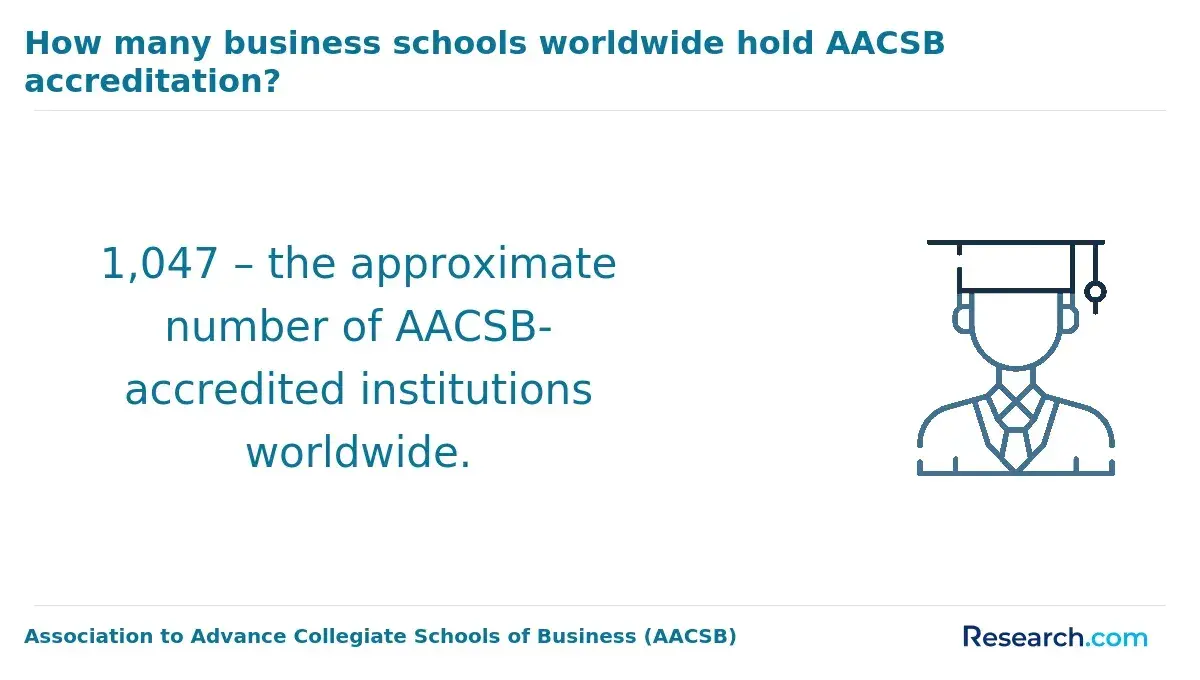
Accreditation matters because it is one of the clearest safeguards against paying for a low-cost MBA that has limited academic or employer value. A cheap online MBA can be a smart investment, but only if the school and business program meet accepted quality standards.
Institutional accreditation confirms that the university meets broad academic and administrative standards. Business-specific accreditation adds another layer of review for faculty qualifications, curriculum, assessment, and student outcomes. Programs such as AACSB-accredited online MBA programs are often preferred by students who want stronger quality assurance and wider employer recognition.
Accreditation can affect:
- Employer confidence: Hiring managers are more likely to recognize degrees from accredited institutions and business schools.
- Credit transfer and future study: If you later pursue another graduate degree or certificate, accredited coursework is more likely to be considered by other institutions.
- Financial aid eligibility: Federal financial aid generally requires enrollment at an eligible accredited institution.
- Curriculum quality: Accredited programs must show that coursework, faculty, assessment, and student support meet defined standards.
- Long-term degree value: Accreditation reduces the risk of earning a credential that looks inexpensive upfront but carries weaker recognition later.
The lowest tuition should never be your only filter. A better approach is to first remove unaccredited or poorly documented programs from consideration, then compare cost among credible options.
How do online one‑year MBA programs compare with online EMBA programs?
Online one-year MBA programs and online executive MBA programs can both serve experienced professionals, but they are designed for different career stages. A one-year online MBA is usually better for students who want a fast, flexible, and comparatively affordable graduate business degree. An online EMBA is generally built for senior professionals who already manage teams, budgets, or business units.
| Factor | One-year online MBA | Online EMBA |
| Typical audience | Early- to mid-career professionals, career changers, and managers seeking advancement | Senior managers, executives, and experienced leaders |
| Main goal | Build broad business skills quickly and affordably | Strengthen executive leadership, strategy, and high-level decision-making |
| Cost profile | Often more budget-focused, especially at public or competency-based institutions | Typically more expensive because of cohort design, executive services, and possible residencies |
| Format | Often fully online, accelerated, and flexible | May include cohort pacing, residencies, synchronous sessions, or leadership intensives |
| Best fit | Students who want speed, affordability, and flexibility | Experienced leaders who value peer networking and executive-level discussion |
The right choice depends on your current role. If you are trying to qualify for management roles, broaden your business knowledge, or move into a new function, a one-year online MBA may be the more practical route. If you already hold a senior leadership role and want an executive peer network, an EMBA may offer better alignment despite the higher cost.
For more details, compare affordable online executive MBA programs by tuition, program length, and target audience.
What are the best accelerated online MBA programs with no GMAT required?
The best accelerated online MBA programs with no GMAT required are those that waive standardized testing without lowering academic expectations. Instead of using a test score, these programs may evaluate undergraduate GPA, professional experience, prior business coursework, leadership background, essays, recommendations, or interviews.
No-GMAT programs are especially useful for working adults who do not want to spend months preparing for an exam before applying. They can also help experienced professionals whose work history is a stronger indicator of readiness than a standardized test. You can compare options in our guide to the best online MBA programs with no GMAT.
When reviewing no-GMAT accelerated MBA programs, focus on these points:
- Admission standards: A no-GMAT policy should not mean open admission. Look for clear requirements related to GPA, work history, prerequisite knowledge, or professional readiness.
- Academic pace: Accelerated MBA courses move quickly. Without GMAT preparation, you may start sooner, but you still need enough time each week for reading, projects, exams, and group work.
- Quantitative preparation: If you have limited experience in accounting, economics, finance, or statistics, ask whether the program offers foundation modules or prerequisite support.
- Accreditation and outcomes: A no-GMAT program should still be accredited and transparent about student support, graduation expectations, and career services.
- Application timeline: Removing the GMAT can shorten the admissions process, but transcripts, recommendations, and employer documentation may still take time.
A no-GMAT option can be a smart choice if your professional record shows you are ready for graduate business study. It is less ideal if you need a slower admissions process to build quantitative skills or clarify your career goals.
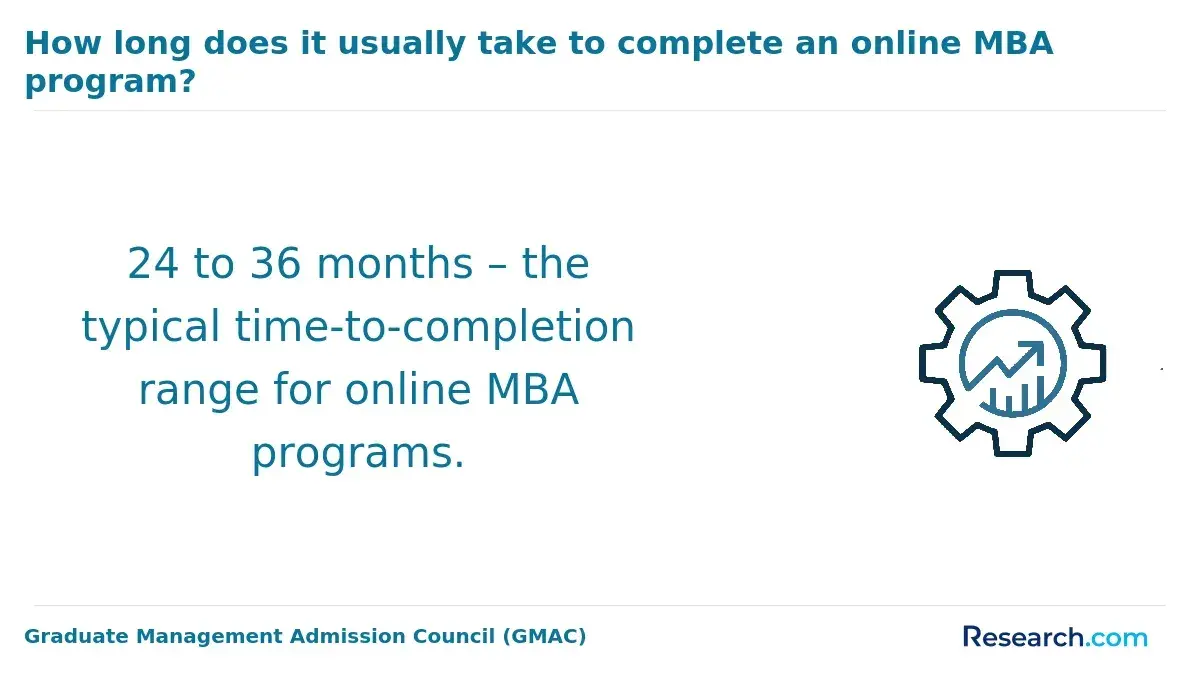
A cheap one-year online MBA can often be completed in about 12 months, but the actual timeline depends on credit requirements, term structure, course availability, transfer or waiver policies, and how much time you can commit each week. “One-year” is a program design, not a guarantee for every student.
Most MBA programs require 30–36 credits for graduation. Accelerated programs compress those credits into shorter terms, year-round enrollment, heavier course loads, or overlapping sessions. This can work well for disciplined students, but it can also create a demanding schedule for those balancing full-time work, caregiving, travel, or unpredictable job responsibilities.
What affects completion speed?
- Credit-hour requirement: A 30-credit MBA is generally easier to complete quickly than a program closer to 36 credits, although course intensity also matters.
- Term length: Short sessions can help you finish faster, but assignments and exams come more frequently.
- Course sequencing: Some programs require courses in a fixed order. If a required course is offered only at certain times, your timeline may stretch.
- Asynchronous vs. cohort format: Asynchronous programs may provide more scheduling flexibility. Cohort programs can keep you on track but may offer less room to slow down.
- Prior coursework: Students with a business background may qualify for waivers or move faster through foundation material, depending on school policy.
- Work and personal commitments: Even strong students may need more time if their work schedule changes or if family responsibilities increase.
Some programs advertise 12-month completion but realistically take 14–18 months for many working students. Before enrolling, ask admissions for the standard full-time plan of study, the maximum course load allowed, and the percentage of online students who actually finish within the advertised one-year timeline.
An affordable one-year online MBA can support promotions, career changes, and stronger business decision-making, but outcomes depend heavily on your prior experience, industry, location, employer, school reputation, and how actively you use the program’s network. The degree alone does not guarantee a specific job title or salary.
Common career goals for online MBA students include moving into management, project leadership, operations, finance, marketing, analytics, healthcare administration, consulting, or entrepreneurship. Graduates may target roles such as business analyst, marketing manager, operations director, project manager, product manager, or department leader, depending on their background.
Salary expectations should be evaluated carefully. Online MBA graduates have reported median starting salaries in the six-figure range for accelerated programs, but this should not be treated as a universal outcome. A student entering the program with substantial management experience will usually have different earnings potential than a student using the MBA to make an early-career transition.
How to evaluate career value before enrolling
- Ask for outcomes specific to online MBA students: Do not rely only on full-time campus MBA data if the online program serves a different student population.
- Review employer recognition: A low-cost program with strong regional employer ties may be valuable if you plan to work in that market.
- Check career services access: Confirm whether online students receive resume reviews, interview coaching, job boards, networking events, and alumni support.
- Consider your starting point: The MBA is more likely to improve outcomes when it builds on relevant work experience or fills a clear skill gap.
- Calculate return on investment: Compare total program cost with realistic salary growth, promotion potential, and opportunity cost.
The strongest affordable MBA choice is one that connects directly to your next career move, not simply the one with the lowest tuition.
The cheapest advertised tuition may not equal the cheapest total cost. Before choosing a one-year online MBA, calculate the full amount you may pay from application to graduation, including fees and indirect expenses.
Watch for these cost factors:
- Books, supplies, and technology fees: Online MBA students may need textbooks, software, proctoring services, platform access, or specific technology tools.
- Residency or in-person components: Some online programs include short campus visits, intensives, or networking sessions that require travel, lodging, and meals.
- Out-of-state or international tuition: Public universities may charge different rates based on residency status, although some online programs use a flat rate.
- Course load and work impact: Accelerated study can be intense. If the workload affects your job performance or requires reduced hours, the indirect cost may be significant.
- Prerequisite or foundation courses: Students without a business background may need extra coursework that increases cost or time.
- Graduation, transcript, and student fees: Smaller mandatory fees can add up across terms.
- Financial aid timing: Scholarships, employer tuition assistance, and federal aid may have deadlines or enrollment requirements.
Ask each school for a written total cost estimate based on your residency status, start term, expected course load, and any required fees. Then compare programs using total cost, not tuition alone.
The best fit for a cheapest one-year online MBA is a student who needs a practical, accredited, and fast business credential more than a traditional campus experience. These programs reward focus, independence, and clear career goals.
A strong candidate often has:
- Professional experience: Mid-career professionals with 3–10 years of work experience may be well positioned to connect MBA coursework to real business problems.
- Self-discipline: Accelerated online courses require steady weekly effort, time management, and comfort learning without frequent in-person structure.
- Clear career purpose: Students who know whether they want a promotion, career pivot, salary growth, or business ownership can choose courses and projects more strategically.
- Cost sensitivity: These programs work well for students who want to limit debt and are willing to trade some campus amenities for affordability.
- Some business familiarity: Prior exposure to budgeting, management, analytics, operations, sales, or finance can make the compressed pace easier to manage.
This format may be less suitable for students who need extensive academic support, want an immersive campus network, prefer a slower pace, or are entering business with little preparation and limited time to study. If you are early in your career, a longer online MBA, part-time MBA, or specialized master’s program may provide more room to build foundational skills.
The value of a cheap one-year online MBA depends on more than price. A program is valuable when it delivers a credible credential, relevant skills, employer recognition, and career support at a cost that makes sense for your goals.
Key value factors include:
- Accreditation: Look for institutional accreditation and, when possible, recognized business accreditation such as AACSB or other appropriate bodies.
- Curriculum relevance: Courses should match your goals in leadership, finance, analytics, operations, marketing, entrepreneurship, healthcare, technology, or another field.
- Faculty experience: Strong programs use instructors with academic qualifications, professional experience, or both.
- Online learning quality: A low-cost program should still provide clear course design, reliable technology, accessible faculty, and responsive advising.
- Career services: Resume support, interview preparation, networking access, and alumni connections can improve the practical value of the degree.
- Reputation and employer awareness: A school does not need to be nationally famous to be worthwhile, but it should be respected in the markets or industries where you plan to work.
- Completion support: Accelerated students need advising, predictable scheduling, and clear graduation planning to stay on track.
The best-value program is not always the absolute cheapest. A slightly higher-cost MBA with stronger accreditation, better course fit, and more reliable support may deliver a better return than the lowest-priced option.
What questions should you ask admissions when evaluating a cheapest one‑year online MBA program?
Admissions conversations should help you verify cost, quality, timing, and fit. Do not rely only on website claims. Ask direct questions and request written confirmation when possible.
- What is the total program cost for my residency status? Ask whether the estimate includes tuition, mandatory fees, technology fees, books, software, and graduation fees.
- Can students realistically finish in 12 months? Request the exact course sequence for the one-year path and ask how many students follow it successfully.
- How many credits are required? Confirm whether the program requires 30–36 credits or another structure, and ask whether prerequisites add to that total.
- Is the program fully online? Ask about residencies, live class requirements, exams, internships, travel, or campus visits.
- What accreditation does the university and business school hold? Verify both institutional accreditation and business-specific accreditation, if applicable.
- Are GMAT or GRE scores required? If waived, ask what admissions factors replace test scores.
- What support do online MBA students receive? Ask about advising, tutoring, technical support, faculty access, and career services.
- What are the outcomes for online or accelerated MBA graduates? Request placement information, promotion data, employer examples, and salary information specific to the online program if available.
- Can I slow down if my work schedule changes? Confirm whether part-time study is allowed and whether slowing down affects tuition, aid, or course availability.
- What happens if a required course is not offered when I need it? This is important in accelerated programs where one scheduling issue can delay graduation.
The goal is to identify a program that is genuinely affordable, accredited, manageable, and aligned with your career plan. A good admissions team should be able to explain the full cost, the expected workload, and the support available before you commit.
Other Things You Should Know About the Cheapest One‑Year Online MBA Programs in the U.S.
Many one-year online MBA programs waive the GMAT or GRE for applicants with a bachelor’s degree and relevant work experience. Some still require a test score, especially for conditional admission. Schools also often ask for transcripts, a résumé, and a statement of purpose.
In 2027, the average tuition for the most affordable one-year online MBA programs in the U.S. typically ranges from $10,000 to $20,000. This cost-effective option allows students to earn their degree quickly while minimizing financial burden, making it an attractive choice for budget-conscious professionals.
- All Business Schools. (2025, June 10). MBA accreditation: Why it Matters (Explained). allbusinessschools.com.
- BLS. (2025, August 28). Management occupations. bls.gov.
- McCartney, A. (2024, August 19). Cost of an online MBA | OnlineMBA.com. Online MBA Programs | Find the Best Schools and Degrees. onlinemba.com.
- OnlineMBA. (2024, September 25). Financial Aid for MBAs | OnlineMBA.com. Online MBA Programs | Find the Best Schools and Degrees. onlinemba.com.
- Sukanya. (2024, October 4). Scholarships options for online MBA. MBA & Beyond. mbaandbeyond.com.