2027 Best Accredited Online Environmental Engineering Degree Programs: Compare Tuition, Admissions, and Career Outcomes

Co-Founder and Chief Data Scientist
Choosing an online environmental engineering degree is a high-stakes decision because program quality, accreditation, tuition, and career fit can vary widely. The U. S. Bureau of Labor Statistics reported a May 2024 median wage of $104,170 for environmental engineers, making the field attractive for students who want technical work tied to water, air, waste, infrastructure, and climate resilience.
This guide is for working adults, transfer students, engineers seeking advancement, and first-time graduate applicants. You will learn how to compare accredited programs, estimate value, avoid red flags, and choose a format that supports your goals.
Key Things You Should Know
- The strongest overall value usually comes from institutionally accredited public universities with online engineering programs, transparent tuition, strong student support, and clear preparation for environmental engineering, water resources, air quality, or sustainability roles.
- For licensure-minded students, ABET accreditation matters most at the bachelor's level; many online environmental engineering master's programs are institutionally accredited but not ABET-accredited because ABET programmatic accreditation is less common for graduate programs.
- The BLS reported a May 2024 median wage of $104,170 for environmental engineers, but salary outcomes depend on degree level, prior experience, licensure status, location, employer type, and technical specialization.
Which Accredited Online Environmental Engineering Degree Programs Offer the Best Overall Value?
The best accredited online environmental engineering degree program is not always the cheapest or the most selective. A strong value program combines recognized accreditation, reasonable total cost, flexible delivery, credible engineering faculty, career-relevant coursework, and outcomes that match the student's goal.
Most online options are graduate programs, especially master's degrees in environmental engineering, environmental engineering sciences, civil engineering with an environmental focus, or water resources engineering. Fully online ABET-accredited bachelor's programs specifically in environmental engineering are uncommon, so students seeking first-time engineering licensure should pay close attention to the accreditation section below.
The table below compares common online environmental engineering program types by the kind of student each tends to serve best. Use it as a fit framework rather than a fixed ranking, because tuition, course availability, and admission policies can change by term.
| Program type | Best fit | Value strengths | Potential trade-offs |
| Public university online master's in environmental engineering | Working engineers, STEM graduates, and cost-conscious students | Often combines lower tuition, regional employer recognition, and broad course access | May have limited electives if the online catalog is smaller than the campus catalog |
| Private university online engineering master's | Students prioritizing brand recognition, specialized electives, or employer tuition assistance | Can offer strong faculty networks, advanced electives, and professional engineering focus | Usually costs more, so ROI depends heavily on aid, employer reimbursement, and career goals |
| Online civil engineering degree with environmental concentration | Students interested in water systems, hydrology, infrastructure, or municipal engineering | Can provide broader civil engineering mobility while still supporting environmental work | May not include as much air quality, hazardous waste, or environmental chemistry content |
| Online environmental management or sustainability engineering program | Professionals moving into compliance, ESG, policy implementation, or project management | Often more accessible for non-engineering backgrounds | May not prepare students for engineering design roles or licensure pathways |
For most students, the best value choice is the lowest-cost accredited program that still offers the technical concentration they need. Paying more may make sense if the program has a rare specialization, strong employer recognition in your region, or a schedule that lets you finish without pausing your career.
What Accreditation Should Students Look for in an Online Environmental Engineering Degree Program?
Accreditation is the first filter students should apply because it affects credit transfer, federal financial aid eligibility, employer recognition, and in some cases professional engineering licensure. At a minimum, the college or university should hold institutional accreditation from an agency recognized by the U.S. Department of Education or the Council for Higher Education Accreditation.
Environmental engineering students should understand the difference between institutional and programmatic accreditation. Institutional accreditation applies to the university; programmatic accreditation applies to a specific degree program. In engineering, ABET is the main programmatic accreditor employers and licensing boards may look for, especially for bachelor's degrees.
| Accreditation type | Why it matters | What students should verify |
| Institutional accreditation | Supports federal aid eligibility, transfer credibility, and baseline academic legitimacy | Confirm the university is accredited by a recognized institutional accreditor |
| ABET accreditation | Often important for engineering licensure pathways and employer screening | Check whether the exact degree program, level, and delivery format appear in ABET's database |
| State authorization | Determines whether an online school can enroll students from your state | Ask whether the program accepts students in your state and whether any restrictions apply |
| Licensure alignment | Professional Engineer requirements vary by state | Contact your state engineering board before enrolling if PE licensure is a goal |
A common mistake is assuming that a university's engineering reputation automatically means every online program is ABET-accredited. ABET accreditation is program-specific, so the exact degree name matters. A master's degree from an institutionally accredited university can still be valuable, but it may not replace the role of an ABET-accredited bachelor's degree for licensure.
Students who already hold an ABET-accredited bachelor's in engineering usually have more flexibility when choosing an online master's. Students entering engineering for the first time should be more cautious and should ask admissions advisers how the program supports fundamentals of engineering preparation, lab requirements, design work, and state licensure expectations.
How Do Tuition Costs Compare Across Accredited Online Environmental Engineering Degree Programs?
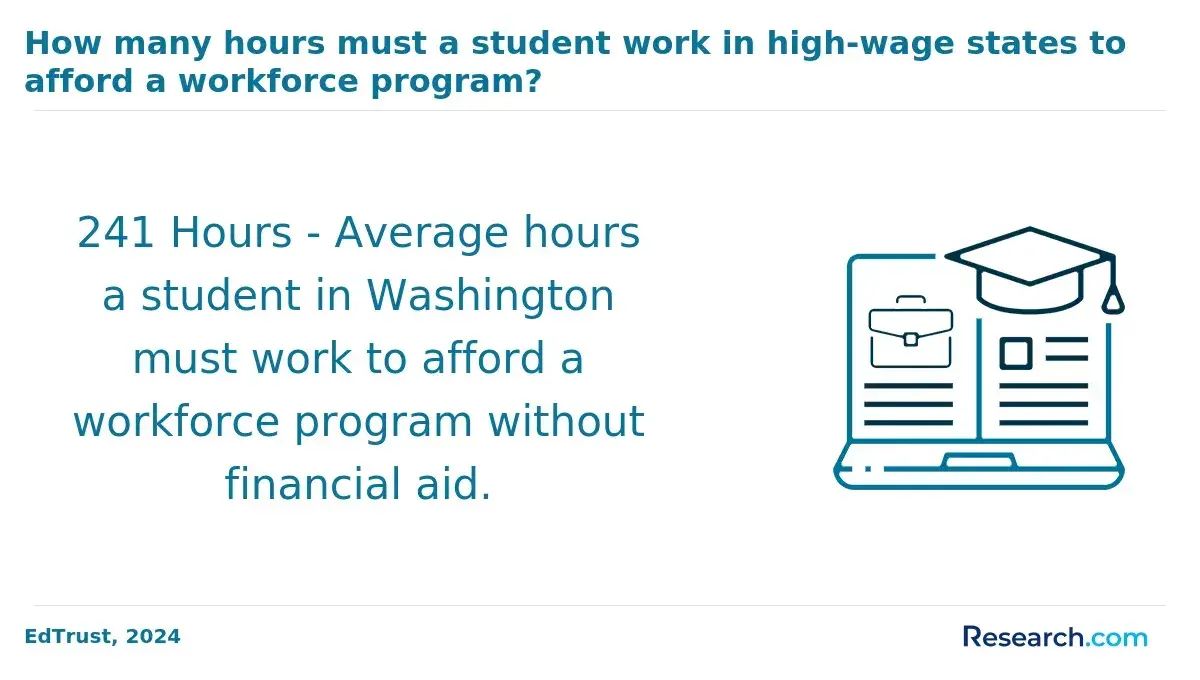
Tuition comparisons should start with total program cost, not advertised per-credit tuition. Online environmental engineering students may pay technology fees, distance-learning fees, lab software costs, proctoring fees, textbooks, graduation fees, and sometimes higher nonresident tuition at public universities.
College Board's 2024 Trends in College Pricing reported average published tuition and fees of $11,610 for in-state public four-year students and $43,350 for private nonprofit four-year students. Those undergraduate figures do not directly price every online engineering graduate program, but they show why public-versus-private cost differences can materially affect ROI.
The table below shows the major cost categories to compare before applying. This is especially important for engineering students because software, technical electives, and required course sequencing can affect both cost and time to completion.
| Cost factor | Why it affects total price | Best value signal |
| Per-credit tuition | Most master's programs charge by credit, and engineering degrees commonly require a fixed number of credits | Published tuition is easy to find and applies consistently across online courses |
| Resident versus nonresident rate | Public universities may charge different rates depending on state residency | Online students receive a flat or reduced distance-learning rate |
| Mandatory fees | Technology, student services, and distance-learning fees can raise the final bill | The school publishes a complete fee schedule before enrollment |
| Transfer or waived credits | Approved credits can shorten the program and reduce tuition | The policy is written, generous, and reviewed before admission deposit deadlines |
| Employer reimbursement | Many working engineers use employer education benefits | The program is approved by the employer and course pacing matches reimbursement rules |
When comparing costs, request a written estimate that includes tuition, fees, expected credits, and any required campus visits. Students comparing technical graduate degrees with broader business options may also find it useful to review how cost structures differ in guides to the cheapest online MBA, since MBA programs often use different pricing and cohort models.
The biggest red flag is a program that advertises affordability but makes it difficult to calculate the complete price. If a school cannot clearly explain total estimated cost, transfer limits, and fee categories, compare it with programs that provide a more transparent financial picture.
How Competitive Is Admission to Accredited Online Environmental Engineering Degree Programs?
Admission competitiveness varies by degree level and institution. Online master's programs in environmental engineering typically expect a bachelor's degree in engineering or a closely related STEM field, while certificate or environmental management programs may admit a broader range of applicants.
Engineering admissions are often less about broad selectivity and more about readiness for advanced math, science, and design coursework. A student with strong calculus, chemistry, physics, fluid mechanics, and statistics preparation may be a better fit than a student with a high GPA but limited technical background.
| Admission factor | Common expectation | What it tells the student |
| Prior degree | Bachelor's in engineering, environmental science, chemistry, physics, biology, or another STEM field | Applicants without engineering prerequisites may need bridge coursework |
| GPA | Minimum GPA requirements vary by school and program level | A minimum does not guarantee admission, and a lower GPA may be offset by experience |
| Prerequisites | Calculus, differential equations, chemistry, physics, statistics, or fluid mechanics may be required | Prerequisite gaps can delay graduation and increase cost |
| GRE | Many online engineering programs have made the GRE optional or limited its use | Applicants should verify current test policies before spending money on exams |
| Professional experience | Helpful but not always required | Experience can strengthen applications for practice-focused master's programs |
Students should not confuse admissions flexibility with weak academics. Some reputable online programs admit a wider range of working professionals but maintain rigorous graduate engineering standards after enrollment. This differs from fields where admissions-access guides, such as those for the easiest MSW programs to get into, may focus more on social science prerequisites, field placement readiness, and licensure-oriented fit.
Before applying, students should complete a practical readiness check. This step is especially important for applicants changing fields or returning to school after several years away from quantitative coursework.
- Ask the program to review your transcripts for prerequisite gaps before you submit a deposit.
- Confirm whether missing courses can be completed online, at a community college, or through the university.
- Request the expected course sequence for part-time and full-time students.
- Ask whether conditional admission is available and what grades are required to continue.
- Compare admissions requirements against your career goal rather than choosing the program with the fewest barriers.
Which Learning Formats Offer the Greatest Flexibility in Online Environmental Engineering Degree Programs?
Flexibility matters because many online environmental engineering students are working professionals. The best format depends on whether you need predictable weekly deadlines, live interaction, independent pacing, or occasional in-person technical work.
Online engineering programs usually fall into a few delivery models. The table below explains how each format affects scheduling, interaction, and suitability for different learners.
| Format | How it works | Best for | Possible drawback |
| Asynchronous online | Students access lectures and assignments on their own schedule within deadlines | Working adults, rotating-shift employees, and military students | Requires strong self-management and proactive communication |
| Synchronous online | Classes meet live by video at scheduled times | Students who want real-time discussion and instructor access | Less convenient across time zones or unpredictable work schedules |
| Hybrid or low-residency | Most coursework is online, with limited campus labs, intensives, or exams | Students who want online access but benefit from hands-on experiences | Travel costs and time away from work can add friction |
| Cohort-based | Students move through a fixed sequence with the same peer group | Learners who value structure and peer support | Less flexible if you need to pause or change pace |
| Self-paced or extended completion | Students take fewer courses per term or follow a longer timeline | Professionals balancing work, caregiving, or licensure preparation | Longer completion time may delay career benefits |
Environmental engineering also involves technical tools such as modeling software, geographic information systems, water quality analysis, life-cycle assessment, and data visualization. Current employer expectations increasingly include digital collaboration and data-informed design, so students should look for programs that give online learners access to the same technical platforms used in campus courses.
A useful rule is to choose the most structured format you can realistically sustain. Fully asynchronous courses are convenient, but students who struggle without live accountability may perform better in programs with scheduled sessions, cohort milestones, or frequent faculty check-ins.
What Student Support Services Improve Success in Online Environmental Engineering Degree Programs?
Student support can be the difference between enrolling and finishing, especially in mathematically demanding online engineering programs. Support quality matters more for online students because they do not have casual access to campus labs, faculty offices, or peer study groups.
The most helpful support services are those that directly reduce academic friction, administrative confusion, and career uncertainty. Students should confirm availability before enrolling, not after they encounter a problem.
- Dedicated engineering advising: Advisers should understand prerequisites, course sequencing, concentration choices, and how online enrollment affects graduation timelines.
- Faculty access: Programs should offer office hours, discussion boards, timely email responses, and clear expectations for feedback on technical assignments.
- Online tutoring and quantitative support: Look for help in calculus, statistics, chemistry, fluid mechanics, environmental chemistry, and technical writing.
- Software and lab access: Students should know whether required tools are included, discounted, remotely accessible, or installed through virtual desktops.
- Career services for engineers: The strongest programs help with resumes, project portfolios, employer connections, internships, and professional society involvement.
- Accessibility and veteran services: These offices can be essential for students using accommodations, military benefits, or employer-funded tuition plans.
A common mistake is evaluating online programs only by course list. A strong curriculum is important, but weak advising can cause students to take courses out of sequence, miss prerequisites, or delay graduation. Ask how many students each adviser supports and whether online students receive the same career services as campus students.
Which Financial Aid Options Are Available for Accredited Online Environmental Engineering Degree Students?
Accredited online environmental engineering students may qualify for several forms of financial aid, but eligibility depends on the institution, degree level, enrollment status, citizenship status, and satisfactory academic progress. Students should complete the FAFSA if they plan to use federal aid and should also ask departments about engineering-specific scholarships or assistantships.
Financial aid strategy should focus on net cost, not sticker price. A higher-tuition program with employer reimbursement or scholarships may cost less out of pocket than a cheaper program with limited aid.
| Aid option | Who may use it | Decision point |
| Federal student loans | Eligible students enrolled in accredited degree programs | Borrow only after estimating monthly repayment and career timeline |
| Institutional scholarships | Students selected by the university, college, or engineering department | Ask whether online students compete for the same awards as campus students |
| Employer tuition assistance | Working professionals whose employers support continuing education | Confirm grade requirements, annual caps, approved programs, and repayment obligations |
| Military and veteran benefits | Eligible service members, veterans, and dependents | Verify program approval and online enrollment rules with the school's certifying official |
| Graduate assistantships | Some master's or doctoral students, usually with research or teaching duties | Online students should ask whether remote assistantships are available |
| Professional association scholarships | Students in engineering, water, environmental, or sustainability fields | Look for awards tied to specialization, region, or professional goals |
Students comparing education investments across fields should remember that aid structures differ by profession. For example, online engineering programs may rely heavily on employer reimbursement, while clinical mental health counseling programs often require students to evaluate field placement costs, supervision rules, and licensure-related expenses in addition to tuition.
Before accepting an offer, compare aid packages using the same assumptions. Use the same credit load, timeline, residency status, fees, and borrowing estimate for each school. This avoids the common mistake of comparing one school's discounted annual cost with another school's full program cost.
Which Career Outcomes Are Associated With Accredited Online Environmental Engineering Degree Programs?
Environmental engineering degree programs can lead to roles in water and wastewater treatment, air quality, solid and hazardous waste management, remediation, sustainability consulting, environmental compliance, stormwater management, and climate-resilient infrastructure. Outcomes depend heavily on prior experience, degree level, licensure, technical specialization, and local labor markets.
The BLS reported a May 2024 median annual wage of $104,170 for environmental engineers. That figure is a national midpoint, not a guaranteed outcome, so students should use it as a labor-market benchmark while also researching salaries by region, employer, and specialization.
| Career path | Typical responsibilities | Degree value signal |
| Environmental engineer | Designs systems that address water, air, waste, remediation, or environmental compliance problems | Strong fit for students with engineering fundamentals and design interests |
| Water resources or wastewater engineer | Works on treatment systems, stormwater, hydrology, flood control, or municipal infrastructure | Best supported by programs with water, hydraulics, and modeling coursework |
| Environmental compliance specialist | Helps organizations meet federal, state, and local environmental rules | May suit students combining engineering knowledge with regulatory interests |
| Remediation engineer or consultant | Evaluates contaminated sites and designs cleanup strategies | Benefits from coursework in hydrogeology, chemistry, risk assessment, and field methods |
| Sustainability or resilience engineer | Applies engineering analysis to emissions, materials, energy use, life-cycle impact, or climate adaptation | Works best when the program includes data analysis and systems thinking |
Engineering salary potential can be strong, but students should compare the degree with other options using realistic assumptions about debt, time, licensure, and personal fit. Readers exploring income-driven education choices more broadly may also want to compare technical programs with other highest paid degrees to understand how engineering ROI fits into the wider degree market.
Current trends make environmental engineering especially relevant. Stricter attention to PFAS contamination, climate resilience, aging water infrastructure, environmental justice, and data-enabled compliance is increasing the need for professionals who can combine engineering design with regulatory and analytical judgment.
How Do Online and Campus-Based Environmental Engineering Degree Programs Compare?
Online and campus-based environmental engineering programs can deliver comparable academic content when the online program is well designed, accredited, and supported. The better option depends on your schedule, need for laboratory access, learning style, employer expectations, and career stage.
The table below compares online and campus-based formats using factors that directly affect engineering students. The goal is not to declare one format universally better, but to show when each format is the stronger fit.
| Comparison factor | Online program advantage | Campus program advantage |
| Schedule | Better for working adults and students with family obligations | Better for students who can attend full-time during standard class hours |
| Hands-on access | May use simulations, remote tools, local projects, or limited residencies | Often provides easier access to physical labs, field equipment, and research facilities |
| Networking | Can connect working professionals across regions and industries | May offer more spontaneous peer, faculty, and campus employer interaction |
| Cost control | May reduce relocation and commuting costs | May offer more assistantships, campus jobs, or research funding in some programs |
| Learning style | Works well for self-directed students comfortable with digital tools | Works well for students who need in-person structure and frequent live interaction |
Online engineering students should be honest about whether they can learn technical material independently. If you need physical lab repetition, immediate in-person help, or daily campus structure, a hybrid or campus program may be a better investment even if it is less convenient.
Program format also varies by profession. A technical engineering degree may be online with limited in-person requirements, while a licensure-oriented therapy pathway such as an MFT degree usually depends heavily on supervised clinical experience. That contrast is a reminder to evaluate each online degree by its field-specific requirements, not by the word "online" alone.
How Should Students Choose the Best Accredited Online Environmental Engineering Degree Program?
Students should choose an accredited online environmental engineering degree program by matching academic quality, affordability, specialization, flexibility, and career outcomes to a specific goal. A program that is excellent for a working civil engineer seeking water resources advancement may not be right for a career changer who needs foundational engineering preparation.
Use the following decision process to compare programs consistently. It prevents the most common mistakes: choosing by ranking alone, focusing only on tuition, ignoring accreditation, and overlooking course delivery fit.
- Define your goal first: licensure, promotion, specialization, career change, research preparation, or management transition.
- Verify institutional accreditation and, if relevant, ABET status for the exact program and degree level.
- Request a full cost estimate that includes tuition, fees, required credits, software, books, travel, and graduation costs.
- Compare prerequisites and ask whether any bridge courses will add time or cost.
- Review the course catalog to confirm the program includes your target area, such as water, air, remediation, sustainability, or compliance.
- Ask how online students access faculty, tutoring, software, labs, career services, and alumni networks.
- Check whether the schedule fits your work and family obligations for the full length of the program, not just the first term.
- Compare aid offers using net cost and likely borrowing rather than advertised tuition alone.
- Ask employers, licensing boards, or professional mentors whether the credential is recognized for your intended path.
- Choose the program with the strongest fit across cost, credibility, flexibility, and outcomes, not the one that wins on only one factor.
The best overall choice for many students is a regionally recognized public online engineering program with clear accreditation, manageable tuition, relevant electives, and strong advising. A higher-cost private program may be worth it when it offers specialized coursework, employer-funded tuition, or a network that directly supports your target role.
Students should consider a different path if they dislike quantitative problem-solving, are not willing to complete technical prerequisites, or want a role centered more on counseling, direct human services, or policy advocacy than engineering design. In those cases, comparing adjacent online graduate paths before committing can prevent wasted time and debt.
Other Things You Should Know About Environmental Engineering
Environmental engineering focuses on designing technical solutions, such as water treatment systems, pollution controls, and remediation plans. Environmental science focuses more on studying natural systems, collecting data, and analyzing environmental impacts.
Yes. Most engineering-focused programs require comfort with calculus, statistics, chemistry, physics, and technical problem-solving. Students who have been away from math for several years may benefit from refresher courses before enrolling.
Not always. Many professional online master's programs offer non-thesis tracks built around coursework, projects, or capstone experiences. Students planning for doctoral study should ask whether a thesis or research option is available.
Useful tools may include GIS software, hydraulic or hydrologic modeling platforms, spreadsheet modeling, statistical software, CAD tools, and data visualization programs. The best programs explain which tools are used before students enroll.
References
- MS in Environmental Engineering in USA | Masters in Environmental Engineering in USA | GoUSA https://www.gousa.study/ms-in-environmental-engineering-in-usa
- Top 7 Online Environmental Engineering Degrees | NEWENGINEER https://newengineer.com/advice/top-7-online-environmental-engineering-degrees-1415753
- 15 Best Colleges with an Environmental Engineering Major | National Society of High School Scholars https://www.nshss.org/resources/blog/blog-posts/15-best-colleges-to-pursue-an-environmental-engineering-degree/
- Environmental Engineer - Salary, How to Become, Job Description & Best Schools https://www.onlinedegree.com/careers/engineering/environmental-engineer/
- How to Become an Environmental Engineer - Steps & Time Required https://www.onlineengineeringprograms.com/faq/how-to-become-an-environmental-engineer
- Ranking 2024 - Environmental engineering https://engirank.eu/ranking/2024/env
- 2025 Most Affordable Online Environmental Science Degrees https://www.onlineu.com/most-affordable-colleges/environmental-science-degrees
- How Much Do Environmental Graduate Programs Cost? https://www.cjbnetwork.com/articles/how-much-do-environmental-graduate-programs-cost