2027 Cheapest Accredited Online Environmental Engineering Degree Programs That Accept FAFSA

Co-Founder and Chief Data Scientist
Finding a low-cost online environmental engineering degree is not just about tuition; it is about accreditation, FAFSA eligibility, transfer credits, and long-term value. The U. S. Bureau of Labor Statistics reports a May 2024 median annual wage of $104,170 for environmental engineers, making cost control especially important for students who want strong ROI without unnecessary debt. This guide is for bachelor's and master's students comparing affordable online options, federal aid, and career value so they can choose a program that is both legitimate and financially realistic.
Key Things You Should Know
- The cheapest FAFSA-eligible online environmental engineering options are usually public universities, but the lowest tuition is not always the lowest net cost after grants, transfer credits, fees, and residency rules.
- For undergraduate engineering, ABET programmatic accreditation matters most; for many master's programs, institutional accreditation and employer recognition are usually more relevant because ABET primarily accredits bachelor's-level engineering programs.
- The maximum Federal Pell Grant for the 2025-26 award year is $7,395, but grants are need-based and do not guarantee that an online environmental engineering degree will be fully covered.
Which Are the Cheapest Accredited Online Environmental Engineering Degree Programs That Accept FAFSA?
The cheapest accredited online environmental engineering degree programs that accept FAFSA are typically offered by public universities with regional institutional accreditation and participation in federal Title IV student aid. Because environmental engineering is lab- and design-heavy, fully online bachelor's options are limited; online master's programs are more common and may be cheaper for students who already hold an engineering or science bachelor's degree.
| School | Online degree option | Degree level | Accreditation context | Cost position | FAFSA relevance |
| University of North Dakota | Online B.S. in Environmental Engineering | Bachelor's | Institutionally accredited; ABET-accredited environmental engineering program should be verified for the current catalog year | Often among the more affordable online engineering bachelor's options, especially compared with private online engineering tuition | Degree-seeking eligible students may use federal aid if all school and student requirements are met |
| Arizona State University Online | Online B.S.E. in Environmental Engineering | Bachelor's | Institutionally accredited; students should confirm current ABET status for the specific program and modality | Usually higher than the lowest public options but offers broad online infrastructure and frequent start dates | Federal aid may apply for eligible students in an approved degree program |
| University of Florida | Online environmental engineering sciences graduate study through engineering distance education | Master's | Institutionally accredited; graduate engineering programs are generally evaluated by institutional quality, faculty, curriculum, and employer fit | Often a strong low-cost graduate value for students who qualify and can complete the program online | FAFSA can support eligible graduate students primarily through federal loans and limited work-study options |
| North Carolina State University | Online Master of Environmental Engineering | Master's | Institutionally accredited public university with established engineering programs | Can be cost-effective for North Carolina residents; nonresident pricing may change the value calculation | Federal aid may be available to eligible degree-seeking graduate students |
| University of Wisconsin-Platteville | Online M.S. in Engineering with environmental engineering-related study options | Master's | Institutionally accredited public university; confirm specialization fit before enrolling | Flat online pricing can be attractive for working adults comparing total program cost | Eligible students may file the FAFSA for federal aid consideration |
The main decision is whether you need an ABET-accredited bachelor's degree for entry-level engineering licensure pathways or a lower-cost online master's to specialize after an existing STEM degree. A bachelor's student should prioritize ABET status more heavily, while a working engineer comparing master's programs may place more weight on total cost, employer tuition assistance, faculty expertise, and flexibility.
How Does FAFSA Eligibility Work for Online Environmental Engineering Degree Programs?
FAFSA eligibility means the school participates in federal student aid programs and the student is enrolled in an eligible degree or certificate program. It does not mean every student receives grants, and it does not mean every online course, nondegree certificate, or continuing education option is covered.
Students should verify eligibility before making a deposit because online engineering programs can include special sections, professional education pricing, or nondegree pathways. Use this sequence to reduce the risk of enrolling in a program that does not qualify for the aid you expect:
- Confirm the institution is approved for federal Title IV aid and has a valid federal school code.
- Ask whether the exact online environmental engineering degree is aid-eligible for degree-seeking students.
- Check whether you must enroll at least half time to receive federal loans or other aid.
- Ask whether online students are charged separate program fees, technology fees, distance education fees, lab fees, or proctoring fees.
- Request a written cost-of-attendance estimate that includes tuition, required fees, books, software, supplies, and any campus residency costs.
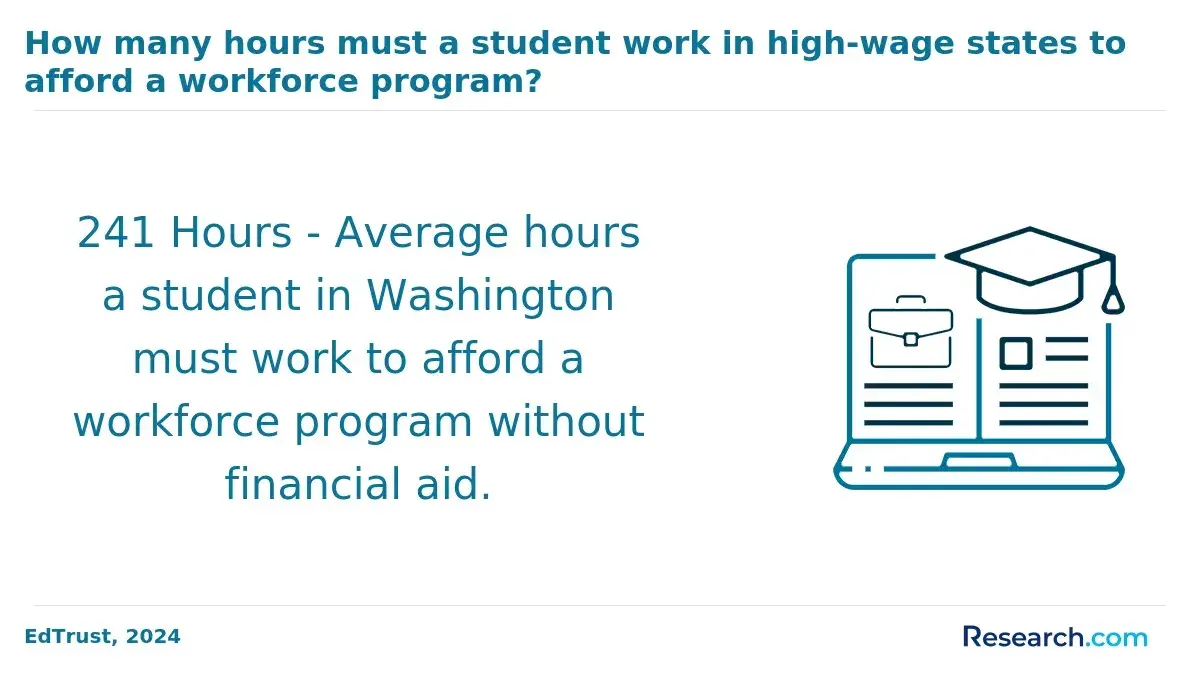
A common mistake is treating "accepts FAFSA" as a synonym for "affordable." FAFSA is only the application used to determine aid eligibility; your actual package depends on financial need, dependency status, enrollment level, prior aid use, satisfactory academic progress, and the school's own aid policies.
How Much Does an Online Environmental Engineering Degree Cost After Financial Aid?
The cost after financial aid is the net price: tuition and required expenses minus grants, scholarships, tuition waivers, employer assistance, and other gift aid. Federal loans can make a program payable up front, but they do not reduce the price because the money must be repaid with interest.
The table below shows how the same advertised tuition can lead to different out-of-pocket costs depending on degree level and aid profile. It is not a promise of aid; it is a practical framework for comparing offers after schools send financial aid packages.
| Cost factor | Why it matters | How to compare programs |
| Published tuition | This is the visible price, but it may exclude mandatory fees and materials | Compare cost per credit and total required credits, not just annual tuition |
| Required fees | Online programs may charge technology, engineering, lab, proctoring, or distance education fees | Ask for the full cost of attendance in writing |
| Grants and scholarships | Gift aid lowers the actual price and can make a higher-tuition school cheaper than a low-tuition school | Compare net price after gift aid, not sticker price |
| Transfer credits | Accepted credits can remove entire courses from the bill | Request a transfer evaluation before enrolling |
| Federal loans | Loans improve access but increase long-term cost | Compare total borrowing at graduation, not just semester affordability |
A good rule is to compare environmental engineering programs the way cost-conscious graduate students compare options in fields such as the cheapest online MBA: the best value is usually the program with the lowest realistic net cost that still meets accreditation, career, scheduling, and employer-recognition needs.
For undergraduates, the 2025-26 maximum Federal Pell Grant is $7,395 for eligible students, which can significantly reduce annual cost but rarely covers the entire price of an engineering degree. Graduate students generally do not receive Pell Grants, so their net cost often depends more on scholarships, employer assistance, assistantships, payment plans, and responsible use of federal Direct Unsubsidized or PLUS loans.
Which Affordable Online Environmental Engineering Degree Programs Offer the Best Value?
The best-value program is not automatically the one with the lowest tuition. In environmental engineering, value depends on whether the degree supports your target outcome: engineering licensure preparation, career advancement, environmental compliance work, water resources, remediation, sustainability, or public-sector engineering roles.
Use the comparison below to decide which type of affordable program best fits your situation. This is especially important because bachelor's and master's students are often solving different problems.
| Student goal | Best-value program type | When a cheaper program may not be enough |
| Become an entry-level environmental engineer | Online or hybrid ABET-accredited bachelor's in environmental engineering | If the program lacks required labs, design experiences, or recognized engineering accreditation for your licensure path |
| Advance from civil, chemical, or mechanical engineering into environmental work | Online master's in environmental engineering or environmental engineering sciences | If prerequisite gaps require extra undergraduate courses that raise the total cost |
| Move into compliance, sustainability, or environmental management | Engineering-related master's or specialized environmental graduate program | If the curriculum is too policy-focused and does not build quantitative engineering skills |
| Finish a bachelor's with many prior credits | Transfer-friendly public online bachelor's program | If the school accepts few engineering, math, lab science, or upper-division credits |
A more expensive program can be worth choosing if it accepts substantially more transfer credits, offers stronger engineering labs or design projects, has better support for working adults, or aligns more closely with licensure and employer expectations. A lower-cost program is less attractive if it extends your time to graduation, requires expensive residencies, or does not match the engineering role you want.
Are the Cheapest Online Environmental Engineering Degree Programs Properly Accredited?
Accreditation is the quality-control issue students should check before comparing price. Institutional accreditation confirms that the college or university meets broad academic and administrative standards, while programmatic accreditation evaluates a specific program. For engineering bachelor's degrees, ABET accreditation is often the key programmatic credential because it can affect licensure eligibility, graduate school recognition, and employer confidence.
Before choosing a cheap online environmental engineering degree, verify these items directly rather than relying only on marketing pages:
- Institutional accreditation from a recognized accreditor listed by the U.S. Department of Education or the Council for Higher Education Accreditation.
- Current ABET status for the exact bachelor's engineering program, including the environmental engineering major and any online or distance delivery notes.
- Whether the program includes required labs, design projects, fieldwork, or campus visits that affect cost and scheduling.
- Whether the degree title is engineering, engineering technology, environmental science, environmental studies, or environmental management, because these can lead to different career and licensure outcomes.
- Whether your state licensing board has specific education rules if you plan to become a Professional Engineer.
The biggest red flag is a program that uses engineering language but awards a non-engineering degree without clearly explaining career limitations. A low price does not compensate for a credential that fails to meet your licensure, employer, or graduate school requirements.
What FAFSA Grants and Federal Aid Can Pay for an Online Environmental Engineering Degree?
FAFSA can connect eligible students to federal grants, federal loans, work-study consideration, and sometimes state or institutional aid. The mix differs sharply by undergraduate versus graduate status, which is why two students in the same online program can receive very different aid packages.
The following aid types are the most relevant for online environmental engineering students. Understanding the difference between gift aid and borrowed aid is essential before deciding what is truly affordable:
- Federal Pell Grant: Need-based undergraduate grant aid that does not have to be repaid if enrollment and eligibility rules are met.
- Federal Supplemental Educational Opportunity Grant: Campus-based undergraduate grant for students with exceptional financial need, available only at participating schools with limited funds.
- Federal Direct Subsidized Loan: Undergraduate loan for eligible students with financial need; the government pays interest during certain enrolled and deferment periods.
- Federal Direct Unsubsidized Loan: Available to undergraduate and graduate students, but interest generally accrues while enrolled.
- Federal Direct PLUS Loan: Available to eligible graduate students or parents of dependent undergraduates, usually after other federal loan options are considered.
- Federal Work-Study: Part-time work funding that may be available through the school, though online students should ask whether remote or local placements are realistic.
Federal aid rules are not unique to engineering; students comparing other online professional paths, such as clinical mental health counseling programs, face the same basic distinction between grants that reduce price and loans that spread payment over time. For environmental engineering, the added issue is that equipment, software, labs, and residency requirements can make the cost of attendance higher than tuition alone suggests.
How Do Transfer Credits Lower the Cost of an Online Environmental Engineering Degree?
Transfer credits lower cost by reducing the number of credits you must pay for at the new school. This can matter more than tuition rate because a higher-cost program that accepts 60 credits may be cheaper overall than a lower-cost program that accepts only 30.
Engineering transfer is stricter than many other fields because math, science, lab, and design courses often must match specific outcomes. Before enrolling, ask for a formal review that separates general education credits from major-required engineering credits.
- Collect official transcripts from every college attended, including community college, military, dual-enrollment, and prior university work.
- Ask the admissions office for a preliminary transfer estimate before applying if available.
- Ask the engineering department which math, chemistry, physics, statistics, programming, and engineering science courses apply to the major.
- Confirm whether upper-division engineering credits must be completed at the degree-granting university.
- Request a revised degree plan showing remaining credits, estimated semesters, and total remaining cost.
Students with strong community college credits can see major savings, but they should be cautious with old science labs, non-calculus physics, or environmental technology courses that may not satisfy engineering requirements. The best transfer-friendly program is the one that shortens the path to graduation without weakening accreditation, prerequisites, or licensure preparation.
Which Students Benefit Most From a Low-Cost Online Environmental Engineering Degree With FAFSA?
Low-cost FAFSA-eligible online environmental engineering programs are best for students who need flexibility but still want a recognized engineering credential. They are especially useful for working adults, military-connected students, rural students, caregivers, and students who can transfer lower-cost credits from a community college.
These programs tend to benefit the following students most because they can combine online access with cost control:
- Undergraduates who want an engineering career but cannot relocate for a campus program.
- Students with completed calculus, chemistry, physics, or general education credits that can transfer into the degree.
- Working professionals in civil engineering, utilities, environmental compliance, construction, or public works who want graduate-level environmental engineering skills.
- Students who qualify for need-based grants, state aid, employer tuition assistance, veterans benefits, or institutional scholarships.
- Learners who can handle rigorous online math, science, engineering design, and software-based coursework without daily in-person structure.
Students should avoid choosing mainly by low price if they need extensive hands-on support, struggle with advanced math, require a highly structured campus environment, or plan to pursue a licensure path that the program does not clearly support. If your broader search includes fields with very different admissions barriers, such as the easiest MSW programs to get into, remember that engineering programs usually have more rigid prerequisite sequences and technical progression rules.
How Does the Cost of an Online Environmental Engineering Degree Affect Career ROI?
Career ROI depends on total net cost, time to completion, borrowing, and the kinds of roles the degree can realistically support. Environmental engineers may work on water and wastewater systems, air pollution control, remediation, hazardous waste, sustainability, environmental permitting, and infrastructure resilience.
The U.S. Bureau of Labor Statistics projects employment for environmental engineers to grow 7% from 2023 to 2033, which is faster than the average for all occupations. That trend supports continued demand, but it does not remove the need to control debt because salaries vary by industry, location, experience, licensure, and whether the role is engineering, compliance, consulting, or management.
To evaluate ROI, compare your expected total borrowing with the career path the degree supports. Students still comparing majors can use broader salary resources, including guides to the highest paid degrees, but environmental engineering should be judged by more than pay alone because many roles combine technical work with public health, infrastructure, and regulatory impact.
The cheapest program is usually a strong ROI candidate when it is accredited, transfer-friendly, aligned with your target role, and does not require excessive borrowing. A more expensive program may offer better ROI if it helps you graduate sooner, qualify for licensure, access stronger employer networks, or move into a higher-responsibility engineering role.
How Should Students Choose the Cheapest FAFSA-Eligible Online Environmental Engineering Degree?
Students should choose the cheapest FAFSA-eligible online environmental engineering degree by comparing net price, accreditation, transfer acceptance, curriculum fit, delivery format, and likely career value together. A program that looks cheap on a tuition page can become expensive if it adds fees, rejects credits, requires travel, or does not meet your professional goal.
Use this decision process before committing to a school. It turns affordability from a guess into a documented comparison:
- Identify your target outcome: entry-level engineering licensure pathway, graduate specialization, compliance role, public works advancement, or sustainability-focused technical work.
- Verify institutional accreditation and, for bachelor's engineering programs, current ABET programmatic accreditation.
- Confirm the exact online degree is eligible for federal aid and ask for the school's federal code.
- Request the full cost of attendance, including tuition, fees, software, books, travel, labs, and required campus sessions.
- Complete the FAFSA and compare official aid offers from multiple schools.
- Separate gift aid from loans so you know what reduces cost and what increases future repayment.
- Get a written transfer evaluation before enrolling if you have prior college credit.
- Ask about online student support, tutoring, engineering advising, career services, internship access, and licensure guidance.
- Estimate total debt at graduation and compare it with realistic career paths rather than best-case salary assumptions.
It can also help to compare engineering with other regulated online graduate paths, such as an MFT degree, because both fields show why accreditation, supervised or practical requirements, and state rules can matter as much as tuition. For environmental engineering, the safest choice is the lowest net-cost program that still gives you the technical curriculum, recognized credential, and completion support you need.
Other Things You Should Know About Environmental Engineering
Some programs are fully online, especially at the master's level, but bachelor's programs may require labs, design projects, proctored exams, field experiences, or short campus visits. Always ask whether any in-person requirements are mandatory and how much they cost.
Bachelor's programs usually require strong preparation in algebra, precalculus or calculus readiness, chemistry, and physics. Master's programs often expect an engineering or closely related STEM bachelor's degree, prerequisite coursework, transcripts, recommendations, and sometimes professional experience.
No. Environmental engineering focuses on engineered systems such as water treatment, pollution control, remediation, and infrastructure. Environmental science is usually broader and more focused on natural systems, field science, policy, or conservation, depending on the program.
Often, yes. Programs may require engineering software, statistical tools, CAD or modeling platforms, a capable computer, webcam-based proctoring, lab kits, or access to local testing sites. These costs should be included in your affordability comparison before enrolling.
References
- Graduate Engineering Schools That Award Financial Aid to International Students | WorldTrips Travel Insurance https://www.worldtrips.com/resources/graduate-engineering-financial-aid-to-international-students
- 2025 Most Affordable Online Environmental Science Degrees https://www.onlineu.com/most-affordable-colleges/environmental-science-degrees
- How to Become an Environmental Engineer - Steps & Time Required https://www.onlineengineeringprograms.com/faq/how-to-become-an-environmental-engineer
- The 4 Best Online Colleges that Accept FAFSA https://joinjuno.com/financial-literacy/financial-aid/online-colleges-accept-fafsa
- College Mentor https://www.collegementor.com/blogs/environmental-science-vs-environmental-engineering-course-comparison-salary-and-future-scope