
2027 Best Medical Assistant Classes Online with Financial Aid

Co-Founder and Chief Data Scientist
Choosing an online medical assistant program is not only about finding flexible classes. You also need to know whether the program is accredited, whether it prepares you for certification, whether it includes hands-on clinical practice, and whether you can use financial aid to reduce your out-of-pocket cost. For students balancing work, family, or limited transportation, an online or hybrid medical assisting program can be a practical entry point into healthcare—but only if it meets employer and certification expectations.
This guide explains what to expect from online medical assistant classes with financial aid, how online training compares with campus-based programs, what programs cost, which aid options may be available, and how to evaluate whether a program is worth your time and money. It also includes a curated list of online and hybrid medical assistant programs for 2027 and practical questions to ask before enrolling.
Quick answer: Are online medical assistant classes with financial aid worth considering?
Yes, online medical assistant classes can be worth considering if the program is properly accredited, includes supervised clinical training or an externship, prepares students for a recognized certification exam, and offers access to federal, state, institutional, workforce, or scholarship-based financial aid. The strongest programs combine flexible online coursework with in-person lab practice or local clinical placement because medical assisting requires both administrative knowledge and hands-on patient care skills.
Students should be cautious with very short or low-cost programs that do not clearly state their accreditation, externship requirements, certification preparation, or financial aid eligibility. A lower tuition price does not always mean better value if the program does not qualify you for certification or meet employer expectations.
Why students choose online medical assistant training
- It can lead to multiple healthcare settings. Medical assistants work in physicians’ offices, hospitals, clinics, outpatient care centers, telemedicine organizations, and administrative healthcare roles. Some graduates move into positions such as clinical assistant, virtual medical assistant, medical office assistant, care coordinator, or health records support.
- The occupation has strong projected demand. The U.S. Bureau of Labor Statistics projects 15% employment growth for medical assistants from 2023 to 2033, much faster than the average for all occupations.
- Training can be completed relatively quickly. Many certificate programs take months rather than years, while associate degree options provide broader academic preparation and may support future advancement.
- Online delivery can make training more accessible. Students can often complete lectures, readings, quizzes, and administrative coursework online while arranging required labs or externships through the school or a local healthcare site.
- The career can serve as a healthcare stepping stone. Medical assisting can help students test their interest in healthcare before pursuing nursing, healthcare administration, medical billing and coding, phlebotomy, sonography, or other clinical paths.
What can I expect from an online medical assistant class?
An online medical assistant class typically teaches the administrative, clinical, legal, and communication skills needed to support patient care in ambulatory healthcare settings. Students usually study medical terminology, anatomy and physiology, clinical procedures, medical office administration, electronic health records, billing basics, infection control, and Health Insurance Portability and Accountability Act (HIPAA) compliance.
Although coursework may be online, medical assisting is not a fully virtual skill set. Strong programs include practical training through virtual simulations, in-person lab sessions, skills checkoffs, or a supervised clinical externship. Many programs require a clinical externship of 160-204 hours at a local healthcare facility, giving students the chance to practice patient intake, vital signs, specimen handling, charting, and office procedures under supervision.
Program formats vary. Some are self-paced, while others follow weekly deadlines, live class meetings, or cohort schedules. Many programs use online learning platforms with video lectures, readings, quizzes, practice activities, simulations, discussion boards, and instructor or mentor support. Tuition commonly ranges from $1,500 to $5,000, although the final cost depends on the school, credential level, program length, fees, books, supplies, certification exam costs, and whether the student qualifies for aid.
| Program feature | What students should look for | Why it matters |
| Accreditation | Institutional accreditation and, when applicable, programmatic accreditation such as CAAHEP or ABHES | Accreditation may affect certification eligibility, employer recognition, credit transfer, and financial aid access. |
| Certification preparation | Preparation for exams such as CMA, RMA, CCMA, or NCMA | Many employers prefer or require certified medical assistants. |
| Hands-on training | Externship, lab sessions, clinical simulations, or local practicum placement | Students need supervised practice for clinical tasks such as vital signs, injections, EKGs, and specimen collection. |
| Financial aid eligibility | FAFSA eligibility, grants, scholarships, payment plans, WIOA funding, or employer reimbursement | Aid can reduce upfront cost, but not all online programs qualify for federal aid. |
| Student outcomes | Certification pass rates, completion rates, externship placement support, and job placement services | Outcomes help students judge whether the program produces employable graduates. |
Where can I work with an online medical assistant degree?
Graduates of online or hybrid medical assistant programs can work in settings that need both patient-facing and administrative support. Common employers include physicians’ offices, outpatient clinics, hospitals, specialty practices, urgent care centers, community health centers, corporate clinics, government health agencies, nonprofit healthcare organizations, and telemedicine providers.
Training in phlebotomy, electrocardiograms (EKGs), medical records, patient scheduling, insurance workflows, and HIPAA compliance can also support roles outside the traditional exam room. Depending on the program and employer requirements, graduates may pursue roles such as medical assistant, clinical assistant, medical office assistant, medical records specialist, health IT support assistant, patient care coordinator, or medical office manager after gaining experience.
The field also offers mobility. With projected employment reaching 901,900 by 2033, graduates who build skills in electronic health records, patient communication, clinical documentation, and care coordination may be able to move into education, medical sales, healthcare administration, billing, consulting, or other allied health roles over time.
How much can I make with an online medical assistant degree?
Medical assistant pay depends on location, employer type, certification, experience, and whether the role is primarily clinical, administrative, or specialized. In 2025, the average U.S. medical assistant earns around $41,370 annually or $20 per hour. Outpatient care centers report higher average pay at about $46,090 per year, followed by hospitals at $44,350.
Geography can also make a meaningful difference. Reported averages include San Francisco, California ($48,741) and Washington ($46,855). Entry-level workers generally start below experienced medical assistants, while certified professionals or those with additional skills in phlebotomy, EKG, billing, coding, or health records may have stronger advancement options. Salaries are not guaranteed, so students should compare local job postings before enrolling.
- Best Online Medical Assistant Programs for 2027
- Program Length: How Long Online Medical Assistant Training Takes
- Online vs. On-Campus Medical Assistant Programs
- Average Cost of an Online Medical Assistant Program
- Financial Aid Options for Online Medical Assistant Students
- Prerequisites for Online Medical Assistant Programs
- Common Courses in Online Medical Assistant Programs
- How More Education Can Support Healthcare Career Growth
- Challenges Students Face in Online Medical Assistant Programs
- How Online Medical Assistant Training Can Help Biology Majors
- How to Evaluate Program Quality and Outcomes
- Medical Assistant Specializations and Skill Tracks
- How to Choose the Best Online Medical Assistant Program
- Career Paths After an Online Medical Assistant Program
- Additional Certifications That Can Improve Career Options
- Job Market for Online Medical Assistant Graduates
List of the Best Online Medical Assistant Programs for 2027
How do we rank schools?
Cost, completion time, accreditation, student support, and career preparation all matter when comparing medical assistant programs. To help students identify credible options, Research.com evaluates programs using reliable institutional and government data sources, including:
- The Integrated Postsecondary Education Data System (IPEDS) database
- Peterson’s database, including its Distance Learning Licensed Data Set
- College Scorecard database
- National Center for Education Statistics
Our review also considers factors such as graduation rate, student-faculty ratio, program focus, and overall student value. More details about the ranking process are available on Research.com’s methodology page.
1. Herzing University
Herzing University offers a 20-month online medical assistant degree program that combines flexible online coursework with required clinical lab experiences and an externship. Students prepare for the Registered Medical Assistant (RMA) certification exam, and the university covers the first attempt.
- Required Credits to Graduate: 60
- Cost: $515
- Accreditation: Higher Learning Commission (HLC)
2. Southwestern Community College
Southwestern Community College in Sylva, North Carolina, offers a hybrid Associate in Applied Science in Medical Assisting. The two-year, five-semester program allows students to complete about half of the coursework online while attending required campus-based instruction.
- Required Credits to Graduate: 70
- Cost: $79 for NC residents, $271 for out-of-state residents
- Accreditation: Southern Association of Colleges and Schools Commission on Colleges (SACSCOC)
3. Bay Area Medical Academy
Bay Area Medical Academy (BAMA), with locations in San Francisco and San Jose, California, offers a 9-month hybrid 3-in-1 medical assistant program. The program prepares students for the National Certified Medical Assistant (NCMA), Certified EKG Technician (CET), and California Certified Phlebotomy Technician (CPT-I) / National Certified Phlebotomy Technician (NCPT) credentials. BAMA also offers medical assisting scholarships and may provide a Free Medical Assistant Training Program for eligible students.
- Required Credits to Graduate: 900 hours
- Cost: $16,726
- Accreditation: Middle States Association
4. Davenport University
Davenport University, located in Grand Rapids, Michigan, offers a one-year online medical assisting certificate that can also serve as a pathway into associate or bachelor’s programs in related healthcare fields. The curriculum covers patient care, healthcare law, and certification preparation, and many students receive financial aid.
- Required Credits to Graduate: 33
- Cost: $974 per credit (residents), $658 per credit (nonresidents)
- Accreditation: HLC
5. Barton County Community College
Barton Community College in Great Bend, Kansas, provides a three-term online medical assistant certificate. Students complete general education, administrative, and clinical coursework and finish with an internship in an ambulatory healthcare setting. The program includes training in areas such as phlebotomy and CPR and prepares students for the Certified Clinical Medical Assistant exam.
- Required Credits to Graduate: 44
- Cost per Credit: $160
- Accreditation: HLC
6. Dakota College at Bottineau
Dakota College at Bottineau in North Dakota offers a one-year online medical assisting certificate. Graduates are prepared to pursue national certification through the National Center for Competency Testing or the National Healthcareer Association. Coursework includes lab procedures and ECG interpretation, and the program meets North Dakota licensure requirements.
- Required Credits to Graduate: 38
- Cost per Semester: $5,551 - $6,457
- Accreditation: HLC
7. Mercy College of Health Sciences
Mercy College of Health Sciences in Des Moines, Iowa, offers a one-year online medical assisting certificate with flexible online or cohort-based options plus two required hands-on lab experiences. The program reports strong graduate outcomes, including high exam pass and job placement rates.
- Required Credits to Graduate: 25
- Cost per Credit: $437
- Accreditation: CAAHEP
8. Keiser University
Keiser University offers an online Associate of Science in Medical Assisting with a 60-credit curriculum focused on clinical and administrative competence. Students learn to collect patient histories, take vital signs, assist physicians, administer injections, perform lab tests and venipuncture, and use ECG equipment.
- Required Credits to Graduate: 60
- Cost: Not specified
- Accreditation: SACSCOC
9. University of Providence
The University of Providence offers a Medical Assistant Certificate Program that combines online coursework with required in-person skills labs on selected weekends at designated sites in California, Montana, and Oregon. Students should confirm travel expectations before enrolling. The program prepares students for several national certification exams.
- Required Credits to Graduate: 16
- Cost: $9,571
- Accreditation: Northwest Commission on Colleges and Universities (NWCCU)
10. Northwood Technical College
Northwood Technical College offers a Medical Assistant Program that prepares students to support medical office operations, provide patient care within legal and professional limits, perform basic lab procedures, follow safety standards, and respond appropriately in emergencies.
- Required Credits to Graduate: 32
- Cost: $5,662
- Accreditation: Commission on Accreditation of Allied Health Education Programs (CAAHEP)
The chart below summarizes common medical assistant degree and credential options.
How long does it take to complete an online medical assistant program?
Most online medical assistant programs are designed for relatively fast career entry, but completion time depends on the credential, school calendar, externship requirements, and whether the student enrolls full time or part time.
Typical timelines
- Accelerated programs: Some intensive programs advertise completion in as little as six weeks, though these options are uncommon and may require a demanding schedule.
- Standard certificate programs: Many reputable online certificate programs take four to nine months.
- Self-paced programs: Some programs let students move through online coursework at their own speed and finish within four to six months if they can study consistently.
- Associate degree programs: Degree programs usually take longer because they include general education courses in addition to medical assisting content.
- Externship timing: Even if online coursework is completed quickly, externship placement, background checks, immunizations, and site availability can extend the timeline.
| Credential type | Best for | Typical consideration |
| Certificate or diploma | Students who want faster entry into medical assisting | Usually shorter and more career-focused, but may offer fewer transferable credits. |
| Associate degree | Students who want broader preparation or may continue into another healthcare degree | Takes longer but may provide general education credits and a stronger academic foundation. |
| Hybrid program | Students who can travel for labs or campus requirements | Often better for clinical skills practice, but less flexible than fully online coursework. |
| Self-paced online program | Organized students with unpredictable schedules | Requires discipline and careful planning for externship deadlines. |
How does an online medical assistant program compare to an on-campus program?
Online and on-campus medical assistant programs can both prepare students for healthcare support roles, but they differ in structure, interaction, clinical training access, and scheduling. The better choice depends on your learning style, location, work schedule, and need for hands-on support.
| Factor | Online or hybrid program | On-campus program |
| Flexibility | Often allows students to complete lectures and assignments around work or family responsibilities. | Usually follows fixed class and lab schedules. |
| Hands-on practice | May require local externships, weekend labs, or in-person skills sessions. | Provides direct access to labs, equipment, instructors, and scheduled clinical practice. |
| Student support | Support may be delivered through video meetings, email, chat, advising portals, or discussion boards. | Students can often get immediate help from instructors and classmates on campus. |
| Learning style | Best for self-directed students who can manage deadlines independently. | Better for students who prefer structured schedules and face-to-face instruction. |
| Externship logistics | Students should confirm whether the school finds placements or expects students to locate sites. | Schools may have established relationships with nearby healthcare facilities. |
When an online program makes sense
An online or hybrid program may be a good fit if you need scheduling flexibility, live far from campus, have reliable internet access, and can attend required labs or externship hours. It is also useful for students who are comfortable learning administrative concepts and foundational healthcare theory online.
When campus-based training may be better
A campus program may be better if you learn best by watching demonstrations in person, want immediate instructor feedback, need more structure, or are concerned about arranging clinical practice on your own. Students new to healthcare should pay close attention to how an online program teaches and verifies hands-on skills.
What is the average cost of an online medical assistant program?
Online medical assistant programs commonly cost about $1,500 to $5,000, but prices vary widely. Certificate and diploma programs are usually less expensive than associate degree programs. Public community colleges may cost less for in-state students, while private colleges, universities, and career schools may charge higher tuition or fees.
Students should look beyond tuition. The total price may include textbooks, uniforms, supplies, technology fees, background checks, drug screening, immunizations, CPR certification, transportation to clinical sites, and certification exam fees. A program that appears inexpensive may become less affordable if it does not include required materials or if students must pay separately for exams and clinical requirements.
Online education can also reduce some costs compared with traditional enrollment. On average, pursuing an online degree from a public four-year college can save students $30,545 compared with an out-of-state traditional program. At private colleges, an online degree averages $62,756 compared with $198,616 for an in-person degree. These figures show why online learning can be financially attractive, though students should still compare program-specific costs and outcomes.
What are the financial aid options for students enrolling in an online medical assistant program?
Financial aid depends heavily on the school, credential type, accreditation status, program length, and student eligibility. Before enrolling, students should ask the financial aid office which forms of aid apply to the specific medical assistant program—not just to the institution overall.
Federal financial aid
- Eligibility: Federal aid generally requires enrollment in an eligible program at a school accredited by a recognized accrediting body, such as CAAHEP, Accrediting Bureau of Health Education Schools (ABHES), or a regional accreditor.
- Types of aid: Eligible students may qualify for grants such as Pell Grants and Federal Supplemental Educational Opportunity Grants (FSEOG), federal student loans, and in some cases work-study opportunities.
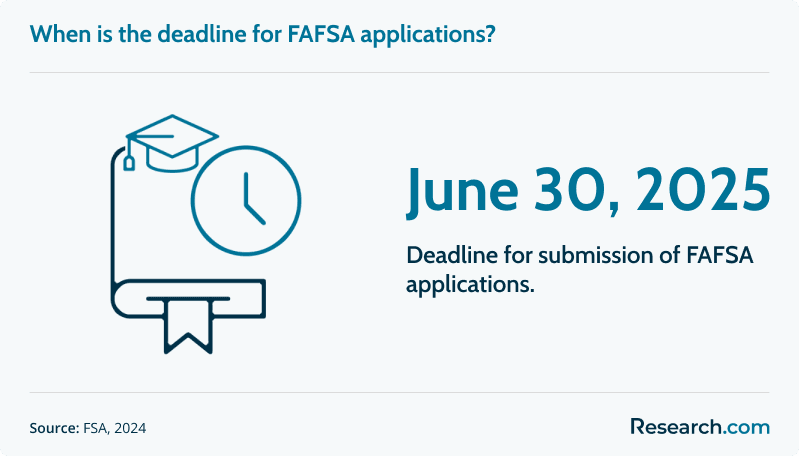
- Application: Students should complete the Free Application for Federal Student Aid (FAFSA) to determine eligibility and award amounts.
Institutional aid
- School scholarships and grants: Colleges and training providers may offer awards based on financial need, academic achievement, program of study, or student background.
- Payment plans: Some schools allow students to divide tuition into monthly or term-based payments instead of paying all at once.
- Program-specific assistance: Certain institutions offer medical assisting scholarships or tuition discounts for eligible students.
Private scholarships and grants
- External scholarships: Professional associations, community foundations, healthcare organizations, and local nonprofits may offer scholarships for allied health students.
- Professional association resources: Organizations such as the American Association of Medical Assistants may list scholarship or grant opportunities for students pursuing medical assisting.
State-based aid
Some states fund healthcare workforce grants, scholarships, or loan repayment programs. These awards may require state residency, enrollment at an approved institution, or a commitment to work in a shortage area after graduation.
Workforce and employer-based aid
Students may also qualify for job training support through the Workforce Innovation and Opportunity Act (WIOA), local workforce boards, or community-based training organizations. Current healthcare employees should also ask whether their employer offers tuition reimbursement, apprenticeship support, or direct training assistance.
| Aid option | Best for | Question to ask before enrolling |
| Federal grants and loans | Students attending eligible accredited schools | Is this exact medical assistant program FAFSA-eligible? |
| Institutional scholarships | Students applying through colleges or career schools | Are awards automatic, competitive, or need-based? |
| Payment plans | Students who can pay over time | Are there fees, interest, or missed-payment penalties? |
| WIOA funding | Eligible job seekers or workers seeking retraining | Is this program approved by my local workforce board? |
| Employer reimbursement | Current healthcare or administrative workers | Must I stay employed for a certain period after receiving aid? |
What are the prerequisites for enrolling in an online medical assistant program?
Most online medical assistant programs require applicants to have a high school diploma or General Educational Development (GED) credential. Schools may also require applicants to meet a minimum age, often 16 or 18, and demonstrate English reading, writing, and speaking proficiency. The application process typically includes an application form, proof of high school completion or GED, and official transcripts.
Additional requirements vary by school and clinical site. Students may need to complete or provide:
- Proof of personal health insurance
- Drug screening
- Physical examination
- Criminal background check
- CPR certification, often before clinical or practicum placement
- Immunization records or other health documentation
- Program orientation
Students with criminal records, limited transportation, or health documentation concerns should speak with admissions before enrolling because clinical sites may have requirements that affect placement eligibility.
What courses are typically in an online medical assistant program?
Online medical assistant programs usually combine clinical instruction with medical office training. The goal is to prepare graduates to support providers, communicate with patients, manage records, understand safety rules, and perform basic procedures within the medical assistant scope of practice.
- Anatomy and Physiology: Students learn how body systems, organs, tissues, and cells function. This foundation helps medical assistants understand symptoms, procedures, and provider instructions.
- Medical Terminology: This course teaches medical prefixes, suffixes, root words, abbreviations, and documentation language used in healthcare settings.
- Pathology and Pharmacology: Students study common diseases and basic medication concepts, including classifications, dosage awareness, side effects, and routes of administration under appropriate supervision.
- Microbiology and Infection Control: Coursework covers microorganisms, infection prevention, standard precautions, sterilization, and proper handling of biohazardous materials.
- Clinical Procedures: Students practice skills such as taking vital signs, assisting with exams, preparing rooms, applying bandages, collecting specimens, and supporting routine procedures.
- First Aid and CPR: Programs often include basic emergency response training to prepare students for urgent situations in clinical environments.
- Medical Office Procedures and Administration: Students learn scheduling, patient reception, records management, inventory control, and office workflow. Students interested in long-term leadership can compare pathways such as healthcare management versus healthcare administration degrees.
- Medical Law and Ethics: This course covers confidentiality, HIPAA, informed consent, patient rights, professional boundaries, and legal responsibilities.
- Medical Billing and Coding: Students learn basic insurance, reimbursement, and coding processes. Learners who want a short introduction to this field may review a 4 week online course for medical coding and billing cost.
The chart below highlights in-demand skills that aspiring medical assistants should develop.
How Can Advancing My Education Enhance Career Growth in Healthcare?
Additional education can help medical assistants move beyond entry-level clinical and administrative duties. After gaining experience, some professionals pursue associate, bachelor’s, or master’s programs in healthcare administration, nursing, public health, health information management, or other allied health fields. These pathways can support advancement into supervision, office management, care coordination, compliance, or operations roles.
Some professionals also combine healthcare experience with business or specialized management education. For example, an online masters sports management degree may fit students interested in sports medicine organizations, wellness programs, athletic administration, or health-related business settings. The key is to choose further education that aligns with a realistic career goal, not simply to collect credentials.
What challenges do students face in online medical assistant programs?
Online medical assistant students often value flexibility, but that flexibility comes with responsibility. Common challenges include managing deadlines without daily in-person reminders, learning clinical concepts through a screen, staying engaged in virtual discussions, and arranging externship hours around work or family obligations.
Hands-on training can be the biggest issue. Students should ask whether the school places them in an externship site or whether they must find their own. They should also confirm whether there are local clinical partners, travel requirements, background check rules, and minimum schedule expectations. Students who want to compare future healthcare options can also explore broader career guides such as what is the highest paid medical profession.
How Do Online Medical Assistant Programs Enhance Opportunities for Biology Majors?
Biology majors often have a strong science foundation but may lack direct patient care experience. An online medical assistant program can add practical healthcare skills such as patient intake, clinical documentation, EKG support, phlebotomy exposure, infection control, and medical office workflow. This combination can make biology graduates more competitive for clinical support roles, research-facing healthcare jobs, and patient-care environments.
For students comparing applied healthcare options after a biology degree, medical assisting can provide faster entry into the field while they evaluate longer-term pathways. It may also complement searches for highest paying entry-level jobs for biology majors, especially for graduates who want hands-on healthcare experience before committing to graduate or professional school.
How can I assess the effectiveness of an online medical assistant program?
A good program should be transparent about outcomes and student support. Before applying, ask for completion rates, certification exam pass rates, job placement support, externship placement policies, employer partnerships, graduate feedback, and career services availability. Do not rely only on advertising language or rankings.
Students should also verify whether the curriculum reflects current healthcare technology, including electronic health records, telehealth workflows, digital scheduling, insurance documentation, and patient privacy requirements. Those considering advanced study in health and wellness fields can also compare options such as the fastest masters nutrition degree online.
What types of specializations are available in an online medical assistant program?
Most medical assistant programs provide generalist training, but some include specialty tracks, embedded credentials, or focused electives. Specializations can help students target specific employers or prepare for additional certifications.
- Phlebotomy: Some programs provide deeper blood draw training or prepare students for phlebotomy technician certification. Students comparing these roles can review who makes more medical assistant or phlebotomist.
- OB/GYN Medical Assistant: This focus prepares students to support women’s health visits, prenatal care, gynecological procedures, and patient education. Students interested in imaging-related careers may later explore sonography programs online.
- Geriatric Medical Assistant: A geriatrics emphasis helps students understand age-related health concerns, mobility issues, chronic disease support, and communication with older adults and caregivers.
- Pediatric Medical Assistant: Pediatric training focuses on children’s health, growth and development, family communication, immunization workflows, and child-friendly clinical support. It can also expose students to the broader path of how to become a pediatrician.
- Electrocardiography (EKG/ECG) Technician: Some programs include more extensive EKG training and may prepare students for an EKG Technician certification exam.
Focused skills can support medical assistant career growth, but students should verify that any advertised specialization is recognized by employers in their area.
How to Choose the Best Online Medical Assistant Program
The best online medical assistant program is the one that fits your schedule, budget, certification goals, and local job market while meeting quality standards. Use the following criteria before committing.
1. Verify accreditation and certification eligibility
Confirm whether the school is institutionally accredited and whether the program has programmatic accreditation from a recognized allied health accreditor such as CAAHEP or ABHES when relevant. Ask which certification exams graduates are eligible to take, such as CMA, RMA, CCMA, or NCMA, and whether exam preparation or exam fees are included.
2. Review the curriculum carefully
A strong program should cover both clinical and administrative responsibilities. Look for patient care, phlebotomy, EKG, injections, vital signs, medical law and ethics, electronic health records, scheduling, billing basics, and medical coding fundamentals. Programs that focus only on office tasks may not prepare students for clinical roles.
3. Understand hands-on requirements
Ask how skills are taught, practiced, and evaluated. Find out whether labs are online, on campus, scheduled on weekends, or completed through a local partner. For externships, confirm whether the school arranges placement or whether students are responsible for finding sites.
4. Compare true cost, not just tuition
Request a full cost estimate that includes tuition, fees, books, supplies, uniforms, background checks, drug screening, immunizations, certification exams, and travel. Then compare the net cost after grants, scholarships, WIOA funds, employer reimbursement, and payment plans.
5. Check student support and outcomes
Ask about instructor access, tutoring, technical support, academic advising, certification exam preparation, resume help, interview coaching, and employer connections. A program with strong support may be a better value than a cheaper program with limited guidance.
| Question to ask | Why it matters |
| Is the medical assistant program eligible for FAFSA or other aid? | Not every online or short-term program qualifies for federal financial aid. |
| Which certification exam does the program prepare students for? | Certification expectations vary by employer and state. |
| Who arranges the externship? | Externship placement can delay graduation if the process is unclear. |
| Are there required campus visits or weekend labs? | Hybrid requirements may affect travel, childcare, and work schedules. |
| What are the completion and job placement outcomes? | Outcomes help students assess whether the program delivers career value. |
Common mistakes to avoid
- Choosing based only on price. Low tuition is not useful if the program lacks accreditation, externship support, or certification preparation.
- Assuming online means fully online. Many programs require in-person labs, clinical hours, skills checkoffs, or externships.
- Ignoring accreditation. Accreditation can affect financial aid, certification eligibility, employer recognition, and future credit transfer.
- Not checking local employer preferences. Before enrolling, review job postings near you to see which certifications and skills employers request.
- Overlooking total cost. Supplies, exam fees, background checks, and travel can change the real price of attendance.
- Assuming salary outcomes are guaranteed. Pay varies by employer, location, experience, certification, and job duties.
What career paths are available for graduates of an online medical assistant program?
Online medical assistant graduates can pursue entry-level clinical and administrative positions, then specialize or advance with experience, additional credentials, or further education. Students can also compare different medical assistant fields before choosing a program or specialization.
Entry-level career options
- Medical Assistant: Graduates commonly work in physicians’ offices, hospitals, outpatient clinics, community health centers, schools, nursing care facilities, or laboratories. Duties may include taking vital signs, preparing patients, assisting with exams, scheduling appointments, updating records, and supporting billing workflows.
- Front Desk Receptionist or Medical Office Assistant: These roles focus on patient check-in, scheduling, insurance verification, records, phones, and office coordination.
- Clinical Assistant: Clinical assistants may focus on exam room preparation, procedure support, charting, patient intake, and provider assistance.
Specialized and alternative roles
- Phlebotomist: With additional certification, medical assistants may specialize in blood collection and specimen handling.
- Medical Claims Examiner or Medical Records Specialist: These roles emphasize insurance claims, documentation, records management, and compliance.
- Health Information Technician: Medical assistants with strong administrative and technology skills may transition toward electronic health records and health data support.
Advancement opportunities
- Office Manager, Billing Manager, or Practice Manager: Experienced medical assistants may supervise staff, manage schedules, coordinate billing, and oversee front-office operations.
- Healthcare Manager or Administrator: Additional education can lead to broader leadership roles in clinics, hospitals, or healthcare organizations.
- Registered Nurse (RN) or Licensed Practical Nurse (LPN): Some medical assistants continue into nursing. Students comparing nursing paths can review the difference between LPN and RN.
- Physician Assistant (PA): With significant further education and prerequisite coursework, some medical assistants eventually pursue physician assistant training.
- Medical Assistant Instructor: Experienced professionals may teach in medical assisting programs or support clinical training for new students.
What additional certifications can further enhance career prospects?
Additional certifications can help medical assistants stand out, especially in competitive markets or specialty practices. Common options include phlebotomy, EKG, medical billing and coding, electronic health records, CPR, and other administrative or clinical credentials. The best choice depends on the jobs available in your region and the tasks employers expect medical assistants to perform.
Students interested in revenue cycle work, insurance processing, and documentation may consider medical coding accredited online programs. Coding and billing skills can support transitions into medical records, claims, compliance, and administrative healthcare roles.
What is the job market for graduates with an online medical assistant degree?
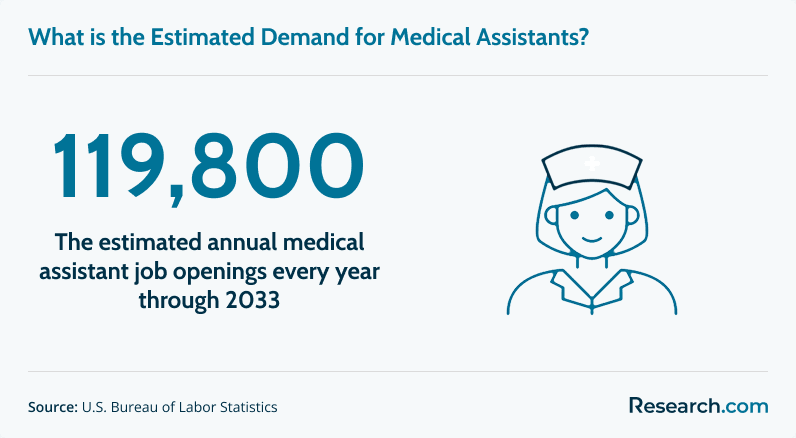
The medical assistant job market is strong. Employment of medical assistants is projected to grow 15% from 2023 to 2033, much faster than the average for all occupations. This growth is expected to create approximately 119,800 job openings each year, on average, over the decade.
Demand is connected in part to the healthcare needs of the aging baby-boom population. As older adults use more healthcare services, physicians’ offices and other primary care settings need medical assistants to perform routine clinical and administrative work. However, job availability and pay still vary by region, employer, certification, and experience.
Students comparing adjacent healthcare roles can review med tech vs medical assistant salary to understand how medical assisting differs from laboratory-focused careers.
The chart below shows the largest employers of medical assistants in 2023.
References
- Hanson, M. (2024, August 31). Cost of Online Education vs. Traditional Education. https://educationdata.org/cost-of-online-education-vs-traditional-education
- U.S. Bureau of Labor Statistics. (2024, August 29). Medical Assistants. Occupational Outlook Handbook. https://www.bls.gov/ooh/healthcare/medical-assistants.htm
- Zippia. (2025, January 8). What Is A Medical Assistant, And How To Become One. https://www.zippia.com/medical-assistant-jobs
- ZipRecruiter. (2025). Medical Assistant Salary. https://www.ziprecruiter.com/Salaries/Medical-Assistant-Salary#Yearly
- ZipRecruiter. (2025). What Is the Average Medical Assistant Salary by State https://www.ziprecruiter.com/Salaries/What-Is-the-Average-Medical-Assistant-Salary-by-State
Key Insights
- Online medical assistant programs can be a practical path into healthcare, but the strongest options are usually online-plus-clinical rather than fully online.
- Accreditation, certification preparation, and externship support should carry more weight than speed or advertised tuition.
- Many programs cost about $1,500 to $5,000, but students should compare the full cost after books, fees, supplies, background checks, certification exams, and transportation.
- Financial aid may include FAFSA-based aid, school scholarships, payment plans, WIOA funding, state programs, private scholarships, or employer reimbursement, but eligibility varies by program.
- Medical assistants earn around $41,370 annually or $20 per hour on average in 2025, with higher averages reported in some industries and locations.
- The occupation has a favorable outlook, with 15% projected growth from 2023 to 2033 and approximately 119,800 openings each year on average.
- Before enrolling, ask whether the school places students in externships, which certification exam the program supports, whether aid applies to the exact program, and what outcomes graduates achieve.
Other Things You Should Know About Medical Assistant Classes Online With Financial Aid
Many online medical assistant programs require 160 to 200 externship hours in an approved clinic or physician’s office. The site usually helps arrange the placement, and students must complete background checks, immunization records, and CPR certification before starting.
To apply for financial aid in online medical assistant programs in 2027, first complete the Free Application for Federal Student Aid (FAFSA). Check with prospective programs for additional scholarships and grants, and inquire about any specific application processes or criteria they may have.


