
2027 What Is Included in a Typical Medical Assisting Course?

Co-Founder and Chief Data Scientist
Choosing a medical assisting course is usually a practical career decision: you want healthcare training that can lead to work quickly, without committing immediately to a long degree. The right program can prepare you for both front-office responsibilities and basic clinical support, but the wrong one can leave you underprepared for certification exams, externships, or employer expectations.
This guide explains what medical assisting courses include, how online and campus options compare, what programs may cost, which certifications matter, and how to judge whether the investment fits your goals. It is designed for career changers, recent high school graduates, working adults, and healthcare support workers who want a clear path into medical assisting or a foundation for future healthcare roles.
Quick Answer: What are the benefits of taking a medical assisting course?
A medical assisting course can be worthwhile if you want a relatively short healthcare training path that combines patient-facing work with administrative skills. Graduates may pursue roles in physician offices, hospitals, outpatient care centers, and other healthcare practices. The Bureau of Labor Statistics reported a median annual wage of $42,000 for medical assistants as of May 2023, although pay varies by employer, location, experience, and certification.
- Medical assisting training can prepare students for both clinical tasks and office-based healthcare duties.
- Certificate programs may take only a few months, while associate degree options can take up to two years.
- Online programs can offer scheduling flexibility, but students should confirm whether hands-on labs, externships, and certification preparation are included.
- Accreditation, externship quality, certification eligibility, and job placement support are more important than program length alone.
| Decision factor | What it means for students | Why it matters |
| Program format | Online, hybrid, or campus-based instruction | Affects flexibility, hands-on practice, commuting, and scheduling |
| Credential type | Certificate, diploma, or associate degree | Influences time to completion, cost, and depth of training |
| Externship | Supervised experience in a healthcare setting | Helps students apply skills and may support job readiness |
| Certification preparation | Preparation for CMA, CCMA, RMA, CMAA, or related exams | Can improve employer confidence and broaden job options |
| Total cost | Tuition plus fees, books, supplies, certification exams, and transportation | Determines the real investment, not just advertised tuition |
What can I expect from a medical assistant course?
A medical assistant course teaches the blend of clinical, administrative, and communication skills needed in ambulatory healthcare settings. Students typically study medical terminology, anatomy and physiology, pharmacology basics, infection control, patient intake, vital signs, documentation, billing concepts, and electronic health records. Many programs also include practice in skills such as injections, specimen collection, phlebotomy, EKG testing, and preparing patients for exams.
The strongest programs connect classroom instruction with practical experience. That may happen through simulation labs, supervised campus practice, or an externship at a clinic, physician office, hospital department, or outpatient care center. Before enrolling, ask whether the program includes hands-on training and whether completion makes you eligible for the certification exam you plan to take.
Where can I work with a medical assistant course?
Medical assistants are most commonly hired in settings where clinicians need support with patient flow, documentation, routine clinical procedures, and front-office coordination. Because the role sits between clinical care and administration, graduates may find opportunities in several types of healthcare workplaces.
- Offices of Physicians
- Hospitals (State, Local, and Private)
- Outpatient Care Centers
- Offices of Other Health Practitioners
The states with the highest employment levels for medical assistants include:
- California
- Texas
- Florida
- New York
- Pennsylvania
These states tend to have large healthcare systems and high patient volumes, but employment prospects still depend on local hiring conditions, certification preferences, and the number of clinics, hospitals, and outpatient centers in your area.
How much can I make with a medical assistant course?
According to the Bureau of Labor Statistics, the median annual wage for medical assistants was $42,000 as of May 2023. Pay can differ by setting. For example, medical assistants in outpatient care centers earn about $46,090, while those in physicians' offices make around $40,670 annually.
Salary websites report different averages because they use different datasets, job postings, user submissions, and calculation methods. The article’s cited salary sources include:
- Zippia reports an average of $34,900 yearly
- Glassdoor lists $42,795
- Indeed shows $40,279
- ZipRecruiter indicates $41,510
- SalaryExpert at $41,373
- CareerExplorer reports $37,190 yearly
Use these figures as a comparison range rather than a guarantee. Your actual earnings may be affected by certification, years of experience, shift type, employer size, geographic area, and whether your role includes specialized skills such as phlebotomy, EKG, or medical billing support.
- What do medical assisting courses teach?
- Medical assisting programs to compare for 2027
- How long does medical assisting training take?
- Online vs. on-campus medical assisting programs
- How much does a medical assisting course cost?
- Financial aid options for medical assisting students
- Common prerequisites for admission
- Medical assisting specializations
- Additional certifications that may improve employability
- Accreditation and certification requirements
- Using medical assisting as a pathway to advanced healthcare roles
- Accelerated medical assisting programs
- Healthcare management pathways after medical assisting
- Advanced allied health certifications
- How to choose the right medical assisting program
- Skills employers prioritize
- Telehealth and digital health trends
- Career paths for graduates
- Job market for medical assisting graduates
- Further education after a medical assisting course
- Is a medical assisting course worth it?
What do medical assisting courses teach?
Medical assisting programs are built around the daily realities of outpatient healthcare: greeting patients, preparing exam rooms, recording health information, assisting clinicians, handling documentation, and keeping appointments moving. A strong curriculum should develop both accuracy and professionalism, because small mistakes in documentation, medication support, or patient communication can affect care quality.
Medical assisting can also serve as an entry point for people who later want to move into administration, nursing, billing and coding, public health, or other allied health fields. With approximately 783,900 medical assistants employed in the United State and job growth at 14%, some professionals may eventually look for promotion pathways. For those interested in leadership, comparing options such as the cheapest master's in healthcare administration may be useful after gaining healthcare work experience.
| Course area | What students learn | How it is used on the job |
| Medical Terminology | Common prefixes, suffixes, body-system terms, procedure names, and abbreviations | Supports accurate documentation and communication with clinicians |
| Patient Care | Vital signs, patient intake, communication, positioning, and basic first aid | Helps prepare patients for exams and routine clinical services |
| Anatomy and Physiology | Major body systems and how they function | Builds context for symptoms, procedures, and provider instructions |
| Pharmacology | Medication categories, dosing concepts, safety, and interactions | Supports medication-related documentation and patient instructions within scope |
| Phlebotomy | Blood draw procedures, specimen handling, safety, and patient response | Prepares students for lab collection duties when permitted by employer and state rules |
| Basic Surgical Assisting | Sterile technique, instrument awareness, patient preparation, and procedure support | Useful in clinics that perform minor procedures |
| Clinical Courses | Skills practice in labs, simulations, or supervised healthcare settings | Builds confidence before working with patients |
| Office Administration | Scheduling, billing basics, insurance workflows, records, and electronic health records | Supports patient flow and clinic operations |
| Health Administration Law | HIPAA, confidentiality, patient rights, and legal responsibilities | Reduces privacy and compliance risks |
| Electrocardiography (EKG) | Basic EKG equipment use, patient preparation, and cardiac testing concepts | Supports clinics where cardiovascular screening is routine |
Medical Terminology
This course gives students the vocabulary used in patient charts, provider instructions, lab orders, and clinical conversations. Understanding medical terms helps medical assistants document information clearly and follow directions without confusion.
Patient Care
Patient care coursework focuses on the direct interactions medical assistants have every day. Students practice taking blood pressure and temperature, recording patient concerns, preparing patients for exams, and communicating in a calm, respectful way.
Anatomy and Physiology
Anatomy and physiology explain how the body is structured and how major systems work together. This knowledge helps students understand why certain symptoms, procedures, tests, and provider instructions matter.
Pharmacology
Pharmacology introduces common medications, dosage concepts, drug effects, and safety considerations. Medical assistants do not replace pharmacists or nurses, but medication knowledge helps them support accurate documentation and safe patient communication within their permitted scope.
Phlebotomy
Phlebotomy training teaches students how blood samples are collected, labeled, handled, and protected from contamination. It also covers patient comfort, needle safety, and procedures for responding to fainting or anxiety.
Basic Surgical Assisting
Students learn how minor procedures are prepared and supported in outpatient settings. Topics may include sterile fields, equipment preparation, patient positioning, and post-procedure cleanup.
Clinical Courses
Clinical coursework allows students to connect theory with practice. Depending on the school, this may include skills labs, simulation, supervised clinical practice, or an externship with a healthcare employer.
Office Administration
Administrative training prepares students to manage appointments, update records, support billing workflows, answer patient questions, and use electronic systems. These skills are important because many medical assistants split time between clinical and front-office duties.
Health Administration Law
This area covers privacy, confidentiality, patient rights, and the legal responsibilities that apply in healthcare offices. Medical assistants often handle sensitive information, so compliance knowledge is essential.
Electrocardiography (EKG)
EKG instruction introduces the equipment and procedures used to record electrical activity of the heart. Students may learn how to prepare patients, attach leads, and recognize when results need provider review.
Medical assisting programs to compare for 2027
The programs below illustrate the range of medical assisting options available, from community college certificates to online and hybrid training. Do not choose a school from a list alone. Use rankings and program profiles as a starting point, then verify accreditation, certification eligibility, externship requirements, total cost, and outcomes directly with the school.
How do we rank schools?
Research.com rankings are built using a documented methodology and data from established education sources. For this guide, the ranking context is medical assisting, not APA accredited clinical psychology programs. Data sources may include:
- IPEDS database: A National Center for Education Statistics resource with institutional data on U.S. colleges and universities.
- Peterson's database: A source of education program and distance learning information.
- College Scorecard database: A federal tool that provides information on college costs and outcomes.
Rankings have limitations. They may not reflect your local employer preferences, commute, clinical placement options, schedule needs, or state-specific certification expectations.
Davidson Community College
Davidson Community College offers in-person diploma and certificate training focused on both clinical and administrative medical assisting skills. Students considering this option should ask about current externship sites, certification preparation, and recent placement outcomes.
- Cost: $1,216 (in-state), $5,813 (out-of-state)
- Program Length: 2 years
- Accreditation: Certified Medical Assistant (CMA)
Stanly Community College
Stanly Community College provides certificate and associate degree options in medical assisting, including pathways that may be accessible to high school students. The program is accredited by the Southern Association of Colleges and Schools Commission on Colleges.
- Cost: $1,368 (in-state), $4,824 (out-of-state)
- Program Length: 6 months (certificate) to 2 years (associate degree)
- Accreditation: Certified Medical Assistant (CMA)
Stepful’s Medical Assistant Program
Stepful’s online medical assistant certificate is designed for fast completion and certification exam preparation. Students should confirm externship arrangements, job placement support details, and whether the program fits their state and employer requirements.
- Cost: $1,500 (after $2,500 scholarship)
- Program Length: 4 months
- Accreditation: Certified Clinical Medical Assistant (CCMA)
MedCerts Medical Assist Program
MedCerts offers an online certificate format using interactive lessons and video-based instruction. The program includes pathways connected to CMA or CCMA certification options.
- Cost: $4,000 to $4,800
- Program Length: 7 months
- Accreditation: Certified Medical Assistant (CMA) or Certified Clinical Medical Assistant (CCMA)
Pima Community College
Pima Community College offers a medical assistant certificate with clinical and administrative coursework. The program includes an internship in the final semester, which can be especially valuable for students who want supervised workplace experience before applying for jobs.
- Cost: $2,403 (in-state), $8,383 (out-of-state)
- Program Length: 12 months
- Accreditation: Certified Medical Assistant (CMA)
Community College of Philadelphia
The Community College of Philadelphia offers an online medical assisting option with video lectures and quizzes. Students have up to six months to complete the program, and an optional externship is available for hands-on learning.
- Cost: $2,599
- Program Length: Up to 6 months
- Accreditation: Certified Clinical Medical Assistant (CCMA)
San Francisco State University
San Francisco State University offers a clinical medical assistant program in online or hybrid formats. The curriculum includes phlebotomy and EKG content, along with 160 hours of externship opportunities.
- Cost: $2,599
- Program Length: 3 to 6 months
- Accreditation: Certified Clinical Medical Assistant (CCMA)
Penn Foster Medical Assistant Associate Degree
Penn Foster’s online associate degree covers medical terminology, anatomy, pharmacology, and clinical procedures. The program also includes externship opportunities and partnerships with major healthcare providers for job placement support.
- Cost: $4,800
- Program Length: 2 years
- Accreditation: CMA, CCMA, RMA, or CMAA
Craven Community College
Craven Community College offers diploma and associate degree options that begin each fall. The program includes support features such as a childcare option for working parents and reports exam pass and job placement rates.
- Cost: $2,741 (in-state), $5,813 (out-of-state)
- Program Length: 18 months to 2 years
- Accreditation: Certified Medical Assistant (CMA)
US Career Institute
US Career Institute provides a self-paced medical assistant course that may suit students who need flexible study timing. The curriculum covers pharmacology, front office procedures, and related topics, with career coaching after graduation.
- Cost: $1,239 to $1,568
- Program Length: 4-10 months
- Accreditation: Certified Clinical Medical Assistant (CCMA) or Certified Medical Administrative Assistant (CMAA)
How long does it take to complete a medical assisting course?
Medical assisting programs vary widely in length. Certificate programs can be completed in as little as four months, which is shorter than even the best accelerated bachelor's degree programs. Associate degree programs may take up to two years because they usually include broader general education and more comprehensive coursework.
Stepful’s Medical Assistant Program is an accelerated option that takes only four months to complete. The US Career Institute offers a self-paced structure that can be completed between 4 to 10 months, which may work better for students balancing employment, caregiving, or unpredictable schedules.
Longer options, such as Davidson Community College and Penn Foster, extend up to two years. These programs may be a better fit for students who want deeper training, a degree credential, or a more gradual pace.
| Program type | Typical completion time in this guide | Best fit |
| Accelerated certificate | As little as four months | Students who want the fastest route to entry-level employment |
| Self-paced online course | 4-10 months | Working adults who need control over weekly study time |
| Standard certificate or diploma | 6 months to 18 months | Students who want focused preparation with practical training |
| Associate degree | Up to two years | Students who want broader education or may transfer credits later |
How does an online medical assisting program compare to an on-campus program?
An online medical assisting program can be a strong option when it includes credible coursework, certification preparation, student support, and a plan for hands-on training. Medical assisting is not purely theoretical; students need practical skill development, especially for injections, vital signs, phlebotomy, EKG, and patient interaction.
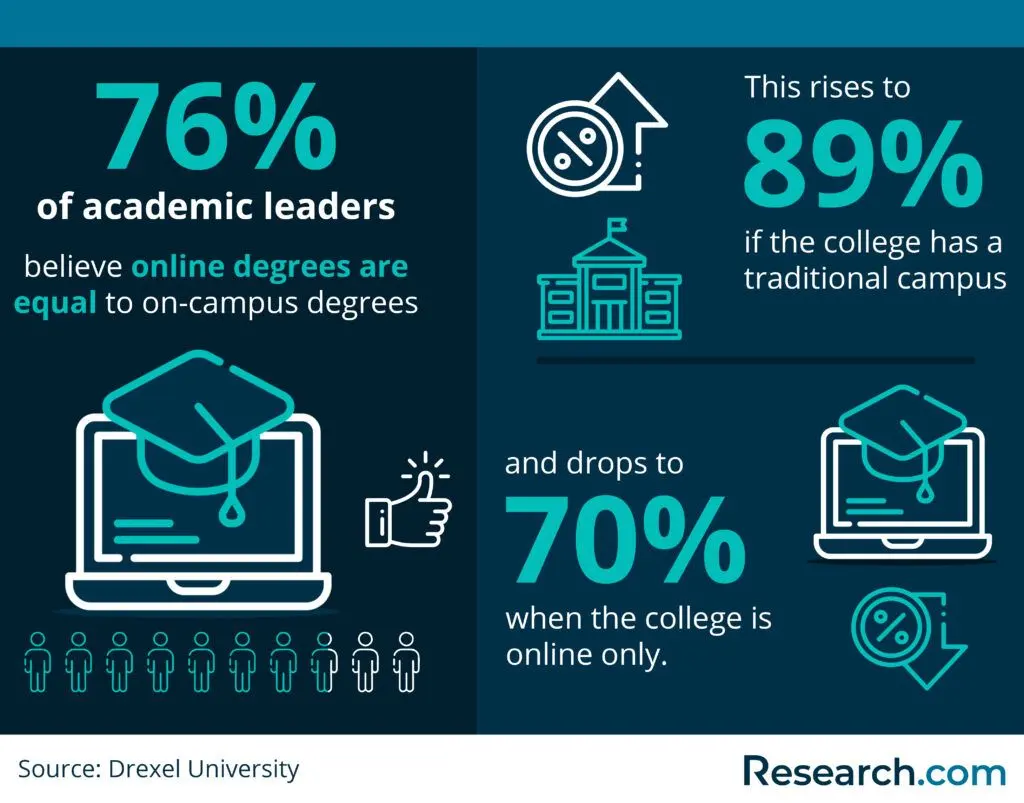
According to statistics from a Drexel University Online infographic, 76% of academic leaders believe that online degrees are equal to on-campus degrees, and this perception improves to 89% if the online program is offered by an institution that also has a traditional campus. In addition, 92% of brick-and-mortar universities make no distinction between online and on-campus programs regarding the type of degree awarded.
The same logic applies to many career programs: format matters less than quality, accreditation, outcomes, and employer recognition. A student considering a management degree online should still check accreditation and reputation; a medical assisting student should do the same, while paying special attention to labs and externships.
| Format | Advantages | Possible drawbacks | Questions to ask |
| Online | Flexible schedule, reduced commuting, self-paced options in some programs | May require separate externship arrangements or limited in-person practice | How are clinical skills taught and verified? |
| Hybrid | Combines online theory with in-person labs or clinical practice | Requires travel for specific sessions | How often must students attend in person? |
| Campus-based | More direct access to instructors, labs, and peer practice | Less flexible for working adults and commuters | Are evening or weekend classes available? |
What is the average cost of a medical assisting course?
The average cost of a medical assisting course varies by school type, residency status, format, and credential. In the programs cited in this guide, costs generally range between $1,239 and $8,383. Davidson Community College charges $1,216 for in-state students and $5,813 for out-of-state students for a two-year program. Pima Community College charges up to $8,383 for out-of-state students for a 12-month program.
Medical assisting certificate costs may be comparable to some other healthcare certification pathways, such as a child life specialist certification, but costs can change significantly when a student chooses an associate degree, campus-based program, or option with more required fees.
Costs to include beyond tuition
- Application and registration fees
- Books, uniforms, scrubs, shoes, and supplies
- Background checks, drug screening, immunization records, and health screenings
- Certification exam fees
- Transportation to labs, campus sessions, or externship sites
- Technology fees for online courses
- Lost wages if the schedule reduces your work hours
What are the financial aid options for students enrolling in a medical assisting course?
Financial aid can make a medical assisting program more affordable, but eligibility depends on the school, program length, credential type, accreditation, enrollment status, and student circumstances. Start by asking whether the program participates in federal student aid and whether the credential qualifies.
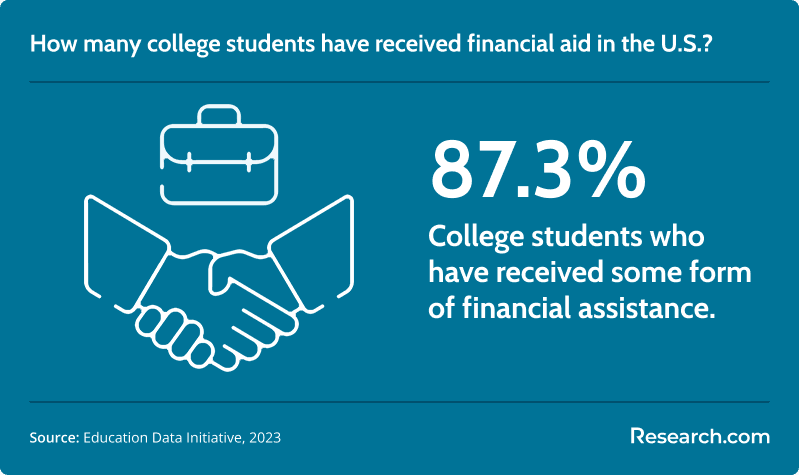
Financial aid is common across higher education. The article cites that 87.3% of college students receive some form of financial aid. Students should begin with the Free Application for Federal Student Aid (FAFSA) if their school and program are eligible, then compare other aid sources before using loans.
- Federal Grants: Students may qualify for federal grants such as the Pell Grant. Grants generally do not need to be repaid if students meet eligibility and enrollment requirements.
- State Grants: Some states provide grant aid based on residency, financial need, or workforce priorities.
- Scholarships: Schools, professional groups, community organizations, and private foundations may offer scholarships for allied health or medical assisting students.
- Student Loans: Federal and private loans can help cover education costs, but students should compare interest rates, repayment terms, and total debt carefully.
- Work-Study Programs: Eligible students at participating schools may use part-time work-study employment to help pay education expenses.
- Employer Assistance Programs: Healthcare employers may offer tuition reimbursement or education benefits to employees moving into higher-need roles.
If you want programs that may combine career training with institutional support, compare top medical assistant trade schools and ask each school for a full cost-of-attendance estimate.
What are the prerequisites for enrolling in a medical assisting course?
Medical assisting programs usually have entry requirements designed to protect patients and ensure students can complete clinical training. Exact prerequisites vary by school and externship partner, so verify requirements before applying.
- High School Diploma or GED: Most programs require applicants to have completed high school or earned a GED.
- Background Check: Many programs require a criminal background check because students may work around patients and protected health information.
- Health Screenings and Immunizations: Schools may require immunization records, TB screening, physical exams, or other health documentation for externship eligibility.
- Basic Computer Skills: Students should be comfortable with digital learning systems, electronic records concepts, email, and online assignments.
- CPR Certification: Some programs require CPR certification before enrollment or before clinical placement.
- Interview or Entrance Exam: Some schools use an interview, placement test, or entrance exam to assess readiness and commitment.
If you are comparing nearby healthcare support roles, review the difference between MA and CNA. The roles overlap in patient service but differ in training, duties, work settings, and career pathways.
What types of specializations are available in medical assisting course?
Some medical assisting programs offer tracks or elective training that help students prepare for specific work environments. Specialization can be useful, but it should not replace a strong foundation in core medical assisting skills.
- Clinical Medical Assisting: Emphasizes direct patient care, such as vital signs, injections, exam preparation, and assistance with minor procedures.
- Administrative Medical Assisting: Focuses on appointment scheduling, billing support, insurance processes, records, and front-office communication.
- EKG Technician: Prepares students to support cardiac testing using EKG machines and patient preparation procedures.
- Phlebotomy Technician: Trains students in blood collection, specimen handling, safety, and patient interaction.
- Pediatric Medical Assisting: Focuses on supporting care for infants, children, and adolescents in pediatric settings.
- Geriatric Medical Assisting: Prepares students to work with older adults and understand age-related healthcare needs.
Students entering the field without prior healthcare employment can also review practical strategies on how to get a medical assistant job with no experience, including how to use externships, certifications, and entry-level applications effectively.
The chart below gives a snapshot of where medical assistants may earn more, which can help students think about specialization and workplace choices.
What additional certifications can improve career prospects?
Additional certifications can help medical assistants show targeted skills beyond a general training program. Common add-ons include phlebotomy, EKG, medical billing, coding, and administrative credentials. The best option depends on the type of job you want: clinical roles may value phlebotomy or EKG, while front-office roles may value billing, coding, or records experience.
Students interested in revenue cycle work or health information roles can compare medical assisting with billing and coding by reviewing how much does it cost to become a medical coder. This can help you decide whether you want a patient-facing job, an administrative healthcare role, or a combination of both.
| Certification area | Best for | Career value |
| Phlebotomy | Students who want more lab and specimen collection duties | May support work in clinics, labs, and outpatient centers |
| EKG | Students interested in cardiology or diagnostic testing support | Can be useful in practices that perform routine cardiac screening |
| Medical billing and coding | Students who prefer administrative or records-focused work | May open pathways into billing offices, coding support, or health information |
| CMAA | Students focused on medical office administration | Signals front-office and administrative readiness |
| CCMA, CMA, or RMA | Students seeking broad medical assisting recognition | May improve employer confidence and job competitiveness |
What are the accreditation and certification requirements for medical assisting programs?
Accreditation and certification are not the same. Accreditation applies to a school or program and indicates that it has met defined education standards. Certification is a credential earned by an individual, usually after completing training and passing an exam.
Prospective students should ask whether a program is accredited by a recognized organization such as the Commission on Accreditation of Allied Health Education Programs (CAAHEP) or the Accrediting Bureau of Health Education Schools (ABHES). Accreditation can affect certification eligibility, employer recognition, externship access, and credit transfer. Students comparing flexible formats should also review affordable online medical assistant programs and confirm that online convenience does not come at the expense of recognized standards.
Questions to ask before enrolling
- Is the institution accredited, and is the medical assisting program separately accredited if required?
- Which certification exam does the program prepare students for?
- Are graduates eligible for CMA, CCMA, RMA, CMAA, or another credential?
- Is an externship required, optional, or unavailable?
- Who arranges externship placement?
- What are the certification pass rates and job placement rates?
- Will the program meet employer expectations in my state or city?
Can a medical assisting course propel me to advanced healthcare roles?
A medical assisting course can be a starting point, not an endpoint. Many people use the role to gain patient-care exposure, understand healthcare workflows, and decide whether to pursue nursing, health administration, public health, pharmacy, health informatics, or another allied health career.
However, advanced clinical roles usually require additional education, licensure, or specialized credentials. If you are thinking long term, compare the requirements early. For example, students exploring pharmacy-related pathways can review whether can you become a pharmacist online and what clinical or licensure requirements may apply.
Can an accelerated program fast-track my medical assisting career?
Accelerated programs can shorten your time in school, but speed should not be the only reason to enroll. A fast program is only useful if it still prepares you for certification, teaches practical skills, and provides a legitimate route to hands-on experience.
Students considering accelerated training should compare weekly time commitment, clinical requirements, certification eligibility, and student support. A short course may work well for someone who can study intensively, but it may be difficult for students who need more instructor guidance or practice time. To compare faster pathways, review options on how to become a medical assistant fast.
| Accelerated program may fit if... | Consider a longer program if... |
| You can study several days per week without interruption | You need a slower pace because of work or caregiving |
| You already have healthcare or customer service experience | You are completely new to healthcare and need more practice |
| The program includes externship support | The fast program has limited hands-on training |
| You need to enter the workforce quickly | You want an associate degree or transferable credits |
Can a medical assisting course open doors to healthcare management roles?
Medical assisting can provide useful operational experience for future healthcare management. Medical assistants see how scheduling, patient flow, billing, documentation, compliance, and clinical teamwork connect inside a practice. That experience can be valuable later in supervisory or administrative roles.
Management roles usually require more than a medical assisting certificate. Professionals often need years of experience, leadership training, business coursework, or a degree in healthcare administration. If your long-term goal is leadership, explore top healthcare administration jobs to understand which roles require degrees, certifications, or management experience.
How can advanced allied health certifications expand my expertise?
Advanced allied health credentials can help medical assistants move toward more technical or specialized work. Options may include diagnostic testing, cardiovascular support, imaging-related education, or laboratory-focused skills. The right choice depends on whether you want to stay in medical assisting, specialize clinically, or transition into a different allied health profession.
For example, students interested in imaging careers may compare medical assisting with the best sonography programs in the US. These fields require different training and clinical competencies, so it is important to evaluate accreditation, hands-on requirements, and long-term job fit before changing direction.
How to choose the best medical assisting program
The best medical assisting program is not always the cheapest, fastest, or highest ranked. It is the program that prepares you for certification, gives you enough hands-on experience, fits your schedule, and has a realistic total cost.
- Verify accreditation: Check whether the school and program have recognized accreditation, such as CAAHEP or ABHES where applicable.
- Confirm certification eligibility: Ask exactly which exam graduates can sit for and whether exam preparation is included.
- Review the curriculum: Look for both clinical and administrative training, including electronic health records, patient care, medical terminology, and compliance.
- Evaluate externship quality: Ask where students are placed, who arranges placement, and how many hours are required.
- Compare total cost: Include tuition, fees, supplies, exams, transportation, and lost work time. Comparing how much does an LPN program cost can also help you understand how medical assisting compares with other healthcare training paths.
- Check outcomes: Request certification pass rates, job placement data, graduation rates, and employer partnerships.
- Match the format to your life: Online learning may help with flexibility, but campus or hybrid formats may offer more direct lab practice.
Common mistakes to avoid
- Choosing a program only because it is short.
- Assuming every online program includes a real externship.
- Ignoring accreditation and certification eligibility.
- Comparing tuition only and forgetting exam fees, supplies, and transportation.
- Assuming salary outcomes are guaranteed after graduation.
- Not asking whether credits transfer into a future degree.
- Relying only on rankings instead of checking local employer preferences.
What skills do employers prioritize in medical assisting roles?
Employers usually want medical assistants who can work accurately, communicate clearly, protect patient information, and keep clinic workflows moving. Technical skills matter, but soft skills often determine whether a new hire succeeds in a busy healthcare environment.
- Clinical accuracy: Taking vital signs, preparing patients, following infection control procedures, and supporting routine clinical tasks.
- Documentation: Recording information correctly in electronic health records and updating patient files.
- Communication: Explaining next steps, listening to patient concerns, and coordinating with providers and office staff.
- Professionalism: Maintaining privacy, arriving prepared, and staying calm under pressure.
- Adaptability: Moving between front-office duties and clinical support as patient volume changes.
- Digital literacy: Using scheduling systems, records platforms, patient portals, and telehealth tools.
Students who later want a stronger science foundation may compare medical assisting with broader academic options, such as the quickest biology degree online, especially if they are considering future clinical or graduate study.
How will telehealth and digital health trends impact medical assisting roles?
Telehealth, electronic health records, patient portals, remote monitoring, and digital scheduling tools are changing how medical assistants support care. Many medical assistants now help prepare patients for virtual visits, update records before appointments, troubleshoot basic access issues, and coordinate follow-up instructions.
This does not mean the role is becoming fully remote. Medical assisting still includes hands-on patient support in many settings. Instead, digital health is expanding the skill set. Students who are comfortable with technology, privacy rules, and patient communication may have an advantage. Those who want deeper scientific preparation can also explore online biology degrees as part of a longer-term healthcare education plan.
What career paths are available for graduates of medical assisting course?
Medical assisting graduates can pursue direct medical assistant roles or use their training as a foundation for related healthcare occupations. Some pathways require additional schooling, certification, or licensure, so students should not assume that one credential automatically qualifies them for another role.
- Dental Assistants: Support dentists with patient care, x-rays, records, and scheduling. Additional dental-specific training may be required depending on the state and employer.
- Licensed Practical and Licensed Vocational Nurses (LPNs/LVNs): Provide basic nursing care under supervision. This path requires an approved practical nursing program and licensure.
- Medical Records and Health Information Technicians: Manage patient data, coding information, and health records systems.
- Phlebotomists: Specialize in blood collection, specimen handling, and patient preparation.
- Health Information Technologists and Medical Registrars: Work with clinical data, health information systems, registries, and reporting processes.
Students who enjoy the business side of healthcare may later consider leadership-oriented education. Exploring MBA healthcare management salary potential can help clarify how graduate business training may connect to healthcare administration roles.
The table or chart below presents median salaries for roles related to medical assisting.
What is the job market for graduates with a medical assisting course?
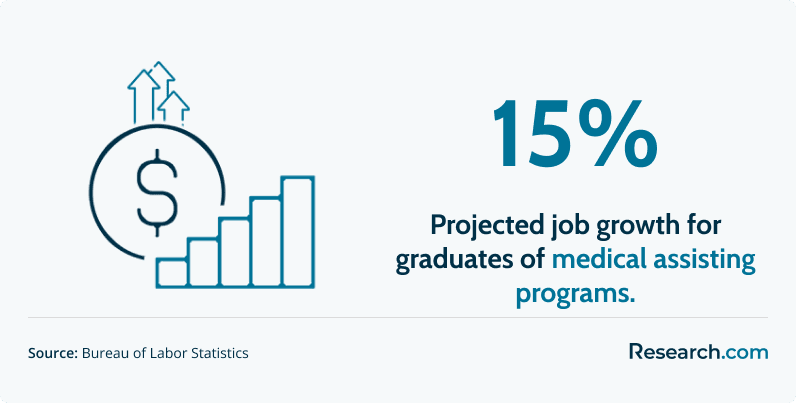
The job market for medical assistants remains favorable in the cited federal data. According to the U.S. Bureau of Labor Statistics, employment of medical assistants is projected to grow 15% from 2023 to 2033, much faster than the average for all occupations. The demand is tied to healthcare service needs, especially in primary care and outpatient settings where medical assistants are commonly employed.
The BLS also cites about 119,800 openings for medical assistants each year over the decade. Many of these openings are expected to come from workers transferring to other occupations or leaving the labor force, including retirement.
Technology is also creating adjacent pathways. Students interested in healthcare data, systems, and digital records may eventually explore a health informatics MS, especially if they want to move from front-line clinical support into information systems or analytics.
Should I pursue further education beyond a medical assisting course?
Further education is worth considering if your long-term goal requires a different credential. Medical assisting can help you test your interest in healthcare, build patient-contact experience, and understand clinic operations. From there, you may decide to move into nursing, billing and coding, healthcare administration, public health, health informatics, sonography, or another allied health field.
If you are drawn to community health, policy, epidemiology, or population-level work, a master of public health may eventually be relevant. Comparing options such as the cheapest online MPH can help you understand cost and curriculum differences before committing to graduate study.
Is a medical assisting course a worthwhile investment?
A medical assisting course can be a worthwhile investment when it leads to a recognized credential, includes practical experience, fits your budget, and supports your career goals. It is especially practical for students who want a faster route into healthcare than a degree-length clinical program.
It may not be the best fit if you already know you want a licensed role such as nursing, pharmacy, or another advanced clinical profession. In that case, medical assisting can still be useful exposure, but it may add time and cost before your required degree. Students aiming for administration may eventually compare options such as a healthcare administration degree online accredited after gaining experience.
| Choose medical assisting if... | Consider another path if... |
| You want to enter healthcare relatively quickly | You need a licensed clinical role with broader scope of practice |
| You like both patient interaction and office tasks | You strongly prefer laboratory, imaging, or non-patient-facing work |
| You want experience before committing to a longer degree | You already meet prerequisites for your target healthcare program |
| You can find an accredited program with externship support | The only available programs lack certification preparation or hands-on training |
Key Insights
- A medical assisting course is best for students who want practical healthcare training that combines clinical support and administrative duties.
- The Bureau of Labor Statistics reported a median annual wage of $42,000 for medical assistants as of May 2023, with cited pay differences by setting such as $46,090 in outpatient care centers and $40,670 in physicians' offices.
- Program length varies significantly: accelerated options may take four months, self-paced programs may take 4-10 months, and associate degree pathways may take up to two years.
- Accreditation, certification eligibility, and externship quality are the most important program checks. A fast or inexpensive program is not a good value if employers do not recognize it.
- Online programs can work well for flexible learners, but students must confirm how hands-on skills are taught and how clinical experience is arranged.
- Employment of medical assistants is projected to grow 15% from 2023 to 2033, with about 119,800 openings each year over the decade, according to the cited BLS data.
- Medical assisting can be a launch point for further healthcare education, including administration, informatics, public health, nursing, billing and coding, or other allied health careers.
References:
- Bureau of Labor Statistics. Occupational Outlook Handbook: Medical Assistants.
- Bureau of Labor Statistics. Occupational Employment and Wages, May 2023: Medical Assistants.
- College Tuition Compare. National Career College.
- Drexel University Online. Online Degree vs. Traditional Degree.
- Zippia. Medical Assistant Salaries.
Other Things You Should Know About Medical Assisting Courses
In 2027, medical assisting courses incorporate technology by teaching students to use electronic health records (EHR) systems, telemedicine platforms, and healthcare software. Classes often include simulations and hands-on practice to ensure proficiency in the latest medical technologies.
By 2026, medical assisting courses increasingly emphasize electronic health records (EHR) proficiency, telemedicine protocols, and the use of mobile health apps. Students learn through simulations and real-world practice, ensuring they’re ready for the technological demands of modern healthcare settings.


