2027 Online Digital Photography Degrees With Real-World Applied Photography Projects

Co-Founder and Chief Data Scientist
Choosing an online digital photography degree is really a decision about portfolio quality, cost, and career fit. The U. S. Bureau of Labor Statistics reported a median annual wage of $42,520 for photographers in May 2024, but earnings vary widely by specialty, client base, and business skills. This guide is for prospective students comparing online associate and bachelor's programs that include real assignments, critique, editing, and portfolio development. You will learn how programs work, what they cost, which schools offer them, and how to choose one that supports your career goals.
Key Things You Should Know
- Online digital photography degrees are most useful when they combine technical instruction, guided critique, portfolio development, and applied projects such as product shoots, portraits, events, documentary series, and client-style briefs.
- Current national cost benchmarks show why comparison shopping matters: College Board's 2024-25 figures place average published tuition and fees at $4,050 for public two-year in-district colleges and $11,610 for public four-year in-state colleges.
- Photography remains portfolio-driven: BLS May 2024 wage data lists $42,520 as the median annual wage for photographers, so students should evaluate programs by career alignment, production support, transfer policies, and business training rather than degree title alone.
What is an online digital photography degree with real-world applied photography projects?
An online digital photography degree is an associate or bachelor's program that teaches image capture, lighting, editing, visual storytelling, portfolio development, and the business of photography through a distance-learning format. "Real-world applied photography projects" means students do not only read about camera settings or art history; they complete structured shoots that resemble professional assignments.
In a strong program, applied work usually includes instructor feedback, peer critique, revision, and a final portfolio. Students may photograph people, products, architecture, food, events, landscapes, or documentary subjects in their own communities, then submit edited files, contact sheets, project statements, and process notes through an online learning platform.
The format can work well for students who already have access to a camera, computer, editing software, and local subjects to photograph. It can be less ideal for students who need daily access to a campus studio, specialized lighting equipment, darkroom facilities, or in-person networking with local creative agencies.
Common degree levels include associate degrees, bachelor's degrees, and sometimes photography concentrations within broader art or visual communication programs. An associate degree can help students build foundational skills or transfer into a bachelor's program. A bachelor's degree usually includes more advanced studio work, visual theory, art history, professional practices, and a capstone portfolio.
The degree may be worth considering if your goal is to build a disciplined portfolio, learn industry workflows, and receive structured critique. If your main goal is to learn basic camera operation quickly, a shorter certificate, community college course, or workshop may be more cost-effective.
How do online digital photography programs compare to campus-based options for hands-on learning?
Online and campus photography programs can both be hands-on, but they create practice in different ways. The best choice depends on how much structure, equipment access, in-person critique, and scheduling flexibility you need.
The table below compares the practical learning experience in online and campus-based formats. Use it to identify where you may need extra planning, such as renting equipment, finding local subjects, or arranging portfolio shoots.
| Factor | Online digital photography degree | Campus-based photography degree | Decision takeaway |
| Hands-on projects | Students shoot locally and upload images, edits, artist statements, and project documentation. | Students complete studio, location, lab, and critique assignments in person. | Online can be highly practical if assignments are project-based and critique is detailed. |
| Equipment access | Students often provide or rent cameras, lenses, lighting, storage, and editing hardware. | Campuses may provide studios, lighting kits, printers, labs, or checkout equipment. | Online students should budget for gear beyond tuition. |
| Critique | Feedback is usually asynchronous through discussion boards, annotated submissions, video reviews, or live sessions. | Feedback often happens in studio critiques, demonstrations, and peer review sessions. | Ask how often faculty provide individualized feedback, not just grades. |
| Schedule | More flexible for working adults, parents, military students, and students outside major art markets. | More fixed class times and location-based requirements. | Online is stronger for flexibility; campus is stronger for immersion. |
| Networking | Networking depends on virtual critiques, alumni groups, internships, social platforms, and local outreach. | Networking may happen through campus events, studios, galleries, and local employers. | Online students need to be intentional about building professional contacts. |
Online learning makes the most sense when you are self-directed and can turn your local environment into a studio. Campus learning may be better if you need frequent live demonstrations, advanced studio facilities, or close mentorship in a specific creative market.
Before enrolling, review sample syllabi and look for evidence of actual production work. A credible hands-on online program should require more than quizzes and readings; it should ask students to plan, shoot, edit, revise, and explain creative decisions.
Which accredited schools offer online digital photography degrees in the United States?
Several accredited U.S. institutions offer online photography degrees or closely related online art degrees with digital photography coursework. Availability, program names, and delivery formats can change, so students should confirm current details directly with each school before applying.
The table below highlights examples of accredited institutions known for online photography or photography-focused visual arts programs. It is not a ranking; it is a starting point for comparing degree level, accreditation, and fit.
| School | Example online photography-related program | Institutional accreditation | Best fit |
| Arizona State University Online | BFA in Art with a digital photography focus or related online art pathway, depending on current catalog offerings | Higher Learning Commission | Students seeking a large public university environment with online art coursework and broader general education options. |
| Southern New Hampshire University | BA in Digital Photography | New England Commission of Higher Education | Students who want a flexible online bachelor's program focused on digital imaging, visual storytelling, and portfolio development. |
| Academy of Art University | Online photography degrees at associate, bachelor's, or graduate levels, depending on current offerings | WASC Senior College and University Commission | Students seeking an art-school model with portfolio-driven creative instruction. |
| Rocky Mountain College of Art + Design | Online BFA in Photography or related photography pathway, depending on current catalog offerings | Higher Learning Commission | Students looking for a specialized art and design college with online studio-based coursework. |
| Savannah College of Art and Design | Online photography or related creative degree options through SCADnow, depending on current availability | Southern Association of Colleges and Schools Commission on Colleges | Students interested in a private art and design institution with a strong creative-industry orientation. |
Institutional accreditation matters because it affects federal financial aid eligibility, transfer credit review, and general academic credibility. Programmatic accreditation from the National Association of Schools of Art and Design can also be a quality signal for art and design programs, but not every legitimate photography program has it.
When comparing schools, verify the exact degree title, whether the program is fully online, and whether any residencies, campus visits, internships, or proctored requirements apply. Also ask whether photography courses are taught by working photographers, fine artists, commercial practitioners, or general visual arts faculty.
What courses and applied photography projects are typically included in these online programs?
Online digital photography programs usually combine technical camera training, visual communication, editing, art history, and professional practice. The strongest programs connect each course to portfolio-ready assignments rather than treating photography as a purely theoretical subject.
The table below summarizes common coursework and the types of applied projects that often accompany each area. This can help you read catalogs more critically and distinguish a portfolio-centered degree from a lecture-heavy one.
| Course area | What students learn | Typical applied project |
| Digital camera operation | Exposure, aperture, shutter speed, ISO, focal length, file formats, and image quality. | A controlled shooting assignment demonstrating motion, depth of field, and exposure decisions. |
| Lighting | Natural light, continuous light, flash, studio lighting, modifiers, and lighting ratios. | A portrait or product series using a planned lighting setup and written lighting diagram. |
| Digital editing | Color correction, retouching, RAW processing, nondestructive editing, file management, and export standards. | A before-and-after editing submission with workflow notes and final deliverables. |
| Visual storytelling | Sequencing, narrative structure, documentary ethics, composition, and audience intent. | A photo essay or editorial story built around a person, place, issue, or event. |
| Commercial photography | Client briefs, product styling, brand consistency, usage rights, and deliverable specifications. | A mock client shoot for products, food, fashion, real estate, or promotional imagery. |
| Portfolio and capstone | Personal style, project development, artist statements, portfolio editing, and professional presentation. | A final portfolio website or cohesive image series reviewed by faculty or peers. |
Students interested in broader visual careers should also compare photography programs with adjacent degrees. For example, an online graphic design bachelor degree may be a better fit for someone who wants to combine photography with branding, typography, layout, UX, or digital advertising work.
Look for programs that teach both creative and business skills. Professional photographers often need to price jobs, write estimates, manage image licenses, communicate with clients, market services, and maintain a web portfolio. A technically strong photographer who lacks client and business skills may struggle to turn portfolio work into paid assignments.
Students should also expect technology to keep changing. AI-assisted editing, automated masking, generative image tools, metadata workflows, and content authenticity standards are now part of the broader imaging environment. A good program should teach students how to use technology ethically while still developing original photographic judgment.
What are the admission requirements for online digital photography bachelor's and associate degrees?
Admission requirements vary by school and degree level, but most online associate and bachelor's programs are accessible to students with a high school diploma or equivalent. Selective art schools or upper-division bachelor's programs may also require a portfolio, statement of purpose, or prior college credits.
Most applicants should prepare the following materials before starting applications. These items help schools determine academic readiness, transfer eligibility, and fit for a studio-based online program.
- Official high school transcript, GED record, or prior college transcript.
- Completed online application and any required application fee or fee waiver request.
- Portfolio, if required, showing original photographs, visual art, design work, or creative projects.
- Personal statement or short essay explaining creative interests, career goals, and readiness for online learning.
- Transfer credit documentation, including course descriptions or syllabi when requesting evaluation of prior art, design, or general education coursework.
- Technology readiness, including access to a digital camera, reliable computer, image-editing software, high-speed internet, and sufficient storage.
Associate programs often have open or broad admissions policies, especially at community colleges and career-focused institutions. Bachelor's programs may have additional general education requirements, minimum GPA standards, portfolio review steps, or prerequisites for advanced studio courses.
Applicants should not assume that a portfolio is always required. Some online bachelor's programs accept beginners and build technical skills from the first course, while others expect applicants to demonstrate prior visual work. If you are new to photography, ask whether the program offers foundation courses before advanced portfolio review.
Transfer students should be especially careful. A school may accept general education credits but decline to apply older or non-equivalent photography courses toward the major. Before enrolling, request a written transfer evaluation that shows which credits apply to the degree and how many credits remain.
How long do online digital photography degrees take, and what do they cost?
An online associate degree in digital photography typically takes about two years of full-time study, while a bachelor's degree commonly takes about four years for first-time students. Students with transfer credits, military credits, prior college coursework, or year-round enrollment may finish faster; part-time students may take longer.
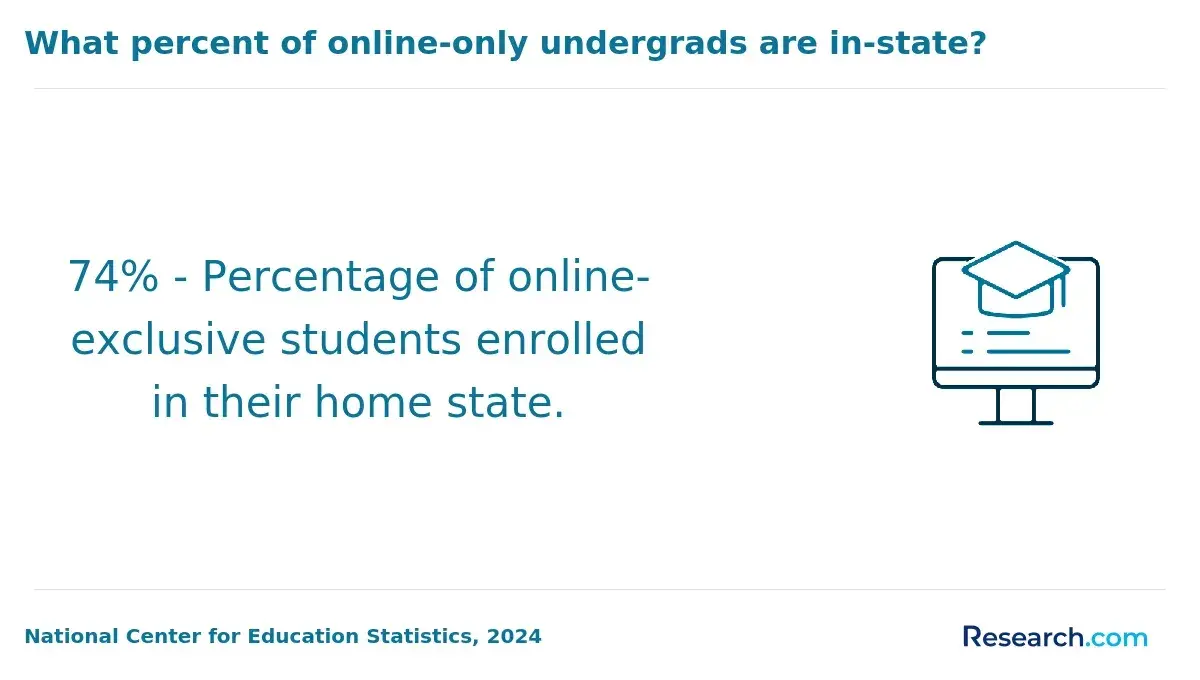
Cost depends on institution type, transfer credits, residency rules, technology fees, software subscriptions, and equipment needs. College Board's 2024-25 national averages show why degree level and school type matter: published tuition and fees averaged $4,050 at public two-year in-district colleges and $11,610 at public four-year in-state colleges.
The table below outlines common time and cost factors. Use it to estimate total investment rather than comparing tuition alone.
| Program type | Typical full-time length | Major cost drivers | Best for |
| Online associate degree | About two years | Tuition, general education courses, camera gear, editing software, storage, and transfer planning. | Students seeking lower upfront cost, foundational training, or a pathway into a bachelor's program. |
| Online bachelor's degree | About four years | Tuition, upper-division studio courses, portfolio development, equipment upgrades, software, and capstone production. | Students seeking deeper creative development, broader career preparation, or a more complete undergraduate credential. |
| Degree completion pathway | Varies by accepted credits | Remaining credits, transfer rules, residency requirements, and major-course sequencing. | Students with prior college credits who want to finish a bachelor's degree efficiently. |
Photography students should budget for non-tuition expenses. A program may not include a camera body, lenses, tripod, lighting, calibration tools, external drives, memory cards, printing, website hosting, or Adobe-style editing software in the advertised tuition. These costs can affect affordability even when tuition appears low.
To reduce cost, students can take transferable general education courses at a public community college, apply for federal financial aid if eligible, compare institutional scholarships, buy used gear from reputable sellers, and avoid unnecessary equipment upgrades until course requirements are clear.
Be cautious with accelerated programs. Finishing faster can reduce living costs and opportunity costs, but studio courses require time for shooting, reshooting, critique, editing, and revision. A very compressed schedule may be difficult for students working full time or caring for family members.
What careers can graduates of online digital photography programs pursue?
Graduates can pursue photography-centered roles as well as broader visual media work. The degree alone does not determine employability; employers and clients usually evaluate portfolio quality, reliability, editing skill, communication, niche expertise, and business professionalism.
The table below summarizes common career paths and what each role typically involves. Use it to match a program's coursework with the work you actually want to do after graduation.
| Career path | Typical responsibilities | Portfolio evidence employers or clients may expect |
| Portrait photographer | Photograph individuals, families, graduates, professionals, or performers in studio or location settings. | Consistent lighting, posing, retouching, client-ready galleries, and varied subject examples. |
| Commercial product photographer | Create images for e-commerce, catalogs, advertising, packaging, or brand campaigns. | Clean product lighting, accurate color, styling control, detail shots, and client-brief execution. |
| Event photographer | Cover weddings, conferences, performances, sports, nonprofit events, or community activities. | Low-light skill, storytelling sequences, candid images, fast delivery workflow, and reliability. |
| Photo editor or digital imaging specialist | Select, retouch, color-correct, organize, and prepare images for publication or client delivery. | Before-and-after edits, file management samples, retouching restraint, and production consistency. |
| Real estate or architectural photographer | Photograph residential, commercial, hospitality, or interior spaces for listings and marketing. | Correct perspective, lighting balance, interior composition, exterior images, and quick turnaround. |
| Visual content creator | Produce photo, short-form video, social media, and campaign assets for brands or organizations. | Cross-platform storytelling, brand consistency, basic motion skills, and measurable campaign examples. |
Some graduates move into adjacent creative or helping professions after additional education. For example, students drawn to the therapeutic use of art and imagery may later explore a master in art therapy, but that path has separate graduate admission, supervised practice, and state credential considerations.
Photography careers can be freelance, salaried, contract-based, or hybrid. Many professionals combine multiple income streams, such as weddings, portraits, product shoots, editing, teaching workshops, stock licensing, and content production. Because income can fluctuate, business training is especially valuable.
This degree may be a good fit if you enjoy independent projects, visual problem-solving, client communication, and continuous portfolio improvement. It may not be the best fit if you want a career path with standardized licensing, predictable entry-level salaries, or a single required credential that leads directly to employment.
What salary ranges and earning potential exist for professional digital photographers?
Salary potential in photography depends heavily on specialization, location, client base, employment type, portfolio quality, and business model. BLS May 2024 data reports a median annual wage of $42,520 for photographers, which is a useful national midpoint but not a promise of what any graduate will earn.
The table below explains how earning potential differs by work setting. It focuses on the practical factors that tend to influence income rather than presenting salary as a guaranteed outcome.
| Work setting | Income pattern | What can improve earning potential |
| Freelance photography | Income may vary by season, bookings, pricing, referrals, and client retention. | Strong niche positioning, contracts, repeat clients, efficient editing, marketing, and pricing discipline. |
| Commercial or product work | Projects may pay by assignment, day rate, image license, retainer, or agency contract. | Technical consistency, brand understanding, studio skills, usage-rights knowledge, and reliable delivery. |
| Media, publishing, or journalism | Roles may be staff, contract, or assignment-based, often with tight deadlines. | News judgment, ethical practice, captioning, metadata, speed, and multimedia capability. |
| Corporate or institutional content | Work may involve salaried visual content roles or recurring contract assignments. | Photo and video ability, collaboration with marketing teams, asset management, and brand standards. |
| Photo editing and retouching | Income may come from hourly, salaried, or project-based digital production work. | Advanced editing, color accuracy, workflow speed, organization, and platform fluency. |
Students comparing creative degrees should think beyond first-year income. A photographer's earning power often grows through reputation, referrals, repeat clients, specialized skills, and business systems. Conversely, weak pricing, poor contracts, and inconsistent delivery can limit income even with a strong degree.
If your main goal is a more corporate or analytics-oriented path, creative media can also pair with business or marketing education. Some students eventually compare photography-related work with marketing graduate programs to move toward brand strategy, digital campaigns, content leadership, or creative management.
A realistic ROI calculation should include tuition, gear, software, lost work time, loan interest, and the time needed to build a client base. The safest approach is to graduate with a usable portfolio, low avoidable debt, and a clear plan for paid work.
What is the job outlook and industry demand for digital photography professionals?
The photography labor market is competitive but not disappearing. BLS 2024-2034 projections describe employment for photographers as growing about as fast as the average for all occupations, which suggests continued demand but also a need for differentiation.
Demand is shaped by several forces. Businesses need steady visual content for websites, e-commerce, social media, recruiting, real estate, events, and product marketing. At the same time, smartphones, stock libraries, AI tools, and templated content platforms have reduced demand for some basic image-making tasks.
That mix makes skill level and specialization important. Photographers who can plan shoots, direct subjects, solve lighting problems, manage files, edit consistently, and understand client goals are better positioned than those who only know how to take technically acceptable images.
Current trends students should watch include AI-assisted editing, short-form video expectations, hybrid photo-video roles, authenticity concerns in journalism and documentary work, and demand for fast-turnaround branded content. Programs that ignore these trends may leave students underprepared for modern creative workflows.
Students should also recognize that local markets differ. A rural wedding photographer, a Los Angeles commercial assistant, a real estate photographer in a fast-growing metro area, and an in-house content creator for a healthcare system may face very different opportunities. Before choosing a program, research job postings and freelance demand in the region or niche where you want to work.
How can prospective students evaluate and choose a reputable online digital photography program?
A reputable online digital photography program should be accredited, transparent about costs, specific about equipment needs, and clear about how students build a portfolio. It should also match your intended career path, not just your interest in photography as a hobby.
Use the following steps before committing to a program. They are designed to help you compare quality, affordability, and career relevance in a practical way.
- Verify institutional accreditation through the school's website and the U.S. Department of Education or accreditor directory.
- Confirm the exact degree title, delivery format, and whether any campus visits, residencies, internships, or synchronous meetings are required.
- Request a full cost estimate that includes tuition, fees, software, camera equipment, lighting, storage, printing, portfolio hosting, and expected course materials.
- Ask for sample syllabi from photography courses to confirm that students complete applied shoots, critiques, revisions, and portfolio-ready assignments.
- Review faculty biographies to see whether instructors have relevant commercial, editorial, fine art, documentary, or digital imaging experience.
- Ask how critiques work, including whether feedback is individualized, how often it occurs, and whether students receive guidance on revisions.
- Check transfer credit policies in writing, especially if you plan to start with an associate degree or bring prior college credits.
- Compare career support, including portfolio reviews, internship guidance, alumni networking, freelance business training, and job-search resources.
- Look for student work or graduate portfolios to judge whether the program produces the level and style of work you want to create.
- Calculate ROI using conservative income assumptions and avoid borrowing more than your likely early-career cash flow can support.
Common red flags include vague course descriptions, no clear portfolio requirement, limited faculty information, pressure to enroll immediately, unclear equipment expectations, and a refusal to provide total cost estimates. Another warning sign is a program that markets photography as an easy path to high income without discussing competition, freelancing realities, or business skills.
When comparing any online degree, use the same evidence-based mindset across fields. For instance, a student reviewing an online animal science degree salary analysis would still need to compare tuition, outcomes, accreditation, and career fit; photography students should do the same instead of choosing based on portfolio images alone.
The best program is not automatically the cheapest, fastest, or most prestigious. It is the one that helps you produce stronger work, receive meaningful critique, control costs, and move toward a specific career direction with realistic expectations.
Other Things You Should Know About Digital Photography
Yes, if the program requires structured projects, critique, and revision. Students can create strong portfolios using local subjects, natural light, rented studios, home setups, community events, and client-style assignments.
No, you don't need an expensive camera before starting an online digital photography degree in 2027. Many programs emphasize foundational skills and techniques that can be practiced with a basic model or even a smartphone. As you advance, you might consider investing in higher-quality equipment.
Students usually need Adobe Lightroom and Photoshop skills by the first term. Many programs require RAW processing, non-destructive editing, color correction, and file management using a calibrated monitor. Some also expect basic Adobe Bridge or Capture One workflow skills for submitting project-ready images.
References
- College Certificate vs Online Photography School | Cameraderie https://cameraderie.org/threads/college-certificate-vs-online-photography-school.56322/
- Industries & Fields - Vault https://vault.com/industries/photography/industry-outlook
- How an Online Photography Course Works https://www.nyip.edu/photo-articles/photography-tutorials/how-an-online-photography-course-works
- How to Choose the Right Photography Program https://nossi.edu/how-to-choose-the-right-photography-program/
- What Can You Do With a Photography Degree? https://pnca.willamette.edu/academics/bfa/photography/career-options
- Digital Camera Recommendations for Photography Students https://collegeforartsandtech.com/digital-camera-recommendations-for-students/
- Online Photography Degree | Associate Degree (AOS) https://www.sessions.edu/online-degrees/digital-photography/
- What can you do with a Photography degree? https://www.falmouth.ac.uk/study/undergraduate/what-can-you-do-photography-degree
- Online Photography School | F.I.R.S.T. Institute https://www.first.edu/programs/online-photography-school/
- Photography Jobs Outlook 2026: Is Studying Photography Still a Good Career Investment? https://www.baph.co.uk/blog/photography-jobs-outlook-2026--is-studying-photography-still-a-good-career-investment-