2027 Digital Photography Roles at the Center of Ecommerce, Brand Content, and Visual Media

Co-Founder and Chief Data Scientist
Digital photography is no longer only about portraits, weddings, or news images; it now sits at the center of online sales, social campaigns, product storytelling, and visual media teams. The U. S. Bureau of Labor Statistics reports that photographer employment is projected to grow 4% from 2023 to 2033, which signals steady demand but also rising competition.
This guide is for students, career changers, freelancers, and creative workers comparing education paths, portfolio expectations, costs, salaries, and job options so they can choose the smartest route into professional photography.
Key Things You Should Know
- Digital photography careers now extend beyond camera operation into ecommerce product imagery, retouching, brand campaigns, content production, digital asset management, and visual storytelling.
- The BLS projects 4% employment growth for photographers from 2023 to 2033, so portfolios, software fluency, and niche specialization matter more than simply earning a credential.
- Education options range from short certificates to associate, bachelor's, and MFA programs; the best choice depends on whether you want fast freelance entry, agency work, studio management, teaching, or advanced creative direction.
How are digital photography roles driving ecommerce, brand content, and visual media today?
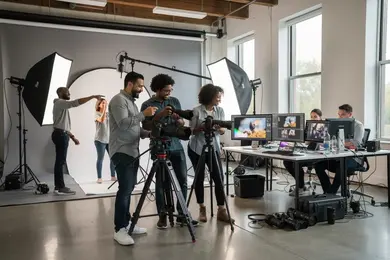
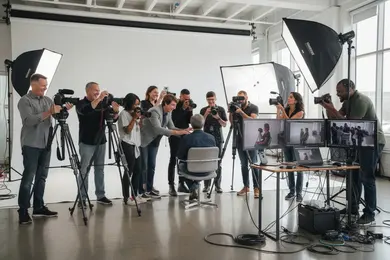
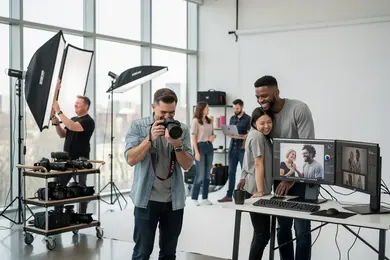
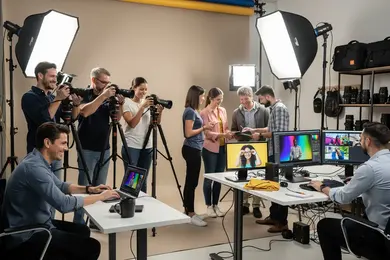
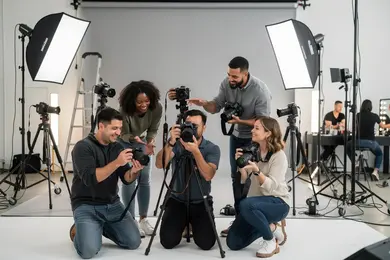
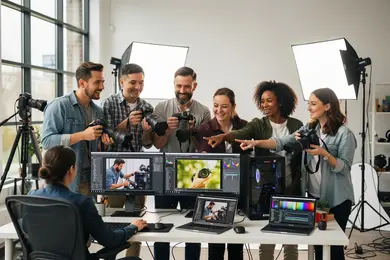
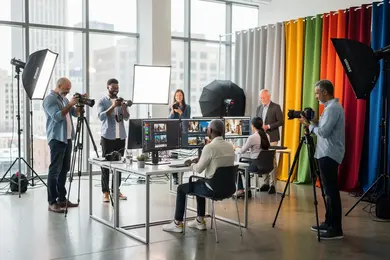
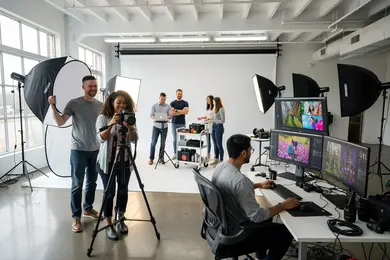
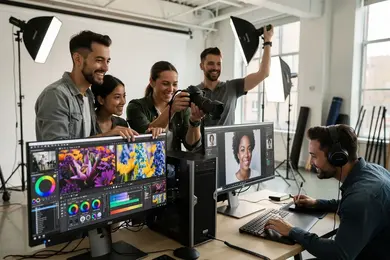
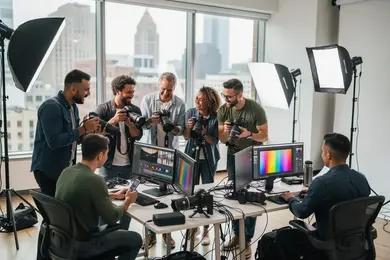
Digital photography roles are driving ecommerce, brand content, and visual media because companies need a constant supply of images that help people understand, trust, and buy products online. A digital photographer captures, edits, organizes, and delivers image assets for websites, marketplaces, social platforms, advertising, internal campaigns, publications, and multimedia teams.
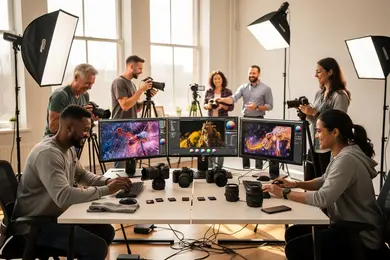
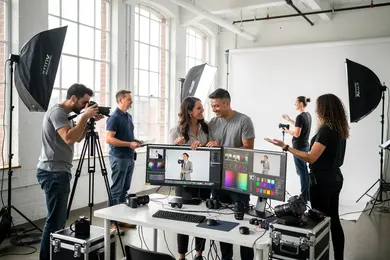
In ecommerce, the work is especially tied to conversion. Product photos must show scale, texture, color accuracy, packaging, use cases, and detail views. A strong ecommerce photographer understands lighting consistency, batch workflows, color management, file naming, retouching standards, and platform specifications. The goal is not only to make an image look attractive but also to reduce uncertainty for buyers.
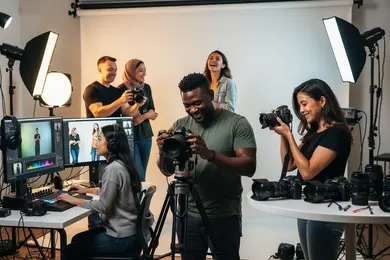
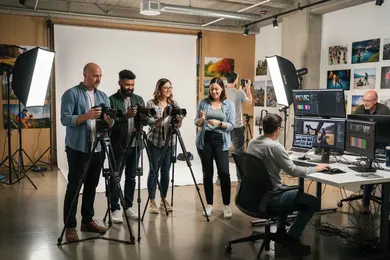
Brand content photography is broader. It includes lifestyle shoots, executive portraits, event coverage, social media campaigns, environmental images, behind-the-scenes assets, and advertising visuals. These roles often require collaboration with art directors, stylists, copywriters, designers, marketing managers, videographers, and paid media teams. Photographers who can plan a shoot, interpret a creative brief, and deliver assets in multiple crops for different channels tend to be more useful to employers.
Visual media work also increasingly overlaps with video, motion, and AI-supported production. AI tools can speed up masking, object removal, tagging, resizing, and background generation, but employers still need people who can light products accurately, direct talent, control visual ethics, preserve brand consistency, and judge whether an image is truthful and usable. If your interests lean more toward building image-recognition systems than producing commercial images, a technical path such as a PhD in artificial intelligence USA may fit better than a photography degree.
The main takeaway is that digital photography is now a production discipline as much as an art form. Camera skill matters, but employers and clients increasingly evaluate whether you can solve visual business problems quickly, consistently, and legally.
What education and skills do you need to start a digital photography career?
You do not always need a degree to start a digital photography career, but you do need demonstrable skill, a focused portfolio, and professional workflow habits. Entry-level employers and clients usually care about whether you can deliver usable images on deadline, communicate clearly, and adapt to the visual standards of a brand or publication.
The most important skills fall into three categories: image creation, post-production, and business execution. A beginner should build each category deliberately rather than relying only on natural creativity.
- Image creation: exposure, lighting, composition, camera settings, lenses, studio setup, posing, product styling, color accuracy, and location problem-solving.
- Post-production: RAW processing, retouching, masking, color correction, image resizing, metadata, file exports, backup systems, and nondestructive editing.
- Business execution: estimating, licensing, contracts, client communication, production planning, model releases, copyright awareness, invoices, and project delivery.
For ecommerce and marketing work, technical consistency often matters more than experimental style. A product photographer who can reproduce the same lighting across 300 items may be more valuable to a retailer than someone with a dramatic portfolio that cannot be scaled. For editorial or fine-art roles, originality and visual voice become more important.
Many beginners make the mistake of building a portfolio that is too broad. A school, employer, or client will struggle to evaluate your fit if your images include unrelated landscapes, portraits, product shots, travel photos, and casual snapshots with no clear direction. A stronger strategy is to create two or three focused portfolio sections that match the work you actually want.
Digital photographers should also understand the limits of credentials. A certificate can help you learn faster, and a degree can build depth, critique experience, and career networks, but neither replaces a strong body of work. Your smartest first step is to identify the job environment you want, then reverse-engineer the skills and portfolio evidence that environment expects.
What degree and training pathways prepare you for professional digital photography work?
Digital photography training ranges from self-directed learning to graduate study. The right pathway depends on your budget, timeline, career target, and how much structure you need. Someone seeking freelance product work may not need the same credential as someone pursuing college teaching, museum work, or senior creative direction.
The table below compares common education pathways by purpose. Use it to decide whether you need a short skills program, a full degree, or a more advanced creative credential.
| Pathway | Typical fit | Main advantages | Trade-offs |
| Workshops and self-study | Beginners testing interest or freelancers filling a skill gap | Low commitment, flexible, useful for specific topics such as lighting or retouching | Less formal feedback, no degree credential, harder to verify quality |
| Certificate in digital photography | Career changers who want structured training without a long degree | Focused skills, shorter timeline, often portfolio-oriented | May not include general education, internships, or advanced art history |
| Associate degree | Students seeking a lower-cost start or transfer pathway | Broader foundation, access to studios and faculty, transfer potential | May not be enough for some art director or teaching roles |
| Bachelor's degree | Students targeting agency, media, brand, studio, or management paths | Portfolio development, critique, visual theory, electives, internships, campus resources | Higher cost and longer timeline than certificates |
| MFA or graduate study | Advanced artists, educators, curators, or creative leaders | Deep critique, thesis work, teaching preparation, professional network | Usually unnecessary for basic commercial photography entry |
A photography bachelor's degree can be valuable if you want sustained critique, access to studio equipment, internships, and a broader education in design, media, and visual culture. Students who want a wider visual communication foundation may also compare photography programs with a graphic design bachelor degree, especially if they want to combine image-making with branding, layout, typography, and digital campaigns.
An MFA can make sense for photographers pursuing teaching, fine-art practice, advanced conceptual work, or leadership in creative fields. If your goal is graduate-level studio development with more flexible study, reviewing MFA online options can help you compare cost and format before committing to a traditional campus program.
Choose the shortest credible pathway that gets you to your target role without limiting your next step. A certificate may be enough for immediate freelance entry, while a bachelor's degree may be more useful if you want internships, a broader professional network, or eligibility for roles that prefer a four-year credential.
How do online digital photography programs compare with campus-based options?
Online and campus-based digital photography programs can both prepare students for professional work, but they support different learning styles. The best format depends on your access to equipment, need for hands-on critique, schedule flexibility, and target career.
The table below compares the practical differences that usually affect student outcomes. It focuses on learning environment rather than assuming one format is automatically better.
| Factor | Online programs | Campus-based programs |
| Schedule | Often better for working adults, parents, and freelancers | Better for students who can attend scheduled studio courses |
| Equipment access | Students may need to own or rent cameras, lighting, and editing tools | Programs may provide studios, printers, lighting kits, and lab access |
| Critique | Usually asynchronous or video-based, which can be convenient but less immediate | In-person critique can be more direct and collaborative |
| Networking | Can be strong when programs include live sessions, cohort work, or local internships | Often easier through campus events, faculty introductions, and studio collaboration |
| Portfolio development | Works well for self-directed students who can create assignments locally | Works well for students who benefit from structured shoots and shared facilities |
Online study often makes sense if you already have access to a camera, editing computer, reliable internet, and a local environment where you can complete shoots. It can also be a good option if you are building a freelance business while studying because coursework can align with real client projects.
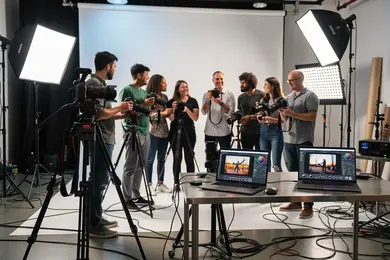
Campus study may be better if you need access to lighting studios, large-format printing, darkroom or hybrid processes, faculty critique, and peer collaboration. It is also useful for students who learn best through live demonstrations and immediate troubleshooting.
A common mistake is choosing an online photography program solely because it is convenient. Before enrolling, confirm whether the program requires specific camera bodies, lenses, lighting kits, external drives, Adobe subscriptions, or printing costs. A program that looks cheaper at first can become expensive if required equipment is not included in tuition and fees.
What core courses and software are taught in digital photography programs?
Digital photography programs usually combine technical camera training, visual communication, editing software, critique, and professional practice. The strongest programs teach students not only how to make images but also how to plan, manage, deliver, and legally protect visual work.
Core courses often vary by school, but most serious programs include a mix of production, theory, and career preparation. These areas help students build a portfolio that can be evaluated by employers or clients.
- Digital camera operation, exposure, lenses, and lighting fundamentals for studio and location work.
- Composition, visual storytelling, color theory, art history, and contemporary photographic practice.
- Digital workflow, RAW processing, retouching, file management, metadata, color calibration, and output for web or print.
- Commercial photography courses such as product, portrait, fashion, food, architecture, advertising, or editorial photography.
- Professional practice topics such as copyright, contracts, releases, pricing, client communication, portfolio review, and marketing.
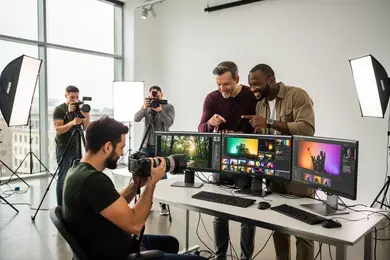
Software training commonly includes Adobe Lightroom, Adobe Photoshop, Capture One, Bridge, and sometimes Premiere Pro, After Effects, or digital asset management platforms. Students may also encounter tethered capture workflows, cloud galleries, content management systems, and AI-assisted editing features. The specific software matters less than your ability to maintain a clean, repeatable workflow.
Programs that prepare students for ecommerce and brand content should also address production efficiency. That means students should learn how to shoot to a style guide, maintain color consistency, export multiple file sizes, organize thousands of assets, and collaborate with designers and marketers. These skills are often what separate hobbyist work from professional production work.
When comparing curricula, look for assignments that resemble real deliverables. A program that asks students to create product pages, campaign assets, portfolio statements, licensing estimates, and client-ready galleries may be more career-relevant than one focused only on isolated image exercises.
What admission requirements and portfolios do schools expect for digital photography majors?
Admission requirements for digital photography programs depend on the credential level and selectivity of the school. Certificate and associate programs may have open or less selective admissions, while bachelor's and MFA programs often require stronger academic records, artist statements, and portfolio reviews.
Most schools evaluate applicants through a mix of academic readiness and creative potential. The exact requirements vary, so applicants should always confirm details with each institution.
- Common undergraduate requirements: Application form, high school transcript or GED, personal statement, recommendation letters, and sometimes standardized test scores if the school still uses them.
- Common portfolio requirements: 10 to 20 recent images, a short description of each project, evidence of technical control, and work that shows curiosity or a developing visual point of view.
- Common graduate requirements: Bachelor's degree, portfolio, artist statement, resume, recommendations, and sometimes an interview or proposal for advanced creative work.
A strong photography portfolio does not have to look like a professional campaign, but it should show intention. Admissions reviewers usually respond better to a coherent project than to random single images. For example, a product photography applicant might submit a series showing consistent lighting, clean backgrounds, detail shots, and lifestyle applications rather than unrelated "best photos."
Applicants should avoid over-editing every image with heavy filters or trendy effects. Schools want to see how you observe light, compose, solve visual problems, and think about subjects. If the edit becomes the whole image, reviewers may have trouble judging your underlying skill.
Before applying, ask whether the program admits students directly into the major or requires a portfolio review after foundational courses. This distinction matters because some students enter as pre-majors and must pass a later review to continue into upper-level studio work.
How long do digital photography programs take, and what do they typically cost?
Digital photography program length and cost vary widely by credential, school type, residency status, equipment requirements, and whether you study full time or part time. The total price is not just tuition; students should budget for cameras, lenses, lighting, storage, printing, software subscriptions, travel, portfolio materials, and possible studio fees.
The table below gives a practical timeline overview. It can help you match your budget and career urgency to the type of training you are considering.
| Program type | Typical full-time length | Cost considerations | Best fit |
| Short courses or workshops | Days to several months | Usually paid per course; equipment often not included | Testing interest or learning one skill quickly |
| Certificate | Several months to 1 year | Lower total tuition than a degree, but software and equipment can add cost | Focused entry into freelance or assistant work |
| Associate degree | About 2 years | Community colleges may reduce tuition, especially for in-district students | Affordable foundation or transfer pathway |
| Bachelor's degree | About 4 years | Higher total cost; may include broader coursework, studios, internships, and portfolio development | Students seeking deeper preparation and wider career options |
| MFA | About 2 to 3 years after a bachelor's degree | Graduate tuition, residency requirements, and production expenses can be significant | Advanced artists, educators, and creative leaders |
For a national cost benchmark, the College Board's 2024 Trends in College Pricing reported average published tuition and fees of $4,050 for public two-year in-district students and $11,610 for public four-year in-state students for 2024-25. These figures are not photography-specific, but they help you understand why community college and transfer routes can materially reduce the cost of a creative degree.
Students should compare net price rather than sticker price. Net price accounts for grants and scholarships and is usually a better estimate of what students actually pay. Also compare transfer policies, because a low-cost first year can lose value if credits do not apply to the final degree.
To reduce costs, prioritize these steps before enrolling. They help you avoid common financial surprises that are especially relevant in photography programs.
- Ask for a complete equipment list before committing, including camera, lens, lighting, computer, storage, printer, and software requirements.
- Use the school's net price calculator and compare it with your financial aid offer rather than relying on advertised tuition alone.
- Confirm whether credits transfer into a bachelor's program if you begin at a community college.
- Ask whether students can borrow studio equipment or must purchase their own kits.
- Review portfolio and lab fees, because creative programs may carry extra costs beyond tuition.
What digital photography jobs exist in ecommerce, marketing, and media, and what do they do?
Digital photography jobs exist across retail, agencies, media companies, in-house brand teams, studios, publishing, sports, real estate, education, nonprofits, and freelance markets. Job titles vary because employers may combine photography with retouching, video, design, social media, or digital asset management.
The table below summarizes common roles in ecommerce, marketing, and media. It focuses on what people do in each role so you can connect job titles to portfolio requirements.
| Role | Typical responsibilities | Portfolio evidence employers may expect |
| Ecommerce product photographer | Photographs products for websites, marketplaces, catalogs, and product detail pages | Consistent lighting, clean backgrounds, detail shots, color accuracy, high-volume workflow |
| Brand content photographer | Creates lifestyle, campaign, event, and social media imagery for organizations | Campaign sets, people-focused storytelling, brand consistency, multiple platform crops |
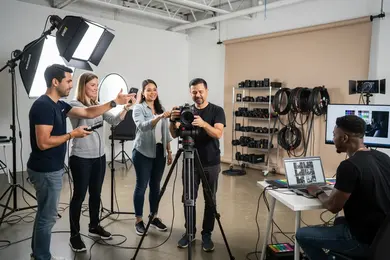
| Photo assistant or studio assistant | Sets up lights, prepares gear, manages files, supports senior photographers, and maintains studios | Technical reliability, behind-the-scenes experience, lighting diagrams, organized workflow |
| Retoucher or digital imaging technician | Processes RAW files, retouches images, manages color, handles exports, and supports post-production | Before-and-after samples, skin or product retouching, color matching, nondestructive editing |
| Editorial photographer | Produces images for magazines, digital publications, news features, or documentary projects | Story-driven projects, captions, sequencing, ethical awareness, deadline work |
| Real estate or architectural photographer | Photographs interiors, exteriors, commercial spaces, and property listings | Wide-angle control, lighting balance, vertical accuracy, quick turnaround, location consistency |
| Social media visual producer | Creates photo and short-form visual assets for digital channels and campaigns | Platform-specific content, fast editing, brand voice, photo-video versatility |
Entry-level workers often start as assistants, junior photographers, retouchers, studio coordinators, or content production associates. These roles can be valuable because they teach workflow, client expectations, file standards, and production etiquette that are difficult to learn from solo shooting.
Specialization can improve your market fit. Sports organizations, for example, need photographers who can handle fast action, venue lighting, sponsor requirements, and real-time delivery; students comparing media paths may also explore how visual production connects to sports analytics jobs when teams combine performance data, fan engagement, and digital content strategy.
Advancement usually comes from building a sharper portfolio, developing production leadership, and taking responsibility for larger campaigns. A photographer may move into lead photographer, studio manager, creative producer, art director, photo editor, content manager, or independent business owner roles.
What salary ranges and job outlook can digital photographers expect in the United States?
Salary and job outlook for digital photographers vary by industry, region, experience, employment type, and specialization. Freelance income can be especially uneven because it depends on pricing, client volume, licensing, business expenses, and repeat work.
The BLS reported a median annual wage of $42,520 for photographers in May 2024. This figure is useful as a national benchmark, but it should not be treated as a promise for new graduates; beginners may earn less while experienced commercial photographers, in-house specialists, or successful freelancers may exceed the median depending on market and client base.
Job outlook is steady rather than explosive. The BLS projects 4% employment growth for photographers from 2023 to 2033, which is about a moderate pace. For readers, this means the field is viable but competitive, and the best opportunities may go to photographers who combine image-making with retouching, video, ecommerce production, marketing knowledge, and client management.
The table below shows how salary potential is shaped by work setting rather than job title alone. It can help you think realistically about where income stability and creative freedom may differ.
| Work setting | Income pattern | Career implication |
| In-house brand or ecommerce team | More stable paycheck, clearer job duties, possible benefits | Good fit for photographers who value consistency and repeatable production systems |
| Agency or creative studio | Project-based pace with exposure to varied clients | Good fit for photographers who like collaboration and campaign work |
| Freelance or self-employed | Variable income tied to client acquisition, pricing, licensing, and expenses | Good fit for entrepreneurial photographers who can market, sell, and manage operations |
| Editorial or media organization | May offer storytelling work but can be competitive and deadline-driven | Good fit for photographers with strong narrative judgment and ethical awareness |
| Specialized commercial niche | Can improve rates when skills are scarce or technically demanding | Good fit for photographers who build expertise in product, food, architecture, medical, or industrial work |
Technology is changing the outlook but not eliminating the need for professional judgment. AI-assisted editing and automated product photography systems can reduce repetitive tasks, but photographers who understand lighting, brand requirements, authenticity, copyright, and production management still solve problems that software alone cannot handle.
To improve earning potential, build a portfolio around a marketable niche, track business expenses, learn usage-based licensing, and document measurable results when possible. For example, an ecommerce photographer can strengthen a resume by showing consistent product sets, faster turnaround, or improved asset organization rather than relying only on visual appeal.
How can you choose an accredited, reputable digital photography program that fits your goals?
Choosing a reputable digital photography program requires more than comparing tuition or looking at attractive student galleries. You need to evaluate accreditation, curriculum, equipment access, faculty experience, portfolio outcomes, internship support, transfer policies, and total cost.
Start with accreditation. In the United States, institutional accreditation from an agency recognized by the U.S. Department of Education is important for federal financial aid eligibility, credit transfer, and general academic credibility. Some art and design schools may also hold specialized accreditation, but institutional accreditation is the baseline to verify first.
Use the following steps to compare programs before applying or enrolling. These actions help you avoid common mistakes that can affect cost, transferability, and career fit.
- Verify institutional accreditation through official school and federal databases rather than relying only on advertising language.
- Review the curriculum for lighting, digital workflow, retouching, visual storytelling, business practices, and portfolio development.
- Ask whether the school provides access to studios, lighting kits, printers, color-calibrated labs, and professional software.
- Request information about internships, employer partnerships, alumni work, portfolio review events, and career services.
- Compare total cost, including equipment, software, printing, travel, fees, and time away from work.
- Confirm transfer credit rules if you plan to start at a community college or switch schools later.
- Look for transparent student work, faculty credentials, and clear course descriptions rather than vague promises about creative careers.
Red flags include unclear accreditation, no published curriculum, unrealistic salary language, weak portfolio examples, limited access to critique, and admissions pressure that discourages comparison shopping. Be cautious if a program promises career outcomes it cannot document or implies that a degree alone will secure freelance clients.
The best program is the one that matches your specific goal. If you want ecommerce work, prioritize studio lighting, product photography, retouching, and workflow. If you want editorial storytelling, prioritize documentary projects, ethics, sequencing, writing, and publication experience. If you want teaching or fine-art practice, look for advanced critique, exhibition support, and graduate pathways.
A practical final test is to ask: "Will this program help me build the portfolio, workflow, network, and business judgment required for the roles I want?" If the answer is unclear, keep comparing options before making a financial commitment.
Other Things You Should Know About Digital Photography
Yes. Start with a reliable camera, one or two useful lenses, basic lighting knowledge, and strong editing habits. Rent or borrow specialized gear before purchasing it, especially for niches such as product, sports, or architectural photography.
In 2027, digital photographers must master skills like advanced photo editing, digital marketing, and content management. Understanding eCommerce platforms, possessing strong storytelling abilities, and adapting to emerging media trends are crucial for success in the evolving landscape of brand content and visual media.
Not always, but basic video skills can improve employability in marketing and brand content roles. Many employers prefer visual creators who can capture stills, short clips, behind-the-scenes content, and platform-ready assets during the same production day.
Ecommerce digital photographers usually deliver high-resolution JPEGs for web use and TIFF or PSD files for retouching and archive work. Many brands also require transparent PNGs for cutouts and sRGB color profiles for consistent display across online stores, marketplaces, and social platforms.
References
- Online Photography Classes, Photography Courses https://www.sessions.edu/online-classes/photography-courses/
- Undergraduate Application Requirements: High School Applicants - Pratt Institute https://www.pratt.edu/resources/undergraduate-application-requirements-high-school-applicants/
- How Much Does it Cost to Learn Photography? https://blog.nobledesktop.com/learn/photography/photography-cost-to-learn
- Ecommerce Photography Explained: Why your product images matter more than you think https://www.capturestudios.com/blog/ecommerce-photography-explained
- Ecommerce Product Photography Services vs Regular Photography https://wedigitalcreatives.com/ecommerce-product-photography-vs-regular-product-photography-theyre-not-the-same-job/
- Photographer Education for 2025: Career Insights https://www.clippingpathassociate.com/blog/photographer-education-requirements
- The Future of E-Commerce Product Photography: Trends for 2025 - Star İstanbul https://staristanbul.com/en/the-future-of-e-commerce-product-photography-trends-for-2025/
- How to become a professional photographer - The Complete Guide https://thephotoacademyni.co.uk/how-to-become-a-professional-photographer/
- How to Choose the Right Photography Program https://nossi.edu/how-to-choose-the-right-photography-program/
- The Photography Institute https://www.thephotographyinstitute.com/us/en/blog-salary