2027 Best Online Digital Photography Degrees for Event Photography Careers

Co-Founder and Chief Data Scientist
Choosing an online digital photography degree is really a career-planning decision: you need technical training, a strong portfolio, and business skills that can survive a competitive event market. The U.S. Bureau of Labor Statistics reported a $42,520 median annual wage for photographers in May 2024, but event income varies widely by market, specialization, and client base.
This guide is for aspiring wedding, corporate, concert, sports, and social-event photographers who want to compare accredited online programs, understand costs and timelines, and choose a degree path that supports realistic career goals.
Key Things You Should Know
- Most online digital photography degrees are associate or bachelor's programs; event photography preparation usually comes from portfolio projects, lighting courses, client-based assignments, internships, and business training rather than a standalone "event photography" major.
- BLS May 2024 data places the median annual wage for photographers at $42,520, so students should evaluate programs by portfolio outcomes, marketable skills, and cost-not by assuming a degree will automatically raise earnings.
- College Board's 2024 pricing data shows average published tuition and fees of $11,610 for in-state public four-year colleges and $43,350 for private nonprofit four-year colleges, making transfer credits, online fees, equipment costs, and financial aid central to ROI.
What is an online digital photography degree and how does it prepare event photographers?
An online digital photography degree is a college program that teaches camera operation, lighting, composition, digital editing, visual storytelling, portfolio development, and professional workflow. For event photography, the value is not only learning how to make technically strong images; it is learning how to deliver consistent results under pressure, in changing light, around people who cannot be directed like studio models, and on deadlines that clients take seriously.
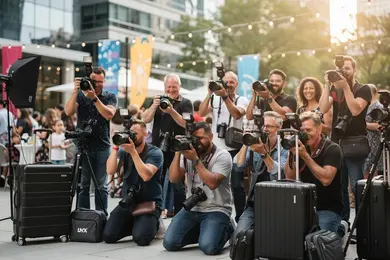
Event photography includes weddings, conferences, graduations, concerts, fundraisers, festivals, sports events, and brand activations. These assignments require fast decision-making, low-light shooting, flash control, backup planning, client communication, file management, and post-production efficiency. A strong online program prepares students by combining critique-based coursework with practical assignments they can complete in their own communities.
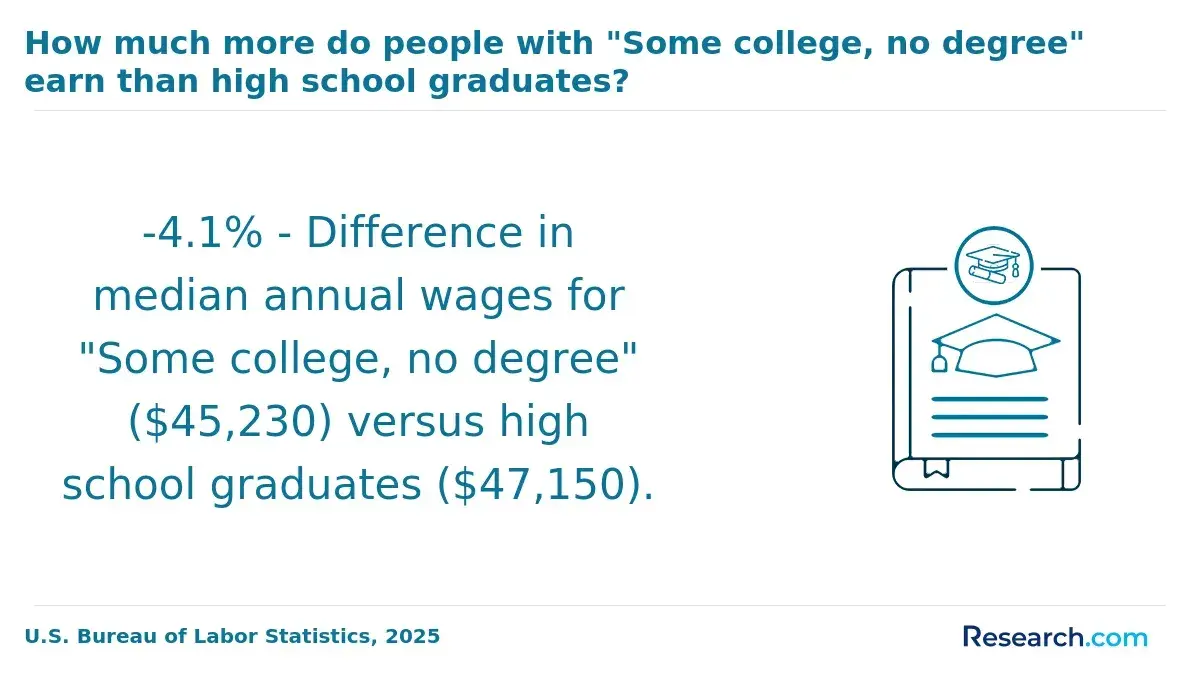
The degree can be worth it if you want structured feedback, a credential, a broader visual arts foundation, and access to financial aid or transfer pathways. It may be less necessary if you already have a strong portfolio, regular paid clients, and only need focused training in lighting, editing, or business operations. Students who also want adjacent design work-such as album layouts, brand assets, or promotional graphics-may benefit from exploring graphic design pathways alongside photography.
The clearest way to understand the degree options is to compare what each credential is designed to do. The table below summarizes the most common online photography credentials and how they fit event photography goals.
| Credential | Typical Length | Best Fit | Event Photography Value | Limitations |
| Certificate in digital photography | Several months to 1 year | Beginners or working photographers filling skill gaps | Fast training in camera control, editing, lighting, or portfolio basics | Usually less comprehensive and may not qualify for the same financial aid as degrees |
| Associate degree in photography | About 2 years full time | Students seeking entry-level training or a lower-cost transfer route | Builds technical foundations, editing workflow, and early portfolio work | May offer fewer advanced business, branding, and capstone opportunities than a bachelor's degree |
| Bachelor's degree in digital photography | About 4 years full time | Students who want a broad professional portfolio and degree credential | Stronger preparation in concept development, visual storytelling, critique, business, and portfolio presentation | Higher total cost and time commitment; still requires real-world shooting experience |
| Master's degree in photography or related visual arts | 1 to 3 years | Advanced artists, educators, or photographers moving into leadership or academic work | Useful for conceptual depth, teaching goals, or high-end portfolio refinement | Usually not required for event photography businesses or freelance entry |
Which accredited online schools offer the best digital photography programs for event photography?
The best online digital photography program for event photography is usually the one that combines accreditation, practical image-making assignments, strong critique, portfolio development, and business preparation. Because "event photography" is rarely a separate major, students should look for programs that let them shape projects around weddings, conferences, performances, sports, or documentary-style assignments.
The schools below are useful starting points for a shortlist because they offer online or distance-accessible photography programs and institutional accreditation. Availability, formats, tuition, and degree names can change, so confirm each program directly before applying.
| School | Online Photography Option | Institutional Accreditation | Why It Fits Event Photography Goals | Best For |
| Southern New Hampshire University | BA in Digital Photography | New England Commission of Higher Education | Emphasizes digital workflow, visual communication, portfolio development, and business-oriented creative practice | Students seeking a flexible online bachelor's degree with broad career preparation |
| Academy of Art University | Online photography degrees at undergraduate and graduate levels | WASC Senior College and University Commission | Offers studio-style critique, lighting, digital imaging, and portfolio courses that can be applied to weddings, fashion events, concerts, and commercial work | Students who want an art-school environment in an online format |
| Rocky Mountain College of Art + Design | Online BFA in Photography | Higher Learning Commission | Combines visual storytelling, digital production, and portfolio-building with a fine-arts foundation | Students who want a BFA structure and creative development beyond basic technical training |
| Sessions College for Professional Design | Online associate-level and certificate options in digital photography | Distance Education Accrediting Commission | Focuses on practical digital imaging, design-aware presentation, and portfolio development | Students seeking a shorter, skills-focused online path who understand transfer-credit limits |
When comparing these options, do not treat a school list as a final ranking. A program that is excellent for fine-art photography may not be the best fit for a student who wants to build a wedding business quickly, while a shorter program may be practical for a working adult who already has clients.
Before choosing, ask each school for concrete evidence of event-relevant preparation. Useful questions include whether students complete client-style assignments, whether faculty have current professional photography experience, whether portfolios are reviewed by instructors, and whether the program covers contracts, pricing, copyright, backups, and client delivery.
How do online digital photography degrees compare to campus programs for event photographers?
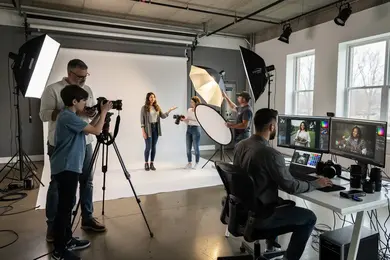
Online and campus photography programs can both prepare students for event work, but they develop skills in different ways. Online learning is strongest when you are self-directed, have access to local events or practice subjects, and can build a portfolio in your own market. Campus learning may be stronger if you need studio access, in-person lighting labs, or close peer collaboration.
The comparison below highlights the trade-offs that matter most for event photographers. Use it to decide whether flexibility or in-person production access is more important for your current situation.
| Factor | Online Digital Photography Degree | Campus Photography Program | Better Choice When |
| Schedule | Often more flexible for working adults, parents, military learners, and freelancers | Requires scheduled class attendance and commuting or relocation | Online is better if you need to shoot paid events while studying |
| Hands-on practice | Students complete assignments using their own cameras, locations, and subjects | Students may use campus studios, labs, lighting equipment, and peer models | Campus is better if you need structured in-person production support |
| Portfolio relevance | Can be highly local and career-specific if assignments are built around real community events | May offer more staged or studio-based assignments unless the program has event partnerships | Online is better if your goal is to build a portfolio in the market where you plan to work |
| Networking | Depends on virtual critique, faculty access, alumni groups, and local initiative | Often easier to build peer and faculty relationships in person | Campus is better if you rely on school-based networking and referrals |
| Technology needs | Requires reliable internet, editing software, storage, backup systems, and camera gear | May provide some lab access, printing resources, and shared equipment | Online is better if you already own or can budget for equipment |
For event photographers, the biggest online-program risk is isolation. You can offset it by assisting local photographers, joining professional groups, volunteering selectively for portfolio-building events, and requesting detailed critique from instructors instead of only submitting finished images.
Choose online study if you are disciplined, want to keep working, and can create real-world shooting opportunities. Choose campus study if you need equipment access, face-to-face accountability, or a more immersive arts environment.
What courses are included in an online digital photography curriculum focused on events?
An event-focused online digital photography curriculum should teach both image quality and job readiness. The strongest programs do not stop at camera settings; they also teach how to plan a shoot, manage files, edit consistently, communicate with clients, and present a professional portfolio.
The courses below commonly appear in online digital photography programs and can be applied directly to event work. When reviewing a curriculum, look for assignments that require varied lighting, deadlines, people-focused storytelling, and portfolio critique.
| Course Area | What Students Learn | Why It Matters for Event Photography |
| Digital camera techniques | Exposure, focus, lenses, camera modes, file formats, and image quality | Events move quickly, so photographers need confident technical control without slowing down the moment |
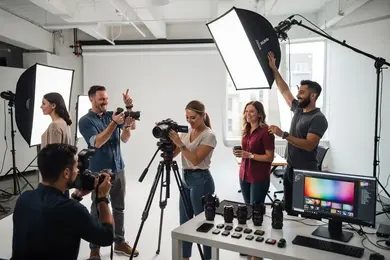
| Lighting and flash | Natural light, on-camera flash, off-camera flash, modifiers, and mixed lighting | Reception halls, conferences, concerts, and ceremonies often have difficult or changing light |
| Digital editing and workflow | RAW processing, color correction, retouching, culling, exporting, and file organization | Event photographers may deliver hundreds or thousands of images under client deadlines |
| Documentary and storytelling photography | Sequencing, visual narrative, candid moments, and ethical representation | Strong event coverage tells the story of the day, not just isolated posed portraits |
| Portraiture | Posing, expression, lighting for people, group arrangements, and subject direction | Weddings, graduations, galas, and corporate events all require confident people photography |
| Business of photography | Contracts, licensing, estimates, invoicing, client communication, marketing, and copyright basics | Many event photographers are freelancers or small-business owners who must manage risk and profitability |
| Portfolio or capstone | Curated body of work, artist statements, presentation, and critique | A polished portfolio is often more persuasive to clients than the degree title alone |
Technology is also changing the curriculum. AI-assisted culling, noise reduction, masking, and generative editing tools can speed up post-production, but event photographers still need judgment, consent awareness, and clear client policies about what can and cannot be altered. Students interested in the technical side of image automation may eventually explore advanced computing pathways such as a PhD in artificial intelligence USA, though that is far beyond what is needed for most event photography careers.
If your goal is event work, prioritize programs that require repeated critique and real shooting assignments. A curriculum that is mostly software tutorials may help you edit images, but it may not prepare you to handle a dark reception, a fast awards ceremony, or a client who needs clear direction.
What are the admission requirements for online digital photography bachelor's and associate degrees?
Admission requirements vary by school and degree level, but online photography programs usually combine standard college admissions materials with creative or technical readiness expectations. Some programs are open-admission or test-optional, while art schools may request a portfolio or creative samples.
Most applicants should be prepared for a few common requirements. These items help schools verify academic readiness and, in some cases, determine transfer credit or placement.
- High school diploma, GED, or equivalent for associate and bachelor's entry.
- Official transcripts from high school and any previously attended colleges.
- Application form and, when required, an application fee.
- Portfolio, creative samples, or a statement of interest for programs that evaluate artistic readiness.
- Minimum technology requirements, including reliable internet, a computer capable of running editing software, and access to a digital camera.
- English proficiency documentation for applicants whose prior education was not in English, if required by the school.
Transfer students should pay close attention to credit policies. General education credits may transfer more easily than studio or photography courses because schools often want to review whether prior creative work matches their learning outcomes.
Applicants should also ask whether the program requires specific equipment before the first term. A lower tuition price can become less attractive if students must immediately buy a camera body, lenses, flash units, memory cards, calibrated monitor, hard drives, software subscriptions, and backup services.
How long do online digital photography degrees take and what do they cost?
Online digital photography degrees typically take about two years for an associate degree and about four years for a bachelor's degree when taken full time. Part-time students may need longer, while transfer students can shorten the timeline if prior credits are accepted.
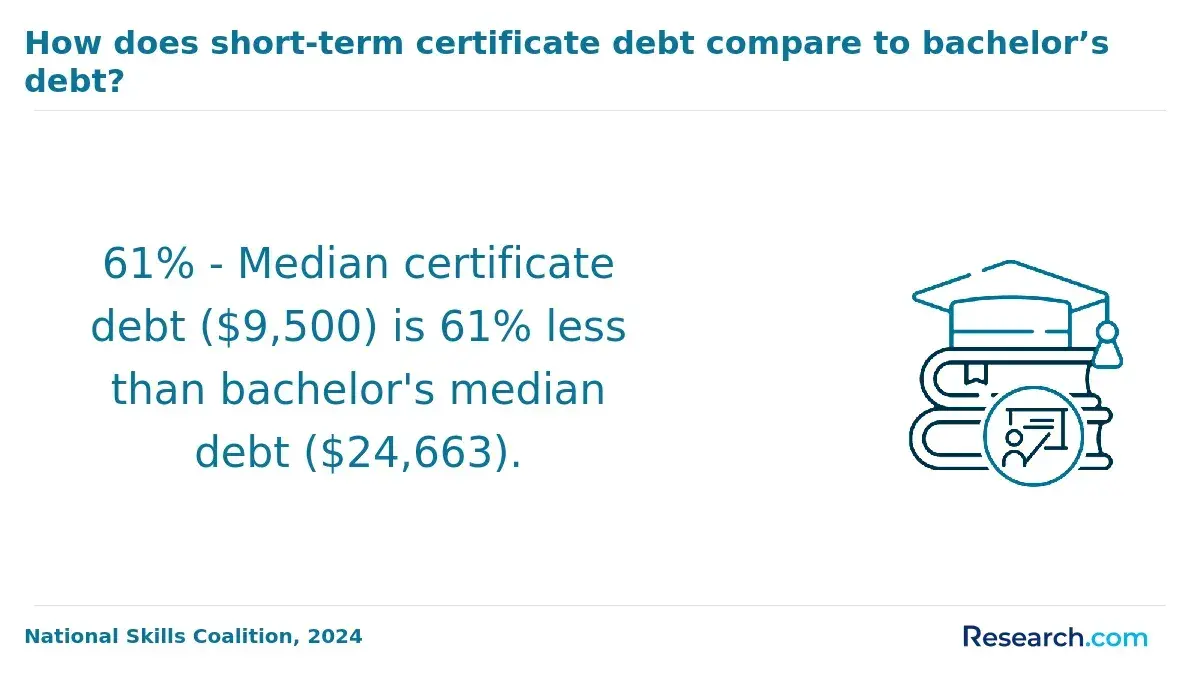
Cost depends on tuition, fees, transfer credits, equipment, software, books, and the number of terms needed to finish. College Board's 2024 Trends in College Pricing reported average published tuition and fees of $11,610 for in-state public four-year institutions and $43,350 for private nonprofit four-year institutions for the 2024-2025 academic year; online programs can fall above or below those benchmarks depending on the school.
Use these common cost categories when estimating your total investment. Program pages may advertise tuition clearly, but the real budget for photography students often includes gear and production expenses.
- Tuition and required institutional fees.
- Online course fees, technology fees, or portfolio review fees.
- Camera body, lenses, flash, light modifiers, memory cards, batteries, and camera bag.
- Editing software, cloud storage, external hard drives, and backup systems.
- Printing, portfolio website, domain name, sample albums, or promotional materials.
- Travel, parking, or location costs for assignments, internships, or local event shoots.
The table below shows how time and cost considerations differ by program type. It is not a price quote; it is a planning guide for comparing degree formats.
| Program Type | Typical Full-Time Length | Cost Pattern | Best Cost-Control Strategy |
| Certificate | Several months to 1 year | Lower total tuition but may have limited aid eligibility | Use it for targeted skills such as lighting, editing, or business if a full degree is unnecessary |
| Associate degree | About 2 years | Often lower total cost than a bachelor's degree, especially at community colleges | Confirm transfer agreements before enrolling if a bachelor's degree is your long-term goal |
| Bachelor's degree | About 4 years | Higher total cost but broader portfolio, general education, and credential value | Maximize transfer credits, compare net price after aid, and choose a program with strong portfolio outcomes |
| Master's degree | 1 to 3 years | Often expensive and usually unnecessary for event photography entry | Choose only if it supports teaching, advanced artistic practice, or a specific professional goal |
Students comparing affordability across online degrees can borrow a useful strategy from resources on the cheapest online Spanish degree: focus on completion time, transfer credit, and total net cost rather than tuition alone.
To reduce costs, start by filing the FAFSA if eligible, comparing net price instead of sticker price, asking about transfer credits, renting or buying used gear carefully, and avoiding equipment upgrades until a course or paid assignment truly requires them.
What event photography careers can you pursue with an online digital photography degree?
An online digital photography degree can support several event-focused roles, especially when paired with a strong portfolio and real client experience. Employers and clients usually care about image quality, reliability, editing speed, and professionalism, so the degree works best as part of a broader career plan.
The table below summarizes common career directions for graduates or students building event photography experience. Many professionals combine several of these roles, especially early in their careers.
| Career Path | Typical Responsibilities | Common Clients or Employers | What Helps You Compete |
| Wedding photographer | Cover ceremonies, receptions, portraits, details, and timelines | Couples, planners, venues, studios | Strong low-light skills, backup systems, posing ability, client communication, and album storytelling |
| Corporate event photographer | Photograph conferences, panels, headshots, networking sessions, award events, and branded activations | Companies, agencies, nonprofits, convention organizers | Professional delivery, fast turnaround, brand awareness, and discretion in business settings |
| Concert or performance photographer | Capture live music, theater, dance, festivals, and backstage moments | Venues, artists, publications, promoters | Low-light expertise, fast lenses, rights awareness, and the ability to work within access limits |
| Sports event photographer | Photograph games, tournaments, races, awards, and team portraits | Schools, leagues, media outlets, athletic organizations | Fast autofocus skills, action timing, long-lens technique, and efficient batch editing |
| Photo editor or digital imaging specialist | Cull, color-correct, retouch, archive, and prepare images for delivery | Studios, agencies, media teams, high-volume event companies | Editing speed, consistency, file management, and software expertise |
| Event studio owner | Manage clients, contracts, shooters, editing workflows, pricing, and marketing | Direct consumers, corporate clients, event planners | Business planning, sales, leadership, risk management, and repeatable workflows |
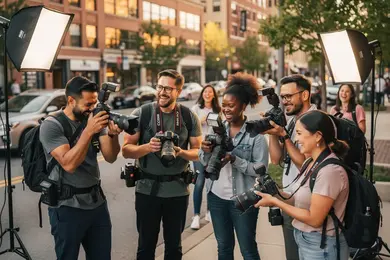
Entry-level photographers often start as assistants, second shooters, photo booth operators, studio editors, or freelance contributors. These roles may not be glamorous, but they teach timing, client expectations, gear handling, and delivery standards.
Advancement usually comes from specialization. A photographer who becomes known for luxury weddings, executive conferences, school sports, nonprofit galas, or live performance coverage can build clearer pricing, referrals, and marketing messages than someone who tries to photograph every possible event.
How much do event photographers with digital photography degrees typically earn?
There is no single salary for event photographers with digital photography degrees because many are self-employed, seasonal, part-time, or paid per assignment. BLS May 2024 data reported a $42,520 median annual wage for photographers overall, which is a useful benchmark but not an event-specific guarantee.
For decision-making, it is better to think in terms of earning models. Event photographers may earn through hourly coverage, day rates, wedding packages, corporate retainers, editing services, image licensing, print sales, albums, or second-shooter fees.
The table below explains how income context differs by work arrangement. This matters because a freelancer's gross revenue is not the same as take-home pay after taxes, insurance, equipment, software, marketing, travel, and subcontractor costs.
| Work Arrangement | How Pay Is Commonly Structured | Income Considerations | Best Fit |
| Employee photographer | Hourly wage or salary | More predictable pay but less control over clients, style, and schedule | Graduates who want stability and team-based work |
| Freelance event photographer | Hourly coverage, day rate, or project package | Higher flexibility but income varies by season, market, marketing ability, and referrals | Self-directed photographers comfortable with business operations |
| Second shooter or assistant | Per-event flat fee or hourly rate | Lower responsibility and lower pay than lead roles, but strong learning value | Beginners building experience and portfolio credibility |
| Studio owner | Client packages, associate shooter revenue, add-ons, and repeat contracts | Potentially higher revenue but also higher risk, overhead, and management responsibility | Experienced photographers with business systems and consistent demand |
A degree can support earning potential indirectly by improving technical quality, professionalism, portfolio presentation, and business literacy. It does not replace market demand, referrals, client experience, or consistent delivery.
Before enrolling, estimate your break-even point. Compare total program cost with realistic local event rates, the number of paid shoots you can handle per month, and the time it may take to build a client base.
What is the job outlook for event photographers and related digital photography roles?
The job outlook for photographers is modest but not stagnant. BLS employment projections published in 2024 projected photographer employment to grow 4% from 2023 to 2033, about as fast as the average for all occupations. For students, this means opportunity exists, but competition and differentiation matter.
Event photography demand is shaped by weddings, corporate travel, conventions, school activities, entertainment, nonprofit fundraising, and brand marketing. At the same time, smartphones, social media teams, lower-cost freelancers, and AI-assisted editing have made basic photography more accessible. The photographers most likely to compete well are those who provide reliability, consistent style, fast turnaround, strong people skills, and professional risk management.
Current trends affecting event photography include several practical shifts. These are important because they influence what skills students should build during a degree program.
- Hybrid and corporate events increasingly need both still photography and short-form visual assets for websites, social media, and internal communications.
- AI-assisted editing is speeding up culling, masking, denoising, and color workflows, making human judgment and ethical editing policies more important.
- Clients expect faster previews and online galleries, so file management, backup discipline, and delivery platforms are now core business skills.
- Event planners and venues often prefer photographers who carry liability insurance, use contracts, and can coordinate smoothly with other vendors.
- Specialization is becoming more important because general "good photos" are easier to find than photographers with proven experience in a specific event niche.
Students should treat the outlook as a signal to build a business-ready portfolio, not just complete assignments. Practical experience, testimonials, vendor relationships, and repeatable workflows can matter as much as the credential itself.
How can you evaluate and choose a reputable online digital photography program?
Choosing a reputable online digital photography program starts with accreditation, but it should not end there. You also need to know whether the curriculum, faculty, portfolio expectations, technology requirements, and total cost match your event photography goals.
Use the following steps before enrolling. This sequence helps you avoid common mistakes such as choosing only by tuition, assuming all credits transfer, or picking a program that does not build an event-ready portfolio.
- Verify institutional accreditation through the school and recognized accreditation databases before submitting an application.
- Review the curriculum for lighting, digital workflow, portraiture, business practices, copyright, portfolio development, and critique-based assignments.
- Ask whether students can shape projects around weddings, conferences, performances, sports, or other real events.
- Request a full cost estimate that includes tuition, fees, software, camera gear, storage, printing, and portfolio expenses.
- Confirm transfer-credit policies in writing, especially if you plan to start with an associate degree or have prior college credits.
- Look for faculty experience that aligns with professional photography, commercial work, documentary practice, or event-related production.
- Ask how online students receive critique, advising, career support, internship guidance, and portfolio review.
- Compare graduation requirements with your weekly schedule, work obligations, and realistic access to subjects or events for assignments.
Military-connected students, veterans, and working adults should ask additional questions about benefits, scheduling, transfer credits, and support services. Similar considerations appear in guidance on an online cybersecurity bachelor degree for veterans, where flexibility and student support can be just as important as the program title.
Red flags include vague accreditation language, no clear portfolio expectations, limited instructor feedback, pressure-heavy admissions calls, unclear total costs, no published transfer-credit policy, and promises of guaranteed jobs or income. Photography careers are opportunity-driven and portfolio-driven, so any school that guarantees a specific outcome should be approached cautiously.
A strong final shortlist should include no more than three to five programs. Compare them by net cost, time to completion, portfolio fit, course relevance, faculty feedback, and how well each one helps you build the type of event photography career you actually want.
Other Things You Should Know About Digital Photography
No certification is universally required for event photographers in the US. However, credentials from professional photography organizations can help demonstrate commitment, especially when paired with a strong portfolio, client reviews, and reliable business practices.
When choosing an online digital photography degree for event photography careers, consider programs that offer event-specific courses, strong technical training, and mentorship opportunities. Check the curriculum for modules on lighting, composition, and editing. Also, evaluate the school's reputation, faculty expertise, and networking opportunities to ensure career readiness upon graduation.
Yes. Many online digital photography programs require a portfolio review or capstone portfolio in the final term, often after 120 to 128 credit hours. For event photography careers, this usually includes edited wedding, corporate, and live-event images presented for faculty assessment.
Many do, depending on location, venue rules, and business structure. Liability insurance, equipment insurance, contracts, and local business registration can protect both the photographer and the client, so check state and local requirements before taking paid work.
References
- Digital Photographer Career Guide - Sessions College https://www.sessions.edu/career-center/photographer/
- 12 Types of Photography Careers for Your Passion https://www.tafecourses.com.au/resources/photography-career-types/
- What Can You Do With A Photography Degree? - What Career Live https://www.whatcareerlive.co.uk/what-can-you-do-with-a-photography-degree/
- Begin Your Digital Photography Course Today | Photography School https://www.australianphotographyschool.com.au/blog/mastering-digital-photography-a-comprehensive-guide/
- Online Photography Degrees https://mycollegeguide.org/online-photography-degrees/
- How Much Does it Cost to Learn Photography? https://blog.nobledesktop.com/learn/photography/photography-cost-to-learn
- How to Choose the Right Photography Program https://nossi.edu/how-to-choose-the-right-photography-program/
- Digital Photography Program https://coned.georgebrown.ca/courses-and-programs/digital-photography-program
- How Much Do Photographers Make | Full Frame Insurance https://www.fullframeinsurance.com/blog/how-much-do-photographers-make
- How to evaluate an online photography course https://www.upskillist.com/blog/how-to-evaluate-an-online-photography-course/