2027 Best Online Associate Degrees in Digital Photography With Prior Learning Credit

Co-Founder and Chief Data Scientist
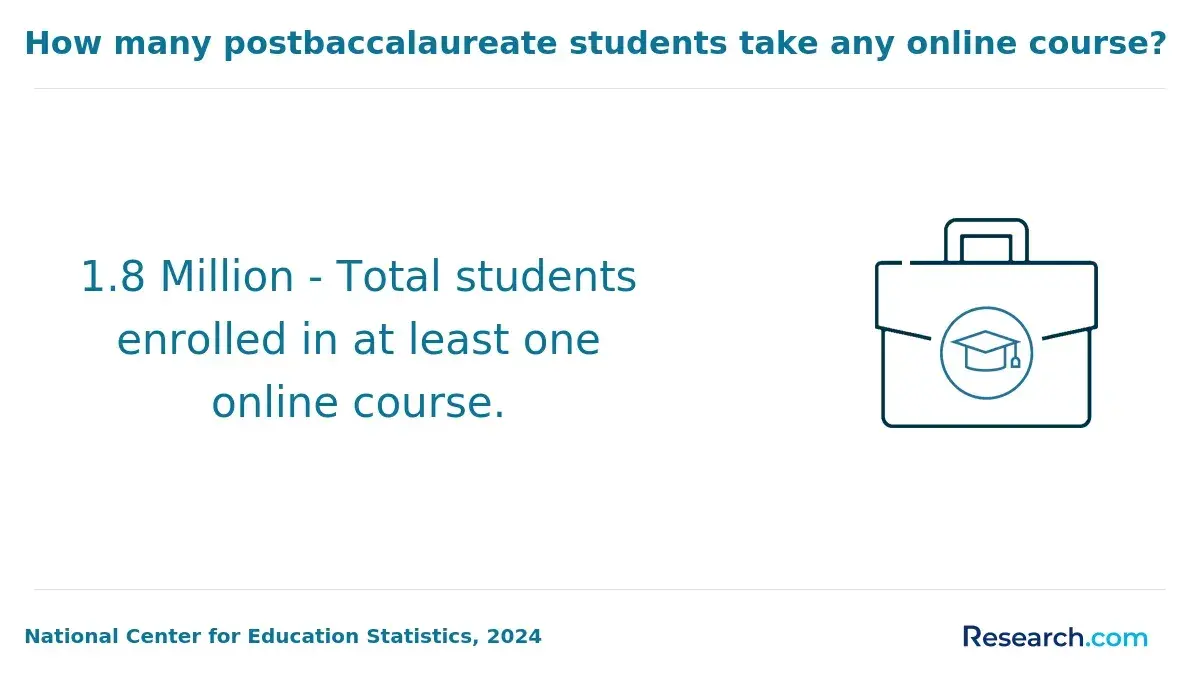
Choosing an online associate degree in digital photography is really a choice about cost, time, portfolio quality, and career fit. It matters because online learning is now mainstream: NCES distance education data published in 2024 shows that more than half of U.S. undergraduates take at least one online course.
This guide is for working adults, career changers, military learners, and self-taught photographers who want college credit for what they already know. You'll learn how to compare programs, use prior learning credit, estimate costs, and judge whether the degree supports your goals.
Key Things You Should Know
- The strongest online photography associate options are accredited programs that combine digital capture, lighting, editing, visual storytelling, business skills, and a portfolio or capstone, while also offering formal transfer or prior learning credit review.
- Cost varies widely, but College Board's 2024 pricing data lists average published in-district tuition and fees at public two-year colleges at about $4,050 for the academic year, making community colleges a key benchmark for affordability.
- BLS May 2024 wage data places the median annual wage for photographers at $42,520, so students should evaluate programs by portfolio outcomes, total cost, and local or freelance market opportunities rather than assuming the degree alone will raise earnings.
What are the best online associate degrees in digital photography with prior learning credit?
The best online associate degrees in digital photography with prior learning credit are not always the most heavily advertised programs. They are the programs that are accredited, transparent about transfer and experiential credit, portfolio-focused, and aligned with the type of photography work you want to do after graduation.
For most students, the strongest choices fall into a few program types. The right fit depends on whether you want to transfer into a bachelor's degree, enter freelance or studio work quickly, or combine photography with digital media, marketing, or design.
| Program type | Best for | What to look for | Prior learning credit fit |
| Online Associate of Applied Science in Digital Photography | Students who want job-ready portfolio training | Courses in lighting, image editing, studio practice, business, and portfolio development | Often strongest when the school reviews professional experience, military training, certifications, or transfer coursework |
| Online Associate of Arts or Associate of Science in Photography | Students planning to transfer to a bachelor's program | General education transferability, art foundations, photography history, and digital production | Useful for reducing general education credits through AP, CLEP, DSST, or prior college work |
| Online Associate in Visual Communications or Digital Media | Students who want photography plus design, social media, or content production skills | Photography courses paired with design software, branding, video, and web media | Good fit for students with work experience in marketing, media production, or creative software |
| Online Associate in Graphic Design with Photography Electives | Students who want broader creative employment options | Layout, typography, digital imaging, Adobe software, and photography electives | May accept portfolio-based or course-equivalency credit, depending on school policy |
A good "best program" shortlist should include schools that answer practical questions before you apply: how many credits can transfer, whether a portfolio can be reviewed for credit, what camera and software are required, whether assignments can be completed fully online, and whether graduates leave with a professional portfolio.
Use this selection sequence when comparing programs, because it keeps you from choosing based only on tuition or a familiar school name.
- Confirm institutional accreditation through the college's accreditor and the U.S. Department of Education database.
- Ask for the written prior learning credit policy, including limits, fees, required documentation, and whether credits apply to major courses or only electives.
- Compare the curriculum against your goal, such as portrait photography, product photography, content creation, photojournalism, real estate photography, or transfer to a bachelor's program.
- Review portfolio requirements and student work samples if available, because the portfolio is often more important to clients and employers than the program title.
- Calculate total cost after transfer credit, technology fees, software, camera equipment, and graduation fees.
A common mistake is assuming that any online photography degree with "digital" in the title will be hands-on. In reality, some programs emphasize general media theory, while others require regular shooting assignments, critiques, lighting setups, editing projects, and client-style portfolio work. If your goal is paid photography work, choose the option that gives you the strongest body of finished images.
How does prior learning credit work for photography degrees?
Prior learning credit, sometimes called credit for prior learning or PLA, is college credit awarded for college-level learning gained outside a traditional classroom. In photography programs, that learning may come from professional work, military training, industry certifications, software training, workshops, exams, or a portfolio that demonstrates measurable skills.
Schools differ significantly in how they evaluate prior learning. Some award only elective credit, while others may allow credit to replace introductory digital imaging, software, business, or general education courses. The difference matters because elective credit may reduce total credits, but major-course credit can shorten the program more directly.
| Prior learning source | Possible evidence | How it may apply | What to verify |
| Professional photography work | Client galleries, invoices, publication credits, studio experience, supervisor letters | Portfolio review, elective credit, or introductory photography credit | Whether the program accepts experiential credit in the major |
| Military or workforce training | Joint Services Transcript, ACE-reviewed training, employer training records | General education, technology, communication, or elective credit | Whether credits satisfy degree requirements or only reduce electives |
| Adobe or software training | Certificates, course records, exam documentation, project samples | Digital imaging, editing, or design-related credit | Whether the certification is current and recognized by the school |
| Standardized exams | CLEP, DSST, AP, or IB records | English, humanities, social science, math, or other general education credit | Minimum score, credit limit, and transcript procedure |
| Prior college coursework | Official transcripts | General education, art foundations, design, or photography courses | Minimum grade, recency rules, and course equivalency |
Students with substantial experience should contact admissions and the registrar before applying. Ask for an unofficial credit estimate and a degree plan showing exactly where each accepted credit would count. This is especially important for veterans and adult learners comparing creative programs with technical fields such as cybersecurity programs online for veterans, where military training and industry certifications may transfer differently.
To make a strong PLA request, organize your evidence before the school reviews it. A clean, documented submission is more likely to be evaluated efficiently.
- Create a portfolio with labeled examples that show technical control, lighting, composition, editing, and client or project context.
- Collect transcripts, certificates, military records, training syllabi, and proof of completed exams.
- Map your experience to specific course outcomes listed in the catalog instead of simply saying you have worked as a photographer.
- Ask whether PLA credits are posted as pass/fail, graded credit, elective credit, or course-equivalent credit.
- Confirm the maximum number of credits allowed through transfer and prior learning before you enroll.
The biggest red flag is a school that promises credit before reviewing documentation. Legitimate prior learning credit is evaluated through a defined academic process, and the final decision usually rests with the registrar, department, or faculty evaluator.
Are online digital photography associate degrees accredited?
Many online digital photography associate degrees are accredited, but accreditation belongs to the institution and sometimes to the program, not to the delivery format alone. An online program can be legitimate if it is offered by an institution recognized by an accreditor approved by the U.S. Department of Education or the Council for Higher Education Accreditation.
Institutional accreditation is the first thing to check because it affects federal financial aid eligibility, credit transfer, employer recognition, and future bachelor's degree options. Specialized art or design accreditation can be a plus, but it is usually not required for entry-level photography work.
| Accreditation or recognition type | Why it matters | How students should use it |
| Institutional accreditation | Supports financial aid eligibility, transferability, and basic academic legitimacy | Treat it as essential before applying |
| Programmatic art or design accreditation | May indicate external review of curriculum, faculty, and student outcomes | Consider it helpful, but not always necessary for photography employment |
| State authorization for online learning | Allows the college to enroll students from your state | Confirm if you live outside the school's home state |
| Industry software recognition | May show alignment with tools such as Adobe Creative Cloud | Use it as a bonus, not a substitute for accreditation |
Online students should also verify whether the program has any in-person requirements. Some photography degrees can be completed fully online using your own camera, lighting, editing software, and local subjects. Others may require campus workshops, proctored assessments, internships, or access to specialized studio equipment.
Common accreditation mistakes are easy to avoid if you know what to ask. Before committing to a program, confirm the following details in writing.
- Whether the college is institutionally accredited and whether that accreditation is current.
- Whether online students in your state are eligible to enroll under state authorization rules.
- Whether credits are likely to transfer to the bachelor's programs you may want later.
- Whether financial aid applies to the specific online photography associate degree, not just the college overall.
- Whether the program title on the transcript matches your intended pathway, such as photography, digital media, or visual communications.
Accreditation does not guarantee a job, a salary, or a specific transfer outcome. It simply gives you a stronger foundation for academic recognition, financial aid access, and long-term educational mobility.
What courses are in an online digital photography associate degree?
An online digital photography associate degree usually requires about 60 credits. The curriculum combines general education, technical photography courses, digital editing, art and design foundations, and business or portfolio preparation. The strongest programs teach both image-making and the practical work of managing files, clients, deadlines, usage rights, and deliverables.
Courses vary by school, but most associate programs cover a predictable set of skills. The table below shows the course areas students are most likely to encounter and why each matters for career preparation.
| Course area | Typical topics | Why it matters |
| Digital photography fundamentals | Exposure, aperture, shutter speed, ISO, lenses, composition, file formats | Builds technical control and consistency |
| Lighting | Natural light, studio lighting, flash, reflectors, product setups, portrait lighting | Helps students produce professional-looking images in varied conditions |
| Digital editing | RAW processing, retouching, color correction, masking, workflow, output formats | Supports modern client, editorial, and commercial expectations |
| Visual design and art foundations | Color, form, visual hierarchy, art history, media literacy | Improves creative decision-making and critique skills |
| Business of photography | Pricing, contracts, copyright basics, client communication, marketing, branding | Prepares students for freelance and small-business realities |
| Portfolio or capstone | Project planning, editing a body of work, presentation, critique, career materials | Creates evidence students can show employers, clients, or transfer schools |
Technology is changing the curriculum. Many programs now address mobile workflows, short-form visual content, AI-assisted editing, metadata, content authenticity, and cross-platform publishing. If you are also considering creative technology fields beyond photography, comparing photography coursework with online degrees in AI can clarify whether you want to focus on image creation, automation, or technical systems.
Students should not judge a curriculum only by course titles. Review assignments, software requirements, critique format, and portfolio expectations. A course called "Digital Imaging" could be a rigorous editing studio, a general computer literacy class, or a design survey, depending on the school.
For online study, the most useful courses are interactive. Look for programs with instructor critique, peer review, project revisions, and real-world assignments rather than only readings and quizzes. Photography improves through practice and feedback, so a program without structured critique may be less valuable for portfolio development.
What are the admission requirements for online photography programs?
Most online associate degrees in digital photography have open or moderately selective admissions. Applicants usually need a high school diploma or GED, official transcripts, an application form, and proof of identity or residency. Some programs request placement testing, while others use high school records or prior college transcripts to place students in English or math.
Photography associate programs generally do not require a professional portfolio for admission, especially at community colleges. However, private art schools or more specialized programs may ask for creative samples, a personal statement, or an admissions interview. Even when a portfolio is optional, submitting strong samples can help advisors place you in the right courses or discuss prior learning options.
| Requirement | Common expectation | What to prepare |
| Education record | High school diploma, GED, homeschool documentation, or prior college transcript | Official transcripts sent directly to the college |
| Application | Online application and basic personal information | Legal name, residency details, program choice, and start term |
| Placement | English and math placement through transcripts, test scores, or assessment | Prior scores, college coursework, or readiness testing if required |
| Technology readiness | Reliable computer, internet access, camera, storage, and editing software | Budget for equipment and confirm minimum specifications |
| Creative materials | Optional or required portfolio at some schools | Small image set showing variety, technical control, and original work |
Start dates can also affect your decision. Some schools use traditional semesters, while others offer monthly, rolling, or accelerated terms. If timing is important because of work, military transition, or family obligations, compare photography programs with broader lists of online colleges that start soon to understand how flexible calendars work.
Before applying, ask admissions these practical questions. The answers can save time and prevent surprises after enrollment.
- Can I complete every photography course online from my state?
- What camera, lenses, lighting, computer, storage, and software are required in the first term?
- How many transfer or prior learning credits can be applied to this exact degree plan?
- Will I receive instructor critique on photo assignments, or are courses mostly self-paced?
- Does the program include portfolio review, internship options, or career support for creative freelancers?
A common mistake is applying before checking equipment requirements. A low tuition price can become less affordable if the first semester requires a new camera body, multiple lenses, lighting gear, paid software, and high-capacity storage.
How long does an online photography associate degree take?
An online digital photography associate degree typically takes two years of full-time study because most programs require about 60 credits. Part-time students often take three to four years, depending on course load, term length, and whether required photography courses are offered every term.
Prior learning credit can shorten the timeline, but the impact depends on where the credits apply. For example, 15 accepted general education credits may remove a semester of coursework, while 15 elective credits may help only if the degree has enough elective space. Students should always request a degree audit rather than relying on a general transfer-credit estimate.
| Study pace | Typical credit load | Likely timeline | Best for |
| Full-time | 12 to 15 credits per term | About two academic years | Students who can manage multiple studio and general education courses at once |
| Part-time | 6 to 9 credits per term | About three to four years | Working adults, caregivers, and students building a freelance business while studying |
| Accelerated with transfer or PLA | Varies after credit review | Potentially less than two years | Students with prior college credit, exams, military training, or documented professional experience |
| Sequential studio track | Program-specific course sequence | May take longer if courses are missed | Students in programs where photography courses must be completed in order |
Online learning does not automatically mean faster learning. Photography courses can be time-intensive because students must plan shoots, arrange subjects or locations, capture images, edit files, respond to critique, and revise work. A three-credit photography studio course may require more weekly time than a lecture-based general education course.
To avoid delays, build your schedule around course sequencing. Introductory photography, digital editing, lighting, and portfolio courses may be prerequisites for one another. Missing one course can push back graduation if it is offered only once or twice a year.
Students trying to finish quickly should balance speed with portfolio quality. An accelerated path makes sense if you already have strong technical skills and need the credential. A slower path may be better if you are still learning camera control, lighting, editing, and client-style production.
How much do online digital photography associate degrees cost?
Online digital photography associate degree costs depend on tuition, residency status, institution type, fees, transfer credit, PLA fees, equipment, and software. College Board's 2024 pricing data places average published tuition and fees at public two-year colleges at about $4,050 for in-district students for the academic year, which is a useful benchmark when judging affordability.
Photography students should calculate total cost, not just tuition. A program with low tuition may still require significant out-of-pocket spending for camera equipment, lighting, editing software, printing, storage, and portfolio presentation.
- Public community college in-district tuition is often the lowest-cost route, especially when the program is fully online and accepts transfer or prior learning credit.
- Out-of-state online tuition can be higher unless the school charges a flat online rate or participates in a tuition reciprocity arrangement.
- Private nonprofit and private for-profit colleges may offer more specialized online creative programs, but students should compare total cost, transferability, and portfolio outcomes carefully.
- PLA can reduce tuition if accepted credits replace required courses, but some schools charge portfolio assessment, transcription, or exam fees.
- Equipment and software can materially affect the budget, especially if the program requires a DSLR or mirrorless camera, lenses, lighting, color-calibrated monitor, external storage, and Adobe Creative Cloud or similar tools.
The table below summarizes major cost drivers so you can compare programs on a realistic basis rather than relying on advertised tuition alone.
| Cost factor | Why it changes total price | How to evaluate it |
| Tuition rate | Rates may differ for in-district, in-state, out-of-state, and online students | Ask for the rate that applies to your residency and delivery format |
| Transfer and PLA credit | Accepted credits can reduce the number of courses you must pay for | Request a written degree audit before enrolling |
| Course fees | Online, technology, lab, or digital media fees may be charged separately | Review the program cost sheet by course, not only annual tuition |
| Equipment | Camera, lenses, lighting, storage, and computer requirements vary | Ask whether used or entry-level equipment is acceptable |
| Software | Editing tools may require monthly or annual subscriptions | Check whether the school provides discounted access |
| Financial aid | Grants, scholarships, employer assistance, VA benefits, and payment plans can reduce net cost | Compare net price after aid, not only sticker price |
To judge value, compare the program's net cost with your likely use of the credential. If you want to transfer, prioritize low cost and transferable credits. If you want freelance work, weigh the cost against portfolio quality, business training, and access to critique. If you already have strong skills, prioritize programs with generous prior learning credit and avoid paying to repeat introductory content you have already mastered.
What jobs can you get with a photography associate degree?
A photography associate degree can support entry-level creative roles, freelance work, and transfer into bachelor's programs. It is not a guarantee of employment, and many photography careers depend heavily on portfolio strength, networking, location, niche, and business skills. Still, the degree can provide structure, technical training, and a credential that helps students compete for assistant, studio, media, or content roles.
Photography work is increasingly connected to digital content production. Employers and clients often expect photographers to understand editing, lighting, social media formats, short video, file delivery, and brand consistency. Students who want more interactive or entertainment-focused creative work may also compare photography with adjacent video game programs, where image-making, visual storytelling, and digital asset creation overlap in different ways.
| Career path | Typical responsibilities | How the associate degree helps |
| Portrait or event photographer | Photograph individuals, families, weddings, graduations, and events | Builds lighting, editing, client communication, and portfolio skills |
| Commercial or product photography assistant | Support studio shoots, lighting setups, product staging, file handling, and postproduction | Provides technical foundation and studio workflow awareness |
| Real estate photographer | Capture interiors, exteriors, property details, and sometimes video or virtual tour assets | Develops composition, lighting, editing, and fast delivery habits |
| Photo editor or digital imaging technician assistant | Organize, edit, retouch, color-correct, and prepare image files | Strengthens editing workflow and software skills |
| Social media or visual content assistant | Create and edit images for brands, organizations, or small businesses | Combines photography with design, marketing, and platform-specific content production |
| Studio assistant | Prepare equipment, manage files, assist clients, maintain sets, and support photographers | Offers practical vocabulary and workflow knowledge for entry-level studio work |
The smartest career strategy is to choose a niche while building flexible skills. Portrait, product, event, real estate, editorial, and social media photography each require different samples, pricing models, client expectations, and equipment.
Students should begin career preparation before graduation. Practical steps include building a niche portfolio, practicing client communication, learning basic contracts and copyright, creating a simple website, and documenting before-and-after editing work. For many photography careers, the portfolio and professional reliability will carry more weight than the degree title alone.
How much do photographers earn in the United States?
The U.S. Bureau of Labor Statistics reported a median annual wage of $42,520 for photographers in May 2024. Median wage means half of workers in the occupation earned more and half earned less, so it should be used as a labor-market benchmark rather than a prediction of what any one graduate will earn.
Photography earnings vary widely because the occupation includes wage-and-salary employees, freelancers, studio owners, part-time workers, and specialists in very different markets. A real estate photographer in a high-volume metro market, a wedding photographer with strong referrals, a staff photographer at a small company, and a product photographer assisting in a commercial studio may all have different income patterns.
| Factor | How it affects earnings | What students can do |
| Portfolio quality | Clients and employers usually want proof of consistent image quality | Build polished samples in a specific niche |
| Location | Demand and pricing differ by metro area, tourism, events, real estate, and local business activity | Research local rates and competitors before setting prices |
| Employment type | Freelancers may have higher upside but less predictable income and more business expenses | Learn pricing, taxes, contracts, and client management |
| Technical specialization | Lighting, retouching, product photography, drone work, or video can expand opportunities | Add complementary skills that match your target market |
| Business skills | Marketing, referrals, client experience, and licensing can influence revenue | Choose courses or electives that cover creative business practices |
Students should also account for expenses when considering freelance photography. Cameras, lenses, lighting, insurance, editing software, website hosting, travel, storage, and taxes can reduce net income. A degree can help build skills, but business planning often determines whether photography becomes sustainable work.
AI-assisted editing and automated image tools are also reshaping expectations. Rather than eliminating the need for photographers, these tools are raising the value of creative direction, client service, lighting judgment, authenticity, and efficient workflow. Students should learn how to use AI responsibly while still developing original visual judgment.
Do photographers need certification or licensing?
Most photographers in the United States do not need a state license simply to take photographs for clients. However, licensing and permits may apply in specific situations, such as operating a business, collecting sales tax, using drones commercially, photographing in certain public spaces, or working in regulated environments like schools, hospitals, or government facilities.
Certification is usually optional, but it can help demonstrate skill in specific tools or professional practices. It is most useful when it aligns with a clear market need, such as image editing, drone photography, or professional association standards.
| Credential or requirement | When it may matter | What to check |
| Business registration | Freelancers or studio owners may need local or state business registration | City, county, and state business rules |
| Sales tax permit | Some states tax physical prints, digital files, or photography services differently | State revenue agency guidance |
| FAA Part 107 remote pilot certificate | Commercial drone photography or videography | FAA requirements, airspace rules, and insurance needs |
| Adobe or software certification | Editing, retouching, design, or digital media roles | Whether employers in your target role value the credential |
| Professional photography certification | Portrait, wedding, commercial, or studio professionals seeking credibility | Portfolio, exam, continuing education, and renewal requirements |
| Location permits | Shoots in parks, campuses, landmarks, private venues, or public facilities | Permit rules, fees, insurance, and release requirements |
Students should not overpay for certifications before understanding their target market. A certification can support credibility, but clients typically care most about portfolio quality, reliability, communication, and whether your style fits their needs.
The safest approach is to treat licensing as a local compliance issue and certification as a career-positioning tool. Before taking paid work, check business rules in your city and state, understand copyright and model releases, and use written agreements that clarify deliverables, usage rights, payment terms, and cancellation policies.
Other Things You Should Know About Digital Photography
Programs commonly accept an official military transcript, employer training records, professional certifications, portfolio reviews, and challenge exams such as CLEP or DSST. Schools usually require documentation before awarding credit, and many limit prior learning credit to 25%–50% of the 60-credit associate degree.
Yes, many online programs are designed around local shooting assignments, home lighting setups, outdoor locations, and digital critique. However, you should confirm whether any course requires studio equipment, printing, internships, or campus attendance.
A certificate may be better if you only need a short, skill-focused credential in editing, lighting, or business. An associate degree is usually stronger if you want transfer options, general education credits, financial aid eligibility, and a broader academic credential.
Yes, especially if they need structured critique, business training, a credential, or transfer credit toward a bachelor's degree. Self-taught students should prioritize programs with prior learning credit so they do not repeat skills they can already document.
References
- Online Photography Degree | Associate Degree (AOS) https://www.sessions.edu/online-degrees/digital-photography/
- Digital Photography AAS https://explore.cscc.edu/programs/DIGTLPHOTO.AAS/digital-photography-aas
- What can you do with a Photography degree? https://www.falmouth.ac.uk/study/undergraduate/what-can-you-do-photography-degree
- What is RPL? | Recognition of Prior Learning (RPL) https://www.priorlearning.ie/what-rpl
- Photography Licenses: Business Quick Start Guide https://www.zno.com/blog/photography-licenses-business.html
- Investigating Credit for Prior Learning (CPL) – Planning Your Education https://planningyoureducation.pressbooks.sunycreate.cloud/chapter/pursuing-credit-for-prior-learning-2/
- Credentials | Professional Photographers of America https://www.ppa.com/credentials/cpp
- Online Photography Degrees | Photography Programs & Courses https://www.onlinecolleges.net/degrees/photography/
- Computer graphic arts - digital photography https://www.starkstate.edu/academics/explore-all-programs/digital-photography-major/
- Best Online Photography Degrees https://www.onlineu.com/degrees/photography