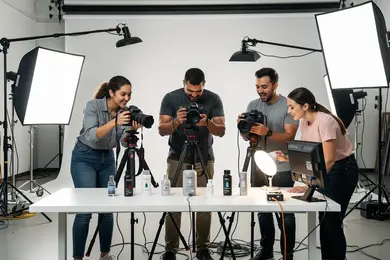
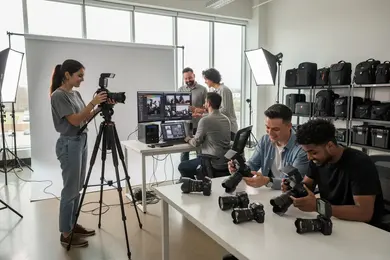
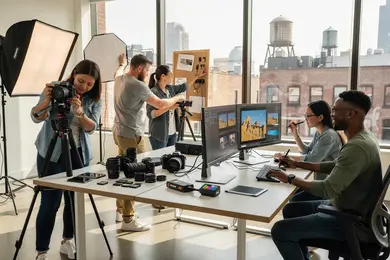
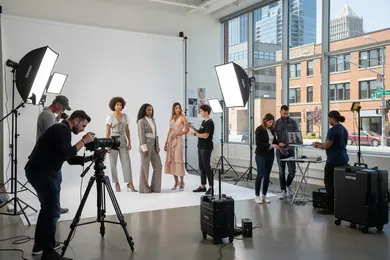
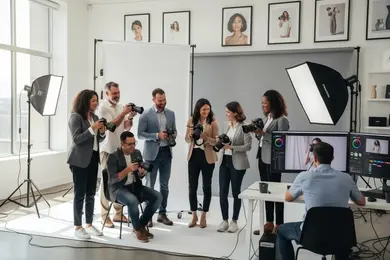
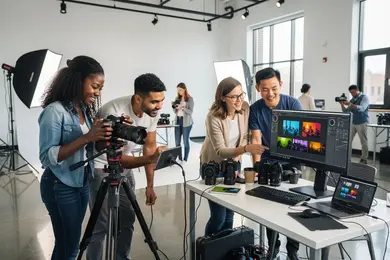
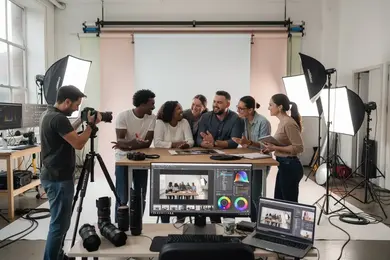
2027 Online Digital Photography Degrees With Strong Technical and Creative Training

Co-Founder and Chief Data Scientist
Choosing an online digital photography degree is really a decision about skills, portfolio quality, cost, and career fit. The U.S. Bureau of Labor Statistics reported a May 2024 median annual wage of $42,520 for photographers, which shows that outcomes can be meaningful but highly dependent on specialization, location, and client base.
This guide is for aspiring photographers, working creatives, and career changers who want technical training without pausing their lives. You'll learn how online programs work, what they cost, how to judge quality, and whether a degree, certificate, or self-directed path makes the most sense.
Key Things You Should Know
- Online digital photography programs can be worthwhile when they build a strong portfolio, teach lighting and editing workflows, and offer critique, but they are less useful if they focus mostly on software tutorials without career-ready projects.
- Program length ranges from short certificates to four-year bachelor's degrees, while 2024 College Board data shows average published tuition and fees of $4,050 at public two-year colleges and $11,610 for in-state public four-year colleges before aid.
- The BLS reported a May 2024 median photographer wage of $42,520, so students should compare total cost against realistic entry-level paths such as assistant photographer, studio technician, retoucher, content creator, or freelance specialist.
What is an online digital photography degree and how does it train technical and creative skills?
An online digital photography degree is a structured college program that teaches students how to create, edit, critique, publish, and market photographic work using digital tools. Unlike a casual photography course, a degree usually combines camera operation, composition, lighting, visual storytelling, image editing, art history, business practices, and portfolio development.
The "technical" side covers how images are made and controlled: exposure, aperture, shutter speed, ISO, lenses, color management, file formats, studio lighting, tethered shooting, editing software, metadata, print preparation, and digital asset management. The "creative" side develops visual judgment: concept development, narrative, mood, subject direction, framing, sequencing, critique, and personal style.
Students comparing a photography degree online should look for programs that treat technical and creative work as connected. A technically perfect image may still fail if it lacks purpose, while an imaginative concept may not succeed if lighting, focus, color, or post-production are weak.
Good online programs typically use a cycle of instruction, practice, critique, revision, and portfolio review. This matters because photography careers are judged less by transcripts alone and more by the quality and consistency of finished work. A useful program should help students answer three practical questions: Can I make technically reliable images? Can I create work with a clear point of view? Can I show that work professionally to clients, employers, galleries, or creative teams?
The strongest fit is usually a student who wants guided critique, a credential, access to faculty, and a portfolio-building sequence. Students who already have strong client work, deep technical skills, and a clear niche may benefit more from a shorter certificate, mentorship, business coaching, or targeted software training.
How do online digital photography programs compare to campus-based options for hands-on learning?
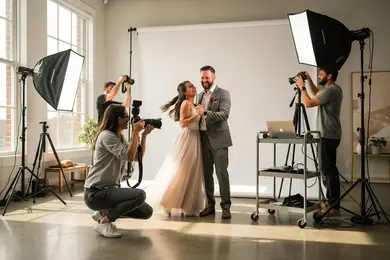
Online photography programs can be hands-on, but the hands-on work happens differently. Instead of using a campus studio every week, students typically shoot assignments locally, upload work for critique, join live or recorded demonstrations, and use home, rented, workplace, or community spaces for projects.
The table below summarizes the main differences students should weigh before choosing an online or campus format. The right choice depends on your schedule, access to equipment, learning style, and need for in-person studio support.
| Factor | Online digital photography program | Campus-based photography program | Best fit |
| Hands-on shooting | Completed independently in local environments with remote critique | Completed in studios, labs, and supervised campus settings | Online works well for self-directed students; campus works well for students who need structured studio time |
| Equipment access | Student may need to buy, rent, or borrow camera and lighting gear | School may provide studios, lighting kits, printers, and checkout equipment | Campus may be better if equipment access is limited |
| Critique experience | Delivered through video calls, annotated uploads, forums, and recorded reviews | Delivered in classrooms, studios, and live group critiques | Either can work if critique is frequent, specific, and portfolio-focused |
| Schedule | Often asynchronous or hybrid, useful for working adults | Requires travel and fixed class meeting times | Online is stronger for students balancing work, family, or freelance projects |
| Networking | Depends on virtual events, internships, alumni groups, and local outreach | Often easier through campus exhibitions, studio collaborations, and local arts communities | Campus may offer more organic networking; online students must be more intentional |
Online learning is strongest when the program requires original shooting assignments, not just quizzes or software demonstrations. Students should expect to photograph people, products, places, events, or conceptual scenes in real conditions, then revise based on critique.
Before enrolling, ask how hands-on work is evaluated. Strong answers usually include details about file submission standards, faculty feedback turnaround, live critique options, peer review, capstone portfolios, and access to digital labs or software. Red flags include vague promises of "industry training" without examples of assignments, portfolio reviews, or graduate work.
What types of online digital photography degrees and certificates can students pursue?
Students can pursue online photography credentials at several levels. The best option depends on whether the goal is fast skill development, transfer to a bachelor's program, professional advancement, or preparation for advanced creative study.
The table below compares common credential types. It can help you avoid overpaying for a degree when a certificate is enough, or choosing a short program when your target role expects deeper training.
| Credential | Typical focus | Common student goal | When it makes sense |
| Certificate | Camera skills, editing, lighting basics, portfolio samples | Quick career pivot, freelance preparation, skill refresh | Best for students who already have a degree or want focused training without a long commitment |
| Associate degree | Foundational photography, general education, digital workflow | Entry-level creative work or transfer to a bachelor's program | Best for cost-conscious students who want college credit and a gradual path |
| Bachelor's degree | Advanced technique, visual theory, business, portfolio, specialization | Professional practice, creative employment, graduate school preparation | Best for students seeking a comprehensive credential and a broader creative education |
| Master's degree or MFA pathway | Advanced creative practice, research, critique, teaching preparation | College teaching, fine art practice, advanced portfolio development | Best for experienced photographers with a clear body of work and long-term artistic goals |
A certificate may be enough for students who want to improve product photography for an online store, build a small portrait business, or learn editing workflows. An associate degree can be a practical entry point when cost matters and transfer credit is important. A bachelor's degree is more suitable for students who want a broader credential and more time to build a portfolio across genres.
Students interested in teaching, fine art, or advanced interdisciplinary practice may eventually consider a master of fine arts online. However, an MFA is usually not the first step for beginners; it is most valuable when the student already has a mature portfolio and needs advanced critique, exhibition preparation, or teaching credentials.
What core courses and specializations are typically included in online digital photography curricula?
Most online digital photography curricula are built around three layers: image-making fundamentals, digital production skills, and professional portfolio development. The exact course names vary, but the underlying competencies are fairly consistent across serious programs.
Students should look for courses that build from technical control to creative independence. A balanced curriculum often includes the following areas because each one supports employability or freelance readiness.
- Camera and exposure fundamentals, including aperture, shutter speed, ISO, focal length, metering, focus, and motion control.
- Composition and visual storytelling, including framing, sequence, narrative, mood, visual hierarchy, and image selection.
- Lighting, including natural light, flash, studio lighting, modifiers, product setups, portrait lighting, and mixed-light correction.
- Digital editing and retouching, including RAW processing, color correction, masking, compositing basics, non-destructive workflows, and export standards.
- History and theory of photography, including documentary, commercial, portrait, fine art, editorial, and contemporary digital practices.
- Business and professional practice, including pricing, contracts, licensing, client communication, copyright basics, branding, and portfolio presentation.
- Capstone or portfolio development, where students create a cohesive body of work aligned with a career or artistic direction.
Specializations can make a major difference because "photographer" is not one job. A wedding photographer, e-commerce product photographer, forensic photographer, real estate photographer, photojournalist, retoucher, and fine art photographer need overlapping skills but different portfolios.
Common concentrations include portrait photography, commercial photography, product photography, fashion, documentary, sports, real estate, food, event photography, digital imaging, photo editing, and fine art photography. Some programs also include video, social media content, drone photography, motion graphics, or web portfolio design.
One current trend students should not ignore is AI-assisted imaging. Generative tools, automated masking, noise reduction, content-aware editing, and image search are changing post-production workflows. Photography students do not need to become machine learning engineers, but they should understand ethical image disclosure, authorship, workflow automation, and how AI may affect client expectations. Students who want deeper technical preparation in adjacent fields can compare creative programs with options such as a best online master's in artificial intelligence, especially if they are interested in computational photography, imaging systems, or creative technology leadership.
How can students verify accreditation and program quality for online digital photography degrees?
Accreditation is one of the first checks students should make because it affects credit transfer, eligibility for federal financial aid, employer recognition, and graduate school options. For most students, institutional accreditation from a recognized accreditor is more important than a photography-specific label.
Program quality also depends on what students actually produce. A legitimate online photography degree should be able to show evidence of strong student work, faculty expertise, critique processes, and career support.
Use the following steps before submitting an application or deposit. This sequence helps separate credible programs from expensive options that may not support your goals.
- Confirm the school's institutional accreditation through the U.S. Department of Education or the Council for Higher Education Accreditation database.
- Check whether credits are transferable, especially if you may start with a certificate or associate degree and later pursue a bachelor's degree.
- Review faculty portfolios, professional experience, exhibitions, publications, commercial clients, or industry credits.
- Ask to see student portfolio examples, capstone projects, online exhibitions, or graduate showcases.
- Verify the format of critique, including how often faculty give feedback and whether live reviews are available.
- Ask what software, camera gear, lighting equipment, computer specifications, and subscriptions are required beyond tuition.
- Review career services, internship support, alumni outcomes, and help with freelance business practices.
Common red flags include unclear accreditation, pressure to enroll immediately, no published faculty information, no portfolio examples, vague career claims, and total costs that are hard to calculate. Be especially cautious of programs that promise income outcomes or imply that a degree alone will secure clients. In photography, the credential can help, but the portfolio, professional habits, network, and niche matter heavily.
What are the typical admission requirements and application materials for online photography programs?
Admission requirements vary by school and credential level. Certificates and associate degrees are often more accessible, while bachelor's completion programs, selective art schools, and graduate programs may require stronger academic records or portfolio submissions.
The table below outlines common requirements by program level. Use it to estimate how much preparation you may need before applying.
| Program level | Typical admission materials | Portfolio expectation | Best preparation strategy |
| Certificate | Application form, proof of high school completion, placement information if credit-bearing | Often not required for beginner certificates | Prepare sample images if the program offers advising or advanced placement |
| Associate degree | High school transcript or equivalent, application, placement tests or college readiness documentation | Usually optional or not required | Ask about transfer pathways and whether general education credits apply later |
| Bachelor's degree | Transcripts, application, personal statement, possible portfolio, transfer credit review | May be required for art-focused or upper-division admission | Build a 10- to 20-image sample showing technical control and creative range |
| Master's or MFA | Bachelor's degree, portfolio, artist statement, resume, recommendations, transcripts | Usually required and central to admission | Develop a cohesive body of work rather than a random collection of strong images |
If a portfolio is required, selection matters more than volume. Admissions reviewers generally want to see control, curiosity, consistency, and the ability to make intentional choices. A smaller set of well-edited images is usually stronger than a large folder of unrelated work.
Applicants can strengthen their materials by taking a few practical steps before applying. These steps are especially useful for students who are self-taught and need to translate informal experience into a college-ready application.
- Create a portfolio folder with only finished work, not screenshots, unedited files, or multiple near-duplicates from the same shoot.
- Write a short statement explaining what you like to photograph, what skills you want to improve, and how the program connects to your goals.
- Gather transcripts early because transfer evaluations can affect cost, timeline, and placement.
- Ask admissions advisors whether prior college credits, military training, professional experience, or industry certifications can reduce required coursework.
- Confirm technology requirements before enrolling so you are not surprised by camera, laptop, storage, or software costs.
How long do online digital photography degrees take, and what do they cost to complete?
Program length depends on credential level, transfer credits, course load, and whether the program uses standard semesters or accelerated terms. Students who already have general education credits may finish faster, while part-time students may need more time but can reduce work disruption.
The table below gives realistic planning ranges. These are general timelines, so students should confirm exact requirements with each school.
| Credential | Common completion time | Main cost drivers | Cost-control opportunity |
| Certificate | A few months to one year | Tuition, software, camera equipment, editing hardware | Choose a focused certificate only if it teaches the specific skill gap you need |
| Associate degree | About two years full time | Tuition, fees, general education courses, gear, books, storage | Start at a community college and transfer credits carefully |
| Bachelor's degree | About four years full time, less with transfer credit | Tuition, fees, technology, portfolio production, elective credits | Maximize transfer credit and avoid retaking similar studio courses |
| Master's or MFA | Two to three years in many formats | Graduate tuition, thesis work, exhibitions, printing, advanced equipment | Apply only when the degree clearly supports teaching, fine art, or advanced professional goals |
Cost varies widely by institution type and residency. College Board's 2024 Trends in College Pricing reported average published tuition and fees of $4,050 at public two-year colleges, $11,610 for in-state students at public four-year colleges, and $43,350 at private nonprofit four-year colleges for the 2024-25 academic year. These figures are not photography-specific, but they give students a useful benchmark before financial aid, scholarships, transfer credits, or equipment costs are added.
Photography students also need to budget beyond tuition. A school may require a DSLR or mirrorless camera, lenses, tripod, lighting kit, color-calibrated monitor, external drives, cloud storage, Adobe Creative Cloud or comparable software, printing, portfolio hosting, and backup equipment for client work.
To evaluate affordability, compare total program cost rather than tuition alone. The smartest approach is to ask each school for a full cost estimate and then calculate how many credits you can transfer, how much equipment you already own, and whether the program leads to portfolio work aligned with your target market.
A common mistake is choosing the cheapest program without checking whether it includes critique, portfolio development, or business training. Another mistake is choosing an expensive private program on brand reputation alone. Neither low cost nor high cost automatically means strong return on investment; the best value is a program that produces usable work, reduces unnecessary credits, and fits your career plan.
What careers can graduates of online digital photography programs pursue across creative industries?
Graduates of online digital photography programs can pursue employment, freelance work, entrepreneurship, or hybrid creative roles. Many photographers build income from multiple sources, especially early in their careers, combining client shoots, editing, content production, assistant work, and licensing.
The table below shows common career paths and the kind of portfolio each path usually requires. This can help students choose assignments and specializations while still in school.
| Career path | Typical responsibilities | Portfolio emphasis | Common work setting |
| Portrait photographer | Photograph individuals, families, professionals, graduates, or performers | Lighting, posing, skin tone accuracy, expression, consistency | Studio, home-based business, location work |
| Commercial or product photographer | Create images for brands, catalogs, advertisements, and e-commerce | Product lighting, clean backgrounds, detail, color accuracy | Studios, agencies, retail companies, freelance |
| Event or wedding photographer | Capture live events, ceremonies, conferences, and celebrations | Low-light skill, timing, storytelling, client galleries | Freelance, event companies, hospitality markets |
| Photo editor or retoucher | Select, edit, color correct, retouch, and prepare images for delivery | Before-and-after samples, consistency, workflow speed | Media companies, studios, agencies, remote freelance |
| Real estate photographer | Photograph homes, interiors, commercial spaces, and rental properties | Wide-angle control, lighting balance, vertical alignment, fast delivery | Freelance, real estate firms, media vendors |
| Fine art photographer | Create concept-driven bodies of work for exhibitions, grants, publications, or sales | Cohesive series, artist statement, print quality, originality | Independent practice, galleries, residencies, teaching pathways |
| Content creator or visual media specialist | Create photography, short-form video, social assets, and branded visual campaigns | Platform-ready imagery, editing style, brand storytelling | Companies, nonprofits, agencies, self-employment |
Photography is a portfolio-driven field, so students should build career-specific work before graduation. A student interested in real estate should not graduate with only fine art portraits; a student targeting commercial product work needs controlled lighting samples, not just travel images.
The degree is most useful when paired with practical experience. Students can build experience through internships, assisting established photographers, volunteering selectively for portfolio-relevant projects, working for campus or community publications, supporting local businesses, and producing self-directed test shoots. Free work should be limited and strategic; it should create usable portfolio material, not replace paid client work indefinitely.
What salary ranges and job outlook can digital photographers expect in the United States?
Digital photography salaries vary more than many degree-based careers because income depends on employment status, niche, region, pricing power, client relationships, and business skill. A staff photographer may have steadier income, while a freelancer may earn unevenly across seasons and markets.
The BLS reported a May 2024 median annual wage of $42,520 for photographers in the United States. Treat this as a midpoint for the occupation, not a prediction for a new graduate. Entry-level assistants, part-time freelancers, and early-career shooters may earn less, while established commercial, wedding, editorial, or specialized photographers may exceed the median depending on demand and client base.
The table below explains how to interpret salary potential by path. It avoids treating one national median as if it applied equally to every photography career.
| Path | Income pattern | What influences earnings most | Risk to consider |
| Staff photographer | More predictable wages or salary | Employer type, region, assignment volume, editing responsibilities | Fewer openings in some traditional media settings |
| Freelance portrait or wedding photographer | Seasonal and client-dependent | Marketing, referrals, pricing, client experience, delivery speed | Business costs and inconsistent bookings |
| Commercial or product photographer | Project-based or contract-based | Lighting skill, brand clients, studio workflow, licensing knowledge | High competition and equipment expectations |
| Retoucher or digital imaging specialist | Hourly, salary, or contract-based | Software expertise, speed, consistency, agency or studio experience | Automation may reduce demand for basic edits while increasing demand for advanced judgment |
| Content creator or visual media specialist | May combine salary, freelance, sponsorship, or client work | Multi-platform skills, video, analytics, branding, audience fit | Platform changes and unstable client demand |
Job outlook is also mixed. Demand for digital imagery remains strong across e-commerce, social media, real estate, events, branding, and content marketing, but competition is intense because camera technology is accessible and many clients expect fast turnaround. AI tools may automate basic edits and image variations, but they also make human judgment, client direction, authenticity, lighting control, and trustworthy documentation more important.
Students evaluating return on investment should compare photography with both creative and noncreative career paths using the same method: training cost, time to work, wage data, advancement routes, and personal fit. For example, someone comparing creative work with technical healthcare support might review a field-specific resource such as autopsy tech salary to see how very different careers stack up in pay structure, education requirements, and day-to-day work.
Are professional certifications, portfolios, or licensing needed for digital photography careers?
Most photography careers in the United States do not require a state license, but requirements can vary for specialized work such as drone photography, certain government contracts, school photography vendor rules, or forensic documentation roles. For most creative jobs, the portfolio is more important than licensing.
Certifications can still help in specific situations. Software credentials, drone certification, professional association credentials, and vendor-specific training can show competence, especially for students entering commercial, editing, real estate, or technical imaging work. However, certifications rarely replace a strong body of work.
Students should prioritize credentials in this order because employers and clients usually evaluate visible skill first.
- Build a focused portfolio for the exact work you want, such as portraits, products, weddings, interiors, documentary, or retouching.
- Create a professional website with clear galleries, contact information, service descriptions, and client-ready presentation.
- Learn copyright, licensing, contracts, model releases, usage fees, backups, and delivery standards.
- Add certifications only when they support a defined goal, such as drone real estate photography, advanced retouching, or software-based production work.
- Keep updating the portfolio because older student projects may stop representing your current ability.
The biggest mistake is treating a degree, certificate, or camera purchase as proof of professional readiness. Clients and employers want to see that you can solve visual problems reliably. That means consistent lighting, clean edits, clear communication, backups, deadlines, usage rights, and a portfolio that matches the assignment.
A practical next step is to choose one target niche and build five to ten polished projects around it. For example, a product photographer might create a beverage shoot, skincare shoot, reflective object shoot, apparel flat lay, and lifestyle brand shoot. This focused approach is more persuasive than a general portfolio that tries to show every possible genre.
Other Things You Should Know About Digital Photography
Online photography students typically need a DSLR or mirrorless camera, a reliable computer for editing, and photo editing software like Adobe Photoshop. Lens variety, a tripod, and external storage may also be required to fulfill coursework in 2027 programs focused on technical and creative training.
Strong programs use uploaded image reviews, annotated edits, video critiques, discussion boards, live class sessions, and portfolio conferences. Before enrolling, ask how often feedback is given and whether students can revise work after critique.
Most programs require students to submit high-resolution JPEG and RAW files, with edited work in TIFF or PSD format for critique. Many courses also ask for embedded metadata, contact sheets, and color-calibrated exports to show technical control in exposure, white balance, and post-processing.
References
- Do Professional Photographers Need to Be Certified? https://www.nyip.edu/photo-articles/business/do-professional-photographers-need-to-be-certified
- 10 real photography jobs in Australia’s creative industries https://www.collarts.edu.au/collarts-life/news/blog-what-jobs-can-you-get-in-photography-top-10-real-career-paths/
- What's the Outlook for Photographer Jobs? | All Art Schools https://www.allartschools.com/photography/outlook-photography-jobs/
- Should you Study Photography at College or are There Better Options Now? https://digital-photography-school.com/should-you-study-photography-at-college-or-are-there-better-options-now/
- Computer graphic arts - digital photography https://www.starkstate.edu/academics/explore-all-programs/digital-photography-major/
- Practical information - Spéos: Photography Programs & Courses https://speos-photo.com/en/practical-information/
- Photographers: Salary, career path, job outlook, education and more - RaiseMe https://www.raise.me/careers/media-and-communication/photographers/
- Open University Online Courses https://rps.org/qualifications/open-university-online-courses/
- Job and Pay - Photographers https://wageindicator.org/en-us/work-in-usa/job-description-and-salary/photographers/
- FULL-TIME | WINNIPEG LOCATIONS PROPF-CT Professional Photography https://catalogue.rrc.ca/Programs/WPG/Fulltime/PROPF-CT/PrinterFriendly