2027 Online Digital Photography Degrees for Students Who Want Broad Creative Career Preparation

Co-Founder and Chief Data Scientist
Choosing an online digital photography degree is really a question of fit: will the program help you build a portfolio, technical range, and business skills for creative work? The U.S. Bureau of Labor Statistics reported a May 2024 median annual wage of $42,520 for photographers, which shows that preparation matters in a competitive field where freelance, commercial, and digital media work often overlap.
This guide explains degree options, costs, accreditation, online learning trade-offs, and career outcomes so you can compare programs with clearer expectations.
Key Things You Should Know
- Online digital photography degrees are strongest when they combine camera technique, lighting, editing, visual storytelling, portfolio development, and business training rather than treating photography as only a software skill.
- Cost varies widely: College Board's 2024 pricing data lists average published tuition and fees at $4,050 for public two-year colleges, $11,610 for in-state public four-year colleges, and $43,350 for private nonprofit four-year colleges.
- Career outcomes depend heavily on portfolio quality, location, specialization, and self-employment strategy; BLS data shows photographers had a May 2024 median wage of $42,520 and projected 2024-2034 employment growth of 3%.
What is an online digital photography degree and how does it prepare creative professionals?
An online digital photography degree is a college program that teaches students how to create, edit, manage, present, and sell photographic work using digital tools. Unlike a short camera workshop, a degree usually includes general education, art and design foundations, critique-based assignments, digital post-production, portfolio courses, and career preparation.
The "digital" part matters because contemporary photography rarely ends when the shutter closes. Students learn how to plan shoots, control light, capture files correctly, process RAW images, use editing software, manage color, prepare images for print and web delivery, and build a professional archive. Many programs also introduce video, social media content, branding, web portfolios, and visual communication for clients.
This degree can fit students who want broad creative career preparation rather than one narrow job title. It may support work in portrait photography, product photography, event coverage, editorial imagery, visual marketing, art practice, digital content production, or creative entrepreneurship. It is less likely to be the best choice for someone who only wants a quick technical credential, already has a strong client base, or needs a degree tied to regulated licensure.
The best programs treat photography as both a craft and a business. Students should expect repeated critique, revision, and portfolio building because employers and clients usually judge photographers by demonstrated work more than by the degree title alone.
How do online digital photography programs compare with campus-based options for hands-on learning?
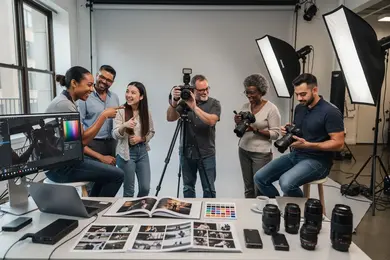
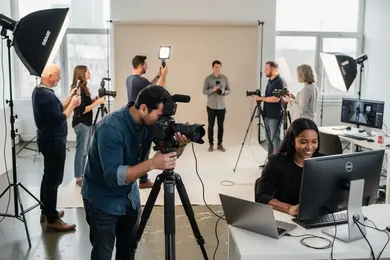
Online photography programs can work well for hands-on learning because the camera, lighting setup, editing software, and portfolio work can often be completed where the student lives. The trade-off is that online students must be more proactive about equipment access, feedback, networking, and creating their own shoot opportunities.
The table below compares the practical learning experience in online and campus-based formats. Use it to identify which environment better supports your schedule, budget, creative discipline, and need for in-person studio access.
| Learning factor | Online digital photography degree | Campus-based photography degree | Best fit |
| Studio access | Often requires students to create home or rented shooting setups | May include campus studios, lighting labs, darkrooms, or equipment cages | Campus may be better for students who need structured studio access |
| Critique | Usually delivered through discussion boards, recorded reviews, live video sessions, and portfolio submissions | Usually happens in classroom critiques, studio reviews, and informal peer feedback | Either can work if critique is frequent, detailed, and faculty-led |
| Schedule | Often asynchronous or low-residency, which helps working adults | Usually requires scheduled class, lab, or studio attendance | Online may be better for students balancing work or caregiving |
| Networking | Requires intentional participation in online critiques, internships, local shoots, and professional communities | Can provide easier access to campus events, exhibitions, visiting artists, and peer collaboration | Campus may be stronger for students who thrive on in-person creative communities |
| Equipment costs | Students may need to buy or rent more gear independently | Some equipment may be available through the school, though fees can still apply | Compare total program cost, not tuition alone |
A strong online program should tell you exactly how hands-on assignments work before you enroll. Ask whether students receive lighting demonstrations, live critique, equipment recommendations, remote software access, file-submission standards, and portfolio reviews from faculty with relevant professional experience.
Online study is not automatically easier. In photography, it can require more self-direction because you must locate subjects, manage permissions, schedule shoots, troubleshoot gear, and meet deadlines without a physical studio class around you.
Which accreditations should online digital photography schools have in the United States?
Accreditation is one of the most important checks before enrolling because it affects federal financial aid eligibility, credit transfer, graduate school options, and employer confidence. In the United States, students should first confirm institutional accreditation, then look for art-specific recognition when relevant.
Institutional accreditation means the entire college or university has been reviewed by an accreditor recognized by the U.S. Department of Education or the Council for Higher Education Accreditation. Common institutional accreditors include the Higher Learning Commission, Middle States Commission on Higher Education, New England Commission of Higher Education, Northwest Commission on Colleges and Universities, Southern Association of Colleges and Schools Commission on Colleges, and WASC Senior College and University Commission.
Some art and design schools also hold programmatic or specialized accreditation from the National Association of Schools of Art and Design. NASAD accreditation is not required for every photography career, but it can signal that the school's art and design curriculum, faculty qualifications, facilities, and assessment processes have been reviewed against field-specific standards.
Before applying, verify accreditation directly rather than relying only on marketing language. A practical check should include the following steps:
- Search the school in the U.S. Department of Education's Database of Accredited Postsecondary Institutions and Programs.
- Confirm that the accreditor listed matches the school's current name, campus, and online division.
- Ask whether online students are covered under the same accredited institution as campus students.
- Check whether photography, art, or design credits are commonly accepted for transfer or graduate admission.
- Be cautious if a school uses vague phrases such as "licensed," "approved," or "internationally recognized" instead of naming a recognized accreditor.
Photography does not have a single state license requirement like nursing or teaching, so accreditation is less about licensure and more about academic legitimacy, financial aid, transferability, and long-term flexibility.
What types of digital photography degrees can you earn online and who are they for?
Online digital photography degrees are available at several levels, and the right choice depends on how much time, money, and academic depth you want to invest. A certificate may be enough for a focused skill upgrade, while a bachelor's or master's degree may make more sense for students who want broader creative, academic, or leadership preparation.
The table below summarizes common online photography credentials and the students they typically serve. It can help you avoid overpaying for a degree level that does not match your goals.
| Credential | Typical focus | Who it is for | When it may not be enough |
| Undergraduate certificate | Camera basics, editing, lighting, and portfolio samples | Beginners, hobbyists, working professionals adding visual skills, or entrepreneurs needing better content | May not provide enough general education or depth for roles that prefer a degree |
| Associate degree | Foundational photography, digital imaging, design basics, and introductory business skills | Students seeking a lower-cost starting point or transfer pathway | May limit access to some bachelor's-level roles or graduate study |
| Bachelor's degree | Advanced technical practice, visual storytelling, art history, professional portfolio, and broader liberal arts coursework | Students seeking broad creative preparation and a stronger academic credential | May be more time-intensive than necessary for students who only need a narrow skill upgrade |
| Master's degree or MFA | Advanced creative practice, critique, research, teaching preparation, exhibition work, or specialized visual production | Experienced photographers, artists, educators, or students considering college-level teaching or serious studio practice | Usually not necessary for entry-level commercial photography work |
Students comparing advanced creative degrees may also want to look at best online MFA programs, especially if their long-term goals include teaching, gallery work, advanced studio practice, or interdisciplinary visual arts.
A bachelor's degree often offers the broadest preparation because it combines technique, portfolio work, writing, art history, business, and electives. However, the "best" credential is the one that matches the work you want to do. If your goal is to run a local portrait business quickly, a certificate plus mentorship may be more efficient. If your goal is art direction, graduate study, or teaching, a degree pathway may be more useful.
What courses and specializations are typically included in an online digital photography curriculum?
An online digital photography curriculum usually blends technical production, creative development, and professional practice. The strongest programs do not simply teach students how to use a camera; they help students develop a recognizable visual point of view and a portfolio that can be evaluated by clients, employers, galleries, or graduate schools.
Most programs include several categories of coursework. These categories matter because they show whether the program prepares you for broad creative work or only a narrow editing workflow.
- Camera and exposure fundamentals, including aperture, shutter speed, ISO, lenses, depth of field, file formats, and image capture workflow.
- Lighting courses covering natural light, studio lighting, flash, modifiers, product setups, portrait lighting, and location problem-solving.
- Digital editing and post-production using tools such as Lightroom, Photoshop, color correction, retouching, compositing, and output preparation.
- Visual storytelling courses focused on composition, sequence, narrative, documentary practice, editorial assignments, and audience interpretation.
- Art and photography history courses that help students understand visual movements, ethics, representation, and contemporary image culture.
- Business and professional practice courses covering pricing, contracts, copyright, client communication, branding, marketing, licensing, and portfolio presentation.
- Capstone or portfolio courses where students revise a body of work, build a website or digital portfolio, and prepare for critique or exhibition.
Specializations vary by school. Common options include portrait photography, commercial photography, product photography, fashion photography, documentary photography, photojournalism, fine art photography, event photography, social media content, and multimedia production.
Technology is changing the curriculum. Many programs now discuss AI-assisted editing, content authenticity, metadata, image ethics, and automated workflow tools. Students interested in the broader relationship between visual work and machine learning may also compare creative technology pathways with resources on artificial intelligence degree salary, especially if they are considering roles that blend imaging, automation, and digital product development.
When reviewing a curriculum, look for repeated opportunities to produce finished work. A program with one portfolio class at the end may be weaker than a program that builds portfolio expectations into nearly every studio and critique course.
What are the usual admission requirements for online digital photography degree programs?
Admission requirements for online digital photography programs vary by credential level and school selectivity. Open-access community colleges may require only a high school diploma or equivalent, while bachelor's and MFA programs may ask for transcripts, portfolio samples, essays, or prerequisite coursework.
The admissions checklist below shows what applicants commonly need. Requirements can vary, so students should confirm details with each school before spending money on application fees.
- High school diploma, GED, or equivalent for undergraduate admission.
- Official transcripts from high school and any prior colleges attended.
- Minimum GPA requirement, though some online or transfer-friendly programs use flexible review.
- Portfolio submission for selective bachelor's, BFA, or MFA programs, often including 10 to 20 images or a themed body of work.
- Personal statement explaining creative interests, career goals, and reasons for choosing the program.
- Letters of recommendation, especially for competitive bachelor's completion, graduate, or MFA programs.
- English placement, writing assessment, or general education placement requirements for some undergraduate programs.
- Technology readiness, including access to a computer, reliable internet, editing software, and required camera equipment.
Portfolio requirements should not discourage beginners from applying to entry-level programs. Some associate and bachelor's programs are designed for students who are still learning the basics. In those cases, admissions teams may care more about curiosity, visual awareness, and willingness to revise than about polished commercial work.
For more selective programs, a portfolio should show consistency and decision-making. Admissions reviewers usually want to see control of focus, exposure, framing, lighting, sequence, and concept. A smaller set of strong, intentional images is usually better than a large group of unrelated snapshots.
A common mistake is applying without checking equipment requirements. Some programs require a DSLR or mirrorless camera with manual controls, specific lenses, a tripod, external storage, editing software, or access to lighting equipment. These costs can affect your first-term budget.
How long do online digital photography degrees take and what do they cost?
Program length depends on degree level, enrollment intensity, transfer credits, and whether the program uses traditional semesters or accelerated terms. Certificates may take a few months to one year, associate degrees commonly take about two years of full-time study, bachelor's degrees often require about four years from first enrollment, and master's or MFA programs may take two to three years.
Cost should be evaluated as total cost of attendance, not tuition alone. College Board's 2024 Trends in College Pricing reported the following average published tuition and fees for the 2024-25 academic year:
- $4,050 for public two-year in-district colleges.
- $11,610 for public four-year in-state colleges.
- $30,780 for public four-year out-of-state colleges.
- $43,350 for private nonprofit four-year colleges.
Those figures are broad national averages, not photography-specific prices. Online students may pay different tuition rates, technology fees, software costs, portfolio fees, proctoring fees, equipment expenses, and course material charges. Some public universities charge the same online tuition to all students, while others distinguish between in-state and out-of-state tuition.
Photography students should also budget for gear and software. A realistic starting setup may include a manual-control camera, lens, memory cards, storage drives, tripod, lighting basics, calibration tools, editing software, printing costs, and website hosting. You do not always need top-tier equipment, but you do need tools that meet assignment requirements.
If you plan to borrow, federal loan terms can materially affect ROI. For the 2025-26 academic year, Federal Student Aid lists Direct Subsidized and Unsubsidized Loans for undergraduates at 6.39%, while Direct Unsubsidized Loans for graduate students are listed at 7.94%. That means part-time work, transfer credits, employer tuition assistance, scholarships, and lower-cost public options can significantly reduce long-term repayment pressure.
To compare affordability, ask each school for a written estimate that includes tuition, required fees, software, equipment, transfer credit evaluation, and expected time to completion. A lower tuition rate may not be the best value if the program accepts few transfer credits or requires extra terms.
What careers can you pursue with an online digital photography degree?
An online digital photography degree can support several creative career paths, but most outcomes depend on portfolio strength, professional network, business ability, and the kind of market you enter. Photography is often freelance-heavy, so students should evaluate both employment options and self-employment readiness.
The table below outlines common career directions and what each role usually emphasizes. Use it to connect degree coursework with real work settings before choosing electives or specializations.
| Career path | Typical responsibilities | Useful preparation | Portfolio emphasis |
| Portrait photographer | Photograph individuals, families, professionals, seniors, or personal branding clients | Lighting, posing, client communication, retouching, pricing, and scheduling | Consistent portraits, skin tone accuracy, posing variety, and client-ready galleries |
| Commercial or product photographer | Create images for brands, e-commerce, catalogs, advertising, and marketing campaigns | Studio lighting, product styling, color management, licensing, and client briefs | Clean product images, controlled reflections, brand consistency, and detail shots |
| Event photographer | Cover weddings, corporate events, performances, conferences, or community events | Low-light shooting, fast workflow, backup planning, contracts, and delivery systems | Complete event stories, candid moments, lighting adaptability, and reliability |
| Photo editor or digital imaging specialist | Edit, retouch, organize, color-correct, and prepare image files for publication or clients | Post-production, asset management, metadata, color profiles, and deadline workflow | Before-and-after editing samples, retouching consistency, and file preparation examples |
| Visual content producer | Create still images, short-form video, social media assets, and campaign visuals | Photography, video basics, branding, platform strategy, and analytics awareness | Cross-platform campaigns, visual storytelling, and audience-focused content |
| Fine art photographer | Create conceptual, gallery, exhibition, publication, or grant-supported work | Critique, art history, artist statements, exhibition practices, and project development | Cohesive body of work, concept clarity, sequencing, and presentation quality |
Some graduates use photography as part of a broader media or education role rather than as a stand-alone job. For example, visual communication skills can support training content, e-learning media, and instructional materials; students interested in that path may compare photography training with an instructional design masters degree online.
Employers and clients commonly look for technical control, reliability, creativity, editing speed, communication, and professionalism. For freelance work, business skills are just as important as camera skills because photographers must estimate projects, negotiate usage rights, manage taxes, protect files, and market their services.
Students who want stable full-time employment should research local job markets carefully. In some regions, full-time staff photographer roles are limited, while marketing departments, universities, hospitals, retailers, real estate firms, studios, and media organizations may hire hybrid content creators who can shoot photos, edit video, and manage digital assets.
How much do digital photographers typically earn and what is the job outlook?
Photography earnings vary widely because the field includes part-time workers, freelancers, studio owners, salaried employees, assistants, and specialized commercial professionals. The most useful salary data gives a baseline, not a promise.
The U.S. Bureau of Labor Statistics reported a May 2024 median annual wage of $42,520 for photographers. This means half of workers in the occupation earned more and half earned less, but it does not capture every source of freelance business income, equipment cost, unpaid marketing time, or regional variation.
BLS also projects 3% employment growth for photographers from 2024 to 2034. That is modest growth, so students should not assume that a degree alone will create strong job security. A focused portfolio, business plan, niche selection, client pipeline, and comfort with evolving digital tools can make a significant difference.
Several factors can affect earning potential. These include geography, specialization, reputation, repeat clients, licensing agreements, ability to sell packages, editing efficiency, and whether the photographer works independently or for an employer. Commercial product photography, corporate work, high-volume portrait studios, and specialized retouching may have different earning patterns than fine art or general freelance work.
AI and automation are also changing expectations. Editing tools can speed up culling, masking, noise reduction, upscaling, and background cleanup, but they do not replace the need for concept development, lighting judgment, client direction, ethics, and taste. Students should learn AI-enabled tools while also understanding disclosure, copyright, model releases, and authenticity standards.
For ROI, the key question is not "Will this degree pay for itself automatically?" A better question is whether the program will help you produce a stronger portfolio, enter a viable niche, reduce trial-and-error learning time, and build business systems that support paid work.
How can you choose a reputable online digital photography program that fits your goals?
Choosing a reputable online digital photography program requires more than comparing tuition or scanning rankings. The best fit is a program that matches your creative goals, budget, learning style, transfer situation, and career plan.
Use the following steps to compare programs in a practical order. This sequence helps you eliminate poor-fit options before you invest time in applications or financial aid paperwork.
- Verify institutional accreditation through a recognized accreditation database before reviewing curriculum details.
- Match the degree level to your goal: certificate for focused skill development, associate degree for affordable entry or transfer, bachelor's degree for broader preparation, and MFA or master's degree for advanced creative or teaching goals.
- Review required equipment and software before enrollment so you understand first-term costs.
- Ask how critique works online, including whether feedback is live, recorded, written, peer-based, faculty-led, or portfolio-centered.
- Compare portfolios from current students or graduates when available, because portfolio quality reveals more than course titles.
- Ask whether faculty have current or recent professional photography, art, design, media, or commercial experience.
- Check transfer credit policies, prior learning options, and whether studio courses must be repeated.
- Request a full cost estimate that includes tuition, fees, software, gear, printing, portfolio hosting, and expected time to completion.
- Look for career support such as internship guidance, portfolio reviews, alumni networks, business courses, and client-facing project opportunities.
- Avoid programs that promise unrealistic income, understate equipment needs, hide accreditation details, or provide little faculty critique.
Veterans and military-connected students should also ask about tuition assistance, GI Bill processing, credit for prior learning, deployment flexibility, and dedicated advising. Criteria used to evaluate military friendly online electrical engineering degree programs can also help photography students think more carefully about online support services, even though the academic field is different.
Common red flags include unclear accreditation, no portfolio requirement or review in advanced programs, limited faculty interaction, vague course descriptions, pressure-heavy admissions calls, no published equipment expectations, and career claims that sound guaranteed. A reputable school should be willing to answer direct questions in writing.
The smartest choice is usually the program that offers enough structure to improve your work without forcing you into unnecessary debt. If two schools are academically similar, the better option may be the one with stronger critique, better transfer acceptance, lower total cost, and clearer support for building a marketable portfolio.
Other Things You Should Know About Digital Photography
While a smartphone can capture images, a computer with photo editing software and a quality digital camera is essential for an online digital photography degree in 2027. These tools help students gain proficiency in diverse techniques and prepare them for creative careers.
Some programs require printed assignments or final portfolios, while others accept digital submissions. Printing can still be valuable because it teaches color management, resolution, paper choice, and presentation quality.
Students usually study image ownership, model releases, licensing, fair use, and how to register work with the U.S. Copyright Office. Many programs also require assignments on client contracts and portfolio usage rights, because those skills protect photographers in commercial, editorial, and freelance work.
It is very important. Students should learn who owns an image, how licensing works, when model or property releases are needed, and how usage rights affect pricing, publication, and client agreements.
References
- Online Photography Degree | Associate Degree (AOS) https://www.sessions.edu/online-degrees/digital-photography/
- Computer graphic arts - digital photography https://www.starkstate.edu/academics/explore-all-programs/digital-photography-major/
- Online Photography Degrees | Photography Programs & Courses https://www.onlinecolleges.net/degrees/photography/
- Best Online Photography Degrees https://www.onlineu.com/degrees/photography
- Open University Online Courses https://rps.org/qualifications/open-university-online-courses/
- The Photography Institute https://www.thephotographyinstitute.com/us/en/accreditations
- Top 10 Online Photography Classes You Can't-Miss: From Beginner to Pro https://www.zno.com/blog/top-10-online-photography-classes.html
- What Can You Do With A Photography Degree? - What Career Live https://www.whatcareerlive.co.uk/what-can-you-do-with-a-photography-degree/
- Top 5 reasons to study a photography degree online https://www.falmouth.ac.uk/news/top-5-reasons-study-photography-degree-online
- Should you Study Photography at College or are There Better Options Now? https://digital-photography-school.com/should-you-study-photography-at-college-or-are-there-better-options-now/