
2027 Most Affordable Online UX/UI Degree Programs

Co-Founder and Chief Data Scientist
Are you looking to break into the exciting world of UX/UI design without breaking the bank? Online degree programs offer a flexible and affordable way to gain the skills and knowledge needed to succeed in this in-demand field. In this post, we will explore some of the cheapest and fastest online UX/UI degree programs available, as well as key factors to consider when choosing the right program for your needs.
Whether you are a recent high school graduate, a career changer, or simply looking to upskill, an affordable online UX/UI degree can open doors to a rewarding and lucrative career. Read on and discover the best options to fit your budget and timeline.
What are the benefits of getting an affordable online UI/UX degree?
- UI/UX designers are highly sought after in today's digital-first world. An affordable online degree can equip you with the skills needed to land well-paying jobs.
- A UI/UX degree can help you advance your career, whether you are looking to move into a leadership role or start your own business.
- The rise of remote work has created more opportunities for UI/UX designers to work from anywhere.
- Graduates of these programs often find themselves in high-paying roles within technology companies, startups, and other organizations that rely on digital products and services.
What can I expect from an affordable online UI/UX degree?
Online UI/UX degree programs cover a wide range of topics, including user research, information architecture, interaction design, visual design, and usability testing. Many online programs incorporate hands-on projects and assignments to help you apply your knowledge and develop practical skills.
Online programs often have lower tuition costs than traditional on-campus programs, making them more accessible to a wider range of students. By completing an affordable online UI/UX degree, you can gain the skills and knowledge needed to pursue a rewarding career in the field of user experience and interaction design.
Where can I work with an affordable online UI/UX degree?
Software development companies often have dedicated UI/UX teams to design and develop software applications. Tech giants like Google, Apple, Facebook, and Amazon are always seeking talented UI/UX designers to work on their products and services.
Startups often have a high demand for UI/UX designers to help them create innovative and user-friendly products. Marketing agencies hire UI/UX designers to create digital marketing materials, such as websites, landing pages, and email campaigns. Online retailers like Amazon, eBay, and Alibaba need skilled UI/UX designers to create intuitive and engaging shopping experiences.
How much can I make with an affordable online UI/UX degree?
Based on data from the Bureau of Labor Statistics, the mean annual wage of web and digital interface designers with a bachelor's degree was $108,820 in 2023. The salary you can earn with an affordable online UI/UX degree can vary depending on several factors, including your experience, location, and the specific industry you work in. However, UI/UX designers generally command competitive salaries, especially in major technology hubs.
As you gain experience in UI/UX design, you can expect your salary to increase. Salaries tend to be higher in major technology hubs like Silicon Valley, New York City, and London. Designers with specialized skills, such as mobile app design or game design, may be able to command higher salaries.
- Most Affordable Online UX/UI Degree Programs for 2027 Most Affordable Programs
- How long does it take to complete an online UX/UI degree program? Completion Timeline
- How does an online UX/UI degree compare to an on-campus program? Online vs On-Campus
- What is the average cost of an online UX/UI degree program? Average Cost
- What are the financial aid options for students enrolling in an online UX/UI degree program? Financial Aid
- What are the prerequisites for enrolling in an online UX/UI degree program? Program Prerequisites
- What courses are typically in an online UX/UI degree program? UI/UX Courses
- What types of specializations are available in online UX/UI degree programs? What types of specializations are available in online UX/UI degree programs?
- How to choose the best online UX/UI degree program? How to choose the best online UX/UI degree program?
- What career paths are available for graduates of online UX/UI degree programs? What career paths are available for graduates of online UX/UI degree programs?
- What is the job market for graduates with an online UX/UI degree? What is the job market for graduates with an online UX/UI degree?
- How a UI/UX Degree Can Enhance Career Versatility Across Related Design Fields How a UI/UX Degree Can Enhance Career Versatility Across Related Design Fields
- How do online UX/UI programs ensure long-term career ROI? How do online UX/UI programs ensure long-term career ROI?
- Do employers recognize and value affordable online UX/UI degrees? Do employers recognize and value affordable online UX/UI degrees?
- Evaluating Accreditation and Program Credibility for Online UX/UI Degrees Evaluating Accreditation and Program Credibility for Online UX/UI Degrees
- How can you secure federal financial aid for your online UX/UI education? How can you secure federal financial aid for your online UX/UI education?
- How can online UX/UI programs accommodate working professionals? How can online UX/UI programs accommodate working professionals?
- How are emerging technologies and design trends incorporated into online UX/UI curricula? How are emerging technologies and design trends incorporated into online UX/UI curricula?
- Can accelerated degree pathways fast-track your UX/UI career? Can accelerated degree pathways fast-track your UX/UI career?
- Why consider a graduate degree in UX/UI design? Why consider a graduate degree in UX/UI design?
- Is a doctoral degree in UX/UI design worth the investment? Is a doctoral degree in UX/UI design worth the investment?
- Industry Connections, Networking, and Job Placement Support in Online UX/UI Programs Industry Connections, Networking, and Job Placement Support in Online UX/UI Programs
- How Do Online UX/UI Programs Enhance Practical Learning and Portfolio Development? How Do Online UX/UI Programs Enhance Practical Learning and Portfolio Development?
- What challenges are commonly encountered in online UX/UI programs and how can you overcome them? What challenges are commonly encountered in online UX/UI programs and how can you overcome them?
- How do online UX/UI programs support continuous career growth? How do online UX/UI programs support continuous career growth?
Most Affordable Online UX/UI Degree Programs for 2027
Choosing an online UX/UI degree is partly a design decision and partly a financial decision. You need a program that teaches user research, interface design, prototyping, accessibility, and portfolio development, but you also need tuition that makes sense for your budget and career goals. This guide is for students comparing affordable online UX/UI bachelor’s programs, working adults changing careers, and design-minded learners who want a degree path rather than a short bootcamp or self-taught route.
You will find a ranked list of affordable online UX/UI-related degree programs, a cost comparison, guidance on accreditation and financial aid, and practical advice on choosing a program that can help you build job-ready skills. The goal is not only to identify low-cost options, but to help you decide which program format, curriculum, and support system best match the kind of UX/UI career you want.
Quick answer: What is the most affordable online UX/UI degree option listed here?
Among the programs listed in this guide, University of Florida Online has the lowest stated cost per credit at $111.92 for its Bachelor of Science in Information Technology with UX/UI-related study. However, the best-value program is not always the lowest per-credit option. Students should also compare total credits, transfer credit policies, accreditation, portfolio opportunities, design software requirements, and career support before enrolling.
How this ranking was developed
Research.com evaluates online degree options using a transparent ranking methodology that considers affordability, program information, institutional data, and student-relevant factors. Sources used in this process include the Integrated Postsecondary Education Data System (IPEDS), Peterson's databases, the College Scorecard, and data from the National Center for Education Statistics. These sources help readers compare schools using available information rather than marketing claims alone.
Affordable online UX/UI degree programs at a glance
| Rank | School and program | Program length | Cost per credit | Credits required | Accreditation |
| 1 | Southern New Hampshire University: BA in Graphic Design and Media Arts with a Concentration in User Experience Design | 4 years | $325 | 120 | New England Commission of Higher Education (NECHE) |
| 2 | Colorado State University Global: BS in Information Technology | 4 years | $375 | 120 | North Central Association Commission on Higher Education (NCA-CHE) |
| 3 | University of Maryland Global Campus: Online Bachelor's in Graphic Communication | 4 years | $460 | 120 | Middle States Commission on Higher Education (MSCHE) |
| 4 | University of Florida Online: Bachelor of Science in Information Technology | 4 years | $111.92 | 120 | Southern Association of Colleges and Schools Commission on Higher Education (SACSCOC) |
| 5 | Arizona State University Online: Bachelor of Science in Graphic Information Technology | 4 years | $563 | 120 | Higher Learning Commission (HLC) |
1. Southern New Hampshire University: BA in Graphic Design and Media Arts with a Concentration in User Experience Design
The BA in Graphic Design and Media Arts from Southern New Hampshire University is a design-centered option for students who want UX training grounded in visual communication. The program is especially relevant for learners interested in interface layouts, branding, digital media, and user-centered visual design. Its UX concentration can help students connect creative design work with usability and digital product thinking.
- Program Length: 4 years
- Tracks/concentrations: Graphic Design, Media Arts, User Experience Design
- Cost per Credit: $325
- Required Credits to Graduate: 120
- Accreditation: New England Commission of Higher Education (NECHE)
2. Colorado State University Global: BS in Information Technology
The BS in Information Technology from Colorado State University Global is better suited to students who want a stronger technical foundation alongside UX/UI coursework. Because the program sits within information technology, it may appeal to learners who want to understand systems, development workflows, and technology infrastructure while building design skills.
- Program Length: 4 years
- Tracks/concentrations: UX/UI Design
- Cost per Credit: $375
- Required Credits to Graduate: 120
- Accreditation: North Central Association Commission on Higher Education (NCA-CHE)
3. University of Maryland Global Campus: Online Bachelor's in Graphic Communication
The online bachelor’s program in Graphic Communication connected to the University of Maryland provides a broader communication-design foundation with UX/UI-related study. Students who want to work across visual communication, digital content, and interface design may find this path useful because it does not limit the curriculum to one narrow design role.
- Program Length: 4 years
- Tracks/concentrations: Graphic Design, Visual Communication, UX/UI Design
- Cost per Credit: $460
- Required Credits to Graduate: 120
- Accreditation: Middle States Commission on Higher Education (MSCHE)
4. University of Florida Online: Bachelor of Science in Information Technology
The Bachelor of Science in Information Technology from University of Florida Online is a technology-oriented route for students who want UX/UI design knowledge within a broader IT curriculum. This option may be a better fit for learners who are comfortable with technical coursework and want to work near product teams, web development teams, or digital systems groups.
- Program Length: 4 years
- Tracks/concentrations: UX/UI Design
- Cost per Credit: $111.92
- Required Credits to Graduate: 120
- Accreditation: Southern Association of Colleges and Schools Commission on Higher Education (SACSCOC)
5. Arizona State University Online: Bachelor of Science in Graphic Information Technology
The BS in Graphic Information Technology at Arizona State University blends design, production, and technology. Students considering this program should expect a curriculum that connects graphic information systems, digital media, and user experience concepts. It can be a practical option for learners who want a design career that overlaps with web, media, and technical production.
- Program Length: 4 years
- Tracks/concentrations: Graphic Information Technology, UX/UI Design
- Cost per Credit: $563
- Required Credits to Graduate: 120
- Accreditation: Higher Learning Commission (HLC)
How long does an online UX/UI degree take?
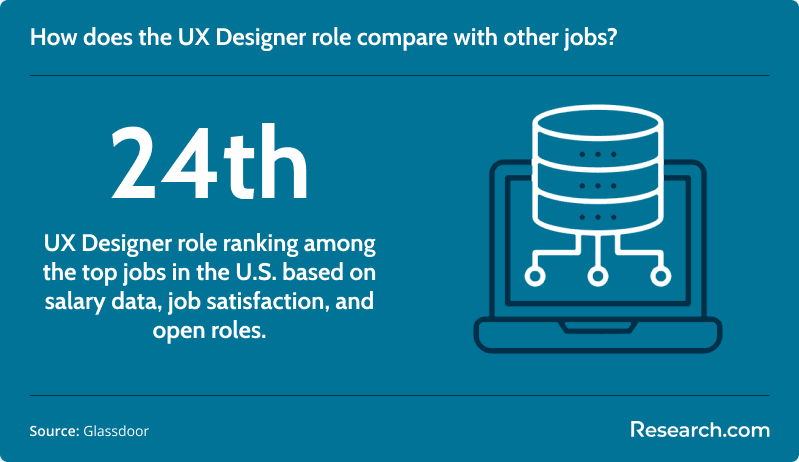
Most online UX/UI-related bachelor’s programs are designed around a four-year timeline, but actual completion time depends on transfer credits, enrollment status, course availability, and whether the program allows accelerated pacing. Glassdoor listed UX Designer as the 24th best job to have in the U.S. based on salary data, job satisfaction, and open roles, which helps explain why UX/UI continues to appear among discussions of the best degrees to get in college.
| Degree level | Typical full-time timeline | Best for | Important planning note |
| Associate degree | Often shorter than a bachelor’s pathway | Students seeking a lower-cost start or transfer route | Confirm whether credits transfer into a bachelor’s UX/UI, design, or IT program. |
| Bachelor's Degree | Typically takes 2-4 years of full-time study. | Students seeking entry-level UX/UI, product design, web design, or related digital roles | Completion may be faster with transfer credits or slower with part-time enrollment. |
| Master's Degree | Usually takes 1-2 years of full-time study. | Professionals who already hold a bachelor’s degree and want advanced design, research, or leadership preparation | Admissions may require a portfolio, related background, or prerequisite coursework. |
If cost and completion speed are major concerns, compare UX/UI programs with broader lists of the most affordable online bachelor's degree options. A lower tuition rate can help, but transfer policy and total credits required often have just as much impact on final cost.
Online versus on-campus UX/UI degrees: Which format fits you?
An online UX/UI degree can work well for students who need flexibility, already have work or family responsibilities, or want access to programs outside their local area. An on-campus program may be stronger for students who learn best through in-person critique, studio collaboration, campus networking, and direct access to labs or design events.
| Factor | Online UX/UI degree | On-campus UX/UI degree |
| Schedule | Usually more flexible, especially for working adults | Often follows fixed class times and campus schedules |
| Cost considerations | May reduce relocation, commuting, and housing expenses; compare options among cheap online colleges | May involve campus fees, housing, transportation, and local living costs |
| Networking | Depends heavily on virtual events, alumni access, group projects, and career services | Often easier to build relationships through studio work, clubs, and campus recruiting |
| Portfolio development | Can be strong if the program includes critiques, real-world projects, and instructor feedback | May offer more structured studio critique and collaborative design time |
| Best fit | Self-directed learners who need flexibility | Students who want face-to-face support and campus-based design culture |
Students comparing creative technology fields may also want to review top online game art degrees, especially if they are interested in interactive media, game interfaces, or experience design beyond traditional web and app products.
What does an online UX/UI degree cost?
The cost of an online UX/UI degree varies widely by school type, residency rules, credit requirements, technology fees, course materials, and financial aid eligibility. Per-credit tuition is useful, but it does not tell the full story. Students should estimate the total degree cost by multiplying credits required by tuition, then adding software, books, fees, portfolio tools, and any required hardware upgrades.
| Degree type | Estimated annual cost range | What to check before enrolling |
| Associate degree | $5,000 and $15,000 per year | Transfer agreements, general education credits, and whether courses prepare you for bachelor’s-level UX/UI work |
| Bachelor's degree | Between $10,000 and $30,000 per year. | Total credits, tuition rate, fees, software costs, and portfolio support |
| Master's degree | Between $15,000 and $50,000 per year | Prerequisites, admissions portfolio, research focus, and employer tuition assistance |
Public universities often charge less than private institutions, but the final price can still vary by residency status and fees. Accelerated programs can reduce time in school for some students, but they may require heavier course loads; compare that trade-off carefully if you are also considering an accelerated computer science degree or another technical online pathway.
Financial aid options for online UX/UI degree students
Even affordable UX/UI programs can require a major investment. A degree may support access to design and technology careers, and related programs are often discussed alongside highest paid bachelor degrees, but no program can guarantee a specific salary or job outcome. Students should build a funding plan before committing.
Federal financial aid
- Federal Student Loans: Federal loans may offer repayment protections and interest terms that differ from private loans.
- Federal Grants: Grant aid can reduce out-of-pocket costs and generally does not need to be repaid.
- Work-Study: Eligible students may be able to earn money through approved part-time work while enrolled.
State financial aid
- State Grants: Some states provide grants for eligible residents attending approved colleges.
- State Loans: Certain states offer education loans that may have different terms from private lenders.
Institutional financial aid
- Scholarships: Schools may award scholarships based on academic performance, talent, background, or other criteria.
- Grants: Institutional grants are commonly based on financial need or school-specific eligibility rules.
- Work-Study Programs: Some colleges provide campus-based or institution-supported work opportunities.
Private financial aid
- Scholarships: Professional groups, nonprofits, and companies may fund students pursuing design, technology, or digital media fields.
- Grants: Some nonprofit organizations provide limited grant support for eligible students.
- Personal Loans: Private loans can cover remaining costs, but they often have higher interest rates or fewer protections than federal loans.
If you are comparing creative technology programs by price, you may also want to examine affordable degree programs for video game design online to understand how tuition and portfolio expectations differ across design-related fields.
Admissions requirements for online UX/UI degree programs
Admissions requirements depend on the school and degree level. Undergraduate programs usually focus on academic readiness, while graduate programs may look more closely at prior college work, professional experience, and evidence of design ability.
- High school diploma or equivalent: Most undergraduate programs require proof of high school completion or an approved equivalent.
- Undergraduate degree for master's programs: Graduate UX/UI programs typically expect a bachelor’s degree, often in design, computer science, human-computer interaction, communication, or a related field. Students from broader liberal arts backgrounds, including those with an online bachelor's in history, may need to show relevant skills through writing, research, projects, or prerequisite coursework.
- Portfolio: Some programs ask applicants to submit design samples, creative work, research projects, or case studies that demonstrate potential.
- Basic computer skills: Online learners should be comfortable using digital tools, learning software independently, managing files, and communicating through online platforms.
Common courses in an online UX/UI degree program
UX/UI programs combine design thinking, user research, interface design, technology, and communication. Exact course titles vary, but strong programs should help students understand users, design usable interfaces, test ideas, and explain design decisions clearly.
Core UX/UI courses
- Introduction to UX/UI Design: Covers the roles, principles, workflows, and deliverables used in user experience and interface design.
- User Research Methods: Teaches students how to gather and interpret information about user needs, goals, behaviors, and pain points.
- Information Architecture: Focuses on organizing digital content so users can navigate products and find information efficiently.
- Interaction Design: Explores how users move through digital products, complete tasks, and respond to interface elements.
- Visual Design: Develops skills in layout, typography, color, hierarchy, and composition for digital screens.
- Usability Testing: Introduces methods for evaluating whether a website, app, or digital product is understandable and easy to use.
Students who want to strengthen their broader design eye may also compare UX/UI coursework with programs from top online interior design schools, since both fields require attention to space, flow, visual hierarchy, and human behavior.
Technical and production courses
- Programming Fundamentals: Introduces common front-end concepts and languages such as HTML, CSS, and JavaScript.
- User Interface Development: Connects design decisions with implementation considerations for digital interfaces.
- Prototyping Tools: Builds skill in creating interactive mockups, wireframes, and clickable design prototypes.
- User Experience Analytics: Shows how data can be used to evaluate behavior and improve the user experience over time.
UX/UI specializations to consider
Specializations help students shape their portfolio toward a specific type of design work. Before choosing one, review job postings in your target area and look for repeated skill requirements, tools, and project types.
| Specialization | What it emphasizes | Who should consider it |
| Mobile App Design | Designing flows, screens, and interactions for smartphones and tablets | Students interested in consumer apps, mobile-first products, or startup environments |
| Web Design | Designing and developing responsive websites for desktop and mobile users | Learners who want a blend of visual design, front-end awareness, and UX thinking; compare with an online graphic design degree |
| Game Design | Creating interactive experiences for games and entertainment products | Students drawn to immersive media, player experience, and interface systems |
| Accessibility Design | Designing digital products that can be used by people with disabilities | Students who want to focus on inclusive design, compliance, usability, and ethical technology |
| Data Visualization | Turning complex data into clear visuals, dashboards, and interactive displays | Learners interested in analytics, business intelligence, product metrics, or information design |
How to choose the best online UX/UI degree program
Choosing a UX/UI program should start with your target role, not with the school’s marketing page. UX design, UI design, product design, user research, front-end design, and accessibility work can require different strengths. According to the statistics, job postings for tech positions were 623,627 in May 2021 and about 2.2 million during 2022, representing a 52% increase over the previous year. That broader tech demand makes program selection important because employers still expect evidence of practical skills.
Before enrolling, review how the school defines UX/UI degree program outcomes and compare them with real job descriptions.
- Accreditation: Confirm that the institution is recognized by an appropriate accrediting body and that the credential will meet employer, transfer, and financial aid expectations.
- Curriculum fit: Look for user research, interaction design, accessibility, prototyping, visual design, and usability testing. A program that only teaches graphic design software may not be enough for UX roles.
- Faculty background: Review whether instructors have design, research, product, technology, or industry experience relevant to your goals.
- Portfolio support: Strong programs should produce case studies, not just assignments. Ask how many portfolio-ready projects students complete.
- Career services: Look for portfolio reviews, mock interviews, employer events, internship guidance, and alumni networking.
- Cost and aid: Compare total program cost, not just tuition. Include fees, software, books, and any required technology.
- Specializations: Choose a concentration only if it supports your target role, such as mobile design, accessibility, data visualization, or web design.
Questions to ask before you apply
| Question | Why it matters |
| Is the institution accredited? | Accreditation can affect transfer credits, financial aid eligibility, and employer confidence. |
| How many portfolio projects will I complete? | UX/UI hiring often depends on your ability to show process, research, design decisions, and final outcomes. |
| Are courses taught by design or product professionals? | Faculty experience can influence how current and practical the coursework feels. |
| Does the program include usability testing? | Testing is central to UX work and helps students move beyond attractive screens. |
| Can I transfer credits? | Transfer credits may significantly reduce total cost and time to graduation. |
| What career support is available to online students? | Online students should have access to the same quality of advising, portfolio feedback, and job search resources. |
Career paths for graduates of online UX/UI degree programs
The US Bureau of Labor Statistics reports that jobs for UI and UX designers will grow 23% through 2032. Graduates of online UX/UI programs can pursue several digital design and product roles, though exact eligibility depends on portfolio quality, technical skills, prior experience, and the employer’s expectations.
| Career path | What the role focuses on | Portfolio evidence employers may look for |
| UX/UI Designer | Designing user flows, interfaces, prototypes, and digital product experiences | Case studies showing research, wireframes, testing, iteration, and final designs |
| Product Designer | Working across strategy, user needs, business goals, interaction design, and product delivery | End-to-end projects that show problem framing, decisions, trade-offs, and measurable outcomes |
| User Researcher | Studying users to understand behavior, needs, and decision-making | Research plans, interview guides, synthesis, personas, journey maps, and insights; among UXRs, 42% are the most likely to have a formal university education in user research or a closely related discipline. |
| Interaction Designer | Designing how users interact with digital systems, components, and workflows | Interaction flows, prototypes, task models, and usability findings |
| Information Architect | Structuring information so users can find and understand content | Sitemaps, navigation systems, taxonomy work, and content organization projects |
| Accessibility Specialist | Helping digital products meet accessibility and inclusive design expectations | Accessibility audits, remediation examples, inclusive design projects, and usability work with diverse users |
| User Experience Writer | Writing clear interface copy, instructions, labels, and product content | Before-and-after copy examples, content strategy, voice guidelines, and UX writing samples |
What is the job market like for online UX/UI degree graduates?
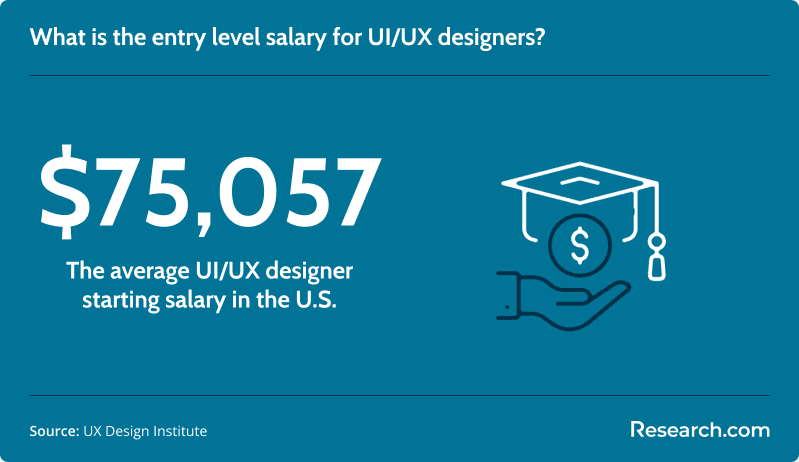
The average UI/UX designer starting salary in the U.S. is $75,057. The job market for graduates with an online UX/UI degree can be promising, but it is also competitive. Employers usually want more than a credential; they want proof that a candidate can identify user problems, design practical solutions, communicate decisions, and work with product or engineering teams.
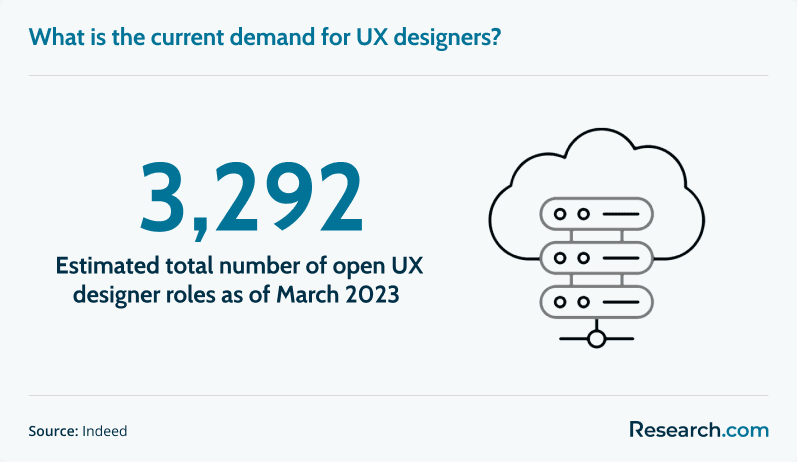
As of March 2023, there were 3,292 open UX designer roles in Indeed. Businesses continue to invest in digital products, websites, apps, internal platforms, and customer experience improvements. At the same time, hiring standards can be high for entry-level candidates, especially when many applicants present similar coursework projects.
To stand out, students should complete internships, freelance assignments, volunteer design work, or personal projects that solve real problems. A strong UX/UI portfolio should explain the problem, research approach, design process, constraints, iterations, and final result. Networking, mentorship, and current tool knowledge can also improve employability.
How a UX/UI degree can support career versatility
UX/UI training can apply beyond a single job title. Because the field combines visual design, research, technology, communication, and problem-solving, graduates may move into adjacent roles as their skills and interests evolve.
Graphic design
UX/UI study can strengthen graphic design work by adding usability, user behavior, and interaction thinking to visual communication. Students interested in branding, marketing design, digital layouts, and interface visuals can explore how a graphic design career path may overlap with UX/UI skills.
Data visualization
Designers who understand hierarchy, usability, and audience needs can help turn complex information into dashboards, reports, and interactive visuals. This path may suit students who enjoy both design clarity and analytical thinking.
Human-computer interaction
Human-computer interaction connects research, psychology, design, and technology. UX/UI graduates who enjoy usability testing, accessibility, behavior, and system design may find HCI-related roles or graduate study appealing.
How should you evaluate long-term ROI from an online UX/UI program?
Return on investment depends on total cost, time to completion, debt, portfolio quality, career support, and how well the curriculum matches employer expectations. Students should ask schools about alumni outcomes, internship access, portfolio review processes, and career progression resources. If flexibility and career mobility are priorities, compare UX/UI programs with broader options such as the easiest online degree paths, but avoid choosing a program only because it appears simple or fast.
Do employers value affordable online UX/UI degrees?
Employers generally care most about whether candidates can do the work. An affordable online degree from an accredited institution can be valuable when it includes rigorous coursework, a strong portfolio, practical projects, and current design tools. The delivery format matters less when graduates can demonstrate research, prototyping, visual design, communication, and problem-solving skills. Students comparing faster credential options can also review fastest online bachelor degree pathways, but speed should not come at the expense of portfolio depth.
How to verify accreditation and program credibility
Accreditation is one of the first things to check before applying to an online UX/UI program. It can affect credit transfer, graduate school eligibility, financial aid access, and employer confidence. Students should verify accreditation directly through the institution and the accrediting organization rather than relying only on a program advertisement.
Program credibility also depends on curriculum quality, faculty expertise, student work samples, alumni visibility, and employer connections. Look for programs that publish clear course descriptions, explain portfolio expectations, and provide access to academic advising and career services for online students.
If you are still building a school shortlist, use this list of regionally accredited online colleges to compare accredited online institutions and identify programs that fit your budget and academic goals.
How can you use federal financial aid for an online UX/UI degree?
To use federal aid, confirm that the school and program are eligible, complete required forms on time, and review your aid offer carefully before accepting loans. Students should ask whether online learners qualify for the same aid options as campus students and whether enrollment status affects eligibility.
Programs connected to FAFSA-approved online certificate programs and degree options can help students understand how federal aid works in online education. Always confirm eligibility with the school’s financial aid office before making enrollment decisions.
How can online UX/UI programs work for working professionals?
Working adults need programs that respect limited time. Useful features include asynchronous coursework, part-time enrollment, evening deadlines, predictable course rotations, mobile-friendly learning platforms, and advisor support. Students balancing employment with school should also look for project-based courses that allow them to connect current work experience with UX/UI assignments.
If flexibility is a top priority, compare UX/UI degree options with broader lists of online degrees for working adults. The best fit is usually a program that combines schedule flexibility with strong feedback, not one that leaves students to learn entirely on their own.
How do online UX/UI programs address AI and emerging design trends?
UX/UI education is changing as design teams use artificial intelligence, automation, analytics, responsive design systems, and emerging interfaces. Strong programs should help students understand how new tools affect research, prototyping, content design, accessibility, and product workflows while still teaching durable fundamentals such as user needs, usability, ethics, and clear communication.
Students should review course descriptions for current tool coverage, but they should not choose a program based only on software names. Tools change quickly; design reasoning, research skill, accessibility awareness, and collaboration remain essential. For broader context on online institutional standards, compare programs with accredited online universities.
Can an accelerated pathway help you enter UX/UI faster?
Accelerated pathways can reduce time in school for students who already have credits, can manage heavier course loads, or want a faster route into design-related work. They are not ideal for every learner. UX/UI requires practice, critique, revision, and portfolio development, so moving too quickly can weaken the quality of your work if the program does not include enough hands-on feedback.
Students who want a lower-cost starting point may consider an accelerated AA degree before transferring into a bachelor’s program. Before choosing this route, confirm transferability and make sure the early coursework supports your target UX/UI degree plan.
When does a graduate degree in UX/UI make sense?
A graduate degree can make sense for professionals who already have a bachelor’s degree and want deeper preparation in research, human-computer interaction, product strategy, accessibility, or design leadership. It may also help career changers build a more advanced portfolio, depending on the program structure.
Students seeking a faster graduate credential can compare 1 year master degree programs, but should carefully evaluate workload, project quality, faculty support, and whether the program provides enough time to produce strong case studies.
Is a doctoral degree in UX/UI design worth it?
A doctoral pathway is usually not necessary for entry-level UX/UI design roles. It is more relevant for people interested in academic research, advanced human-computer interaction study, university teaching, design science, or high-level research leadership. The investment can be significant, so students should define the career outcome they want before applying.
Professionals considering research-intensive study may explore the most affordable doctoral programs, but they should compare research fit, faculty expertise, dissertation expectations, and long-term career goals before committing.
Industry connections, networking, and job placement support
Affordability matters, but a low-cost program with weak career support may not be the best choice. UX/UI hiring often relies on portfolio evidence, referrals, practical experience, and interview performance. That makes networking and career preparation especially important for online students.
- Industry connections: Look for programs that connect students with design professionals, product teams, guest speakers, portfolio reviewers, or employer projects.
- Networking opportunities: Online students should have access to virtual meetups, critique groups, alumni communities, design challenges, or professional events.
- Job placement support: Helpful services include resume guidance, portfolio reviews, mock interviews, internship support, and job search coaching.
Students interested in technology-heavy design careers may also compare UX/UI with related fields such as the cheapest masters in artificial intelligence, since AI tools and user experience design increasingly intersect in product development.
How do online UX/UI programs build practical skills and portfolios?
Strong online UX/UI programs do not rely only on lectures and readings. They ask students to research users, define problems, sketch ideas, build wireframes, create prototypes, test designs, revise based on feedback, and present final case studies. These steps help students build a portfolio that shows process, not just polished screens.
Students who want a manageable undergraduate path can compare applied UX/UI programs with an easy bachelor's degree, but they should remember that design careers require demonstrable work. A program that is too light on projects may leave graduates underprepared for portfolio-based hiring.
Common challenges in online UX/UI programs and how to handle them
Online UX/UI students often face three challenges: staying disciplined without a studio schedule, getting enough feedback on design work, and building real-world portfolio projects. These challenges can be managed, but students should choose programs that provide structure and support.
| Common mistake | Why it can hurt you | Better approach |
| Choosing a program only because tuition is low | A cheap program may still be a poor value if it lacks portfolio support or career services. | Compare total cost, curriculum depth, project quality, and student support. |
| Ignoring accreditation | Accreditation can affect financial aid, transfer credits, and employer confidence. | Verify accreditation before applying or paying fees. |
| Assuming online means easier | Online design work still requires critique, revision, and consistent practice. | Set a weekly schedule and participate actively in feedback opportunities. |
| Building only visual mockups | UX/UI employers want to see research, reasoning, testing, and iteration. | Create case studies that explain your full design process. |
| Skipping career services until graduation | Portfolio and interview preparation take time. | Use career support early, especially for internships and portfolio reviews. |
Graduate students comparing flexible study options may also review the quickest online masters degree pathways, but should confirm that speed does not reduce mentorship or project quality.
How do online UX/UI programs support ongoing career growth?
The best programs support students beyond the first course sequence. Career growth can come from alumni networks, continuing workshops, mentorship, portfolio refresh opportunities, and exposure to new tools and design practices. Students should ask whether graduates can continue using career services after completing the degree.
Some professionals eventually pursue advanced credentials to move into research, leadership, or teaching. If that is part of your long-term plan, compare options such as the shortest online doctorate, but weigh the credential against your actual career target.
What graduates say about online UX/UI study
- Sarah: "Online UX/UI study gave me the flexibility I needed while working full time. I could plan coursework around my schedule, revisit lectures when needed, and still complete projects that helped me build confidence in my design process."
- Alex: "I was unsure about studying online at first, but the lower tuition made the decision possible. The format gave me access to instructors, digital resources, and design assignments without relocating or taking on costs I could not manage."
- Ben: "The biggest benefit for me was connecting with other students who were also building design careers. Peer critiques, mentor feedback, and portfolio projects helped me turn coursework into work I could discuss in interviews."
Key Insights
- The lowest stated cost per credit in this ranking is $111.92 at University of Florida Online, but total value depends on more than tuition.
- A strong UX/UI degree should include user research, interaction design, visual design, prototyping, usability testing, accessibility, and portfolio development.
- Online programs can be a good fit for working adults and self-directed learners, but students should confirm that online learners receive meaningful critique, advising, and career support.
- Accreditation matters. Verify it before enrolling because it can affect financial aid, credit transfer, graduate study, and employer confidence.
- Portfolio quality is central to UX/UI hiring. Choose a program that helps you produce case studies showing research, design decisions, testing, iteration, and final outcomes.
- Financial aid can reduce costs, but students should compare loans, grants, scholarships, fees, software, and transfer credits before committing.
- UX/UI careers can lead into product design, user research, accessibility, information architecture, UX writing, data visualization, and related digital design roles.
- Affordable does not mean low quality, but a program must still provide rigorous coursework, practical projects, and credible support to be worth the investment.
References:
- Bureau of Labor Statistics. (2023). Web and digital interface designers. Occupational Employment Statistics.
- Bureau of Labor Statistics. (2023). Web developers.
- CompTIA. (2024). CompTIA State of the Tech Workforce 2024.
- Soegaard, M. (2024). UI & UX Designer Salaries: How Much Can I Earn in 2024?. Interaction Design Foundation - IxDF
- User Interviews (2023). State of User Research 2023 Report.
- UX Design Institute. (2023). UX hiring in 2023.
Other Things You Should Know About the Most Affordable UI/UX Degree
Most affordable online UX/UI degree programs ask for 5 to 10 samples that show design process, not just finished visuals. A strong portfolio often includes wireframes, user flows, interface mockups, and a short explanation of your role, tools used, and problem solved.
Most affordable online UX/UI degree programs in 2027 generally require a high school diploma or equivalent. Some programs may also ask for a portfolio of design work. Applicants often need to submit transcripts and, depending on the institution, letters of recommendation might be necessary.


