
2027 Best Online Public Relations Programs

Co-Founder and Chief Data Scientist
Choosing an online public relations degree is a practical decision about cost, credibility, career preparation, and how well a program teaches modern communication work. PR is no longer limited to writing press releases or managing media calls. Employers now expect graduates to understand crisis response, social media strategy, analytics, audience research, brand reputation, ethics, and increasingly, AI-assisted communication workflows.
This guide is for students comparing online public relations bachelor’s programs, working adults considering a communications-related degree, and future PR professionals who want to know whether the degree can lead to useful career options. You will learn what online PR programs typically cost, what admissions requirements to expect, which courses and skills matter most, how to evaluate accreditation and internships, and how to compare programs without relying only on rankings.
Quick answer: An online bachelor’s degree in public relations can be worthwhile for students who want careers in strategic communication, media relations, crisis communication, corporate communications, nonprofit outreach, government affairs, or digital reputation management. Public relations specialists in the U.S. receive a median pay of $69,780 per year, or $33.55 per hour, with the total number of jobs reaching 315,900, which is almost the same as digital marketing salaries. It is expected to grow faster than average at 4.8% through 2034 (U.S. Bureau of Labor Statistics, 2025).
Our Research.com experts reviewed publicly available program information and consulted subject matter experts on what makes an online public relations program useful, credible, and career-focused.
Best Online Public Relations Programs Table of Contents
- Online public relations degree cost
- Admission and certification requirements
- Common online public relations courses
- Skills PR graduates need for career success
- How to choose an online public relations program
- 2027 best online public relations degree programs
- How internships and practical experience improve PR training
- How digital marketing skills strengthen a PR career
- Student support, mentorship, and career guidance
- Creative writing and PR strategy
- Ethical challenges in modern public relations
- Visual communication and PR campaigns
- Unconventional degrees and PR career advantages
- Career outcomes for public relations graduates
- Networking and advancement opportunities
- Using interdisciplinary studies to maximize a PR degree
Public relations matters most when an organization’s reputation is under pressure. Even large companies such as Facebook, due to data privacy scandals, and Boeing, following the BA 737 MAX crashes, have experienced bad PR management. The lesson for students is clear: reputation risk can affect even the biggest brands, and response speed, accuracy, and transparency matter.
PR specialists and managers play a central role in controlling damage, communicating with stakeholders, and explaining what an organization is doing to resolve a problem. Crisis communication requires planning, messaging discipline, audience analysis, and coordination across departments. Students who are interested in crisis planning may also find related training in emergency management degrees online.
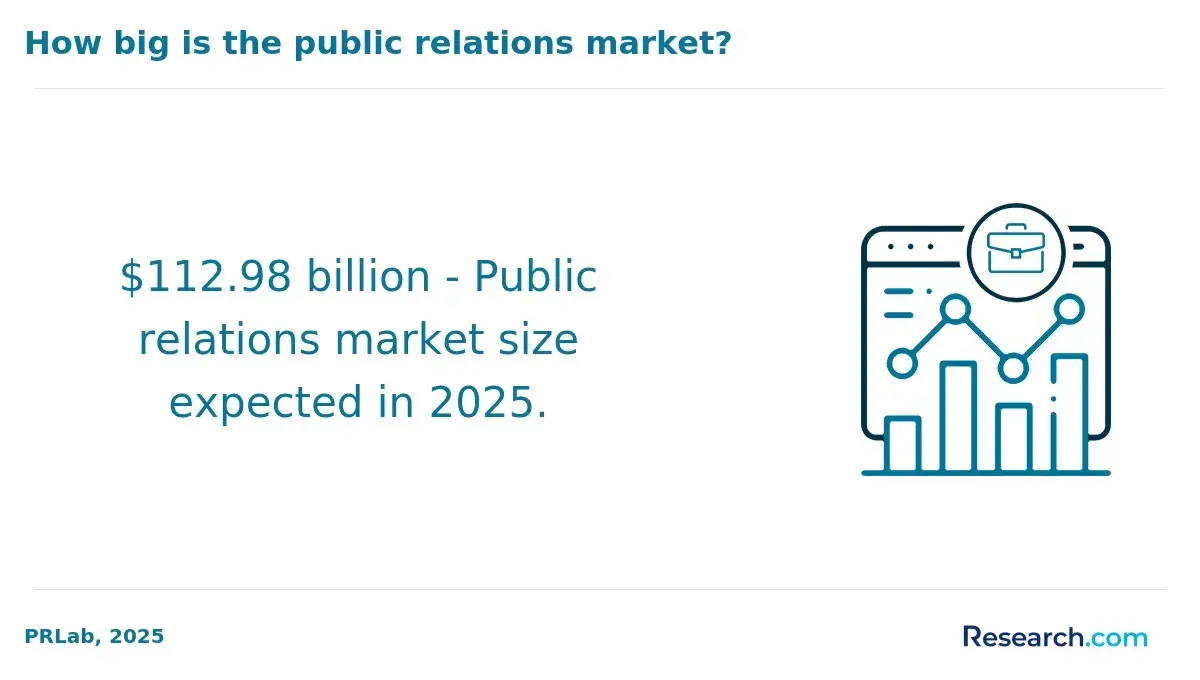
The business case for PR is also significant. These explain the $112.98 billion revenue value of the PR industry in the U.S. in 2025. This presents a CAGR of about 5-6% that could result to a projected 2029 value of $132.52 billion. For students, that growth means the field is broad, but it also means competition will favor graduates who can combine communication judgment with digital, analytical, and ethical decision-making skills.
How much does an online degree in public relations cost?
The price of an online public relations degree varies widely by institution, residency rules, transfer credit policies, fees, and whether the program is housed in communication, journalism, strategic communication, advertising, or media studies. Online degrees in public relations, communication, digital marketing masters programs, and online masters in organizational management are not as common as some larger online majors, but universities are expanding online communication tracks and PR-focused concentrations.
The table below shows a sample of online public relations or closely related programs and their listed tuition cost per credit hour.
| University | Degree | Tuition cost per credit hour( $U.S.) |
| Arizona State University | B.S. Communication | 561.00 |
| Florida International University | B.S. Public Relations, Advertising, and Applied Communications | 228.81 |
| Franklin University | B.S. Communication | 398.00 |
| Liberty University | B.S. in Strategic Communication | 390.00 |
| Lynn University | B.A. Communication and Media | 375.00 |
| Montana State University Billings | B.S. Public Relations | 200.20 |
| Point Park University | B.A. Public Relations, Advertising and Social Media | 495.00 |
| Southern New Hampshire University | B.A. Communication - Public Relations | 330.00 |
| University of Florida | B.S. Public Relations | 129.18 |
Within this sample, the University of Florida’s online B.S. Public Relations program lists the lowest tuition at $129.18 per credit hour. Arizona State University’s online B.S. Communication program lists the highest tuition in the sample at $561.00 per credit hour. The average tuition cost for this list is $345.24 per credit hour; however, this figure should be treated only as a small-program sample, not as a national average for all online public relations degrees.
Many online programs charge one online tuition rate instead of separate in-state and out-of-state rates, which can help remote students compare schools more easily. Still, tuition is only one part of the total price. Students should also ask about technology fees, course materials, graduation fees, internship costs, portfolio software, transfer credit limits, and whether summer courses cost the same as fall or spring courses. Students who want graduate-level specialization after a bachelor’s program can compare options such as the best online MS Public Relations degrees.
| Cost factor | Why it matters when comparing PR programs |
| Tuition per credit | This is the clearest starting point, but it does not show the full cost of attendance by itself. |
| Required credits | A lower tuition rate may not be the cheapest option if the program requires more credits or accepts fewer transfer credits. |
| Transfer credit policy | Generous transfer rules can reduce both time and total cost for students with prior college coursework. |
| Online fees | Technology, course, platform, and student service fees can change the real price of an online degree. |
| Internship requirements | Internships can improve career readiness, but students should know whether placements are remote, local, required, or optional. |
| Financial aid eligibility | Accreditation and enrollment status can affect eligibility for state, federal, military, or institutional aid. |
Whether a four-year online PR degree is worth the cost depends on your career goals, how much debt you would need, and whether the program helps you build a portfolio and professional network. The highest-paying industries for public relations specialists in the U.S. show that graduates may work across several sectors. The top-paying industry is finance with a median annual salary of $65,431, followed by the technology industry at $53,975 and the healthcare industry at $53,449.
Students interested in media-focused roles should note that the annual median salary is $51,149 in the media industry. Nonprofits pay an average annual salary of $48,903 and start-ups, $48,465. These figures show that PR careers are not limited to one type of employer; graduates may work in corporations, agencies, small organizations, nonprofits, startups, public agencies, or their own ventures.
Career outcomes can improve when students continue into graduate study, build measurable campaign experience, and develop digital communication skills. Students comparing future options can review public relations career paths and current salary data or consider whether an online communications masters degree aligns with their advancement goals.
Students who want a stronger technical profile may also pair communication training with programming or data skills. For example, computer coding careers can complement PR roles that involve analytics dashboards, campaign automation, content systems, and AI-assisted communication tools.
What are the requirements for an online Bachelor’s Degree in Public Relations program?
Most online bachelor’s programs in public relations or strategic communication use standard undergraduate admissions requirements. Requirements vary by school, so applicants should confirm deadlines, test policies, transfer rules, and English-language requirements before applying.
Admission Requirements
- High school diploma from an accredited institution
- GED diploma from an accredited institution as an alternative pathway
- Academic transcripts, with a minimum required GPA that is usually 3.0 out of a 4.0 scale
- SAT scores, although some programs list them as optional
- TOEFL or IELTS test scores for applicants who are non-native speakers of English
- Letters of Recommendation from former professors, advisers, current employers, or personal references
- Statement of purpose or personal statement explaining goals and academic fit
Certification Requirements
A certification is generally not required to begin working in public relations, but it can help professionals signal specialized skills in areas such as social marketing, digital media strategy, public relations management, or professional communication. For example, becoming a Certified Social Marketing Associate (CSMA) may support applicants who want to work in social campaigns, cause marketing, or public awareness initiatives.
Certification requirements differ by organization. Some require professional experience, coursework, membership, portfolio evidence, or continuing education. Others may involve an application and online coursework. Students should verify the current eligibility rules directly with the issuing body before paying for a certificate.
Common certification options connected to public relations, communication, marketing, or digital media include the following:
| Certification | Certification board |
| Accredited in Public Relations (APR) | Universal Accreditation Board (UAB) of the Public Relations Society of America (PRSA) |
| AMA Professional Certified Marketer - Public Relations (PCM-PR) | American Marketing Association (AMA) |
| Certified Digital Media Strategist (CDMS) | Digital Media Management Association (DMMA) |
| Certified in Public Relations Management (CPRM) | Public Relations Society of America (PRSA) |
| Certified Manager Certification (CM) | Institute of Certified Professional Managers (ICPM) |
| Certified Professional Communicator (CPC) | International Association of Business Communicators (IABC) |
| Certified Public Relations Professional (CPRP) | Universal Accreditation Board (UAB) |
| Certified Social Marketing Associate (CSMA) | eMarketing Association (eMA) |
| Certified Strategic Public Relations Practitioner (CSPRP) | Public Relations Society of America (PRSA) |
| Chartered Institute of Public Relations Diploma in Public Relations | Chartered Institute of Public Relations |
| Global Alliance for Public Relations and Communication Management Professional Certificate Program | Global Alliance for Public Relations and Communication Management |
| Master Certified Professional Communicator (MCPC) | International Association of Business Communicators (IABC) |
| PRSA Counselors Academy Certificate Programs | PRSA Counselors Academy |
| Society for New Communications Research Digital & Social Media Certificate Program | Society for New Communications Research |
The best approach is to earn the degree first or while building professional experience, then choose certificates that match your target role. A student aiming for corporate communications may value different credentials than someone pursuing nonprofit advocacy, digital media strategy, or agency work.
Courses to Expect in an Online Degree in Public Relations Program
Online PR programs usually combine theory, writing, research, digital communication, ethics, and campaign practice. Course names vary, and some schools place PR inside communication, journalism, advertising, media, or strategic communication departments. Before enrolling, review the full curriculum, not just the program title.
- Corporate public relations: Students learn how organizations manage public reputation, respond to media questions, communicate with investors or shareholders, and maintain a positive corporate image.
- Crisis communication and management: This course focuses on communication during high-risk events such as product recalls, disasters, organizational mistakes, employee misconduct, injuries, deaths, service failures, or negligence claims.
- Digital PR and social media: Students study how organizations use social platforms, digital tools, content planning, community management, and online reputation strategies to reach defined audiences.
In 2025, the most popular social media platform that Americans use as a news source is Facebook with 38% of U.S. adults regularly getting news there, followed by YouTube with 35%. Instagram and TikTok came in third at 20%, and X (formerly Twitter) landed at 12% (Pew Research Center, 2025).
For PR students, these figures show why platform choice cannot be an afterthought. A campaign aimed at public awareness, brand trust, or crisis response must account for where audiences actually encounter information and how they prefer to consume it.
- Digital public relations: This course covers digital channels such as websites, social media, search engine visibility, online press rooms, and other tools used to distribute organizational messages and press materials.
- Ethics in Public Relations: Students examine cultural, legal, and professional standards that guide responsible PR practice and reduce the risk of misleading communication, reputational harm, or legal disputes.
- Government public relations: This area prepares students to communicate for government agencies, public departments, elected officials, and federal or state-level public information offices.
- Introduction to public relations: This foundational course explains the history, concepts, principles, theories, and contemporary practices that shape public relations as a profession.
- Public relations research: Students learn how to collect information, analyze audiences, interpret media and industry trends, evaluate campaign results, and use data to guide communication strategy.
- Writing for Public Relations: This course develops practical writing skills for press releases, speeches, media pitches, social content, statements, newsletters, and other PR materials.
Electives and concentrations often determine how useful a program will be for your specific goals. A student who wants agency work may need campaign management and analytics, while a future nonprofit communicator may benefit from advocacy, grant communication, and community engagement coursework.
Common specialized topics include the following:
- Integrated marketing communications: Students learn how PR fits with advertising, social media, influencer marketing, brand messaging, and other coordinated marketing channels.
- International public relations: This course addresses cross-cultural communication, regional media systems, global reputation management, and the challenges of operating across countries.
- Media relations: Students practice journalist outreach, press release writing, editing, media pitching, interview preparation, and crisis response communication.
- Nonprofit public relations: This specialization focuses on advocacy, donor communication, community trust, volunteer engagement, and mission-based messaging.
- Public relations campaign management and planning: Students learn how to plan, execute, monitor, and evaluate PR campaigns for organizations, issues, product launches, or events.
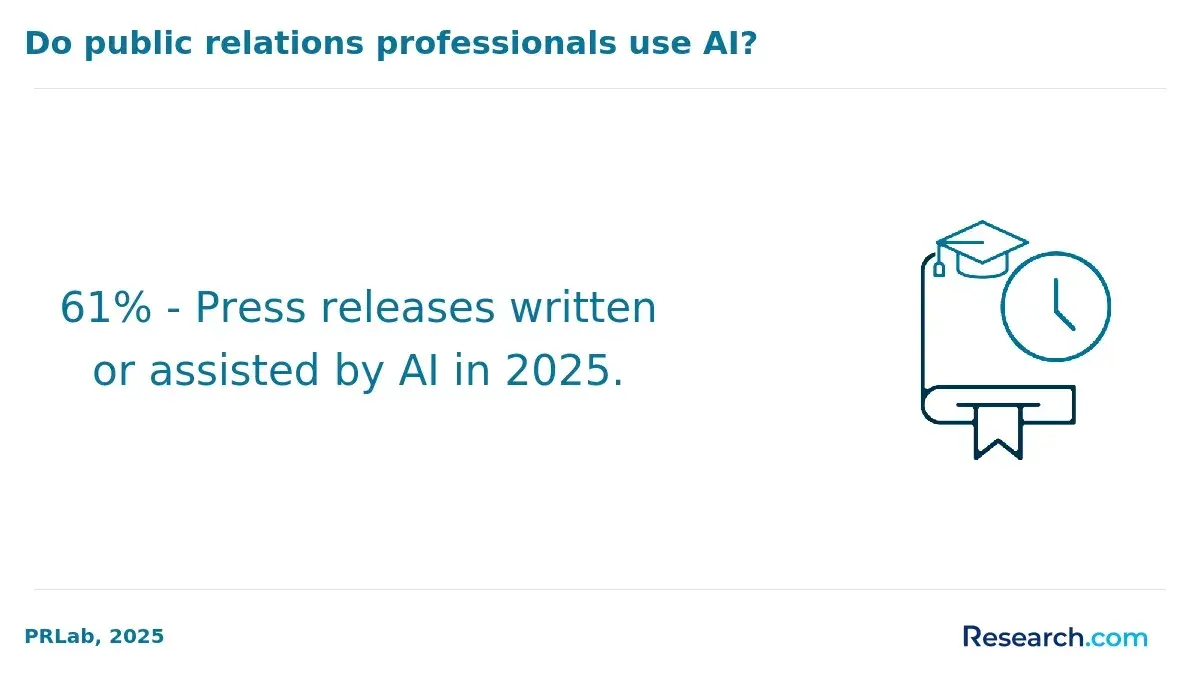
Students who want broader career flexibility may combine PR with technical study. For example, online computer degree programs can support students who want to work with analytics, automation, search visibility, digital platforms, or AI-enabled communication systems. Around 61% of press releases are used with AI, signaling that technical skills in computer and data science complement PR skills as more AI tools are utilized by marketing, advertising, and public relations organizations.
What skills do public relations graduates need to succeed?
Public relations graduates need more than good writing. The strongest candidates can plan strategy, interpret audience data, manage difficult conversations, build relationships, use digital tools, and make ethical decisions when information is incomplete or pressure is high.
- Strategic Communication: PR professionals must shape messages for specific audiences, channels, and goals. This includes writing press releases, planning campaigns, preparing talking points, and keeping brand narratives consistent.
- Crisis Management: Graduates should know how to identify reputational risk, prepare response plans, coordinate with leadership, and communicate clearly during sensitive events.
- Research and Analytics: Modern PR relies on audience research, media monitoring, sentiment analysis, campaign metrics, and evidence-based recommendations.
- Digital and Social Media Expertise: Employers expect familiarity with social platforms, SEO concepts, content calendars, digital engagement, online reputation tools, and basic performance reporting.
- Creativity and Storytelling: PR work often depends on turning complex information into credible, memorable, and audience-relevant stories.
- Interpersonal and Networking Skills: Successful PR professionals build working relationships with journalists, executives, influencers, community leaders, customers, and internal teams.
- Adaptability: Communication channels, audience expectations, and public issues change quickly. Graduates need the ability to learn new tools and adjust strategy without losing judgment.
| Skill area | What students should be able to show employers |
| Writing | Press releases, media pitches, statements, speeches, social posts, and campaign copy |
| Research | Audience insights, media scans, survey interpretation, and campaign evaluation |
| Digital communication | Platform-specific messaging, content planning, SEO awareness, and performance reporting |
| Crisis response | Holding statements, response timelines, stakeholder updates, and risk-aware messaging |
| Ethics | Transparent communication, source verification, privacy awareness, and responsible use of AI tools |
| Portfolio development | Real or simulated campaigns, writing samples, analytics summaries, and presentation work |
Things to Look for in an Online Public Relations Degree Program
A good online public relations program should do more than offer convenient classes. It should help students graduate with credible academic preparation, practical campaign experience, a portfolio, and access to career support.
- Accreditation Accreditation is one of the first items to verify because it affects academic quality, credit transfer, employer recognition, and eligibility for military, state, or federal financial aid. Online versions of campus programs are often accredited through the same institutional accreditor, but students should confirm this directly through the university and accreditor.
- Faculty Strong faculty bring both teaching skill and communication expertise. Look for instructors with professional PR, journalism, strategic communication, marketing, research, or crisis communication backgrounds, as well as faculty who publish or contribute to the field.
- Internships Practical experience can make the difference between a degree and a job-ready portfolio. Ask whether internships are required, optional, local, remote, credit-bearing, or supported through employer partnerships.
- Program courses Core PR courses may look similar across schools, so electives and concentrations can be decisive. Relevant options may include social media marketing, corporate communication, nonprofit PR, TV news writing and hosting, campaign planning, research methods in PR, analytics, or digital storytelling.
Research training is increasingly important because audience behavior varies by market, country, culture, and platform. In 2025, news consumption preferences differed widely across countries. For all countries surveyed, 55% prefer to read the news and 31% prefer watching the news, perhaps as internet videos or TV programs. The Philippines, India (40%), and Mexico (41%) prefer this format. Interestingly, the UK and USA prefer reading at a high rate of 73% and 60% respectively; only 16% and 27% prefer watching (Reuters Institute for the Study of Journalism, 2025). A PR graduate who understands these differences can recommend better channels, formats, and messaging strategies.
| Question to ask | Why the answer matters |
| Is the institution accredited? | Accreditation affects transfer credit, financial aid, graduate school eligibility, and employer confidence. |
| Does the curriculum include campaign work? | Campaign projects help students build portfolio evidence, not just complete exams. |
| Are internships supported for online students? | Online learners may need help finding local, remote, or virtual placements. |
| How are digital tools taught? | PR roles increasingly require social media, analytics, content systems, and AI-aware communication skills. |
| Can transfer credits shorten the degree? | Transfer credits may reduce cost and time to completion. |
| What career services are available? | Resume reviews, portfolio coaching, alumni connections, and interview preparation can improve job readiness. |
Students should avoid choosing a program based only on a low tuition rate or a familiar school name. The better question is whether the program can help you produce strong writing samples, campaign plans, measurable results, and professional contacts.
Students who enjoy research may find strong opportunities in PR as technology, consumer behavior, news habits, and stakeholder expectations continue to shift.
2027 Best Online Public Relations Degree Programs
The following programs are Research.com experts’ picks of the top five online public relations degree or equivalent programs. Use this list as a starting point, not a substitute for your own comparison. Your best-fit school may differ based on tuition, transfer credits, schedule, accreditation, internship access, and career goals.
1. Arizona State University
Arizona State University offers an online BS in Communication. The program is designed to help students communicate clearly, build persuasive arguments, and approach complex communication challenges strategically. Coursework develops critical thinking, problem-solving, diversity, equity, and inclusion awareness, leadership, conflict management, interpersonal communication, oral and written communication, teamwork, and collaboration.
- Program Length: 4 years
- Tracks/concentrations: N/A
- Tuition per credit hour:$561.00
- Required Credits to Graduate: 120 credits
- Accreditation: Higher Learning Commission
2. Liberty University
Liberty University offers a B.S. in Strategic Communication. The program emphasizes applied learning and client-focused communication practice. Through the Department of Digital Media & Communication Arts, students study advertising, public relations, branding, digital promotions, mobile and online communication planning, transmedia storytelling, social media and web strategy, and integrated marketing communication campaigns.
- Program Length: 4 years
- Tracks/concentrations: Strategic Communication (B.S.): Social Media Management or Strategic Communication (B.S.): Strategic Communication
- Tuition cost per credit hour:$390.00
- Required Credits to Graduate: 60 credits
- Accreditation: Accreditation Council for Business Schools and Programs
3. Lynn University
Lynn University offers a fully online B.A. in Communication and Media. The program uses an iPad®-powered curriculum and asynchronous coursework designed for flexible study. Students build knowledge in advertising, public relations, storytelling, media production, and business. Applicants are not required to submit SAT or ACT test scores. Lynn University is also an Apple®-recognized distinguished school for ongoing innovation in learning, teaching, and the school environment.
- Program Length: 4 years
- Tracks/concentrations: N/A
- Tuition cost per credit hour:$375.00
- Required Credits to Graduate: 120 credits
- Accreditation: Southern Association of Colleges and Schools Commission on Colleges
4. University of Florida
The University of Florida offers an online Bachelor of Science in Public Relations. The curriculum combines skills-based courses with conceptual study. UF’s College of Journalism and Communications students have won more times than any other U.S. university in the Public Relations Student Society of America’s (PRSSA) Bateman Case Study Competition. PR students study writing, social media, information management, video, public policy, social psychology, political science, economics, ethics, and technical communication areas.
- Program Length: 4 years
- Tracks/concentrations: N/A
- Tuition cost per credit hour:$129.18
- Required Credits to Graduate: 124 credits
- Accreditation: Southern Association of Colleges and Schools Commission on Colleges
5. Southern New Hampshire University
Southern New Hampshire University offers an online B.A. in Communication with a Public Relations focus. Core learning areas include communication development and delivery, strategic planning and execution, stakeholder collaboration, and ethical communication planning. The program offers no set class times and provides 24/7 access to the online classroom. It does not require an application fee or SAT/ACT scores.
- Program Length: 4 years
- Tracks/concentrations: N/A
- Tuition cost per credit hour:$330/credit
- Required Credits to Graduate: 120 credits
- Accreditation: The New England Commission of Higher Education (NECHE)
How do internships and practical experiences strengthen a public relations degree?
Internships, simulations, campaign projects, and capstones help students move from classroom concepts to professional work. PR employers often want evidence that graduates can write for real audiences, manage deadlines, use media tools, support campaigns, and respond to changing circumstances. Practical assignments can also help students build a portfolio before graduation.
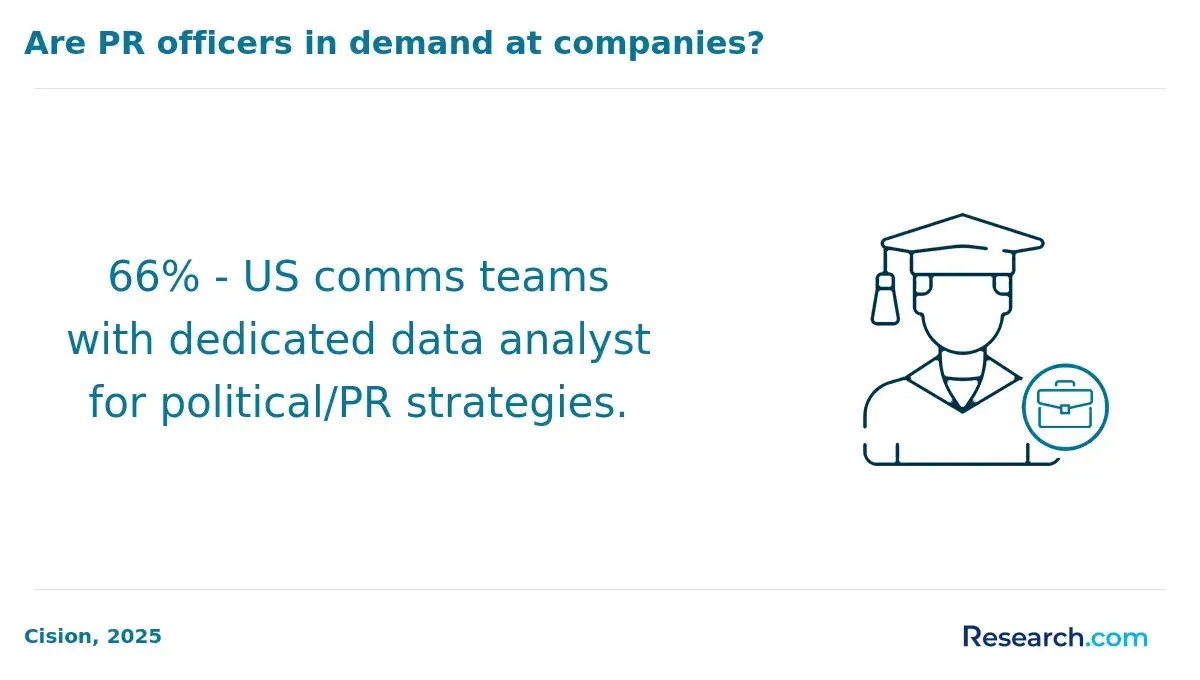
This practical training is especially valuable because 66% of U.S. communications teams now employ a dedicated data analyst to support political and PR strategies, reflecting the growing integration of analytics into communication planning and evaluation. When comparing a public relation degree, students should ask how the program teaches campaign measurement, reporting, media monitoring, and data-informed communication decisions.
| Experience type | How it helps PR students |
| Internship | Provides workplace experience, professional references, and exposure to clients, media, or internal communication teams. |
| Capstone campaign | Lets students plan, execute, and evaluate a communication strategy from start to finish. |
| Portfolio project | Creates writing samples and campaign materials that students can show employers. |
| Simulation | Helps students practice crisis response, stakeholder messaging, or media relations in a low-risk setting. |
| Student agency or practicum | Gives students client-style experience while still receiving faculty feedback. |
How Can Complementary Digital Marketing Skills Boost Your PR Career?
Public relations and digital marketing now overlap in search visibility, social engagement, influencer outreach, analytics, audience segmentation, content strategy, and reputation management. PR students who understand digital marketing can design campaigns that are easier to measure and better aligned with how audiences discover information online.
Additional coursework or credentials, including an online social media marketing degree, may help graduates strengthen skills in content calendars, platform analytics, paid and organic reach, search-informed messaging, and campaign optimization. This combination is particularly useful for agency roles, brand communication teams, startups, and organizations that expect PR professionals to work across multiple digital channels.
How Do Student Support Services and Mentorship Enhance Your PR Success?
Online students should pay close attention to advising, mentorship, and career services because these supports can affect persistence, portfolio quality, and job preparation. Strong programs may offer career counseling, faculty mentorship, alumni networking, resume feedback, portfolio reviews, internship guidance, and access to communication professionals.
These services are especially helpful for students who are changing careers or entering PR without existing media contacts. Mentors can explain agency life, corporate communication roles, nonprofit communication, government affairs, and ethical expectations. Students exploring a broader career in communications can use advising and alumni networks to identify roles that match their strengths.
How Can Creative Writing Skills Enhance Your Public Relations Strategy?
Public relations depends on writing that is clear, credible, timely, and audience-aware. Creative writing can strengthen PR by helping professionals build narratives, adapt tone, explain complex issues, and create messages that people remember. This is useful in brand campaigns, executive communication, nonprofit storytelling, crisis response, and social media content.
Students who want to improve narrative technique, voice, and content development may benefit from targeted writing coursework. Options such as the cheapest creative writing bachelor's programs can be useful for students who want to pair PR strategy with stronger storytelling ability.
What are the ethical challenges in modern public relations?
Ethics is one of the most important parts of public relations because PR work can influence public opinion, stakeholder trust, and organizational accountability. Modern PR professionals must handle misinformation, privacy concerns, biased messaging, selective disclosure, AI-generated content, crisis transparency, and conflicts between client interests and the public interest.
Good programs should teach students how to verify information, disclose relevant facts, protect confidential data, avoid deceptive tactics, and evaluate the consequences of messaging decisions. Real case studies are especially useful because ethical problems rarely appear as simple textbook scenarios. Students comparing related business and communication pathways may also review the best accelerated marketing degree online to understand how marketing and communication programs address professional standards.
How Can Visual Communication Skills Enhance Your PR Strategy?
Visual communication helps PR professionals explain information quickly, build brand recognition, and make campaigns more engaging. Infographics, video statements, social graphics, presentation decks, web visuals, and short-form multimedia can support both routine campaigns and crisis communication.
Students do not need to become full-time designers to benefit from visual communication training. They should understand layout, clarity, accessibility, brand consistency, and how visuals shape audience interpretation. Programs that include multimedia assignments or design electives can help students create stronger campaign assets. Students who want deeper design preparation can compare accredited online graphic design programs as a complement to PR study.
Can Unconventional Degrees Provide a Competitive Edge in Public Relations?
Public relations can benefit from academic backgrounds outside traditional communication programs. Fields such as game design, psychology, computer science, data analytics, political science, public health, and creative writing can give PR professionals specialized knowledge and fresh approaches to audience engagement.
For example, the advantages of earning a game design degree may include interactive storytelling, user experience thinking, narrative design, and audience engagement skills. These capabilities can be useful for digital campaigns, experiential marketing, brand activations, and communication strategies that rely on participation rather than one-way messaging.
What are the career outcomes for public relations graduates?
Graduates of online public relations programs can pursue roles in agencies, corporate communication departments, nonprofits, media organizations, government offices, public affairs teams, startups, healthcare organizations, universities, and technology companies. The degree is broad because reputation, stakeholder communication, and public messaging are important across sectors.
Common roles include public relations specialist, media relations coordinator, corporate communication officer, social media strategist, public affairs assistant, content strategist, community relations coordinator, internal communication associate, and communications manager. With experience, graduates may move into senior roles such as PR consultant, communications director, public affairs manager, or brand reputation lead.
| Career path | Typical focus | Helpful preparation |
| Public relations specialist | Media outreach, press materials, campaigns, and stakeholder messaging | Writing samples, media relations practice, and campaign projects |
| Social media strategist | Platform planning, online engagement, analytics, and content calendars | Digital PR, social media marketing, and reporting skills |
| Corporate communications officer | Internal and external communication for companies | Business communication, crisis response, and executive messaging |
| Nonprofit communications professional | Mission storytelling, donor communication, advocacy, and community engagement | Writing, nonprofit PR, campaign planning, and audience research |
| Media relations manager | Journalist outreach, interviews, press strategy, and reputation management | Media pitching, news judgment, and crisis communication |
Some graduates pursue additional credentials, digital marketing training, or communication-focused graduate study. Students considering broader communication pathways can review communication degree requirements to compare academic options for future advancement.
Salary outcomes vary by role, industry, location, experience, and portfolio strength. The finance, healthcare, and technology sectors are particularly known for offering high-paying PR roles. Students should not treat salary figures as guaranteed outcomes; instead, they should compare program cost against realistic entry-level opportunities, internship access, and the quality of their portfolio.
What are the networking and career advancement opportunities for public relations graduates?
Public relations is relationship-driven. A degree can provide the academic foundation, but long-term advancement often depends on professional connections, industry visibility, mentorship, and a record of successful communication work.
- Join professional organizations. Groups such as the Public Relations Society of America (PRSA) and the International Association of Business Communicators (IABC) can provide networking events, professional resources, awards, and certification pathways.
- Use internships and mentorships strategically. Internships can lead to references, portfolio work, and job leads. Mentorship helps students understand workplace expectations and avoid early career mistakes.
- Build a professional digital presence. LinkedIn, X, portfolio websites, and industry forums can help graduates share work samples, follow journalists and PR leaders, and participate in relevant conversations.
- Consider graduate programs and certifications. Advanced study or specialized credentials may support movement into senior roles, especially when completed through accredited online colleges.
- Attend conferences, webinars, and industry events. These events help professionals track trends, meet employers, learn from case studies, and stay current on ethical and digital communication practices.
How can you maximize your public relations degree through interdisciplinary studies?
A public relations degree becomes more flexible when paired with another field. Interdisciplinary study can help students specialize in industries or functions where communication knowledge alone may not be enough.
Marketing or digital media can prepare students for social media strategy, influencer outreach, campaign planning, and content creation. Psychology can improve understanding of audience behavior and persuasion. Data analytics can help graduates measure campaign performance and explain results to executives. Public policy or political science can support careers in government affairs, advocacy, and issue management.
Technology-focused study is also becoming more relevant as AI, automation, media monitoring platforms, and data tools affect communication workflows. Students who understand these tools can work more effectively with analysts, marketers, designers, and technical teams.
Students deciding how to combine interests can review good majors in college to identify fields that complement public relations. The best pairing depends on whether your goal is corporate reputation, crisis communication, nonprofit advocacy, digital strategy, public affairs, or another specialized area.
Is Accreditation a Key Factor in Choosing an Online PR Program?
Accreditation should be treated as a must-check item, not a minor detail. It signals that a school has gone through external quality review and that its programs meet recognized academic standards. Accreditation can affect transfer credit, graduate school admission, financial aid eligibility, and employer trust.
Students should confirm accreditation through the school and the accrediting body, not only through marketing pages. If you plan to continue into graduate study, accreditation can also affect whether your bachelor’s credits are recognized. Students comparing future academic pathways may also look at options such as the easiest masters degrees, but ease should never replace fit, quality, accreditation, and career relevance.
Future Trends in Public Relations Programs
Public relations programs are changing because audiences now encounter news and brand messages through social feeds, video platforms, podcasts, search engines, newsletters, and creator-driven media. Social media can also intensify polarization in society, which makes trust, source verification, and audience segmentation even more important for PR professionals.
AI is another major force in PR education and practice. AI tools can draft content, summarize coverage, generate ideas, support media monitoring, and assist with audience research. However, human review remains essential because PR involves judgment, ethics, context, accuracy, and accountability. Students who want to work comfortably with AI-enabled tools may benefit from technical coursework or an online associates computer science degree alongside communication training.
Common mistakes to avoid when choosing an online public relations degree
- Choosing only by tuition. A cheap program may not be the best value if it lacks accreditation, internships, career services, or portfolio-building assignments.
- Ignoring accreditation. Accreditation affects financial aid, transfer credit, graduate school options, and employer confidence.
- Assuming all communication degrees are the same. A general communication degree may not provide the same PR writing, media relations, crisis communication, or campaign planning depth as a PR-focused curriculum.
- Skipping the internship question. Online students should confirm how internships work before enrolling, especially if they need local or remote options.
- Overlooking digital skills. PR graduates increasingly need social media, analytics, content strategy, search awareness, and AI-literate communication skills.
- Relying only on rankings. Rankings can be useful, but your best-fit program depends on cost, schedule, credits, support, curriculum, and career goals.
- Assuming salary outcomes are guaranteed. Pay depends on role, employer, location, experience, industry, portfolio, and professional network.
Key Insights
- An online public relations degree can be a strong fit for students who want careers in strategic communication, media relations, crisis response, digital reputation management, corporate communications, nonprofit outreach, or public affairs.
- Public relations specialists in the U.S. receive a median pay of $69,780 per year, or $33.55 per hour, with 315,900 jobs and expected growth of 4.8% through 2034.
- Program cost varies widely. In the sample reviewed, tuition ranged from $129.18 to $561.00 per credit hour, with an average of $345.24 per credit hour for that list.
- The best online PR programs combine accredited coursework, writing practice, campaign planning, digital communication, ethics, research, analytics, and internship or capstone experience.
- Students should compare more than tuition. Accreditation, transfer credits, online fees, internship access, career support, faculty experience, and portfolio development all affect value.
- Digital skills are no longer optional. Social media strategy, analytics, SEO awareness, AI-assisted workflows, and visual communication can make PR graduates more competitive.
- Certifications can support career growth, but they are usually most useful when aligned with a specific goal such as digital media strategy, public relations management, or professional communication.
- Interdisciplinary study can strengthen a PR degree. Useful pairings include marketing, data analytics, psychology, public policy, computer science, creative writing, and design.
References:
- Cision. (2025). PR statistics: 2025 comms report by the numbers. https://www.cision.com/resources/articles/pr-statistics-2025-comms-report/
- Pew Research Center. (2025). Social Media and News Fact Sheet. https://www.pewresearch.org/journalism/fact-sheet/social-media-and-news-fact-sheet
- PRLab. (2025). 150+ PR statistics you need to understand the industry in 2025. https://prlab.co/blog/public-relations-statistics-2025/
- Research and Markets. (2026). Public relations market size, competitors & forecast to 2029. https://www.researchandmarkets.com/report/public-relations
- Reuters Institute for the Study of Journalism. (2025). Reuters Institute Digital News Report 2025. https://reutersinstitute.politics.ox.ac.uk/sites/default/files/2025-06/Digital_News-Report_2025.pdf
- U.S. Bureau of Labor Statistics. (2025). Public relations specialists. In Occupational Outlook Handbook. U.S. Department of Labor. Retrieved February 2, 2026, from https://www.bls.gov/ooh/media-and-communication/public-relations-specialists.htm
- Zippia. (2026). Public relations jobs demographics and statistics in the U.S. https://www.zippia.com/public-relations-jobs/demographics/
Other Things You Should Know About Online Public Relations Degrees
Admission requirements for top online PR programs in 2027 often include a bachelor’s degree in any field, a minimum GPA (usually around 3.0), a resume, letters of recommendation, and a personal statement detailing your interest in public relations.
Many online public relations programs require a supervised internship, practicum, or capstone project before graduation. Some programs ask for 120 to 160 total credit hours, with 3 to 6 credits tied to applied experience. Schools may let students complete the requirement at an approved workplace or communications agency.
In 2027, top online PR programs emphasize skills such as digital communication, crisis management, and data analytics. Students learn to leverage social media, refine their storytelling abilities, and adapt strategies to diverse media platforms. Programs also focus on ethical practices, equipping graduates to navigate modern challenges in public relations effectively.


