
2027 Best Online Digital Marketing Degree Programs

Co-Founder and Chief Data Scientist
Choosing an online digital marketing degree is not just a question of which school has the lowest tuition or the most recognizable name. The better question is whether the program will help you build marketable skills in SEO, analytics, paid advertising, content strategy, social media, customer research, and marketing technology while fitting your schedule and budget.
This guide is designed for students, working adults, transfer students, and career changers comparing online bachelor’s programs in digital marketing for 2027. It explains what these programs teach, how long they take, how much they may cost, what careers they can lead to, and how to evaluate whether a program is worth your time and money.
Quick answer: Is an online digital marketing degree worth considering?
An online digital marketing degree can be a strong option if you want a structured bachelor’s-level education in marketing strategy, data analysis, digital advertising, social media, and web-based customer engagement. It is especially useful for students who need flexibility, want to keep working while studying, or plan to pursue roles such as digital marketing specialist, SEO analyst, social media manager, content creator, or digital advertising specialist.
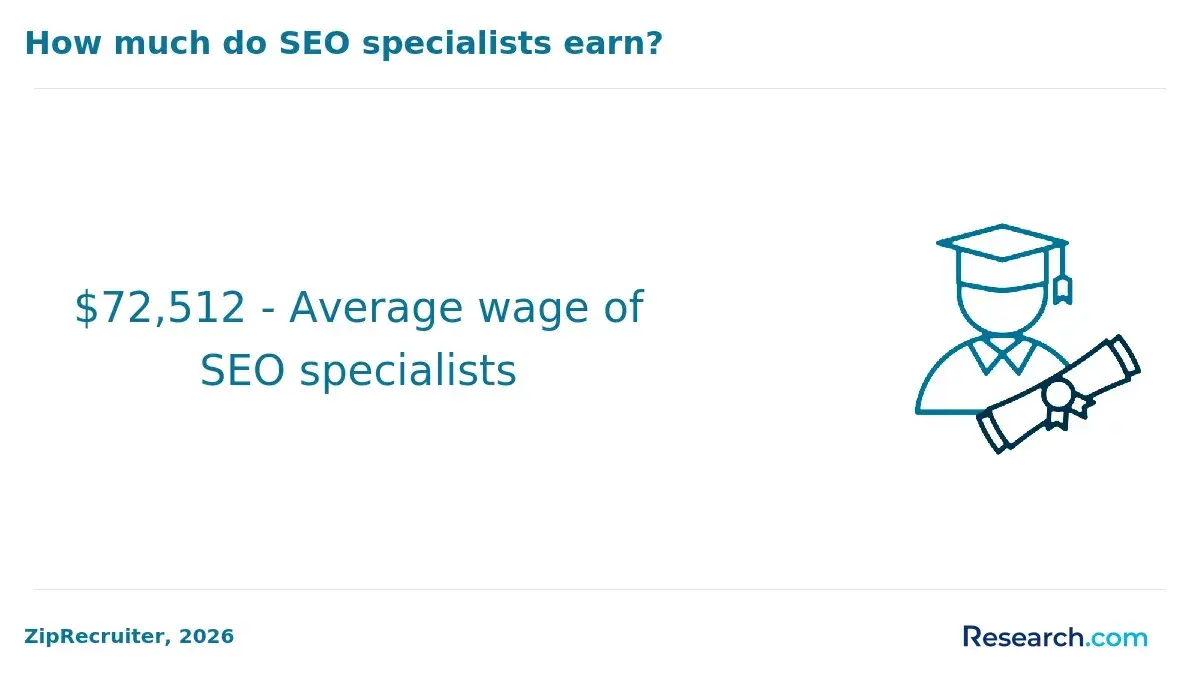
The average annual salary of a digital marketer in the U.S. is $65,418. Other related roles listed in this guide include social media managers at $79,169, SEO analysts at $72,512, and content creators at $61,715. Salary outcomes vary by experience, location, employer, industry, portfolio quality, and technical skill level, so students should treat these figures as benchmarks rather than guarantees.
- Best fit: Students who want a business-focused degree with practical digital skills, flexible online coursework, and broad career options across marketing, technology, e-commerce, media, startups, and agencies.
- Potential drawback: A degree alone is usually not enough. Employers often want proof of hands-on ability through campaigns, analytics projects, certifications, internships, writing samples, ad experiments, or a portfolio.
- Main decision point: Choose an accredited program that combines marketing theory with practical tools, analytics, portfolio-building assignments, and career support.
What can I expect from an online digital marketing degree?
An online digital marketing degree teaches students how businesses attract, engage, convert, and retain customers through digital channels. Most programs blend core business and marketing concepts with technical coursework in search, social media, analytics, content, mobile marketing, branding, and online advertising.
Students should expect coursework that builds both strategic and hands-on skills. A strong program does not only explain what SEO or paid ads are; it should also require students to analyze audience behavior, create campaign plans, interpret performance data, and make decisions based on measurable outcomes.
Common topics in an online digital marketing program
- Search engine optimization (SEO)
- Social media marketing
- Email marketing
- Web analytics
- Digital content creation
- Mobile Marketing
- Data analysis
- Branding
- Digital advertising
- Marketing principles and consumer behavior
By graduation, students should have a foundation in business management and digital campaign execution. The online format can be particularly useful for learners who need to study around work, family, military service, or other commitments.
Where can I work with an online digital marketing degree?
Digital marketing graduates can work in almost any organization that depends on online visibility, customer data, advertising, content, or digital sales. This includes agencies, corporate marketing teams, nonprofit organizations, tech companies, e-commerce businesses, startups, healthcare organizations, education providers, media companies, and consulting firms.
Common job titles for graduates
- Digital marketing specialist
- Social media manager
- SEO analyst
- Content creator
- Email marketing specialist
- Digital advertising specialist
- Search marketing specialist
- Digital analytics specialist
Typical responsibilities
- Planning and launching digital marketing campaigns
- Managing paid search, display, video, or social media advertising
- Using web analytics to measure traffic, conversions, and engagement
- Optimizing website content for search visibility and user behavior
- Creating social, email, blog, video, and landing page content
- Testing campaign messages, audiences, creative assets, and budgets
- Reporting campaign results to clients, managers, or leadership teams
Some graduates also pursue freelance consulting or launch small digital marketing agencies. This path can be attractive for students who build a strong portfolio, develop sales skills, and gain experience with real client problems.
How much can I make with an online digital marketing degree?
Earnings in digital marketing depend heavily on specialization, experience, location, industry, portfolio strength, and the complexity of the campaigns a professional can manage. The following salary figures provide a useful starting point for comparing related roles:
| Role | Average salary listed in this guide | What the role usually focuses on |
| Digital marketing specialist | $65,418 | Campaign coordination, analytics, SEO, paid media, content, and cross-channel marketing support |
| Social media manager | $79,169 | Social strategy, community engagement, platform analytics, paid social campaigns, and brand voice |
| SEO analyst | $72,512 | Keyword research, technical SEO, content optimization, search performance tracking, and reporting |
| Content creator | $61,715 | Written, visual, video, or multimedia content designed to attract and engage target audiences |
A degree may help qualify you for entry-level or early-career roles, but higher-paying positions usually require demonstrated results. Examples include improving organic traffic, lowering ad costs, increasing conversions, building dashboards, managing budgets, or leading multi-channel campaigns.
- Best Online Bachelor’s Degrees in Digital Marketing for 2027
- How long does an online digital marketing program take?
- Online vs. on-campus digital marketing programs
- Average cost of an online digital marketing program
- Financial aid options for online digital marketing students
- Admission requirements for online digital marketing programs
- Common courses in an online digital marketing degree
- Digital marketing specializations to consider
- How to choose the best online digital marketing program
- Career paths for digital marketing graduates
- Job market for digital marketing degree graduates
- Soft skills needed in digital marketing
- How to keep your digital marketing skills current
- How digital marketing connects to communications careers
- Accelerated online digital marketing degree options
- Emerging technologies in digital marketing
- Graphic design skills for digital marketing
- Game design and digital marketing engagement
- Online degrees that complement digital marketing
- Public relations and digital marketing strategy
- Creative arts training for digital campaigns
- Internships and hands-on digital marketing projects
- Certifications that can strengthen digital marketing qualifications
Best Online Bachelor’s Degrees in Digital Marketing for 2027
How Research.com ranks schools
A bachelor’s degree is a major investment, so students need rankings that are transparent, practical, and based on credible data. Research.com developed this list of online bachelor’s degrees in digital marketing using current and comprehensive datasets from:
- The Integrated Postsecondary Education Data System (IPEDS) database
- Peterson’s database, including the Distance Learning Licensed Data Set
- College Scorecard database
- National Center for Education Statistics
The ranking also considers factors such as graduation rate, student-faculty ratio, and program focus. More details are available on Research.com’s methodology page.
| Rank | School | Program | Program length | Cost per credit | Credits required | Accreditation |
| 1 | Southern New Hampshire University | Online Bachelor of Science in Digital Marketing | Four years | $330 | 120 credits | New England Commission of Higher Education |
| 2 | American Public University | Online Bachelor of Arts in Marketing | Four years | $350 | 120 credits | Higher Learning Commission |
| 3 | Bellevue College | Bachelor of Applied Science in Digital Marketing | Four years | Not provided | 180-181 | Northwest Commission on Colleges and Universities |
| 4 | Maryville University | Online Bachelor’s Degree in Marketing | Four years | $540 | 128 | Accreditation Council for Business Schools and Programs |
| 5 | Cambridge College | Online Bachelor of Science in Digital Marketing | Four years | $60,240 (total program cost) | 120 | New England Commission of Higher Education |
| 6 | Bay Path University | Digital Marketing Management degree | 3.5 years | $410 | 120 | New England Commission of Higher Education |
| 7 | Colorado Technical University | Online BSBA in Digital Marketing | Four years | N/A | 180 | Higher Learning Commission |
| 8 | University of New Hampshire (UNH) College of Professional Studies | Business Management with Digital Marketing Option | 3.5 years | $314 | 120 | New England Commission of Higher Education |
| 9 | Harrisburg University of Science and Technology | Online Digital Marketing Concentration | 50-54 semester hours | $380 | N/A | Middle States Commission on Higher Education |
| 10 | Johnson and Wales University | Bachelor of Science in Digital Marketing and Social Media | Four years | $495 | N/A | New England Commission of Higher Education |
How to use this ranking
Use the list as a starting point, not as the only factor in your decision. The best program for you depends on transfer credits, total cost, course schedule, student support, career services, available concentrations, and whether the curriculum includes current digital marketing tools and applied projects.
Student perspectives on online digital marketing degrees
-
: "
"Earning my degree in digital marketing online allowed me to balance work and study seamlessly. The flexibility to access cutting-edge marketing tools and resources time revolutionized my learning experience and directly enhanced my career prospects. The practical skills I gained have opened up new opportunities for me in the industry." - Ariadna
"
-
: "
"Studying digital marketing online was an eye-opener. It was incredible to engage with students from all over the world, sharing insights and strategies in real time. This global perspective enriched my understanding of market dynamics, making me a better marketer. The convenience of studying from home was just the cherry on top." - Mariel
"
-
: "
"The online digital marketing program was a game-changer for my career development. It equipped me with the technical know-how and creative thinking necessary to thrive in today's fast-paced digital world. Balancing family life with my studies was challenging, but the flexibility of the online format made it all possible." - Sebastian
"
Key findings for prospective students
- Online digital marketing degrees are built for flexibility, which can help students balance school with work and personal responsibilities.
- The typical cost of an online digital marketing degree ranges from $8,250 to $32,000 per academic year.
- Graduates may pursue roles such as digital marketing specialist, social media manager, SEO analyst, and content creator, with salary benchmarks ranging from $61,715 to $79,169 in the roles listed above.
- Core coursework usually includes SEO, social media marketing, web analytics, content creation, and marketing strategy.
- The job market for digital marketing specialists is projected to grow by 6.7% through 2034, with about 87,200 new jobs per year.
- Accreditation matters. Programs connected to recognized institutional or business accreditors can support financial aid eligibility, transferability, and employer confidence.
How long does it take to complete an online digital marketing program?
The timeline depends on the credential type, enrollment pace, transfer credits, and program structure. A bachelor’s degree usually takes longer than a certificate, but it can also provide a broader foundation in business, analytics, communication, and marketing strategy.
| Program type | Typical completion time stated in this guide | Best for |
| Short digital marketing course | A few days to a few weeks | Students who need a quick introduction to a tool, platform, or topic |
| Certificate program | Two to four months | Learners who want faster skill development without completing a full degree |
| Bachelor’s degree | Usually four years | Students seeking a full undergraduate credential and broader career preparation |
| Master’s degree | One to two years | Professionals who already have a bachelor’s degree and want advanced study |
Students who transfer prior college credits, enroll year-round, or choose accelerated formats may finish faster. Part-time learners may need more time, especially if they take only one or two courses per term.
How does an online digital marketing program compare to an on-campus program?
Online and on-campus digital marketing programs can cover similar academic material, but the learning experience is different. The right format depends on how you learn best, how much schedule flexibility you need, and whether you value in-person networking more than location independence.
| Factor | Online digital marketing program | On-campus digital marketing program |
| Schedule flexibility | Often better for working adults, caregivers, military students, and learners outside commuting distance | Usually follows fixed class times and campus-based schedules |
| Networking | May rely on virtual discussion boards, group projects, webinars, and online career events | Offers easier access to in-person classmates, faculty, clubs, events, and local recruiters |
| Pacing | Can be part-time, full-time, or accelerated depending on the school | Often follows a more traditional semester or term structure |
| Learning environment | Requires self-discipline, strong time management, and comfort with digital platforms | Provides face-to-face structure and immediate classroom interaction |
| Curriculum quality | Can be comparable when offered by an accredited institution with strong faculty and applied assignments | Can be comparable when the program is current, well-supported, and connected to industry needs |
Online programs are often the better fit if you need control over when and where you study. Campus programs may be better if you want a more traditional college experience or immediate access to in-person networking and campus resources.
What is the average cost of an online digital marketing program?
The estimated cost of an online digital marketing degree ranges from $8,250 to $32,000 per academic year. By comparison, on-campus tuition typically ranges from $10,940 to $39,400 per year.
Tuition is only one part of the total cost. Students should also compare fees, books, software subscriptions, technology requirements, graduation fees, transfer credit policies, and the number of credits required to finish. A program with a higher per-credit rate may still be affordable if it accepts more transfer credits or has fewer hidden fees.
Cost questions to ask before enrolling
- What is the total program cost, not just the cost per credit?
- Are online students charged additional technology or distance learning fees?
- How many transfer credits will the school accept?
- Are digital marketing tools, analytics platforms, or course materials included?
- Can students reduce costs through employer tuition assistance, scholarships, military benefits, or payment plans?
- Does the school offer career services, portfolio support, or internship help that may improve job readiness?
Students looking for lower-cost options can review Research.com’s guide to the cheapest online degrees. If you are comparing digital marketing with other technology-focused paths, you may also find the guide on how much a software engineering degree costs useful.
Top Marketing Channels

What are the financial aid options for students enrolling in an online digital marketing program?
Online digital marketing students may qualify for several types of financial support, depending on the school, program, enrollment status, and personal eligibility. Always confirm whether the institution is accredited and whether the program qualifies for the aid you plan to use.
- Payment plans and financing options. Some schools allow students to divide tuition into scheduled payments instead of paying the full balance at once.
- Tuition discounts. Schools may offer discounts for employees, alumni, veterans, military-connected students, or other eligible groups. Students comparing affordability across fields can also review options such as cheap online master's programs for teachers.
- Employer tuition reimbursement. Working adults should ask their HR department whether their employer reimburses tuition for job-related education.
- Government funding. Some students may qualify for support through programs such as the Workforce Innovation and Opportunity Act (WIOA) or the Division of Vocational Rehabilitation (DVR).
- Veteran education benefits. Eligible veterans may be able to use GI Bill or VET TEC benefits toward approved programs.
- Scholarships. Some institutions and external organizations offer scholarships for working adults, business students, marketing students, or online learners.
Financial aid checklist
- Confirm the school’s accreditation before applying for federal aid.
- Ask whether aid applies to online students in the same way it applies to campus students.
- Compare the net price after scholarships, grants, discounts, and transfer credits.
- Check satisfactory academic progress rules so you understand what GPA or completion rate you must maintain.
- Avoid borrowing based only on expected salary; use conservative income assumptions.
What are the prerequisites for enrolling in an online digital marketing program?
Admission requirements vary by school, but most online bachelor’s programs in digital marketing expect students to show they are ready for college-level coursework. Transfer students may need to submit additional records so the institution can evaluate prior credits.
Common admission requirements
- Online application. Students typically complete an online application. Some schools use rolling admissions or waive application fees.
- Official transcripts. First-year applicants usually need a high school diploma or equivalent, such as a GED. Transfer applicants submit transcripts from prior colleges.
- Test scores. Some institutions consider ACT or SAT scores. Others may require students to meet GPA or placement requirements, including a minimum GPA of 2.0.
- Recommendation letters. Programs may request two to three letters from teachers, counselors, employers, or professional contacts.
- Essays. Applicants may need to submit one to three essays explaining academic goals, career interests, or reasons for choosing the program.
Preparation skills that help students succeed
- Research and data gathering. Digital marketers need to understand audiences, markets, competitors, and campaign performance.
- Analytical thinking. Students should be ready to interpret metrics and use evidence when choosing marketing tactics.
- Communication. Strong writing and presentation skills are essential for campaigns, reports, stakeholder updates, and client work.
- Interpersonal awareness. Marketers must understand customer needs, motivations, objections, and behavior.
- Adaptability. Digital platforms, search algorithms, ad tools, privacy expectations, and consumer behavior change frequently.
What courses are typically in an online digital marketing program?
Online digital marketing degrees usually include business core courses, general education requirements, and specialized marketing courses. The strongest programs connect classroom concepts to realistic campaign problems.
- Digital content creation
- Digital marketing analytics
- Digital marketing insights, strategies, and applications
- Introduction to digital marketing
- Marketing principles
- Mobile Marketing
- Search engine optimization (SEO)
- Social media marketing
What to look for in course design
- Projects that require students to create campaign plans, content calendars, analytics reports, or ad strategies
- Assignments using current digital platforms and measurement tools
- Coverage of ethical marketing, data privacy, accessibility, and consumer trust
- Opportunities to build a portfolio before graduation
- Faculty feedback on writing, creative strategy, analytics interpretation, and campaign performance
What types of specializations are available in an online digital marketing program?
Specializations help students align their degree with a specific career direction. A broad digital marketing major can prepare students for many roles, but a focused concentration may be useful for students who already know they want to work in analytics, content, search, social media, or brand communication.
- Brand Communication
- Content Marketing
- Data Analysis and Analytics
- Data Visualization
- Integrated Marketing Communications
- Marketing Channel Data Collection
- Marketing Mix
- Marketing Performance Measurement and Management
- Marketing Plan
- Mobile Marketing
- Pricing Strategies
- Product Strategies
- Search Marketing
- Social Media Marketing
| Specialization | Best for students interested in | Possible related roles |
| Search Marketing | SEO, paid search, search behavior, and website visibility | SEO specialist, search marketing specialist, PPC coordinator |
| Data Analysis and Analytics | Campaign measurement, reporting, dashboards, and conversion analysis | Digital analytics specialist, marketing analyst, performance marketing associate |
| Content Marketing | Writing, storytelling, brand voice, audience education, and lead generation | Content marketer, content strategist, email marketing specialist |
| Social Media Marketing | Platform strategy, community engagement, creator content, and paid social | Social media manager, social media strategist, community manager |
| Integrated Marketing Communications | Cross-channel messaging, brand consistency, and stakeholder communication | Marketing communications specialist, brand coordinator, PR-focused marketer |
Because communication is central to digital marketing, students interested in messaging, media relations, and audience engagement may also want to compare digital marketing with an affordable online master's in communication.
How to Choose the Best Online Digital Marketing Program
The best online digital marketing program is not automatically the cheapest, fastest, or highest-ranked. It is the program that is accredited, affordable for your situation, aligned with your career goals, and strong enough to help you graduate with practical evidence of your skills.
1. Verify accreditation first
Accreditation helps indicate that a school meets recognized standards. It can also affect federal financial aid eligibility, credit transfer, graduate school options, and employer confidence. Students can check accreditation through the Database of Accredited Postsecondary Institutions and Programs (DAPIP) and the Council for Higher Education Accreditation (CHEA).
Because digital marketing degrees are often housed in business departments, students may also see programmatic accreditation from organizations such as:
- Association to Advance Collegiate Schools of Business (AACSB)
- Accreditation Council for Business Schools and Programs (ACBSP)
- International Accreditation Council for Business Education (IACBE)
2. Compare total cost, not just tuition
Look beyond the advertised per-credit rate. Ask about fees, transfer credit limits, books, software, subscriptions, graduation costs, and whether courses must be repeated if you pause enrollment. A clear total-cost estimate is more useful than a low headline tuition rate.
3. Review the curriculum for practical skill development
A strong digital marketing curriculum should cover SEO, analytics, paid media, social media, content, consumer behavior, and marketing strategy. It should also require applied work. If most courses are theory-only, you may need to build practical skills elsewhere.
4. Look for portfolio-building opportunities
Employers often want proof that you can execute. Prioritize programs with capstones, internships, simulations, client projects, analytics reports, campaign plans, or content portfolios.
5. Check specialization options
If you want a specific career path, such as SEO, social media, analytics, or content marketing, confirm that the program offers electives or concentrations in that area.
6. Ask about certifications
Certifications are not a substitute for a degree, but they can strengthen your resume and show familiarity with specific platforms. Useful options for digital marketing students include:
- Google Analytics Certification
- Google Ads Certification
- Meta Blueprint Certification
- Hubspot Digital Marketing Certification Course
- Kellogg Professional Certificate in Digital Marketing
7. Evaluate student support
Online students should ask about academic advising, tutoring, technical support, library access, career coaching, internship assistance, and alumni networking. Flexibility is valuable, but support is what helps many students finish.
Common mistakes to avoid
| Mistake | Why it can hurt you | Better approach |
| Choosing a school without checking accreditation | It may affect financial aid, credit transfer, or employer recognition | Verify institutional accreditation before applying |
| Comparing only cost per credit | Fees, credit requirements, and transfer policies can change the real price | Request a full estimated cost to graduation |
| Ignoring the portfolio | A degree without work samples may not be enough for competitive roles | Choose courses that produce campaign plans, analytics reports, and content samples |
| Assuming online means easier | Online learning requires organization, self-direction, and steady progress | Plan weekly study blocks and use advising early |
| Relying only on rankings | A ranked program may not match your schedule, budget, or specialization needs | Use rankings as a shortlist, then compare fit carefully |
What career paths are available for graduates of an online digital marketing program?
Digital marketing graduates can pursue roles across strategy, search, social media, content, analytics, advertising, and user experience. Some positions are entry-level, while others require several years of experience or advanced technical ability.
| Career path | Primary responsibilities | Skills that matter |
| Digital Marketing Strategist | Builds digital marketing plans that support business goals | Strategy, analytics, channel planning, budgeting, communication |
| SEO Specialist | Improves website visibility and organic search performance | Keyword research, technical SEO, content optimization, analytics |
| Social Media Manager | Manages social platforms, content calendars, engagement, and reporting | Copywriting, platform knowledge, community management, social analytics |
| Content Marketing Manager | Plans and manages content that attracts, educates, and converts audiences | Writing, editing, SEO, brand voice, audience research |
| Digital Analytics Expert | Collects and interprets data from campaigns and digital platforms | Data analysis, dashboards, attribution, testing, reporting |
| UX Designer | Improves user experience across websites, apps, and digital products | User research, design thinking, usability, interface structure |
| Search Marketing Specialist | Runs paid search campaigns and optimizes traffic acquisition | PPC, keyword bidding, landing pages, conversion tracking |
| Email Marketing Specialist | Creates email campaigns that nurture leads and retain customers | Segmentation, copywriting, automation, testing, deliverability |
| Digital Advertising Specialist | Plans and optimizes campaigns across display, video, social, and search channels | Ad platforms, creative testing, performance analysis, budget management |
What is the job market for graduates with an online digital marketing degree?
According to the BLS, the job market for marketing specialists is projected to grow by 6.7% through 2034. This growth is expected to create about 87,200 new jobs every year over the next decade. There are currently over 941,700 marketing specialists and analysts, including digital marketing specialists, employed in the United States. Zippia reported in 2025 that salaries for digital marketing specialists have risen by 5% over the last five years.
The demand for digital marketing skills is tied to the continued importance of online customer acquisition, e-commerce, search visibility, social media, content distribution, and measurable advertising. However, entry-level competition can be strong. Students can improve their prospects by graduating with a portfolio, internship experience, certifications, and evidence that they can interpret performance data.
What soft skills are essential for success in a digital marketing career?
Technical knowledge matters, but digital marketers also need the judgment and communication skills to work with designers, writers, sales teams, executives, agencies, clients, and customers. The best marketers can combine data, creativity, and empathy.
- Creativity and Innovation: Marketers need fresh ideas for campaigns, content, messaging, and audience engagement.
- Analytical Thinking: Digital marketing decisions should be guided by metrics, testing, and performance trends.
- Adaptability: Platforms, algorithms, tools, audience behavior, and privacy expectations change frequently.
- Communication Skills: Strong writing and speaking skills help marketers explain strategies, present results, and create persuasive messages.
- Problem-Solving: Campaigns often face budget limits, tracking issues, underperformance, or shifting business priorities.
- Time Management: Marketers often juggle deadlines, campaigns, reports, content calendars, and stakeholder requests.
- Collaboration: Digital marketing usually involves cross-functional teamwork with creative, technical, sales, and leadership teams.
- Customer Empathy: Understanding what audiences need, fear, want, and value leads to stronger messaging and better campaign decisions.
How to stay ahead in the evolving digital marketing industry?
Digital marketing changes quickly because search engines, social platforms, advertising tools, analytics systems, and customer expectations change quickly. A degree can provide a foundation, but long-term career growth requires continuous learning.
- Keep learning after graduation. Students who want a faster academic route can compare accelerated marketing degree programs online. Professionals can also use workshops, webinars, platform training, and short courses to update specific skills.
- Follow credible industry sources. Track changes in search, social media, content marketing, email marketing, analytics, privacy, and paid advertising.
- Build a professional network. Join marketing communities, attend virtual or in-person events, and connect with practitioners who work in the specialties you want to enter.
- Test new tools carefully. Experiment with AI tools, analytics platforms, automation systems, and emerging content formats, but evaluate them based on results rather than hype.
- Develop a niche. Specializing in SEO, content marketing, paid media, social strategy, email, analytics, or marketing operations can help you stand out.
- Stay data-driven. Learn how to translate metrics into decisions. Reporting numbers is not enough; marketers need to explain what the data means and what should happen next.
- Use agile campaign habits. Test, measure, adjust, and document lessons learned so campaigns improve over time.
How can digital marketing skills pave the way for communications careers?
Digital marketing and communications often overlap. Both fields depend on audience research, message development, storytelling, channel strategy, and performance measurement. A digital marketer who can write clearly, manage brand voice, and interpret audience response may be well prepared for broader jobs in the communications field.
This path can make sense for students who enjoy public messaging, media strategy, stakeholder communication, brand reputation, or content-driven engagement more than paid advertising or technical analytics.
Accelerate Your Career with an Online Digital Marketing Degree
Accelerated online programs can appeal to students who want to complete a degree faster than a traditional schedule allows. They may be especially useful for working adults with transfer credits, career changers who want to move quickly, or students who can handle a heavier academic pace.
Before choosing an accelerated option, confirm accreditation, transfer credit rules, weekly workload, course length, faculty access, career services, and whether the faster schedule still includes applied projects. Students comparing accelerated formats in other fields can review Research.com’s guide to an accelerated psychology degree online for additional context on how compressed programs are structured.
How can emerging technologies enhance digital marketing performance?
Emerging technologies can improve digital marketing when they help teams understand audiences, personalize content, automate repetitive tasks, forecast campaign performance, or identify patterns in large datasets. Artificial intelligence, machine learning, predictive analytics, automation, and marketing platforms can all support better decision-making when used responsibly.
Students should look for programs that teach not only how to use tools, but also how to evaluate outputs, protect customer trust, interpret data carefully, and avoid over-reliance on automation. Learners interested in platform-specific social media training may also compare an accelerated social media marketing online degree.
How can graphic design skills elevate your digital marketing campaigns?
Graphic design skills can make digital marketing campaigns more persuasive and recognizable. Strong visuals support brand consistency, improve ad performance, make content easier to understand, and help campaigns stand out in crowded digital feeds.
Students who want to combine marketing strategy with visual production may benefit from an online graphic design degree. Design training can strengthen skills in layout, color, typography, visual hierarchy, and multimedia content development.
Can game design expertise elevate your digital marketing performance?
Game design principles can support digital marketing by making campaigns more interactive, immersive, and engaging. Gamification, reward systems, interactive storytelling, challenges, and user-centered design can help brands create experiences that encourage participation rather than passive viewing.
This combination is most useful for marketers interested in experiential campaigns, interactive content, brand activations, apps, loyalty programs, or youth-oriented media. Students exploring this direction can read more about whether is going to college for game design worth it.
What other online degree options can complement a digital marketing degree?
Digital marketing pairs well with several related online degree paths. The best complementary option depends on whether you want to become stronger in social media, analytics, business strategy, public relations, creative production, writing, design, or management.
For students focused on platform strategy and audience engagement, a social media marketing degree online can provide deeper preparation in social campaigns, content planning, and platform-specific tactics. Other students may prefer business, communications, public relations, graphic design, or creative writing depending on their goals.
How can public relations complement your digital marketing efforts?
Public relations strengthens digital marketing by adding expertise in reputation, media outreach, crisis communication, stakeholder engagement, and brand credibility. While digital marketing often focuses on measurable traffic, conversions, and campaigns, public relations focuses on trust, visibility, and message control.
Students who want to work at the intersection of reputation and digital channels may benefit from a public relation degree. This combination can be especially useful for roles involving brand communications, executive messaging, influencer relations, or crisis response.
How can creative arts programs boost your digital marketing strategy?
Creative arts training can help digital marketers produce stronger campaigns by improving storytelling, visual communication, video concepts, creative writing, and audience engagement. These skills are valuable for content marketing, brand storytelling, social media, video advertising, and campaign ideation.
Students who want advanced creative development alongside marketing knowledge may explore MFA online programs. This path is most relevant for learners who want creative leadership roles, content direction, or brand storytelling responsibilities.
How can internships and hands-on projects strengthen your digital marketing skills?
Internships and project-based learning are especially important in digital marketing because employers want evidence that candidates can apply concepts to real campaigns. Coursework can teach frameworks, but projects show whether you can research audiences, create content, manage deadlines, interpret analytics, and improve performance.
Strong hands-on experiences may include campaign simulations, nonprofit client projects, paid ad planning, SEO audits, content calendars, email sequences, social media analytics reports, and capstone presentations. Students who want to improve campaign storytelling may also consider a low cost creative writing degree online.
What certifications can enhance your digital marketing qualifications?
Professional certifications can help students demonstrate platform knowledge and specialized skills. They are most valuable when paired with a degree, portfolio, internship, or work experience. Certifications should support your target role rather than simply add names to a resume.
- Google Analytics Certification: Useful for marketers who want to measure user behavior and evaluate campaign performance.
- Google Ads Certification: Relevant for students interested in paid search, PPC strategy, and Google advertising platforms.
- HubSpot Content Marketing Certification: Helpful for learners focused on inbound marketing, content strategy, and SEO-supported writing.
- Facebook Blueprint Certification: Valuable for students pursuing social media advertising across Facebook and Instagram.
- Hootsuite Social Media Marketing Certification: Useful for social campaign planning, scheduling, and social media management workflows.
- Certified Digital Marketing Professional (CDMP): A broader credential offered by the Digital Marketing Institute for multiple areas of digital marketing.
Students pursuing digital marketing majors can use certifications strategically by aligning them with their preferred specialization, such as analytics, paid media, content, or social media.
Questions to ask before choosing an online digital marketing degree
- Is the institution accredited, and can I verify it through recognized accreditation sources?
- What is the total cost to graduate after transfer credits, fees, and required materials?
- Does the program teach current digital tools, analytics, SEO, social media, paid advertising, and content strategy?
- Will I graduate with portfolio pieces or only completed coursework?
- Are internships, capstones, simulations, or client projects available online?
- What career services are available for online students?
- Can I complete the program part-time, full-time, or on an accelerated schedule?
- Does the program offer concentrations that match my target role?
- Are certification opportunities built into the coursework or recommended separately?
- How responsive are advisors, faculty, and technical support teams?
Key Insights
- An online digital marketing degree can be worthwhile for students who want flexible bachelor’s-level training in marketing strategy, SEO, analytics, social media, content, and digital advertising.
- Accreditation should be checked before cost, speed, or ranking. It can affect financial aid, transfer options, and employer confidence.
- The best programs combine marketing theory with practical work such as campaign plans, analytics reports, portfolio projects, internships, or capstones.
- Online learning is convenient but not effortless. Students need strong time management, self-direction, and comfort using digital tools.
- Costs vary widely. The estimated online range is $8,250 to $32,000 per academic year, so students should compare total cost to graduation rather than only per-credit tuition.
- Career outcomes depend on more than the degree. Certifications, internships, real projects, communication skills, and measurable results can make graduates more competitive.
- Digital marketing changes quickly. Long-term success requires continuous learning in analytics, AI-supported tools, search changes, social platforms, privacy expectations, and campaign measurement.
References:
- American Marketing Association. (2025). Marketing in the Age of Disruption: The Skills Marketers Need in 2025 and Beyond. https://www.ama.org/2025/01/31/2025-marketing-skills-report
- HubSpot. (2026). The State of Marketing 2026. https://www.hubspot.com/state-of-marketing
- PayScale. (2026). Average Content Creator Salary. Retrieved March 2026, from https://www.payscale.com/research/US/Job=Content_Creator/Salary
- Search Engine Journal. (2026). State of SEO 2026: How to Survive. https://www.searchenginejournal.com/state-of-seo
- U.S. Bureau of Labor Statistics. (2025, August 28). Occupational projections and worker characteristics. Retrieved March 2026, from https://www.bls.gov/emp/tables/occupational-projections-and-characteristics.htm
- Zippia. (2025). Job outlook for digital marketing specialists in the United States. Retrieved March 2026, from https://www.zippia.com/digital-marketing-specialist-jobs/trends
- ZipRecruiter. (2026). Digital Marketing Specialist Salary. Retrieved March 2026, from https://www.ziprecruiter.com/Salaries/Digital-Marketing-Specialist-Salary
- ZipRecruiter. (2026). Social Media Strategist Salary. Retrieved March 2026, from https://www.ziprecruiter.com/Salaries/Social-Media-Strategist-Salary
Other Things You Should Know About the Best Online Digital Marketing Program
Admission prerequisites vary by institution, but typically include a high school diploma or equivalent, and sometimes prior coursework in marketing or business. Some programs may also require proficiency in digital tools or platforms, as evidenced by certifications or relevant experience.
In 2027, top online digital marketing programs emphasize real-world training through internships, access to industry-standard tools, and project-based learning. These programs integrate the latest technologies and trends, ensuring students gain hands-on experience and are prepared to meet employer expectations upon graduation.
Many bachelor’s programs require a capstone, internship, or practicum, often for 120 to 124 total credits. Schools usually place students with an approved business or agency, and some programs let students complete a supervised project instead of onsite fieldwork.
In 2027, leading programs emphasize platforms like Google Analytics, Adobe Creative Cloud, and HubSpot. Mastering these technologies is critical for digital marketing, providing students with practical skills that align with current industry standards and enhance their employability upon graduation.


