
2027 What Can You Do with an MFA in Creative Writing: Costs & Job Opportunities

Co-Founder and Chief Data Scientist
An MFA in creative writing is a major investment of time, money, and creative energy, so the right question is not only “Can I become a better writer?” but “Will this program help me reach the kind of writing life or career I actually want?” This guide is for prospective graduate students comparing MFA programs, online and low-residency options, costs, admissions requirements, specializations, and career outcomes. You will learn what an MFA typically includes, how to compare programs, what graduates can do with the degree, and which factors matter most before you enroll.
Quick answer: Is an MFA in creative writing worth considering?
An MFA in creative writing can be worthwhile if you want structured writing time, serious workshop feedback, faculty mentorship, a finished manuscript, and access to literary, publishing, teaching, or media networks. It is not a guaranteed path to publication or a high-paying writing job, so applicants should compare cost, funding, faculty fit, genre focus, format, and career support before committing.
What are the benefits of getting an MFA in creative writing?
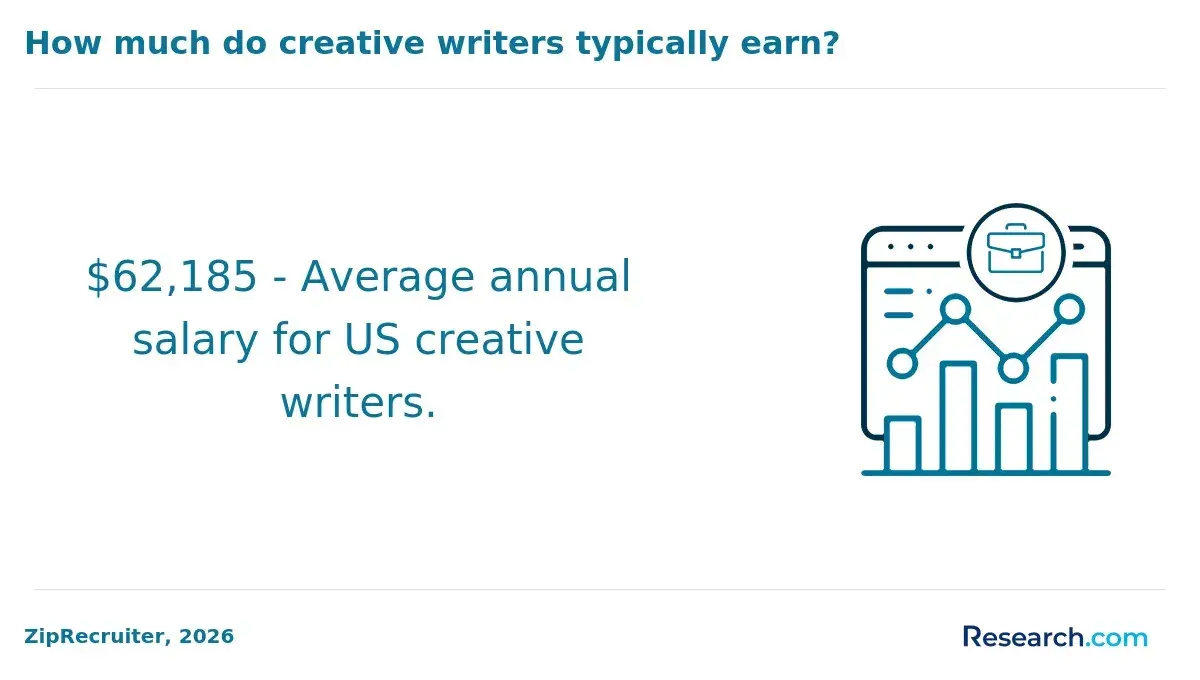
- MFA in creative writing degree holders in this guide are associated with salary figures ranging from an average annual salary of $62,185 to a median wage of $72,270.
- The degree can support work in several fields, including marketing and public relations, publishing, journalism, freelance writing, content strategy, and academia.
- An online MFA in creative writing can make graduate study more manageable for working adults, caregivers, and students who want access to mentors and classmates beyond their local area.
What can I expect from an MFA in creative writing?
An MFA in creative writing is a graduate studio degree built around writing practice, revision, critique, reading, and a final creative project. Most programs ask students to produce original work in a genre such as fiction, poetry, creative nonfiction, screenwriting, or writing for young audiences while also studying literature and craft.
- Advanced craft development: Students usually spend significant time in workshops where they submit original writing, critique peers, and revise based on faculty and class feedback.
- Experimentation across forms: Many programs encourage writers to test new genres, structures, voices, and narrative techniques so they can grow beyond their existing habits.
- Literary and critical study: Coursework often includes literary history, theory, craft analysis, and close reading to help students understand how published work is built.
- Manuscript preparation: Many MFA programs culminate in a thesis, often a substantial creative manuscript such as a poetry collection, essay collection, short story collection, screenplay, memoir, or novel excerpt.
- Professional preparation: Depending on the program, students may learn about editing, publishing, teaching, literary journals, public readings, author platforms, or freelance work.
Where can I work with an MFA in creative writing?
An MFA does not limit graduates to literary publishing. Strong writers are needed in organizations that rely on persuasive, clear, emotionally intelligent, or audience-specific communication. The best fit depends on whether you want to teach, publish creative work, work for an employer, freelance, or combine several income streams.
| Work setting | Typical opportunities | When this path makes sense |
| Universities and colleges | Creative writing instructor, lecturer, adjunct faculty member, writing center role | Best for writers who enjoy teaching, mentoring, workshops, and academic communities. |
| Marketing and communications teams | Copywriter, content writer, brand storyteller, campaign writer, public relations writer | Best for graduates who want steadier employer-based writing work and can adapt to brand voice and audience goals. |
| Publishing | Editor, editorial assistant, literary agency support, book marketing, acquisitions support | Best for writers who enjoy shaping manuscripts, working with authors, and understanding the business side of books. |
| Journalism and digital media | Feature writer, essayist, narrative journalist, magazine contributor, online publication writer | Best for graduates who can combine research, reporting, deadlines, and narrative craft. |
| Freelance and independent work | Freelance writer, ghostwriter, manuscript consultant, author, newsletter writer | Best for self-directed writers who can manage clients, pitching, contracts, marketing, and irregular income. |
How much can I make with an MFA in creative writing?
According to our research, the average annual salary of MFA creative writing degree holders in the United States is $62,185, with some earning a median wage of $72,270. Actual earnings can vary widely because creative writing graduates work in different roles, industries, job levels, and employment arrangements. A full-time copywriter, a tenure-track instructor, a freelance essayist, and a publishing editor can have very different compensation patterns.
The highest-paying average salary areas for creative writers and authors include motion picture and video industries, agencies and managements for public figures, and information services. Students should treat salary figures as context rather than a promise; portfolio quality, work experience, location, specialization, and business skills can all affect outcomes.
- 2027 MFA in creative writing programs
- How long does an MFA in creative writing take?
- Online vs. on-campus MFA in creative writing programs
- Average cost of an MFA in creative writing
- Financial aid options for MFA students
- Admissions requirements for MFA creative writing programs
- Common MFA creative writing courses
- Creative writing MFA specializations
- How to choose the right MFA program
- Career paths after an MFA in creative writing
- Job market for MFA creative writing graduates
- Challenges students may face in an MFA program
- How digital marketing skills expand writing careers
- Benefits of writing residencies and retreats
- How interdisciplinary study can strengthen an MFA
- Why faculty expertise and accreditation matter
- How graphic design skills can support creative writing
- Affordable MFA programs in creative writing
- Best majors to pair with creative writing
- How MFA graduates can improve earning potential
- Transferable skills for digital and media careers
- Using creative writing in game narrative design
- Emerging trends in creative writing education
2027 List of MFA in Creative Writing Programs
How do we rank schools?
Selecting an MFA program can be difficult because the “best” choice depends on genre, funding, format, faculty, residency expectations, and career goals. To help readers compare options, we review program details such as cost, length, accreditation, and available tracks. Our rankings are informed by our methodology and data analysis from our research team, using sources such as:
- IPEDS database
- Peterson's database, including their Distance Learning Licensed Data Set
- College Scorecard database
- National Center for Education Statistics
Program comparison at a glance
| School | Program length | Tracks or concentrations | Cost per credit | Credits required |
| Chapman University | Two Years | fiction, creative nonfiction, poetry, screenwriting, graphic literature | $1,258 | 36 |
| Cornell University | Two Years | fiction and poetry | $1,750 | 60 |
| Washington University | Two Years | poetry and prose | $328.31 (in-state); $573.27 (out-of-state). | 55 |
| Liberty University | Two Years | fiction, creative nonfiction, poetry, and screenwriting | $565 (full-time); $615 (part-time) | 48 |
| Western Colorado University | Two Years | genre fiction, nature writing, poetry, publishing, screenwriting, and more. | $700 | 60 |
| Adelphi University | One and a half years | fiction, poetry, and creative nonfiction | $875 | 40 |
| Cornell College | One to Two Years | literary criticism | $2,700 | 11 |
| America University | Two Years | literary journalism | $1,922 | 36 |
| The New School | Two Years | arts writing, fiction, nonfiction, poetry, and writing for children and young adults | $1,945 | 36 |
| Fairleigh Dickinson University | Two Years | fiction, poetry, creative nonfiction, and more. | $647 | 60 |
1. Chapman University
The MFA in creative writing program offered by Chapman University covers fiction, creative nonfiction, poetry, screenwriting, and graphic literature. Students can study areas such as creative writing, journalism, composition, linguistics, and digital humanities. The program ends with a book-length thesis that brings together the student’s creative development and graduate-level craft work.
- Program Length: Two Years
- Tracks/concentrations: fiction, creative nonfiction, poetry, screenwriting, graphic literature
- Cost per credit: $1,258
- Required Credits to Graduate: 36
- Accreditation: Western Association of Schools and Colleges Senior College & University Commission
2. Cornell University
Cornell University’s MFA in creative writing program is organized around fiction and poetry. The program admits only eight students each year, with four students in each concentration, which allows for close attention from faculty. Students take a graduate writing workshop each semester, work as editorial assistants and teaching assistants, and complete a book-length manuscript.
- Program Length: Two Years
- Tracks/concentrations: fiction and poetry
- Cost per credit: $1,750
- Required Credits to Graduate: 60
- Accreditation: Middle States Commission on Higher Education
3. Washington University
The MFA in creative writing at Washington University includes poetry and prose tracks and admits only 10 to 12 students each year. Students participate in writing workshops, complete a 20- to 30-page critical essay, and prepare a manuscript of at least 30 poems, five short stories or essays worth 100 pages, or a 150-page novel or essay. Coursework emphasizes literary theories, periods, and types.
- Program Length: Two Years
- Tracks/concentrations: poetry and prose
- Cost per credit: $328.31 (in-state); $573.27 (out-of-state).
- Required Credits to Graduate: 55
- Accreditation: Northwest Commission on Colleges and Universities
4. Liberty University
The MFA in creative writing program at Liberty University is an online option with four concentrations: fiction, creative nonfiction, screenwriting, and poetry. The curriculum addresses creative writing, publishing, literature, and literary techniques. Students also build practical skills related to editing, layout, and publishing operations.
- Program Length: Two Years
- Tracks/concentrations: fiction, creative nonfiction, poetry, and screenwriting
- Cost per credit: $565 (full-time); $615 (part-time)
- Required Credits to Graduate: 48
- Accreditation: Southern Association of Colleges and Schools Commission on Colleges
5. Western Colorado University
The MFA in creative writing at WCU uses a low-residency structure that can work well for writers who need flexibility while still wanting an active writing community. Students can choose from several areas of creative writing and take some online courses during the academic year.
- Program Length: Two Years
- Tracks/concentrations: genre fiction, nature writing, poetry, publishing, screenwriting, and more.
- Cost per credit: $700
- Required Credits to Graduate: 60
- Accreditation: Higher Learning Commission
6. Adelphi University
Located in Brookly, NY, Adelphi University’s MFA in creative writing program exposes students to multiple genres and hybrid literary forms. The program uses small classes and faculty mentorship from award-winning novelists, writers, and poets. Students work across genres and literary traditions, and graduates are automatically enrolled as members of the Association of Writers and Writing Programs (AWP).
- Program Length: One and a half years
- Tracks/concentrations: fiction, poetry, and creative nonfiction
- Cost per credit: $875
- Required Credits to Graduate: 40
- Accreditation: Middle States Commission on Higher Education
7. Cornell College
Cornell College in Vermont offers an MFA in creative writing degree program with a low-residency format. Students combine on-campus and online learning based on their schedule. The program requires monthly creative and critical work, along with an applied studies project focused on literary criticism.
- Program Length: One to Two Years
- Tracks/concentrations: literary criticism
- Cost per credit: $2,700
- Required Credits to Graduate: 11
- Accreditation: Higher Learning Commission
8. America University
America University’s MFA program in creative writing brings together writing, literary journalism, and translation. Workshops are designed to be rigorous while still supporting experimentation in fiction, nonfiction, and poetry. Students complete an MFA thesis in the form of an original, book-length manuscript.
- Program Length: Two Years
- Tracks/concentrations: literary journalism
- Cost per credit: $1,922
- Required Credits to Graduate: 36
- Accreditation: Middle States Commission on Higher Education
9. The New School
The New School’s MFA in creative writing program may appeal to students who want to study within New York’s literary environment. The program connects students with a progressive and socially engaged writing community, workshops, seminars, and faculty tied to the NYC literary scene.
- Program Length: Two Years
- Tracks/concentrations: arts writing, fiction, nonfiction, poetry, and writing for children and young adults
- Cost per credit: $1,945
- Required Credits to Graduate: 36
- Accreditation: Middle States Commission on Higher Education
10. Fairleigh Dickinson University
The MFA in creative writing program at FDU offers remote coursework and a low-residency option over two years. International students outside the U.S. and other countries can choose the fully remote path. Students may also add a second degree track to complete a dual concentration degree.
- Program Length: Two Years
- Tracks/concentrations: fiction, poetry, creative nonfiction, and more.
- Cost per credit: $647
- Required Credits to Graduate: 60
- Accreditation: Middle States Commission on Higher Education
Key Findings
- The average annual salary for MFA in creative writing degree holders is $62,185.
- Graduates with creative writing training, including those who completed a bachelor’s degree in English, can pursue roles in marketing, journalism, freelancing, publishing, and related fields.
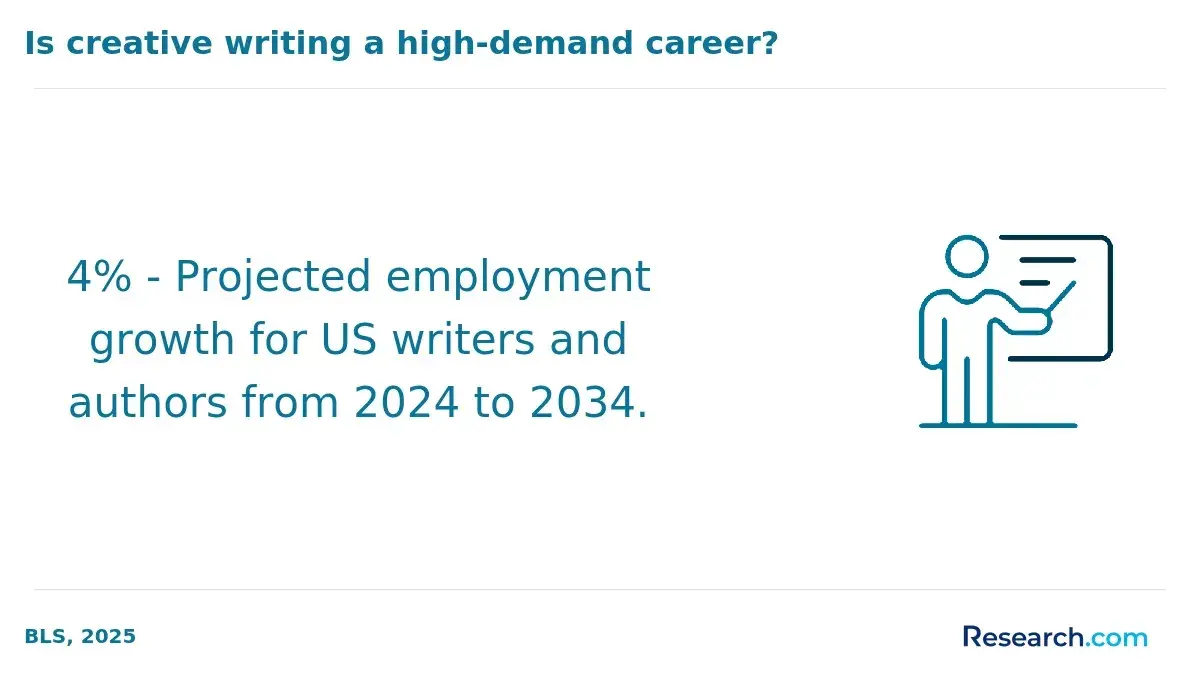
- The job outlook for writers and authors is 4% through 2034.
- MFA in creative writing programs usually take two years to complete, although timelines vary by curriculum and enrollment format.
- The demand for technical writers is expected to increase by seven percent within the next decade.
How long does it take to complete an MFA in creative writing?
An MFA in creative writing typically takes around 2 to 3 years to finish. The timeline depends on the program model, whether you attend full-time or part-time, whether residencies are required, and how the thesis or manuscript requirement is structured. Before applying, review the school’s sample degree plan and ask how many credits students usually take each term.
How does an online MFA in creative writing compare to an on-campus program?
An online MFA in creative writing is often the stronger choice for students who need schedule flexibility, cannot relocate, or want to keep working while studying. It can also connect students with faculty and peers in different regions, which may broaden workshop perspectives.
An on-campus MFA may be a better fit for students who want frequent face-to-face discussion, immediate workshop interaction, campus literary events, and deeper immersion in a local writing community. Some campus-based or low-residency programs also include intensive residencies where students meet visiting writers, attend workshops, and focus heavily on manuscript development.
| Format | Best for | Potential trade-offs |
| Online MFA | Working adults, parents, students outside major literary hubs, and writers who need location flexibility | Requires strong self-discipline and may offer fewer in-person networking experiences. |
| On-campus MFA | Students who want a full campus environment, live workshops, readings, and regular faculty access | May require relocation, commuting, or higher living costs. |
| Low-residency MFA | Writers who want a blend of independent work, online study, and short in-person residencies | Residency travel and concentrated workshop periods can add cost and scheduling pressure. |
What is the average cost of an MFA in a creative writing program?
The average cost of an MFA in a creative writing program can range from around $35,000 for low-residency programs to around $70,000 for private and on-campus programs. Total cost can change based on institution type, residency status, program length, location, required credits, fees, travel, and living expenses. Students seeking a lower-cost path can consider a university option where expenses may be around $27,000 for full-time studies and $29,000 for part-time studies. The chart below summarizes cost patterns identified in our research:
What are the financial aid options for students enrolling in an MFA in creative writing program?
Because MFA outcomes can vary, funding should be part of the decision from the start. A strong program with limited aid may be less practical than a slightly less famous program that offers tuition support, a teaching assistantship, or a manageable part-time structure.
- Federal Student Aid (FAFSA): Completing the Free Application for Federal Student Aid (FAFSA) can make students eligible for federal aid options such as direct unsubsidized loans and graduate PLUS loans. Applicants should confirm whether the specific MFA program participates in federal aid.
- Merit-Based Scholarships: Some MFA programs award scholarships based on the writing sample, academic record, recommendations, and overall application strength. These awards may reduce tuition, fees, or living expenses.
- Teaching Assistantships (TA): Many programs use teaching assistantships to support graduate students who help teach undergraduate writing courses or work with program-affiliated literary journals. Compensation may include tuition support and, in some cases, a stipend.
- State and Local Grants: Depending on the state or region, graduate students may find public or community-based grants and scholarships. These sources are worth checking early because deadlines can differ from university deadlines.
Questions to ask about MFA funding
- Is funding guaranteed, competitive, renewable, or only available after the first year?
- Does the tuition figure include fees, residency costs, travel, books, and thesis expenses?
- Are assistantships available to online or low-residency students?
- How many students graduate with debt, and what career support is available after graduation?
What are the prerequisites for enrolling in an MFA in creative writing program?
Admissions committees usually care most about the quality and potential of the writing sample. However, most programs also require evidence that the applicant can succeed in graduate-level study.
- Bachelor's Degree: Most programs require a bachelor's degree from an accredited institution. The undergraduate major does not always need to be writing-related; for example, a student who completed the cheapest online bachelor degree in another discipline may still qualify for MFA admission if the writing portfolio is strong.
- Writing Portfolio or Manuscript: The portfolio is usually the centerpiece of the application. Programs may request poetry, fiction, creative nonfiction, or a genre-specific sample based on the applicant’s intended track.
- Transcripts: Schools commonly require official transcripts from all colleges previously attended to verify academic history and degree completion.
- Letters of Recommendation: Applicants are often asked for recommendations from professors, mentors, editors, or professionals who can discuss their writing ability, discipline, and readiness for graduate study.
- Standardized Test Scores: Many MFA creative writing programs do not require standardized tests, but some institutions may still request them. Strong GMAT or GRE scores may also help students qualify for some aid opportunities where applicable.
What courses are typically in an MFA in creative writing program?
Coursework varies by school and specialization, but most MFA curricula combine writing workshops, craft study, literature, revision, and professional development. Students comparing degrees in creative writing should look carefully at whether the curriculum matches the kind of writing they want to produce.
- Genre-Specific Workshops: These courses center on student work in fiction, nonfiction, poetry, screenwriting, or another genre. Students learn to read drafts closely, give useful critique, and revise with intention.
- Literary Criticism and Theory: Students examine literary texts through different critical approaches, building a stronger vocabulary for analyzing craft, form, voice, and meaning.
- Editing and Publishing: These courses may cover line editing, developmental editing, audience awareness, submission processes, publishing contracts, and career-building practices.
- Special Topics Courses: Programs may offer focused study in areas such as hybrid forms, experimental writing, digital storytelling, literary translation, genre fiction, or contemporary trends.
Applicants should also understand the difference between degree and major when reviewing graduate options. The MFA is the degree, while a concentration or track may indicate the student’s specialized area, such as poetry, screenwriting, or creative nonfiction.
What types of specializations are available in MFA creative writing programs?
Choosing the right specialization matters because workshops, faculty expertise, thesis expectations, and career preparation often differ by genre. A poet, screenwriter, children’s author, and nonfiction essayist may need very different mentors and peer communities.
| Specialization | What students study | Good fit for |
| Fiction | Short stories, novels, plot, character, point of view, scene design, and revision | Writers focused on literary fiction, genre fiction, or long-form prose. |
| Poetry | Poetic forms, sound, image, line, voice, traditions, and experimentation | Students building a poetry manuscript or developing a distinct poetic style. |
| Creative Nonfiction | Memoir, personal essay, narrative journalism, research-based nonfiction, and true-story structure | Writers interested in essays, memoirs, magazines, or documentary-style storytelling. |
| Screenwriting | Screenplay structure, dialogue, visual storytelling, scenes, and scripts for film or television | Students who want to write for visual media. |
| Young Adult (YA) or Children's Writing | Age-specific voice, audience expectations, picture books, middle-grade fiction, and YA novels | Writers who want to publish for children, teens, or school-age readers. |
| Digital and New Media Writing | Interactive storytelling, online platforms, multimedia narratives, and technology-supported writing | Writers interested in digital publishing, games, web-based narratives, or emerging media. |
How to choose the best MFA in creative writing program?
The best MFA program is the one that fits your writing goals, finances, preferred learning format, and long-term career plan. Prestige alone is not enough. A program with famous faculty may still be a poor fit if it does not support your genre, schedule, funding needs, or professional direction.
- Program Specializations: Confirm that the program offers serious coursework and workshops in your genre. If your goal is screenwriting, writing for young readers, creative nonfiction, or digital storytelling, do not assume a general MFA will provide enough depth.
- Faculty Profiles: Review faculty publications, genres, teaching style, and mentorship availability. Strong faculty fit can matter more than a broad program reputation.
- Workshops and Class Sizes: Smaller workshops can provide more individualized feedback, but structure matters too. Ask how critique is handled, how often you submit work, and whether students receive written feedback from faculty.
- Accreditation: Creative writing does not have one universal programmatic accreditor. Instead, students should look for institutional accreditation from recognized national or regional organizations. Some programs may also connect with organizations such as the Council for the Accreditation of Educator Preparation or the Association of Writers and Writing Programs (AWP).
- Program Format: Compare full-time, part-time, online, low-residency, and on-campus structures. The right format should support your writing life rather than make it unsustainable.
- Career Support: Ask whether the program offers teaching experience, editorial opportunities, publishing guidance, alumni networks, internship access, or professional development beyond literary craft.
Common mistakes when choosing an MFA program
| Mistake | Why it can hurt you | Better approach |
| Choosing only by reputation | A well-known program may not support your genre, schedule, or financial situation. | Compare faculty fit, funding, thesis expectations, and student outcomes. |
| Ignoring accreditation | Institutional recognition can affect aid eligibility, transferability, and employer confidence. | Verify accreditation before applying or paying a deposit. |
| Looking only at tuition | Fees, residencies, travel, housing, and lost work hours can change the real cost. | Calculate total cost of attendance and funding. |
| Assuming publication is guaranteed | An MFA can improve craft, but it does not guarantee an agent, book deal, or job. | Use the program to build a manuscript, network, skills, and a realistic career plan. |
| Overlooking online student support | Online programs vary in advising, faculty access, and community-building. | Ask how online workshops, mentorship, readings, and career services actually work. |
What career paths are available for graduates of MFA programs in creative writing?
MFA graduates often build portfolio careers, combining teaching, publishing, freelancing, editing, and communications work. Some paths are directly literary, while others use the same skills in business, media, education, or technology.
- Teaching and Education: Many MFA graduates teach creative writing at high schools, colleges, universities, or community programs, sometimes without a PhD degree, depending on the role and institution.
- Creative Nonfiction Writer: Graduates may write essays, memoir, narrative journalism, and long-form nonfiction for print and online publications.
- Author/Novelist: Some graduates pursue publication in fiction, nonfiction, poetry, or hybrid forms.
- Freelance Writing: MFA graduates may write articles, essays, branded content, grant narratives, ghostwritten work, or creative pieces for multiple clients.
- Journalist: Writers with research and reporting skills may work for newspapers, magazines, or online news platforms.
- Public Relations Specialist: Graduates may write press releases, speeches, media statements, profiles, and organizational narratives.
- Publishing Professional: Some move into editing, literary scouting, agent support, book marketing, or other publishing roles.
There are around 135,400 writers and authors in the U.S. These employment figures show that creative writing skills can apply across many professional environments, especially when graduates pair craft with editing, teaching, digital communication, or industry-specific expertise. The chart below shows the number of people employed in the creative writing industry and the diverse range of career opportunities available to graduates.
What is the job market for graduates with an MFA in creative writing degree?
The job market for MFA graduates is broad but competitive. Writers and authors are expected to see 4% demand growth by 2034, while technical writers are expected to see demand increase by seven percent within the next decade. Employers increasingly need clear, compelling content for marketing, public relations, education, media, publishing, and digital platforms, but candidates still need strong portfolios, adaptable skills, and evidence that they can write for specific audiences and deadlines.
What challenges might you face during an MFA in creative writing program?
An MFA can be creatively rewarding, but it can also be demanding. Students may face strict deadlines, intense critique, creative blocks, financial stress, and the challenge of balancing school with paid work or family responsibilities. Workshops can be especially difficult for writers who are not used to public feedback. Before enrolling, review the program culture, advising model, mental health support, workload expectations, and career services. Students exploring earlier academic pathways can also review this creative writing degree guide.
How can digital marketing skills amplify career opportunities for MFA creative writing graduates?
Digital marketing skills can help MFA graduates turn strong writing into practical career opportunities. Writers who understand audience research, search behavior, email campaigns, social media, analytics, and content strategy can work beyond traditional literary markets. These skills also help authors promote books, build newsletters, pitch freelance services, and connect directly with readers. Students who want structured training in audience engagement can compare options related to social media marketing degree schools.
What are the benefits of participating in writing residencies and retreats during an MFA program?
Writing residencies and retreats can deepen the MFA experience by giving students concentrated time, mentorship, and community away from daily distractions. They are especially useful for students working on a thesis manuscript or trying to develop a sustainable writing routine.
- Dedicated Writing Time: Residencies and retreats create protected time for drafting, revising, and making meaningful progress on manuscripts, poems, essays, or scripts.
- Mentorship and Feedback: Some residencies include visiting writers, faculty consultations, or peer critique sessions that help participants solve craft problems and revise more effectively.
- Networking Opportunities: Retreats can introduce students to other writers, editors, agents, and publishers, which may lead to future collaborations or professional opportunities.
- New Ideas and Inspiration: A different environment, culture, landscape, or creative community can help writers see their work in a new way.
- Career Visibility: Residencies may strengthen a writer’s CV, especially when they include readings, publications, exhibitions, or other public-facing outcomes.
How can interdisciplinary studies enhance an MFA in creative writing?
Interdisciplinary study can make an MFA more versatile by combining narrative craft with design, technology, business, architecture, education, or media. A writer who understands another discipline can create more specialized work, such as branded storytelling, spatial narratives, exhibition writing, interactive media, or creative direction. Students interested in design-oriented or built-environment storytelling may find useful comparisons in programs such as the most affordable online masters in architecture degree.
How do faculty expertise and accreditation impact program quality?
Faculty expertise shapes the feedback students receive, the literary models they encounter, and the professional networks they can access. Applicants should review faculty publications, genres, industry experience, advising availability, and recent student outcomes. Accreditation is equally important because it signals that the institution meets recognized academic standards. Students interested in combining creative writing with business-facing communication may also compare related pathways such as an accelerated marketing degree online.
How can merging graphic design skills enhance creative writing narratives?
Graphic design skills can help writers create stronger visual and digital storytelling projects. Writers who understand layout, typography, imagery, visual hierarchy, and reader experience can produce more effective chapbooks, digital essays, web narratives, pitch decks, and multimedia projects. Students who want to build visual communication skills alongside writing can explore resources related to the best online school for graphic design.
Affordable MFA Programs in Creative Writing: Finding Budget-Friendly Options
An MFA in creative writing can be expensive, so affordability should be evaluated alongside program quality. Online and low-residency programs may reduce relocation and commuting costs, but students should still calculate tuition, fees, required residencies, books, technology, and lost income.
One practical way to compare lower-cost options is to review online creative writing degrees. Prospective students can explore the cheapest online creative writing degree programs to identify programs that combine workshops, mentorship, and flexible scheduling at more accessible prices.
Students should also ask about teaching assistantships, merit scholarships, and other aid. A lower sticker price is helpful, but the best financial choice is usually the program that balances cost, funding, completion time, and realistic career value.
What are the best majors to pair with an MFA in creative writing?
Pairing creative writing with another field can make your writing more employable and distinctive. English literature, journalism, and screenwriting can deepen craft and narrative knowledge. Education can support teaching goals. Marketing and communications can lead to roles in content creation, brand storytelling, public relations, and digital media.
Psychology can also be useful for writers who want stronger character development, human behavior insight, or emotionally complex storytelling. Students comparing academic combinations can review this guide to top majors in college and evaluate how different fields align with their professional goals.
How can MFA creative writing graduates optimize their career earnings?
MFA graduates can improve earning potential by treating writing as both an art and a professional skill. That may mean building experience in digital media, content strategy, editing, grant writing, technical communication, publishing operations, teaching, or entrepreneurship. Networking, pitching, portfolio development, and ongoing skill-building are also important. For broader context, graduates can compare how creative expertise might pair with fields represented among the highest-paying degrees.
How does an MFA in creative writing build transferable skills for digital and media careers?
An MFA builds more than literary technique. Students practice revision, audience awareness, close reading, persuasive communication, research, critique, project management, and long-form creative discipline. These skills can transfer to content strategy, digital storytelling, editing, communications, social media, brand writing, and integrated marketing. Graduates considering broader media roles can explore pathways tied to when communication career options.
How can MFA graduates leverage creative writing for game narrative design?
Game narrative design requires character development, worldbuilding, dialogue, pacing, branching storylines, and collaboration with designers and developers. MFA graduates who add knowledge of interactive storytelling and game production can adapt their narrative skills to digital entertainment. Those comparing this path with formal game design education can review whether do game designers make a lot of money when evaluating interdisciplinary options.
Emerging Trends in Creative Writing Education
Creative writing education is changing as writers increasingly work across print, digital, audio, visual, and interactive platforms. MFA programs are responding by adding more attention to publishing models, author platforms, online workshops, and interdisciplinary storytelling.
- The Digitalization of Publishing: Digital publishing platforms have given writers more ways to reach readers directly. Platforms such as Amazon Kindle Direct Publishing (KDP), Wattpad, and others have encouraged more programs to address self-publishing, online audience building, and direct-to-reader strategy.
- Social Media as a Tool for Writers: Writers are often expected to promote work, connect with readers, and build public identities. MFA programs increasingly address how platforms such as Twitter, Instagram, and TikTok can support audience development and literary visibility.
- Hybrid and Online Learning Formats: Online and hybrid MFA models make graduate writing education more accessible to students balancing work, family, location limits, or other responsibilities.
- Cross-Disciplinary Approaches: Programs are increasingly connecting creative writing with digital media, screenwriting, game design, and other fields that use narrative in new formats.
- Focus on Diversity and Inclusive Storytelling: Many programs are paying closer attention to a wider range of voices, cultures, literary traditions, and global perspectives.
Students looking for a lower-cost and flexible path can review the cheapest online creative writing degree options and compare how each program handles workshops, mentorship, publishing preparation, and career support.
References:
- The New School. (2024). Tuition and Fees Estimator – Creative Writing. https://www.newschool.edu/writing/tuition-fees-estimator
- U.S. Bureau of Labor Statistics. (2025). Writers and authors. In Occupational Outlook Handbook. U.S. Department of Labor. Retrieved February 3, 2026, from https://www.bls.gov/ooh/media-and-communication/writers-and-authors.htm
- U.S. Bureau of Labor Statistics. Technical writers. https://www.bls.gov/ooh/media-and-communication/technical-writers.htm
- Zippia. (2025). Creative writer education requirements: Degrees, majors, and colleges. https://www.zippia.com/creative-writer-jobs/education/
- ZipRecruiter. (2026). Salary: Creative Writer (February, 2026) United States. https://www.ziprecruiter.com/Salaries/Creative-Writer-Salary
Key Insights
- An MFA in creative writing is most valuable when it gives you the right faculty mentorship, workshop environment, genre focus, and time to complete a serious manuscript.
- Cost matters. Compare tuition, fees, residency expenses, funding, assistantships, and the income you may give up while studying.
- Online and low-residency MFA programs can be strong options for working adults, but students should verify faculty access, workshop quality, and community support.
- The degree can support careers in teaching, publishing, marketing, journalism, public relations, content strategy, freelancing, and digital media, but outcomes are not guaranteed.
- Applicants should choose a program based on fit, funding, accreditation, faculty, specialization, and career support—not reputation alone.
Other Things You Should Know About MFA in Creative Writing
Many MFA programs offer graduate teaching, editorial, or research assistantships that reduce tuition and provide a stipend. Common awards cover partial or full tuition plus $5,000 to $20,000 per academic year, and they usually require 10–20 hours of work each week.
Here are some freelance writing opportunities for MFA graduates:
- Content Creation
- Copywriting
- Ghostwriting
- Creative nonfiction essays
- Freelance Editing
- Technical Writing
- Scriptwriting for Media
- Travel Writing
- MFA programs in Creative Writing offer mentorship with experienced writers, providing valuable guidance and feedback on your work.
- Networking opportunities include interactions with fellow writers, published authors, and industry professionals during workshops, seminars, and literary events.
- Access to literary journals, publishing houses, and writing conferences through university connections enhances your exposure and chances of publication.
Alumni networks and career services support your post-graduation endeavors, including job placements, residencies, and fellowships in the writing and publishing industry.
Yes, many institutions offer scholarships and financial aid to MFA in Creative Writing students. Some programs provide merit-based scholarships or teaching assistantships, while federal aid might be available depending on the institution and student's eligibility in 2027.


