
2027 Best Online Master’s Degrees in Communication Programs

Co-Founder and Chief Data Scientist
An online master’s degree in communication is designed for people who want advanced training in strategic messaging, media, public relations, organizational communication, digital content, or communication leadership without leaving their jobs or relocating. The decision is not just whether the degree can be completed online. The more important question is whether a specific program is credible, affordable, rigorous, and aligned with the communication career you want.
This guide explains how online communication master’s programs work, what they usually cost, what admissions requirements to expect, how employers view online credentials, and how to compare programs before applying. It also covers coursework, concentrations, technology requirements, career outcomes, common mistakes, and practical questions to ask schools. If you are still comparing undergraduate and graduate options, Research.com also provides resources on online communication degree programs.
Online Master’s Degree in Communication Table of Contents
- Can you get a degree completely online?
- Will employers take my online degree seriously?
- Are online degrees recognized all over the world?
- Online vs. Traditional Master’s Degree in Communication
- How much does an Online Master’s Degree in Communication cost?
- What are the requirements of an Online Master’s Degree in Communication?
- Courses to Expect in Online Master’s Degree in Communication
- Things to Look for in an Online Master’s Degree in Communication
- How can you evaluate the quality and academic rigor of an online master’s in communication program?
- How can project management strategies be integrated into an online master’s in communication program?
- Can additional credentials bolster the impact of an online master’s in communication?
- Are Job Prospects Promising After an Online Master’s in Communication?
- What are the common challenges faced by online master’s in communication programs?
- What are the networking opportunities available in an online master’s in communication program?
- How can creative design skills enhance your communication career?
- How do online communication master’s programs support career advancement?
- Emerging Trends in Communication for Master’s Graduates
- Factors Affecting the Affordability of an Online Master’s Degree in Communication
- How can interdisciplinary learning enhance your communication strategies?
- What role do integrated digital marketing modules play in enhancing communication expertise?
Quick answer: Is an online master’s in communication worth considering?
Yes, an online master’s in communication can be worth considering if the program is offered by an accredited institution, fits your budget, provides relevant coursework, and supports your career goals. It is often best suited for working professionals who want to move into roles involving strategic communication, public relations, corporate communication, marketing communication, digital media, training, leadership, or higher education.
The degree is not automatically valuable simply because it is online or because it carries the word “master’s.” Its usefulness depends on the school’s reputation, faculty quality, curriculum, portfolio-building opportunities, employer recognition, total cost, and whether the program helps you develop practical skills that employers can see.
Can you get a degree completely online?
Many accredited universities allow students to complete a master’s degree in communication fully online. In these programs, students usually access lectures, readings, discussion boards, writing assignments, research projects, presentations, and group work through a learning management system rather than attending classes on campus.
Online communication master’s programs commonly examine topics such as strategic communication, media theory, organizational communication, interpersonal communication, digital media, public relations, health communication, political communication, and communication leadership. Some programs follow a broad communication curriculum, while others are built around a specific concentration.
For many students, the online format is the main reason graduate study becomes possible. Working professionals, parents, military-affiliated students, career changers, and people who do not live near a preferred university may be able to continue their education without relocating. However, “online” does not always mean self-paced. Some programs are asynchronous, while others require live classes, timed presentations, virtual group meetings, or scheduled faculty conferences.
| Question to ask | Why it matters | What to look for |
| Is the program fully online or partly online? | Some programs still require residencies, campus visits, internships, or in-person presentations. | Confirm all required in-person components before applying. |
| Are classes asynchronous, synchronous, or mixed? | Your work schedule may not fit live evening or weekend class meetings. | Review the delivery format for each required course. |
| Does the program include applied projects? | Communication employers often value work samples, campaigns, writing, research, and media projects. | Look for portfolio, capstone, client-based, or practicum options. |
| Does the school hold recognized accreditation? | Accreditation affects credibility, financial aid eligibility, and employer confidence. | Verify institutional accreditation and any relevant program-specific accreditation. |
Will employers take my online degree seriously?
Employers are generally more familiar with online graduate degrees than they were in the past, especially because many well-known universities now offer online programs. For most hiring managers, the key issue is not whether a course was taken online, but whether the degree came from a credible institution and whether the applicant can demonstrate relevant skills.
Online study can also signal strengths that matter in modern workplaces. According to one discussion of employer attitudes toward online credentials, employers may associate online degree completion with digital literacy, independence, and self-discipline. These skills are especially relevant as remote and hybrid work remain common. With 98% of workers expressing a desire to work remotely at least some of the time for the rest of their careers, and 93% of employers planning to continue using remote or hybrid work models for the long term, communication professionals who can collaborate online may have an advantage.
That said, not every online degree carries the same weight. Employers may scrutinize the school’s reputation, the rigor of the curriculum, the student’s professional experience, and the quality of the applicant’s portfolio. A strong online degree plus evidence of applied work is usually more persuasive than a credential alone.
Are online degrees recognized all over the world?
Online communication degrees are not automatically treated the same way in every country, industry, or hiring system. Recognition depends on the institution, accreditation, local employer expectations, immigration or work authorization rules, and whether the role requires country-specific experience or credentials.
Communication is also a portfolio-driven field. If you plan to work internationally in journalism, media, public relations, corporate communication, marketing, or content strategy, prepare more than a transcript. Employers may ask to see published articles, campaign samples, research reports, presentations, multimedia projects, analytics dashboards, or other evidence of your work. In some countries or industries, local internships or region-specific professional experience may also help you enter the market.
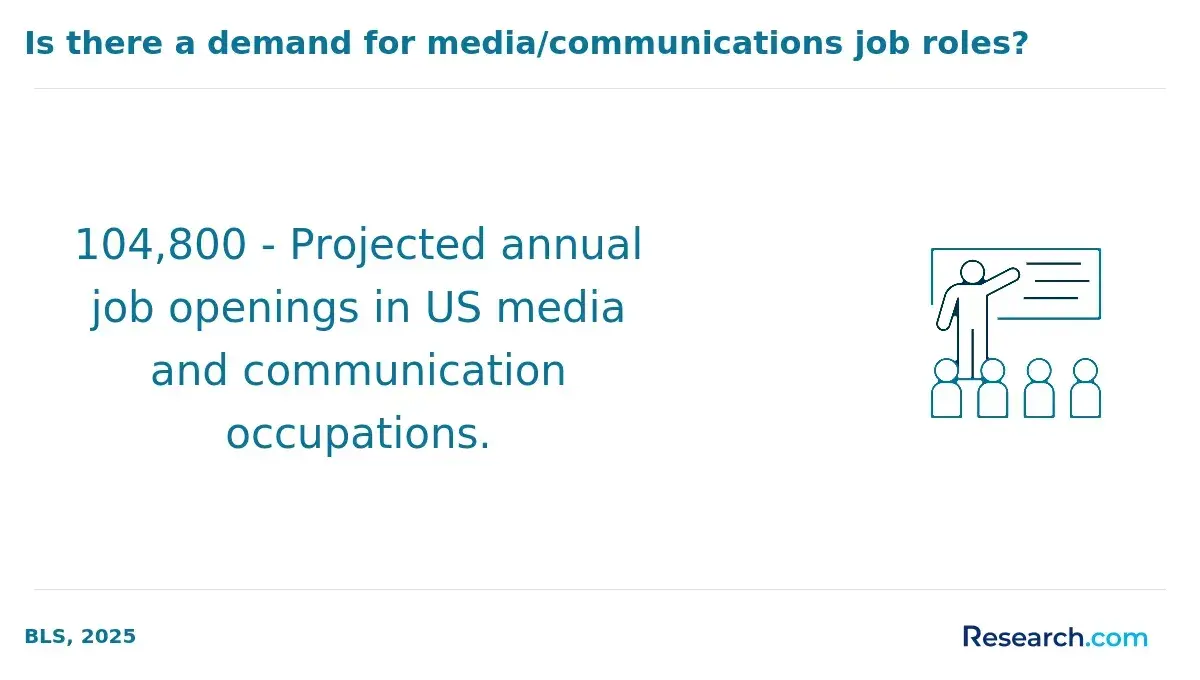
In the United States, communication-related occupations are supported by ongoing demand for professionals who can create, edit, interpret, and distribute information across traditional and digital channels. According to U.S. Bureau of Labor Statistics information cited in the original source material, the median annual salary for media and communication jobs was $70,300, compared with $49,500 for all occupations. Examples in this broad occupational group include announcers, interpreters and translators, and technical writers.
Online vs. Traditional Master’s Degree in Communication
The better format depends on your schedule, budget, learning preferences, career stage, and the kind of communication work you want to do. A campus program may offer more face-to-face interaction, local networking, and access to physical media facilities. An online program may be a stronger fit if you need flexibility, want to keep working, or cannot relocate for graduate school. If you are still comparing graduate study formats more broadly, this overview of the master’s degree program pathway can help you understand common options.
| Factor | Online master’s in communication | Campus-based master’s in communication |
| Schedule flexibility | Often better for working adults, especially when courses are asynchronous. | Usually requires attendance at specific times and locations. |
| Networking | Can include virtual events, alumni groups, online cohorts, and digital collaboration. | May provide more frequent in-person contact with faculty, peers, and local employers. |
| Costs beyond tuition | May reduce commuting, parking, housing, and relocation expenses. | May involve transportation, campus fees, housing, meals, or lost work hours. |
| Learning style | Best for students who can manage deadlines independently and communicate well online. | Best for students who prefer in-person discussion and structured class routines. |
| Access to programs | Allows students to consider universities outside their local area. | Limited by where the student can realistically live or commute. |
Flexibility
Online study usually gives students more control over when they complete readings, discussions, and assignments. This flexibility can matter for communication professionals, whose work may involve deadlines, client needs, events, news cycles, or irregular hours. Recent data indicates that approximately 88% of college graduates in 2026 were employed while pursuing or after obtaining their degrees (ThinkImpact, 2026), which helps explain why many graduate students prefer flexible formats. Programs that use asynchronous learning can be especially useful for students balancing work and school.
Affordability
Online programs are not automatically cheaper, but they can reduce indirect costs. In one cited student survey, 51% of students included affordability among their considerations when selecting an online school. Tuition still matters, but so do technology fees, books, software, travel for any required residencies, and the cost of reducing work hours. Students should compare total program cost rather than tuition alone.
Access to Universities
Online learning expands the number of schools a student can realistically consider. More than half of students (88%) said that if the program they wanted was unavailable online, they would look for the same program at another university online. For communication students, this can mean broader access to specialized tracks such as strategic communication, public relations, political communication, or digital media.
Is an online degree cheaper?
An online master’s degree may cost less overall if it helps you avoid relocation, commuting, parking, campus housing, or lost income from leaving work. Some institutions also charge online learners lower tuition or a flat online rate. However, many online programs still charge technology fees, course fees, graduation fees, or out-of-state tuition.
Communication students should also budget for applied work. Research interviews, media production, software subscriptions, conference participation, portfolio tools, or travel connected to capstone projects can add expenses even when the coursework is online.
Is an online degree as good as a regular degree?
An online degree can be comparable to a campus degree when it comes from a reputable institution, uses qualified faculty, has rigorous coursework, provides strong student support, and asks students to produce substantial academic or professional work. The delivery method alone does not determine quality.
The study “How They See It: Employer Perceptions of Online Versus Traditional Learning at the Graduate Level,” published in the Journal of Educational Leadership in Action, found that employers often consider the institution and its reputation when evaluating online degrees. The authors noted that respondents were generally comfortable with online degrees but paid attention to where the credential was earned, with some skepticism toward online for-profit institutions.
The study concluded that employers had a “qualified positive impression” of online learning. In practical terms, students should choose carefully: the school name, accreditation, coursework, faculty, and portfolio outcomes all influence how the degree may be perceived.
How much does an Online Master’s Degree in Communication cost?
The estimated cost per credit hour for an online master’s degree in communication ranges from $420 to $1,000, depending on the institution. Total cost varies widely because most graduate communication programs take two to three years and require 30 to 65 credits. Fees, books, software, production tools, and any required in-person experiences can also change the final price.
Graduate communication programs may include electives in business, humanities, social sciences, technology, or research. Depending on the concentration, students may also need to pay for fieldwork, group projects, research activities, media tools, or presentation materials.
| Cost factor | How it affects total price | What to verify |
| Credit requirement | A 30-credit program usually costs less than a 65-credit program if the per-credit rate is similar. | Ask for the exact number of required credits, including electives and capstone work. |
| Tuition rate | Per-credit tuition can vary from $420 to $1,000. | Confirm whether online students pay in-state, out-of-state, or separate online tuition. |
| Fees | Technology, online learning, graduation, and course fees can increase the total. | Request a full cost-of-attendance estimate, not just tuition. |
| Program length | Longer programs may mean more semesters of fees and more time before career benefits appear. | Compare full-time, part-time, and accelerated options. |
| Transfer credits | Accepted graduate credits may reduce both time and cost. | Ask how many credits can transfer and whether they apply to core requirements. |
Is an online master’s degree in communication worth it?
An online master’s in communication may be worth it if it helps you qualify for higher-responsibility roles, shift into a specialized field, build a stronger portfolio, or gain leadership and research skills you cannot easily develop on the job. It is less likely to be worth the cost if you choose an expensive program without a clear career goal or if your target roles value experience and portfolio work more than graduate education.
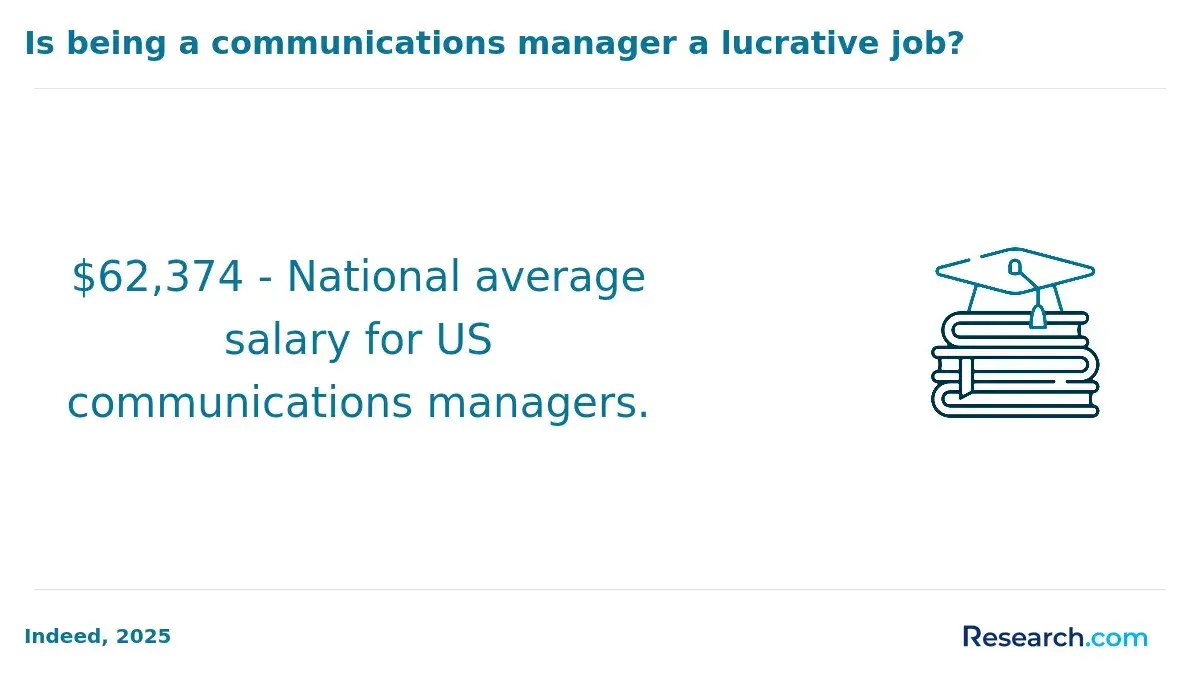
Salary outcomes vary by role, industry, employer, location, and experience. The original source material cites Payscale figures showing a communications manager salary range of $49,000 to $99,000, with an average salary of $70,284. It also cites marketing director salaries from $57,000 to $128,000, with an average salary of $90,816. These figures should be treated as examples rather than guarantees.
Graduates may pursue roles in corporate communication, public relations, marketing, government, higher education, media, training, nonprofit communication, or related fields. Some may move toward postsecondary teaching, marketing management, broadcasting, journalism careers, film, video, or digital content leadership.
What are the requirements of an Online Master’s Degree in Communication?
Most online master’s in communication programs require applicants to hold a bachelor’s degree from an accredited college or university. Some programs prefer applicants with prior study in communication or a related field, but many also admit students from other academic backgrounds.
Applicants with a journalism degree, public relations degree, or communications degree may already have relevant academic preparation. Students from other fields, including those with a business degree, may still be considered, though they may need prerequisite coursework or additional preparation in communication theory, writing, research, or media analysis.
Typical admission requirements
- Bachelor’s degree from an accredited institution
- Minimum GPA requirement
- Official transcript of records
- Standardized test score, such as the GRE, if required
- Professional experience, depending on the program
- Letters of recommendation
- Application fee
- Statement of purpose, writing sample, resume, or portfolio, when requested
Skills that help students succeed
- Research and analysis. Graduate communication work often requires students to evaluate data, interpret audience behavior, examine media effects, and build evidence-based arguments.
- Organization and deadline management. Communication work is frequently deadline-driven. Students must manage readings, writing, discussions, presentations, and group projects without daily in-person reminders.
- Interpersonal communication. Even in online programs, students collaborate with classmates, faculty, clients, research participants, and professional contacts.
- Writing and editing. Clear writing remains central to communication careers, whether the work involves public relations, corporate messaging, content strategy, journalism, or internal communication.
- Digital collaboration. Online students need to be comfortable using video platforms, shared documents, learning systems, project tools, and feedback workflows.
What technology do online students need?
Online graduate study requires dependable technology. A weak internet connection or outdated device can make it difficult to join live sessions, upload presentations, collaborate on group projects, or access multimedia coursework.
- Hardware. Students generally need a reliable computer with current specifications. Tablets and smartphones can be useful for reading announcements or reviewing materials, but they are usually not enough for graduate-level writing, research, and presentations. Current trends in online learning show that many students rely on laptops and desktop computers, while 90,000 online learning platforms are operational, reflecting the scale of digital education infrastructure.
- Communication and collaboration tools. Programs may use learning platforms, video conferencing, cloud storage, shared documents, and project management tools. Examples include Dropbox, Google Workspace, Trello, and Monday.com.
- Stable internet connection. Public Wi-Fi may work occasionally, but graduate students should have a dependable connection for live discussions, exams, uploads, and group meetings.
- Software access. Depending on the program, students may need tools for analytics, media production, citation management, survey design, presentation design, or content management.
Courses to Expect in Online Master’s Degree in Communication
Coursework usually combines communication theory, research methods, writing, strategy, digital media, and applied projects. Some programs emphasize academic research, while others are built for practitioners who want leadership, campaign, or media skills.
| Course area | What students learn | Why it matters professionally |
| Digital media | Platform strategy, digital communication theory, content systems, policy issues, and audience behavior. | Employers need professionals who can communicate across websites, social media, email, video, and emerging channels. |
| Communication research methods | Qualitative and quantitative methods, research questions, data analysis, and study design. | Research skills help professionals measure campaigns, understand audiences, and support recommendations with evidence. |
| Corporate communication | Internal communication, external messaging, brand voice, stakeholder communication, and public relations strategy. | Organizations need clear messaging for employees, customers, media, investors, and communities. |
| Capstone or thesis | A final research project, campaign, portfolio, applied project, or thesis defense. | The culminating project can become proof of graduate-level expertise for employers. |
Digital Media
A digital media course may cover digital communication theory, platform policy, social media, websites, content management systems, audience behavior, and technology’s role in shaping public information. The topic is increasingly important as social media penetration in some regions is close to 82%.
Digital communication also brings risks, including disinformation and misinformation. The study “Journalism Students and Information Consumption in the Era of Fake News” by Santiago Tejedor, Marta Portalés-Oliva, Ricardo Carniel-Bugs, and Laura Cervi examined how journalism students understand fake news and digital information. The authors noted that fake news is not new, but digital systems have increased public vulnerability to disinformation.
The study found that journalism students understood the concept of fake news but did not always feel prepared to identify it. The authors emphasized the need to strengthen media literacy and critical thinking, writing that education plays an essential role in developing a media-literate society (Tejedor et al., 2025).
Communication Research Methods
Research methods courses teach students how to design studies, frame research questions, develop hypotheses, gather evidence, analyze data, and interpret results. These skills are useful in academic research, market research, audience analysis, campaign evaluation, employee communication, and media studies.
Corporate Communication
Corporate communication coursework focuses on how organizations communicate with internal and external audiences. Students may study strategic messaging, brand alignment, stakeholder communication, crisis response, public relations, executive communication, and communication planning.
Capstone or Thesis
Most programs require a final project that demonstrates graduate-level learning. A thesis is typically more research-oriented, while a capstone may involve an applied communication campaign, professional portfolio, case analysis, or client-based project. Some programs require a written paper, oral defense, presentation, or practical implementation component.
Things to Look for in an Online Master’s Degree in Communication
The best online master’s program for you is not necessarily the highest-ranked or most expensive one. It is the program that combines credibility, academic fit, affordability, student support, and career relevance.
- Accreditation. Start by confirming that the institution is accredited. For journalism and mass communication programs, the Accrediting Council on Education in Journalism and Mass Communications, or ACEJMC, is a relevant accrediting body.
- Institutional reputation. School reputation can influence how employers interpret an online credential. Thirty-six percent of college students said they consider school reputation when choosing an online program (Magda, Capranos, & Aslanian, 2020). Employer-facing resources also note that hiring managers may consider where an online degree was earned.
- Concentrations. Review whether the program offers the specialization you need. Common options include marketing communication, public relations, political communication, health communication, strategic communication, and communication leadership.
- Program length. Most programs take two to three years, though some universities offer accelerated options. Program length affects cost, workload, and how quickly you may apply the degree to career advancement.
- Faculty expertise. Look for faculty who combine academic research, industry experience, publications, or professional leadership in your area of interest.
- Portfolio and applied learning. Strong programs help students produce work samples, campaigns, research reports, media plans, or strategic communication projects.
- Student support. Online students should have access to advising, library resources, writing support, technology help, career services, and faculty interaction.
How can you evaluate the quality and academic rigor of an online master’s in communication program?
To judge program quality, verify accreditation first, then examine the curriculum, faculty credentials, student support, graduation requirements, and evidence of student outcomes. A rigorous program should require advanced writing, research, theory, strategic analysis, applied projects, and meaningful faculty feedback. It should not feel like a collection of disconnected online modules.
Review whether the curriculum reflects current communication work: digital media, analytics, audience research, crisis communication, ethics, stakeholder communication, and inclusive messaging. Also check whether students complete a thesis, capstone, portfolio, practicum, or client-based project. For broader comparisons of online education options, Research.com’s guide to the most respected online degree pathways can help you evaluate online program credibility.
| Quality indicator | Strong sign | Warning sign |
| Accreditation | The institution is accredited and transparent about its status. | The school avoids clear accreditation details or uses unfamiliar claims. |
| Curriculum | Courses build from theory and research to applied strategy. | Course descriptions are vague, outdated, or overly promotional. |
| Faculty | Faculty have relevant graduate credentials, research, or professional experience. | Faculty information is difficult to find. |
| Student work | The program requires a thesis, capstone, portfolio, or applied project. | There is little evidence that students produce substantial work. |
| Support | Online students receive advising, library access, career help, and technical support. | Support appears limited to automated systems or general email help. |
How can project management strategies be integrated into an online master’s in communication program?
Project management is highly relevant to communication work because campaigns, launches, events, internal communication plans, media strategies, and crisis responses all require coordination. Online communication programs can integrate project management through group campaigns, content calendars, stakeholder plans, budgeting exercises, risk assessments, and timeline-based deliverables.
Students who learn planning, scope management, budgeting, workflow design, task delegation, and risk management may be better prepared to lead communication initiatives across teams. Professionals who want deeper preparation in this area may also compare communication study with a project management degree, especially if their goals involve operations, program leadership, or cross-functional campaign management.
Can additional credentials bolster the impact of an online master’s in communication?
Additional credentials can strengthen a communication graduate’s profile when they add a specific, employer-recognized skill. A master’s degree may provide strategic and theoretical depth, while a certificate or focused program can show practical ability in areas such as social media analytics, search strategy, project management, crisis communication, design, data visualization, or marketing technology.
The best add-on credential depends on the target role. Someone pursuing digital strategy may benefit from training connected to social media and analytics, while a public relations professional may prioritize crisis communication or media relations. For students focused on digital campaigns, Research.com’s guide to an affordable social media marketing degree can help compare related options.
Are Job Prospects Promising After an Online Master’s in Communication?
Job prospects depend on the role, industry, location, experience, portfolio, and the quality of the graduate program. A master’s in communication can support advancement, but it does not guarantee a specific job or salary. Employers typically want evidence that candidates can write clearly, manage projects, interpret audiences, communicate across platforms, and solve messaging problems.
Graduates may pursue roles in public relations, corporate communication, marketing communication, content strategy, media management, internal communication, nonprofit communication, government communication, higher education, training, or research. Programs that offer mentoring, internships, alumni networks, career services, and portfolio development can make the transition stronger. Students comparing career paths may find Research.com’s guide to communications careers useful.
What are the common challenges faced by online master’s in communication programs?
Online graduate study requires independence. Students may struggle with time management, limited face-to-face contact, group project coordination, technology issues, or feeling disconnected from classmates and faculty. These challenges are manageable, but they should be considered before enrolling.
Strong programs reduce these problems through structured deadlines, live sessions when useful, active discussion boards, accessible faculty, online tutoring, technology help, writing support, and intentional cohort-building. Communication students can also strengthen their written and narrative abilities through related study areas; for example, Research.com covers affordable online creative writing programs for students interested in storytelling, voice, and editorial craft.
| Common mistake | Why it can hurt you | Better approach |
| Choosing based only on tuition | A low tuition rate may hide fees, weak support, or poor career fit. | Compare total cost, curriculum, faculty, support, and outcomes. |
| Ignoring accreditation | Unaccredited or poorly recognized programs may reduce employer confidence. | Verify accreditation before applying. |
| Assuming online means easy | Graduate communication courses can be reading-, writing-, and project-intensive. | Plan weekly study time before enrollment. |
| Overlooking portfolio development | A degree without work samples may be less persuasive in competitive roles. | Choose courses that produce campaigns, research, writing, or media projects. |
| Relying only on rankings | A highly ranked program may not match your specialization, budget, or schedule. | Use rankings as one input, not the full decision. |
What are the networking opportunities available in an online master’s in communication program?
Online programs can offer meaningful networking, but students usually need to be more intentional than they would be on campus. Communication careers are relationship-driven, so the strongest online programs create regular opportunities to connect with peers, faculty, alumni, and industry professionals.
- Virtual networking events. Programs may host online meetups, roundtables, student showcases, alumni panels, or informal sessions with faculty and classmates.
- Guest lectures and industry webinars. Speakers from journalism, public relations, corporate communication, digital marketing, government, or nonprofit communication can expose students to current professional challenges.
- Alumni networks and mentoring. Some universities connect online students with graduates who can offer career advice, portfolio feedback, referrals, or industry perspective.
- Group projects. Collaborative assignments help students build professional relationships while practicing remote teamwork through tools such as Slack, Microsoft Teams, and Zoom.
- Professional associations. Some programs encourage or support participation in organizations such as the Public Relations Society of America or the American Communication Association, which can provide conferences, job boards, events, and professional development.
How can creative design skills enhance your communication career?
Communication professionals increasingly work with visual formats, not just written messages. Design knowledge can improve presentations, brand communication, social media content, infographics, campaign assets, reports, websites, and multimedia storytelling.
Students who understand visual hierarchy, accessibility, typography, layout, color, and user experience can collaborate more effectively with designers and produce clearer communication materials. Those who want more formal design training may compare communication coursework with online graphic design degree programs.
How do online communication master’s programs support career advancement?
Online master’s programs can support advancement when they connect academic learning to visible professional growth. The most useful programs help students refine a specialization, build evidence of skill, expand professional networks, and prepare for leadership responsibilities.
- Career services. Resume reviews, interview preparation, job search coaching, and employer connections can help students translate graduate study into career opportunities.
- Networking support. Alumni groups, webinars, faculty connections, and professional events can help students meet people in their target field.
- Applied projects and internships. Practical experiences allow students to demonstrate communication strategy, research, writing, and campaign execution.
- Specialized tracks. Concentrations in public relations, digital communication, corporate communication, or strategic communication can align the degree with specific job goals.
- Portfolio development. A strong portfolio can help employers evaluate what a graduate can actually do.
Students who want a faster undergraduate route into the field may also compare graduate options with an accelerated communications degree online.
Emerging Trends in Communication for Master’s Graduates
Communication work is changing as organizations rely more heavily on digital platforms, analytics, remote collaboration, and rapid-response messaging. Master’s students should look for programs that address these shifts directly rather than treating communication as only writing, speech, or traditional media relations.
- Digital transformation. Organizations need professionals who understand online platforms, social content, digital storytelling, influencer relationships, and audience engagement.
- Data-driven communication. Communication teams increasingly use analytics to evaluate campaigns, refine messages, and report results to leaders.
- Diversity, equity, and inclusion. Inclusive communication requires careful attention to audience, language, representation, accessibility, and cultural context.
- AI and automation. Tools such as ChatGPT are being used for drafting, brainstorming, research support, customer engagement, and workflow efficiency, but professionals still need judgment, ethics, editing skill, and audience understanding.
- Crisis communication. Social media can accelerate reputational issues, making crisis planning, response timing, and message discipline more important.
Maximizing Career Potential with Affordable Programs
Cost matters because graduate debt can reduce the return on a degree. Students seeking lower-cost options should compare accredited programs carefully and review resources on the cheapest masters degree online pathways before committing.
Factors Affecting the Affordability of an Online Master’s Degree in Communication
Affordability is more than the advertised tuition rate. A program that looks inexpensive per credit may become costly if it requires many credits, charges high fees, offers limited transfer credit, or takes longer than expected. A higher-priced program may be more reasonable if it offers scholarships, strong career support, faster completion, or a concentration that closely matches your goals.
Program Structure and Credit Requirements
Most online master’s programs in communication require between 30 and 65 credit hours. A lower-credit program can reduce costs, but students should still evaluate the curriculum’s depth. A thesis, capstone, practicum, or portfolio requirement may add work but can also strengthen career value.
Institution Type and Tuition Rates
Public universities often have lower tuition than private institutions, especially for in-state students. However, some private universities offer competitive online tuition, scholarships, or institutional grants. Students should request a full cost breakdown and ask whether the rate changes by residency status.
If affordability is a primary concern, Research.com’s guide to the most affordable online master’s in communication programs can help you compare lower-cost options without ignoring quality.
Is an Online Master’s Degree in Communication right for you?
An online master’s in communication may be a strong fit if you already work in communication, marketing, public relations, media, education, nonprofit work, government, or business and want to move into more strategic or specialized roles. It can also help career changers build a formal foundation in communication theory, research, writing, and digital strategy.
The degree may be less suitable if you need highly hands-on studio training, struggle with independent learning, cannot commit weekly time to graduate coursework, or are unsure what career outcome you want. In that case, it may be better to gain experience, complete a certificate, build a portfolio, or compare less expensive options before starting a full master’s program.
Students focused specifically on public relations can compare broader communication programs with a masters degree in public relations online. If cost is the main barrier, Research.com’s guide to the most affordable online colleges may help identify lower-cost education pathways.
How can interdisciplinary learning enhance your communication strategies?
Communication problems rarely fit inside one academic discipline. Professionals often need to understand business goals, audience psychology, design, technology, data, media production, ethics, and culture at the same time. Interdisciplinary learning helps students build messages that are not only clear, but also usable, persuasive, inclusive, and visually effective.
For example, exposure to design, interactive media, or game-based storytelling can help communication professionals think differently about engagement and user experience. Students interested in interactive digital media may find it useful to explore whether majoring in game design is worth it as a related creative and technical pathway.
What role do integrated digital marketing modules play in enhancing communication expertise?
Digital marketing modules can make a communication master’s program more practical by teaching students how messages perform in real online environments. Topics such as SEO, social media analytics, content strategy, digital branding, email campaigns, paid media, and audience segmentation help connect communication theory to measurable outcomes.
These modules are especially useful for students pursuing roles in marketing communication, content strategy, brand communication, social media management, or digital public relations. Students who want focused preparation in this area can also compare communication programs with fast online social media marketing programs.
Questions to Ask Before Applying
- Is the university institutionally accredited, and is any relevant program-specific accreditation available?
- How many credits are required, and what is the total estimated cost including fees?
- Are courses asynchronous, synchronous, or a mix of both?
- Does the program offer the concentration you need for your career goal?
- Who teaches the courses, and what are their academic or professional qualifications?
- Will you complete a thesis, capstone, internship, practicum, or portfolio?
- What career services are available to online graduate students?
- Can you transfer graduate credits or receive credit for prior coursework?
- What technology, software, or media tools will you need?
- How does the program help online students network with faculty, classmates, alumni, and employers?
Key Insights
- An online master’s in communication can be completed fully online, but formats differ. Some programs are flexible and asynchronous, while others require live sessions, presentations, group work, or occasional in-person components.
- Accreditation and reputation matter. Employers are more likely to respect an online degree when it comes from a credible institution with rigorous coursework and qualified faculty.
- Cost should be evaluated as total cost, not just tuition. Per-credit tuition may range from $420 to $1,000, but fees, credit requirements, software, research costs, and program length all affect affordability.
- The degree is most useful when it produces practical evidence of skill. Look for capstones, portfolios, campaigns, research projects, internships, or client-based work that can support your job search.
- Career outcomes vary. A master’s degree may support advancement into communication, marketing, public relations, media, or leadership roles, but salary and job prospects depend on experience, industry, location, and portfolio quality.
- Online learning requires discipline. Students need strong time management, reliable technology, writing ability, and comfort collaborating through digital tools.
- Specialization should drive program choice. Choose a concentration that matches your target field, such as strategic communication, public relations, digital media, corporate communication, or marketing communication.
References:
- AcademicInfluence – Master’s in Communications career options. https://academicinfluence.com/resources/degrees/communications-masters
- Statista. (2025). Global daily social media usage 2025. https://www.statista.com/statistics/433871/daily-social-media-usage-worldwide/
- Buffer. (2024). State of Remote Work. https://buffer.com/state-of-remote-work/2024
- LearnHowToBecome.org – Communications degrees and careers resource. https://www.learnhowtobecome.org/arts-humanities-careers/communications/
- International Association of Business Communicators – Career and networking resources. https://www.iabc.com/
- National School Public Relations Association – Professional development resources. https://www.nspra.org/
- National Center for Education Statistics – Degree holder outcomes. https://nces.ed.gov/programs/coe/indicator/sbc/bachelor-degree-holder-outcomes
- Occupational Information Network – Skills and work requirements. https://www.onetonline.org/
- ThinkImpact. (2026). College graduates statistics. https://www.thinkimpact.com/college-graduates-statistics/
- U.S. Bureau of Labor Statistics – Media and communication occupations. https://www.bls.gov/ooh/media-and-communication/
- U.S. Bureau of Labor Statistics – Field of degree: Communications. https://www.bls.gov/ooh/field-of-degree/communications/communications-field-of-degree.htm
- Public Relations Society of America – PR careers and professional resources. https://www.prsa.org/
Other Things You Should Know About Online Master’s Degrees in Communication Programs
In 2027, top programs typically offer courses in media ethics, strategic communications, digital media, and public relations. Students may also encounter topics such as crisis communication, intercultural communication, and communication theory, which provide a comprehensive understanding of the field.
Employers increasingly recognize and respect online degrees, especially those from reputable institutions. They appreciate the digital literacy and discipline required to complete an online program.
The cost per credit hour ranges from $420 to $1,000, depending on the institution. Additional expenses for projects, research, and technology requirements should also be considered.
Students need a computer with up-to-date technical specifications, reliable internet access, and software for communication and collaboration. Tools such as Dropbox, Google Workspace, and project management software are commonly used.
Online degrees are not always cheaper, but they can reduce costs related to transportation, accommodation, and other on-campus expenses. The final cost depends on the institution and the specific program.
Requirements for an Online Master’s Degree in Communication in 2027 typically include a bachelor's degree, a minimum GPA (often around 3.0), letters of recommendation, a personal statement, and a resume. Some programs may require GRE scores or a portfolio, while others focus on professional experience.


