
2027 Best Online Associate in Marketing Programs

Co-Founder and Chief Data Scientist
Choosing an online Associate Degree in Marketing is usually a practical decision: you want a faster route into business, sales, digital marketing, advertising, or communications without committing to a four-year degree right away. A two-year marketing associate program can help you build the fundamentals of consumer behavior, branding, market research, digital campaigns, sales, and business communication while keeping the option open to transfer into a bachelor’s program later.
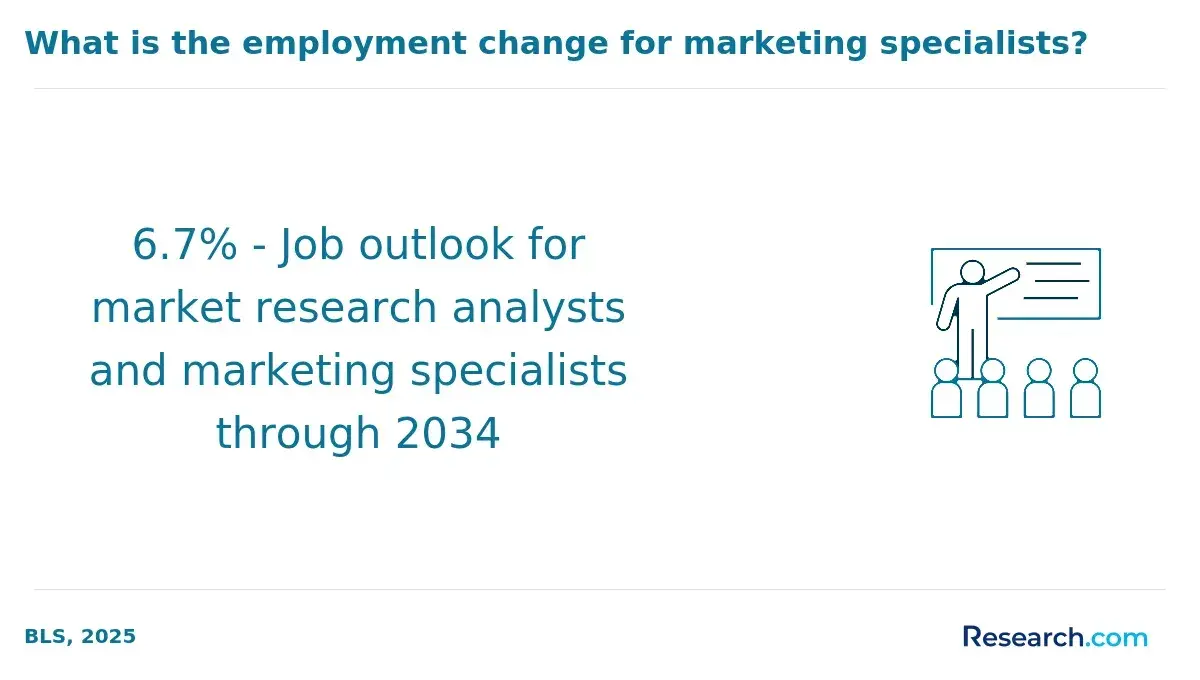
The field remains attractive because marketing skills are used across nearly every industry. The U.S. Bureau of Labor Statistics reports that advertising, promotions, public relations, and marketing manager roles had median pay of $144,530 per year, with 1,182,400 jobs and projected 5.2% job growth through 2034, which is faster than average. Those figures reflect management-level roles, not guaranteed associate-degree outcomes, but they show why many students use an associate degree as a starting point for long-term advancement.
This guide explains how online associate marketing programs work, what they cost, what courses and admissions requirements to expect, how to compare schools, and which programs Research.com identified after reviewing publicly available datasets and consulting subject matter experts.
Quick Answer: Is an Online Associate Degree in Marketing Worth Considering?
An online Associate Degree in Marketing can be worth considering if you want an affordable, flexible entry point into marketing-related work and may later transfer into a bachelor’s degree. It is best suited for students seeking entry-level business, sales, digital marketing, retail, event, social media, or administrative marketing roles. It is less ideal if your target job requires a bachelor’s degree, advanced analytics training, or managerial experience from the start.
The strongest programs combine business fundamentals with current digital marketing tools, career support, transfer pathways, accredited coursework, and opportunities to build a portfolio through projects, internships, or capstones.
Online Associate Degree in Marketing Programs: Table of Contents
- How much does an online Associate Degree in Marketing cost?
- What are the requirements for an online Associate Degree in Marketing program?
- Courses to Expect in an Online Associate Degree in Marketing Program
- Things to Look for in an Online Associate Degree in Marketing Program
- Building a Marketing Foundation: Essential Skills Employers Value
- 2027 Best Online Associate Degree in Marketing Programs
- What accreditation and quality assurance measures validate online associate marketing programs?
- What Student Support Services Can Enhance Your Experience in an Online Associate Degree in Marketing Program?
- How can financial aid and scholarships alleviate the cost barrier for an online Associate Degree in Marketing?
- What are the employment outcomes for online Associate Degree in Marketing graduates?
- How do industry partnerships enhance real-world learning in online Associate Degree in Marketing programs?
- What are the potential challenges of pursuing an online Associate Degree in Marketing?
- How can professional networking enhance your online associate in marketing education?
- Career Advancement Opportunities with an Associate Degree in Marketing
- Integrating Other Relevant Degrees with Marketing for Enhanced Career Prospects
- Can integrating creative disciplines, like game design, elevate your marketing strategy?
- What Role Does Specialization Play in Enhancing Career Prospects for Online Associate Degree in Marketing Graduates?
Associate degrees continue to carry employment value for many students. A 2026 Gallup survey found that 85% of students pursuing associate degrees were confident they would secure employment after graduation. NACE data also reported a 95% career outcomes rate for associate degree graduates, meaning the share employed or enrolled in additional education within six months of graduation.
Marketing-related hiring also remains broad. Jobs for marketing specialists are forecast to reach 1,004,700 through 2034, with 87,200 annual openings across the decade. For students who want a business credential that can lead to work in many industries, the best online Associate Degree in Marketing programs can provide an accessible first step.
How much does an online Associate Degree in Marketing cost?
An online associate degree in marketing is typically less expensive than a bachelor’s degree because it usually requires about two years of study instead of four. Online delivery may also reduce costs tied to relocation, commuting, campus housing, and some location-based tuition differences. However, tuition varies widely by institution type, residency status, credit requirements, fees, and whether the school is public, private, or for-profit.
The table below shows publicly available annual tuition examples for two-year institutions. These are not final net prices, and students should confirm current tuition, fees, technology charges, books, and financial aid directly with each school before enrolling.
| School | Institution category | In-state tuition | Out-of-state tuition |
| American Academy of Dramatic Arts: West | Private 2-year | $36,190.00 | $36,190.00 |
| Bay State College | For-profit 2-year | $29,500.00 | $29,500.00 |
| College of Westchester | For-profit 2-year | $24,900.00 | $24,900.00 |
| Colorado School of Trades | For-profit 2-year | $21,500.00 | $21,500.00 |
| Dean College | Private 2-year | $41,618.00 | $41,618.00 |
| Delaware College of Art and Design | Private 2-year | $25,770.00 | $25,770.00 |
| Dunwoody College of Technology | Private 2-year | $23,670.00 | $23,670.00 |
| Harcum College | Private 2-year | $25,000.00 | $25,000.00 |
| Hesston College | Private 2-year | $28,440.00 | $28,440.00 |
| Kankakee Community College | Public 2-year | $4,830.00 | $24,131.00 |
| Laboure College | Private 2-year | $30,850.00 | $30,850.00 |
| Landmark College | Private 2-year | $59,100.00 | $59,100.00 |
| Modern College of Design | For-profit 2-year | $37,340.00 | $37,340.00 |
| Ohio Technical College | For-profit 2-year | $28,544.00 | $28,544.00 |
| Richard Bland College | Public 2-year | $8,100.00 | $21,810.00 |
| University of Pittsburgh at Titusville | Public 2-year | $12,006.00 | $21,946.00 |
| Valley Forge Military College | Private 2-year | $29,975.00 | $29,975.00 |
These examples show a large price spread, from $4,830 at a public two-year institution to $59,100 at a private two-year institution. Some schools charge the same tuition to in-state and out-of-state students, while others have a major residency-based price difference. When comparing programs, look beyond sticker price and calculate your likely net cost after grants, scholarships, employer tuition benefits, transfer credits, and fees. You can also compare marketing tuition with related options such as online sports management graduate programs if you are deciding between business-focused fields.
Salary expectations should be evaluated carefully. Some roles connected to marketing, business operations, communications, and sales may be open to associate-degree graduates, while management roles usually require more experience or further education. Reported median annual salaries include meeting, convention, and event planners at $59,440, proofreaders and copy markers at $49,210, and office clerks at $43,630. PayScale reports that an associate in marketing degree holder’s average salary is $69,000 per year.
Because associate programs are shorter than bachelor’s programs, they can help students enter the workforce sooner. Some students later combine marketing with technical or communication-oriented training. For example, information systems career paths can pair well with marketing technology, while a communications degree can strengthen writing, public relations, and audience strategy skills.
If you are comparing academic pathways, a broader marketing degree guide covering costs and career options can help you decide whether an associate, bachelor’s, certificate, or graduate pathway fits your goals.
Marketing also continues to evolve through digital channels. In 2026, HubSpot identified websites or blogs, organic media content, and email marketing as top marketing channels, which helps explain why associate programs increasingly include digital content, analytics, and campaign planning.
What are the requirements for an online Associate Degree in Marketing program?
Admission requirements for online marketing degree programs are usually accessible compared with bachelor’s or graduate programs, but requirements still vary by school. Community colleges and open-admission institutions may ask for fewer materials, while selective programs may request additional documentation.
Common admission requirements
- High school diploma or GED from an accredited institution
- Official academic transcripts, with some programs expecting a minimum GPA of 3.0 on a 4.0 scale
- SAT scores, although some programs make them optional
- TOEFL or IELTS scores for applicants whose first language is not English
- Letters of recommendation from teachers, advisers, employers, or personal references
- Statement of purpose or personal statement explaining academic and career goals
Certification requirements
You do not generally need a professional certification to start entry-level marketing work with an associate degree. Still, certifications can help prove specific skills in digital marketing, content strategy, analytics, sales, or marketing management. Some employers may prefer applicants who can show recognized training in the tools and methods used on the job.
One widely recognized source is the American Marketing Association (AMA).
Another option is Sales and Marketing Executives International (SMEI), which provides courses and exams for sales and marketing professionals.
AMA certification areas include Digital Marketing, Digital Marketing Pro, Digital Marketing Expert, Marketing Management, and Content Marketing. Exam topics may include marketing strategy, market research, data analysis, pricing, consumer behavior and segmentation, and product or service positioning.
SMEI credentials include SMEI Certified Professional Marketer, SMEI Certified Marketing Executive, SMEI Certified Professional Salesperson, and SMEI Certified Sales Executive.
Before paying for a certification, check exam prerequisites and recommended preparation. Some exams may be difficult for associate-degree students without additional bachelor’s-level coursework or work experience, even if they are technically eligible to sit for the exam.
Courses to Expect in an Online Associate Degree in Marketing Program
Most associate marketing programs combine general education, introductory business courses, and applied marketing classes. Course names differ by school, but students commonly encounter the subjects below. Always review a program’s catalog and syllabi so you know whether the curriculum emphasizes traditional marketing, digital marketing, sales, retail, entrepreneurship, or transfer preparation.
- Advertising and Branding teaches how organizations create brand identity, plan advertising campaigns, manage messaging, and use branding to support customer loyalty and revenue.
- Business Principles introduces core business areas such as management, accounting, economics, finance, ethics, and law. Students who want deeper legal knowledge may later consider a business law master degree.
- Consumer Behavior examines why people buy, how they compare options, and how economic, psychological, social, and cultural factors shape purchasing decisions.
- Digital Marketing covers online promotion through search, social media, email, content, paid campaigns, web analytics, and related digital tools.
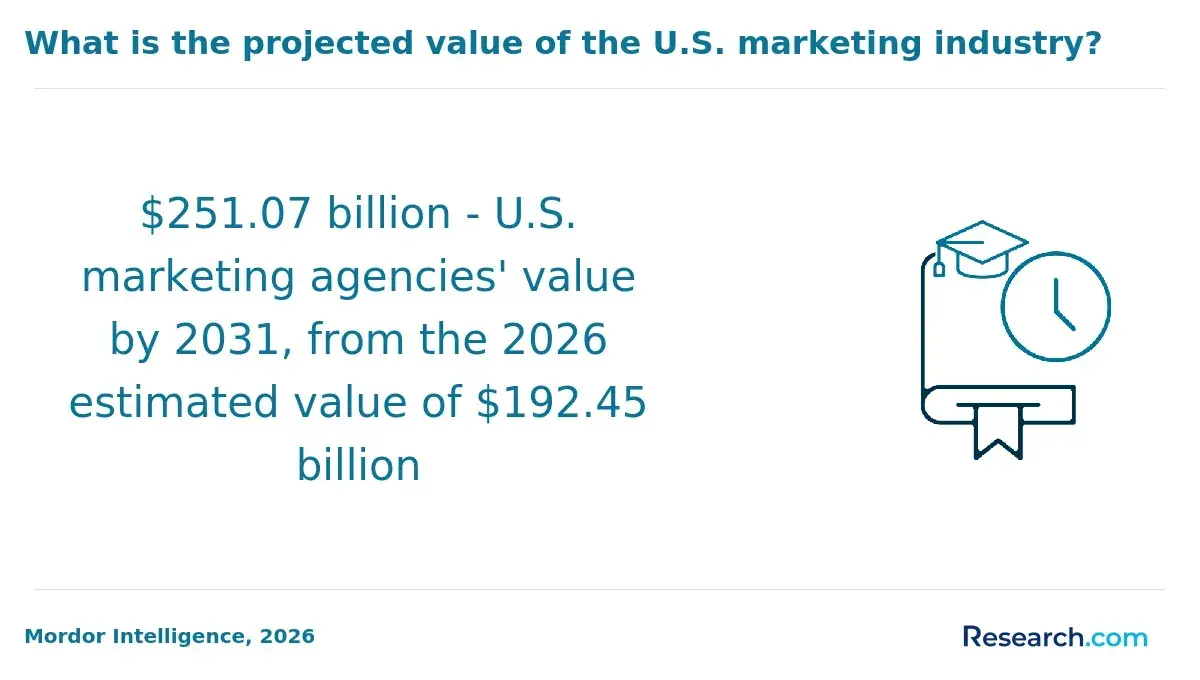
The digital focus matters because the estimated value of the U.S. marketing industry is around $192.45 billion in 2026 and is projected to reach $251.07 billion by 2031.
- E-commerce explains how online businesses attract customers, manage transactions, support digital storefronts, and use technology to sell goods and services. Students interested in technical implementation may also explore the best online computer programming degree.
- Market Research focuses on collecting, analyzing, interpreting, and applying data to understand customer needs, forecast demand, and support better marketing decisions.
- Marketing Communications reviews how organizations communicate with audiences through advertising, public relations, sales promotions, social media, customer feedback, and complaint resolution.
- Principles of Marketing gives students a broad foundation in customer behavior, segmentation, product development, pricing, promotion, distribution, supply chains, and market positioning.
- Sales and Retail Management introduces sales planning, selling techniques, service quality, retail operations, and long-term customer relationship building.
- Marketing Analytics teaches students how to evaluate campaign performance, customer segments, promotional results, and marketing data. Students interested in business analysis may also look at a graduate finance certificate or online business management certificates.
Things to Look for in Online Associate Degree in Marketing Programs
The best program is not always the cheapest, fastest, or most heavily advertised. A strong online associate marketing program should match your career goal, transfer plan, budget, schedule, and learning style.
| Factor to compare | Why it matters | Questions to ask before enrolling |
| Accreditation | Accreditation supports academic credibility, access to financial aid, and transferability of credits. | Is the institution accredited by a recognized accreditor, and will credits transfer to bachelor’s programs? |
| Curriculum relevance | Marketing changes quickly, especially in digital channels, analytics, and social media. | Do courses include current examples, campaign tools, SEO, analytics, content, and digital strategy? |
| Faculty background | Experienced instructors can connect theory with real marketing work. | Do faculty members have industry experience, teaching experience, or current professional work? |
| Career support | Online students need access to internships, resume help, interview preparation, and employer contacts. | Are career services available remotely, and does the school share employment or internship outcomes? |
| Transfer pathway | Many students use an associate degree as the first half of a bachelor’s degree. | Does the school have articulation agreements or clear transfer maps? |
| Hands-on work | Marketing employers often want proof that applicants can create, analyze, and present campaigns. | Will you complete projects, portfolios, internships, simulations, or capstone assignments? |
Accreditation should be verified first. It can affect credit transfer, employer recognition, and eligibility for military, state, or federal financial aid. Next, review whether the curriculum reflects current marketing practice rather than relying only on outdated case studies. For example, influencer marketing has become an important topic, and the AMA’s influencer marketing resources note that 39% of marketers cited paid social media content as one of their top marketing channels.
Top Marketing Channels

Building a Marketing Foundation: Essential Skills Employers Value
An associate degree can introduce marketing theory, but employers also look for evidence that you can write clearly, analyze data, use digital tools, manage deadlines, and collaborate with others. The most competitive graduates leave school with both coursework and proof of applied skills.
Soft skills
Marketing depends heavily on communication. Entry-level professionals may write emails, prepare social posts, help with presentations, update product descriptions, contact customers, or support campaign teams. Problem-solving, adaptability, time management, and teamwork are also important because campaigns often change quickly and involve several stakeholders.
Technical skills
Useful technical abilities include familiarity with Google Analytics, Adobe Creative Suite, customer relationship management platforms such as Salesforce, SEO basics, email marketing tools, social media advertising dashboards, and reporting metrics. You do not need to master every tool before graduation, but you should be able to show that you can learn platforms, interpret results, and connect data to marketing decisions.
Certifications and portfolio evidence
Short credentials from Google Ads, HubSpot, AMA, or similar providers can complement an associate degree when they align with your target role. A portfolio can be just as valuable: sample campaigns, social media calendars, email sequences, keyword research, analytics reports, and class projects help employers see what you can actually do. Students aiming for leadership over time can also review Research.com’s guide on how to become a marketing manager.
2027 Best Online Associate Degree in Marketing Programs
Research.com experts selected the following 5 online associate-level marketing or closely related business programs based on publicly available information and expert review. This list should be used as a starting point, not a substitute for your own comparison. Your best choice may differ depending on tuition, state residency, transfer goals, desired specialization, schedule, and support services.
| Program | Length | Credits | Tuition information | Accreditation |
| Lake Area Technical Institute | 27 months | 76 credits | $1488 per 12 credits | Higher Learning Commission |
| Kennebec Valley Community College | 2 years | 60 credits | $96/Credit In-State; $134/Credit Out-of-State | Accreditation Council for Business Schools and Programs |
| Southern New Hampshire University | 2 years | 60 credits | $330/credit | Accreditation Council for Business Schools and Programs |
| Georgia Piedmont Technical College | 2 years | 63 credits | $100 for Georgia residents; $200 for USA residents; $400 for non-residents | Southern Association of Colleges and Schools Commission on Colleges(SACSCOC) |
| Lakeshore Technical College | 2 years | 60 credits | $138.90 (WI resident) | Higher Learning Commission |
1. Lake Area Technical Institute
Lake Area Technical Institute offers an Associate of Applied Science (A.A.S.) Degree in Marketing/Management. The program stands out for its applied format, including real-world projects, business visits, and interaction with marketing management professionals. Students complete a business internship or business internship/capstone project, along with an elective that allows them to explore a topic of interest while working with a partner organization.
- Program length: 27 months
- Tracks or concentrations: N/A
- Tuition: $1488 per 12 credits
- Credits required: 76 credits
- Accreditation: Higher Learning Commission
2. Kennebec Valley Community College
Kennebec Valley Community College provides an online Associate in Applied Science Degree in Business Administration. Although broader than marketing alone, the program develops business communication, interpersonal skills, data analysis, problem-solving, business documentation, ethical reasoning, and practical decision-making. It can support workforce entry, entrepreneurship, or transfer to a four-year institution through existing agreements with several colleges and universities.
- Program length: 2 years
- Tracks or concentrations: N/A
- Tuition cost: $96/Credit In-State; $134/Credit Out-of-State
- Credits required: 60 credits
- Accreditation: Accreditation Council for Business Schools and Programs
3. Southern New Hampshire University
Southern New Hampshire University offers an online Associate of Science in Marketing. The program is designed for flexibility, with no scheduled class meeting times and access to coursework at any time. SNHU states that it has some of the lowest online tuition rates in the nation, and the associate degree can lead into a bachelor’s in marketing. The program also received the 21st Century Distance Learning Award for Excellence in Online Technology from the United States Distance Learning Association (USDLA).
- Program length: 2 years
- Tracks or concentrations: N/A
- Tuition cost per credit hour: $330/credit
- Credits required: 60 credits
- Accreditation: Accreditation Council for Business Schools and Programs
4. Georgia Piedmont Technical College
Georgia Piedmont Technical College offers an online Associate Degree in Marketing Management. The program is designed for students who want to enter marketing, update current skills, or retrain for business roles. Graduates may study basic specializations in areas such as e-business, entrepreneurship, marketing management, professional selling, retail management, sports marketing, or social media marketing.
- Program length: 2 years
- Tracks or concentrations: Various
- Tuition cost per credit: $100 for Georgia residents; $200 for USA residents; $400 for non-residents
- Credits required: 63 credits
- Accreditation: Southern Association of Colleges and Schools Commission on Colleges(SACSCOC)
5. Lakeshore Technical College
Lakeshore Technical College offers an online Associate Degree in Digital Marketing. The program focuses on modern business tools used in digital marketing, including search engine optimization, digital advertising, and social media marketing. Students can complete the program fully online or in a hybrid format, depending on schedule and learning preference. This option may appeal most to students who want marketing roles connected to web presence, campaign execution, and digital strategy.
- Program length: 2 years
- Tracks or concentrations: N/A
- Tuition cost per credit: $138.90 (WI resident)
- Credits required: 60 credits
- Accreditation: Higher Learning Commission
If your main interest is online promotion, campaign analytics, SEO, and social platforms, a digital marketing degree guide can help you compare broader options. Influencer marketing is also expanding: data show that the global influencer marketing platform market will reach $97.55 billion by 2030, growing at an annual rate of 23.3% from its $25.44 billion value in 2024.
What accreditation and quality assurance measures validate online associate marketing programs?
Accreditation is one of the most important checks before enrolling in any online associate marketing program. It helps verify that the institution meets recognized standards for curriculum, faculty, student services, governance, and academic integrity. It can also affect whether you can use financial aid, transfer credits, or continue into a bachelor’s program.
Prospective students should confirm institutional accreditation through the school’s official website and accreditor records. Additional quality signals include business program accreditation, industry advisory boards, internship partners, transfer agreements, transparent graduation requirements, and clear student outcome information. Students planning future graduate study in a related field may also compare communication-focused pathways such as an affordable online master’s in communication.
What Student Support Services Can Enhance Your Experience in an Online Associate Degree in Marketing Program?
Online students should not have to navigate college alone. Strong programs offer academic advising, online tutoring, library access, writing support, technical help, career counseling, transfer advising, and clear communication from instructors. These services matter because remote learners often balance school with work, family, and other commitments.
Before enrolling, ask whether support is available during evenings or weekends, how quickly technical issues are resolved, whether career services work with online students, and whether tutoring covers business writing, statistics, research, and marketing software. Students interested in combining marketing with creative work may also explore options such as online MFA programs, depending on long-term career goals.
How can financial aid and scholarships alleviate the cost barrier for an online Associate Degree in Marketing?
Financial aid can significantly change the real cost of an online associate degree. Students should complete required aid forms early, ask about institutional scholarships, review state grants, compare payment plans, and check whether employers offer tuition assistance. Some schools also provide scholarships for online learners, adult students, first-generation students, military-affiliated students, or students in business programs.
Do not compare programs by tuition alone. Include required fees, books, software subscriptions, proctoring fees, transfer credit policies, and the number of credits required to graduate. A lower tuition rate may not save money if few prior credits transfer or if the program does not align with your career plan. Students considering related writing, media, or public-facing roles may also review potential careers in communications.
What are the employment outcomes for online Associate Degree in Marketing graduates?
Employment outcomes vary by school, region, experience level, portfolio quality, and whether the graduate continues into a bachelor’s degree. Associate-degree graduates may pursue entry-level roles in sales support, social media coordination, retail marketing, administrative marketing, customer service, event support, market research assistance, and business operations.
When evaluating outcomes, ask the school for job placement information, internship participation, employer partnerships, alumni examples, transfer rates, and career services data. Be cautious with any program that promises a specific salary or job title. For a cost comparison outside marketing, Research.com also covers online creative writing degree costs.
How do industry partnerships enhance real-world learning in online Associate Degree in Marketing programs?
Industry partnerships can make online marketing education more practical. When schools work with employers, agencies, local businesses, technology providers, or nonprofit organizations, students may gain access to case studies, campaign briefs, guest speakers, internships, capstones, and feedback from professionals.
These experiences help students connect classroom concepts to actual marketing problems: audience targeting, budget limits, analytics reporting, brand consistency, content planning, customer acquisition, and campaign performance. Programs focused on social platforms, such as the fastest online social media marketing degree programs, show how digital tools and employer-informed projects can support job readiness.
What are the potential challenges of pursuing an online Associate Degree in Marketing?
Online learning offers flexibility, but it also requires discipline. Students may have fewer spontaneous networking opportunities, less face-to-face collaboration, and more responsibility for staying on schedule. Marketing also benefits from hands-on practice, so a weak online program that lacks projects, internships, software exposure, or instructor feedback may leave students underprepared.
Technical access can also be an issue. Before enrolling, confirm what computer, internet speed, software, and digital tools you need. If you want a more visual or design-oriented path, an online graphic design degree may complement marketing skills in branding, advertising, and content creation.
How can professional networking enhance your online associate in marketing education?
Networking is especially important for online students because many career opportunities come through conversations, referrals, internships, freelance projects, and professional communities. You do not need to wait until graduation to start building a network.
- Learn from working marketers. Conversations with professionals can show how campaign planning, analytics, content creation, and customer research work outside the classroom.
- Find mentors. Experienced marketers can help you choose certifications, build a portfolio, prepare for interviews, and avoid common early-career mistakes.
- Discover internships and entry-level openings. Faculty, classmates, alumni, and employer partners may know about opportunities before they are widely advertised.
- Practice collaboration. Webinars, online workshops, student groups, and class projects can help you build confidence in presenting ideas and giving feedback.
- Build a professional identity. LinkedIn, portfolio websites, and completed class projects can help you show employers your interests, skills, and growth.
- Stay aware of credentials. Networking can help you identify which certifications are respected in your target area and which ones are less useful.
Career Advancement Opportunities with an Associate Degree in Marketing
An associate degree can start your marketing education, but many higher-level roles require additional experience, a bachelor’s degree, specialized training, or a record of measurable results. Advancement usually comes from combining education with work samples, technical skills, and stronger business judgment.
Continue into a bachelor’s degree
Many students transfer associate credits into a four-year program. An accelerated marketing degree online may be useful for students who want to move faster toward bachelor’s-level qualifications while building on prior coursework. Before transferring, confirm how many credits will apply to the new degree.
Add targeted certifications
Certifications in digital marketing, content marketing, social media, SEO, analytics, or sales can help you demonstrate job-specific skills. Choose credentials based on your target role rather than collecting certificates without a plan.
Move into specialized or supervisory roles
With experience, associate-degree graduates may move from support roles into campaign coordination, sales management, brand support, digital campaign execution, public relations assistance, or marketing operations. Long-term roles such as marketing manager, brand strategist, or digital campaign director usually require broader experience and stronger strategic responsibility.
Integrating Other Relevant Degrees with Marketing for Enhanced Career Prospects
Marketing overlaps with communications, business, analytics, design, technology, and media. Pairing an associate marketing degree with another field can make sense when the combination supports a specific job goal.
| Combination | Best fit | Possible advantage |
| Marketing plus communications | Public relations, media relations, corporate messaging, content writing | Stronger writing, speaking, audience analysis, and message strategy |
| Marketing plus business administration | Sales, retail management, entrepreneurship, operations support | Broader understanding of finance, management, ethics, and business decisions |
| Marketing plus software or information systems | Marketing technology, e-commerce, analytics, CRM support | Better ability to work with platforms, data, automation, and technical teams |
| Marketing plus design or creative media | Branding, advertising, social media, content production | Stronger visual storytelling and campaign asset development |
If communication-heavy roles appeal to you, review the communications major requirements to see how writing, public speaking, media strategy, and audience research can complement marketing coursework.
Can integrating creative disciplines, like game design, elevate your marketing strategy?
Creative disciplines can expand how marketers think about engagement. Game design, interactive media, and immersive storytelling can teach useful lessons about audience motivation, feedback loops, user experience, and digital participation. Students curious about this intersection can review Research.com’s discussion of whether game design is a good career choice and consider how interactive content might support brand experiences.
What Role Does Specialization Play in Enhancing Career Prospects for Online Associate Degree in Marketing Graduates?
Specialization helps students move from a general business credential toward a clearer employment target. For example, a student interested in social platforms may choose electives, projects, and certifications in content strategy, paid social, analytics, and community management. A student interested in sales may prioritize CRM tools, customer behavior, negotiation, and retail or B2B selling.
Specialization can come through electives, internships, certificates, portfolio projects, or further education such as a social media marketing degree online. The goal is not to narrow your options too early, but to show employers that your coursework and work samples match the role you want.
Future Trends for the Best Online Associate Degree in Marketing Programs
Marketing programs are adjusting to changes in consumer behavior, technology, media channels, and employer expectations. Influencer marketing continues to shape brand visibility, especially as companies work with creators who already have audience trust. Voice search is also improving, including better recognition of accents and everyday language.
Interactive product experiences are becoming more common, including augmented reality, 360 views, quizzes, and personalized content. These tools are designed to help customers explore products, compare options, and move through the buying process more confidently.
Customer journey management is another major priority. Companies increasingly want to understand every stage of the customer relationship, from first awareness to repeat purchases. AI-powered systems are likely to play a larger role in personalization, segmentation, content planning, and customer experience management. Students interested in the technical side of these systems may consider pairing marketing knowledge with an online software development degree.
Common Mistakes to Avoid When Choosing an Online Associate Degree in Marketing
| Mistake | Why it can hurt you | Better approach |
| Choosing a program without checking accreditation | Credits may not transfer, and financial aid eligibility may be affected. | Verify institutional accreditation before applying. |
| Looking only at tuition | Fees, books, software, and lost transfer credits can change the real cost. | Calculate total net cost after aid and transfer evaluation. |
| Assuming every online program is career-focused | Some programs may be designed mainly for transfer, while others emphasize immediate employment. | Match the curriculum to your goal: job entry, transfer, or both. |
| Ignoring portfolio development | Marketing employers often want proof of writing, campaign, analytics, or content skills. | Choose courses with projects, capstones, internships, or applied assignments. |
| Relying only on rankings | A ranked program may not fit your budget, schedule, state, or transfer plan. | Use rankings as a shortlist, then compare outcomes, support, and costs. |
| Expecting guaranteed salary outcomes | Pay depends on role, location, experience, portfolio, industry, and education level. | Research realistic entry-level roles and build experience early. |
References
- American Marketing Association. (2025). Marketing in the Age of Disruption: The Skills Marketers Need in 2025 and Beyond. https://www.ama.org/2025/01/31/2025-marketing-skills-report
- Grand View Research. (2025). Influencer Marketing Platform Market (2025 - 2030). https://www.grandviewresearch.com/industry-analysis/influencer-marketing-platform-market
- Hrynowski, Z. & Marken, S. (2026, February 24). College Students, Grads See Strong Career Value in Degree. Gallup. https://news.gallup.com/poll/702284/college-students-grads-strong-career-value-degree.aspx
- HubSpot. (2026). The State of Marketing 2026. https://www.hubspot.com/state-of-marketing
- Mordor Intelligence. (2026). United States Marketing Agencies Market Size & Share Analysis - Growth Trends and Forecast (2026 - 2031). https://www.mordorintelligence.com/industry-reports/united-states-marketing-agencies-industry
- National Association of Colleges and Employers. (2025). 2025 First Destinations for the College Class of 2024. https://www.naceweb.org/docs/default-source/default-document-library/2025/publication/free-report/nace-first-destinations-college-class-of-2024.pdf
- PayScale. (2025). Associate’s Degree, Marketing Salary. Retrieved March 2026, from https://www.payscale.com/research/US/Degree=Associate%27s_Degree%2C_Marketing/Salary
- U.S. Bureau of Labor Statistics. (2025, August 28). Occupational projections and worker characteristics. Retrieved March 2026, from https://www.bls.gov/emp/tables/occupational-projections-and-characteristics.htm
- ZipRecruiter. (2026). Social Media Strategist Salary. Retrieved March 2026, from https://www.ziprecruiter.com/Salaries/Social-Media-Strategist-Salary
Key Insights
- An online Associate Degree in Marketing is a practical starting point for entry-level marketing, sales, digital media, retail, event, and business support roles, especially for students who want flexibility and a shorter timeline.
- Cost varies sharply by school type and residency status, so compare total net cost rather than tuition alone.
- Accreditation, transferability, career support, hands-on projects, and current digital marketing coursework are more important than a program’s name by itself.
- Certifications are optional for many entry-level roles, but targeted credentials in digital marketing, analytics, content, or social media can strengthen a resume when paired with a portfolio.
- Students who want higher-level marketing roles should plan beyond the associate degree through work experience, a bachelor’s degree, specialized training, networking, and measurable campaign results.
Other Things You Should Know About Online Associate Degrees in Marketing
Many do, especially for core business and marketing courses. Schools may use live remote proctoring, testing centers, or locked browser software such as Honorlock or ProctorU. Programs often require one or more proctored midterms or finals each term.
In 2027, online associate programs in marketing such as those offered by Southern New Hampshire University and Liberty University emphasize student collaboration through virtual group projects and interactive forums. These platforms provide excellent opportunities for peer interaction, mimicking real-world marketing environments and collaborations.
In 2027, online associate marketing programs should have regional accreditation, which ensures the institution meets high academic standards. Accreditation from bodies such as the Accreditation Council for Business Schools and Programs (ACBSP) is also valuable because it specifically evaluates business and marketing programs for curriculum excellence.


