
2027 Most Affordable Online Communications Degree Programs

Co-Founder and Chief Data Scientist
Choosing an affordable online communications degree is a cost, time, and career decision. A communications major can lead to roles in public relations, marketing, journalism, corporate communication, social media, content strategy, and media production, but programs vary widely in price, format, specialization, and career support. This guide is designed for students comparing online bachelor’s programs in communication, working adults who need flexibility, and transfer students looking for a lower-cost route to a completed degree.
You will learn what online communications programs usually include, how much they can cost, how online study compares with campus learning, which schools appear on Research.com’s affordable program list, and how to evaluate accreditation, curriculum, financial aid, internships, and return on investment before enrolling.
Quick Answer: Is an Affordable Online Communications Degree Worth It?
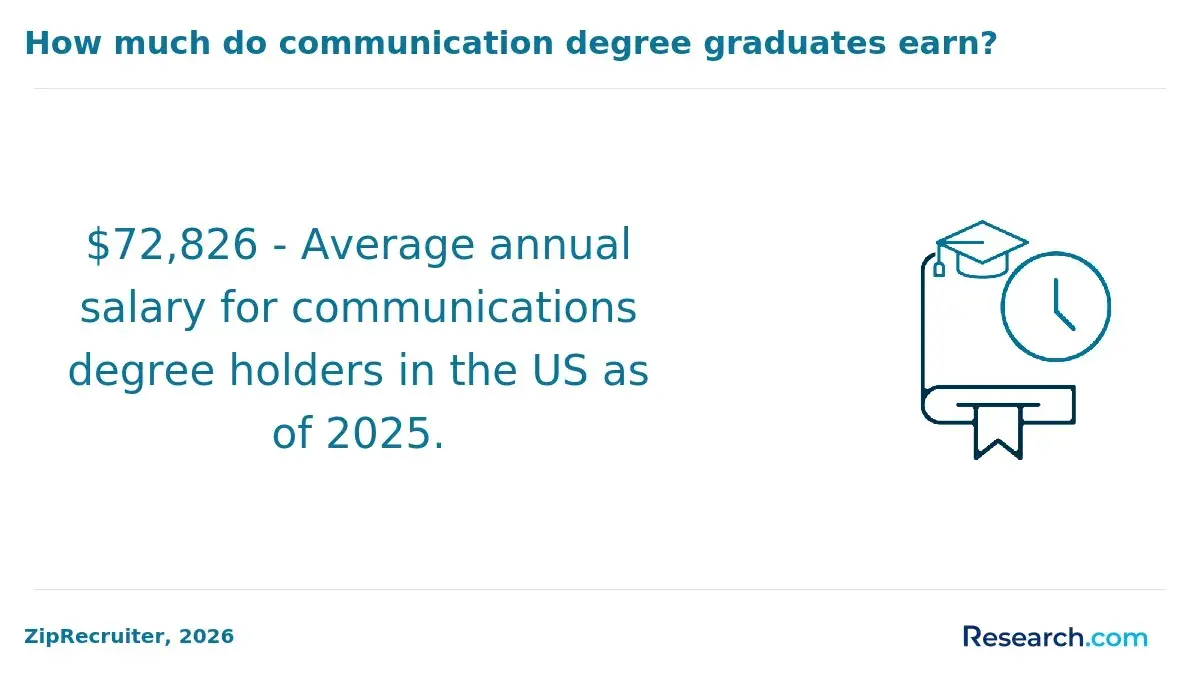
An affordable online communications degree can be worth it if the program is accredited, fits your schedule, offers practical writing and digital media experience, and supports your target career path. Communications graduates can work across media, public relations, marketing, advertising, journalism, corporate communication, nonprofit outreach, government communication, and related fields. According to the U.S. Bureau of Labor Statistics (BLS), the median annual wage for media and communication workers in May 2024 was $70,300, while media and communication equipment workers earned a median annual wage of $53,850.
The degree is less likely to pay off if you choose a program based only on low tuition, ignore fees and transfer policies, or graduate without a portfolio, internship experience, writing samples, or digital skills.
What are the benefits of getting an online communications degree?
- Career flexibility: Communications majors build transferable skills used in media, public relations, marketing, advertising, journalism, corporate communication, human resources, nonprofit outreach, government affairs, and digital content roles.
- Strong communication foundation: Students practice writing, speaking, audience analysis, research, persuasion, storytelling, and message design—skills employers continue to need even as communication tools change.
- Flexible study format: Online courses can make it easier to keep working, manage family responsibilities, and complete assignments around a busy schedule.
- Salary potential varies by role: The average annual salary of communications specialists in the U.S. is $121,210, but individual earnings depend on job title, location, experience, industry, portfolio quality, and employer.
What can I expect from an online communications degree?
An online communications degree teaches students how people, organizations, brands, media outlets, and communities create and exchange messages. Most programs combine theory with applied assignments, so students learn why communication works and how to create effective messages for real audiences.
Common study areas include:
- Interpersonal communication: How people share meaning through words, tone, body language, listening, and relationship dynamics in personal and professional settings.
- Mass media: How television, radio, newspapers, digital platforms, social networks, and online publishing distribute information to large audiences.
- Public speaking: How to plan, organize, deliver, and evaluate speeches, presentations, pitches, and briefings.
- Social media strategy: How organizations use social platforms to build awareness, engage audiences, manage communities, and support marketing or communication goals.
- Crisis and marketing communication: How organizations communicate during emergencies, reputation challenges, product launches, campaigns, and public-facing events.
Students typically strengthen writing, research, critical thinking, editing, presentation, collaboration, and digital communication skills. Many programs also introduce media tools, analytics platforms, multimedia production, campaign planning, and ethical decision-making. Depending on the school, students may specialize in public relations, advertising, journalism, corporate communication, strategic communication, health communication, or digital media.
Where can I work with an online communications degree?
Communications graduates can work wherever organizations need clear, persuasive, audience-centered messaging. Common employers include corporations, public relations agencies, marketing firms, news organizations, nonprofits, universities, healthcare systems, government agencies, sports organizations, technology companies, and entertainment or media businesses.
| Work setting | Common responsibilities | Possible job titles |
| Public relations | Write press materials, respond to media requests, support reputation management, plan campaigns | Public relations specialist, media relations coordinator, community relations manager |
| Marketing and advertising | Create campaign messages, write copy, manage brand voice, coordinate content across channels | Copywriter, content strategist, marketing communications coordinator, social media manager |
| Journalism and media | Research, report, edit, produce, and distribute news or feature content | Reporter, editor, producer, news analyst, social media producer |
| Corporate communication | Manage internal messaging, executive communication, employee updates, stakeholder communication | Corporate communications associate, internal communications specialist |
| Nonprofit and government | Support outreach, public information, grants, advocacy, events, and community education | Public information officer, outreach coordinator, grant writer |
How much can I make with an online communications degree?
Salary depends heavily on occupation, industry, location, employer size, experience, and whether the role involves strategy, management, technical media production, or entry-level support. According to the U.S. Bureau of Labor Statistics (BLS), the median annual wage for media and communication workers in May 2024, including public relations specialists, news analysts, and writers, was $70,300.
Media and communication equipment workers, including broadcast technicians, film and video editors, and photographers, earned a median annual wage of $53,850, which was above the median for all occupations.
- 2027 List of the Most Affordable Online Communications Degree Programs
- How long does it take to complete an online communications degree program?
- How does an online communications degree program compare to an on-campus program?
- What is the average cost of an online communications degree program?
- What are the financial aid options for students enrolling in an online communications degree program?
- What are the prerequisites for enrolling in an online communications degree program?
- What courses are typically in an online communications degree program?
- What types of specializations are available in an online communications degree program?
- How to Choose the Best Online Communication Program
- How does accreditation affect an online communications degree?
- How do industry partnerships enhance the value of online communications degrees?
- What are the benefits of pursuing an online master’s in communication?
- How to Leverage Networking and Internships for Career Advancement in Communications
- How Does an Online Communications Degree Foster Creative and Writing Excellence?
- What career paths are available for graduates of an online communications degree program?
- What is the job market for graduates with an online communications degree?
- What is the return on investment for an online communications degree?
- What additional certifications can enhance my communications career?
- What challenges do online communications students face and how can they overcome them?
- How Can Technical Expertise Complement an Online Communications Degree?
- Emerging Trends in Communication Careers for Online Graduates
2027 List of the Most Affordable Online Communications Degree Programs
How do we rank schools?
Affordability matters, but a low price alone does not make a program a good choice. Research.com evaluates affordable online communications degree programs using government and education data sources, along with factors that help students compare academic value, accessibility, and program fit.
The ranking process uses information from:
- The Integrated Postsecondary Education Data System (IPEDS) database
- Peterson’s database, including the Distance Learning Licensed Data Set
- College Scorecard database
- National Center for Education Statistics
Research.com also considers graduation rate, student-faculty ratio, and program focus. Details about the broader ranking process are available on Research.com’s methodology page.
| Rank | School | Program format and focus | Program length | Cost information | Credits | Accreditation |
| 1 | Arizona State University | Online Bachelor of Arts in Communication with a humanities-focused approach and human communication track | 2 years | $541 per credit | 120 | Higher Learning Commission (HLC) |
| 2 | Central Methodist University | Bachelor of Arts in Communication offered online and at the Fayette Campus; coursework delivered through Canvas | 4 years | $260 per credit | 120 | HLC |
| 3 | Columbus State University | Online Bachelor of Arts in Communication focused on communication theory and professional applications | 4 years | $2,732 tuition per semester | 123 | Southern Association of Colleges and Schools Commission on Colleges (SACSCOC) |
| 4 | Fort Hays State University | Bachelor of General Studies - Business Communication combining liberal education, technology, business, and communication | 4 years | $226.88 per credit | 120 | HLC |
| 5 | Louisiana State University - Alexandria | Online Bachelor of Arts in Communication Studies with synchronous classes covering oral, written, mediated, research, and mass media law topics | 4 years | $325 per credit | 120 | SACSCOC |
| 6 | Ohio University-Main Campus | Online Bachelor of Science in Communication emphasizing theory-based communication strategies and applied practice | 4 years | $243 per credit | 120 | HLC |
| 7 | Southern Utah University | Bachelor of Science in Communication focused on digital content, public outreach, and social media management | 3 years | $3,600 tuition per semester | 120 | Northwest Commission on Colleges and Universities (NWCCU) |
| 8 | University of Arkansas | Online Bachelor of Arts in Communication covering messaging techniques, new media technologies, ethics, and legal issues | 4 years | $255.51 per credit | 120 | HLC |
| 9 | Utah Tech University | Online Bachelor of Science in Communication Studies using theory and application to explore communication forms | 4 years | $255 per credit | 120 | NWCCU |
| 10 | Valley City State University | Bachelor of Arts in Communication Studies with Corporate Cognate, Digital Media Management Cognate, and Journalism and Media Cognate options | 4 years | $7,955 annual tuition | 120 | Higher Learning Commission of the North Central Association of Colleges and Schools (NCA) |
Students comparing leadership-focused graduate options outside communications can also review Research.com’s guide to the Doctorate of Strategic Leadership.
Key Findings
- Online bachelor’s degrees in communication have tuition rates ranging from around $15,000 to $140,000 or more.
- Communications majors develop skills used in media, public relations, marketing, advertising, journalism, and corporate communications.
- The average annual salary for communications specialists in the U.S. is $121,210, compared with the median annual wage for all occupations, which is $48,060.
- According to the Education Data Initiative, an online degree from a public university costs approximately $54,183, compared with $85,348 for the same degree in person, a difference of around $31,165.
- The U.S. Bureau of Labor Statistics projects approximately 114,300 job openings per year in media and communication occupations due to growth and workforce replacement needs.
- Media and communication equipment workers, including broadcast technicians, film and video editors, and photographers, earned a median annual wage of $53,850.
How long does it take to complete an online communications degree program?
Completion time depends on the degree level, transfer credits, course load, term structure, and whether the student enrolls full time or part time. A master’s program may take one to two years, a bachelor’s program commonly takes three to four years, and an associate degree can take about two years.
| Degree level | Typical completion time | Best fit |
| Associate degree | About two years | Students seeking a lower-cost starting point or transfer pathway |
| Bachelor’s degree | Three to four years | Students preparing for entry-level communication, media, marketing, or PR roles |
| Master’s degree | One to two years | Working professionals pursuing advanced strategy, leadership, research, or specialized communication roles |
Full-time students often take nine to 12 credits per semester and finish faster. Part-time students may take three to six credits per semester, which can make school more manageable but extend the graduation timeline.
A part-time format usually works better for students with full-time jobs, caregiving responsibilities, or unpredictable schedules. A full-time schedule may be better for students who want to graduate quickly and can commit to a heavier workload.
How does an online communications degree program compare to an on-campus program?
An online communications degree usually offers more scheduling flexibility than a campus program. However, students must be proactive about networking, group projects, internships, and faculty interaction because the learning environment is less spontaneous than a physical classroom.
| Factor | Online communications degree | On-campus communications degree |
| Schedule | Often more flexible, especially when courses are asynchronous | Usually follows fixed class meeting times |
| Cost considerations | May reduce commuting, housing, and relocation costs | May involve campus fees, transportation, and housing costs |
| Interaction | Requires intentional participation in forums, video meetings, and virtual events | Offers more face-to-face discussion and informal networking |
| Best for | Working adults, parents, military students, transfer students, and self-directed learners | Students who want campus life, in-person collaboration, and structured routines |
| Main risk | Falling behind without strong time management | Less flexibility for students with work or family obligations |
Advantages of online communications programs
- Students can often complete coursework from any location with reliable internet access.
- Online learning can make it easier to continue working while earning a degree.
- Students may avoid commuting, relocation, and some housing-related expenses.
- Digital classrooms can mirror modern remote communication environments used by employers.
Drawbacks to consider
- Students may have fewer in-person networking and collaboration opportunities.
- Online learners need self-discipline, planning, and consistent communication with instructors.
- Some students may feel isolated if the program lacks active faculty engagement, group projects, or career support.
What is the average cost of an online communications degree program?
The cost of an online communications degree depends on the school, degree level, residency rules, transfer credits, technology fees, textbooks, financial aid, and whether tuition is charged per credit, per semester, or at a flat online rate. Based on Research.com’s review, an online bachelor’s degree in communications can range from around $15,000 to $140,000 or more.
According to the Education Data Initiative, an online degree from a public university costs approximately $54,183, compared with $85,348 for the same degree in person. For public four-year colleges, an online degree is $31,165 cheaper than an in-person degree when comparing tuition and the cost of attendance. Students who commute to college for in-person classes pay $1,360 per year in transportation costs, which online students do not have to pay.
Students comparing affordable online degrees in other fields can use the same cost-review approach when evaluating affordable online hospitality degrees.
Cost factors to check before applying
- Tuition structure: Find out whether the school charges per credit, per semester, or by program.
- Residency policy: Ask whether online students pay in-state, out-of-state, or separate online tuition.
- Fees: Look for technology fees, distance learning fees, graduation fees, proctoring fees, and course material costs.
- Transfer credits: A generous transfer policy can reduce both time and total cost.
- Pace: Accelerated formats may reduce time in school but can increase weekly workload.
- Financial aid eligibility: Confirm that the institution participates in federal student aid if you plan to use aid.
What are the financial aid options for students enrolling in an online communications degree program?
Online communications students may qualify for federal aid, state aid, institutional scholarships, private scholarships, grants, employer tuition benefits, military education benefits, payment plans, and transfer-credit savings. Aid eligibility depends on the school, enrollment status, citizenship or residency status, academic progress, and the specific scholarship or grant rules.
Scholarships and grants
Students should search for communication, journalism, public relations, media, marketing, and writing scholarships. Examples include:
- Jim Borden Memorial Scholarship: Applicants must be enrolled or planning to enroll in a four-year college or university, pursue a major in journalism, English writing, or communications, and reside in the Pittsburgh region. Trib Total Media offers the Jim Borden Memorial Scholarship, which provides $7,500 annually ($30,000 over four years), an internship, and a full-time employment offer at Trib Total Media after graduation.
- Marketing for Change Internship: Eligible students include junior or senior undergraduates or graduate students majoring in communications, journalism, marketing, research, psychology, design, advertising, or creative writing. Marketing for Change offers a paid internship that typically lasts four to six months.
- Grants for communications students: Options may include Federal Pell Grants, Federal Supplemental Educational Opportunity Grants, and grants from organizations such as the Asian American Journalists Association.
Transfer credits
Students who previously attended college may be able to transfer credits into an online bachelor’s program. This can lower the number of required courses, shorten the timeline, and reduce tuition costs. Before enrolling, request a formal transfer credit evaluation, not just an informal estimate.
What are the prerequisites for enrolling in an online communications degree program?
Admission requirements vary by institution and degree level, so students should review each program’s admissions page carefully. Online bachelor’s programs in communication commonly ask applicants to provide:
- A high school diploma or equivalent.
- A minimum Grade Point Average (GPA), often around 2.0-2.5.
- Official transcripts from high school and any previously attended colleges or universities.
- A resume and/or personal statement.
- Completion of specific prerequisite courses, such as English composition and college algebra.
Some schools may also request:
- Scholastic Aptitude Test (SAT) or American College Testing (ACT) scores.
- Letters of recommendation.
- An application fee.
What courses are typically in an online communications degree program?
Course titles differ by institution, but most online bachelor’s programs in communication include a core set of classes that develop writing, research, speaking, media literacy, and strategic messaging skills.
| Course area | What students learn |
| Communication Theory | Major theories, models, and principles that explain how people create, interpret, and respond to messages |
| Mass Communication | The development, influence, and social role of television, radio, print media, the internet, and digital platforms |
| Media Writing | Writing for news, public relations, advertising, digital content, and other media formats |
| Communication Research Methods | Qualitative and quantitative methods used to study audiences, messages, media effects, and communication behavior |
| Communication Ethics | Ethical issues in personal, professional, organizational, and mediated communication |
| Communication Technology | How emerging digital tools, platforms, and media systems shape communication practice |
What types of specializations are available in an online communications degree program?
Specializations help students align coursework with a career goal. Not every program offers concentrations, so students should compare the required courses, electives, capstone options, and internship opportunities before choosing a school.
- Strategic Communication: Focuses on coordinated messaging for organizations, brands, campaigns, and stakeholder groups.
- Health Communication: Covers patient-provider communication, public health messaging, healthcare campaigns, and communication in medical settings. Students interested in healthcare leadership can also compare options in Research.com’s guide to the cheapest online healthcare management degree.
- Political Communication: Explores political messaging, rhetoric, campaign communication, public opinion, and media influence.
- Journalism and Media: Emphasizes reporting, editing, news production, storytelling, and digital publishing.
- Business Communication: Develops communication skills for corporate settings, including leadership messaging, marketing, public relations, and organizational communication. Students comparing business-focused majors may also review Research.com’s guide to the easiest business majors.
How to Choose the Best Online Communication Program
The best online communication program is the one that is accredited, affordable after aid, compatible with your schedule, strong in your preferred specialization, and connected to career-building experiences. Use rankings as a starting point, not the only deciding factor.
| Selection factor | What to look for | Why it matters |
| Accreditation | Institutional accreditation from a recognized accreditor | Supports credit transfer, graduate school eligibility, employer recognition, and federal aid access |
| Curriculum | Writing, research, public speaking, media, ethics, and digital communication courses | Ensures the degree builds practical and transferable communication skills |
| Specializations | Concentrations in public relations, journalism, business communication, health communication, or digital media | Helps align coursework with career goals |
| Flexibility | Asynchronous courses, multiple start dates, part-time options, and no required campus visits if needed | Makes it easier to balance school with work and personal responsibilities |
| Student support | Advising, tutoring, library access, technical help, writing support, and career services | Improves persistence and helps students build professional materials |
| Career preparation | Internships, portfolio projects, alumni networking, employer partnerships, and capstone work | Helps students graduate with evidence of skills, not just completed courses |
| Total cost | Tuition, fees, materials, transfer credit policy, aid, and time to completion | Shows the real price of the degree and helps evaluate ROI |
Questions to ask before enrolling
- Is the institution accredited, and by which accreditor?
- How many of my previous credits will transfer?
- Are online students charged additional technology or distance learning fees?
- Does the program require synchronous class meetings?
- Are internships required, optional, virtual, or locally arranged?
- Will I graduate with a portfolio, campaign project, writing samples, or media work?
- What career services are available to fully online students?
- Does the curriculum include current digital tools, analytics, social media strategy, and multimedia communication?
How does accreditation affect an online communications degree?
Accreditation is one of the most important checks when evaluating any online degree. It indicates that an outside accrediting organization has reviewed the institution for academic quality, governance, student support, and educational standards. For students, accreditation can affect federal financial aid eligibility, transfer credits, graduate school admission, and employer confidence.
Do not assume that every online program is equally recognized. Before applying, confirm the institution’s accreditation status through official school information and recognized accreditation databases. If your career goal is highly digital, you may also compare accredited communication-related programs such as a social media marketing degree online.
How do industry partnerships enhance the value of online communications degrees?
Industry partnerships can make an online communications degree more practical by connecting coursework with workplace expectations. Useful partnerships may include guest speakers, client-based projects, employer panels, virtual internships, portfolio reviews, workshops, and alumni mentorship.
These experiences are especially valuable in applied fields such as public relations, marketing communication, and media strategy. Students aiming for PR roles may want to compare communications programs with specialized options such as a public relation degree.
What are the benefits of pursuing an online master’s in communication?
An online master’s in communication is usually best for professionals who already have work experience or a bachelor’s degree and want to move into more advanced strategy, leadership, research, teaching, or specialized communication roles. Graduate programs often cover strategic communication, media management, organizational leadership, public relations, digital media, corporate communication, and communication research.
A master’s degree can also help students build stronger analytical and research skills, which are useful for roles involving audience insights, campaign evaluation, policy communication, and data-informed decision-making. Online formats may make graduate study more realistic for working professionals who cannot relocate or attend campus during traditional hours.
If graduate study is your next step, compare affordable online master’s in communication programs before committing to a school.
How to Leverage Networking and Internships for Career Advancement in Communications
Networking and internships matter in communications because many roles require proof that you can write, collaborate, adapt messages for audiences, and work with real deadlines. Online students can still build professional relationships, but they need to be intentional.
Build a network without being on campus
- Join professional associations: Organizations such as the Public Relations Society of America (PRSA), the American Communication Association (ACA), and the International Association of Business Communicators (IABC) can provide webinars, events, resources, and professional contacts.
- Attend virtual career events: Look for online job fairs, alumni panels, employer sessions, and networking events hosted by your school or professional groups.
- Participate in online communities: LinkedIn groups, professional forums, and communication-focused social communities can help students follow industry conversations and meet practitioners.
- Ask faculty for introductions: Professors often know alumni, agencies, nonprofits, and local organizations that need communication support.
Use internships to build proof of skill
Internships help students move beyond classroom assignments and develop portfolio work. Online learners should search for both local and remote opportunities in public relations, marketing, social media, journalism, nonprofit communication, and content creation.
- Search for remote internships: Use platforms such as Internships.com, LinkedIn, and Indeed, and filter for remote or hybrid communication roles.
- Use your school’s career office: Online students should still have access to career services, internship databases, resume reviews, and interview preparation.
- Create a project-based opportunity: If a formal internship is hard to find, offer communication help to a nonprofit, startup, student organization, or small business in exchange for supervised experience and portfolio samples.
Develop a professional online presence
- Create a portfolio: Include writing samples, campaign plans, press releases, social media calendars, multimedia projects, research briefs, and internship work.
- Strengthen LinkedIn: Use a clear headline, describe relevant coursework and projects, and post thoughtful updates about communication trends or completed work.
- Show outcomes when possible: Employers value examples that show audience growth, engagement, campaign planning, editing quality, or measurable improvements.
Use alumni networks strategically
- Attend alumni webinars or virtual meetups hosted by the school.
- Request short informational interviews with graduates working in your target field.
- Ask alumni which skills, tools, and portfolio pieces helped them get hired.
Students who want to finish faster may also compare an accelerated communications degree online, but they should make sure the faster pace still allows time for internships and portfolio development.
How Does an Online Communications Degree Foster Creative and Writing Excellence?
Writing is central to communications. Students learn how to adjust tone, structure, evidence, and storytelling for different audiences and platforms. A strong program should include writing-intensive courses, editing practice, media writing, campaign assignments, peer review, and feedback from instructors.
Students who want deeper creative writing preparation can compare communications programs with dedicated writing-focused options, including the cheapest online creative writing degrees. This can be useful for careers in digital content, publishing, brand storytelling, scriptwriting, editing, and multimedia production.
What career paths are available for graduates of an online communications degree program?
Communications graduates can pursue many career paths, but the best fit depends on the student’s portfolio, internships, specialization, technical skills, and preferred work environment.
Public relations
Public relations roles focus on reputation, media relationships, public messaging, and organizational credibility. Graduates may work as public relations specialists, media relations coordinators, communications assistants, or community relations managers.
Advertising and marketing
Communications majors often work in campaign planning, copywriting, brand messaging, social media, content strategy, and marketing communications. Students interested in visual branding may also compare communications study with design-focused programs, including cheap graphic design schools.
Journalism and media
Students with strong writing, research, interviewing, and storytelling skills may pursue reporting, editing, producing, broadcasting, or digital media roles. Those interested in investigative work can also explore adjacent academic interests such as the top schools for forensic science.
Nonprofit and government communications
Public information, advocacy, outreach, grant writing, campaign coordination, and community education roles often require clear writing, ethical messaging, and the ability to translate complex information for the public.
What is the job market for graduates with an online communications degree?
Overall employment in media and communication occupations is projected to grow at an average rate from 2024 to 2034. Approximately 104,800 job openings are expected each year, on average, due to employment growth and the need to replace workers who leave these occupations permanently.
Students still exploring whether communications is the right field can compare it with other career-oriented online programs, including the cheapest online accelerated nursing programs, the cheapest online master's in biotechnology, or cheap online doctoral programs in educational leadership.
What is the return on investment for an online communications degree?
Return on investment depends on what you pay, how long you take to graduate, how much debt you use, whether you keep working while enrolled, and how effectively the program helps you build marketable skills. Communications degrees tend to be strongest when students graduate with applied experience: writing samples, campaign plans, research projects, digital media work, internship references, and professional contacts.
To estimate ROI, compare total program cost with realistic career outcomes. Do not rely on a single salary number. Instead, look at entry-level roles in your region, internship access, alumni outcomes, employer connections, and whether the program teaches skills aligned with your target field. Students leaning toward marketing may also compare communications programs with the best online accelerated marketing degree options.
Simple ROI checklist
- Calculate total tuition, fees, books, and technology costs.
- Subtract scholarships, grants, employer benefits, and transfer-credit savings.
- Estimate how many months or years you will need to finish.
- Check whether you can work while enrolled.
- Compare program coursework with job postings in your target field.
- Confirm that you will graduate with portfolio-ready work.
What additional certifications can enhance my communications career?
Certifications can help communications graduates show targeted skills beyond the degree. Useful areas include digital marketing, content strategy, social media management, media analytics, search engine optimization, project management, email marketing, and data visualization. Certifications are most valuable when they match the tools and responsibilities listed in job postings.
Students researching job options can also review Research.com’s guide to communications major jobs.
What challenges do online communications students face and how can they overcome them?
Online programs can be convenient, but they are not effortless. Communications students must practice collaboration, speaking, feedback, and audience engagement in a virtual setting, which requires planning and discipline.
| Common challenge | Why it happens | Better approach |
| Falling behind | Asynchronous courses can make deadlines feel less visible | Use a weekly calendar, schedule study blocks, and check the course platform several times a week |
| Weak networking | Online students may not meet classmates and faculty casually | Attend virtual events, join professional groups, and request informational interviews |
| Limited portfolio work | Students may complete assignments without saving polished samples | Revise top projects and organize them into an online portfolio |
| Technology barriers | Media, video, presentation, and collaboration tools can vary by course | Use tutorials, campus tech support, and practice tools before deadlines |
| Low engagement | Discussion boards and virtual meetings may feel impersonal | Ask specific questions, respond thoughtfully, and schedule faculty office hours |
Students who want a more applied digital pathway may compare programs that include hands-on social media work, such as a fast online social media marketing degree.
How Can Technical Expertise Complement an Online Communications Degree?
Technical skills can make communications graduates more competitive. Employers increasingly expect communication professionals to understand analytics dashboards, content management systems, search behavior, social media metrics, email platforms, accessibility basics, and multimedia tools. Students do not need to become software engineers, but they should be comfortable using data and digital platforms to make better communication decisions.
Students who enjoy analytics, audience behavior, and data-driven messaging may also explore how communication skills connect with data science degree jobs.
Emerging Trends in Communication Careers for Online Graduates
Communication work continues to shift as audiences, platforms, and employer expectations change. Online graduates should look for programs that teach both timeless communication principles and current digital practices.
Digital storytelling and content marketing
Organizations need professionals who can turn information into clear, persuasive narratives across blogs, social media, video, email, podcasts, and web content. Strong writing and audience awareness remain essential.
Data-driven communication strategies
Marketing, public relations, and media teams increasingly use audience data to plan campaigns, test messages, measure engagement, and adjust strategy. Communications students benefit from learning basic analytics and campaign evaluation.
Remote collaboration and virtual communication
Remote and hybrid workplaces have increased demand for professionals who can lead virtual meetings, manage digital projects, write clearly across channels, and collaborate with distributed teams.
Artificial intelligence and automation in communication
AI tools can support drafting, research, customer service, content planning, and workflow automation. Communications graduates need to understand how to use these tools responsibly while maintaining accuracy, ethics, audience fit, and human judgment.
Sustainability and corporate social responsibility
Organizations often need communicators who can explain environmental, social, governance, and community-impact initiatives without overstating claims. Clear, credible, and transparent messaging is important in this area.
Cross-cultural communication in global markets
Global organizations need communicators who understand cultural context, language differences, audience expectations, and international brand messaging.
Students seeking a fast, low-cost graduate pathway in a related field can also review Research.com’s guide to the quickest cheapest masters degree programs.
Common Mistakes to Avoid When Choosing an Online Communications Degree
- Choosing the cheapest program without checking accreditation: Low tuition is not enough if the degree lacks recognition or limits transfer and aid options.
- Ignoring total cost: Fees, books, software, proctoring, and delayed graduation can change the real price.
- Assuming online means self-paced: Many online courses still have weekly deadlines, group projects, and scheduled meetings.
- Skipping internships: Communications is portfolio-driven. Experience can matter as much as coursework.
- Not matching specialization to career goals: A journalism-heavy program may not be ideal for a student focused on corporate PR, and a business communication program may not provide enough reporting practice for a future journalist.
- Relying only on rankings: Rankings help narrow options, but students should also compare curriculum, support, transfer credit, faculty access, and career outcomes.
- Graduating without work samples: Save and refine projects throughout the program so you can show employers what you can do.
References
- Bureau of Labor Statistics, U.S. Department of Labor. (2024). Field of degree: Communications. Occupational Outlook Handbook. Retrieved June 28, 2024, from https://www.bls.gov/ooh/field-of-degree/communications/communications-field-of-degree.htm
- Hanson, M. (2024, August 23). Cost of online education vs. traditional education. Education Data Initiative. Retrieved from https://educationdata.org/cost-of-online-education-vs-traditional-education
- Salary.com. (2024). Communications Specialist Salary in the United States. Retrieved June 28, 2024, from https://www.salary.com/research/salary/listing/communications-specialist-salary
- U.S. Bureau of Labor Statistics. (2024). Media and Communication Occupations. Occupational Outlook Handbook. Retrieved June 28, 2024, from https://www.bls.gov/ooh/media-and-communication/home.htm
- ZipRecruiter. (2024). 25 of the highest-paying communications jobs in 2024. Retrieved from https://www.ziprecruiter.com/g/Highest-Paying-Communications-Jobs
- Additional BLS media and communication information is available at https://www.bls.gov/ooh/media-and-communication/home.htm
Key Insights
- An affordable online communications degree is strongest when it combines accredited coursework, flexible delivery, practical writing, digital media experience, and career support.
- Do not judge value by tuition alone. Compare total cost, transfer credits, fees, financial aid, program length, and whether you can keep working while enrolled.
- Online programs can work well for self-directed students, but networking, internships, faculty contact, and portfolio building require deliberate effort.
- Communication careers are broad. Choose a specialization that matches your target path, such as public relations, journalism, business communication, health communication, digital media, or strategic communication.
- Employers increasingly value technical fluency. Analytics, social media tools, content management systems, multimedia production, and responsible AI use can strengthen a communications degree.
- The best next step is to shortlist accredited programs, request transfer evaluations, calculate net cost after aid, review course requirements, and confirm that online students receive internship and career support.
Other Things You Should Know About Affordable Online Communications Degree Programs
Most 2027 affordable online communications degree programs typically require a reliable internet connection, a computer with updated operating systems, and software like Microsoft Office or Adobe Creative Suite. Some programs may also recommend specific applications for smooth online learning.
Tuition rates for the 2027 Most Affordable Online Communications Degree Programs vary significantly across institutions, generally ranging from $5,000 to $15,000 per year. Factors influencing cost include program length, residency status, and specific course materials required. Students should compare programs to find the best fit for their budget and career goals.
Most affordable online communications bachelor’s degrees require 120 semester credits for graduation. Students usually complete general education, communication core courses, and electives. Programs often accept transfer credits, which can reduce both cost and completion time if previous college work is approved by the institution.
Most affordable online communications programs in 2027 meet regional or national accreditation standards, ensuring quality education. Accreditation bodies assess factors like curriculum, faculty, and student services. It's crucial to verify accreditation to ensure credits transfer and qualify for financial aid or certification.


