2027 Most Affordable Online Hospitality Management Degree Programs

Co-Founder and Chief Data Scientist
An online hospitality management degree is designed for students who want to turn customer service, operations, food and beverage, tourism, lodging, or event experience into a management career. The decision matters because hospitality is a large, competitive service industry: according to 2024 data, the hospitality industry employs 16.82 million people, and employers increasingly expect managers to understand guest experience, revenue, staffing, technology, and business strategy.
This guide explains what you can expect from an online hospitality management degree, how long it takes, what it costs, which affordable programs are available, and what jobs graduates commonly pursue. It also covers accreditation, financial aid, specializations, AI and automation, career support, and practical questions to ask before enrolling.
Quick answer: Is an online hospitality management degree a good choice?
An online hospitality management degree can be a practical option if you want a flexible path into hotel management, restaurant management, event planning, tourism, guest services, or hospitality operations. It is especially useful for working adults who need online coursework while gaining or continuing industry experience. The strongest programs combine business courses, hospitality-specific training, internships or applied projects, and career support.
What are the benefits of getting an online hospitality management degree?
- An online hospitality management degree can prepare graduates for roles such as hotel manager, restaurant manager, front office manager, event planner, revenue manager, and operations manager.
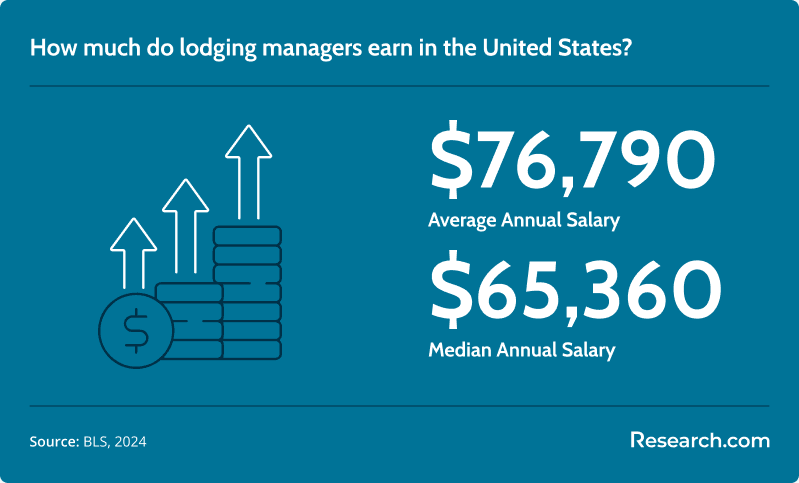
- Lodging managers in the United States earn an average annual salary of $76,790, according to 2024 BLS data.
- Online delivery can make the degree more accessible for students who need to balance school with work, caregiving, military service, or location constraints.
- The degree covers both service-focused and business-focused skills, including guest relations, marketing, finance, human resources, operations, and technology systems.
What can I expect from an online hospitality management degree?
An online hospitality management degree teaches students how hospitality businesses operate and how managers deliver consistent guest experiences while controlling costs, staffing teams, and meeting revenue goals. Most bachelor’s programs include general education, business fundamentals, hospitality operations, and electives or concentrations in areas such as lodging, events, food service, tourism, or revenue management.
- Typical subject areas include hotel operations, restaurant management, hospitality marketing, accounting, event planning, human resources, and tourism management.
- Students build transferable skills in communication, decision-making, problem-solving, leadership, customer service, and data-informed planning.
- Online hospitality management degrees may cost $250 to $750 per credit.
- A bachelor’s degree may take up to 4 years of full-time study to complete.
What you should look for in the online format
| Program feature | Why it matters | What to ask before enrolling |
| Asynchronous coursework | Lets students complete lectures and assignments around work schedules. | Are there required live sessions, and when are they held? |
| Internship or field experience | Hospitality employers value practical exposure to guest-facing and operational environments. | Can online students complete internships near where they live? |
| Hospitality technology training | Hotels, restaurants, and tourism firms rely on reservation systems, revenue tools, customer data, and digital marketing platforms. | Which industry tools, simulations, or software concepts are included? |
| Career services | Resume help, employer connections, and interview coaching can matter when moving into management roles. | Are career services available to online students, not just campus students? |
| Transfer credit policy | Generous transfer options can lower cost and shorten time to graduation. | How many credits can I transfer, and will prior hospitality coursework count? |
Where can I work with an online hospitality management degree?
Hospitality management graduates may work in many service, travel, lodging, entertainment, and food-related settings. The best fit depends on your concentration, prior work experience, location, and willingness to work nontraditional hours.
- Hotels and resorts. Graduates may pursue roles such as hotel manager, front office manager, rooms division supervisor, or operations manager, with responsibilities tied to staffing, guest services, occupancy, and daily property performance.
- Restaurants and catering companies. Food service management roles may involve scheduling, purchasing, menu coordination, service quality, inventory, sanitation standards, and customer satisfaction.
- Event planning and management. Event coordinators and managers organize conferences, weddings, corporate meetings, conventions, banquets, and social events from planning through execution.
- Travel and tourism agencies. Graduates may support itinerary planning, destination management, client service, vendor coordination, and tourism product development.
- Cruise lines. Cruise hospitality roles may involve guest services, onboard activities, entertainment coordination, excursions, and passenger experience management.
- Hospitality consulting firms. Consultants help hospitality businesses improve operations, service quality, pricing, guest satisfaction, training, or profitability.
- Recreation and leisure organizations. Amusement parks, sports facilities, resorts, recreational centers, and attractions often need managers who can coordinate staff, marketing, guest flow, and operations.
- Corporate hospitality. Businesses hire hospitality professionals to manage meetings, executive events, client experiences, retreats, and internal conferences.
- Airlines and transportation services. Customer service and operations roles may focus on passenger support, service standards, safety coordination, and travel experience.
- Academic and training institutions. Experienced professionals may move into teaching, training, student support, or administration in hospitality education settings.
How much can I make with an online hospitality management degree?
Salary depends heavily on role, location, employer size, experience, and whether the job is in lodging, food service, events, tourism, or corporate hospitality. According to 2024 data from the United States Bureau of Labor Statistics (BLS), lodging managers earn an average annual salary of $76,790 and a median annual salary of $65,360. Both figures are higher than the national average of $48,060.
Food service management is another common path. Food service managers earn an average annual salary of $69,580 and a median annual salary of $63,060, according to 2024 BLS data.
| Career area | Relevant BLS role | Average annual salary | Median annual salary |
| Lodging, hotels, resorts, and accommodation | Lodging managers | $76,790 | $65,360 |
| Restaurants, food service, and catering operations | Food service managers | $69,580 | $63,060 |
- Most Affordable Online Hospitality Management Degrees for 2027
- How long does it take to complete an online hospitality management degree?
- How does an online hospitality management degree compare to an on-campus program?
- What is the average cost of an online hospitality management degree?
- What are the financial aid options for students enrolling in an online hospitality management degree?
- What are the prerequisites for enrolling in an online hospitality management degree?
- What courses are typically in an online hospitality management degree?
- What types of specializations are available in online hospitality management degrees?
- How are AI and automation revolutionizing the hospitality industry?
- What emerging trends should hospitality management students be aware of?
- What challenges do online hospitality management students face and how can they overcome them?
- Do online hospitality management programs offer comprehensive career support services?
- Can supplemental business programs enhance your hospitality management degree?
- How to choose the best online hospitality management degree?
- How do accreditation and quality standards affect online hospitality management programs?
- How do industry partnerships enhance the value of an online hospitality management degree?
- How can complementary certifications bolster your hospitality management career?
- What career paths are available for graduates of online hospitality management degrees?
- What is the job market for graduates with online hospitality management degrees?
- Is an online hospitality management degree a worthwhile investment?
- Can project management skills drive success in hospitality management?
- How can you stand out as a hospitality management graduate in a competitive job market?
Most Affordable Online Hospitality Management Degrees for 2027
How do we rank schools?
Because even a low-cost online hospitality management degree can require a major financial commitment, this ranking emphasizes transparent data from established education sources, including IPEDS, College Scorecard, Peterson's Database, and the National Center for Education Statistics (NCES). Readers can review the Research.com ranking methodology for more detail on how school lists are developed.
1. California State University - East Bay Bachelor of Science in Hospitality, Recreation and Tourism
The Bachelor of Science in Hospitality, Recreation and Tourism at California State University - East Bay introduces students to restaurants, hotels, event planning, tourism businesses, and related service sectors. Students may pair the major with minors such as accounting, marketing, or management. The curriculum emphasizes leadership, communication, technology, research, service quality, professional culture, and problem-solving in hospitality settings.
- Program Length: 4 years
- Tracks/Concentrations:
- Event, Planning, and Management
- Food and Beverage
- Lodging, Resort, and Club Management
- Annual Cost: $5,742
- Required Credits to Graduate: 120
- Accreditation: WASC Senior College and University Commission
2. University of the Potomac Bachelor of Science in Hospitality
The Hospitality and Tourism Management program at the University of the Potomac is built for students preparing for management responsibilities in hospitality, tourism, restaurants, and events. Students complete general education, hospitality coursework, and two internships. The program includes leadership, sustainability, management, human resources development, and business strategy components aligned with hospitality industry expectations.
- Program Length: 4 years
- Tracks/Concentrations:
- Hospitality Management
- International Business
- Marketing
- Restaurant & Food Service Management
- Tourism Management
- Annual Cost: $6,750
- Required Credits to Graduate: 120
- Accreditation: Middle States Commission on Higher Education
3. Southeastern Oklahoma State University Bachelor of Business Administration in Hospitality Management Online
The online BBA in Hospitality Management from Southeastern Oklahoma State University prepares students for roles in event planning, hotel and conference management, restaurant and food service, and business development. The AACSB-accredited program is taught by the same faculty who teach campus courses and includes business core classes, general education, and hospitality management coursework across 124 credit hours.
- Program Length: 4 years
- Tracks/Concentrations: None
- Annual Cost: $6,820
- Required Credits to Graduate: 124
- Accreditation: Association to Advance Collegiate Schools of Business
4. Fort Hays State University Bachelor of Science in Tourism and Hospitality Management
The Tourism and Hospitality Management program at Fort Hays State University serves students interested in travel, tourism, hotels, restaurants, cruise ships, conference management, and event planning. The 120-credit curriculum includes general education, business core courses, tourism and hospitality core courses, required electives, and free electives. Students comparing business-related graduate options may also review Research.com’s guide to affordable online master's in economics programs.
- Program Length: 4 years
- Tracks/Concentrations: None
- Annual Cost: $7,283
- Required Credits to Graduate: 120
- Accreditation: Higher Learning Commission
5. Utah Valley University Bachelor of Science in Hospitality Management Online
The online A.S. and B.S. hospitality management programs at Utah Valley University focus on management preparation for hospitality and event planning careers. Students can study areas tied to hotel management, restaurant management, events, and related operations. Tuition varies; out-of-state students pay a flat rate of $270 per credit hour, while Utah residents pay standard in-state tuition.
- Program Length: 4 years
- Tracks/Concentrations:
- Revenue Management
- General Operations
- Foreign Language
- Food & Beverage
- Annual Cost: $7,800
- Required Credits to Graduate: 120
- Accreditation: Association to Advance Collegiate Schools of Business
6. Columbia Southern University B.S. Business Administration – Hospitality and Tourism
The B.S. Business Administration – Hospitality and Tourism at Columbia Southern University combines business administration with hospitality and tourism coursework. Students study management, operations, administration, financial analysis, decision-making, leadership, hotel and tourism management, event planning, sales, and marketing. The program requires 120 credits and allows up to 90 transferable credits.
- Program Length: 4 years
- Tracks/Concentrations:
- Hospitality and Tourism
- Annual Cost: $8,100
- Required Credits to Graduate: 120
- Accreditation: Southern Association of Colleges and Schools Commission on Colleges
7. Missouri State University Bachelor of Applied Science in Hospitality Leadership
The online Bachelor of Applied Science in Hospitality Leadership at Missouri State University is intended for students who already hold an associate degree in hospitality management or culinary arts. The ACPHA-accredited program emphasizes strategic thinking, applied problem-solving, hospitality leadership, and paid internship opportunities while allowing students to complete coursework online.
- Program Length: 4 years
- Tracks/Concentrations: None
- Annual Cost: $8,370
- Required Credits to Graduate: 120
- Accreditation: Accreditation Commission for Programs in Hospitality Administration
8. Ohio University Hospitality Management Online Degree
The online Bachelor of Applied Science in Hospitality Management at Ohio University is structured for students seeking broader opportunities in hospitality and tourism. The program offers asynchronous coursework, advising, and multiple concentration options. Course topics include hotel operations, restaurant operations, customer service, tourism, marketing, leadership, and service quality.
- Program Length: 4 years
- Tracks/Concentrations:
- Event Planning
- Consumer Behavior
- Hospitality Management
- Leadership and Change
- Social Entrepreneurship
- Strategic Marketing
- Service Quality
- Tourism Management
- Annual Cost: $9,270
- Required Credits to Graduate: 120
- Accreditation: Higher Learning Commission
9. Southern Illinois University - Carbondale B.S. in Hospitality, Tourism, and Event Management
The B.S. in Hospitality, Tourism, and Event Management at Southern Illinois University Carbondale emphasizes applied learning through faculty with industry experience, internships, and access to SIU facilities that support commercial cooking and event planning training. Students can pursue minors and an online option, and internships are built into the degree experience.
- Program Length: 4 years
- Tracks/Concentrations: None
- Annual Cost: $9,645
- Required Credits to Graduate: 120
- Accreditation: Accreditation Commission for Programs in Hospitality Administration
10. University of West Florida Global Hospitality and Tourism, B.S. Online
The online Global Hospitality and Tourism B.S. at the University of West Florida covers hospitality financial analysis, travel and tourism management, service experience marketing, leadership, internships, and hands-on learning. The program uses small class sizes and faculty guidance to prepare students for management roles across hotels, events, tourism agencies, and related hospitality sectors.
- Program Length: 4 years
- Tracks/Concentrations: None
- Annual Cost: $10,250
- Required Credits to Graduate: 120
- Accreditation: Association to Advance Collegiate Schools of Business
Key data points for online hospitality management students
- 58% of hospitality managers in the United States have a bachelor's degree; 19% earned an associate degree; 9% have a high school diploma; 8% completed a master's degree; and 6% have other degrees.
- The cost per credit of an online hospitality management program ranges from $250 to $750.
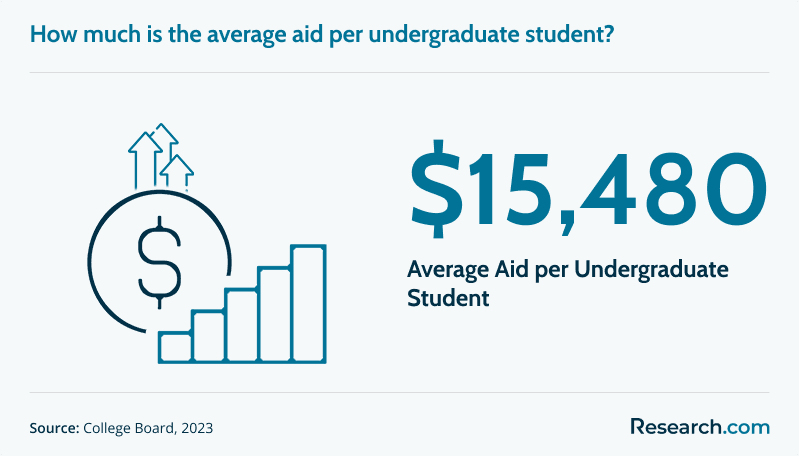
- The average aid per undergraduate student is $15,480.
- The employment of hospitality or lodging managers from 2022 to 2032 is anticipated to increase by 7%.
- The industries that hire the most lodging managers are traveler accommodation (36,330), RV parks and recreational camps (1,320), real estate (920), company management (450), and office administrative services (380).
How long does it take to complete an online hospitality management degree?
A bachelor’s degree in online hospitality management usually takes three to four years of full-time study and commonly requires 120 credits. An associate degree may take about two years, but it generally provides less advanced management preparation than a bachelor’s degree.
Students with transfer credits, prior associate degrees, or accelerated enrollment options may finish faster. Part-time students usually take longer, but that route may be more realistic for working adults or students with family responsibilities.
| Study path | Typical completion time | Best for | Trade-off |
| Full-time bachelor’s degree | Three to four years | Students who can carry a standard course load | Requires consistent weekly study time |
| Associate degree | About two years | Students who want faster entry into the field or a transfer pathway | May not qualify graduates for the same management roles as a bachelor’s degree |
| Accelerated option | Around two years | Students with transfer credits or capacity for heavier course loads | Can be demanding and less flexible week to week |
| Part-time enrollment | Longer than full-time study | Working adults, caregivers, and students managing multiple obligations | Delays graduation and may affect financial aid pacing |
How does an online hospitality management degree compare to an on-campus program?
Online and campus-based hospitality management degrees often cover similar business and hospitality topics, but the learning experience can be very different. Online programs tend to offer flexibility and broader access, while campus programs may provide more structured in-person engagement and immediate access to facilities. Students weighing several online management degrees may also compare delivery models in related fields, such as affordable online MHA programs.
| Factor | Online hospitality management degree | On-campus hospitality management degree |
| Schedule | Often more flexible, especially if courses are asynchronous | Usually follows fixed class times and campus calendars |
| Access | Can be completed from many locations, depending on internship rules | Requires travel to campus and possible relocation |
| Hands-on learning | May use local internships, simulations, projects, and virtual collaboration | May offer labs, campus facilities, demonstrations, and in-person events |
| Networking | Requires more intentional effort through online events, LinkedIn, internships, and associations | Often easier through campus events, faculty interaction, and local employer visits |
| Cost considerations | May reduce commuting, relocation, and housing expenses | May involve campus fees, housing, transportation, and local living costs |
When an online program makes sense
- You already work in hospitality and need a degree that fits around your shifts.
- You cannot relocate for school or commute to campus regularly.
- You are comfortable communicating through learning platforms, video meetings, discussion boards, and email.
- You can arrange internships or applied experiences near your location.
- You prefer online flexibility similar to other remote degree options, such as affordable online elementary education degrees.
When a campus program may be better
- You want frequent in-person interaction with classmates, faculty, and campus recruiters.
- You learn best through scheduled classes and structured routines.
- You want access to campus-based hospitality labs, event spaces, or food service facilities.
- You are trying to build a local hospitality network in the school’s region.
What is the average cost of an online hospitality management degree?
Online hospitality management degree costs vary widely. Some programs charge around $6,000 annually, while others cost over $50,000 per year. Tuition commonly ranges from $250 to $750 per credit, with higher-profile or private institutions often charging more.
Because most bachelor’s programs require about 120 credits, students should evaluate the full program cost rather than only the per-credit price. Fees, books, technology charges, internship travel, transfer credit limits, and residency rules can change the real cost.
Undergraduate degrees are common in this field. According to 2024 Zippia data, most hospitality managers in the United States hold a bachelor’s degree. The chart below provides more detail on the educational attainment of U.S. hospitality managers.
Cost factors students often overlook
| Cost factor | Why it matters | How to reduce the impact |
| Transfer credit limits | A school may not accept all prior credits, which can add courses and cost. | Request an official transfer evaluation before committing. |
| Online fees | Technology, distance learning, or course fees may raise the bill. | Ask for the total cost of attendance, not just tuition. |
| Internship expenses | Transportation, uniforms, background checks, or location requirements may create extra costs. | Confirm whether local placements are allowed. |
| Part-time enrollment | Taking fewer courses can stretch costs over more terms. | Ask how part-time pacing affects aid and graduation timeline. |
| Out-of-state tuition | Some public universities charge different rates by residency. | Look for online programs with flat-rate tuition when available. |
What are the financial aid options for students enrolling in an online hospitality management degree?
Students can lower the cost of an online hospitality management degree through federal aid, state aid, school-based aid, scholarships, employer support, and other funding options. Even affordable programs may still be difficult to pay for without assistance. The average aid per undergraduate student is $15,480.
Students comparing online professional degrees may find similar cost-planning issues across other fields, including affordable online educational leadership degrees.
- Federal aid. The federal aid process is usually the first step. Students should submit the FAFSA to determine eligibility for grants, federal loans, and work-study opportunities.
- State and institutional aid. Some states and colleges offer grants or scholarships based on residency, financial need, academic performance, or program of study.
- Scholarships. Hospitality students may find merit-based, need-based, school-specific, and industry-related scholarships. These do not typically require repayment.
- Employer tuition assistance. Working students should ask hotel groups, restaurants, resorts, airlines, event companies, and tourism employers whether tuition reimbursement or education benefits are available.
- Additional funding options. Private loans, military and veterans benefits, crowdfunding, and income-share agreements may be available, but students should review repayment terms carefully before using them.
Questions to ask a financial aid office
- What is the total estimated cost for the full degree, including fees?
- Will online students qualify for the same institutional scholarships as campus students?
- How will transfer credits affect my aid package?
- Are there hospitality-specific scholarships or employer partnership discounts?
- What happens to my aid if I enroll part time or take a semester off?
What are the prerequisites for enrolling in an online hospitality management degree?
Admissions requirements vary, but most online hospitality management bachelor’s programs ask applicants to show that they are ready for undergraduate study. The process is usually comparable to other online bachelor’s degrees, including an affordable online software engineering degree.
- High school diploma or GED. Applicants typically need proof of high school completion or an equivalent credential.
- Minimum GPA. Some schools set minimum GPA expectations, often ranging from 2.5 to 3.0 on a 4.0 scale. Certain programs may also review math or English preparation.
- Standardized test scores. Some institutions are test optional or waive SAT or ACT requirements for adult learners and transfer students, while others may still request scores.
- Application form. Students usually apply through the school’s online portal or a shared application system.
- Transcripts. Official high school transcripts and transcripts from any college previously attended are commonly required.
- Personal statement or essay. Some programs ask applicants to explain their interest in hospitality, relevant experience, and career goals.
- Letters of recommendation. These may be optional or required, depending on the school.
- Resume or work experience. Programs serving working adults may ask for a resume or may value prior hospitality, tourism, restaurant, retail, or customer service experience.
What courses are typically in an online hospitality management degree?
Hospitality management programs combine service operations with business training. The curriculum is less broad than many general business programs, but it still covers management, accounting, marketing, technology, law, and customer experience. Students comparing broader business options may also review affordable MBA programs.
- Hospitality law. Covers contracts, liability, risk management, employment issues, and legal responsibilities in hospitality operations.
- Hospitality marketing. Explores branding, promotions, customer segmentation, digital campaigns, destination marketing, and guest acquisition.
- Hospitality accounting. Introduces financial statements, budgeting, cost control, forecasting, and hospitality-specific financial decisions.
- Human resources management in hospitality. Focuses on hiring, scheduling, training, retention, labor relations, and supervision in service environments.
- Hospitality information systems. Examines the systems used to support reservations, guest profiles, property operations, payments, and reporting.
- Hotel management. Covers rooms division, front office operations, housekeeping, guest services, revenue management, and property performance.
- Restaurant management. Includes food service systems, kitchen coordination, menu planning, inventory, sanitation, staffing, and customer service.
- Event management. Prepares students to plan, budget, market, coordinate, and evaluate events.
- Travel and tourism management. Introduces destination planning, tour operations, travel services, and tourism marketing.
What types of specializations are available in online hospitality management degrees?
Specializations help students align the degree with a specific part of the hospitality field. Not every school offers every concentration, so applicants should compare specialization options before applying.
- Hotel and lodging management. Focuses on hotels, resorts, guest services, front office work, housekeeping coordination, property systems, and revenue management.
- Food and beverage management. Prepares students for restaurant, bar, catering, and food service leadership through coursework in menu planning, food safety, beverage operations, purchasing, and cost control.
- Event planning and management. Covers logistics, budgeting, marketing, vendor coordination, risk planning, and execution for weddings, corporate events, conferences, and festivals.
- Resort and spa management. Emphasizes wellness services, guest relations, recreation, amenities, and operations in resort and spa environments.
- Casino management. Introduces gaming operations, casino marketing, customer service, floor management, and regulatory compliance.
- Sustainable hospitality management. Covers environmental practices, sustainable tourism, responsible operations, and corporate social responsibility. Students interested in the environmental side of hospitality may also compare affordable online environmental science programs.
- Luxury hospitality management. Focuses on premium guest service, high-end property management, personalized experiences, and luxury brand standards.
- Hospitality marketing and sales. Develops skills in digital marketing, brand management, sales strategy, customer relationships, and booking growth.
How are AI and automation revolutionizing the hospitality industry?
AI and automation are changing how hotels, restaurants, travel companies, and event venues interact with guests and manage operations. Hospitality students do not need to become software engineers, but they do need to understand how technology affects pricing, staffing, service delivery, marketing, and customer expectations.
Hotels and resorts increasingly use AI-enabled chatbots, virtual assistants, and automated messaging to answer questions, support bookings, personalize recommendations, and respond to guest requests. These tools can reduce wait times, but they also require managers who know when automation improves service and when human support is still necessary.
Smart rooms, voice-activated controls, automated lighting, smart thermostats, and digital check-in systems are also becoming more common in lodging. On the operations side, predictive analytics can help forecast demand, adjust room pricing, plan staffing, and manage resources more efficiently.
Automation may also affect tasks such as room service delivery, check-in/check-out, concierge support, and back-office workflows. Students who want broader leadership preparation after the bachelor’s level may compare options such as a low-cost online master's degree, but they should choose graduate study only when it fits their career goals and budget.
What emerging trends should hospitality management students be aware of?
Hospitality is shaped by shifting guest expectations, technology adoption, sustainability concerns, and changing travel behavior. Students should follow these trends because they influence hiring needs and the skills employers value.
- Sustainability. Hotels and tourism operators are paying more attention to energy use, waste reduction, local sourcing, and responsible travel practices. Students interested in destination-based careers may also explore a broader hospitality and tourism degree.
- Health and wellness. Wellness retreats, healthier menus, spa services, fitness programming, and mental well-being experiences are increasingly part of hospitality offerings.
- Digital guest experience. Contactless tools, mobile check-in, virtual tours, digital concierge services, and AI-based personalization are changing how guests research, book, and experience hospitality services.
- Niche and experiential travel. Adventure tourism, luxury glamping, food-focused travel, cultural tourism, and specialized events create opportunities for graduates who understand targeted markets.
- Data-informed management. Pricing, demand forecasting, marketing, inventory, and staffing decisions increasingly depend on data interpretation.
What challenges do online hospitality management students face and how can they overcome them?
Online hospitality programs can be flexible, but students must be proactive to get the full value of the degree. The biggest challenges are usually time management, limited in-person networking, technology comfort, and finding relevant hands-on experience.
| Common challenge | Why it can hurt progress | Better approach |
| Weak time management | Online courses can be easy to postpone when work shifts change. | Create weekly study blocks and treat assignment deadlines like work obligations. |
| Limited networking | Students may miss casual campus connections and employer events. | Attend virtual career fairs, join hospitality associations, use LinkedIn, and build relationships during internships. |
| Not enough applied experience | Hospitality hiring often values real operational exposure. | Seek internships, part-time roles, volunteer event work, or projects with local hospitality employers. |
| Technology issues | Learning platforms, video tools, and online exams can create frustration. | Test systems early, use technical support, and keep backup internet access when possible. |
| Skill gaps outside hospitality | Managers often need business, communication, and digital skills beyond core hospitality courses. | Use electives, certificates, workshops, or supplemental coursework. For lifelong learners comparing online options, Research.com also covers online college courses for seniors. |
Do online hospitality management programs offer comprehensive career support services?
Many online hospitality management programs provide career support, but the quality and availability vary by school. Strong programs make services available to online students and do not limit employer engagement to campus learners.
- Virtual career advising and resume reviews
- Mock interviews and job search coaching
- Internship placement guidance
- Employer webinars and virtual career fairs
- Alumni networking opportunities
- Industry-specific job boards or hospitality employer partnerships
Students who want broader management training beyond hospitality may also compare an online business degree, especially if they are considering corporate operations, entrepreneurship, or multi-unit management.
Can supplemental business programs enhance your hospitality management degree?
Hospitality managers frequently make business decisions involving budgets, pricing, marketing, staffing, vendors, customer data, and long-term strategy. Supplemental business education can help if your degree is highly specialized or if you plan to move into senior leadership.
A business credential may be most useful for students targeting regional management, hotel ownership, restaurant group leadership, consulting, or corporate hospitality. Some professionals later consider options such as a one year MBA in USA, but graduate study should be weighed against cost, time, and expected career benefit.
How to choose the best online hospitality management degree?
The best online hospitality management degree is not automatically the cheapest or highest-ranked option. It is the program that matches your career goal, budget, schedule, transfer credits, location, and need for hands-on learning. Students comparing professional online programs may use a similar decision process when reviewing fields such as affordable online SLP programs.
- Check accreditation first. Confirm that the institution is properly accredited. For hospitality-specific quality indicators, look for programs accredited by organizations such as the Accreditation Commission for Programs in Hospitality Administration (ACPHA) or business accreditation such as AACSB where applicable.
- Match the curriculum to your career target. A future hotel manager should prioritize lodging, revenue, and operations courses, while an aspiring event planner should look for event logistics, budgeting, vendor management, and applied projects.
- Verify hands-on learning options. Ask whether internships, capstones, practicums, or local field placements are required or available.
- Compare total cost, not just tuition. Include online fees, textbooks, residency pricing, transfer credit limits, and internship expenses.
- Evaluate student support. Online learners should have access to advising, tutoring, technology help, library resources, and career services.
- Review graduation and transfer policies. Confirm how many credits can transfer and whether the school accepts associate degrees, military credits, prior learning, or industry training.
How do accreditation and quality standards affect online hospitality management programs?
Accreditation matters because it signals that a school or program has gone through an external quality review. For students, accreditation can affect transfer credit, employer confidence, graduate school eligibility, and access to federal financial aid. Program-specific accreditation can also indicate that the curriculum aligns with hospitality education standards.
Students considering graduate business study later may also review options such as a low-cost online MBA with no GMAT requirement, but bachelor’s degree accreditation should be checked first.
How to verify accreditation
- Look for the institution’s accreditation page on the school website.
- Confirm the accreditor name with an official source rather than relying only on marketing language.
- Check whether the program has hospitality-specific accreditation, business accreditation, or only institutional accreditation.
- Ask admissions whether the degree is eligible for federal financial aid.
- Ask whether credits are typically accepted by other accredited institutions.
How do industry partnerships enhance the value of an online hospitality management degree?
Industry partnerships can make an online hospitality degree more career-focused. Partnerships with hotels, resorts, restaurants, tourism boards, event companies, and hospitality associations may create access to internships, case studies, guest lectures, mentorship, and employer networking.
Students should ask whether partnerships lead to actual student opportunities or are mainly promotional. Those considering broader executive leadership preparation may also compare accelerated graduate options such as the quickest MBA online.
How can complementary certifications bolster your hospitality management career?
Certifications can help graduates demonstrate targeted skills beyond the degree. Depending on your career path, useful areas may include food safety, revenue management, digital marketing, project management, event planning, data analytics, or guest experience technology. Certifications are not a substitute for experience, but they can strengthen a resume when they match the job you want.
Hospitality managers who coordinate renovations, facility improvements, venue buildouts, or large events may also benefit from project and resource-planning skills. Students comparing adjacent operational fields can review fast online construction management programs for context on budgeting, scheduling, and resource coordination in built environments.
What career paths are available for graduates of online hospitality management degrees?
Graduates may move into lodging, food service, events, tourism, resorts, corporate hospitality, recreation, and related service fields. Prior work experience can strongly influence the level of role a graduate qualifies for immediately after completing the degree.
| Career path | Typical responsibilities | Best-fit specialization or experience |
| Hotel manager | Oversees property operations, guest services, housekeeping, revenue, staffing, and service standards. | Hotel and lodging management; front office or rooms experience |
| Front office manager | Manages reservations, check-in/check-out, guest concerns, front desk staff, and service recovery. | Lodging operations; customer service experience |
| Housekeeping manager | Supervises room cleanliness, housekeeping schedules, standards, supplies, and staff performance. | Hotel operations; supervisory experience |
| Revenue manager | Uses demand, pricing, occupancy, and market data to support room revenue decisions. | Revenue management; analytics and lodging experience |
| Event coordinator | Plans event timelines, vendors, budgets, layouts, guest needs, and day-of logistics. | Event planning and management; internship or venue experience |
| Restaurant manager | Manages service, staffing, purchasing, inventory, food safety, customer satisfaction, and cost control. | Food and beverage management; restaurant work experience |
| Convention services manager | Coordinates meetings, conferences, room blocks, client communication, and event execution. | Event planning, hotel sales, and group services |
| Spa manager | Supervises spa services, scheduling, staff, customer experience, and facility operations. | Resort and spa management; wellness services experience |
| Event planner | Plans weddings, corporate events, festivals, conferences, and private functions for clients. | Event planning; vendor and budget management |
Students who decide hospitality is not the right fit can compare other affordable online degree paths, including affordable online computer science associate programs, affordable online sociology programs, and affordable online communications degrees.
What is the job market for graduates with online hospitality management degrees?
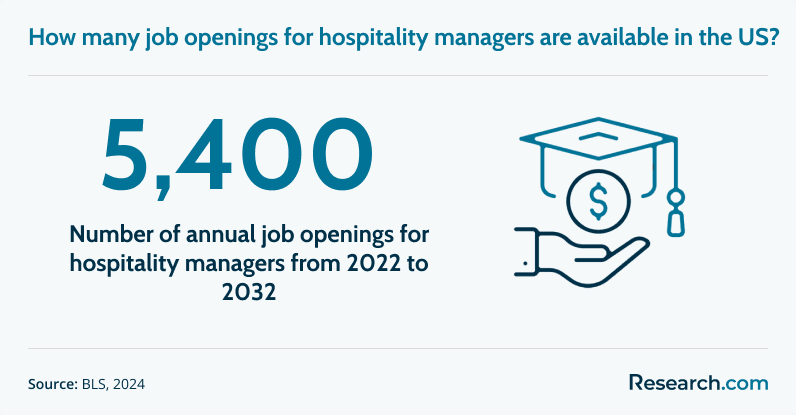
According to 2024 BLS data, employment of hospitality or lodging managers from 2022 to 2032 is anticipated to increase by 7%, compared with the national average of 3%. Graduates and job seekers can expect 5,400 openings each year during that period.
The industries that hire the most lodging managers are traveler accommodation (36,330), RV parks and recreational camps (1,320), real estate (920), company management (450), and office administrative services (380).
Job prospects can vary by region, tourism activity, business travel patterns, food service demand, and the health of local lodging and event markets. Graduates who combine the degree with real hospitality work experience, technology skills, and strong references may be more competitive than those relying on the credential alone.
Is an online hospitality management degree a worthwhile investment?
An online hospitality management degree may be worth it if it helps you qualify for management roles, advance from hourly or supervisory work, or move into a specialized area such as revenue management, events, tourism, or food service leadership. It may be less worthwhile if the program is expensive, lacks accreditation, offers weak career support, or does not include practical experience.
| Choose this degree if... | Consider another option if... |
| You already work in hospitality and need a flexible bachelor’s degree to advance. | You dislike guest-facing environments, irregular schedules, or high-pressure service work. |
| You want business training tied specifically to hotels, restaurants, tourism, events, or resorts. | You want a broader business degree with less focus on hospitality operations. |
| You can access internships, employer tuition assistance, or transfer credits that reduce cost. | The total cost is high and the school cannot explain career outcomes or support services. |
| You are interested in leadership, customer experience, operations, and service quality. | You prefer technical, clinical, or research-heavy work with little customer interaction. |
Students mainly seeking the lowest-cost online bachelor’s options can also compare the cheapest online college bachelor degree listings before committing to a hospitality-specific path.
Can project management skills drive success in hospitality management?
Project management skills are highly relevant in hospitality because managers frequently coordinate events, renovations, service changes, technology rollouts, staff training, vendor timelines, budgets, and guest experience improvements. These projects often involve multiple teams and strict deadlines.
Students who want to strengthen planning, budgeting, scheduling, and team leadership skills may benefit from project management coursework or credentials. For graduate-level comparisons, Research.com also covers the cheapest online project management MBA.
How can you stand out as a hospitality management graduate in a competitive job market?
A degree can open doors, but hospitality employers often look for evidence that candidates can lead teams, solve service problems, work under pressure, and improve the guest experience. The strongest graduates leave school with experience, references, technical familiarity, and a clear career direction.
- Gain experience before graduation. Internships, part-time jobs, seasonal hospitality work, volunteer event roles, and campus or community event planning can all demonstrate readiness.
- Build measurable achievements. Instead of listing duties only, track results such as guest satisfaction improvements, event attendance, cost savings, training outcomes, or upselling performance when available.
- Strengthen soft skills. Communication, conflict resolution, adaptability, cultural awareness, and service recovery are essential in hospitality management.
- Learn the technology side. Become comfortable with reservation systems, customer relationship management concepts, digital marketing, scheduling tools, revenue data, and online review platforms.
- Use certifications strategically. Credentials in food safety, supervision, event planning, revenue management, or digital marketing can help when aligned with your target role.
- Network intentionally. Join hospitality associations, attend virtual or local industry events, connect with alumni, and maintain relationships from internships.
- Customize applications. A resume for hotel operations should look different from one for event planning, restaurant leadership, or tourism marketing.
Common mistakes to avoid when choosing an online hospitality management degree
| Mistake | Why it is risky | Better decision |
| Choosing a program without checking accreditation | It can affect financial aid, transfer credits, employer trust, and graduate study options. | Verify institutional and, when relevant, program-specific accreditation before applying. |
| Comparing tuition only | Fees, books, transfer limits, and internship expenses can change affordability. | Ask for the total cost of attendance and full degree estimate. |
| Ignoring hands-on learning | Hospitality management is practical, and employers value experience. | Prioritize internships, projects, simulations, or employer-connected learning. |
| Assuming online students get the same support | Some schools offer stronger services to campus students than online learners. | Ask specifically about online advising, career services, tutoring, and internship help. |
| Picking a specialization too early without researching jobs | A narrow concentration may not fit your local market or long-term goals. | Review job postings and speak with professionals before choosing electives. |
| Expecting salary outcomes to be guaranteed | Pay varies by role, region, experience, employer, and performance. | Use BLS data as a benchmark, then research local job postings and employer expectations. |
Key Insights
- An online hospitality management degree is best for students who want flexible preparation for management roles in hotels, restaurants, events, tourism, resorts, and related service industries.
- The strongest programs combine hospitality operations with business fundamentals, technology exposure, internships or applied projects, and accessible career services.
- Cost varies widely: online hospitality management programs may cost $250 to $750 per credit, and annual program costs can range from around $6,000 to over $50,000.
- According to 2024 BLS data, lodging managers earn an average annual salary of $76,790, while food service managers earn an average annual salary of $69,580.
- Employment of hospitality or lodging managers from 2022 to 2032 is anticipated to increase by 7%, with 5,400 openings each year during that period.
- Accreditation, transfer credit, total cost, specialization fit, and hands-on learning should carry more weight than rankings alone.
- AI, automation, contactless service, sustainability, wellness, and data-informed decision-making are changing what hospitality managers need to know.
- The degree is most worthwhile when it connects directly to your target role and when you graduate with relevant experience, industry contacts, and practical skills—not just coursework.
References
- BLS (2024, April 3). 11-9051 Food service managers. BLS Occupational Employment and Wage Statistics
- BLS (2024, April 3). 11-9081 Lodging managers. BLS Occupational Employment and Wage Statistics
- BLS (2024, April 17). Food service managers. BLS Occupational Outlook Handbook
- BLS (2024, April 17). Lodging managers. BLS Occupational Outlook Handbook
- College Board (2023). Trends in student aid: Highlights. College Board
- Statista (2024, April). Number of employees in the hospitality and leisure industry in the United States from 2009 to 2023. Statista
- Zippia (2024, April 5). Hospitality manager education requirements. Zippia
- Statista hospitality employment data is also available through this Statista industry employment series.
Other Things You Should Know About Online Hospitality Management Degrees
Many programs require a supervised internship or practicum, often worth 3 to 6 credits. Some schools let students substitute prior industry experience, but most still require documented hours in lodging, food service, or event operations before graduation.
In 2027, students can access various financial aid options for affordable online hospitality management degree programs. These include federal grants, scholarships, work-study programs, and student loans. Additionally, many institutions offer their own scholarships and grants based on merit or financial need, making education even more accessible.
Admission requirements typically include a high school diploma or equivalent, a minimum GPA of 2.5, and completion of an application form. Some programs may also require SAT or ACT scores. Be sure to check specific programs for additional criteria.