2027 One-Year Online Management Master's Degree Programs: Accelerated Options, Costs & Outcomes

Co-Founder and Chief Data Scientist
A one-year online management master's degree can be a practical shortcut for professionals who need graduate-level business credibility without stepping away from work for two years. The main question is not simply whether the format is fast. It is whether the program is accredited, affordable, manageable with your schedule, and strong enough to support the career move you want.
These programs are especially relevant for career changers, early-career professionals moving toward leadership, and working adults who already have field experience but need formal management training. Recent data shows enrollment in accelerated online management programs grew by over 25% from 2020 to 2023, reflecting high demand among career changers.
This guide explains how one-year online management master's programs work, what they usually cost, how admissions and testing requirements are changing, what students study, and how to evaluate whether the accelerated format is worth the workload and expense.
Key Things to Know About One-Year Online Management Master's Degree Programs
- Online management master's programs offer flexible scheduling, ideal for recent graduates and working professionals balancing jobs and studies without relocating.
- Accelerated one-year formats enable rapid skill acquisition, helping career changers enter new fields faster while maintaining rigorous academic standards.
- International applicants benefit from global networking opportunities, accessing diverse professional connections and cross-cultural insights critical for today's multinational business landscape.
What Exactly Is a One-Year Online Management Master's Degree Program, and How Does It Differ from a Standard Graduate Format?
A one-year online management master's degree is an accelerated graduate program designed to be completed in about 12 months. Instead of spreading courses across two years or allowing a slower part-time pace, these programs compress the academic calendar through continuous enrollment, heavier course loads, shorter terms, or cohort-based sequencing.
The main difference is intensity. A standard graduate format usually gives students more breaks, more time between major assignments, and greater flexibility to reduce course loads. A one-year format moves quickly and requires students to stay on schedule from the first week. The trade-off is clear: students finish faster, but they have less room for delays, work emergencies, or extended review time.
Examples of this type of format include Northeastern University's Online Master of Science in Management, University of Florida's program, and the University of Southern California's cohort-based online master's. These programs typically combine structured online coursework with applied projects, faculty interaction, and student support services.
- Program length: A one-year program is built for completion in about 12 months, while standard master's programs often take two or more years.
- Course pacing: Accelerated formats may use three accelerated 14-week terms, compressed sessions, or continuous enrollment to reduce downtime.
- Workload: Students should expect a more concentrated academic schedule with frequent deadlines and limited recovery time between courses.
- Best fit: The format works best for disciplined students with stable weekly study time, clear career goals, and comfort with online learning.
- Potential drawback: Students who need a highly flexible pace, frequent breaks, or lighter course loads may find a standard program more sustainable.
Before applying, compare total cost, accreditation, course schedule, and career services rather than focusing only on speed. Students comparing different online graduate options can also review affordability resources such as online AI degree listings to see how tuition structures vary across fields.
Which Accredited Universities Currently Offer Legitimate One-Year Online Management Master's Programs?
Legitimate one-year online management master's programs are offered by institutions with recognized accreditation. At minimum, students should look for regional accreditation from an agency recognized by the U.S. Department of Education. In business and management, specialized accreditation such as AACSB can provide an additional signal of program quality, faculty standards, and employer recognition.
Accreditation matters because it affects credit transfer, employer confidence, eligibility for federal financial aid, and future doctoral or professional study. An unaccredited or weakly accredited program may be cheaper or easier to enter, but it can carry serious long-term risks.
- University of Southern California (Western Region): Offers the USC Marshall School of Business accelerated online Master of Science in Management and Organization program, completed in approximately 12 months. Tuition is around $63,000 with AACSB accreditation.
- University of North Carolina at Chapel Hill (Southern Region): The Kenan-Flagler Business School's 12-month online Master of Management program costs about $47,000 and has AACSB accreditation. It is tailored for early-career professionals.
- University of Michigan-Flint (Midwestern Region): Provides a flexible accelerated online Master of Science in Management program with tuition near $15,000. The institution holds regional accreditation from the Higher Learning Commission.
- Rutgers University (Northeastern Region): Rutgers Business School's online Master of Science in Management can be completed within 12 months for roughly $34,000. The program benefits from AACSB accreditation.
- University of Texas at Dallas (Southwestern Region): UT Dallas Naveen Jindal School of Management offers a one-year online Master of Science in Management Science and Engineering with tuition near $40,000. AACSB accreditation confirms its quality.
Use Peterson's, the U.S. Department of Education's College Navigator, and each school's official accreditation page to verify claims before applying. Do not rely only on marketing language such as “recognized,” “approved,” or “career-focused.” Confirm the accreditor, the institution, and, when relevant, the business school or program-level accreditation.
Once accreditation is verified, compare admissions selectivity, curriculum depth, faculty credentials, student support, and graduate outcomes. Students exploring adjacent accelerated fields may also compare management programs with accelerated online psychology programs to understand differences in pacing and career alignment.
How Much Does a One-Year Online Management Master's Program Typically Cost in Tuition and Fees?
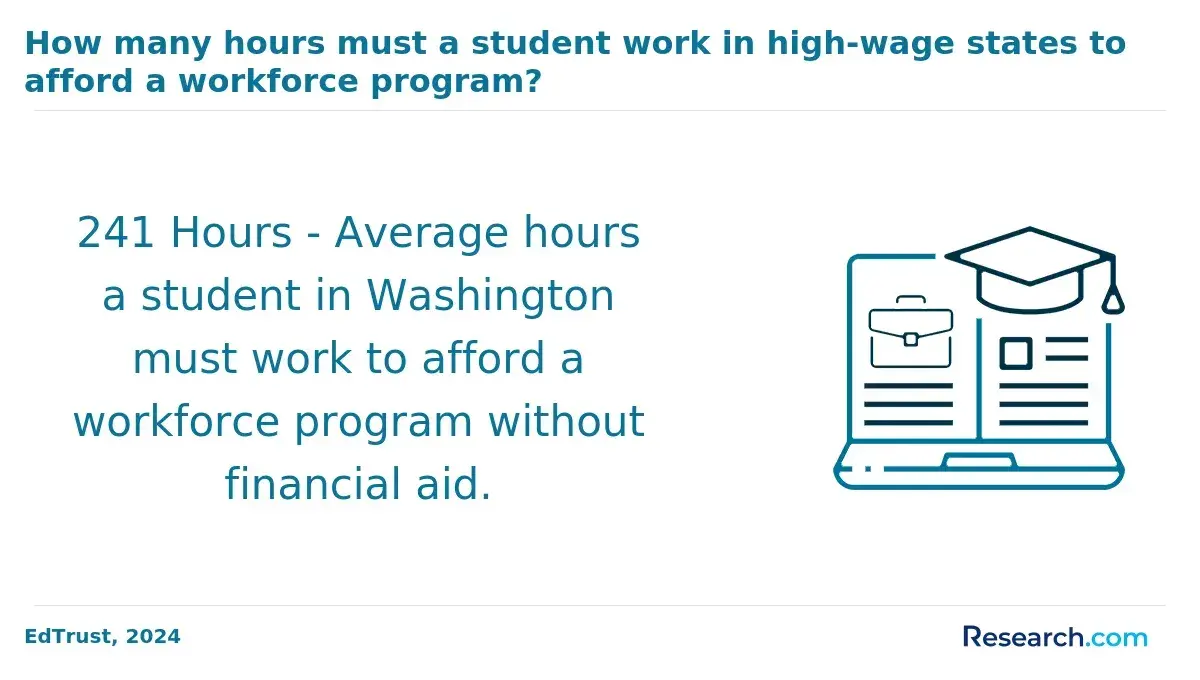
Tuition for one-year online management master's programs varies widely. Public universities typically charge between $15,000 and $35,000, with lower rates often available for in-state students. Private universities usually range from $30,000 to $60,000. The sticker price is only part of the decision, however. Students should calculate the full cost of attendance before comparing programs.
The accelerated format can reduce the time spent in school, but it can also concentrate expenses into a single year. That matters for cash flow, employer reimbursement limits, loan planning, and whether a student can continue working while enrolled.
- Technology and platform fees: Many programs charge fees for online learning platforms, software access, video conferencing, and technical support. These can add $500 to $1,500 annually.
- Course materials and licenses: Textbooks, cases, software licenses, and other learning tools generally range between $1,000 and $2,000 depending on the curriculum.
- Examination and proctoring fees: Some programs charge $50 to $150 per proctored test. Ask how many proctored assessments are required across the program.
- Residency or campus immersion: A mostly online program may still include short on-campus residencies or immersion sessions, which may cost an extra $1,000 to $3,000 for travel and accommodation per visit.
- Opportunity cost: Even online students may need to reduce overtime, travel, freelance work, or family commitments during the program.
Ask each school for a written cost-of-attendance estimate that separates tuition, mandatory fees, optional fees, books, software, residency costs, and estimated loan fees. Since over half of graduate students obtain financial assistance, it is also important to compare net cost after scholarships, employer benefits, and federal loan eligibility.
A professional who enrolled in an online management master's program to change careers said the academic workload was only one part of the challenge. “I was constantly budgeting not just time, but also every extra fee,” he recalled, pointing to proctoring charges and occasional residency travel as costs he had not fully anticipated. His advice to applicants was to “dig deep into the fine print” before committing.
What Financial Aid and Scholarship Options Are Available for One-Year Management Master's Students?
Students in accelerated online management master's programs may be eligible for several forms of aid, including federal loans, institutional scholarships, departmental awards, and employer tuition reimbursement. The challenge is timing. A one-year schedule leaves little room to fix aid problems after classes begin, so applicants should start the financial aid process early.
Graduate students commonly use Direct Unsubsidized Loans and Grad PLUS Loans. Work-study may be available in some cases, but it can be less practical for students in an intensive one-year format. Submit the FAFSA early, especially if the program has nontraditional start dates or multiple annual intakes.
- Federal financial aid: Many accelerated students qualify for unsubsidized and PLUS loans, but borrowing should be weighed against expected career benefits and repayment obligations.
- Merit-based scholarships: Schools may award funding for academic performance, leadership, professional achievement, or strong admissions profiles.
- Departmental fellowships: Some management or business departments offer limited fellowships that cover full or partial tuition. These awards are usually competitive.
- Employer tuition reimbursement: Working students should ask whether their employer covers graduate business education, whether preapproval is required, and whether they must remain employed after graduation.
- External scholarships: Tools such as the College Board's Scholarship Search can help identify graduate-level funding outside the university.
Nearly 60% of students in such accelerated programs receive some form of financial aid, which makes funding strategy a core part of program selection. Do not compare schools by tuition alone. Compare net price, scholarship renewability, loan requirements, billing schedule, and whether employer reimbursement is paid upfront or after course completion.
Students comparing online graduate affordability across disciplines may also find broader cost context in resources such as guides to online engineering degree options.
What GPA, Prerequisites, and Professional Experience Do One-Year Management Master's Programs Require?
Many one-year online management master's programs typically look for a minimum undergraduate GPA near 3.0 on a 4.0 scale. Admissions committees usually review GPA in context, including the applicant's major, institution, course difficulty, grade trends, and professional record.
Because accelerated programs move quickly, admissions teams want evidence that applicants can handle graduate-level work from the start. That evidence may come from academic performance, quantitative coursework, leadership experience, professional certifications, or strong recommendations.
- Common prerequisites: Applicants may be expected to have prior coursework in accounting, economics, organizational behavior, and statistics.
- Leveling coursework: Students missing prerequisites may need to complete preparatory or leveling courses before enrollment or during the early part of the program.
- Professional experience: Work history can strengthen an application, especially when it shows leadership, project ownership, client responsibility, budgeting, analytics, or team supervision.
- Testing flexibility: Extensive work experience can sometimes offset the need for standardized tests such as the GRE or GMAT.
- Program variation: Requirements differ by school and concentration, so applicants should confirm each program's exact standards rather than assuming one common admissions model.
Over 60% of accelerated master's programs now accept professional experience in place of standardized exam scores, reflecting increasing admissions flexibility. Even so, applicants with lower GPAs or limited business coursework should be prepared to explain readiness through essays, recommendations, recent coursework, or test scores if required.
One graduate described entering the process with concerns about an uneven undergraduate record and missing prerequisites. She found that the admissions review gave weight to her professional achievements while still requiring her to close academic gaps. She said the prerequisite work was demanding alongside a full-time job, but it helped confirm that she was ready for the program's pace.
Are GRE or GMAT Scores Still Required for Accelerated Online Management Master's Admissions?
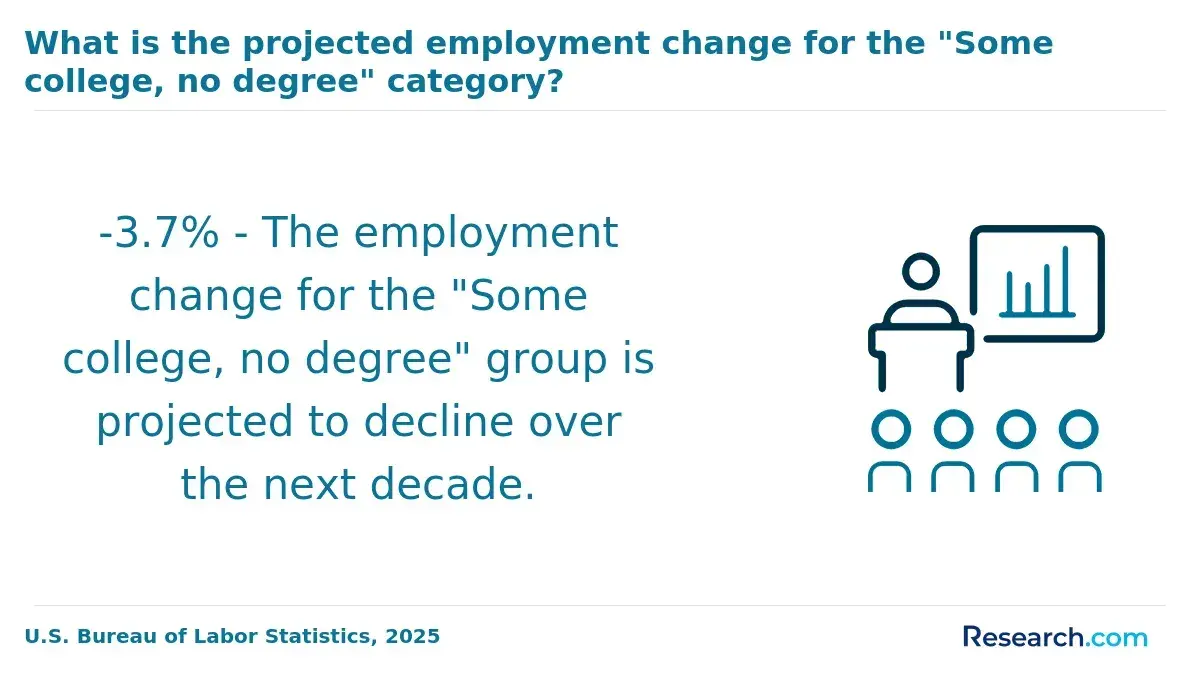
GRE and GMAT requirements are less universal than they once were. Many accelerated online management master's programs now use test-optional policies, test waivers, or holistic admissions reviews that place more emphasis on undergraduate performance, work experience, leadership evidence, and professional credentials.
According to a 2023 Graduate Management Admission Council survey, over 60% of U.S. business schools have adopted test-optional policies for at least some of their master's programs, reflecting this notable post-pandemic trend.
That does not mean testing is irrelevant. Some programs still require GRE or GMAT scores, and others may ask for scores from applicants with limited work experience, weaker GPAs, or insufficient quantitative preparation. In those cases, a strong score can help demonstrate readiness for finance, analytics, economics, or strategy coursework.
- Test-optional admissions: Applicants may choose whether to submit scores, with the rest of the application carrying greater weight.
- Test waivers: Programs may waive scores for applicants with three to five years of relevant management experience, strong academic records, or recognized industry certifications.
- Required testing: Some schools still require scores for all applicants or for applicants who do not meet GPA or experience thresholds.
- Portfolio-based review: Leadership roles, project outcomes, certifications, promotions, and writing samples can help replace or reduce reliance on test scores.
- Best strategy: Check the official admissions page and ask whether submitting a score would strengthen, weaken, or have no effect on your application.
If you have a strong score, it may still be worth submitting where allowed. If your score is weak and the program is truly test-optional, focus instead on a clear career statement, strong recommendations, evidence of quantitative readiness, and a polished professional resume.
How Are Courses Structured and Delivered in a One-Year Online Management Master's Program?
One-year online management master's programs usually combine asynchronous coursework with scheduled live components. Asynchronous learning gives students access to lectures, readings, discussion boards, and assignments on their own schedule. Synchronous sessions, such as live classes, presentations, team meetings, or faculty discussions, create structure and interaction.
Terms in these programs are typically compressed to 12-16 weeks, with students taking 9 to 12 credit hours per term, equivalent to three or four courses simultaneously. This structure can require about 20 to 25 hours of study weekly, including readings, assignments, discussions, team projects, and exam preparation.
- Asynchronous content: Recorded lectures and online modules support students who work full-time or live in different time zones.
- Synchronous meetings: Live sessions help students practice communication, leadership, presentations, and group decision-making.
- Frequent deadlines: Assignments are often due every one to two weeks to keep students moving through the compressed schedule.
- Group projects: Students may work in virtual teams, which mirrors modern workplace collaboration but can create scheduling challenges.
- Capstone, practicum, or thesis: Many programs require a final applied project during the last term to connect coursework with real management problems.
Over 65% of students in accelerated management programs cite scheduling flexibility and interactive components as key contributors to successful learning outcomes. Still, applicants should ask how often live attendance is required, whether sessions are recorded, how group work is managed, and what happens if a work obligation conflicts with a required meeting.
What Core Curriculum and Specialization Tracks Are Covered in a One-Year Online Management Master's Degree?
A one-year online management master's degree usually emphasizes broad managerial competence rather than deep specialization in a single technical field. The core curriculum commonly includes organizational behavior, financial analysis, marketing management, leadership development, and strategic planning. These courses are designed to help students understand how organizations make decisions, allocate resources, manage people, and compete.
Because the timeline is compressed, students should expect fewer electives than they might find in a longer program. The best programs compensate by making assignments practical, case-based, and tied to workplace problems.
- Leadership and organizational behavior: Focuses on motivation, team dynamics, communication, change management, and decision-making.
- Finance and analytics: Builds the ability to interpret budgets, performance metrics, financial statements, and data-supported recommendations.
- Marketing management: Covers customer analysis, positioning, competitive strategy, and market-driven decision-making.
- Strategic planning: Teaches students to evaluate industry conditions, organizational capabilities, risk, and long-term direction.
- Applied projects: Case studies, simulations, consulting-style assignments, and capstones help students translate theory into practice.
Specialization tracks in one-year online management degrees may include project management, human resources, healthcare management, supply chain management, and technology management. Choosing a track can be useful when the student already knows the target industry or function. Students who are still exploring broader leadership roles may benefit more from a general management curriculum.
Reputable programs update coursework to reflect current management practices, leadership models, technology use, and market expectations. When comparing curricula, ask whether the specialization appears on the transcript, how many concentration courses are required, and whether the capstone can be aligned with your career goal.
Applicants comparing graduate education costs may also review resources on affordable advanced programs, including low-cost accredited online doctoral programs, to understand how tuition varies by credential level and field.
How Do One-Year Online Management Programs Balance Academic Rigor With Accelerated Completion?
Strong one-year online management programs do not become rigorous simply by assigning more work in less time. They maintain rigor through careful course sequencing, qualified faculty, applied assessments, clear learning outcomes, and support systems that help students keep pace.
The compressed timeline can work when the curriculum is intentionally designed for acceleration. It becomes risky when schools simply squeeze a traditional schedule into fewer months without enough advising, feedback, or workload planning.
- Cohort learning models: Students move through the program together, which can improve accountability, peer support, and networking.
- Block scheduling and intensive modules: Courses may be organized so students focus deeply on one or two subjects at a time rather than juggling too many unrelated topics.
- Experienced faculty: Accredited programs typically rely on professors with doctoral degrees, industry experience, or both.
- Applied assessments: Case studies, simulations, presentations, and capstone projects can test practical judgment more effectively than exams alone.
- Student support: Advising, tutoring, writing help, technical support, and career coaching are especially important when the schedule is compressed.
Prospective students should ask for outcomes data, including completion rates, job placement information where available, career services access, and alumni engagement. High job placement rates and active alumni communities can be useful signals, but they should be reviewed carefully and in context.
Students comparing online graduate pathways in other fields can also review options such as an online criminal justice degree to see how program design, cost, and career outcomes differ across disciplines.
What Technology Tools and Software Skills Are Students Expected to Learn in an Online Management Master's Program?
Online management master's students are expected to use both learning technology and workplace software. The goal is not just to attend classes online, but to build practical fluency with the tools managers use to analyze information, coordinate teams, communicate decisions, and track projects.
- Data analysis tools: Excel, Tableau, and SPSS help students interpret datasets, build models, analyze performance, and present findings clearly.
- Project management software: Microsoft Project and Asana support planning, scheduling, task ownership, and progress monitoring.
- Communication platforms: Zoom, Microsoft Teams, and Slack prepare students for virtual meetings, remote collaboration, and distributed team leadership.
- Analytic suites: Some programs provide free or discounted licenses for advanced tools such as SAS or SPSS.
- Presentation tools: Students often create executive-style presentations, dashboards, and written recommendations for case studies or capstone projects.
Prospective students should confirm technology requirements before enrolling. Programs typically expect a reliable computer, updated operating system, webcam, microphone, and internet speeds of at least 25 Mbps. Students should also ask whether required software is included in tuition or billed separately.
Recent surveys indicate that over 70% of management employers prioritize candidates who demonstrate strong software skills in addition to interpersonal competencies. For that reason, students should treat software assignments as career preparation, not just academic requirements.
Can Students Pursue a One-Year Online Management Master's Degree While Working Full-Time?
Yes, many students pursue a one-year online management master's degree while working full-time, but it requires realistic planning. These programs typically require completing 30 to 36 credits within a year, which translates to roughly 15 to 20 hours of study weekly. Some courses or weeks may demand more time, especially during group projects, exams, or capstone work.
Surveys from several institutions reveal that 40-60% of enrolled students maintain full-time employment while pursuing these accelerated degrees. That shows the format is possible for working adults, but not automatically easy.
- Assess your calendar honestly: Identify when you will study each week before classes begin, not after deadlines start accumulating.
- Use time-blocking: Reserve fixed study periods for reading, writing, discussion posts, and group meetings.
- Talk to your employer: Flexible hours, remote work, reduced travel, or tuition support can make the workload more manageable.
- Understand live requirements: Ask how often synchronous attendance is mandatory and whether recordings are available.
- Plan for peak weeks: Build extra time around exams, major papers, presentations, and the capstone project.
Before enrolling, ask admissions counselors about average weekly workload, deadline flexibility, academic advising, group project expectations, and leave-of-absence policies. Students with unpredictable work schedules, caregiving responsibilities, or frequent travel should look closely at asynchronous options and support services.
What Graduates Say About Their One-Year Online Management Master's Degree Program
- Irene: "Choosing an online management master's degree was a pivotal decision for me to switch careers from engineering to business leadership. The flexibility of the program allowed me to balance work and study effectively, while the cost was surprisingly affordable compared to traditional options. This degree has opened doors to promotions and leadership roles I never imagined possible."
- Leonard: "Reflecting on my experience, the affordability of the online management program was crucial, especially as a working professional supporting a family. The curriculum's real-world focus helped me immediately apply new skills in my current job, which accelerated my career growth. I appreciate how this degree provided both convenience and tangible professional impact."
- David: "From a professional standpoint, earning an online management master's degree enhanced my strategic thinking and leadership skills significantly. I chose the online format for its flexibility and cost-effectiveness, which fit perfectly with my busy schedule and budget. This investment in my education has substantially elevated my career trajectory and confidence as a manager."
Other Things You Should Know About Management Degrees
To participate successfully in a 2027 one-year online Management master's program, students need a reliable high-speed internet connection, a computer with updated software, and proficiency in using learning management systems like Canvas or Blackboard. Some programs may also require specific applications related to coursework.
Many one-year online Management master's programs do not require an internship, but some include a supervised practicum or consulting capstone for 3 to 6 credits. If an internship is required, schools usually set minimum grade standards, employer approval rules, and a fixed completion window.
References
- 10 Must-Know Facts About Online Masters Of Business Administration https://onlinechitkarau.com/our-blogs/10-must-know-facts-online-mba-degree/
- All Types of Scholarships and Financial Aid for MBA and Master’s Students https://www.accessmba.com/articles/view/all-types-of-scholarships-and-financial-aid-for-mba-and-master-s-students
- How to Get Your MBA in 1 Year Online | University of Bridgeport https://www.bridgeport.edu/news/get-mba-in-1-year-online/
- 2025 Most Affordable Online Master's Programs https://www.onlineu.com/most-affordable-colleges/masters-degrees
- Top Skills You’ll Learn in an Online MCA Program - LearnifyEducation https://learnifyeducation.com/blog/top-skills-youll-learn-in-an-online-mca-program/
- 1025 Master's Degree Management Scholarships available https://www.hotcoursesabroad.com/study/international-scholarships/all/masters-degree/management/cid/98/d6/scholarship.html
- Financial aid | London Business School https://www.london.edu/masters-degrees/financial-aid
- Exploring Fastest Accelerated Online MBA Degree Programs: A Comprehensive Guide | Xavier University : Xavier Online https://online.xavier.edu/exploring-fastest-accelerated-online-mba-degree-programs-a-comprehensive-guide/
- Master of Science in Management | Online MS Degree https://www.snhu.edu/online-degrees/masters/ms-in-management
- FAQ https://www.hec.edu/en/master-s-programs/master-management/faq