2027 Choosing Between Advanced Standing and Regular MSW Programs
Audited and Verified:
Our Editorial and Data Verification Process
Research.com uses government datasets, official education statistics and primary institutional information to support its career and degree guides. Our review process checks factual accuracy, occupational definitions, source dates and the requirements associated with the credentials discussed.
How This Article Was Fact-Checked
Our editorial team verifies salary estimates, employment projections, education requirements and program information against original data providers and official organizations. Salary figures are checked against the relevant occupational definitions and reporting periods. Information about licensure, accreditation and required in-person training is reviewed separately.
Fact-checked and verified on:

Co-Founder and Chief Data Scientist

Reviewed by Karolina Broda
Fact-Checker and Data Verification
Choosing an MSW pathway is not just a question of speed. It affects how much graduate coursework you complete, how soon you can qualify for social work roles, how much you may borrow, and whether your degree supports future licensure. The main decision is whether you qualify for an advanced standing MSW or need the regular MSW track.
Advanced standing is usually built for students who already earned a Bachelor of Social Work from a CSWE-accredited program and have completed undergraduate field education. Regular MSW programs are designed for students with bachelor's degrees in other fields or for applicants who do not meet advanced standing requirements. Both can lead to meaningful social work careers, but they serve different academic starting points.
This guide explains how the two tracks differ in eligibility, length, admissions, cost, curriculum, online credibility, accreditation, licensing, careers, and salary expectations so you can choose the option that fits your background, timeline, and professional goals.
Key Things You Should Know
- Advanced Standing MSW programs credit prior BSW coursework, allowing completion in about 1 year versus 2 for regular programs, ideal for BSW graduates seeking faster entry into advanced practice.
- Regular MSW programs offer comprehensive foundational training beneficial for non-BSW students, with broader specialization options and more fieldwork hours, impacting licensure readiness.
What is the difference between advanced standing and regular MSW programs?
The main difference between advanced standing and regular MSW programs is the starting point. Advanced standing MSW programs are intended for students who already completed accredited undergraduate social work training, usually through a Bachelor of Social Work (BSW) from a CSWE-accredited program. Regular MSW programs are for students who need the full graduate foundation in social work practice, policy, theory, research, ethics, and field education.
Advanced standing programs shorten the degree by giving qualified BSW graduates credit for material already covered in their undergraduate program. Instead of repeating foundation courses, students move quickly into advanced practice, specialization, and graduate-level fieldwork. Regular MSW students complete both foundation and advanced coursework, which takes longer but provides a fuller entry point for career changers and students from unrelated majors.
| Factor | Advanced standing MSW | Regular MSW |
| Typical applicant | BSW graduate from a CSWE-accredited program | Bachelor's degree holder from social work or another field |
| Program focus | Advanced coursework, specialization, and practicum | Foundation coursework plus advanced coursework and field education |
| Time commitment | Often about one year | Usually two to three years full-time |
| Best fit | Students ready to build on prior social work education | Career changers or students who need core social work preparation |
The trade-off is straightforward: advanced standing can reduce time and cost, but only if your previous training meets the program's standards. Regular MSW programs require more coursework, yet they may be the stronger choice if you need a structured foundation before entering advanced practice.
Outcomes can also differ by applicant background and career direction. That does not mean advanced standing is automatically better for every student; it means students with eligible BSW preparation may be able to move into the labor market faster.
If your long-term goal includes doctoral-level leadership, teaching, or advanced practice development, you may eventually compare MSW pathways with an online DSW after completing the master's degree.
Who qualifies for advanced standing MSW programs?
Advanced standing MSW programs usually require a Bachelor of Social Work from an accredited institution. In practice, that often means a BSW from a CSWE-accredited program because the graduate school must be able to verify that your undergraduate coursework and field education meet recognized social work standards.
Most programs also look for strong academic performance. A minimum GPA around 3.0 or higher is common, particularly in social work courses. Some schools may review the overall GPA, the major GPA, or both. Because advanced standing programs move quickly into higher-level content, admissions committees want evidence that applicants can succeed without repeating the foundation curriculum.
Field experience is another major factor. The requirements to qualify for advanced standing MSW degrees often include substantial supervised field education from the BSW program. CSWE accreditation standards require BSW programs to provide at least 400 hours of field education. That field preparation is one reason advanced standing students may be allowed to bypass introductory graduate practice courses.
Common advanced standing eligibility factors
- Accredited BSW: Most programs require a Bachelor of Social Work from a CSWE-accredited program.
- Minimum GPA: A GPA around 3.0 or higher is commonly expected.
- Recent coursework: Some schools prefer or require that the BSW was completed within a certain timeframe.
- Field education: Programs may ask for documentation of undergraduate internship hours and evaluations.
- Recommendations: Faculty, field supervisors, or social work professionals may be asked to comment on readiness for graduate practice.
- Personal statement: Applicants usually explain their professional goals, preparation, and reasons for pursuing advanced study.
Some programs list additional prerequisites in research methods, human behavior, social welfare policy, or practice methods. A few schools may consider applicants with related degrees and extensive experience, but this is not the standard route. If you do not have an eligible BSW, you should expect to apply to the regular MSW track.
Because eligibility rules vary, do not rely on the phrase "advanced standing" alone. Review each program's admissions page, accreditation status, GPA rules, fieldwork documentation requirements, and deadlines. If cost is a major concern, comparing affordable online MSW programs can help you evaluate both advanced standing and regular options.
How long do advanced standing vs regular MSW programs take?
Advanced standing MSW programs usually take less time because they are built for students who already completed undergraduate social work foundation training. Many can be completed in about one year of full-time study, and some finish in as little as 12 to 15 months, depending on the academic calendar, course sequence, practicum structure, and whether the student enrolls full time or part time.
Regular MSW programs generally take about two years for full-time students and may take over three years for part-time students. These programs include foundation courses, field placements, advanced coursework, and specialization options. The longer timeline is not simply extra time; it reflects the need to prepare students who may be entering social work from psychology, sociology, education, public health, criminal justice, business, or another field.
| Program type | Typical full-time length | Typical part-time pattern | Why it takes that long |
| Advanced standing MSW | About one year; sometimes 12 to 15 months | May extend beyond one year depending on course load | Foundation coursework is usually waived based on prior BSW preparation |
| Regular MSW | About two years, often four to six semesters | May take over three years | Students complete both foundation and advanced graduate coursework |
The time difference can have a practical financial effect. Finishing sooner can mean starting full-time, salaried social work earlier.
Still, the fastest option is not always the best option. If you lack a BSW or feel underprepared for graduate-level social work practice, the regular track may offer the structure and field experience you need. If you already have strong BSW training and clear goals, advanced standing can be a more efficient route. Students specifically looking for accelerated formats may compare one year MSW online options, while confirming that the program still meets accreditation and licensure requirements.
MSW admission requirements depend on the track. Regular MSW programs commonly require a bachelor's degree from an accredited institution, official transcripts, a personal statement, letters of recommendation, and a minimum GPA near 3.0. Applicants may strengthen their applications with volunteer work, human services experience, case management exposure, advocacy work, or other relevant service experience, but these experiences are not always required.
GRE scores are sometimes requested but increasingly waived. Instead, many admissions committees focus on academic readiness, writing ability, ethical judgment, professional maturity, and evidence that the applicant understands the purpose and demands of social work education.
Advanced standing MSW admissions are more specific. Applicants typically need a BSW from an accredited program with a cumulative GPA of at least 3.0. Schools may also require documentation of foundational social work coursework and supervised fieldwork hours, usually between 400 and 600. Because advanced standing students skip much of the foundation year, programs often review field evaluations, social work course grades, resumes, and references carefully.
| Requirement | Regular MSW | Advanced standing MSW |
| Prior degree | Bachelor's degree from an accredited institution | Usually a BSW from an accredited program |
| GPA expectation | Often near 3.0 | Often at least 3.0, with attention to social work coursework |
| Fieldwork documentation | May not be required before admission | Often required, usually between 400 and 600 supervised hours |
| Application materials | Transcripts, recommendations, personal statement, sometimes resume | Transcripts, recommendations, personal statement, resume, field documentation |
| GRE | Sometimes requested but increasingly waived | Sometimes requested but increasingly waived |
Both tracks may require a background check, interview, or supplemental essays. Some schools ask applicants to discuss diversity, equity, inclusion, professional ethics, or an ethical dilemma in practice. These prompts are not just writing exercises; they help programs evaluate readiness for client-centered work and professional responsibility.
The financial difference can be substantial for students who qualify. That cost advantage is one factor to consider when asking whether an MSW is worth it financially.
MSW costs vary by institution type, residency status, delivery format, credit requirements, and whether the student qualifies for advanced standing. Public universities typically charge between $15,000 and $40,000 for the entire degree, while private institutions often range from $30,000 to over $70,000. Advanced standing MSW programs often cost less because they require fewer credits, but the actual savings depend on the school's tuition rate, fees, practicum requirements, and aid package.
When comparing costs, look beyond published tuition. Fees, technology charges, travel to field placements, lost work hours, books, background checks, liability insurance, and licensing exam preparation can affect the total cost of attendance. Online programs may reduce relocation or commuting expenses, but they do not eliminate field placement obligations.
Common financial aid options for MSW students
- FAFSA-based federal aid: Graduate students may use the Free Application for Federal Student Aid to access federal loan options.
- Direct Unsubsidized Loans: These are commonly used by graduate students to help cover tuition and eligible costs.
- Graduate PLUS Loans: These may help cover remaining costs after other aid, subject to eligibility.
- School scholarships: Programs may offer merit-based, need-based, or social work-specific awards.
- State-funded grants: Some states support students preparing for public service or behavioral health roles.
- Employer tuition assistance: Human service agencies, hospitals, schools, and public employers may offer education benefits.
- Loan forgiveness programs: Graduates working in qualifying public or nonprofit social service roles may explore loan forgiveness options.
Career goals matter when evaluating debt. According to BLS May 2025 wage data, the median annual wage for social workers was $61,780, ranging from $59,550 for child, family, and school social workers to $71,900 for social workers, all other. Those figures should be interpreted carefully because licensure, location, employer type, and specialization all influence salary.
A practical cost comparison should include three numbers: the total program cost, the aid you do not have to repay, and the realistic monthly loan payment after graduation. Students planning clinical careers should also account for the time and supervised experience needed after graduation before independent clinical practice is available.
The MSW curriculum differs because advanced standing and regular students enter with different levels of preparation. Advanced standing tracks are condensed and focus on advanced coursework, specialization, and practicum education. These students have already completed core social work foundation courses during the BSW, so programs may waive topics such as social welfare policy, human behavior in the social environment, introductory practice methods, and beginning field education.
Regular MSW programs include both foundation and advanced content. Students first learn the profession's core frameworks: social work ethics, human behavior, policy, research methods, diversity and oppression, generalist practice, assessment, intervention, and field education. They then move into specialized or advanced practice areas such as clinical social work, policy, administration, community practice, school social work, healthcare social work, or mental health services.
| Curriculum area | Advanced standing track | Regular MSW track |
| Foundation practice | Usually waived or shortened based on BSW preparation | Required as part of the first phase of the program |
| Policy and systems content | Often taught at an advanced or specialized level | Introduced at the foundation level, then expanded later |
| Research methods | Often focused on applied or advanced research use | Includes foundational research concepts before advanced application |
| Field education | Typically focused on advanced practice expectations | Progresses from foundation fieldwork to advanced fieldwork |
| Specialization | Begins earlier because the foundation is already completed | Usually begins after foundation coursework |
Both tracks emphasize ethical practice, cultural competence, evidence-based interventions, professional boundaries, and service to individuals, families, groups, organizations, and communities. The difference is sequence and depth at the entry level. Regular MSW students spend more time building the full professional base, while advanced standing students move more quickly into higher-level application.
With employment of social workers projected to grow 6% from 2025 to 2035, faster than the average for all occupations, students should choose a curriculum that matches their intended role. A student aiming for clinical licensure may prioritize assessment, diagnosis, psychotherapy methods, and supervised clinical placements. A student interested in policy or administration may value coursework in program evaluation, leadership, budgeting, and advocacy.
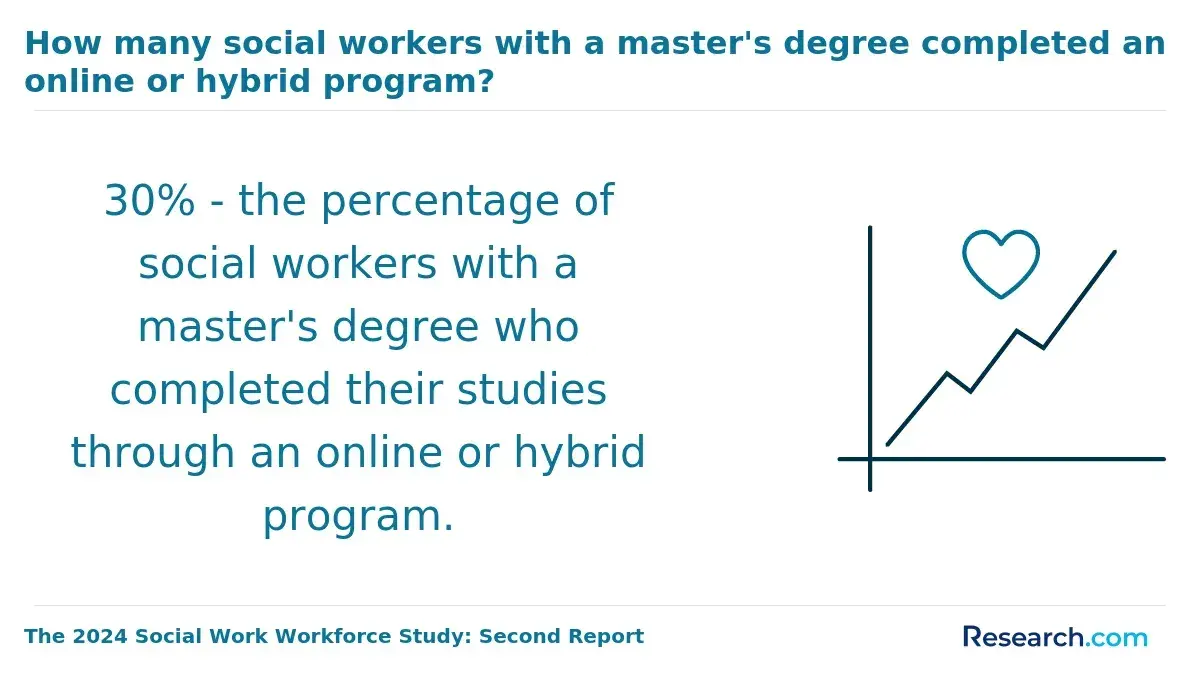
Online MSW programs can be as credible as campus-based programs when they are properly accredited and meet the same academic and field education standards. The key factor is not whether courses are online; it is whether the program is recognized by the Council on Social Work Education (CSWE), provides appropriate field placements, and prepares graduates for the licensure requirements in the state where they plan to practice.
Employers increasingly accept online MSW degrees, especially when the transcript comes from a reputable, accredited institution and the graduate has completed supervised practicum experience. Social work is a practice profession, so field education remains essential in both online and campus formats. Even fully online programs typically require in-person practicum hours in approved agencies or settings.
The return on an MSW depends on tuition, debt, licensure path, salary, and career setting, so students should evaluate each program's outcomes rather than assuming format alone determines value.
How to judge an online MSW program
- Confirm CSWE accreditation: Accreditation is the first credibility checkpoint.
- Ask how field placements work: Find out whether the school helps secure placements or expects students to find their own.
- Review licensure alignment: Make sure the curriculum supports the state where you plan to seek licensure.
- Compare student support: Advising, faculty access, writing support, career services, and placement coordination matter more in online programs than many students expect.
- Check licensing exam outcomes: Graduate pass rates can signal how well the program prepares students for professional requirements.
- Assess schedule fit: Synchronous classes may offer more interaction; asynchronous classes may offer more flexibility.
Online programs are often a strong fit for working adults, caregivers, military-affiliated students, and students who cannot relocate. Campus programs may be better for students who want face-to-face networking, local agency connections, and more immediate access to faculty and peers. Either format can be credible if it is accredited, rigorous, and well connected to field education.
The most important accreditation for MSW students in the United States is accreditation from the Council on Social Work Education (CSWE). Graduating from a CSWE-accredited MSW program is essential for licensure eligibility in nearly all U.S. states. This applies to both regular MSW and advanced standing pathways.
Licensure rules vary by state, but common credentials include Licensed Social Worker (LSW) and Licensed Clinical Social Worker (LCSW). These licenses often require a CSWE-accredited degree, supervised experience, licensing exams, and compliance with state-specific regulations. Students who want to provide clinical services, psychotherapy, diagnosis-related services, or independent practice should pay especially close attention to licensing requirements before enrolling.
Without CSWE accreditation, graduates may be unable to sit for required licensing exams or complete supervised experience toward clinical or specialist credentials. Accreditation can also affect eligibility for federal financial aid and employment in agencies that require licensed or license-eligible practitioners.
Advanced standing students may benefit from a shorter path, but they should not compromise on accreditation. Advanced standing students often work full-time while studying, with 67% maintaining employment and benefiting from a 22% lower student loan default rate than regular MSW students. A CSWE-accredited advanced standing program can reduce time-to-degree while preserving the licensure pathway.
Licensure checklist before enrolling
- Verify that the MSW program is CSWE-accredited.
- Review the licensing board rules in the state where you plan to practice.
- Confirm whether the program meets clinical coursework and field placement expectations.
- Ask whether graduates are eligible for the license you want, such as LSW or LCSW.
- Check whether the state requires additional coursework or practicum hours beyond CSWE standards.
- Keep records of field hours, supervision, course descriptions, and syllabi in case the licensing board requests documentation.
Prioritizing CSWE accreditation and state licensing alignment protects your investment. It also prevents a costly mistake: completing a degree that does not qualify you for the credential or role you intend to pursue.
MSW graduates can pursue clinical, community, school, healthcare, administrative, policy, and advocacy roles. Common career paths include licensed clinical social worker (LCSW), school social worker, healthcare social worker, mental health counselor, community program manager, casework supervisor, policy advocate, and nonprofit administrator. The right path depends on specialization, field placements, licensure plans, location, and preferred population.
Advanced standing MSW graduates may move quickly toward clinical goals when their programs and field placements support that path. Higher earnings usually require more than the MSW itself; clinical licensure, supervised post-graduate experience, and a viable practice setting are often necessary.
| Role or setting | Salary information stated | Key considerations |
| LCSW in private practice | Generally between $65,000 and $110,000 annually | Typically requires clinical licensure and business or referral-building skills |
| Non-licensed or nonprofit social worker | Typically $45,000 to $60,000 | May involve case management, advocacy, community services, or program support |
| Healthcare social worker or hospital role | Often $55,000 to $75,000, with seasoned clinicians reaching over $90,000 | May require experience with care coordination, discharge planning, crisis intervention, or medical teams |
| School social worker | Varies from $50,000 to $68,000 | Pay depends on district and state funding, and may require school-specific credentials |
| Policy and advocacy roles | Usually range from $50,000 to $85,000 | Additional training in policy analysis, research, leadership, or public administration can help |
Licensure is one of the clearest dividing lines for salary and scope of practice. Students interested in psychotherapy, clinical assessment, private practice, or behavioral health leadership should choose programs with strong clinical coursework, appropriate placements, and clear licensure advising. Students who prefer macro practice may not need the same clinical pathway, but they should still consider how the MSW supports advancement in agencies, nonprofits, government, or policy organizations.
No MSW program can guarantee a specific salary. Earnings depend on employer type, region, licensure level, years of experience, specialization, and whether the role is public, nonprofit, healthcare-based, school-based, or private practice. Use salary ranges as planning tools, not promises.
How to choose the best MSW program for your goals?
The best MSW program is the one that matches your academic starting point, career target, licensure needs, budget, and schedule. Advanced standing is usually the best fit if you have an eligible BSW, strong field preparation, and a clear plan to build on your undergraduate social work education. A regular MSW is usually the better fit if you are changing fields, need the full foundation sequence, or want more time to explore practice areas before specializing.
Career timing also matters. Advanced standing programs can help qualified students finish faster, which may be useful in growth areas such as telehealth social work. That does not mean every advanced standing graduate should choose telehealth, but accelerated preparation can matter in fast-moving service models.
Decision checklist for choosing an MSW program
- Start with eligibility: If you do not have a qualifying BSW, focus on regular MSW programs rather than forcing an advanced standing search.
- Confirm CSWE accreditation: Do not compromise on accreditation if licensure or federal aid matters to you.
- Match the program to your license goal: Clinical, school, healthcare, policy, and administrative careers may require different coursework and placements.
- Compare field placement support: Ask where students are placed, who arranges placements, and whether placements align with your goals.
- Calculate total cost: Compare tuition, fees, aid, travel, technology costs, lost wages, and expected loan repayment.
- Review format honestly: Online, hybrid, and campus programs can all work, but only if the schedule and field requirements fit your life.
- Look at outcomes: Ask about employment, licensure preparation, licensing exam pass rates, and alumni roles in your intended area.
- Assess faculty and specialization strength: A program with strong clinical faculty may not be the best choice for policy leadership, and vice versa.
Choose advanced standing if you are eligible, confident in your foundation skills, and want the fastest responsible route to graduate-level practice. Choose a regular MSW if you need comprehensive preparation, want more time in field education, or are entering social work from another discipline. In either case, the right program should give you a credible degree, supervised practice experience, licensure alignment, and a realistic path to the population and setting you want to serve.
Other Things You Should Know About Social Work
Yes. CSWE-accredited MSW programs require supervised field education in both tracks. Advanced Standing students usually complete about 500 practicum hours, while regular MSW students often complete 900 to 1,200 hours, depending on the program and state licensing requirements.
Advanced Standing MSW Programs usually require around 30 credit hours, typically completed in 1 year, while Regular MSW Programs typically demand 60 credit hours over 2 years, assuming full-time enrollment. This includes coursework but does not account for additional time for field placements.
Most MSW programs do not require GRE scores in 2027, and many schools have made the test optional or removed it entirely. Admissions decisions usually focus on undergraduate GPA, a BSW from a CSWE-accredited program for advanced standing, personal statements, references, and field experience.
- Advanced Standing Online MSW Programs https://socialworklicensemap.com/social-work-degrees/online-msw-programs/advanced-standing/
- The Evolution of Online Social Work Education https://www.socialworktoday.com/news/enews_0317_1.shtml
- The Importance of a CSWE Accredited Program in Social Work - Tulane School of Social Work https://socialwork.tulane.edu/blog/importance-of-cswe-accredited-program/
- Advanced Standing Master's in Social Work Programs | MSW Guide https://www.mswguide.org/schools/advanced-standing/
- The Pros and Cons of Online MSW Programs – Should I Pursue an MSW Online? https://www.masterofsocialwork.com/resources/pros-and-cons-online-msw-programs
- Best Affordable Master's Degree In Social Work https://www.psychology.org/social-work/best-affordable-masters-programs/
- Accepted to Multiple MSW Programs? Here’s How to Choose the Right One https://www.mswhelper.com/blog/how-to-decide-on-an-msw-program
- Accreditation and/or licensing requirements | SWTP https://socialworktestprep.com/blog/2024/october/25/accreditation-and-or-licensing-requirements/
- Best Advanced-Standing Online MSW Programs https://www.onlinemastersdegrees.org/best-programs/social-work-msw/advanced-standing/
- MSW Program Options and Curriculum - MSU Denver https://www.msudenver.edu/social-work/master-social-work/program-options-and-curriculum/