2027 Signs an Online MSW Program Is a Good Fit for You

Co-Founder and Chief Data Scientist
An online MSW can be a practical route into advanced social work practice, but it is not automatically the best fit for every student. The real question is whether the program can support your schedule, meet your state’s licensing rules, place you in a suitable practicum, and lead to the kind of social work role you want.
This guide explains how online MSW programs work, who they serve best, what to check before applying, and how to compare accreditation, admissions, curriculum, cost, careers, salary, and licensure. It is written for working professionals, career changers, BSW graduates considering advanced standing, and students who need a flexible path without sacrificing professional credibility.
Key Things You Should Know
- Online MSW programs offer flexibility, with 75% of students balancing work or family while studying, making them ideal for those needing adaptable schedules.
- Accreditation by CSWE remains crucial for licensure eligibility; over 90% of accredited online MSW graduates pass licensure exams on their first attempt.
- Graduates report a 15% average salary increase within two years, reflecting growing demand in healthcare, mental health, and community service sectors.
What Is an Online MSW Program?
An online MSW program is a graduate social work degree delivered primarily through a learning platform rather than a campus classroom. Students usually complete lectures, readings, discussions, assignments, and group projects online while completing required field education through approved agencies in their local area.
The best online MSW programs are not “lighter” versions of campus degrees. When properly accredited, they follow the same professional education standards expected of in-person programs. They typically cover social work theory, ethics, policy, human behavior, research, assessment, intervention, and field practice.
Online formats vary. Some programs are mostly asynchronous, meaning students can view course materials on their own schedule. Others include synchronous class meetings at set times. Many schools offer full-time, part-time, and advanced standing options, and some allow students to choose concentrations such as clinical social work, community practice, administration, child welfare, healthcare, or mental health.
Field education is the part prospective students should examine most closely. Even if coursework is online, MSW students generally need supervised practicum experience. A strong program should explain how it approves field sites, supports students who live far from campus, handles placement problems, and aligns practicum requirements with state licensing expectations.
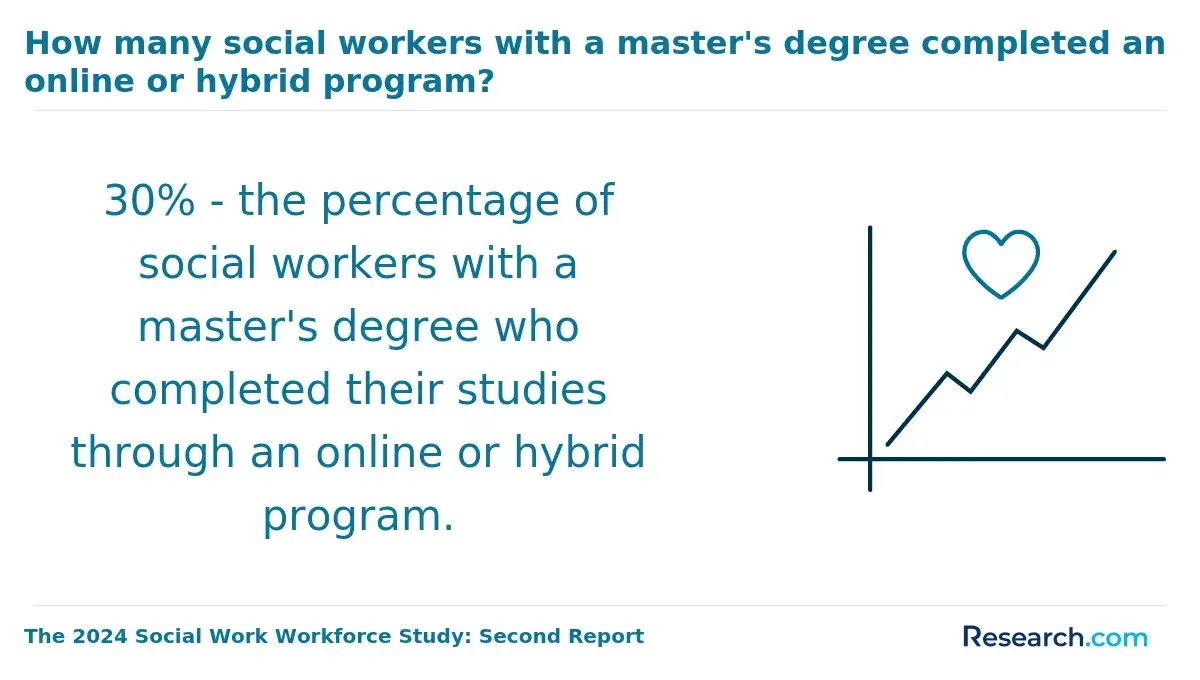
Online MSW programs often appeal to students who already have meaningful work experience. According to the Council on Social Work Education, 54% of online graduates had six or more years of experience before starting, compared to only 23% for in-person graduates. That difference matters because many online students are balancing graduate study with employment, caregiving, or a career transition.
Before enrolling, confirm the program’s CSWE accreditation, practicum support, faculty qualifications, technology requirements, and licensing alignment in the state where you plan to practice. Students who later want advanced professional education may also compare options such as an online doctor of social work.
Is an Online MSW Program Right for You?
An online MSW may be right for you if you need flexibility but still want a degree that can support licensure, field training, and advancement in social work. It is especially useful for students who cannot relocate, commute several times a week, or pause full-time work to attend a campus program.
The format works best for students who can manage deadlines independently, communicate clearly online, and protect study time in a busy schedule. Online does not mean easier. In many cases, it requires more planning because coursework, practicum hours, employment, and family responsibilities can overlap.
Good signs an online MSW may fit
- You need a part-time or flexible schedule because of work, caregiving, or location.
- You are comfortable using learning platforms, video meetings, online library tools, and digital communication.
- You can stay organized without frequent in-person reminders.
- You have reliable internet access and a quiet place to complete coursework.
- You want to complete field education near your community rather than near a campus.
- Your target role or state license accepts a CSWE-accredited online MSW.
Reasons to be cautious
- You learn best through daily face-to-face interaction and informal campus networking.
- You need extensive hands-on support to manage assignments and deadlines.
- The school offers limited help finding local practicum placements.
- The program’s schedule includes live sessions that conflict with your work hours.
- You are unsure whether the degree meets licensing requirements in your state.
Employment outcomes can be encouraging, but they should be interpreted carefully. CSWE data shows 52% of online MSW graduates report satisfactory employment versus 43% for in-person grads. That does not mean every online program produces better outcomes; career results still depend on accreditation, specialization, field placement quality, local labor markets, licensure, and professional networking.
If cost is a major factor, compare tuition, fees, financial aid, field placement travel, and the time you may need to reduce work hours. Students looking for lower-cost options can review affordable MSW online programs.
How Do You Choose an Accredited Online MSW Program?
Start with accreditation. For social work education in the United States, the key programmatic accreditor is the Council on Social Work Education (CSWE). CSWE accreditation is often required for state licensure eligibility and is widely recognized by employers. Institutional accreditation also matters for federal financial aid, credit transfer, and general academic credibility.
After verifying accreditation, compare programs based on how well they support your intended license, schedule, specialization, and practicum needs. A well-known university is not enough if the program cannot place you in appropriate field education or does not align with your state’s licensing rules.
Key factors to compare
| Factor | What to verify | Why it matters |
| CSWE accreditation | Confirm the program is accredited or clearly states its current accreditation status. | Licensing boards and employers commonly rely on CSWE-accredited MSW education. |
| State licensing alignment | Ask whether the curriculum and fieldwork meet requirements in the state where you plan to practice. | Licensure is state-specific, and online enrollment across state lines can create complications. |
| Field placement support | Find out who identifies practicum sites, how placements are approved, and what happens if a site falls through. | Field education is central to MSW training and often affects licensure preparation. |
| Specializations | Compare concentrations such as clinical social work, policy, school social work, healthcare, or community practice. | Your concentration should match your target population and work setting. |
| Format | Check whether classes are asynchronous, synchronous, hybrid, full-time, part-time, or accelerated. | A flexible program still needs to fit your actual weekly schedule. |
| Career outcomes | Request information on licensure pass rates, job placement, alumni roles, and career services. | Outcome data helps distinguish strong programs from programs that only advertise convenience. |
Cost should be evaluated as a total degree expense, not just a per-credit rate. Tuition for online MSW programs typically ranges from $25,000 to $45,000. According to Social Work Degrees, graduates often see a salary increase between $15,000 and $25,000 annually, achieving return on investment within three to five years. For salary context by location, review average LCSW salary data.
Before applying, contact admissions and ask direct questions: Will the program approve placements in my area? Does it prepare students for my state’s LMSW, LCSW, or equivalent license? Are there required campus visits? What are the technology fees? How many students does each field coordinator support? Clear answers to these questions are often more useful than marketing language.
Most online MSW programs require a bachelor’s degree from an accredited institution. Many schools prefer a minimum GPA around 3.0, although some review applications holistically and may consider work experience, volunteer service, leadership, or an upward academic trend.
Applicants usually submit a graduate application, official transcripts, a résumé or curriculum vitae, a personal statement, and two or three letters of recommendation. Strong recommendation letters should speak to your readiness for graduate study, communication skills, ethical judgment, and commitment to social work values.
The personal statement matters because MSW programs are evaluating both academic fit and professional purpose. A strong essay explains why you want to study social work, what populations or systems you hope to serve, how your past experience shaped that goal, and why the specific program format fits your situation.
Common application components
- Bachelor’s degree from an accredited college or university
- Official transcripts from prior institutions
- Minimum GPA around 3.0, depending on the school
- Résumé or curriculum vitae showing employment, volunteer work, internships, or community service
- Personal statement or admissions essay
- Two or three academic or professional recommendations
- GRE scores if required by the program
- TOEFL or IELTS scores for some international applicants
- Background check or clearance requirements for field placement eligibility
About half of programs have waived GRE requirements since the pandemic, though some competitive schools still require them. Do not assume a test is optional; verify each program’s current policy before building your application timeline.
Applicants with a Bachelor of Social Work may qualify for advanced standing if their BSW was completed through an eligible accredited program and meets the school’s recency and GPA rules. Applicants without a BSW typically enter the standard MSW track and complete foundation coursework before advanced practice courses.
Online MSW programs can also support students preparing to work in underserved areas. Online MSW graduates are significantly more likely to work in rural communities-57% compared to 30% of in-person grads, making these programs strategic for those aiming for rural social work careers. If you are still weighing the value of the degree, consider whether is a social work degree worth it for your goals, finances, and licensing plans.
An online MSW program typically takes 1 to 3 years, depending on your enrollment pace, prior education, and program format. Full-time students often finish in about 2 years. Part-time students may take 3 years or more, especially if they are working full time or managing family responsibilities.
Accelerated tracks may allow some students to finish in as little as 12 to 18 months. These options can be efficient, but they are demanding. Students should look closely at weekly workload, field placement hours, summer terms, and whether their job can accommodate the schedule.
Advanced standing is the fastest route for eligible students. Applicants who already hold a Bachelor of Social Work may be able to skip some foundation coursework and complete a shorter degree plan. Advanced standing students often complete their degree in 12 to 15 months, while students without a BSW usually follow the longer standard track.
Typical timeline options
| Program path | Typical length | Best fit |
| Standard full-time MSW | About 2 years | Students who can manage a heavier course load and practicum schedule |
| Standard part-time MSW | 3 years or more | Working professionals and caregivers who need a slower pace |
| Accelerated MSW | 12 to 18 months | Students who can commit to intensive coursework and year-round study |
| Advanced standing MSW | 12 to 15 months | Eligible BSW graduates who meet program requirements |
Clinical concentrations may require careful scheduling because supervised fieldwork can be time-intensive and may need to occur during regular agency hours. Students planning to work in clinical, healthcare, substance abuse, or child welfare settings should ask how field hours are distributed across the program.
Field training is not just a graduation requirement; it shapes readiness for real social work practice. Graduates from online MSW programs tend to serve higher proportions of clients with substance abuse issues (45% vs. 33%) and clients covered by Medicaid (76% vs. 69%) compared to traditional program alumni. That makes high-quality practicum preparation especially important.
An online MSW curriculum prepares students for professional social work practice across individuals, families, groups, organizations, and communities. The foundation year typically introduces core social work knowledge, while the advanced year focuses on a concentration or practice area.
Core coursework commonly includes human behavior in the social environment, social welfare policy, research methods, ethics, diversity, social justice, assessment, intervention, and practice with individuals and communities. Students also learn how systems such as poverty, healthcare, education, housing, criminal justice, and public policy affect client outcomes.
Many programs then allow students to specialize. Common concentrations include clinical social work, mental health, child and family practice, healthcare social work, school social work, substance abuse, gerontology, community organization, policy, and administration. The right concentration should match both your preferred population and your licensing or career goals.
Skills students should expect to build
- Client assessment and case conceptualization
- Ethical decision-making and professional boundaries
- Crisis response and risk assessment
- Treatment planning and evidence-informed intervention
- Advocacy with agencies, schools, courts, healthcare systems, and community organizations
- Program evaluation and applied research literacy
- Cultural humility and practice with diverse communities
- Documentation, supervision, and interprofessional collaboration
Online programs often use case studies, simulations, video discussions, recorded lectures, group projects, and supervised assignments to develop practice skills. However, digital coursework cannot replace field education. Students should confirm that practicum placements are meaningful, supervised, and relevant to their goals.
Curriculum quality can influence career outcomes, but it is only one factor. According to the Council on Social Work Education, 74% of in-person MSW graduates earned $40,000 or more annually, while only 61% of online graduates reached this threshold. This gap may reflect differences in local labor markets, student demographics, field placements, networking access, employment status, licensure progress, or program support.
When comparing curricula, look beyond course titles. Ask whether students receive live faculty feedback, how often they interact with classmates, what training they receive before practicum, whether the program supports licensure exam preparation, and how concentrations connect to actual job roles.
The cost of an online MSW program varies widely by school type, credit requirements, residency status, and program length. Total tuition typically ranges from $10,000 to over $60,000 for the entire degree. Public universities may charge lower rates for in-state students, while private universities often use a flat tuition rate regardless of residency.
Tuition is only part of the cost. Students should also budget for technology fees, textbooks, course materials, background checks, liability insurance, travel to practicum sites, and any required campus intensives. These extra costs can add several hundred to a few thousand dollars annually.
Costs to review before enrolling
- Tuition per credit and total credits required
- Online learning, technology, or student service fees
- Books, software, and required supplies
- Travel costs for field placements or campus visits
- Background checks, health screenings, or liability insurance for practicum
- Lost income if you reduce work hours during field education
- Graduation, transcript, or licensing exam preparation costs
Financial aid can reduce the upfront burden, but students should borrow carefully. Federal loans, grants, scholarships, employer tuition reimbursement, and payment plans may help make the program more manageable. Some students may also reduce total cost by transferring eligible prior graduate credits, if the school allows it.
When comparing programs, calculate the total degree cost rather than focusing only on convenience. A cheaper program that provides weak field placement support may create delays, while a more expensive program may not be worth the price if it offers little career or licensure support. The best value is usually the program that is accredited, affordable, well-supported, and aligned with your target state license.
The demand for flexible education is supported by a projected 7% employment growth for social workers from 2023 to 2032, as noted by the University of Connecticut. Even so, employment growth does not guarantee a specific salary or job offer. Use cost, licensure requirements, local job postings, and expected career path together when judging affordability.
An online MSW can lead to many of the same career paths as an on-campus MSW, provided the program is properly accredited and meets licensing requirements. Graduates work in clinical practice, schools, hospitals, nonprofit organizations, government agencies, community programs, and administrative roles.
Clinical social work is a common goal. Graduates who pursue licensure may provide counseling, assessment, treatment planning, crisis intervention, and mental health services in settings such as hospitals, outpatient clinics, community mental health centers, private practices, and integrated care teams. These roles usually require supervised post-graduate experience and state licensure.
Not every MSW graduate becomes a therapist. Many work in macro or mezzo practice, including program management, policy analysis, community organizing, advocacy, grant-funded services, and nonprofit leadership. These roles can be a strong fit for students interested in systems change rather than direct clinical treatment.
Common MSW career paths
- Licensed clinical social worker
- Medical or healthcare social worker
- School social worker
- Child welfare specialist
- Substance abuse counselor or treatment program clinician
- Mental health case manager
- Community program manager
- Policy analyst or advocate
- Gerontology social worker
- Nonprofit administrator
School social work may require additional state certification beyond the MSW. Healthcare, behavioral health, and substance abuse roles may also require specialized training, supervised hours, or credentials depending on the employer and state.
Before choosing a program, compare its concentrations and field placement network with your intended career. A student planning clinical licensure should prioritize strong clinical supervision and licensing preparation. A student interested in policy or administration should look for macro practice courses, leadership training, and field placements in agencies that match those goals.
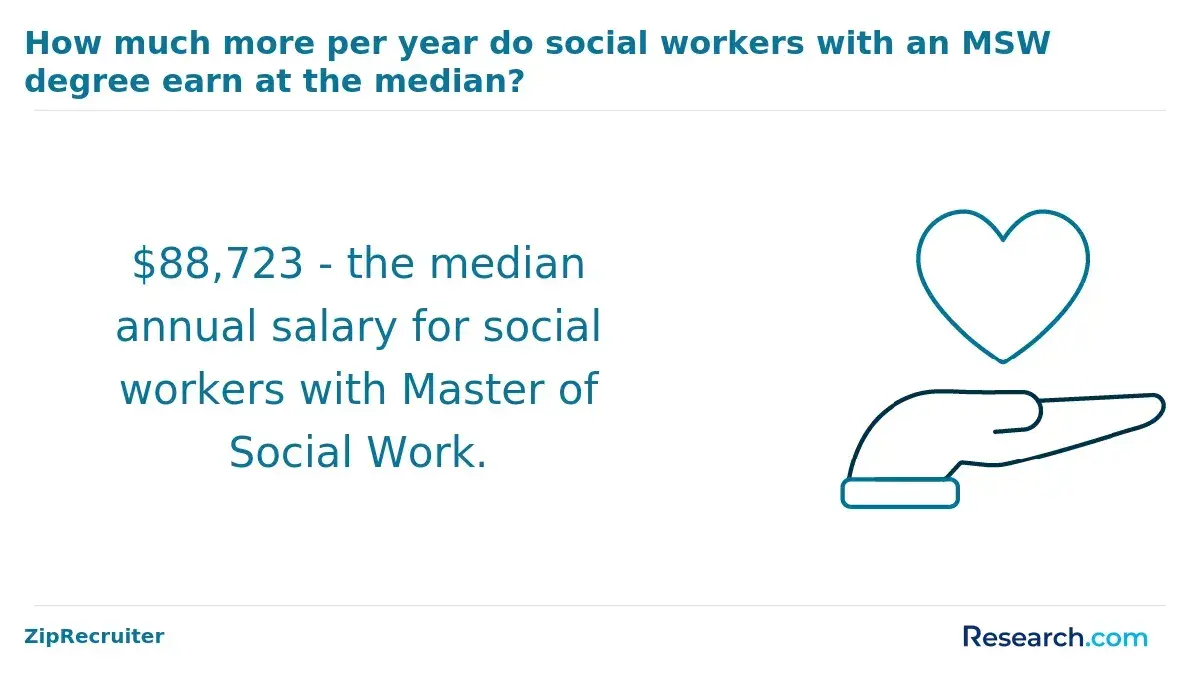
MSW salaries vary by license, specialization, employer, geographic area, and years of experience. Median annual salaries for master's-level social workers in 2026 range between $50,000 and $70,000, according to the U.S. Bureau of Labor Statistics. Actual earnings may fall above or below that range depending on the role and local labor market.
Clinical licensure can make a significant difference because it may qualify graduates for independent practice, higher-responsibility clinical roles, supervisory positions, and private practice opportunities. Obtaining clinical licensure, such as LCSW, can boost salary growth by 15-30%, enhancing both employability and earning potential.
Specialization also affects salary expectations. Graduates concentrating in children and families represent 44% of online MSW recipients, notably higher than the 33% from traditional programs, as per 2018 data from CSWE. These roles typically involve child welfare agencies, foster care, or family counseling centers, with median salaries usually between $55,000 and $65,000.
Substance abuse specialization accounts for 9% of online graduates versus 6% traditionally, with positions in addiction treatment centers offering salaries from $52,000 to $68,000, driven by demand for certified clinical experience.
Salary factors to consider
- Licensure level, especially LMSW, LCSW, LISW, or state equivalents
- Clinical versus nonclinical responsibilities
- Public agency, nonprofit, hospital, school, private practice, or government employment
- Urban, suburban, or rural location
- Specialization in areas such as healthcare, behavioral health, substance abuse, or child welfare
- Supervisory, administrative, or program leadership responsibilities
Metropolitan areas often pay more, but higher wages may come with higher housing, commuting, and living costs. For a realistic outlook, compare salary data with licensing requirements, local job postings, and the cost of completing supervised hours after graduation.
What Licensing Is Required After an Online MSW?
Licensing after an online MSW is determined by the state where you plan to practice, not by the delivery format alone. A CSWE-accredited online MSW is commonly accepted for licensure, but each state sets its own rules for exams, supervised hours, titles, renewals, and scopes of practice.
Common licenses include Licensed Master Social Worker (LMSW), Licensed Clinical Social Worker (LCSW), and Licensed Independent Social Worker (LISW), though names vary by state. LMSW-level licenses often allow master’s-level practice under certain conditions, while LCSW or LISW credentials typically require post-graduate supervised clinical experience and may allow independent clinical practice.
Most states require supervised clinical hours, generally between 2,000 and 4,000, before full licensure. For instance, California mandates 3,200 hours of supervision, while New York requires 3,000 hours. Candidates must also pass the Association of Social Work Boards (ASWB) exam; the master's exam applies to LMSW aspirants, and the clinical exam to LCSW candidates.
Licensure checklist for online MSW students
- Confirm that the program is CSWE-accredited.
- Check your state licensing board’s education requirements before enrolling.
- Ask whether the program meets requirements for the state where you plan to practice.
- Understand whether your practicum must meet specific clinical or supervision standards.
- Plan for post-graduate supervised hours if you want clinical licensure.
- Review ASWB exam requirements for your intended license level.
- Ask about license portability if you may move to another state.
Online MSW students should pay close attention to reciprocity and portability. Moving between states can require additional paperwork, supervised practice, exams, or coursework. This is especially important for online MSW graduates-who tend to be older and often career changers, with 58% significantly older than in-person peers according to CSWE-because many are balancing licensure with established work and family obligations.
Some states allow supervised hours to be completed virtually or in non-traditional settings, but rules differ. Do not rely only on a school’s general statement that graduates are “licensure eligible.” Contact the relevant state licensing board and document the requirements before committing to a program.
In practice, successful licensure depends on four elements: accredited education, approved supervised experience, passing the required exam, and ongoing compliance with state regulations. The earlier you map those requirements, the easier it is to choose an online MSW that supports your career goal.
Other Things You Should Know About Social Work
Most online MSW programs require a reliable laptop, webcam, microphone, and stable internet for live classes, recorded lectures, and field placement communication. Many programs also use learning platforms such as Canvas or Blackboard, and some require file-sharing or video-conferencing software like Zoom.
Burnout is common in social work due to emotional demands and workload. Professionals manage it by seeking regular supervision and peer support, maintaining clear work-life boundaries, and pursuing continuing education to build resilience. Self-care practices such as mindfulness, exercise, and hobbies also play an important role in sustaining long-term well-being.
Social work professionals adhere to a strict code of ethics emphasizing client confidentiality, informed consent, and respect for client autonomy. They must also advocate for social justice and challenge systems of oppression while maintaining professional boundaries. Ethical decision-making is fundamental, especially when balancing conflicting client needs or legal requirements.
- What Can I Do with an MSW Degree? MSW Career Paths https://socialworklicensemap.com/social-work-degrees/master-of-social-work-programs/what-can-you-with-a-msw-career/
- MSW Career Outlook https://www.kysu.edu/academics/college-as/school-of-social-work/careers/msw-career-outlook.php
- The Pros and Cons of Online MSW Programs – Should I Pursue an MSW Online? https://www.masterofsocialwork.com/resources/pros-and-cons-online-msw-programs
- Best Affordable Master's Degree In Social Work https://www.psychology.org/social-work/best-affordable-masters-programs/
- 8 Career Paths You Can Pursue with a Social Work Degree https://www.sacredheart.edu/news-room/news-listing/8-career-paths-you-can-pursue-with-a-social-work-degree/
- Certified Master Social Worker - Florida Board of Clinical Social Work, Marriage & Family Therapy and Mental Health Counseling https://floridasmentalhealthprofessions.gov/certified-master-social-worker/
- After Your MSW: A State-by-State Guide to Social Work Licensing https://www.onlinemastersdegrees.org/student-resources/social-work/license-requirements/
- What Are the Licensed Social Worker Requirements? https://www.tuw.edu/school-news/licensed-social-worker-requirements/
- 8 Signs of a Great MSW Program https://www.chamberlain.edu/blog/8-signs-of-a-great-msw-program