2027 Best Value Online MSW Programs (Cost vs ROI)

Co-Founder and Chief Data Scientist
Choosing an online Master of Social Work is not just a tuition decision. The best-value program is the one that is accredited, affordable enough to keep debt manageable, practical enough to support field placement and licensure goals, and flexible enough to fit your work and family responsibilities.
This guide is for prospective MSW students comparing online programs by cost, accreditation, delivery format, field education, financial aid, and career return. It explains how online MSW programs work, what students study, how much programs typically cost, and how to judge whether a lower-priced option is truly a smart investment.
Use the program examples and evaluation steps below as a decision framework. Before enrolling, confirm current tuition, fees, accreditation status, state licensure rules, and field placement support directly with each university.
Key Benefits of Studying Online MSW Programs
- 80% of MSW graduates enter the workforce within six months of graduation, according to CSWE.
- Online MSW enrollment grew 11% between 2020 and 2023, showing continued student demand.
- Most online MSW programs offer field placements in students’ local communities to reduce costs.
Which online MSW programs offer the best value for money?
The best-value online MSW programs combine reasonable tuition with Council on Social Work Education accreditation, strong field placement support, and coursework that matches your intended license or career track. A low sticker price is helpful, but it is not enough if the program does not meet licensure requirements or cannot help you complete supervised fieldwork in your area.
The following U.S.-based universities are useful benchmarks for cost-conscious students comparing online MSW options:
- University of Missouri: The online 60-credit program is estimated at $38,040 for the full track; the advanced-standing 39-credit version is about $24,726.
- University of Connecticut: The online MSW program charges a flat cost of $880 per credit, regardless of residency.
- Boise State University: The 61-credit program is listed at $565 per credit hour, for a total estimated tuition around $34,465 for the traditional track or ~$20,905 for the 37-credit advanced standing option.
- Sacred Heart University: Tuition is $840 per credit hour for the 60-credit traditional track, or about ~$50,400, and ~$25,200 for the 30-credit advanced standing option.
- Troy University: Troy University is recognized in affordability rankings as among the lowest cost MSW programs, with annual tuition starting around $7,125 in certain cases for online formats.
When comparing these and similar programs, look beyond the advertised tuition total. Ask whether the quoted price includes university fees, technology fees, field education fees, residency requirements, and any additional costs tied to licensure preparation. Advanced standing can substantially reduce cost for eligible students with a qualifying BSW, but it is not available to every applicant.
A strong value program should meet four tests: it is accredited, it fits your state’s licensure pathway, it offers reliable field placement support, and its total cost is realistic based on the salary range for your intended social work role.
How do online MSW Programs work?
Online MSW programs deliver graduate social work coursework through a virtual learning platform while still requiring in-person field education. Students typically complete readings, recorded or live lectures, discussion boards, group projects, case analyses, research assignments, and supervised practicum work in approved community settings.
Program formats vary. Some courses are asynchronous, meaning students can complete weekly work on their own schedule. Others include synchronous sessions at set times, which can improve interaction with faculty and classmates but may be harder for students with unpredictable work schedules.
Typical structure of an online MSW
- Foundation coursework: Covers social welfare policy, human behavior, ethics, research, diversity, and generalist social work practice.
- Advanced coursework: Builds specialized skills in areas such as clinical practice, community practice, healthcare, school social work, administration, or policy.
- Field education: Requires supervised practice in an approved agency, healthcare organization, school, nonprofit, or related setting.
- Capstone or integrative assignments: Many programs require students to connect classroom learning with fieldwork, ethics, and evidence-based practice.
Field placement is the part of an online MSW that is least “online.” Most programs require 900 to 1,200 supervised hours, depending on the curriculum and track. Universities may help students identify approved placements near their home area, but the level of support varies. Before enrolling, ask whether the school secures placements, provides a list of approved agencies, or expects students to find their own site.
Graduates of online and campus-based MSW programs can meet the same educational standard when the programs are properly accredited and aligned with state licensure rules. However, licensure is not automatic after graduation. Students must still satisfy state-specific requirements, which may include supervised post-graduate experience, exams, background checks, and continuing education. Students considering doctoral study can also review online DSW social work options.
How can students evaluate the ROI of online MSW programs before enrolling?
To evaluate the ROI of an online MSW, compare the full cost of attendance with likely earnings, licensure requirements, debt burden, and the career path you plan to pursue. ROI is strongest when a program keeps borrowing manageable while preparing you for the roles and credentials you actually need.
Start with total cost, not just tuition. Include per-credit tuition, fees, books, technology costs, travel for any required campus visits, unpaid field placement time, and any income you may lose if you reduce work hours. Then compare that total with realistic salary expectations in your state and specialization.
ROI factors to review before applying
- Tuition vs. salary potential: Compare program cost with expected pay in clinical social work, healthcare, school social work, nonprofit leadership, policy, or another target field.
- Debt load: Estimate how much you would borrow after scholarships, grants, employer support, and personal payments.
- Loan-to-income ratio: Consider whether expected monthly payments will be affordable based on likely starting income, not only long-term earning potential.
- Licensure fit: Confirm that the curriculum, field hours, and accreditation support your state’s requirements for the credential you want.
- Fieldwork quality: Strong practicum sites can improve professional connections, references, and job readiness.
- Employment outcomes: Review job placement information, alumni roles, licensure exam support, and employer partnerships when available.
- Program length: A shorter path may reduce costs, but only if it still gives you enough preparation and field experience for your goals.
A common mistake is choosing the cheapest program without checking field placement support or licensure alignment. Another is assuming that all MSW specializations lead to the same salary. Clinical, healthcare, administrative, policy, school, and community practice roles can differ meaningfully in pay, supervision requirements, and career mobility.
Students who already meet advanced standing requirements or want a shorter timeline can compare accelerated social work programs. Faster programs can improve ROI for some students, but only if the workload is realistic and the program still supports quality field education.
Online MSW students learn how to assess client needs, apply social work ethics, understand social policy, use research evidence, and intervene with individuals, families, groups, organizations, and communities. The curriculum usually begins with generalist social work practice and then moves into advanced practice or specialization coursework.
Core topics commonly include social welfare policy, human behavior in the social environment, social work research, ethical decision-making, cultural humility, trauma-informed practice, advocacy, assessment, and intervention planning. Students also learn documentation, case management, supervision concepts, and how systems such as healthcare, schools, courts, housing, and public benefits affect clients.
Common MSW specialization areas
- Clinical Social Work: Prepares students for mental health, assessment, counseling-related, and therapeutic practice roles, subject to state licensure rules.
- Healthcare Social Work: Focuses on patient advocacy, care coordination, discharge planning, medical case management, and work with interdisciplinary teams.
- Child and Family Services: Addresses family systems, child welfare policy, abuse prevention, protective services, and family-centered intervention.
- Policy and Administration: Builds skills for program planning, nonprofit management, policy analysis, grant-related work, and social service leadership.
- School Social Work: Emphasizes student support, crisis intervention, family engagement, special education systems, and K–12 social-emotional services.
Field education is where students apply these skills with real clients and organizations under supervision. For students pursuing clinical licensure, the most valuable programs usually include advanced assessment, diagnosis-related coursework where appropriate, intervention models, ethics, and strong supervision in relevant practice settings.
Online MSW program costs vary widely by school type, residency status, credit requirements, and whether the student qualifies for advanced standing. Average tuition ranges between $25,000 and $60,000, depending on whether the school is public or private.
Many programs charge by the credit. Per-credit rates may range from $500 to $1,200, not including technology fees, practicum-related fees, books, or other required expenses. Public universities may offer lower tuition for residents, while some online programs charge one flat online rate regardless of where the student lives.
Advanced standing can reduce the total cost because students complete fewer credits. For example, a student entering a 30-credit or 37-credit advanced standing pathway will usually pay less than a student completing a 60-credit or 61-credit traditional pathway at the same per-credit rate. However, advanced standing generally requires a qualifying BSW and may have GPA or recency requirements.
Costs students should include in their budget
- Tuition: The largest expense, usually charged per credit or by term.
- Mandatory fees: Technology, student services, field education, graduation, or online learning fees may apply.
- Books and materials: Course readings, software, and assessment tools can add to the total.
- Field placement costs: Travel, background checks, immunizations, liability coverage, or reduced work hours may affect affordability.
- Licensure-related expenses: Exams, applications, supervision, and continuing education may come after graduation.
Online study can reduce relocation, commuting, and campus housing costs, but it does not eliminate all indirect costs. The most accurate affordability comparison is total program cost after financial aid, not the advertised tuition rate alone. Students prioritizing lower-cost options can review the cheapest online masters in social work to compare additional programs.
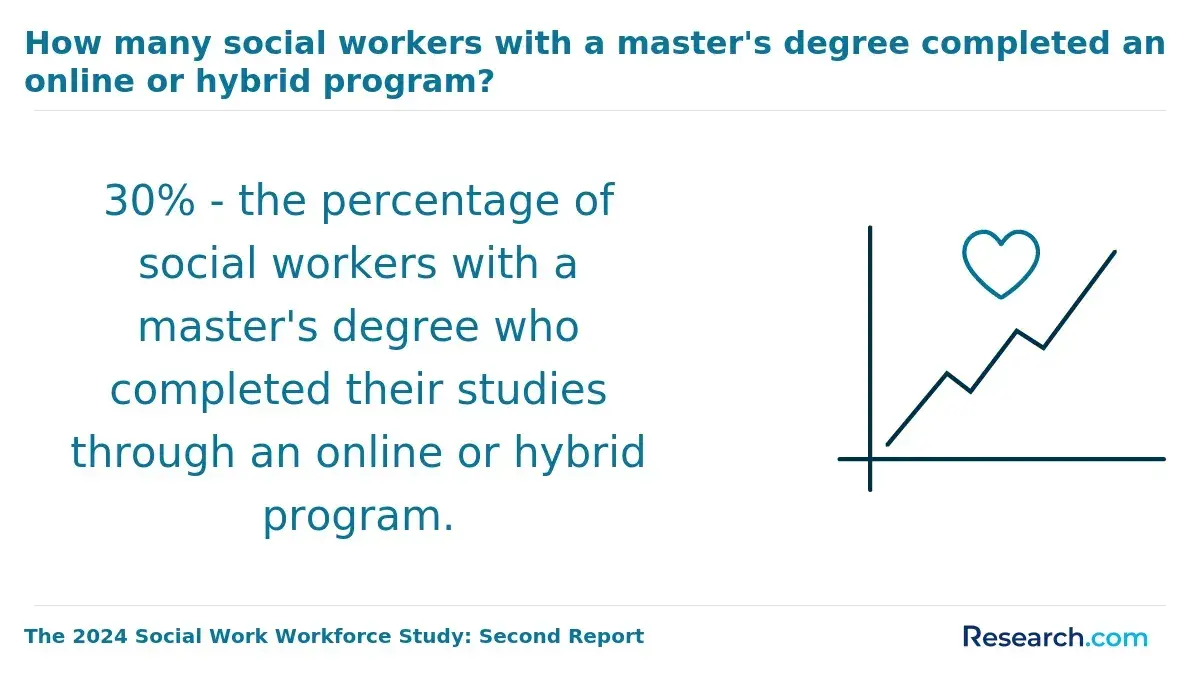
Online MSW students may qualify for many of the same financial aid options as campus-based graduate students, provided the program and institution meet eligibility requirements. The best aid strategy is to reduce borrowing first through grants, scholarships, employer support, and service-based funding before relying heavily on loans.
Common financial aid pathways include:
- Federal loans: Students can access Direct Unsubsidized and Graduate PLUS loans under the FAFSA system.
- Grants: Need-based awards like the TEACH Grant or state-specific aid may apply.
- Scholarships: Universities and foundations offer merit- and diversity-based awards for social work students.
- Employer tuition reimbursement: Public agencies and nonprofits often reimburse partial tuition for continued education.
- Loan forgiveness: Graduates in public service may qualify for PSLF after 120 qualifying payments.
Students should compare aid packages by net cost, not award size alone. A larger loan offer does not make a program more affordable; it only increases available borrowing. Prioritize gift aid that does not have to be repaid, then review loan terms, repayment options, and public service eligibility if you plan to work for a qualifying employer.
Before enrolling, ask each financial aid office whether online MSW students are eligible for the same institutional scholarships as campus students, whether field placement stipends are available, and whether the school has partnerships with agencies that support tuition assistance. Students planning public service careers should also keep careful employment and payment records if they intend to pursue PSLF.
The online MSW programs with the strongest ROI are usually those that keep total tuition manageable, hold CSWE accreditation, support licensure goals, and connect students with relevant field placements. Public universities with lower tuition often perform well on value, but a private program may still be worthwhile if it offers strong aid, a shorter advanced standing pathway, or exceptional placement support in your specialization.
ROI also depends on the type of social work role you pursue. Specializations in clinical practice, healthcare, and public policy tend to offer the best earnings potential. Graduates working in high-cost urban areas or medical institutions typically report higher wages than those in many nonprofit settings. Students who remain employed while completing an online program may also improve ROI by reducing lost income during graduate school.
Signs of a stronger ROI program
- Accreditation is clear and current: The program meets the educational standard needed for social work licensure pathways.
- Total cost is transparent: Tuition, fees, credit requirements, and additional expenses are easy to verify.
- Field placement support is practical: The school can help students secure appropriate supervised placements near their location.
- Career alignment is strong: The curriculum supports your target role, whether clinical, healthcare, school-based, administrative, policy-focused, or community-based.
- Graduation and employment outcomes are available: Programs willing to share outcomes give students better information for decision-making.
Students should be cautious about programs that advertise convenience but provide limited information about licensure, field placement, or total cost. To assess long-term earning potential by location, review current wage data through the social work salary by state. Comparing salary expectations with total tuition and likely debt is the clearest way to judge whether a program offers strong ROI.
Accreditation has a direct effect on the value of an online MSW because it can determine whether the degree supports licensure eligibility, employer recognition, and transferability into advanced credentials. Rankings can be useful for comparison, but they should never outweigh accreditation or licensure fit.
The Council on Social Work Education (CSWE) remains the primary accrediting body recognized by all U.S. states for licensure eligibility. A CSWE-accredited MSW signals that the program meets national academic and professional standards for social work education. For students pursuing clinical licensure, school social work credentials, or other regulated roles, this is a critical requirement to verify before applying.
Rankings are secondary. They may reflect faculty reputation, student satisfaction, selectivity, graduation rates, or peer assessment, depending on the ranking source. These indicators can help narrow a list, but they do not replace a state licensure check. A highly ranked program that does not fit your state’s requirements or cannot support your field placement needs may not be the best value for you.
How to use accreditation and rankings together
- Check accreditation first: Confirm CSWE status directly with the program or accreditor.
- Check state requirements next: Make sure the curriculum and field education align with the state where you plan to practice.
- Use rankings as context: Rankings can help compare reputation and outcomes after the essential requirements are satisfied.
- Review program-level evidence: Look for field placement support, licensure exam preparation, faculty expertise, and alumni outcomes.
In value terms, accreditation protects the utility of the degree. Rankings may influence perception, but accreditation affects whether the degree can help you reach the professional outcome you enrolled for in the first place.
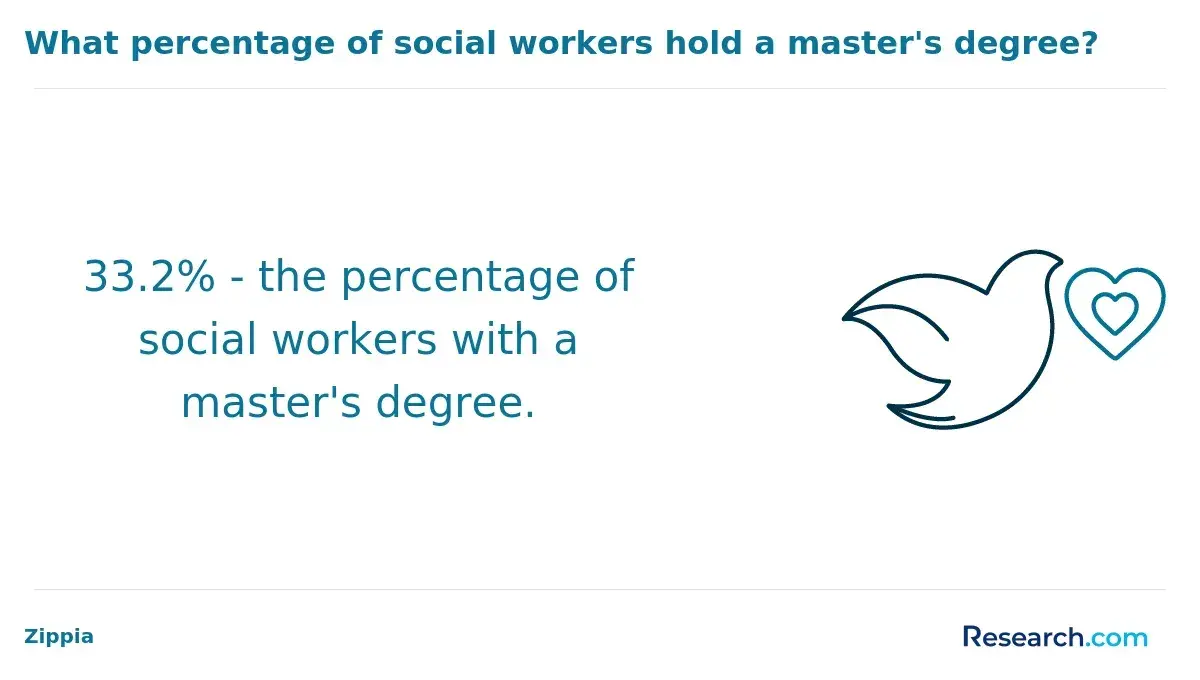
Graduates of online MSW programs can pursue roles in clinical practice, healthcare, schools, child welfare, community organizations, public agencies, advocacy groups, and social service administration. The specific jobs available depend on the graduate’s specialization, field experience, state licensure status, and local employer demand.
According to the U.S. Bureau of Labor Statistics, social work employment is projected to grow by 7% through 2032, faster than average for all occupations. Median annual pay varies by specialization and setting. Clinical social workers earn around $63,000, while healthcare social workers average $68,000. Leadership and policy roles may yield higher compensation, especially in metropolitan or hospital environments.
Common career paths for MSW graduates
- Clinical social worker: Provides assessment, treatment planning, therapy-related services, and mental health support, typically after meeting state licensure requirements.
- Healthcare social worker: Helps patients and families navigate illness, care transitions, insurance issues, discharge planning, and community resources.
- School social worker: Supports students, families, and educators through intervention planning, crisis response, attendance support, and behavioral or social-emotional services.
- Child and family social worker: Works with children, parents, caregivers, and agencies on safety, permanency, family support, and case management.
- Policy or program administrator: Designs, manages, evaluates, or advocates for programs that address social needs at an organizational or community level.
Salary outcomes are not guaranteed by the degree alone. Location, licensure level, employer type, years of experience, specialization, and willingness to work in higher-demand settings all influence pay. Students who want a shorter route into the field can explore 1 year MSW programs online no BSW, while still verifying accreditation, workload, and state licensure requirements.
How can students choose the best value online MSW programs for their goals?
To choose the best-value online MSW, begin with your career goal and work backward. A student aiming for clinical licensure should evaluate programs differently from a student interested in nonprofit leadership, policy, school social work, or healthcare case management. The right program is the one that meets your professional requirements at a cost you can reasonably manage.
Step-by-step selection checklist
- Confirm accreditation: Make sure the program is CSWE-accredited and accepted for the licensure path you plan to pursue.
- Check state licensure alignment: Review the rules in the state where you intend to practice, especially for clinical, school, or specialized credentials.
- Calculate total cost: Include tuition, fees, books, field placement costs, travel, and any reduced income during school.
- Compare net price: Subtract scholarships, grants, employer reimbursement, and other non-loan aid before comparing programs.
- Evaluate field placement support: Ask how placements are approved, who finds them, and whether students in your location have had successful placements.
- Match the curriculum to your goal: Review concentrations, electives, faculty expertise, and practicum options.
- Review flexibility honestly: Consider synchronous class times, part-time options, internship hours, and weekly workload.
- Assess outcomes: Look for alumni roles, licensure support, graduation rates, and employer partnerships when available.
Public universities and CSWE-accredited programs often deliver a strong cost-to-quality ratio, but the best choice depends on fit. A cheaper program may become expensive if it delays graduation or creates field placement problems. A higher-cost program may be worthwhile if aid reduces the net price and the program clearly supports your target career.
Students should also think carefully about academic intensity and emotional workload. Social work training involves policy analysis, research, writing, ethics, client systems, trauma, inequity, and supervised practice. For a deeper look at rigor and expectations, see is social work a hard major. A strong decision balances affordability, accreditation, field learning, flexibility, and the career outcome you want after graduation.
Other Things You Need to Know About Online MSW Programs
Most CSWE-accredited online MSW programs require at least 900 supervised field placement hours for the standard pathway. Advanced standing students often complete about 500 hours. Placements must be approved by the program and completed in settings that meet state licensing and educational standards.
The typical completion time for the best value online MSW programs in 2027 is generally between 2 to 3 years, depending on full-time or part-time enrollment. Some programs may offer accelerated tracks to complete the degree faster.
- Education Dynamics. (2024.) NCES data shows modern learners prioritizing career-focused degrees. EducationDynamics. https://www.educationdynamics.com/nces-data-modern-learners-prioritizing-career-focused-degrees/
- U.S. Bureau of Labor Statistics. (2025). Social workers: Occupational outlook handbook. https://www.bls.gov/ooh/community-and-social-service/social-workers.htm
- U.S. Bureau of Labor Statistics. (2023). Social workers, all other — Employment by state and area. https://www.bls.gov/oes/2023/may/oes211029.htm
- Zippia. (2024). Social worker salary by state: Highest-paid social workers. https://www.zippia.com/advice/social-worker-salary-by-state/
- ZipRecruiter. (2025). Salary: Social Workers (United States). https://www.ziprecruiter.com/Salaries/Social-Work-Msw-Salary