2027 Can You Become a Social Worker Online? Full Career Guide

Co-Founder and Chief Data Scientist
Changing careers into social work is possible even if your bachelor’s degree is in another field, but the path depends on three decisions: choosing an accredited program, planning for field education, and meeting the licensing rules in the state where you want to practice. Online MSW programs can make that path more realistic for working adults, caregivers, military-connected students, and learners who cannot relocate for graduate school.
An online social work degree is not a shortcut around professional standards. Accredited programs still require graduate-level coursework, supervised field placements, ethical training, and, for licensed roles, state-approved exams and supervised practice hours. The advantage is flexibility: many programs deliver classes online while arranging practicum experiences near the student’s community.
This guide explains what online social work programs can and cannot do, which degrees fit different career goals, how accreditation works, what admissions committees look for, how long programs take, what students study, what costs to compare, and what jobs, salaries, and licensing exams graduates should expect.
Key Things You Should Know
- In 2026, over 60% of accredited social work programs offer fully online options, enabling flexible learning for students balancing work or family commitments.
- Most online social work degrees require in-person field placements, ensuring students gain practical experience despite remote coursework.
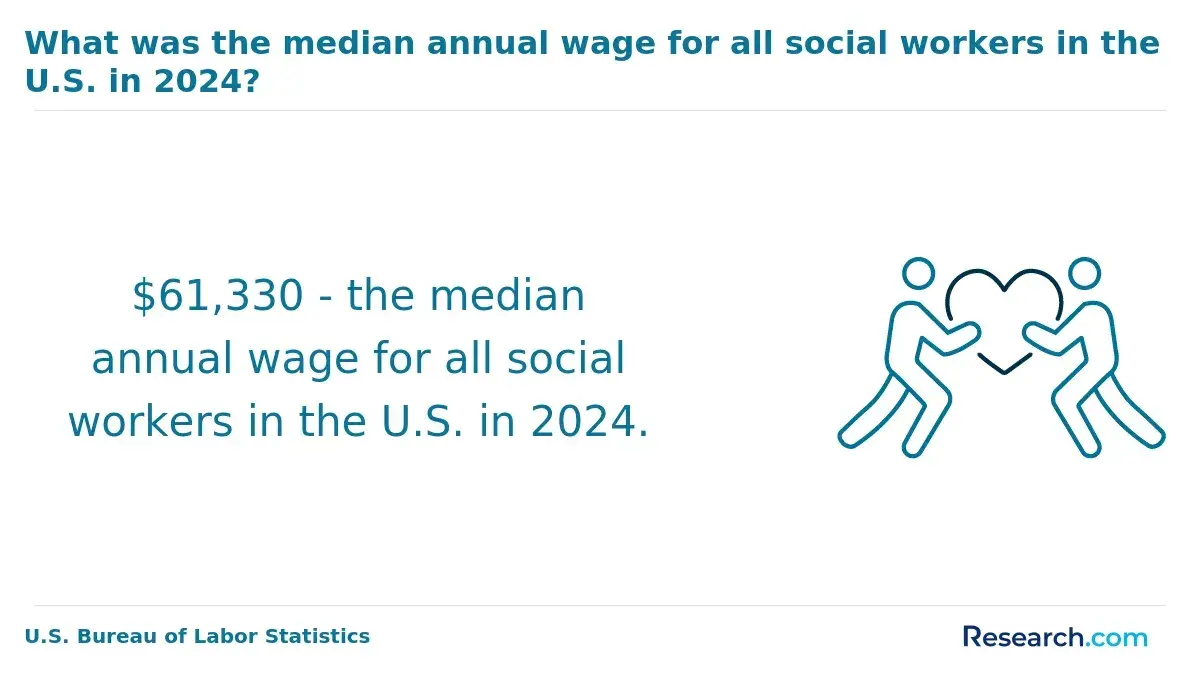
- Graduates with online social work degrees report employment rates comparable to traditional programs, with a median annual wage of $58,000 as of 2025.
Can You Become a Social Worker Online?
Yes. You can prepare for many social work careers through an online BSW or MSW, as long as the program is properly accredited and meets the requirements of the state where you plan to seek licensure. Online delivery changes how you attend classes; it does not remove the need for field education, supervised experience, or licensing exams.
Most students who want clinical or advanced social work roles pursue a Master of Social Work. Online MSW programs commonly combine asynchronous coursework, live class sessions, faculty advising, and in-person field placements at approved agencies near the student. This structure helps students keep a job or remain in their current community while completing professional training.
To become licensed, students typically need a degree from a Council on Social Work Education (CSWE) accredited program, supervised clinical hours, and a passing score on the appropriate licensing exam. Requirements vary by state, so prospective students should check the state board rules before enrolling, especially if they plan to move after graduation.
Online programs can also produce strong outcomes when they are well designed. For example, 98% of Columbia University School of Social Work's online MSW alumni are employed or pursuing further education within one year of graduation. That figure shows that online study can be a legitimate route into the profession when the program has strong academic standards and field placement support.
What to verify before choosing an online program
- CSWE accreditation for the exact program and degree format you intend to complete.
- Whether the curriculum aligns with your intended license, such as LMSW or LCSW preparation.
- How the school helps students secure local field placements.
- Whether online students receive the same advising, library access, career support, and licensure guidance as campus students.
- Whether the program is authorized to enroll students from your state.
Students who later want doctoral-level preparation for leadership, advanced practice, or teaching can also review accredited DSW programs, but a doctorate is not required for most social work positions.
What Degrees Are Needed for Social Work Careers?
The degree you need depends on the kind of social work you want to do. A BSW can qualify graduates for entry-level, nonclinical roles, while an MSW is usually the key credential for advanced practice, clinical licensure pathways, supervision, and specialized roles in healthcare, schools, mental health, and community agencies.
A Bachelor of Social Work introduces students to human behavior, social welfare policy, ethics, diversity, research, and generalist practice. Graduates may work as case managers, social work assistants, community outreach workers, or service coordinators, depending on state rules and employer requirements.
A Master of Social Work goes deeper. It prepares students for advanced generalist, clinical, policy, administrative, or community practice roles. Applicants do not always need a BSW to enter an MSW program, but those without a BSW may need to complete the standard two-year pathway rather than an advanced standing option.
How to match the degree to the career goal
- Entry-level human services work: A BSW may be enough for roles focused on case support, resource coordination, intake, and advocacy.
- Clinical therapy or independent practice: An MSW from a CSWE-accredited program is typically required, followed by supervised post-degree hours and a licensing exam.
- School, healthcare, child welfare, or substance abuse roles: Requirements vary, but many employers prefer or require an MSW for advanced positions.
- Research, university teaching, or high-level leadership: A PhD or DSW may be useful, but it is not necessary for most social work jobs.
CSWE accreditation is especially important for students who want licensure. A non-accredited degree can create serious problems: it may not meet state board requirements, may limit transfer options, and may weaken eligibility for some jobs. Students comparing online pathways should focus first on accreditation, then on specialization, field placement quality, cost, and schedule.
For students who need a cost-conscious graduate route, the most affordable MSW online programs can help identify accredited options that reduce tuition pressure without ignoring quality.
How Do Online Social Work Programs Get Accredited?
Online social work programs are accredited through the same academic quality process used for campus-based programs. In the United States, the key programmatic accreditor for social work education is the Council on Social Work Education (CSWE). CSWE accreditation signals that a program meets professional standards for curriculum, faculty qualifications, student learning outcomes, assessment, and field education.
The process is detailed. Programs complete self-studies, document how they teach required competencies, undergo review, and submit continuing reports. Online programs must show that distance learning students receive a rigorous education and appropriate field training, not simply online access to course materials.
Students should distinguish between institutional accreditation and programmatic accreditation. Regional accreditation, such as from the Higher Learning Commission, applies to the college or university. CSWE accreditation applies to the social work program itself. Both matter, but CSWE accreditation is the credential most closely tied to social work licensure eligibility.
Why accreditation matters
- Licensure: State boards commonly require a CSWE-accredited social work degree for licensed practice.
- Financial aid: Proper accreditation can affect eligibility for federal financial aid.
- Employment: Employers often prefer or require graduates from accredited programs.
- Transfer and doctoral study: Accredited coursework is more likely to be recognized by other institutions.
- Return on investment: Data shows that social workers with a master's degree from an accredited program earn about 25% more than those with only a bachelor's degree.
Before applying, students should confirm the program’s current accreditation status directly through CSWE and ask whether the online format is included. They should also ask about accreditation review cycles, field placement policies, licensing exam preparation, and graduate outcomes. Students seeking flexible graduate options can compare accelerated routes to an MSW degree online while still prioritizing CSWE standards.
Most online MSW programs require a bachelor’s degree from an accredited institution, official transcripts, letters of recommendation, a personal statement, and evidence that the applicant is prepared for graduate study and professional social work practice. A BSW is helpful but not always required.
Programs commonly look for a minimum GPA around 3.0, although some may review applicants with lower GPAs if they can show relevant experience, strong recommendations, improved academic performance, or compelling professional goals. Many schools request two or three recommendation letters from professors, supervisors, or professionals who can evaluate the applicant’s writing, judgment, ethics, and readiness to work with vulnerable populations.
The personal statement is often more important than applicants expect. It should explain why the student wants to enter social work, what populations or systems they hope to serve, how their background has prepared them, and whether their goals fit the program’s curriculum. Generic statements are weaker than focused, evidence-based essays that connect lived experience, volunteer work, employment, and career direction.
Common application components
- Bachelor’s degree from an accredited college or university.
- Official transcripts showing undergraduate coursework and GPA.
- Personal statement or statement of purpose.
- Two or three letters of recommendation.
- Resume listing work, volunteer, advocacy, or human services experience.
- Relevant experience in social service settings, often ranging from six months to a year.
- Interview, if required by the program.
- GRE scores only if the school still requires them, which is less common than in the past.
Applicants should also review whether the program offers concentrations that match their goals. Columbia University's online MSW offers four method specializations and seven fields of practice, showing how some programs allow students to tailor graduate training toward clinical, policy, administrative, or population-focused careers.
Students concerned about selectivity should not choose a program based only on ease of admission. Accreditation, licensure alignment, field placement quality, graduation support, and total cost are more important. For a broader comparison, review MSW online programs accredited and evaluate whether each option fits your academic profile and career plan.
The time required for an online social work degree depends on the degree level, enrollment pace, transfer credit, and field placement schedule. A full-time online MSW typically takes two years. Part-time MSW options may take three or four years, which can be more realistic for students working full time or managing family responsibilities. A BSW usually requires four years of full-time study, although accelerated programs can reduce this to three years through heavier course loads or year-round enrollment.
Field education is the part of the timeline students most often underestimate. Even when coursework is online, practicum hours are completed in person at approved agencies. These placements require predictable weekly availability, professional supervision, and coordination with the school’s field office.
For example, Rutgers School of Social Work's online MSW requires a generalist practicum with 10 hours weekly, increasing to 16.75 hours during advanced practicum stages, all completed at approved agencies nationwide. That kind of schedule can be manageable, but it requires planning with employers, family members, and transportation needs.
Factors that can shorten or lengthen the timeline
- Full-time versus part-time enrollment: Full-time study finishes faster but leaves less room for work and caregiving.
- Advanced standing eligibility: Students with a qualifying BSW may be able to complete a shorter MSW pathway, depending on school policy.
- Transfer credits: Prior graduate coursework may reduce required credits if accepted by the institution.
- Practicum availability: Delays in placement approval can affect progression.
- State licensure goals: Post-degree supervised hours add time after graduation for clinical licensing pathways.
Prospective students should ask for a sample course plan before enrolling. A realistic plan should show not only the semester-by-semester classes, but also when field education begins, how many hours per week it requires, and whether evening or weekend placements are available.
What Licensing Exams Must Social Workers Pass?
Social work licensing exams depend on the level of practice and the state where the graduate applies. In the United States, the Association of Social Work Boards (ASWB) administers commonly used exams at the Bachelor's, Master's, Advanced Generalist, and Clinical levels. Most states require a CSWE-accredited degree, an application to the state board, and a passing exam score for licensure.
The Licensed Clinical Social Worker (LCSW) pathway is the best-known route for independent clinical practice. Candidates usually need an MSW, supervised post-degree clinical experience, and a passing score on the Clinical exam. The exam assesses areas such as human development, assessment, psychotherapy, intervention planning, professional ethics, and practice with diverse populations.
Typically, candidates with an MSW from an accredited program, including online degrees, must complete about 3,000 supervised post-degree hours-roughly 2-3 years-before sitting for the Clinical exam. States may define eligible supervision, documentation rules, and approved practice settings differently, so students should confirm requirements with the relevant licensing board early.
Common license levels
- Bachelor's-level license: May support entry-level social work practice in states that offer this credential.
- Licensed Master Social Worker (LMSW): Usually requires an MSW and the Master's level exam; clinical work may be permitted only under supervision.
- Advanced Generalist license: May apply to experienced MSW-level practitioners in nonclinical or advanced practice roles, depending on the state.
- Licensed Clinical Social Worker (LCSW): Typically required for independent clinical practice, diagnosis-related services, and private practice authority.
Licensure is state-based, not school-based. Graduating from an online MSW program does not automatically make a student licensed, even if the program is accredited. Students should ask each program whether it provides state-specific licensure disclosures and whether its curriculum is designed to meet requirements in the student’s intended state of practice.
Graduates from Columbia University School of Social Work benefit from a well-regarded online MSW program. Data from Columbia University School of Social Work, Burning Glass Technologies: Labor Insight show their MSW graduates earn a median salary about 8% higher than the average for social workers nationally.
Other Things You Should Know About Social Work
Online social work programs still require supervised field placement. BSW programs usually require about 400 to 500 field hours, while MSW programs often require 900 or more. Placements must be approved by the program and completed in person at an agency that meets state and accreditation standards.
In 2027, beyond the basic social work license, professionals can pursue advanced certifications like Licensed Clinical Social Worker (LCSW) and Certified Advanced Children, Youth, and Family Social Worker (C-ACYFSW), among others, which enhance career prospects and specialization. These require additional training, supervision, and often a passing score on a national exam.
Yes, most states require social workers to complete continuing education credits to maintain their licenses. These educational activities update practitioners on current best practices, ethical standards, and legal requirements. Continuing education also supports professional growth and ensures competent service to clients.
- All CSWE Accredited Online MSW Programs (2025 Update) https://www.masterofsocialwork.com/online-msw-programs
- Social Worker Salary and Job Outlook - TrueCare24 https://www.truecare24.com/behavioral-health/social-worker-salary-and-job-outlook/
- Social Work Careers | Academy Online Learning https://academyonlinelearning.com/social-work-careers
- The Essential Guide to Becoming a Social Worker https://blog.cuaa.edu/essential-guide-becoming-a-social-worker-2163-6/
- Articles https://online.arbor.edu/news/social-work-jobs
- Social Worker Salary and Jobs in Social Work https://teach.com/online-ed/social-work-degrees/online-masters-social-work/salary-and-career-outlook/
- Medical Social Work Salary Overview | Psychology.org https://www.psychology.org/social-work/medical-social-work/
- Best Online MSW Programs - CSWE-Accredited https://www.onlinemastersdegrees.org/best-programs/social-work-msw/cswe-accredited/
- How Long Does It Take to Become a Social Worker? https://www.onlinemswprograms.com/careers/how-to-become-a-social-worker/how-long-does-it-take/
- Social Work Exam https://therapistdevelopmentcenter.com/social-work-exam