2027 Fastest Online MSW Programs You Can Finish in Under Two Years

Co-Founder and Chief Data Scientist
Choosing a fast online MSW program is not just a question of speed. The real decision is whether a shorter format can still give you the accredited coursework, supervised field experience, licensure preparation, and career support you need to move into social work responsibly.
Accelerated online MSW programs can be a strong fit for career changers, BSW graduates seeking advanced standing, and working professionals who want to qualify for social work roles without spending several years in school. They are also demanding. Shorter calendars usually mean heavier course loads, year-round enrollment, and carefully scheduled field placements.
This guide explains what “fast” means for online MSW programs, how long different pathways take, what accreditation requires, what admissions committees look for, how much these programs cost, and how to compare options based on licensure goals, field placement support, and career outcomes.
Key Things You Should Know
- Accelerated online MSW programs in 2026 enable completion in under two years, appealing to working professionals balancing career and education.
- These programs typically require 45-60 credit hours and blend synchronous and asynchronous learning for flexibility and interaction.
- Graduates from fast-track MSW programs remain eligible for licensure, with 70% reporting increased job opportunities within six months post-graduation.
What are the fastest online MSW programs under two years?
The fastest online MSW programs under two years are usually full-time, year-round programs designed for students who can handle an intensive academic and fieldwork schedule. Most accelerated options take 12 to 21 months, depending on whether the student qualifies for advanced standing, transfers eligible credits, or enrolls continuously through summer terms.
Universities such as the University of Southern California, Rutgers University, and Washington University offer intensive online MSW pathways that combine graduate coursework with structured field education. These programs are built for speed, but they still require students to complete the professional training expected of an MSW graduate.
Common fast MSW pathways
| Pathway | Typical student | How it reduces time | Main trade-off |
| Advanced standing MSW | Students with a CSWE-accredited BSW | Waives or shortens foundation coursework | Requires prior social work preparation |
| Full-time accelerated MSW | Students without a BSW who can study intensively | Uses heavier course loads and continuous terms | Less flexibility for full-time work |
| Transfer-credit or prior graduate coursework route | Students with eligible previous graduate credits | May reduce required credits if approved | Policies vary widely by school |
| Hybrid accelerated option | Working professionals needing some scheduling flexibility | Combines online courses with local or hybrid fieldwork | May still require evening, weekend, or daytime practicum hours |
Students with a Bachelor of Social Work from an accredited program often have the shortest route. Advanced Standing programs can reduce the degree length to about one year full-time because students have already completed foundational social work coursework at the undergraduate level.
For students without a BSW, finishing in under two years usually requires full-time enrollment, summer study, and a carefully planned practicum schedule. Field education may be completed alongside coursework, which can make the program feel like a full-time job even when classes are online.
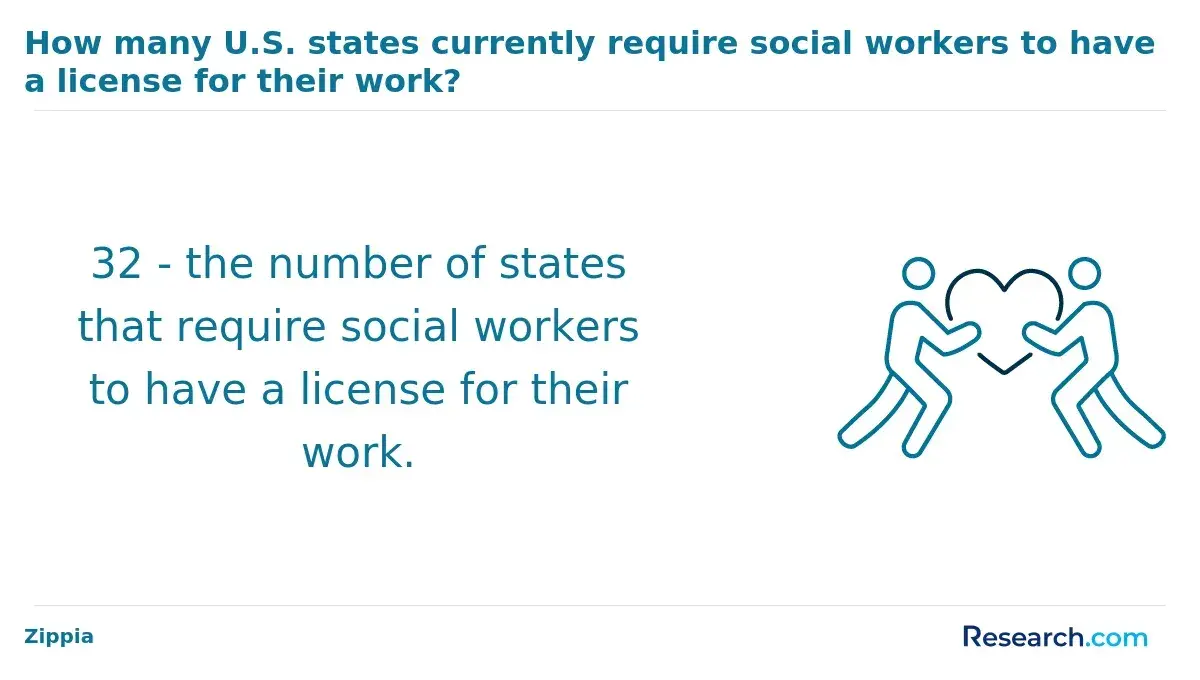
Before choosing any fast program, confirm that it is accredited by the Council on Social Work Education. CSWE accreditation is essential for many social work licensing pathways, including eligibility for clinical licensure in many states. It also helps ensure that acceleration does not come at the expense of required competencies, ethics training, and supervised practice.
From a financial perspective, finishing sooner can help students enter the workforce earlier. LCSW salaries rose 8.2% year-over-year, surpassing the national average increase of 4.1%. Students who later want doctoral-level preparation can also compare options such as a DSW social work online after completing the MSW and gaining professional experience.
How long do accelerated online MSW programs take?
Accelerated online MSW programs typically take 12 to 24 months. The shortest timelines are usually reserved for advanced standing students who already hold a Bachelor of Social Work. Students entering with an unrelated bachelor’s degree generally need closer to two years because they must complete foundational social work courses before moving into advanced practice content.
Advanced standing programs often take 12 to 18 months because they focus on graduate-level specialization rather than repeating BSW-level material. Standard accelerated programs may still finish in under two years, but they usually require a more compressed schedule and fewer breaks between terms.
How program format affects completion time
| Student background | Likely timeline | What to check before enrolling |
| BSW graduate entering advanced standing | 12 to 18 months | Whether the BSW must be CSWE-accredited and how recent the degree must be |
| Non-BSW graduate in a full-time accelerated program | Closer to two years | Course load, summer requirements, and field placement schedule |
| Part-time online student | Often longer unless the program is tightly structured | Whether the school still allows completion within two years |
| Student with approved transfer or prior graduate credits | Varies by school policy | Credit limits, course equivalencies, and residency requirements |
The biggest time drivers are enrollment intensity, field placement availability, and whether the program runs continuously across fall, spring, and summer. A program may advertise a fast completion time, but students should ask whether that timeline assumes full-time enrollment, daytime fieldwork, and no breaks between terms.
The Council on Social Work Education's (CSWE) 2025 data shows that BSW holders enter the workforce sooner, earning Licensed Clinical Social Worker (LCSW) licensure on average 18 months faster than those without a BSW. This advantage can matter for students who want to move into clinical practice as efficiently as possible.
Students comparing timelines should also compare cost, field placement support, and licensure alignment. Some affordable online MSW programs offer accelerated formats, but the best choice is the one that fits both your schedule and your state’s licensing requirements.
Which accredited universities offer fast-track online MSW degrees?
Accredited universities that offer fast-track online MSW degrees typically structure their programs around year-round coursework, advanced standing options, and coordinated field placements. The key is not simply whether a school offers online classes, but whether the full degree can be completed quickly while remaining aligned with CSWE standards.
Simmons University is one example of a university known for an accelerated MSW pathway. Graduates from Simmons reported a 92% employment rate in social work roles within six months of graduation in 2025, a figure that surpasses the national average of 85% (Simmons University MSW Program Outcomes Report 2025). For students evaluating fast programs, outcomes like employment rates can help indicate whether the shorter format still supports career readiness.
Other accredited fast online MSW degrees in the United States use similar acceleration strategies. These may include 18 to 24 months of continuous enrollment, summer and winter terms, condensed course sequencing, and intensive field education schedules. Some programs are designed mainly for students with prior social work education or relevant human services experience, while others admit career changers from unrelated academic backgrounds.
What to verify before choosing a fast-track university
- CSWE accreditation: Confirm the program, not just the university, is accredited or follows the accreditation status required for your licensing plan.
- Advanced standing rules: If you have a BSW, check whether it must come from a CSWE-accredited program and whether there are graduation-year limits.
- Field placement model: Ask whether the school finds placements for online students or expects students to identify agencies themselves.
- State authorization: Make sure the university can enroll students in your state and that field placements are permitted where you live.
- Licensure preparation: Confirm how the curriculum maps to your intended license, especially if you plan to become an LCSW.
Students should be cautious about choosing a program based only on the shortest advertised timeline. A fast-track MSW is useful only if the field placement schedule is realistic, the online format fits your work life, and the curriculum prepares you for the type of social work you want to practice.
For students comparing long-term earnings by location, reviewing social worker salaries by state can help connect program choice with regional job opportunities and cost-of-living considerations.
CSWE accreditation requirements for online MSW programs are designed to ensure that online students receive the same professional preparation as students in campus-based programs. Accreditation evaluates the curriculum, faculty, field education, assessment practices, and alignment with professional social work competencies.
Programs must align with the 2022 Educational Policy and Accreditation Standards (EPAS). These standards cover core areas such as human behavior, social welfare policy, research methods, ethical practice, diversity and inclusion, and effective work with individuals, families, groups, organizations, and communities.
Key CSWE requirements students should understand
- Comprehensive curriculum: Students must receive training across foundational and advanced social work competencies, not only narrow job skills.
- Field education: Accredited MSW programs require at least 900 clock hours of supervised practice.
- Qualified faculty: Programs must use faculty with appropriate academic and professional credentials, including doctoral degrees in social work or related fields.
- Student outcome assessment: Schools must track whether students meet required competencies and use the results to improve the program.
- Equivalent online quality: Online delivery must meet the same academic and field standards as in-person delivery.
Field education is often the most important accreditation issue for online students. A program may deliver coursework online, but students still need approved supervised practice. Prospective students should ask how local placements are arranged, who approves the agency, how supervision works, and what happens if a placement falls through.
CSWE accreditation matters because many employers and licensing boards use it as a baseline requirement. Without it, graduates may face barriers to licensure or may need additional education to qualify for certain roles. This is especially important for students pursuing clinical licensure across state lines.
For example, Fordham University's 16-month online MSW alumni earned a median starting salary of $68,000 in 2025, 12% higher than traditional graduates, according to the Fordham Graduate School of Social Service Career Outcomes Survey 2025. While salary depends on many factors, this example shows that a structured online MSW can be both accelerated and professionally credible when it maintains strong academic and field standards.
Students evaluating the benefits of studying social work should treat CSWE accreditation as a nonnegotiable screening factor, especially if licensure, clinical practice, or public-sector employment is part of the plan.
Typical admission requirements for accelerated MSW programs include a bachelor’s degree from a regionally accredited institution, a competitive undergraduate GPA, relevant service experience, recommendations, and a personal statement that shows readiness for graduate-level social work. Many schools expect a minimum GPA of 3.0, although some may consider applicants with lower GPAs when professional experience, academic improvement, or strong references support the application.
Applicants with degrees in psychology, sociology, human services, public health, education, or related fields may have an easier time showing preparation, but an unrelated major does not automatically rule out admission. Career changers are common in MSW programs. The stronger question is whether the applicant can explain why social work is the right professional path and demonstrate readiness for intensive study and fieldwork.
Common application components
| Requirement | What admissions committees look for | How to strengthen it |
| Bachelor’s degree | Completion of an accredited undergraduate program | Submit complete transcripts and explain any academic gaps or weak terms |
| Minimum GPA | Often 3.0, with some flexibility by program | Highlight recent strong coursework or relevant graduate-level classes if applicable |
| Experience | Usually 300 to 500 hours of professional or volunteer experience in social services | Choose experiences involving direct service, advocacy, crisis support, or community work |
| Statement of purpose | Commitment to social work values, ethical awareness, and clear career goals | Be specific about populations, practice areas, and why an accelerated format fits |
| Recommendations | Two to three letters from people who can assess your readiness | Ask supervisors or instructors who can discuss writing, judgment, reliability, and empathy |
| Interview | Fit for the program and readiness for a demanding pace | Prepare to discuss time management, field placement availability, and emotional resilience |
The GRE is less commonly required, although certain programs may still request it. If a program does not require the GRE, admissions materials such as the personal statement, resume, and references become even more important.
Accelerated formats compress a traditional two-year curriculum into 12 to 18 months, so schools want evidence that applicants can manage heavy reading, writing, group work, and field hours at the same time. Strong candidates usually show maturity, self-awareness, cultural humility, and a realistic understanding of social work practice.
Cost can also shape admissions decisions. The most affordable accelerated online MSW programs averaged $25,000 in total tuition, offering about a 285% return on investment within five years after graduation. Applicants should still evaluate total cost carefully, including fees, books, travel to field sites, and any income reduction caused by practicum hours.
Fast online MSW programs cover the same major areas expected in graduate social work education, but the pace is more compressed. In 2026, a strong accelerated curriculum should prepare students for ethical practice, evidence-informed intervention, policy analysis, research literacy, and supervised work with diverse populations.
Core courses commonly include human behavior and the social environment, social welfare policy, research methods, practice theory, assessment, and clinical or community intervention. Students also study professional ethics, cultural competence, trauma-informed practice, and legal responsibilities relevant to social work settings.
Typical curriculum areas
- Human behavior and social environment: How individuals, families, groups, and communities develop and respond to social conditions.
- Social welfare policy: How laws, institutions, and public programs affect access to services and client outcomes.
- Research methods: How to evaluate evidence, interpret data, and apply research to practice decisions.
- Direct practice: Interviewing, assessment, case planning, crisis intervention, and therapeutic techniques.
- Macro practice: Community organization, advocacy, program development, leadership, and policy change.
- Ethics and professional standards: Confidentiality, boundaries, mandated reporting, documentation, and ethical decision-making.
- Field education: Supervised practice in agencies such as hospitals, schools, community organizations, behavioral health clinics, or public service settings.
Many programs allow students to choose a concentration or specialization. Clinical social work tracks often emphasize mental health assessment, diagnosis, treatment planning, and evidence-based interventions. Community practice or policy tracks may focus more on program design, advocacy, leadership, and systems-level change.
According to California's Employment Development Department Labor Market Information 2025, demand for clinical social workers is expected to rise by 22% between 2024 and 2025, underscoring the importance of strong clinical components for students who plan to pursue mental health or behavioral health roles.
Field education is where students apply classroom learning to real practice situations. In accelerated programs, practicum expectations can be especially intense because field hours may run concurrently with multiple graduate courses. Before enrolling, students should ask how many hours per week fieldwork requires, whether evening or weekend placements are available, and whether the school supports placements near the student’s location.
Online delivery usually combines synchronous learning, such as live classes or skills labs, with self-paced work such as readings, recorded lectures, discussion boards, and assignments. The best fast programs use online tools to increase access without weakening the interpersonal, ethical, and reflective training that social work requires.
Accelerated online MSW programs generally cost $20,000 to $50,000 for the full curriculum. The final price depends on the school, public or private status, residency rules, credit requirements, fees, and whether the student qualifies for advanced standing.
Public universities are often less expensive for in-state students, with some total costs below $25,000. Private universities and out-of-state tuition rates may reach $40,000 or higher. Students should compare total program cost rather than only the per-credit tuition rate, because accelerated programs may charge flat-rate tuition, term-based fees, or separate practicum-related costs.
Costs to include in your comparison
- Tuition: Charged by credit hour, term, or full program depending on the school.
- University fees: Technology, student services, online learning, graduation, and administrative fees may be separate.
- Field placement expenses: Transportation, background checks, immunizations, liability insurance, and onboarding requirements can add costs.
- Books and materials: Online programs may still require textbooks, assessment tools, software, or course packets.
- Lost or reduced income: Fieldwork may require daytime availability, which can affect work hours.
- Licensure costs after graduation: Exam fees, supervision expenses, and application fees may apply depending on the state.
Students typically complete between 30 and 45 credit hours, with accelerated paths allowing graduation within 12 to 18 months. A flat-rate term model can benefit students who can take a heavier load, while per-credit tuition may be better for students who need to slow down. Always ask whether the advertised cost includes all required terms, field education fees, and technology charges.
Financial aid may include federal loans, grants, state scholarships, university scholarships, employer tuition assistance, and service-based funding. Students should complete required financial aid forms early and ask each program whether scholarships are available specifically for online or accelerated MSW students.
Speed can also affect the value calculation. Finishing sooner may allow graduates to return to full-time work or move into MSW-level roles earlier. For instance, accelerated MSW graduates accounted for 75% of new substance abuse counselor hires in the Midwest during a notable 15% employment growth period. However, students should avoid assuming that the fastest option is automatically the best financial option; debt, licensure timeline, and local salaries all matter.
An MSW degree can lead to clinical, administrative, policy, advocacy, and community-based careers. The best path depends on your concentration, field placements, state licensure rules, and whether you plan to provide therapy or work in nonclinical social service roles.
Many graduates pursue Licensed Clinical Social Worker (LCSW) roles, providing counseling, psychotherapy, assessment, and treatment support for individuals, families, and groups facing mental health, substance use, trauma, or relationship challenges. Clinical practice usually requires postgraduate supervised experience and passing the required licensing exam, so students should review their state’s rules before choosing a program.
Common MSW career paths
| Career path | Typical work settings | Best preparation during the MSW |
| Clinical social worker | Mental health clinics, hospitals, private practice, community agencies | Clinical concentration, therapy-focused field placement, licensure preparation |
| Healthcare social worker | Hospitals, rehabilitation centers, hospice, outpatient care | Medical social work placement, case management, care coordination training |
| School social worker | K-12 schools and education systems | School-based practicum, child and family coursework, knowledge of education systems |
| Child welfare social worker | Public agencies, foster care organizations, family service nonprofits | Child welfare coursework, trauma-informed practice, safety assessment experience |
| Substance abuse counselor or behavioral health specialist | Treatment centers, community clinics, integrated care settings | Addiction coursework, motivational interviewing, clinical supervision pathways |
| Program director or policy specialist | Nonprofits, government agencies, advocacy organizations | Macro practice, leadership, program evaluation, policy analysis |
Administrative opportunities include program directors, policy specialists, grant managers, and agency leaders who design, manage, and evaluate social programs. MSW graduates may also work in gerontology, forensic social work, community advocacy, veterans services, crisis response, and corporate social responsibility.
Professionals completing accelerated MSW programs tend to reach supervisory roles 2.1 years earlier and earn median salaries about 28% higher, at $92,500, according to the National Association of Social Workers 2025 Workforce Study. While individual outcomes vary, accelerated study can help motivated students move more quickly toward advanced roles when paired with the right field placements and licensure planning.
Students should choose field placements that match their intended career path. A student aiming for clinical licensure should prioritize mental health, behavioral health, or therapy-adjacent placements. A student interested in policy or leadership should look for placements involving program management, advocacy, community planning, or evaluation.
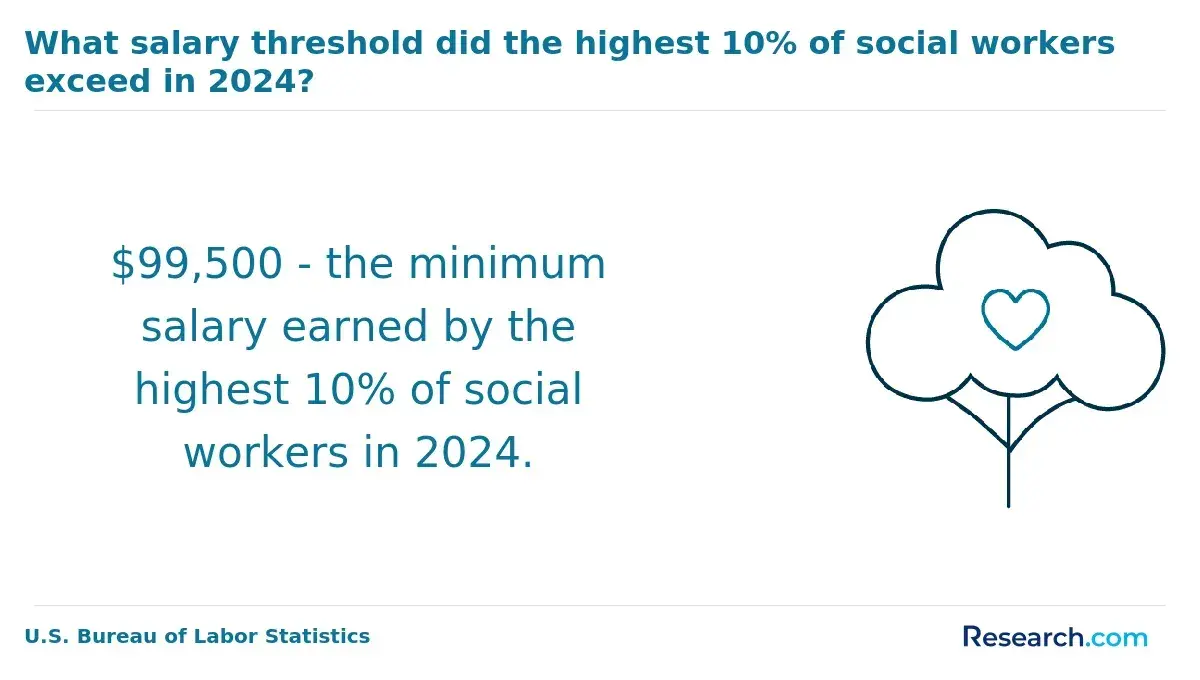
The average salary for professionals with a Master of Social Work degree typically ranges from $60,000 to $75,000 annually, depending on experience, location, specialization, employer type, and licensure status. Licensed Clinical Social Workers often earn more, with salaries exceeding $80,000 in some urban or high-demand areas. Entry-level MSW graduates generally start around $50,000 and may see substantial increases within five years as they gain experience, supervision hours, and credentials.
The job outlook for MSW professionals is positive, with a 12% projected growth rate through 2030 across healthcare, mental health, child welfare, and school social work fields. Demand is supported by ongoing needs in behavioral health, public assistance, healthcare navigation, aging services, and school-based support.
Factors that influence MSW earnings
- Licensure: LCSW status can open access to clinical roles and independent practice opportunities in many states.
- Specialization: Mental health, healthcare, substance use, and leadership roles may offer different salary ranges.
- Geography: Salaries vary by state, metro area, rural demand, and cost of living.
- Employer type: Hospitals, government agencies, schools, nonprofits, private practices, and corporate settings may pay differently.
- Experience: Supervisory, program management, and specialized clinical experience can raise earning potential.
Accelerated MSW programs may shorten the time between enrollment and eligibility for MSW-level roles. According to the Association of Social Work Boards Annual Licensure Report, 68% of accelerated MSW graduates earned their LCSW within one year after graduation, compared to 45% from traditional programs. Faster licensure can lead to earlier access to higher-paying clinical roles, although each state sets its own supervision and exam requirements.
Students should avoid evaluating salary in isolation. A program with higher tuition may not be worthwhile unless it provides strong field placement support, licensure alignment, and career outcomes. Likewise, a lower-cost program may be a better long-term choice if it meets accreditation requirements and helps students enter the right local job market.
How to choose the best accelerated online MSW program?
The best accelerated online MSW program is the one that is accredited, fits your schedule, supports your field placement, aligns with your state’s licensing rules, and leads toward the type of social work career you want. Speed matters, but it should not be the only deciding factor.
Use this checklist before applying
- Confirm CSWE accreditation: This is essential for many licensure and employment pathways.
- Check state licensure alignment: Ask whether the curriculum meets educational requirements in the state where you plan to practice.
- Understand the field placement process: Find out whether the school secures placements, assists with matching, or expects students to arrange sites independently.
- Compare real completion timelines: Ask whether the advertised timeline assumes full-time study, summer enrollment, advanced standing, or daytime practicum availability.
- Evaluate online format: Determine how much coursework is asynchronous, how often live sessions meet, and whether attendance times fit your work schedule.
- Review total cost: Include tuition, fees, books, field placement expenses, travel, and potential lost income.
- Look at outcomes: Consider graduation rates, licensure exam pass rates, employment support, and alumni career paths when available.
- Match the specialization to your goals: Clinical, school, healthcare, child welfare, policy, and macro practice tracks prepare students for different roles.
Field placement support deserves special attention. A program can be academically strong but difficult to complete if it cannot help online students find approved practicum sites. This is especially important for students in rural areas, students working full time, or students planning to enter specialized fields such as telehealth. Telehealth accounts for 40% of new clinical hires from accelerated pathways according to the U.S. Bureau of Labor Statistics 2025-2033 Occupational Outlook.
Cost should be weighed against career value and debt risk. Students entering a job market projected to grow 13% nationally by 2033 may benefit from completing the degree quickly, but only if the program keeps borrowing manageable and supports licensure progress.
Faculty expertise is another useful signal. Programs with faculty active in clinical social work, policy, digital health, behavioral health, or community practice may offer stronger mentoring and more relevant coursework. Students should also ask how accessible faculty are in the online format and whether advising is proactive or mostly self-directed.
Finally, choose the program that you can realistically finish. Accelerated online MSW study is demanding. The strongest option is not always the fastest one; it is the program that balances accreditation, affordability, schedule fit, field training, and career alignment without compromising the professional preparation social work requires.
Other Things You Should Know About Social Work
Students in 2027's fast online MSW programs typically have access to virtual academic advising, online tutoring, and career counseling services. These support services ensure students can manage the program's demands and transition successfully into the social work field.
Yes, most accelerated online MSW programs require field placements or internships as part of their curriculum to meet accreditation standards and provide practical experience. These placements are often arranged locally to accommodate online students' locations and can usually be scheduled to fit each student's availability.
Fast online MSW programs for 2027 typically require a reliable computer, high-speed internet, and updated software such as Microsoft Office or similar programs. Some courses may also require specific platforms for virtual classrooms or secure exam environments.
Yes. Most accelerated online MSW programs accept applicants with any accredited bachelor’s degree, including psychology, sociology, or business. Programs often require a minimum GPA, typically 2.75 to 3.0, plus transcripts, letters of recommendation, and a statement of purpose.
- CSWE Accreditation Requirements and Standards https://lumivero.com/resources/blog/cswe-accreditation/
- Social Worker Salary and Job Outlook - TrueCare24 https://www.truecare24.com/behavioral-health/social-worker-salary-and-job-outlook/
- Advanced Standing Online MSW Programs https://socialworklicensemap.com/social-work-degrees/online-msw-programs/advanced-standing/
- One Year MSW Programs in California https://www.californiasocialworkedu.org/msw-programs-in-california/one-year-msw-programs/
- Admission requirements https://socialwork.wayne.edu/msw/requirements
- What is CSWE Accreditation, and Why Is It Important? https://onlinedegrees.keuka.edu/blog/cswe-accreditation
- Best Affordable Master's Degree In Social Work https://www.psychology.org/social-work/best-affordable-masters-programs/
- Admission Requirements for MSW Programs: Traditional and Advanced Standing https://www.masterofsocialwork.com/resources/admission-requirements-for-msw-programs
- Online MSW Programs Guide: Accredited & Affordable - AU https://online.aurora.edu/program-resources/choosing-best-msw-degree/
- What Careers can you pursue with a Social Work degree? https://www.pointloma.edu/resources/counseling-psychology/what-careers-can-you-pursue-social-work-degree