2027 Dual Degree Options That Pair Well With an MSW

Co-Founder and Chief Data Scientist
An MSW can qualify graduates for many direct practice, community, policy, and leadership roles, but some career goals require more than social work training alone. If you want to work at the intersection of social services and law, public health, business, education, healthcare administration, criminal justice, or human rights, a dual degree may help you build the right credential mix without completing two separate programs from start to finish.
MSW dual degree programs are most useful for students who already have a clear professional direction. They can expand your career options, strengthen your leadership profile, and help you qualify for specialized roles, but they also require more time, tuition, fieldwork coordination, and careful planning. This guide explains which dual degrees pair well with an MSW, what careers they support, how admissions and accreditation work, what programs typically cost, and how to decide whether the added credential is worth the investment.
Key Things You Should Know
- Dual degree programs pairing an MSW with law, public health, or business increase career versatility, with 42% of social workers pursuing interdisciplinary skills by 2025.
- Students gain competitive advantages in leadership, policy, and clinical roles, with combined degrees boosting median salary by up to 30% compared to MSW-only holders.
- Flexible program formats, including online and part-time options, expand access for working professionals aiming to complete dual degrees within three to four years.
What are the best dual degree options with an MSW?
The best dual degree option with an MSW depends on the problem you want to solve professionally. Some combinations prepare graduates for legal advocacy, others for population health, nonprofit leadership, school systems, government policy, or clinical research. The strongest choice is not simply the degree with the highest salary potential; it is the one that matches your target role, licensure plans, and preferred work setting.
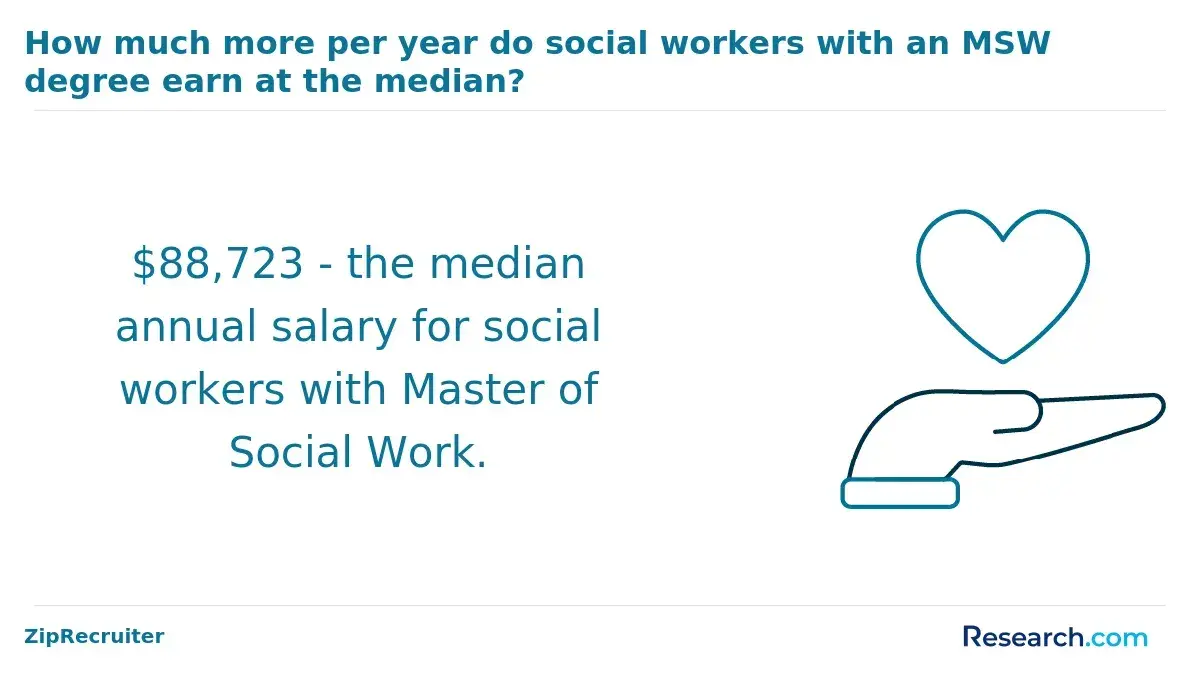
The MSW/JD is one of the most versatile and career-expanding combinations. Among MSW dual degree programs that enhance career opportunities, it stands out because graduates earn a median salary of $105,000 annually—28% above those with only an MSW, according to 2025 Bureau of Labor Statistics data. This pathway is especially relevant for students interested in family law, child advocacy, disability rights, legal aid, public interest law, and policy reform.
Other strong dual degree options include MSW/MPH programs for students who want to address social determinants of health at the community or systems level. This pairing is useful for careers in community health, epidemiology, prevention programs, behavioral health planning, and health policy.
An MSW/MBA is better suited to students who want executive, operational, or entrepreneurial roles. It combines social service expertise with budgeting, strategy, organizational management, and financial decision-making, making it relevant for nonprofit management, healthcare administration, foundation work, and social entrepreneurship.
Students interested in schools, youth services, and education policy may benefit from an MSW/MEd or an MSW/PhD in education. These combinations can support counseling-adjacent roles, school-based program leadership, education nonprofits, student support services, and policy work. A joint MSW/MPA can be a strong fit for students who want to design, manage, evaluate, or fund public programs in government or community agencies.
Best-fit dual degree options by career direction
- MSW/JD: Best for legal advocacy, child welfare law, disability rights, court-connected services, and public interest policy.
- MSW/MPH: Best for community health, behavioral health systems, prevention, epidemiology-informed programming, and health equity work.
- MSW/MBA: Best for nonprofit leadership, healthcare operations, social enterprise, grant-funded organizations, and executive management.
- MSW/MEd or MSW/PhD in education: Best for school systems, student support services, education policy, and research-focused education roles.
- MSW/MPA: Best for government, public administration, social policy, program evaluation, and public-sector leadership.
Before choosing a program, compare total cost, field placement requirements, accreditation, licensure alignment, and whether the second degree is truly required for your target role. Students who want advanced clinical or leadership preparation after the MSW can also explore online doctor of social work programs for later specialization and executive-level development.
Which dual degrees pair most effectively with social work?
The dual degrees that pair most effectively with social work are those that add a distinct professional lens to the MSW rather than duplicating social work coursework. The most useful combinations expand what you can do with clients, organizations, systems, or policy decisions.
The MSW/MPH is often one of the strongest interdisciplinary master's degree options in social work because it connects individual and family needs with public health strategy. Graduates are prepared for work in community health, epidemiology-informed programs, health policy, prevention initiatives, and population-level behavioral health. According to the U.S. Department of Health & Human Services, MSW/MPH professionals saw 15% faster job growth in 2025 compared to those with only an MSW, driven by rising behavioral health needs post-pandemic.
Other effective combinations include:
- MSW/JD (Juris Doctor): A strong choice for social justice, child advocacy, disability rights, public interest law, and policy reform. This pairing helps professionals understand both legal systems and clients' psychosocial needs.
- MSW/MBA: Best for students who want to lead organizations, manage budgets, supervise teams, launch programs, or move into nonprofit and healthcare administration.
- MSW/MHA (Master of Healthcare Administration): Useful for social workers who want to manage healthcare programs, coordinate hospital-based services, or influence healthcare delivery and policy.
- MSW/PhD or MSW/MA in Psychology: Relevant for students interested in research, mental health specialization, program evaluation, clinical supervision, or academic work, depending on the degree structure and licensure rules.
How to decide which pairing is strongest for you
Start with the work environment you want. If you want to improve health outcomes across communities, MSW/MPH is usually a better fit than MSW/MBA. If you want to run an agency or manage large programs, MSW/MBA or MSW/MHA may be more practical. If you want to remove legal barriers for vulnerable clients, MSW/JD is the more direct route.
Also consider whether the second degree is required, preferred, or only indirectly helpful in your target jobs. A dual degree can strengthen a resume, but it is most valuable when employers in your field actively recognize the credential and when the curriculum includes fieldwork, internships, or projects connected to your career goal.
What careers can dual MSW degrees unlock?
Dual MSW degrees can open roles that require both social work expertise and specialized knowledge from another field. These careers often move beyond traditional case management or clinical practice into leadership, advocacy, policy, program design, legal systems, healthcare, education, or justice reform.
An MSW/MBA can prepare graduates for nonprofit executive roles, program director positions, social enterprise leadership, and healthcare administration. These jobs require the ability to understand client and community needs while also managing budgets, staff, operations, grants, and performance outcomes. According to the Nonprofit Times 2025 Salary & Compensation Report, nonprofit executives holding MSW/MBA credentials earn starting salaries averaging $142,000, a 35% premium over those with just an MSW.
Job opportunities with MSW and law dual degrees often include legal advocacy, child welfare law, family law support, disability rights, policy reform, public interest law, government work, and judicial advocacy. The value of the pairing is its ability to connect legal remedies with trauma-informed and client-centered practice.
Professionals with dual degrees in social work and public health often lead community health initiatives, mental health programs, substance abuse treatment services, prevention campaigns, health equity projects, or integrated care programs. Their work may focus on systems-level change rather than only one-on-one service delivery.
MSW/criminal justice combinations can support careers in juvenile justice, probation and parole services, reentry programs, victim advocacy, correctional mental health, diversion programs, and restorative justice. These roles require an understanding of rehabilitation, public safety, trauma, family systems, and community reintegration.
Common career paths by dual degree
- MSW/JD: Legal advocate, child welfare law specialist, public interest policy analyst, disability rights advocate, court program coordinator.
- MSW/MPH: Community health program manager, behavioral health policy specialist, prevention program director, health equity coordinator.
- MSW/MBA: Nonprofit executive, program director, healthcare administrator, social enterprise leader, operations manager.
- MSW/MPA: Public program manager, policy analyst, government agency leader, community development administrator.
- MSW/criminal justice: Reentry program leader, juvenile justice specialist, restorative justice coordinator, probation or parole services administrator.
Career outcomes still depend on location, licensure, employer type, field experience, and the reputation and accreditation of both programs. To compare income expectations by location, use the MSW salary by state resource.
MSW dual degree admission requirements usually combine the standards of two graduate programs. Applicants must be admissible to the MSW program and to the partner program, which may mean submitting separate materials, meeting different deadlines, and satisfying distinct academic or professional prerequisites.
Most programs require a completed bachelor's degree and a minimum GPA around 3.0. Applications commonly include official transcripts, letters of recommendation, a resume, and a personal statement explaining the applicant's professional goals and why the dual degree is necessary. GRE scores may be required by some schools, but they are often waived.
Requirements vary by pairing. MSW/MPA candidates may need to show interest or experience in government, policy, nonprofit work, public service, or community action. MSW/JD applicants may need to meet law school admissions standards. MSW/MPH applicants may be asked to explain their interest in health equity, epidemiology, community health, or health policy. Admissions committees often look for leadership potential, academic readiness, and a clear reason for pursuing two degrees rather than one.
This is especially relevant for public-sector pathways, given the 22% employment increase for MSW/MPA graduates in government roles recently. Strong applicants should connect their experience to specific public service, policy, or social program goals rather than giving a broad statement about wanting to help people.
Typical application materials
- Official undergraduate and, if applicable, graduate transcripts
- Resume showing work, volunteer, internship, research, or service experience
- Letters of recommendation from academic, professional, or field supervisors
- Personal statement addressing both social work and the partner discipline
- GRE or other test scores if required and not waived
- Interview, when required, to assess communication skills, professionalism, and fit
- English proficiency scores such as TOEFL or IELTS for international applicants
- Background checks for practicum or field placement eligibility
Because dual-degree students must complete requirements in two academic areas, applicants should contact admissions counselors early. Ask whether you must apply to both programs at the same time, whether admission to one program guarantees admission to the other, how field placements are coordinated, and whether course credits overlap.
Applicants can strengthen their candidacy through direct social service experience, policy work, legal aid volunteering, public health projects, nonprofit leadership, or research experience connected to the intended dual degree. If you are still deciding whether graduate social work is the right investment, reviewing “Is an MSW degree worth it?” can help clarify the broader value of the credential.
Most MSW dual degree programs take three to four years of full-time study, although the exact timeline depends on the partner degree, credit-sharing rules, field placement structure, and whether the student attends full time or part time. Programs are usually shorter than earning two degrees separately because some credits overlap.
An MSW/JD typically takes four years because law coursework is extensive and must be completed alongside social work classes and field education. MSW/MPH and MSW/MBA programs often finish in about three years when schools allow shared credits, summer enrollment, or integrated course sequencing.
Part-time dual degree options can be useful for working professionals, but they typically require four to six years. The longer timeline can reduce semester-by-semester workload, but it may increase total living costs, delay salary gains, and require careful planning around field placements.
Factors that affect completion time
- Credit overlap: Programs with shared electives or cross-counted credits are usually faster.
- Field placement coordination: Social work field education may limit how quickly students can progress.
- Summer courses: Summer enrollment can shorten the calendar timeline.
- Partner degree requirements: JD and some doctoral pathways usually require more time than many master's pairings.
- Enrollment status: Part-time study adds flexibility but lengthens completion.
- Licensure planning: Students pursuing clinical social work licensure should ensure the curriculum and fieldwork meet state expectations.
Students considering faith-based or pastoral care roles may encounter MSW/M.Div. programs lasting three to four years, supported by coordinated scheduling between disciplines. The demand for MSW/M.Div. dual-degree holders is rising significantly, with an anticipated 18% increase by 2025 in faith-based organizations. Median salaries for these roles can reach $92,000, reflecting growing needs in community mental health and pastoral care.
When comparing program length, do not focus only on the fastest option. A slightly longer program may be worth it if it offers stronger field placements, better licensure alignment, more relevant internships, or deeper access to both professional networks.
MSW dual degree program costs vary by institution, degree combination, residency status, program length, and delivery format. Tuition typically ranges from $25,000 to over $60,000 for the entire program. Public universities generally offer lower rates for in-state students, often between $25,000 and $40,000, while private or elite schools can charge $50,000 to $65,000 or more.
Students should also budget for costs beyond tuition. Additional fees—including technology, activity, and clinical placement charges—may add several thousand dollars. Books, transportation, licensing exam preparation, background checks, relocation, and reduced work hours can also affect the true cost of attendance.
Programs that combine an MSW with degrees such as an MA in counseling or public health usually take 3 to 4 years, which can increase costs compared with a traditional 2-year MSW. Some schools reduce the financial burden by allowing students to complete both degrees in about 3 years through overlapping coursework.
Online and part-time options may improve flexibility, but they do not automatically lower tuition. Many online programs charge similar per-credit rates, and part-time enrollment can extend the period during which students pay fees or carry living expenses.
Cost factors to compare before enrolling
- Total program tuition: Ask for the full estimated cost, not only the per-credit rate.
- Residency status: In-state tuition at public universities can substantially affect affordability.
- Credit sharing: More overlapping credits may reduce both time and tuition.
- Field placement logistics: Travel, unpaid hours, and scheduling constraints can create indirect costs.
- Financial aid: Scholarships, grants, assistantships, loans, and employer tuition reimbursement vary by institution.
- Dual degree scholarships: Some schools reserve scholarships specifically for dual degree cohorts.
- Lost income: Full-time study may reduce earnings while enrolled.
Cost should be weighed against career relevance, not assumed prestige. Educators with MSW/MA dual degrees in school social work have reported 25% higher retention rates through 2025, as noted in the National Association of School Psychologists 2025 impact study. This aligns with better student outcomes in trauma-informed settings and suggests that a dual degree can support both professional effectiveness and longer-term career stability when the credential fits the role.
MSW dual degree programs may be available online, on campus, or in hybrid formats, but availability depends heavily on the partner degree. Many MSW courses can be delivered online, yet field education must still be completed through supervised placements. Some partner degrees, such as business or public health, may be easier to offer online than law, healthcare administration, or highly cohort-based programs.
Online formats can be a strong option for working professionals, caregivers, and students who cannot relocate. However, students should verify that online programs maintain the same accreditation, field placement standards, faculty access, and licensure preparation as campus-based options.
On-campus programs may offer stronger face-to-face networking, easier access to faculty, campus-based research centers, and more structured practicum support. They can be especially valuable for students entering a new field without an established professional network.
Hybrid programs can offer a middle ground. Some universities allow students to complete portions of the curriculum online while attending required residencies, weekend sessions, intensives, or in-person courses for the partner degree.
Dual degrees such as MSW/MA in criminal justice can have notable career impact. Graduates with this combination filled 40% of reentry program leadership roles in 2025, reflecting growing community corrections funding and workforce demand, as reported by the Council of State Governments Justice Center 2025 recidivism report.
Online vs. on-campus: key questions to ask
- Field placement support: Will the school help secure placements near you, or must you find them independently?
- Licensure alignment: Does the program meet requirements in the state where you plan to practice?
- Accreditation: Is the MSW portion accredited, and is the partner degree properly recognized?
- Scheduling: Are courses asynchronous, live, weekend-based, or cohort-based?
- Networking: How will you build relationships with faculty, peers, alumni, and employers?
- Residency requirements: Are there mandatory campus visits or in-person intensives?
- Work-life balance: Can you realistically complete coursework, field hours, and job responsibilities at the same time?
Both online and on-campus formats can be academically sound. The better choice is the format that offers accredited coursework, reliable field placement support, realistic scheduling, and direct alignment with your career and licensure plans.
MSW dual degree curricula combine core social work training with specialized coursework in another discipline. The MSW side typically covers human behavior, social welfare policy, assessment, clinical or macro practice, research methods, ethics, diversity, and supervised field education. The partner degree adds expertise in areas such as public health, law, business, education, gerontology, criminal justice, public administration, or healthcare administration.
The strongest programs do more than place two degrees side by side. They integrate coursework, advising, field placements, internships, and capstone projects so students can apply both disciplines to real problems.
Common program examples include:
- MSW/JD: Integrates social work practice with legal knowledge related to child welfare law, family systems, disability rights, policy advocacy, and public interest law.
- MSW/MPH: Combines clinical and community social work with epidemiology, community health planning, prevention, health policy, and population health methods.
- MSW/MBA: Emphasizes nonprofit leadership, finance, organizational strategy, social entrepreneurship, program management, and administrative decision-making.
- MSW/MS in Gerontology: Focuses on aging studies, long-term care, mental health services for older adults, caregiving systems, and policy affecting aging populations.
Many dual degree tracks require interdisciplinary projects, internships, or field experiences that satisfy requirements across both programs. This coordination matters because poorly integrated programs can create scheduling conflicts or duplicate coursework without adding enough professional value.
Graduates of MSW/MS gerontology programs are well-positioned for workforce demands, with projections estimating 1.2 million new long-term care jobs by 2030 and a 20% higher median salary of $88,000 by 2025.
What to review in the curriculum before applying
- How many credits are required for each degree and how many can be shared
- Whether the MSW concentration is clinical, macro, advanced generalist, or specialized
- How field placements are assigned and whether they align with the partner discipline
- Whether students receive advising from both schools or departments
- Whether there are interdisciplinary capstones, clinics, practicums, or applied projects
- Whether the course sequence supports timely graduation without overloading students
Students comparing traditional and flexible pathways may also explore MSW online programs that combine virtual coursework with supervised field placements for greater scheduling convenience.
These programs can help working professionals balance graduate education with employment while still developing the interdisciplinary skills valued across healthcare, nonprofit, public policy, and community service settings.
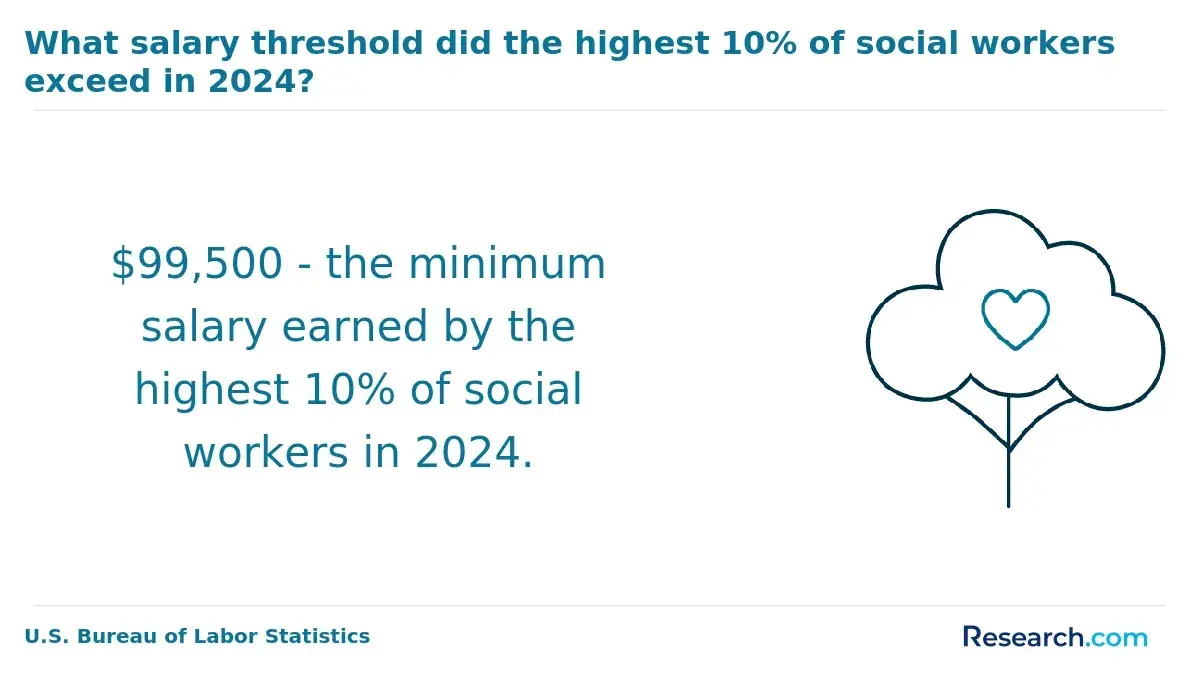
Salaries for MSW dual degree graduates vary widely by discipline, role, location, sector, licensure, experience, and employer size. A dual degree can improve earning potential, but it does not guarantee a specific salary. The financial value is strongest when the second degree directly qualifies you for higher-level, specialized, or administrative roles.
Graduates combining an MSW with a Master of Public Health often earn starting salaries between $65,000 and $85,000 in healthcare and community health leadership roles. JD/MSW graduates typically see entry pay from $75,000 to $95,000, especially in legal advocacy, family law, or mental health policy.
Human Rights Watch 2025 data reveals a 16% increase in global NGO jobs for MSW/MA human rights graduates. Salaries in refugee and advocacy roles generally start near $60,000 but can exceed $90,000 with experience, supported by faster career growth reported by 70% of these professionals. This makes human rights and advocacy-focused dual degrees attractive for students committed to international, refugee, policy, or NGO work, though the highest salaries may require experience and specialized expertise.
Additional dual degree combinations affect salaries as follows:
- MSW/MBA holders usually enter nonprofit management or healthcare administration, earning $70,000 to $100,000.
- MSW paired with education degrees such as an MEd can lead to school social work jobs paying $55,000 to $75,000.
- MSW with psychology degrees can open clinical opportunities with salaries from $60,000 to $85,000 depending on licensure and setting.
What most affects salary outcomes
- Licensure: Clinical roles may require state licensure, supervised hours, and exams beyond the degree.
- Sector: Government, healthcare, private nonprofit, education, and NGO employers may pay differently.
- Location: Salaries and cost of living vary substantially by state and metropolitan area.
- Leadership scope: Supervisory, director, and executive roles usually pay more than entry-level direct service roles.
- Specialization: Law, healthcare administration, public health, and business pairings may lead to higher-paying administrative or policy roles.
- Experience: Dual degrees are often most financially valuable after graduates build field experience and move into advanced positions.
Specialized certificates and licensing combined with dual degrees can boost salaries by 10% to 20%. Before enrolling, compare the expected salary range for your target occupation with the total cost of the program and the time needed to complete both credentials.
How to choose accredited MSW dual degree programs?
Accreditation should be one of the first filters when choosing an MSW dual degree program. The MSW portion should be accredited by the Council on Social Work Education (CSWE), which is the national standard for social work education quality and is often essential for licensure eligibility. The partner degree should also hold the appropriate recognized accreditation, such as AACSB for business or ABA for law, when applicable.
Dual accreditation matters because it protects the value of both credentials. An impressive-sounding program may still create problems if the MSW does not support licensure or if the second degree lacks recognition in its professional field.
What to verify before applying
- CSWE accreditation: Confirm that the MSW program is accredited and that the format you are considering is included.
- Partner program accreditation: Check discipline-specific accreditation, such as AACSB for business or ABA for law, when relevant.
- Licensure alignment: Ask whether the curriculum and field placements support licensure in the state where you plan to practice.
- Credit integration: Review how many credits overlap and whether the program avoids unnecessary duplication.
- Field placement quality: Look for placements connected to your dual degree goal, not generic assignments.
- Graduate outcomes: Request employment, licensure, salary, and completion data when available.
- Faculty expertise: Evaluate whether faculty and advisors have experience in both social work and the partner discipline.
- Flexibility: Compare accelerated, full-time, part-time, online, hybrid, and campus-based options.
Look for programs with genuine curriculum integration between social work and the second field. Interdisciplinary coursework, joint capstone projects, clinics, cross-listed electives, or shared field placements can make the dual degree more useful. For example, an MSW/JD program with collaborative internships can better prepare students for social justice advocacy than a program where the law and social work coursework rarely connect.
Program length and flexibility vary widely, from accelerated three-year tracks to five-year options. Working students may prefer online or part-time formats, but convenience should not come at the expense of accreditation, field placement quality, or licensure preparation.
Research post-graduation outcomes carefully. Studies from the Georgetown University Center on Education and the Workforce show dual MSW degree holders can achieve a 15-25% higher lifetime return on investment, with a median net earnings premium of $1.2 million relative to single-degree MSW graduates. Ask schools to provide transparent outcome data rather than relying only on broad marketing claims.
The best accredited MSW dual degree program is the one that combines recognized credentials, a coherent curriculum, strong advising, relevant fieldwork, and a realistic cost structure aligned with your target career.
Other Things You Should Know About Social Work
Combining an MSW with a law degree in 2027 offers a comprehensive understanding of both legal and social systems. This dual degree opens opportunities in legal aid, policy advocacy, and human rights, enabling professionals to address complex social issues with a multi-faceted approach.
Most MSW dual degree programs expect a minimum 3.0 undergraduate GPA and a completed bachelor’s degree. Some also require 1,000 to 3,000 hours of paid or volunteer human-services experience, especially for social work–law or social work–public health tracks, plus GRE scores only if the program still uses them.
Combining an MSW with a degree in clinical psychology or psychiatric nursing can enhance a professional’s ability to address complex mental health issues. This dual approach improves diagnostic skills, broadens therapeutic techniques, and allows for comprehensive treatment planning in diverse client populations.
To enroll in a dual degree program with an MSW in 2027, applicants generally need a bachelor's degree in a related field, along with a satisfactory GPA. Additional requirements might include prior volunteer or work experience in social services and specific entrance exams as set by the program.
- 30 Most Affordable Dual MPH/MSW Degree Programs - MPH Online https://www.mphonline.org/most-affordable-dual-mph-msw-degree/
- MSW/MPH Dual Degree Admissions https://tssw.tulane.edu/mswmph-dual-degree-admissions
- Best Affordable Master's Degree In Social Work https://www.psychology.org/social-work/best-affordable-masters-programs/
- Dual Degree Programs â Connecting Social Work With Other Disciplines https://www.socialworktoday.com/archive/092109p16.shtml
- Types of MSW Degree Programs in Illinois https://www.illinoissocialworkedu.org/msw-programs-in-illinois/types-of-msw-degree-programs/
- Online MSW Dual Degree Programs https://mastersinsocialworkonline.org/online-msw-dual-degree-programs/
- 2026 MSW-MPH Dual Degree Programs Guide - Master of Social Work Degrees https://www.mswdegrees.org/degrees/msw-mph-dual-degree-programs/