2027 Teletherapy and Remote Social Work Careers

Co-Founder and Chief Data Scientist
Choosing a remote social work career is not just a question of working from home. It is a decision about licensure, client safety, technology, income stability, and the kind of people you want to serve. For experienced practitioners, teletherapy can reduce some sources of burnout and expand access to care. For students and career changers, it can make social work feel more flexible—but only if the education, supervision, and licensing steps are handled correctly.
The opportunity is real. The social work field is projected to grow by 6% over the next decade, and telehealth has become a regular part of mental health care, case management, school support, and community services. At the same time, remote practice brings responsibilities that are easy to underestimate, including state-by-state licensure rules, privacy requirements, crisis planning, and digital boundaries.
This guide, prepared by career planning experts with over 10 years of experience, explains how teletherapy and remote social work careers work in practice. You will learn what remote social workers do, which jobs are available, how much you may earn, what education and licenses are typically required, and how to decide whether this career path fits your goals.
Key Things You Should Know About Teletherapy and Remote Social Work Careers
- The median annual salary for licensed clinical social workers is approximately $94,158, highlighting the strong earning potential in the field.
- Overall employment for social workers is projected to grow by 6% between 2024 and 2034, which is faster than the average for all occupations.
- A Master of Social Work (MSW) from an accredited institution is the standard educational requirement for most licensed and remote clinical roles.
- Successful remote practice requires a unique blend of technical proficiency with telehealth platforms and strong clinical skills to build virtual rapport.
- Remote social work careers extend far beyond therapy, including vital roles in case management, program administration, and policy advocacy.
What is remote social work and teletherapy?
Remote social work is the delivery of social work services without the professional and client being in the same physical location. It may include case management, resource coordination, advocacy, discharge planning, school-based support, employee assistance services, community outreach, and program administration. Teletherapy is a narrower category: it refers to licensed clinicians providing mental health counseling or psychotherapy through secure digital tools, most often video sessions.
The setting may be virtual, but the professional standards are not lighter. Remote social workers still use assessment, documentation, ethical decision-making, cultural responsiveness, mandated reporting knowledge, and crisis intervention skills. The main difference is the delivery method. Instead of meeting in an office, school, hospital, or agency, the work is conducted through approved platforms, electronic records, phone calls, secure messaging, and coordinated referrals.
Remote social work vs. teletherapy
- Remote social work is the broader term. It can include clinical and non-clinical roles, such as care coordination, benefits navigation, family support, community referrals, or program management.
- Teletherapy usually requires clinical licensure and involves diagnosis, treatment planning, therapy sessions, and ongoing clinical documentation.
- Hybrid social work combines remote duties with occasional in-person visits, team meetings, school meetings, hospital rounds, or community-based services.
The evolution to a mainstream practice
Remote practice was once treated as a niche option. It is now a normal part of how many organizations deliver mental health and social services. Clients may prefer it because it reduces travel time, improves access in rural or underserved areas, and makes scheduling easier. Employers may use it to extend service coverage, reduce missed appointments, and hire professionals outside their immediate local market.
That does not mean every client or service is appropriate for remote delivery. Some situations still require in-person assessment, intensive care, home visits, or local crisis response. Strong remote practitioners understand both the benefits and the limits of virtual care.
What kinds of jobs can you get in remote social work?
Remote social work jobs are available in clinical care, healthcare coordination, schools, employee support, public benefits, nonprofit services, and digital health organizations. While nearly 74% of clinical social workers are involved in mental health, remote opportunities are not limited to therapy. Many employers need social workers who can assess needs, coordinate services, document care, and support clients across systems without requiring daily in-person contact.
Common roles include:
- Teletherapist: Provides individual, couples, family, or group counseling through secure platforms. This role usually requires an MSW, supervised clinical experience, and independent clinical licensure.
- Remote case manager: Coordinates services for clients in healthcare, behavioral health, housing, child welfare, aging services, disability services, or reentry programs. The focus is often care planning, referrals, follow-up, and documentation.
- Virtual school social worker: Supports students through virtual counseling, social-emotional interventions, family communication, crisis response planning, and collaboration with teachers, counselors, and administrators.
- Employee Assistance Program (EAP) counselor: Offers confidential short-term counseling, referrals, workplace support, and crisis consultation for employees and their families.
- Utilization review or care coordination social worker: Works with insurers, hospitals, or managed care organizations to review needs, support discharge planning, and connect members with appropriate services.
- Program specialist or policy advocate: Supports social service programs remotely through training, community partnerships, grant-related work, outreach, or systems improvement.
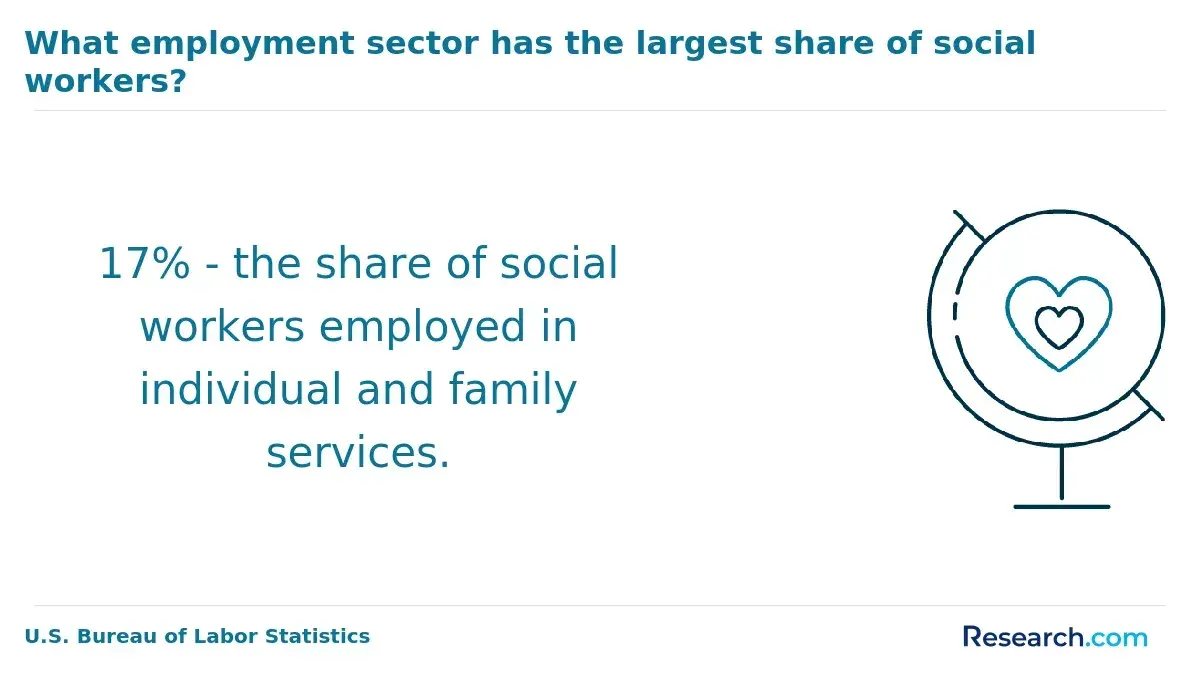
These jobs appear in clinical settings and in the 17% of social work jobs focused on individual and family services. If your goal is to qualify for advanced or clinical roles, a fast track MSW may help you move through graduate training more quickly, provided the program fits your licensing goals and is properly accredited.
Emerging opportunities in non-traditional settings
Remote social workers are also being hired by corporate wellness programs, digital health startups, insurance companies, behavioral health platforms, higher education programs, and organizations serving specific populations. These roles can be appealing because they may offer flexible schedules or specialized work, but applicants should review the job structure carefully. A therapy platform, for example, may operate very differently from a hospital system or nonprofit agency in terms of supervision, caseload expectations, benefits, and documentation requirements.
How much can you earn as a remote social worker?
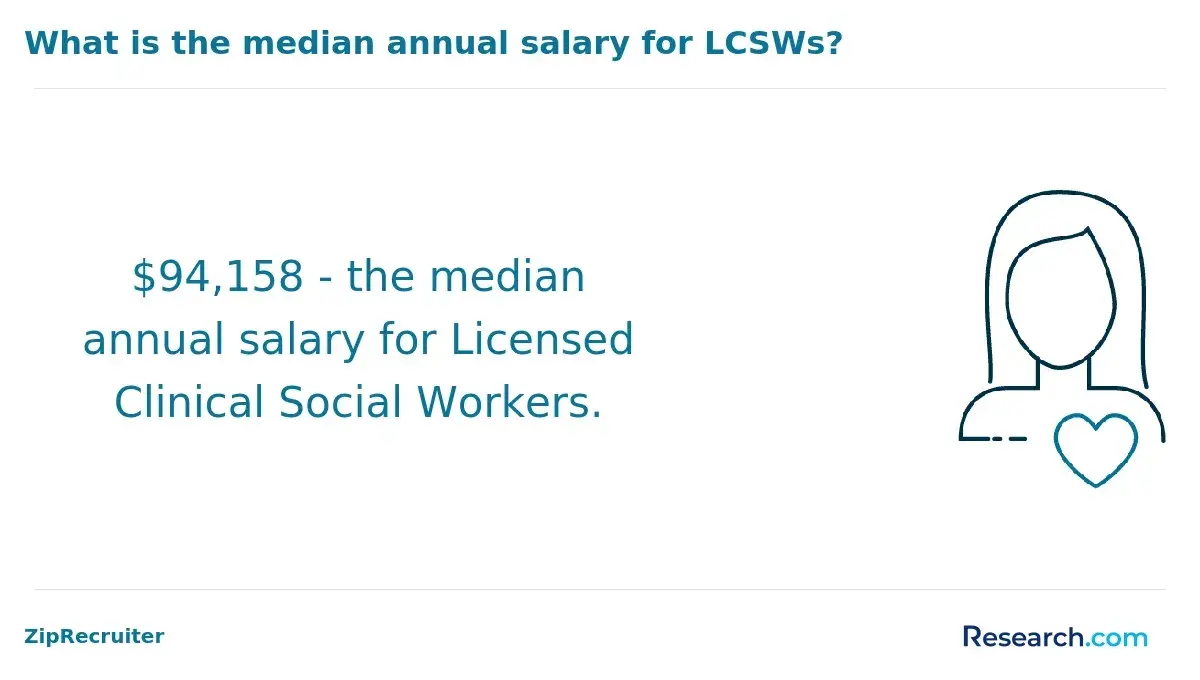
Remote social work pay depends heavily on licensure level, role type, employer, specialty, and whether you are an employee or an independent contractor. For a licensed clinical social worker (LCSW), the median annual salary is around $94,158. This does not mean every remote clinician earns that amount, but it shows that advanced licensure can significantly affect earning potential.
Other remote social work roles may pay differently. In healthcare case management, the median pay for social workers was about $68,090 as of May 2024. Non-clinical roles, school-based positions, public agency jobs, and nonprofit positions may have different pay structures, especially when benefits, caseload size, schedule flexibility, and geographic pay policies are considered.
What affects remote social work salary?
- Licensure: Independent clinical licensure is often the strongest salary driver because it allows a professional to provide therapy without the same level of supervision required for earlier-career clinicians.
- Specialization: Experience in trauma, substance use, child and family therapy, gerontology, healthcare, crisis services, or school systems can make a candidate more competitive.
- Employer type: Hospitals, government agencies, school districts, nonprofits, private practices, and telehealth companies may use very different compensation models.
- Employment status: W2 employees may receive benefits and tax withholding, while 1099 contractors may have more schedule control but must cover taxes, insurance, retirement savings, and business costs themselves.
- Location: Even remote jobs may use state, region, or local cost-of-living benchmarks when setting pay.
For example, the typical school social worker salary can vary greatly depending on district funding and the local cost of living. When comparing offers, look beyond the headline pay rate. A higher hourly rate may be less valuable if it comes with unpaid documentation time, no benefits, unstable referrals, or high cancellation risk.
Teletherapy requires more than strong clinical skills and a reliable internet connection. The best remote social workers can create trust through a screen, manage risk from a distance, document accurately, protect privacy, and maintain professional boundaries in a setting where work and home can easily blur.
Core skills include:
- Clinical engagement from a distance: You need to build rapport, communicate warmth, observe tone and body language, and notice changes in affect even when the view is limited to a screen.
- Clear verbal structure: Remote sessions benefit from explicit agendas, check-ins, summaries, and safety planning because the environment can be more prone to distraction or technical interruption.
- Technical proficiency: You should be comfortable with electronic health records, secure telehealth platforms, scheduling tools, digital forms, and troubleshooting basic audio or video issues.
- Remote crisis management: You need a practiced plan for emergencies, including confirming the client’s physical location, identifying local emergency contacts, and knowing when remote care is not sufficient.
- Documentation discipline: Remote work often depends on timely notes, care coordination messages, risk documentation, and compliance with employer or payer requirements.
- Self-management: Working remotely requires organization, time management, professional focus, and the ability to transition between sessions without the structure of an office environment.
These skills are essential for effective teletherapy and remote social work careers because the quality of care depends on both human connection and operational reliability.
Digital professionalism and boundaries
Remote work can reduce commuting stress, but it can also increase digital burnout. If your workspace is your home, the workday can stretch into evenings, messages can feel constant, and emotional labor may be harder to leave behind.
Strong boundaries are a professional necessity. Set work hours, use a private workspace, separate personal and professional devices when possible, protect client information from household exposure, and create a routine for ending the day. Remote social workers also need a thoughtful social media presence, clear communication policies, and consistency around response times.
Ethical remote practice requires more than moving an in-person session onto a video platform. Social workers must protect confidentiality, obtain informed consent, use appropriate technology, plan for emergencies, and practice only within their competence and legal authority.
Key considerations include:
- Informed consent for telehealth: Clients should understand how remote services work, what the benefits and limitations are, what happens during technology failures, and when in-person or emergency care may be needed.
- HIPAA-compliant technology: Platforms used for clinical services must protect privacy and confidentiality. Consumer video apps or informal messaging tools may not meet professional or legal standards.
- Client location and licensure: At each session, remote clinicians should know where the client is physically located and whether they are authorized to practice in that jurisdiction.
- Emergency protocols: Remote providers need current local emergency contacts, crisis resources, consent procedures, and a plan for situations where a client is at risk.
- Privacy in both locations: The social worker and client should each have a private setting whenever possible. Headphones, secure networks, and clear backup plans can reduce confidentiality risks.
- Digital professionalism and boundaries: Communication outside sessions, social media visibility, texting, email, and response-time expectations should be handled through clear policies.
The evolving standard of care in a digital age
Teletherapy standards continue to evolve as technology, regulations, payer policies, and professional guidance change. Ethical practice requires ongoing learning, not a one-time training. Social workers should stay current on board rules, employer policies, malpractice requirements, privacy practices, and emerging best practices for digital care.
This is also a client safety issue. Strong ethical systems reduce the risk of privacy breaches, missed crises, licensing complaints, and poor continuity of care. Remote practice can be effective and humane, but only when the legal and ethical infrastructure is taken seriously.
Is a career in teletherapy and remote social work worth it?
A career in teletherapy and remote social work can be worth it if you want meaningful client-centered work with more flexibility than many traditional roles provide. It may be especially appealing if you value autonomy, are comfortable with technology, and can maintain strong professional boundaries without the structure of a physical workplace.
The career also has solid external indicators. Licensed clinicians may see median salary potential around $94,158, and the field has projected job growth of 6%. Remote work may reduce commuting time and make it easier to serve clients who otherwise face access barriers.
However, it is not the easiest version of social work. Remote practitioners must manage isolation, screen fatigue, licensure complexity, privacy obligations, crisis planning, and the emotional intensity of client work in a home-based or digital setting. The larger question remains personal and professional: is being a social worker worth it for the kind of life and career you want?
Who may thrive in this career?
- Social workers who are self-directed, organized, and comfortable managing their own workflow.
- Clinicians who can build strong therapeutic relationships through video or phone sessions.
- Professionals who are careful with documentation, privacy, and legal requirements.
- People who want flexibility but still respect the structure required for ethical care.
- Practitioners who can create support systems to avoid professional isolation.
Who may prefer in-person or hybrid roles?
- Social workers who rely heavily on in-person observation, home visits, or community presence.
- Newer professionals who want more immediate supervision and team-based learning.
- Clinicians who find screen-based work draining or less relational.
- Professionals who are uncomfortable managing technology, remote emergencies, or multistate licensure questions.
Questions to ask yourself
- Am I self-motivated and organized enough to work effectively without daily in-person supervision?
- Do I have a plan to stay connected with colleagues and avoid professional isolation?
- Can I create a private, secure workspace for confidential client services?
- Am I willing to track licensure rules carefully before serving clients across state lines?
- Do I feel comfortable using technology as a primary tool for building trust and delivering care?
If your answers point toward independence, ethical discipline, and comfort with digital care, teletherapy and remote social work careers can offer a strong path forward. The best outcomes come from treating remote practice not as a shortcut, but as a specialized way to deliver competent, accessible, and responsible social work services.
Other Things You Should Know About Teletherapy and Remote Social Work Careers
Teletherapy sessions commonly use platforms with end-to-end encryption, business associate agreements, and access controls, such as Zoom for Healthcare, Doxy.me, and VSee. Clinicians also need secure scheduling, documentation, and file-sharing systems that meet HIPAA privacy and security standards.
Teletherapy social workers in 2027 need certifications like Licensed Clinical Social Worker (LCSW) or similar, depending on the state. Additionally, specific telehealth certification from organizations like the Center for Credentialing & Education can enhance their qualifications and compliance with remote work standards.
References:
- Camper, A. B., & Felton, E. M. (2020, March). Telemental health: Legal considerations for social workers. National Association of Social Workers. Retrieved October 26, 2025, from NASW.
- Data USA. (2025). Social work. Retrieved October 26, 2025, from Data USA.
- Lombardi, B. M., de Saxe Zerden, L., & Thyberg, C. (2022). Social work answers the (video) call: Tele-behavioral health use during COVID-19. Social Service Review, 96(1), 1–36.
- Mount Vernon Nazarene University. (2022, December 13). The benefits of an online social work degree. Retrieved October 26, 2025, from MVNU.
- U.S. Bureau of Labor Statistics. (2025). Social workers. Occupational Outlook Handbook. Retrieved October 26, 2025, from BLS.