2027 Social Work Careers in Managed Care and Insurance

Co-Founder and Chief Data Scientist
Social workers who want to work in managed care or insurance face a different career question than those entering traditional clinical, school, or community practice: how can you protect client well-being while working inside systems built around coverage rules, medical necessity, utilization review, provider networks, and cost control?
This guide explains how managed care social work fits into the healthcare system, what degrees and licenses usually matter, which job titles to look for, and how to choose a social work program that prepares you for insurance-related roles. It is written for prospective BSW and MSW students, current social workers considering a career shift, and professionals who want to understand how clinical training translates into care coordination, case management, utilization review, and behavioral health roles in managed care settings.
Key Things You Should Know
- Social work careers in managed care and insurance grew 7% from 2024 to 2025, reflecting expanding demand for coordinated behavioral health and case management services.
- About 65% of social workers in the insurance sector hold advanced degrees, with roles emphasizing care coordination, utilization review, and claims advocacy.
- Technological proficiency in electronic health records and data analysis is increasingly crucial for social workers navigating managed care environments in 2026.
What is managed care in social work and why is it a growing career focus?
Managed care in social work refers to roles where social workers help coordinate health, mental health, and social services within insurance-based systems. The goal is to connect clients with appropriate care while following coverage requirements, documenting medical necessity, supporting treatment outcomes, and avoiding unnecessary or duplicative services.
In practice, managed care social workers may review treatment plans, coordinate discharge services, help members access in-network providers, support people with chronic illness or behavioral health needs, and advocate when coverage limitations affect care. These roles require both social work judgment and a working knowledge of insurance rules, payer requirements, documentation standards, and healthcare team communication.
According to the 2024 ASWB Social Work Workforce Study, over 74% of clinical social workers provide mental and behavioral health services to adult clients within healthcare settings. That overlap between clinical social work and healthcare delivery helps explain why managed care has become a stronger career focus.
Why demand is increasing
- Behavioral health is more integrated into healthcare. Hospitals, insurers, and community health organizations increasingly treat mental health, substance use, and physical health as connected issues.
- Managed Medicaid and Medicare programs are expanding the need for coordination. Social workers help members navigate complex benefits, referrals, provider networks, and community-based supports.
- Healthcare systems are paying more attention to social determinants of health. Housing, transportation, food access, family support, and safety concerns often influence whether a care plan succeeds.
- Insurers need professionals who can interpret clinical information ethically. Social workers bring assessment, advocacy, and systems-level skills to utilization review, case management, and care management.
What makes managed care social work different?
The main difference is the tension between client advocacy and payer rules. A social worker may believe a client needs a service, but coverage may depend on medical necessity criteria, prior authorization, benefit limits, or network availability. Strong professionals in this field know how to document clearly, communicate with providers, escalate concerns appropriately, and use ethical decision-making when administrative requirements and client needs conflict.
Common employers include hospital systems, insurance companies, behavioral health organizations, accountable care organizations, Medicaid managed care plans, community health agencies, and care coordination vendors. Social workers who want senior clinical, administrative, or policy roles may also compare advanced options such as the best DSW programs online.
What degree and licensing credentials do social workers need for managed care roles?
Most managed care and insurance roles require at least a Bachelor of Social Work (BSW) or a related human services degree, but many stronger opportunities prefer or require a Master of Social Work (MSW). The MSW is especially important for roles involving clinical assessment, behavioral health case review, supervision, psychotherapy, complex care planning, or advancement into leadership.
Licensing expectations vary by state, employer, and job function. A utilization review position may not require the same credential as a clinical behavioral health care manager. However, licensure often improves eligibility, credibility, and salary potential because it signals that the social worker has met state standards for professional practice.
| Credential or degree | Where it may fit in managed care | What to check before enrolling or applying |
| BSW | Entry-level case management, member services, community resource coordination, and support roles | Whether the role requires social work licensure, healthcare experience, or supervised field placement in a medical or behavioral health setting |
| MSW | Clinical care management, behavioral health coordination, utilization review, discharge planning, program management, and policy roles | Whether the program is accredited, includes relevant field education, and supports licensure preparation |
| LSW or LMSW | Case management, care coordination, program support, and some non-independent clinical roles | State-specific scope of practice and whether supervision is required |
| LCSW | Clinical assessment, psychotherapy, behavioral health review, clinical supervision, and higher-responsibility managed care roles | Post-MSW supervised experience requirements, exam rules, and state-specific practice authority |
For many clinical roles, becoming a Licensed Clinical Social Worker (LCSW) is the strongest credential. This license generally allows qualified professionals to provide clinical assessments and psychotherapy and to work more independently in behavioral health settings. Typically, candidates must complete 2 to 3 years of supervised clinical experience after an MSW before taking the licensing exam.
For roles centered on policy, case management, quality improvement, or utilization review rather than direct therapy, credentials such as Licensed Social Worker (LSW) or Licensed Master Social Worker (LMSW) may be sufficient. Competition can be stronger at these levels, so field experience in healthcare, insurance, mental health, substance use services, or discharge planning can matter.
Students who need flexibility often compare affordable online MSW programs. When doing so, they should confirm that the program can support field placements relevant to managed care, behavioral health, hospitals, or insurance-related work—not only generalist social service placements.
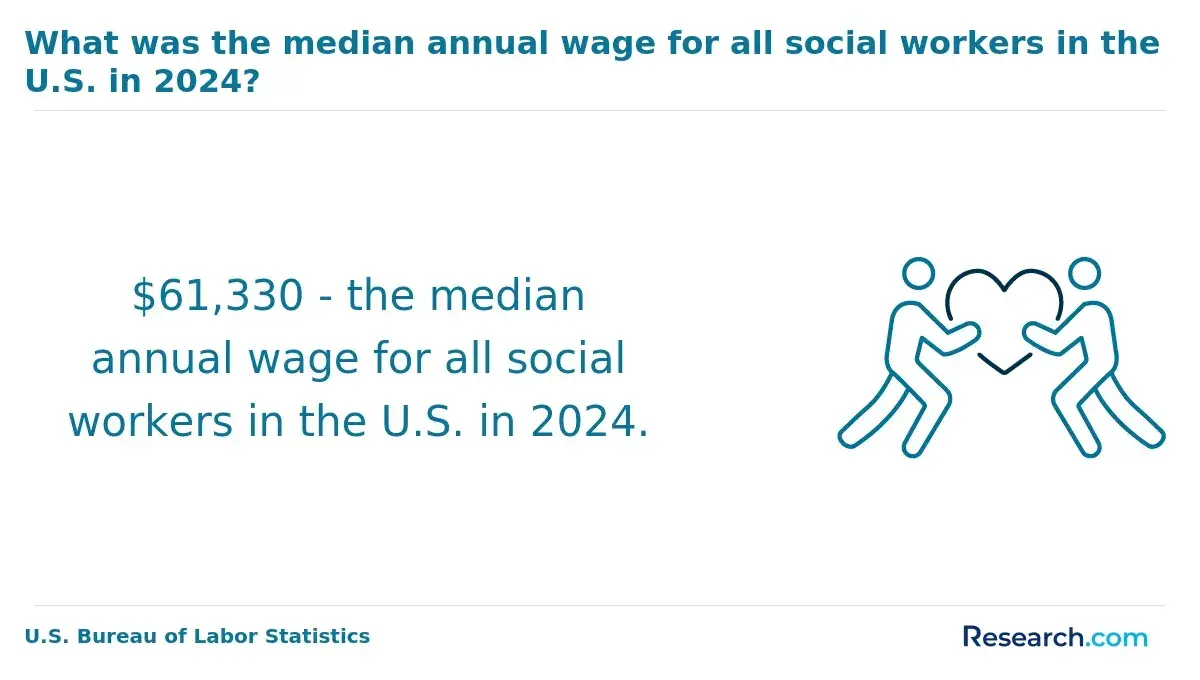
The U.S. Bureau of Labor Statistics projects a 6% employment growth for social workers, with about 74,000 annual openings, showing continued demand for trained and licensed professionals across social work settings, including healthcare and managed care.
What are the main job titles and responsibilities for social workers in insurance and managed care?
Social workers in insurance and managed care commonly work under titles such as care manager, case manager, utilization review specialist, behavioral health care manager, clinical social worker, discharge planner, or care coordinator. The exact title matters less than the function: these professionals assess needs, coordinate services, review clinical information, document outcomes, and help clients move through healthcare systems without losing sight of safety, access, and continuity of care.
| Job title | Typical responsibilities | Skills that matter |
| Care manager | Coordinates treatment, monitors care plans, communicates with providers, and supports members with complex health or behavioral health needs | Care planning, motivational interviewing, documentation, interdisciplinary collaboration |
| Case manager | Connects clients to covered services, community resources, mental health support, substance abuse programs, transportation, housing assistance, or follow-up care | Resource navigation, benefit awareness, crisis response, client advocacy |
| Utilization review specialist | Reviews treatment requests, clinical documentation, and service authorization criteria to determine whether care aligns with coverage and medical necessity standards | Clinical reasoning, policy interpretation, ethical judgment, precise documentation |
| Clinical social worker | Provides assessment, counseling, psychosocial support, and treatment planning, often for clients managing chronic illness, mental health conditions, or transitions in care | Clinical assessment, psychotherapy skills, risk assessment, care coordination |
| Discharge planner | Helps patients leave hospitals or facilities safely by arranging follow-up care, home services, rehabilitation, behavioral health referrals, or community supports | Systems coordination, communication, documentation, knowledge of payer requirements |
These roles often require social workers to translate between clients, providers, insurers, and community agencies. For example, a care manager may help a client follow a treatment plan while also making sure services meet authorization requirements. A utilization review specialist may evaluate whether documentation supports a requested level of care. A case manager may identify nonmedical barriers, such as transportation or housing instability, that could undermine the care plan.
The work can be rewarding, but it is not purely clinical. Professionals should expect documentation deadlines, performance metrics, privacy rules, coverage criteria, and frequent communication with healthcare teams. Social workers who are comfortable combining advocacy with structured administrative processes are often better prepared for these roles.
Wages reflect the healthcare context of the work, with healthcare social workers earning an average yearly wage of $60,648. Students comparing compensation paths can review this master of social work salary resource for broader salary context.
Students interested in managed care should build a foundation in general social work practice and then choose electives, field placements, and projects that connect to healthcare systems, behavioral health, care coordination, and policy. Managed care roles reward professionals who understand both people and systems: clinical needs, family dynamics, trauma, substance use, benefits, reimbursement, documentation, and organizational constraints.
Core coursework that matters
- Human behavior in the social environment: Helps students understand development, family systems, trauma, culture, and environmental factors that affect health.
- Social welfare policy: Builds the policy literacy needed to understand Medicaid, Medicare, insurance access, eligibility, and service gaps.
- Clinical practice methods: Prepares students to assess needs, plan interventions, manage risk, and communicate treatment goals.
- Research and evaluation: Supports outcome measurement, quality improvement, and evidence-informed decision-making.
- Ethics and professional practice: Helps students manage confidentiality, informed consent, boundaries, documentation, and conflicts between client needs and organizational rules.
Useful managed care specializations
- Healthcare social work: Strong preparation for hospitals, clinics, care transitions, discharge planning, and interdisciplinary teams.
- Mental health and substance abuse: Valuable for behavioral health care management, crisis intervention, treatment planning, and utilization review.
- Case management and care coordination: Directly aligned with insurance and managed care roles that involve service planning, referrals, and follow-up.
- Health policy or administration: Useful for students who want leadership, quality improvement, compliance, or program management roles.
- Health informatics or data analytics: Increasingly relevant because managed care organizations use documentation, outcomes, and utilization data to guide decisions.
Students should look for practicum sites in clinics, hospitals, behavioral health agencies, managed care organizations, accountable care organizations, or private practices that interact with payer systems. Coursework alone is not enough; employers often want evidence that a candidate can work with documentation standards, referral systems, interdisciplinary communication, and outcome tracking.
Specializing in mental health and substance abuse can be especially useful because managed care organizations frequently focus on evidence-based treatment, crisis stabilization, care continuity, and appropriate levels of care. Training in cognitive behavioral therapy (CBT), trauma-informed care, motivational interviewing, and risk assessment can strengthen readiness for behavioral health roles.
According to the University of the Pacific social work trends report, mental health and substance abuse social workers in managed care earned a mean salary of $85,369 in 2026, with the top 10% earning up to $140,026. Students should treat salary figures as context rather than guarantees because compensation varies by employer, state, license level, experience, and job function.
How should prospective students evaluate and choose an accredited social work program?
Prospective students should start with accreditation, then evaluate whether the program actually prepares them for the career they want. For social work students in the U.S., CSWE accreditation is the key signal that a program meets national educational standards and supports licensure eligibility in most states. Accreditation is necessary, but it is not enough by itself.
Checklist for choosing a program
- Confirm CSWE accreditation. Do this before applying, especially for online, hybrid, or out-of-state programs.
- Check licensure alignment. Ask whether graduates meet educational requirements in the state where you plan to practice.
- Review field placement support. Look for placements in hospitals, behavioral health agencies, managed care organizations, community health centers, or insurance-adjacent settings.
- Compare format and schedule. Full-time, part-time, hybrid, and online options vary substantially in length, cost, workload, and flexibility.
- Ask about faculty expertise. Managed care students should look for faculty or advisors with experience in healthcare policy, behavioral health, case management, clinical practice, or administration.
- Request outcomes data. Licensure pass rates, graduation rates, employment outcomes, and graduate satisfaction can reveal how well the program supports students.
- Calculate total cost. Include tuition, fees, books, technology, travel, reduced work hours, and licensing-related expenses.
Field placement quality deserves special attention. A student who wants managed care experience may not be well served by a program that cannot help secure healthcare or behavioral health placements. Strong programs maintain agency partnerships, provide responsive field advising, and help students connect classroom learning to documentation, care coordination, ethics, and interprofessional practice.
Debt and earnings should also be part of the decision. According to the ASWB 2024 Social Work Workforce Study, MSW graduates generally carry $40,000-$45,000 in student loan debt. Median earnings for full-time roles are around $67,980, with the 75th percentile earning about $79,310. These figures make it important to compare tuition against placement quality, licensure preparation, employer connections, and realistic career goals.
A good program choice should answer three questions clearly: Will this degree meet licensure requirements? Will the field placement build experience relevant to managed care or healthcare social work? Will the total cost make sense for the roles I am likely to pursue after graduation?
Other Things You Should Know About Social Work
Social workers advocate by helping clients understand their coverage benefits and by navigating complex insurance procedures to secure necessary services. They often communicate directly with insurers to challenge denied claims or obtain prior authorizations. Their role includes ensuring equitable access to care and addressing social determinants that affect treatment outcomes.
Managed care social workers frequently navigate strict utilization reviews, limited service availability, and high caseloads. They must balance client needs with cost containment pressures from insurers. Additionally, documentation and compliance requirements can be extensive, making time management and attention to detail critical skills in these roles.
Most insurance utilization review roles require a state social work license, usually the LMSW or LCSW, and some employers prefer the LCSW for independent case review. These positions also expect familiarity with HIPAA, medical necessity criteria, and payer guidelines used by managed care organizations.
- Social Work Masters Prerequisites: Discover 7 Critical Pieces - Prereqcourses https://www.prereqcourses.com/social-work-masters-prerequisites/
- Managed Care Resource Inc. - Recovery and Mental Health Solutions - Maawandooshim Anokitan https://managedcareresource.com/careers
- Social Work Salaries https://www.socialworkers.org/careers/career-center/kickstart-your-job-hunt/social-work-salaries
- Preparing for a Career in Health and Social Care: A British Perspective https://sbmedu.com.tr/blog/preparing-for-a-career-in-health-and-social-care
- Accreditation | CASWE-ACFTS https://caswe-acfts.ca/our-activities/accreditation/
- Main navigation https://careersportal.ie/sectors/courses3.php
- Top Online Degrees In Social Work 2026 | Psychology.org https://www.psychology.org/social-work/best-online-bachelors-programs/
- Social Worker jobs | Social Worker jobs at Humana https://careers.humana.com/us/en/c/social-worker-jobs
- Starting Your Own Social Work Practice | University of Nevada, Reno https://onlinedegrees.unr.edu/blog/what-you-need-to-start-your-own-social-work-private-practice
- Social Worker Certifications: Best Credentials to Advance Your Career | Teal https://www.tealhq.com/career-paths/social-worker-certifications