2027 Return on Investment (ROI) of an Online MSW Degree

Co-Founder and Chief Data Scientist
An online Master of Social Work can be a smart career investment, but only if the cost, program format, licensure path, and expected salary fit your goals. The degree can open access to clinical, healthcare, school, nonprofit, policy, and leadership roles, including licensed clinical social work positions with a median annual salary of $94,158. It can also require a substantial financial commitment, especially if you borrow for tuition and fees.
This guide explains how to evaluate the ROI of an online MSW degree using practical factors: tuition, financial aid, salary growth, job demand, licensure requirements, career mobility, and break-even time. Use it to compare programs, estimate your likely return, and decide whether an online MSW supports both your professional purpose and your long-term financial stability.
Key Things You Should Know About The Return On Investment (ROI) Of An Online MSW Degree
- With licensure, clinical social workers earn a median salary of $94,158, showing the powerful financial upside of an advanced degree.
- The social work field is projected to grow by 6% through 2034—faster than the average for all occupations—offering excellent job security.
- The biggest financial advantage of an online format is that it allows you to keep working, eliminating the lost income of a full-time, on-campus program.
- This degree is the non-negotiable educational step required to become a Licensed Clinical Social Worker (LCSW), which opens doors to the highest-paying roles.
- Job prospects are particularly strong in fast-growing fields like healthcare and mental health services, where qualified professionals are in great demand.
Why is evaluating the ROI essential for an online MSW degree?
Evaluating ROI is essential because an MSW is both a professional credential and a financial decision. The degree may qualify you for more advanced roles, clinical licensure, and higher earnings, but those benefits must be weighed against tuition, fees, books, loan interest, field placement demands, and the time it takes to complete post-graduate licensure requirements.
A strong ROI analysis helps you avoid choosing a program based only on reputation, convenience, or emotion. Instead, it lets you compare what you will spend with what you are likely to gain: salary growth, job security, licensure eligibility, career flexibility, and advancement potential.
What ROI means for an MSW student
For an online MSW, ROI is not limited to a simple salary calculation. It includes three kinds of return:
- Financial return. The difference between your total education cost and the additional income you can reasonably expect after earning the degree and, if applicable, licensure.
- Career return. Access to roles that typically require an MSW, such as clinical social worker, healthcare social worker, school social worker, program administrator, or policy advocate.
- Personal and professional return. The ability to do work that aligns with your values while building a sustainable career path.
This broader view matters because social work requires emotional resilience, ethical judgment, and a long-term commitment to clients and communities. If you are still deciding whether the field fits you, it can help to review a broader discussion of whether a degree in social work is worth it before focusing only on graduate-level ROI.
The clearest starting point is income: how much an MSW can raise your earning potential compared with your current role or a bachelor’s-level social work position.
How much more can you earn with an online MSW degree?
An online MSW can increase your earning potential most when it leads to roles that require graduate training or clinical licensure. The salary gain depends on your state, employer, specialization, experience, and whether you become licensed for independent clinical practice.
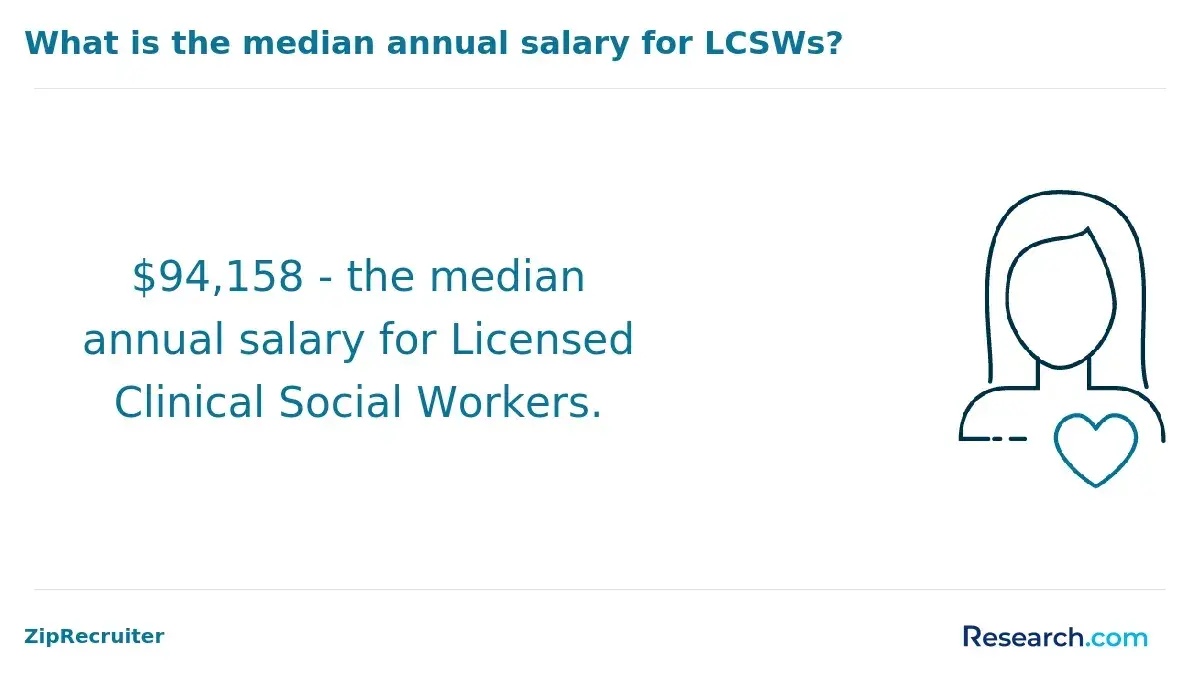
Licensed clinical social workers earn a median annual salary of $94,158. Healthcare social workers also show strong earning potential, with median pay around $68,090. These figures show why many students evaluate an MSW as a long-term income investment rather than only an academic expense.
Where the salary increase usually comes from
The degree can improve earnings by moving you into roles with greater responsibility, stronger demand, or licensure requirements. Common salary drivers include:
- Clinical licensure. LCSW eligibility can lead to clinical therapy, private practice, supervisory, and specialized behavioral health roles.
- Specialized settings. Healthcare, mental health, and substance abuse services often require advanced training and can offer stronger salary prospects.
- Leadership responsibilities. Program management, clinical supervision, and agency administration can raise compensation over time.
- Geographic demand. Salaries can vary widely by state, metro area, cost of living, and local shortages.
How location impacts your earnings
Location can change your ROI calculation significantly. A program that makes sense for a student planning to work in a high-demand urban healthcare system may not produce the same financial return for someone entering a lower-paying rural nonprofit role. Cost of living also matters: a higher salary may not translate into higher disposable income if housing, commuting, and taxes are also higher.
Before applying, compare MSW-level salaries in the state where you expect to practice. A state-by-state social worker salary with a master degree guide can help you estimate income more accurately for your own ROI calculation.
What is the job outlook for graduates with an online MSW degree?
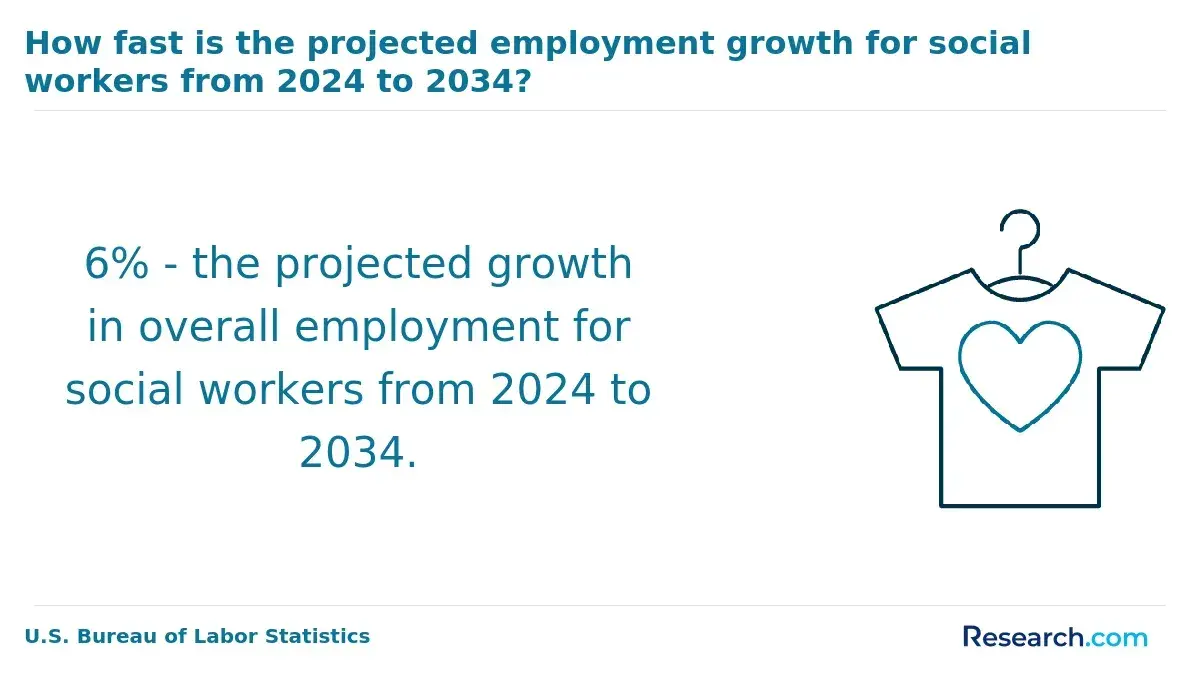
The job outlook for MSW graduates is strong because social work is a large, stable profession with demand across healthcare, mental health, schools, government, and community services. Overall employment for social workers is projected to grow by 6% between 2024 and 2034, faster than the average for all occupations. In 2024, the field accounted for approximately 810,900 jobs.
For ROI, job outlook matters because a degree is more valuable when it leads to a labor market with consistent hiring. Strong demand can reduce the risk of underemployment after graduation and may give you more flexibility to choose a setting, population, or specialization that fits your goals.
Where demand is likely to be strongest
Demand is not equal across all social work roles. Graduates who align their field placements, electives, and licensure plans with high-need areas may improve both job prospects and long-term earning potential. Important demand areas include:
- Healthcare social work. Hospitals, clinics, hospice organizations, and care coordination programs need professionals who can help patients navigate illness, insurance, discharge planning, and community resources.
- Mental health and substance abuse services. Greater public attention to mental wellness and addiction treatment supports ongoing need for clinically trained social workers.
- Child, family, and school services. Schools and family-serving agencies continue to need social workers who can address trauma, attendance, family instability, and student well-being.
- Aging and long-term care. An aging population creates demand for professionals who understand care transitions, caregiver support, benefits, and end-of-life planning.
How job outlook should affect your program choice
When comparing online MSW programs, look beyond general rankings. Review each program’s field placement support, clinical track options, electives, faculty expertise, and licensure alignment in your state. A lower-cost program may produce a stronger ROI if it connects you to the settings where demand is highest in your region.
Salary and job outlook are major parts of the return, but the online format can also improve ROI by reducing the cost of leaving the workforce.
An online MSW can improve ROI by lowering opportunity cost. Many students choose the online format because they can keep working while completing coursework, which may help them preserve income, benefits, seniority, and professional connections. Avoiding a full-time career pause can make the net cost of the degree substantially lower.
This flexibility is especially important for adult learners and career changers. The average age of a social worker with a master's degree is 34, which reflects how many MSW students are balancing graduate school with employment, caregiving, and other responsibilities.
Why accreditation matters for ROI
The online format only protects your investment if the program is properly recognized. For social work, the key standard is accreditation by the Council on Social Work Education (CSWE). A CSWE-accredited MSW is typically necessary for licensure pathways and is the credential employers expect when hiring for MSW-level roles.
Before enrolling, verify accreditation directly and confirm that the curriculum meets educational requirements for the state where you plan to seek licensure. Licensure rules vary, so a program that works well for one state may require additional review for another.
Online MSW advantages and trade-offs
- Advantage: Work-school balance. Online delivery can make it easier to maintain employment while completing the degree.
- Advantage: More program choices. You may be able to compare accredited programs outside your immediate commuting area.
- Advantage: Potentially lower indirect costs. Online students may reduce relocation, parking, commuting, and campus-related expenses.
- Trade-off: Field placement still requires in-person time. MSW programs include supervised field education, so online does not mean fully self-paced or entirely remote.
- Trade-off: Self-management is critical. Online students need strong time management, communication, and planning skills to keep up with coursework and field hours.
Reducing your time-to-degree
Another way to improve ROI is to shorten the time between enrollment and higher-level employment. If you can manage a heavier course load, an accelerated MSW program may help you enter the MSW-level job market sooner. The benefit is speed; the trade-off is intensity, especially if you are working or completing field placement at the same time.
Once you understand the value of the online format, the next step is estimating the full cost of attendance.
The total cost of an online MSW program varies widely, but the investment generally falls between $20,000 and $60,000. The final amount depends on the institution, tuition structure, credit requirements, residency rules, fees, and whether you qualify for advanced standing.
Do not evaluate programs using tuition alone. A realistic ROI calculation should include every required cost you will pay to complete the degree.
Costs to include in your MSW budget
- Tuition. This is usually the largest expense and is often charged by credit hour.
- University fees. Online programs may charge technology, student services, library, graduation, or distance learning fees.
- Books and materials. Budget for textbooks, digital access codes, assessment tools, and course-specific software if required.
- Field placement expenses. Even online students may need transportation, professional clothing, background checks, immunizations, or schedule adjustments for practicum hours.
- Loan interest. If you borrow, the amount you repay may be higher than the amount billed by the university.
Questions to ask before comparing prices
- Is tuition charged per credit, per term, or as a flat program cost?
- Are online students charged the same tuition as on-campus students?
- Does the school offer in-state tuition rates for online students?
- How many credits are required for the traditional track versus advanced standing?
- Are field placement services included, or are students expected to find placements independently?
- What fees are mandatory for online students?
Finding programs that fit your budget
A lower-cost program can improve ROI, but only if it is accredited, licensure-aligned, and able to support your field education needs. Prioritize total value over the lowest sticker price. An inexpensive program that delays graduation or does not support your licensure goals can cost more in the long run.
Many universities offer respected affordable MSW programs online, making it possible to compare accredited options before committing to a higher-cost degree.
After estimating cost, review how much of that amount you may be able to reduce through scholarships, employer support, and federal aid.
Online MSW students may qualify for several forms of financial aid, especially when they enroll in an eligible accredited program. Aid availability varies by school, enrollment status, citizenship or residency status, employer, and loan eligibility, so you should confirm details with each university’s financial aid office.
The best funding strategy is to reduce borrowing first, then use loans only for the remaining amount you cannot cover through grants, scholarships, savings, or employer support.
Common funding options
- Federal student loans. Graduate students are often eligible for federal aid, including Direct Unsubsidized Loans and Grad PLUS Loans, which can cover the full cost of attendance.
- Program-specific scholarships. Many universities offer scholarships or grants for MSW students. Some are based on merit, need, specialization, service commitment, or geographic location.
- Employer tuition reimbursement. Healthcare systems, government agencies, schools, and larger nonprofit organizations may help employees pay for graduate education that supports their role.
- Public Service Loan Forgiveness (PSLF). If you work for a qualifying nonprofit or government agency after graduation, PSLF may forgive the remaining balance of your federal loans after 10 years of payments.
A practical order for funding your degree
- Complete the required financial aid forms early. Deadlines matter, and some institutional funds are limited.
- Apply for scholarships before borrowing. Even smaller awards reduce the amount on which you may pay interest later.
- Ask your employer about education benefits. Confirm reimbursement limits, grade requirements, repayment obligations, and whether you must stay employed for a certain period.
- Compare loan options carefully. Look at interest, repayment flexibility, and eligibility for federal repayment plans or forgiveness programs.
- Borrow only what you need. Treat loans as part of your ROI calculation, not as automatic spending money.
Funding can make an MSW more affordable, but admission requirements determine which programs are realistic options for your background.
Most online MSW programs use admission requirements to assess academic readiness, communication skills, professional maturity, and commitment to social work values. Requirements vary by institution, but many programs are open to applicants from a range of undergraduate majors.
You typically do not need a BSW to apply to a traditional MSW track. However, applicants with a BSW may qualify for advanced standing, which can shorten the program and reduce cost.
Common application requirements
- A bachelor's degree. Programs generally require a degree from a regionally accredited college or university.
- A minimum GPA. Many programs look for a 3.0 on a 4.0 scale, though some review applications holistically rather than using a strict cutoff.
- Letters of recommendation. You may need two or three letters from academic or professional references who can discuss your readiness for graduate study and social work practice.
- A personal statement. This essay usually explains your interest in social work, relevant experience, career goals, and fit with the program.
Traditional track vs. advanced standing
- Traditional MSW track. Designed for students with a bachelor’s degree in another field or a non-BSW background. It usually requires more credits and more time.
- Advanced standing track. Designed for students who already hold a BSW. It is often shorter and may cost less because it builds on prior social work coursework and field education.
How to strengthen your application
If your GPA is not your strongest asset, use the rest of the application to show readiness. Relevant work, volunteer experience, human services exposure, leadership, crisis response, community engagement, and strong recommendations can all help demonstrate fit. Some schools also consider applicants whose academic record improved over time or whose professional experience shows growth since college.
If you are concerned about older grades, you can research online MSW programs with low GPA requirements while still making sure the program is accredited and appropriate for your licensure goals.
Once admitted and enrolled, the value of the degree depends heavily on the career path you pursue after graduation.
An online MSW can prepare graduates for direct practice, clinical, administrative, advocacy, and policy roles. While 17% of social workers are employed in individual and family services, MSW graduates also work in healthcare, schools, behavioral health, government, corrections, aging services, higher education, and nonprofit leadership.
The best career path depends on whether you want to work directly with clients, manage programs, influence systems, or specialize in a population such as children, veterans, older adults, patients, or people experiencing mental health and substance use challenges.
Common MSW career paths
- Clinical Social Worker (LCSW). Provides therapy, counseling, assessment, and treatment planning for individuals, families, and groups in agencies, hospitals, private practice, or community settings.
- Medical and Healthcare Social Worker. Helps patients and families manage illness, care transitions, discharge planning, grief, benefits, and community resources.
- School Social Worker. Supports students by addressing mental health concerns, attendance barriers, bullying, family needs, crisis response, and academic well-being.
- Mental Health and Substance Abuse Social Worker. Works with clients experiencing behavioral health conditions, addiction, recovery challenges, trauma, or co-occurring needs.
- Policy Advocate or Administrator. Focuses on systems-level change through program management, nonprofit leadership, legislative advocacy, grant work, or community planning.
How to choose a specialization
Choose a path by comparing your strengths with the realities of the work. Clinical roles may offer strong autonomy and earning potential, but they require licensure, supervision hours, documentation, and emotional stamina. Healthcare roles can be fast-paced and interdisciplinary. School roles may involve crisis intervention and coordination with families and educators. Policy and administration roles may offer broader impact but less direct client contact.
Focusing on high-growth sectors
Because demand is especially strong in healthcare and mental health services, students interested in ROI should consider field placements and electives in these areas. Practical experience in a high-demand setting can make your resume more competitive and may help you clarify whether the daily work fits you before committing to a long-term path.
For many of the highest-responsibility clinical roles, the MSW is only the first step. Licensure is the next major milestone.
An online MSW can lead to clinical licensure when it is earned from a CSWE-accredited program and meets the education requirements of the state where you plan to practice. The LCSW credential is often the key qualification for independent clinical practice, therapy roles, private practice, supervision, and some higher-paying behavioral health positions.
Graduation is not the end of the licensure process. After earning the MSW, you must complete several thousand hours of supervised, post-graduate clinical experience. This process typically takes two to three years. After completing the required hours and passing a national exam, you can earn the LCSW credential if you meet your state’s rules.
Licensure requirements vary by state, so you should check your state board before enrolling and again before starting supervised practice. In 32 states, social workers must be licensed for most forms of practice, making licensure a central part of professional planning.
Why licensure can raise earning potential
Clinical licensure can increase earnings because it expands what you are legally and professionally qualified to do. Licensed clinical social workers may be able to diagnose, provide therapy, bill for services, supervise others, or practice independently depending on state law and employment setting.
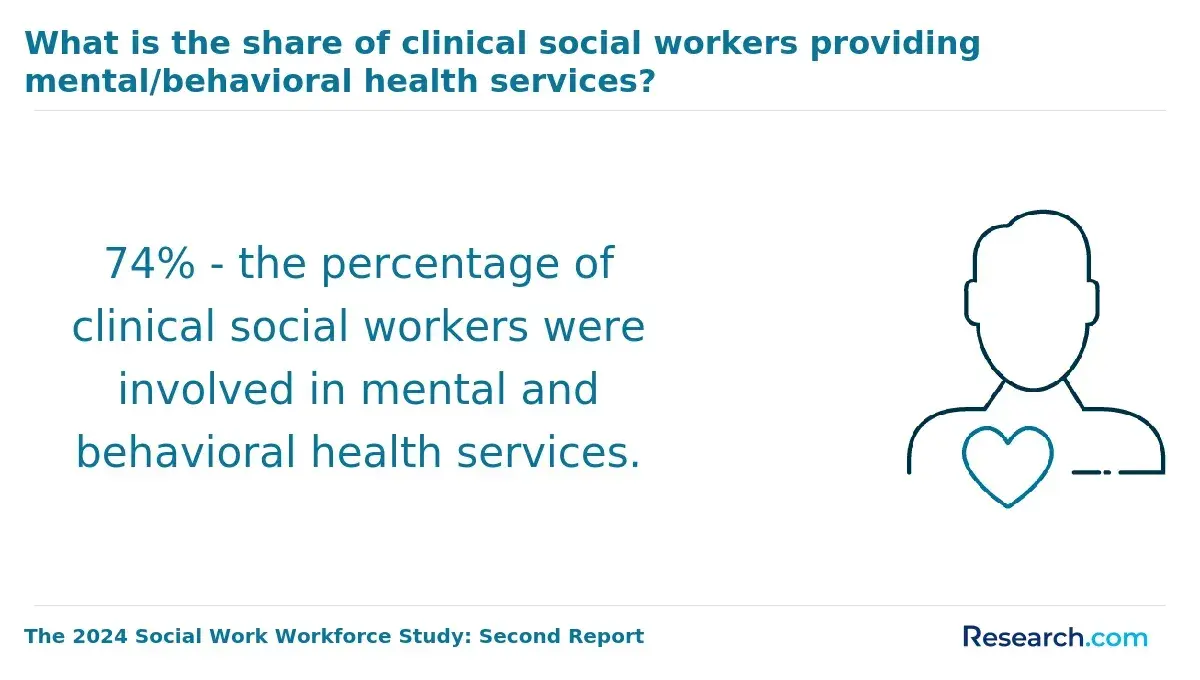
Mental and behavioral health is a major center of clinical practice. An estimated 74% of clinical social workers are involved in this area, which helps explain why licensure is closely tied to demand and salary potential.
Licensure planning checklist
- Confirm that your online MSW program is CSWE-accredited.
- Check whether the curriculum meets education requirements in the state where you plan to practice.
- Ask how the program supports clinical field placements.
- Understand post-graduate supervision hour requirements before accepting your first job after graduation.
- Budget for exam fees, supervision costs if applicable, and license renewal requirements.
Licensure can strengthen ROI, but long-term value also depends on how far the degree can take you over an entire career.
An MSW can support long-term advancement because it prepares graduates for clinical responsibility, supervision, program leadership, administration, and specialized practice. The degree can be useful not only for landing the next job but also for building a career path with increasing autonomy and influence.
Career growth in social work often happens in stages. Early roles build practice skills and credibility. Later roles may involve supervising staff, managing budgets, designing programs, leading agencies, teaching, consulting, or shaping policy.
Common advancement path for MSW graduates
- Direct Practice Clinician. Builds core skills by working directly with clients in agencies, hospitals, schools, behavioral health programs, or community organizations.
- Licensed Clinical Social Worker. Moves into more advanced clinical roles after completing supervised experience, passing the required exam, and meeting state licensure rules.
- Clinical Supervisor. Oversees other social workers or trainees, supports case consultation, monitors documentation quality, and helps develop ethical practice.
- Program Director. Manages services, staffing, compliance, budgets, outcomes, partnerships, and program improvement.
- Executive Director or Private Practice Owner. Leads an organization or operates an independent clinical business with greater responsibility for strategy, finance, compliance, and service quality.
Advancement outside traditional clinical practice
MSW graduates can also move into grant management, quality improvement, utilization review, policy analysis, community organizing, training, research coordination, employee assistance programs, and higher education support roles. These options can be valuable if you want to use social work expertise without spending your entire career in direct therapy or case management.
The path to academic and research leadership
For graduates who want to teach, conduct advanced research, or influence policy at a higher level, the MSW can serve as preparation for doctoral study. An online Doctorate in Social Work may open doors to university teaching, advanced practice leadership, research-focused roles, and senior policy work.
After considering salary, cost, licensure, and advancement, the final step is to run your own ROI calculation.
How can you calculate if an online MSW degree is worth it for you?
The best way to decide whether an online MSW is worth it is to calculate your personal break-even point and then compare that number with your career goals. A program with strong ROI for one student may not be the right choice for another because costs, salaries, debt, state licensure rules, and career plans differ.
Use the following framework to estimate the ROI of an online MSW degree before you enroll.
- Estimate your total investment. Research the total cost of attendance for several programs. Include tuition, university fees, books, required materials, field placement expenses, and expected loan interest if you plan to borrow.
- Project your salary increase. Find the average salary for the MSW-level role you want in your state or region. Subtract your current salary from that figure to estimate your potential annual salary gain.
- Calculate your net annual gain. Use an online student loan calculator to estimate your monthly payment. Multiply it by 12, then subtract that annual loan payment from your projected salary increase.
- Find your break-even point. Divide your total investment by your net annual gain. The result is the approximate number of years it may take to recover your education cost.
Simple ROI example structure
| Step | What to calculate | Why it matters |
| Total investment | Tuition, fees, books, field costs, and borrowing costs | Shows the full price of earning the degree |
| Salary increase | Expected MSW-level salary minus your current salary | Estimates the income gain created by the credential |
| Net annual gain | Salary increase minus annual loan payments | Shows how much financial benefit remains after repayment |
| Break-even point | Total investment divided by net annual gain | Estimates how long it may take for the degree to pay for itself |
The final analysis
For many students, a break-even point of 3-5 years is considered a strong return on investment. A longer break-even period may still be acceptable if the degree leads to licensure, career stability, personal fulfillment, or a role you could not access otherwise. However, if the expected debt is high and the salary increase is small, you may need to choose a lower-cost program, seek more aid, continue working while enrolled, or reconsider the timing.
An online MSW is most likely to be worth it when the program is CSWE-accredited, affordable relative to your expected salary, aligned with your state’s licensure rules, and connected to the settings where you want to work. The strongest decision combines the numbers with an honest assessment of your goals, resilience, and commitment to the profession.
Other Things You Should Know About The Return On Investment (ROI) Of An Online MSW Degree
Attending an online part-time MSW program in 2027 can affect ROI by extending the time needed to graduate, potentially delaying entry into the job field. However, it allows students to continue working, reducing opportunity costs and possibly leading to a more favorable ROI depending on individual circumstances.
It should hold CSWE accreditation. That is the standard required for most state licensure pathways and for field placements, employer screening, and graduate school admissions. An unaccredited MSW can block licensure eligibility, which sharply reduces return on investment.
Yes, maintaining your LCSW license involves ongoing costs that should be part of your long-term career planning. Most state licensing boards require you to complete a specific number of continuing education (CE) units every renewal cycle, which is typically every two years. You will also need to pay an annual or biennial fee to keep your license active. These costs are a standard and necessary professional expense for licensed clinicians.
References:
- Council on Social Work Education. (2025). Directory of Accredited Programs. Retrieved October 27, 2025, from CSWE.
- Data USA. (2025). Social work. Retrieved October 27, 2025, from Data USA.
- Higher Learning Commission. (2025). How accreditation works for you. Retrieved October 27, 2025, from HLC.
- Singh, L. (2024, November 27). The advantages of enrolling in online MSW programs in New York. River Journal. Retrieved October 27, 2025, from RiverJournalOnline.
- U.S. Bureau of Labor Statistics. (2025). Social workers. In Occupational Outlook Handbook. Retrieved October 27, 2025, from BLS.